

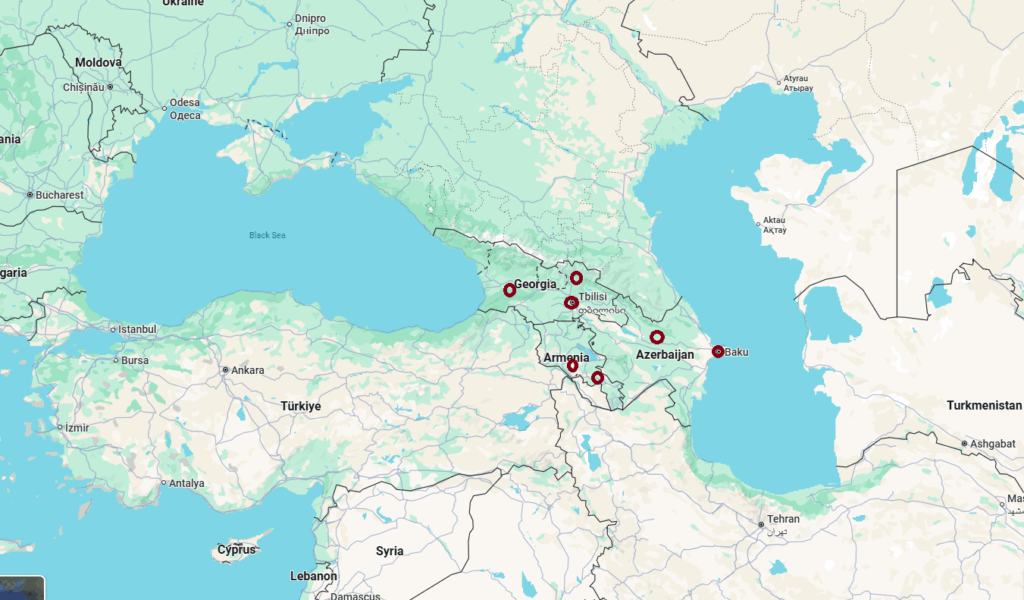
We spent 12 days in the Caucasus region of Asia.
Day 1: Friday, September 12 – Mumbai to Azerbaijan
The trip began just past midnight at Mumbai airport. There’s always a special thrill when a big adventure starts — bags packed, tickets in hand, the promise of new places waiting to be discovered. But just when we thought we were on our way, travel decided to test us.
At the check-in counter, the agent pointed out something we had completely missed: on Anuradha’s visa, her passport expiry date was off by a single day. Just one digit wrong — most likely a typo when I filled in the application. To the airline, though, it was reason enough to deny a boarding pass. For a while, it felt like our carefully planned journey might end before it even began.
After tense discussions, the agent offered a solution: apply for an urgent visa with the correct details. It meant another $70 and a scramble at the last moment, but it was our only chance. We took it. By the time the urgent visa was approved, we were already in the air from Mumbai to Baku — nervous, but also relieved.
We landed at Heydar Aliyev International Airport at sunrise, around 6 am.
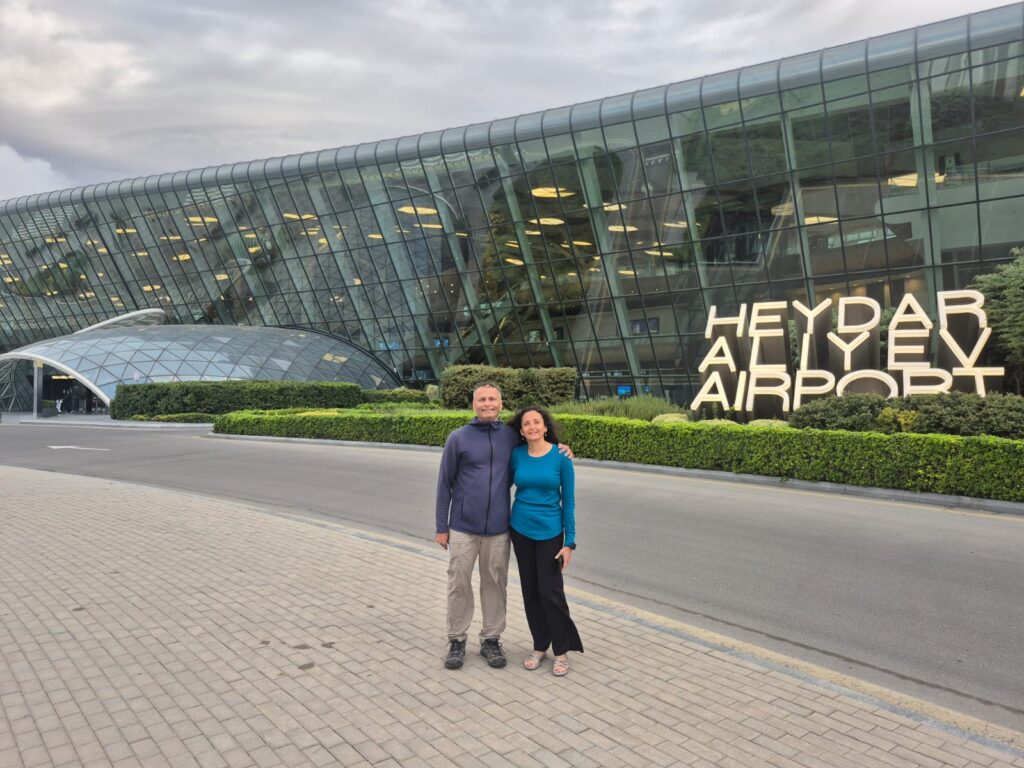
The early morning quiet of Baku was a stark contrast to the chaos we’d just lived through. By 6:45, we had picked up our Hertz rental car and pointed it westward, toward Gabala. Azerbaijan’s roads stretched out ahead of us, framed by rugged hills and vast skies.
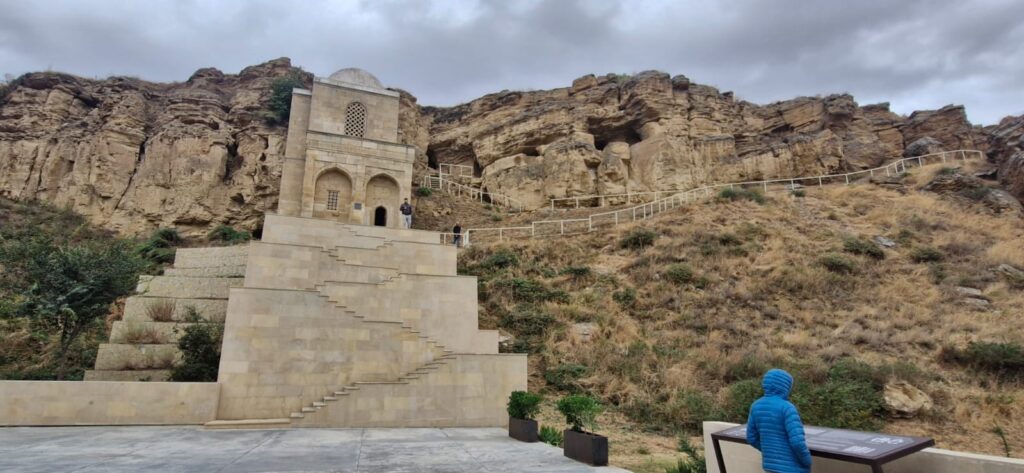
Our first stop was the Diri Baba Mausoleum in Qobustan, near Shamakhi, a structure that immediately made the fatigue of travel worthwhile.
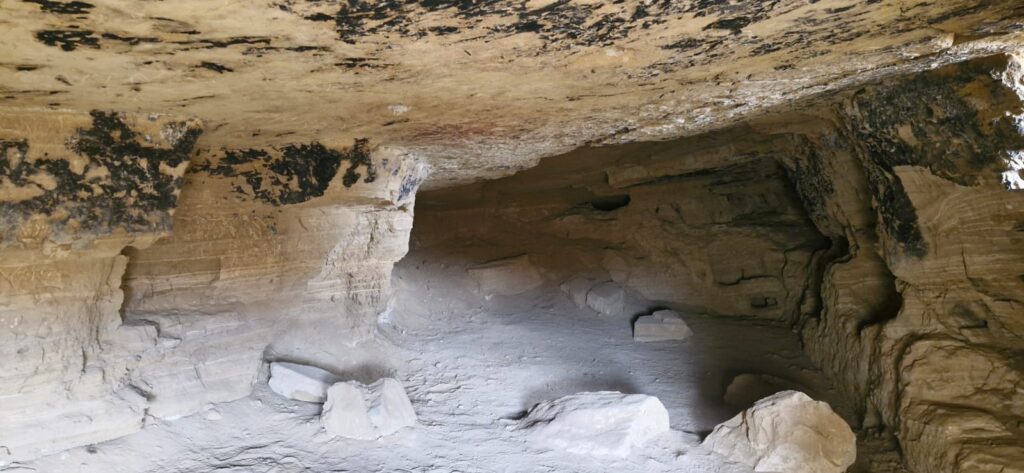
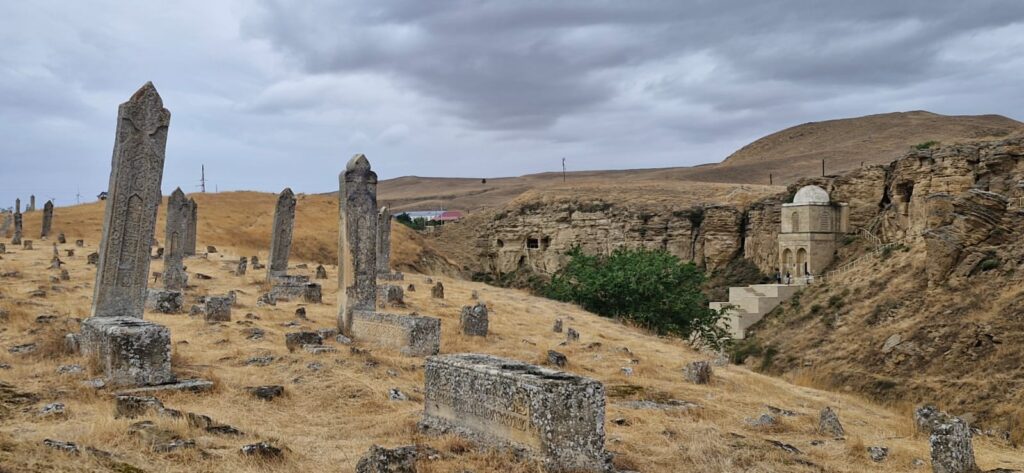
Built in 1402 during the reign of Shirvanshah Ibrahim I, the mausoleum is unlike anything I’d seen before — carved into the side of a cliff, as though the mountain itself decided to shelter it.
Legends say a holy man named Diri Baba was buried here, his body miraculously preserved. Since the 17th century, pilgrims and the curious alike have visited, hoping to feel the mystery of the place. The architecture itself deepens the sense of wonder: a two-storey chamber with pointed arches, an octagonal dome, and stairs carved right into the rock leading upward. Standing there in the stillness of the morning, I could see why this monument has captivated imaginations for centuries.
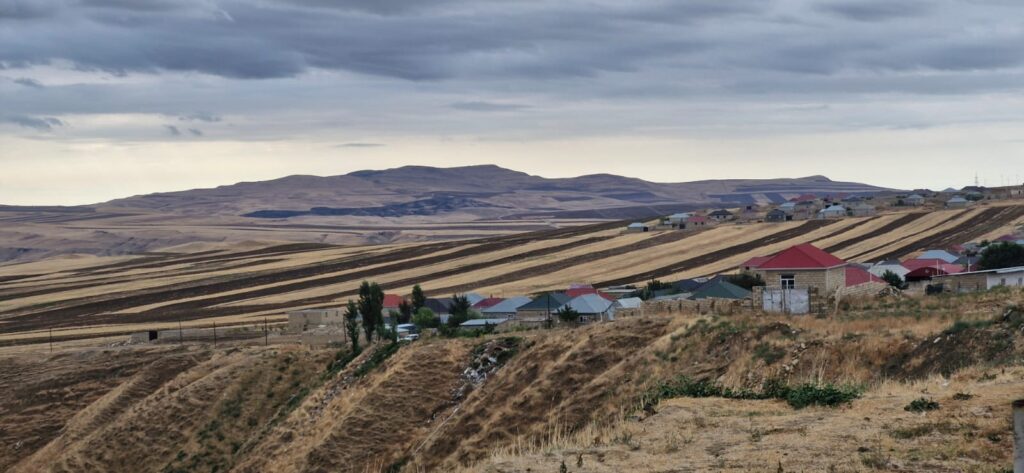
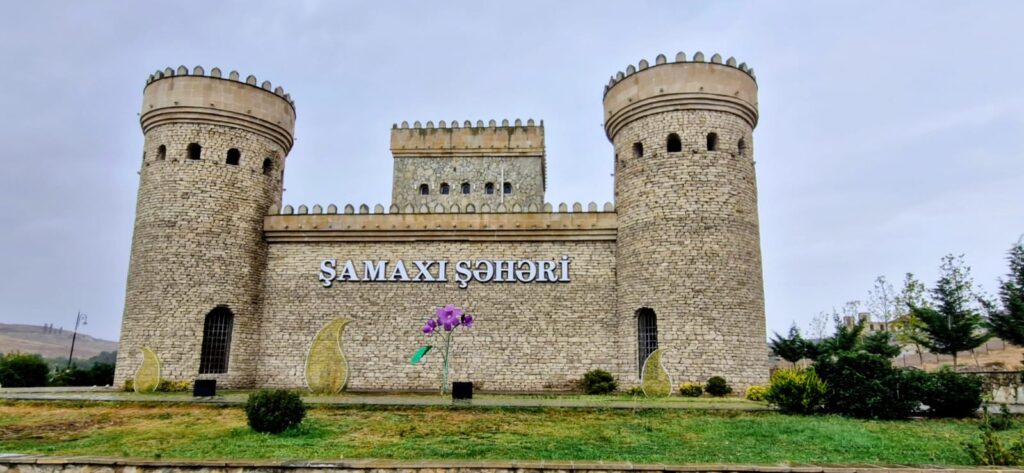
From Qobustan, we drove on to the historic city of Shamakhi. The entrance to the city was dramatic — winding roads giving way to a valley cradled by mountains.
Our first stop was the Juma Mosque, originally built in 743 AD and considered the very first mosque in the Caucasus.
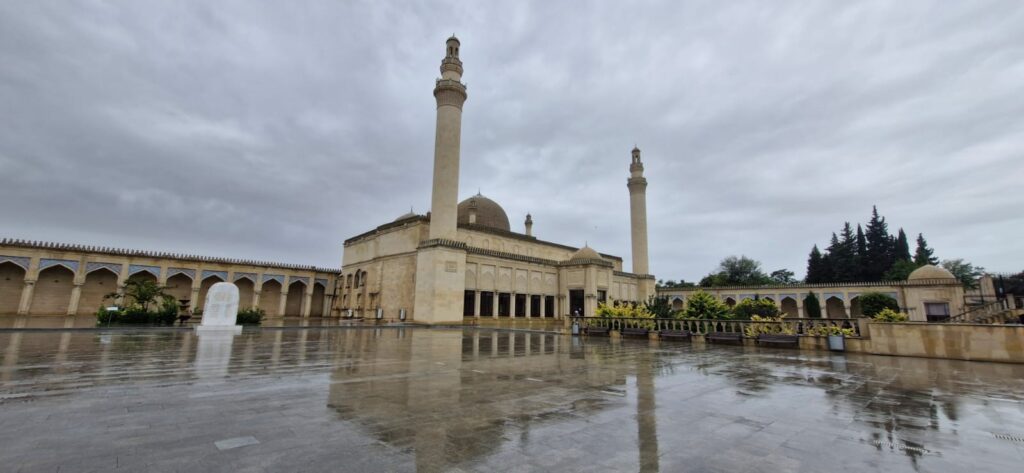
The mosque was constructed soon after the arrival of Islam in the region, during the reign of the Umayyad Caliphate. Over the centuries, it has been destroyed by earthquakes and invasions and rebuilt six times — most recently in 2013.
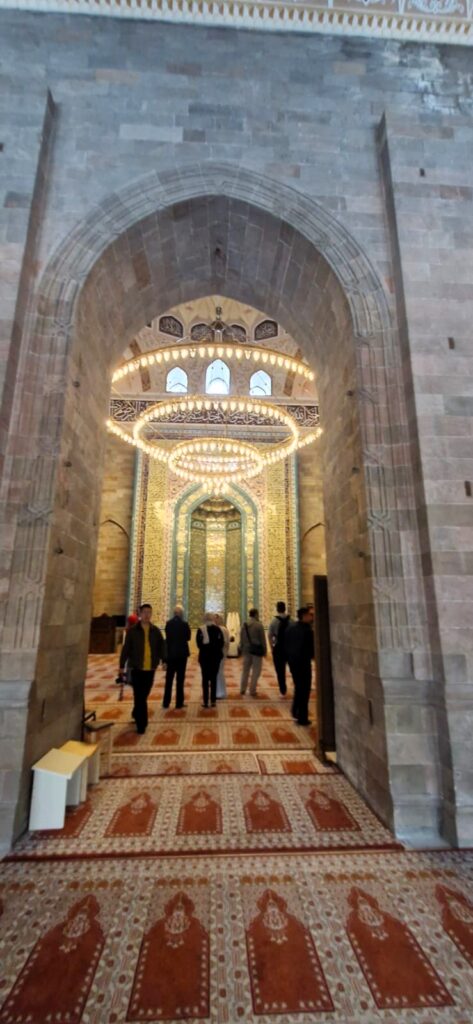
The structure reflects a blend of early Islamic and local Shirvan architectural styles, with graceful arches and intricate brickwork. Standing in its courtyard, it was humbling to realise that this site has witnessed over twelve centuries of prayer and history.
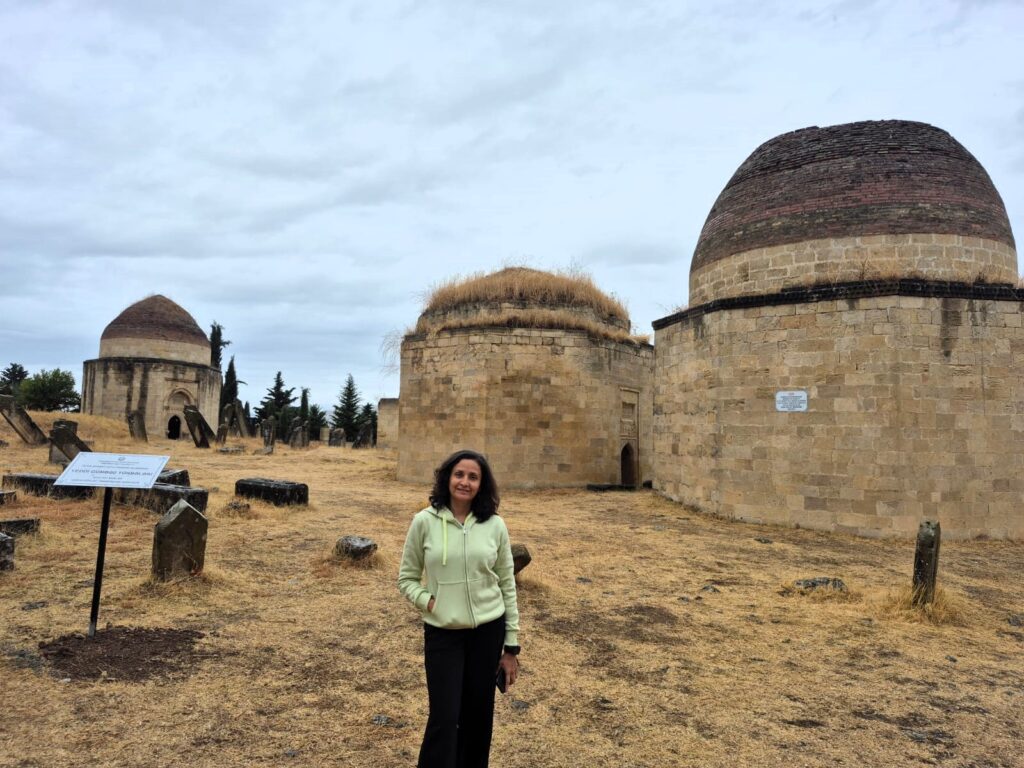
Next, we climbed a hill overlooking the town to see the Yeddi Gumbaz Mausoleum, known as the “Seven Domes.” Only three remain intact today, but they stand strikingly against the valley backdrop.
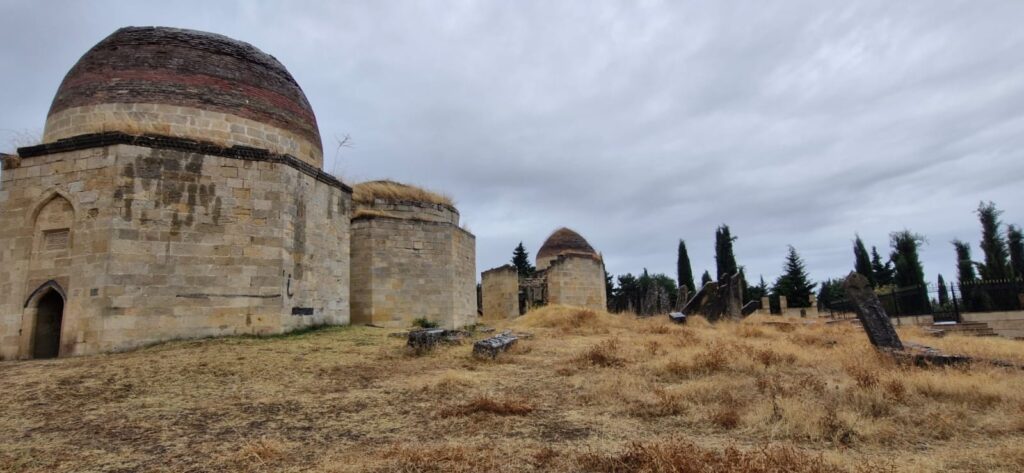
Built in the early 19th century as the royal necropolis for the family of Mustafa Khan, the last ruler of the Shamakhi Khanate, these tombs reflect the elegant Shirvan architectural style — simple domes, pointed arches, and carved geometric patterns on stone. The name of the architect, Ustad Taghi, is still visible in an inscription on one of the structures. Locals say the other four domes were lost to time and earthquakes.
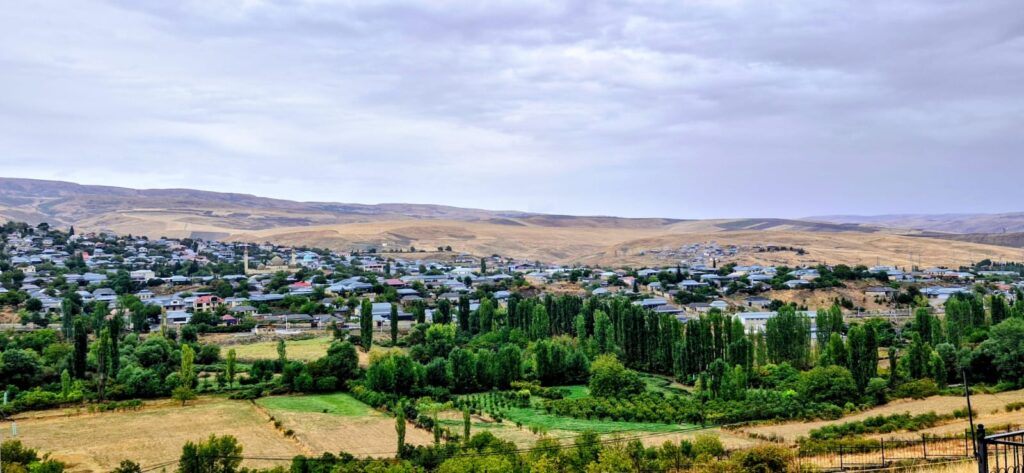
From the hilltop, the view was spectacular — Shamakhi spread out below us, the green slopes and distant mountains wrapping the town in quiet grace.
By the time we left Shamakhi, hunger was setting in. The drive to Nohur Gol (Lake Nohur) near Gabala was long, and food options along the way turned out to be a challenge.
Most small restaurants didn’t serve vegetarian food, and many places only accepted cash. Eventually, we stopped at a market, withdrew some cash from an ATM, and settled for a modest but satisfying lunch: fresh simit bread and flavored yogurt.
We reached Nohur Gol by 3 pm.
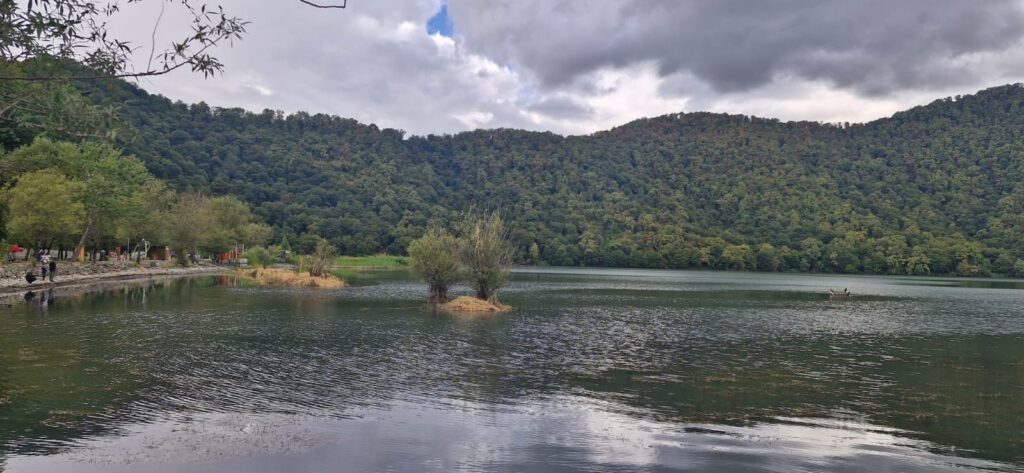
The lake, converted into a reservoir in 1949 to irrigate nearby farmland, sits at about 700 meters above sea level and is surrounded by three mountain ranges — Gulluburun, Goydag, and Yumuru.
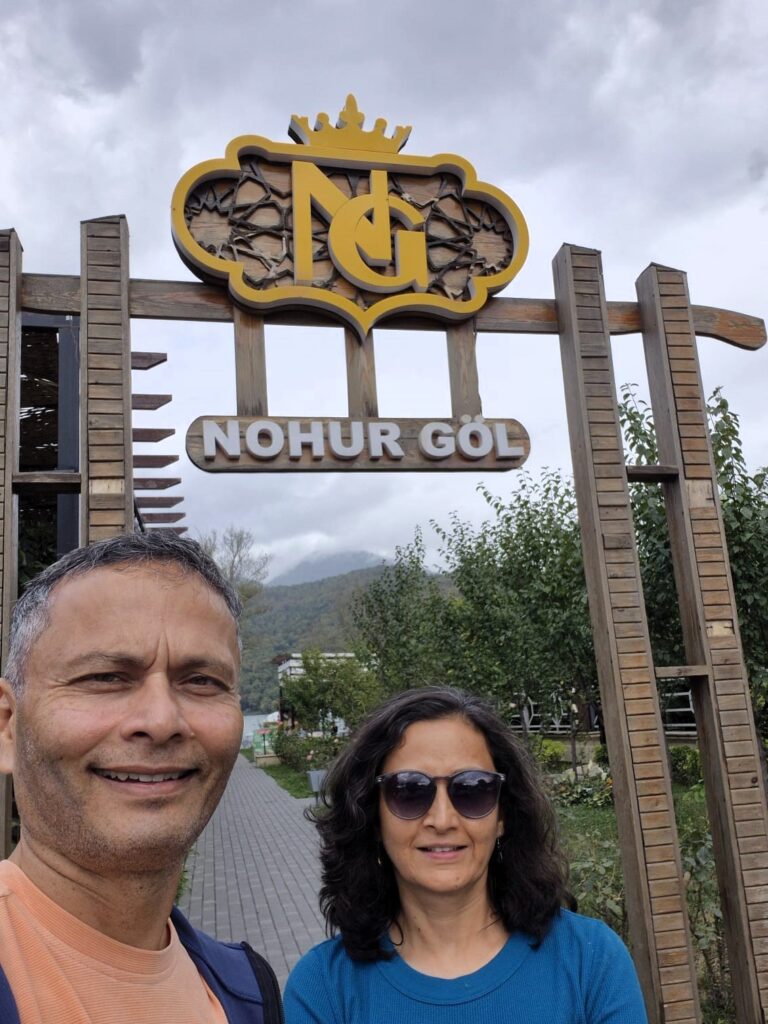
With its glassy waters reflecting the sky, the lake is a favorite spot for locals and tourists alike. It wasn’t the most breathtaking lake I’ve ever seen, but it carried a calm, easy beauty, perfect for a pause in the middle of a long day.
From the lake, we drove on, stopping briefly at the Martyrs Alley monument in Gabala to pay respects, before reaching the Tufandag Mountain Resort.
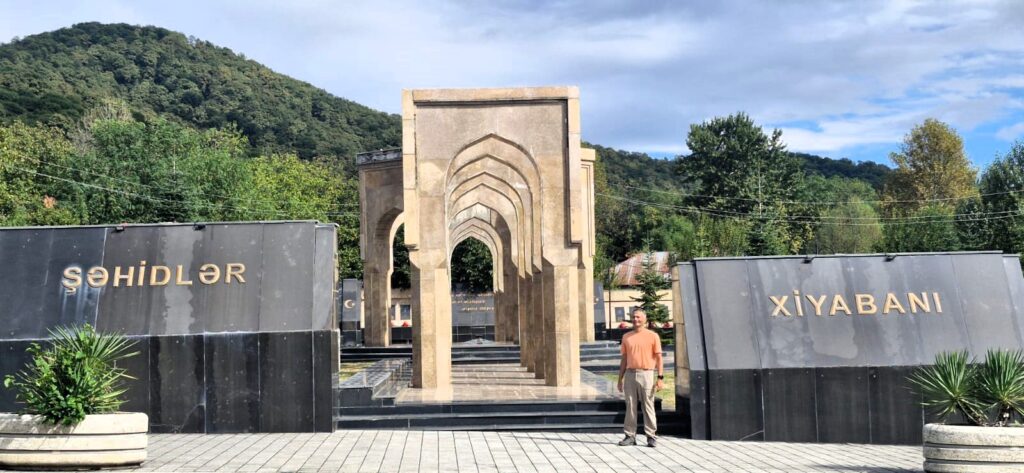
The site is simple yet moving — rows of plaques and flowers honoring those who fell during the Nagorno-Karabakh conflict. It’s a quiet place that reminds visitors how deeply history and resilience are woven into everyday life in Azerbaijan.
The Tufandag Mountain Resort is one of Azerbaijan’s top alpine destinations and offers panoramic views of the Greater Caucasus range.
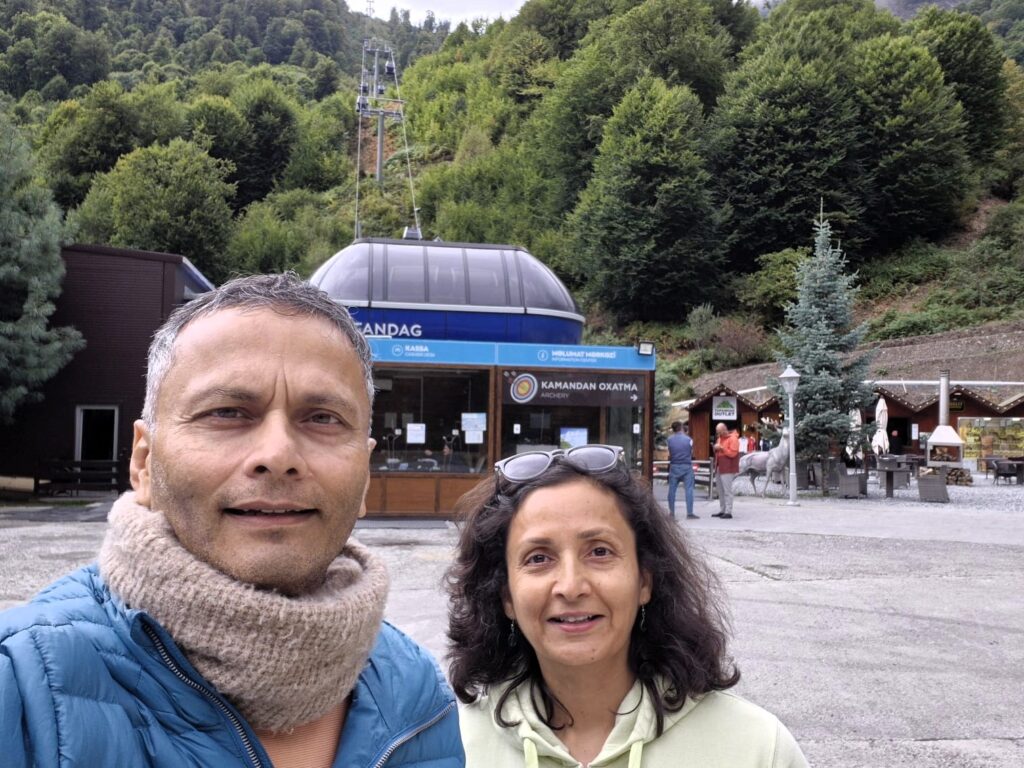
We took the “All Mountain” ticket, which allowed us to ride multiple cable cars and visit every peak. Each stop opened up new, breathtaking views of Gabala’s forests, valleys, and snow-dusted ridges.
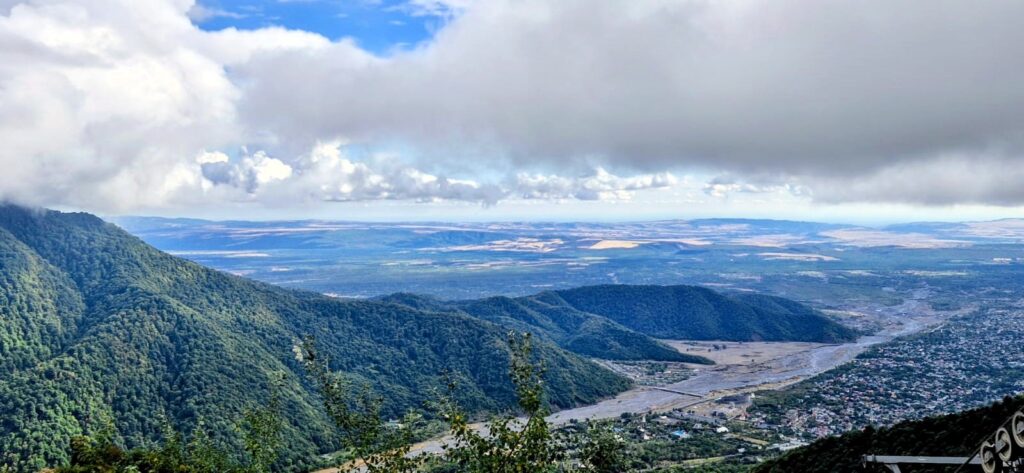
The highest cable car rises over 1,900 meters, and in winter, this area turns into a premier ski destination with well-maintained slopes and chairlifts. Even in summer, it’s a treat — the clean mountain air, the sound of the wind, and the sweeping green hills make the ride unforgettable.
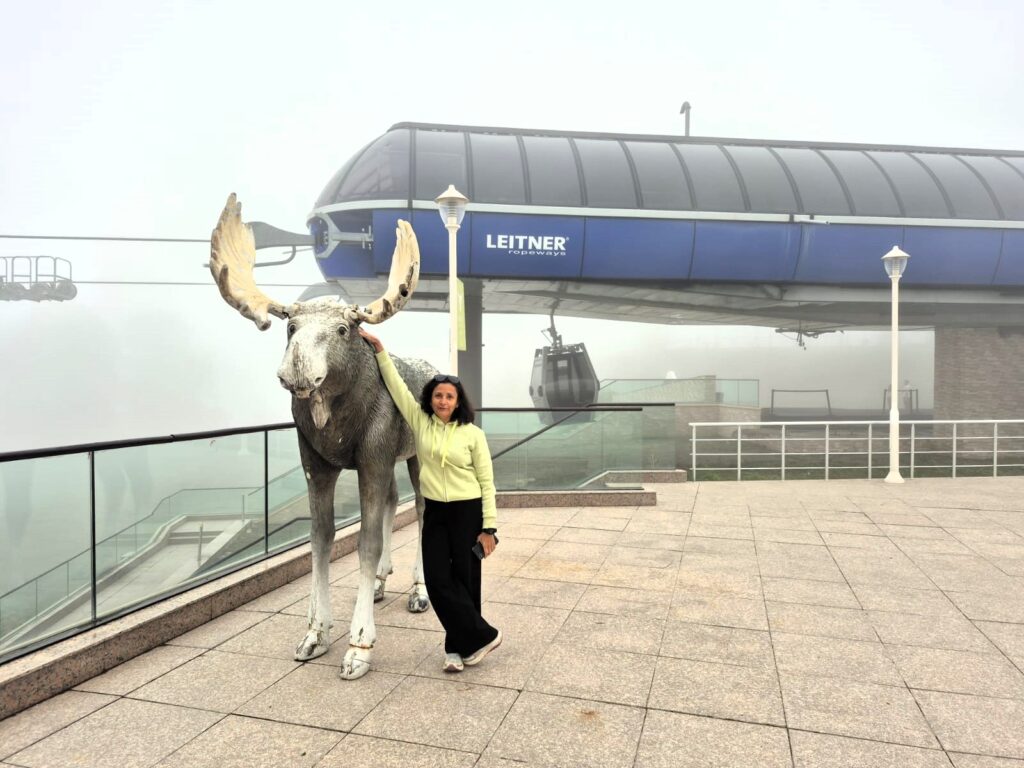
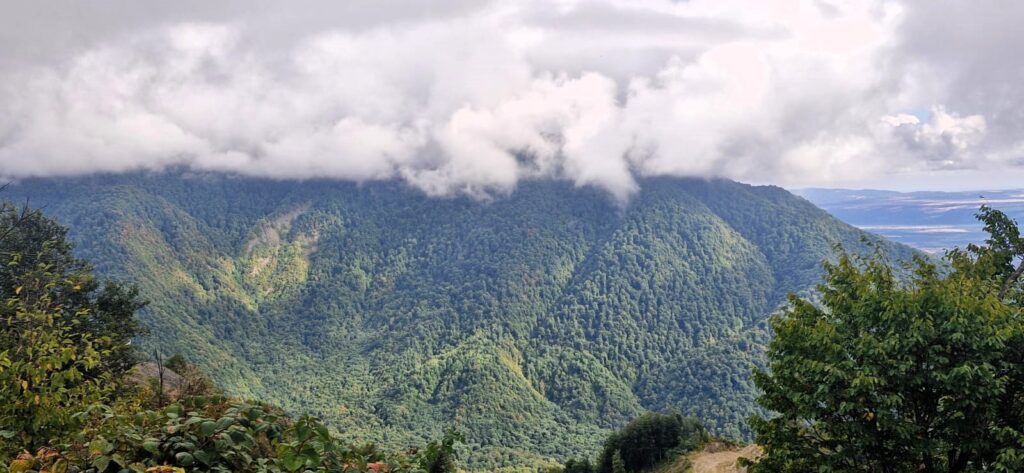
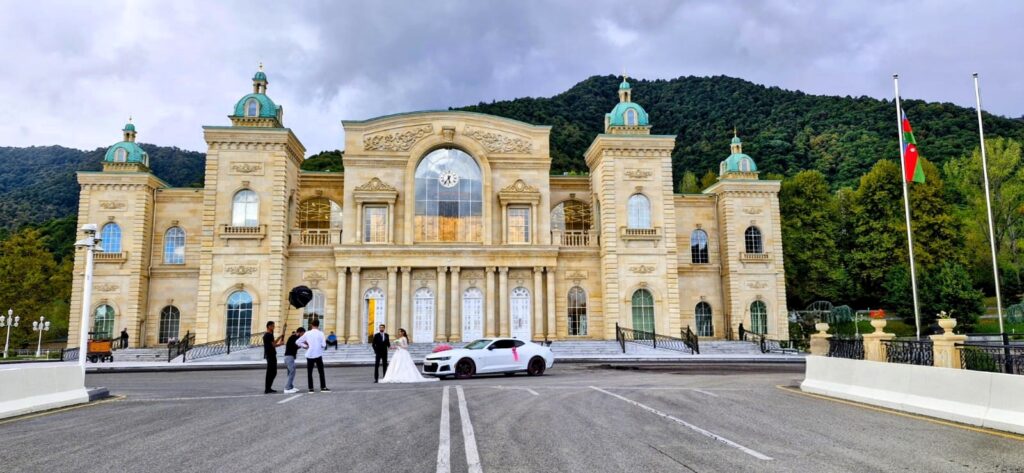
We spent nearly two hours exploring the different peaks and viewpoints, soaking in the scenery from every angle. On our way back, we passed the ornate Heydar Aliyev Congress Hall, an elegant modern building that contrasts beautifully with the surrounding nature.
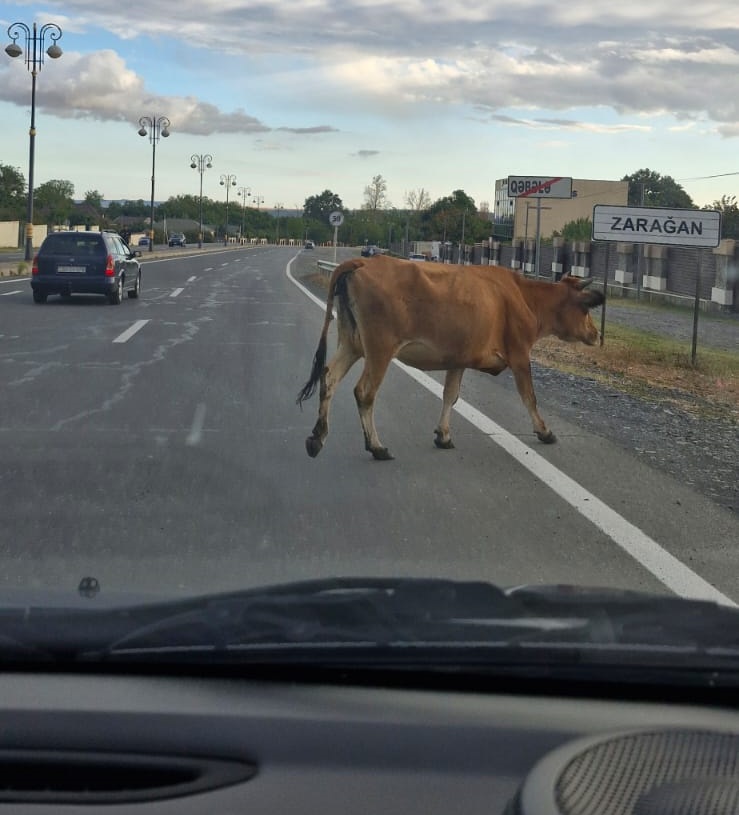
A cow lazily crossing the road — small reminders that travel here is never short on surprises.
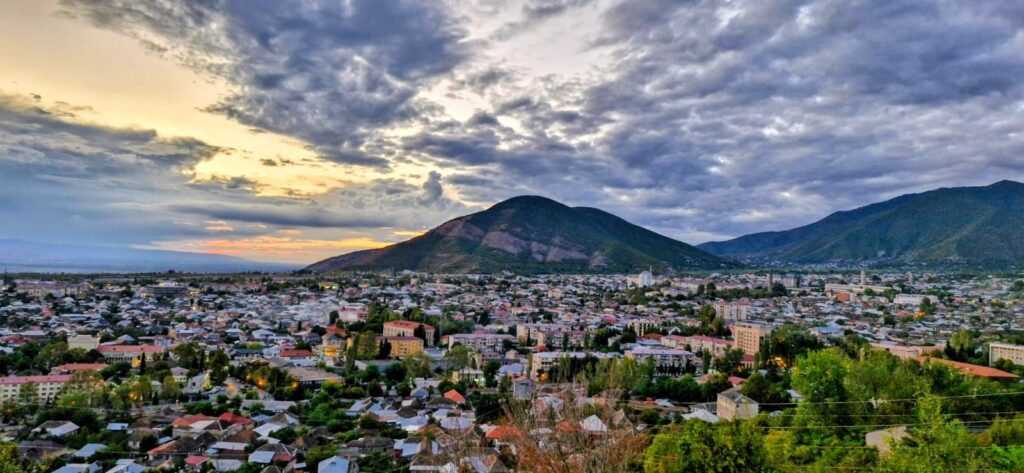
At last, around 7:15 pm, we reached Sheki, where our hotel, Ruma Qala (Roman Castle), perched high on a hill. The views over the town were fantastic, bathed in the golden light of sunset.
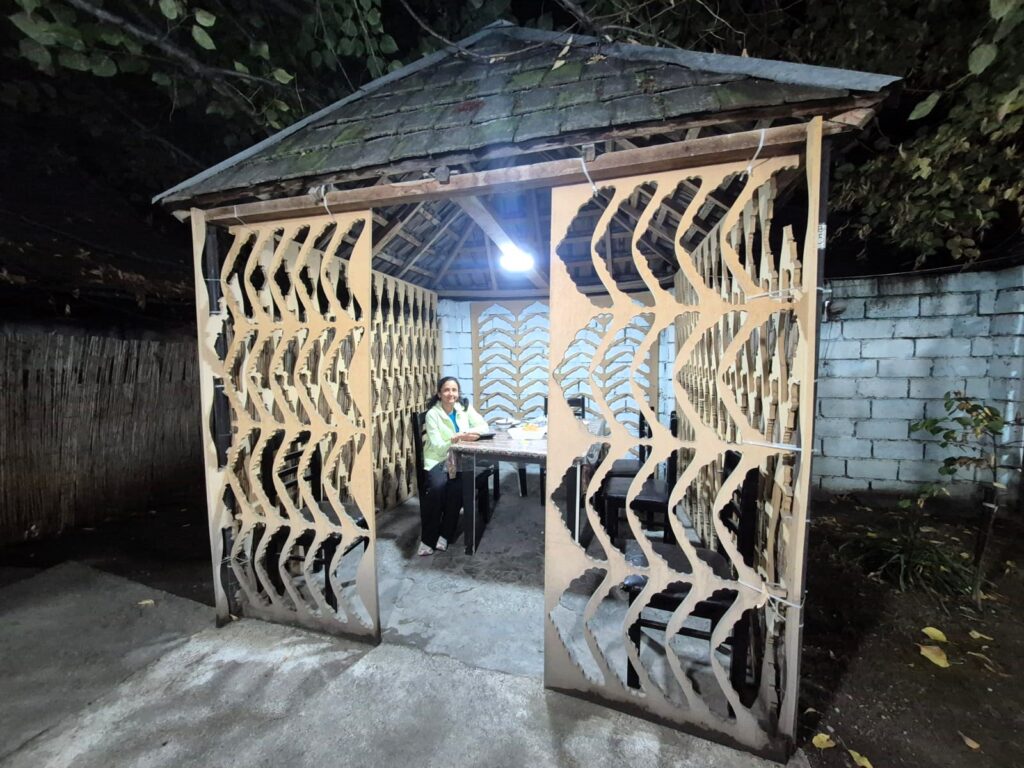
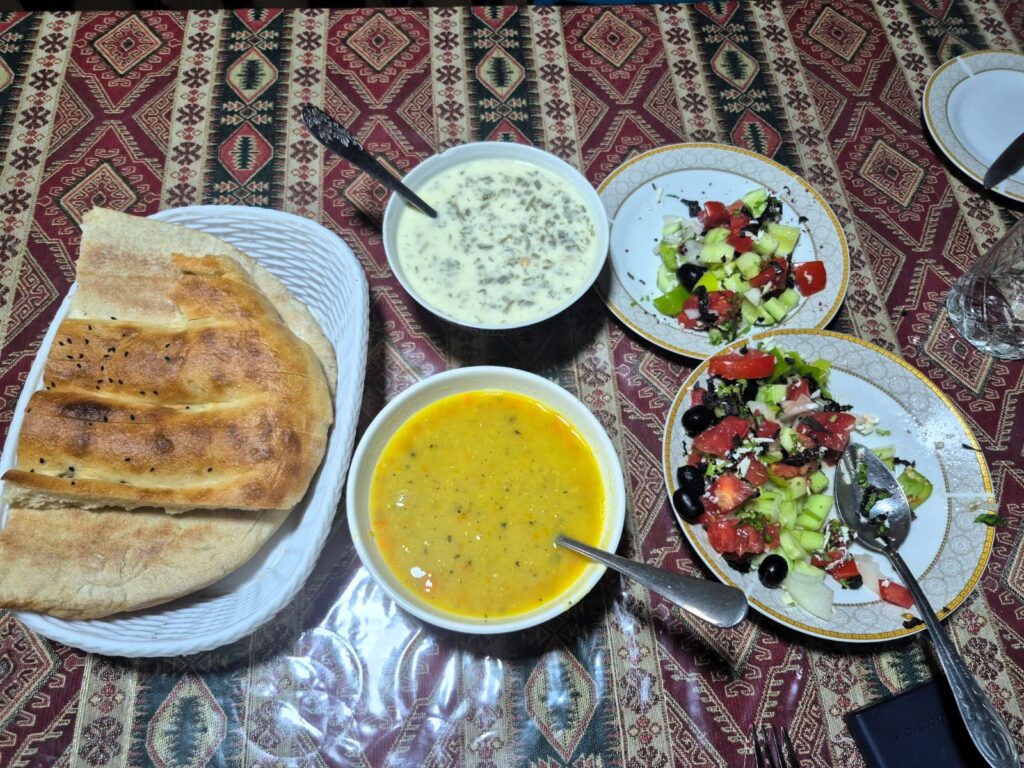
Dinner was another adventure. Our hotel restaurant had no vegetarian dishes, so we wandered into town, eventually finding a small restaurant that served us lentil soup, dovga (a yogurt soup with herbs), Greek salad, grilled vegetables, and bread. After the day’s struggles, it was the most satisfying meal imaginable.
By 10 pm, we were back at the hotel, tired but deeply content. The first day had been long, full of challenges and discoveries — a taste of what this journey through the Caucasus was going to be.
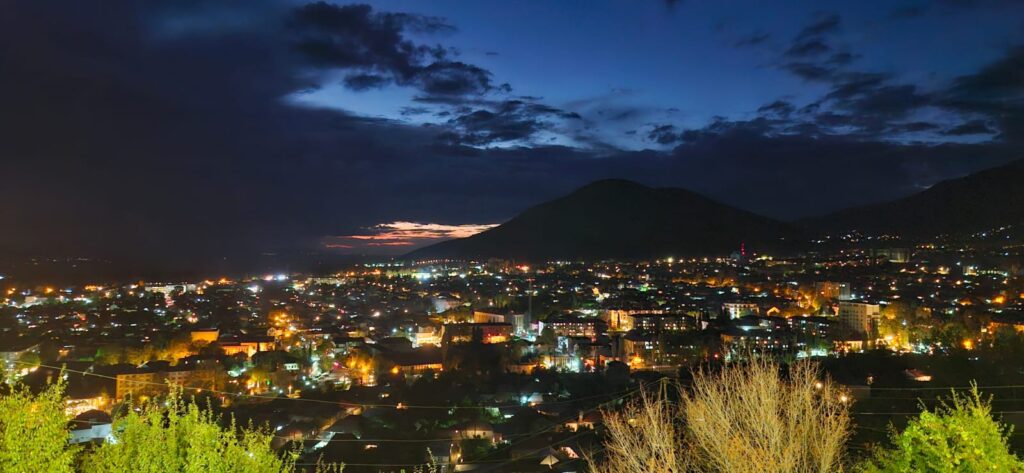
Day 2: Saturday, September 13 – Sheki and the Long Road Back to Baku
We began the morning in Sheki with a hearty Azeri breakfast.
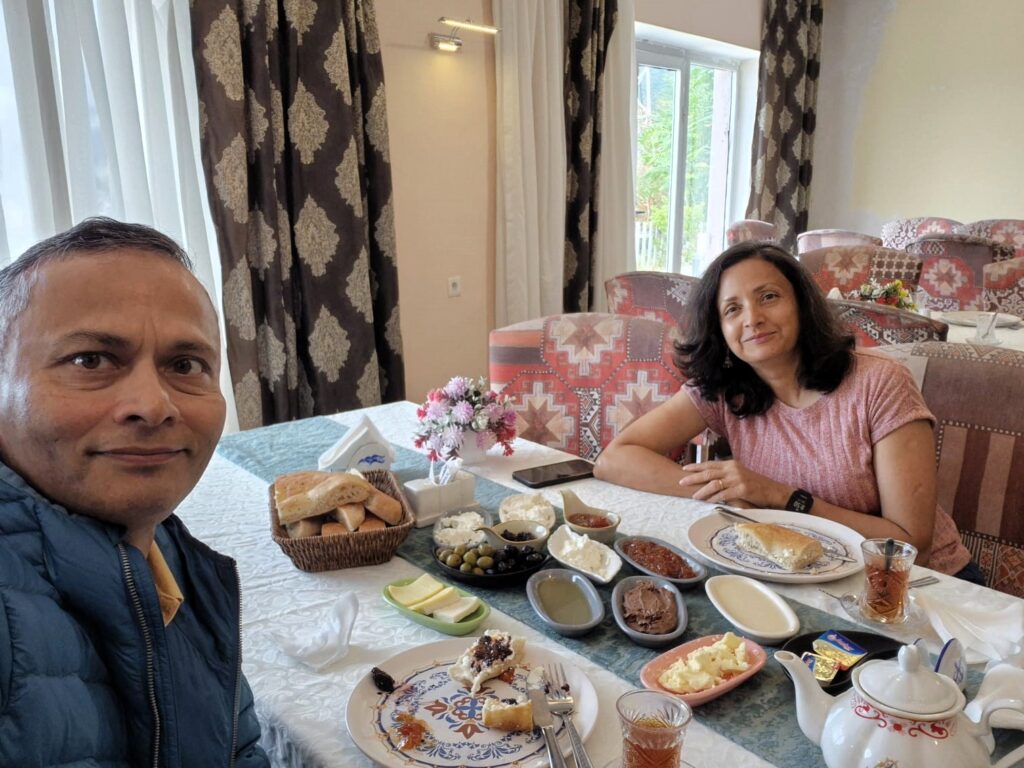
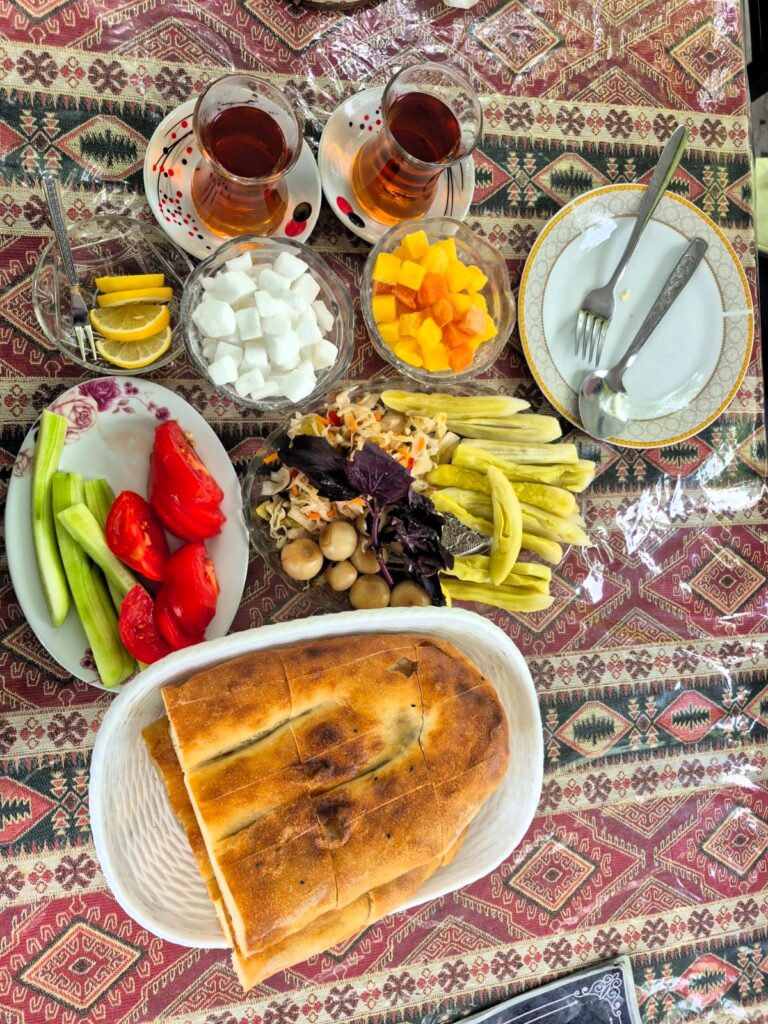
On the table was tendir, a soft bread fresh from the clay oven, three types of cheese, butter, olives, and jams in different flavors. And of course, tea — or chai as it is universally called here.
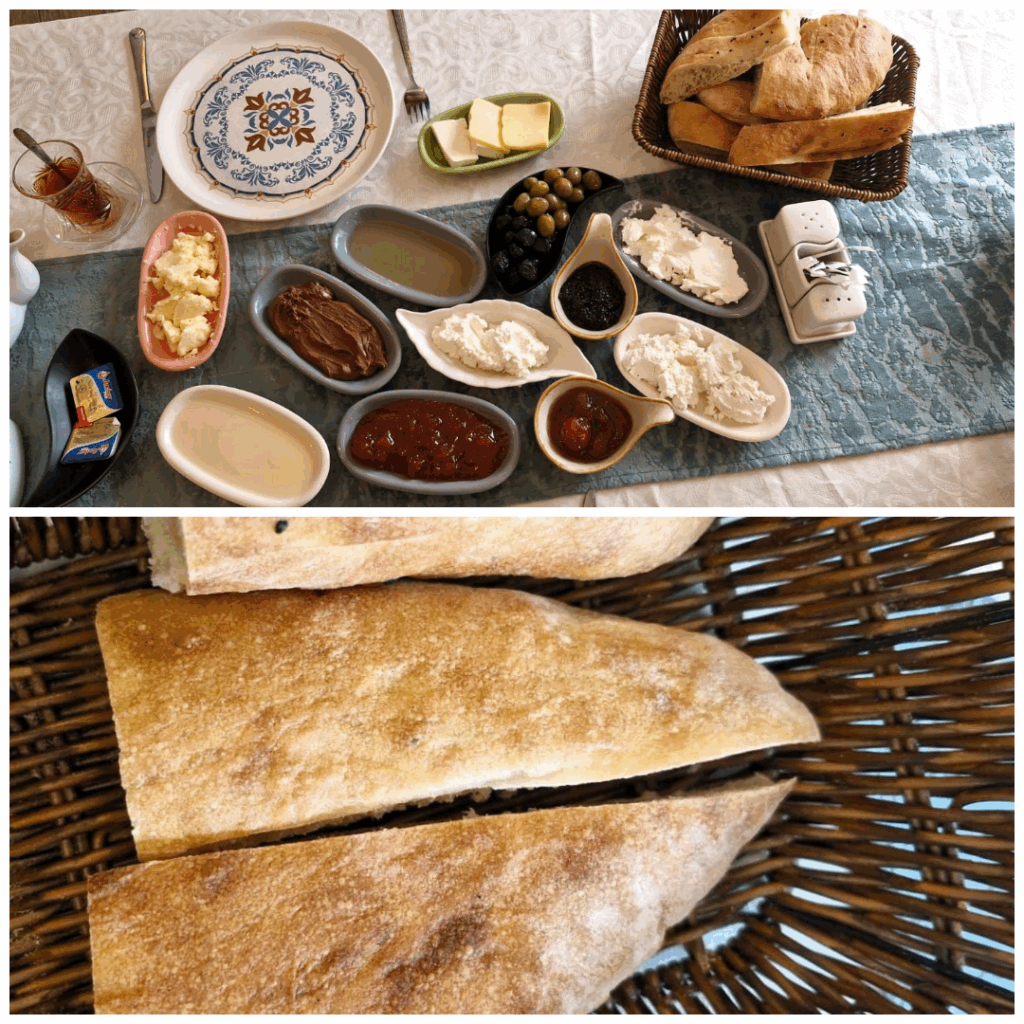
In Azerbaijan, tea is not just a drink but part of the culture, and often comes complimentary with a meal.
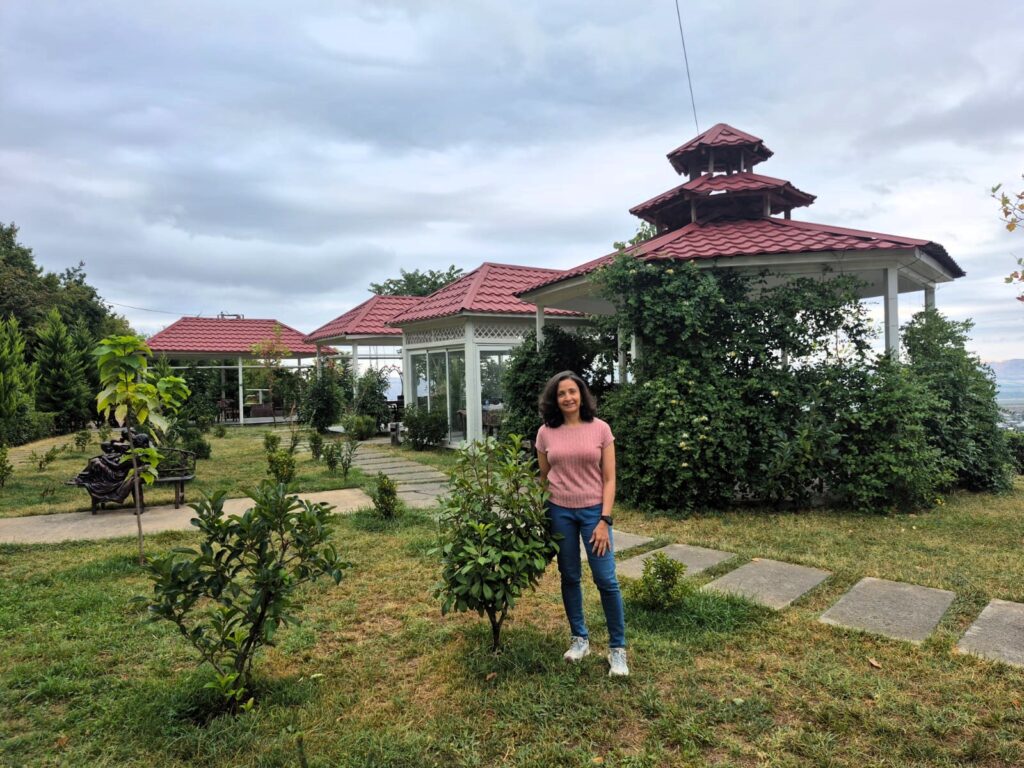
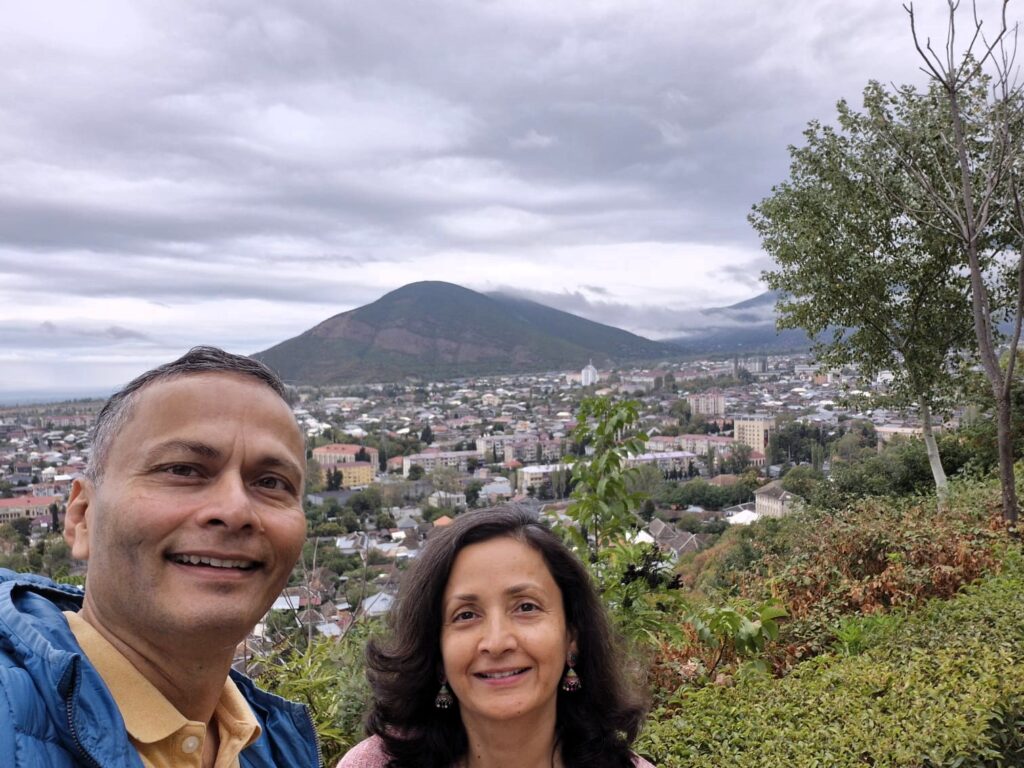
Our hotel, Ruma Qala (Roman Castle), had been decent if not extraordinary, but what made it memorable was its perch on top of a hill.
From there, Sheki spread out below us, with its old town clustered against the mountains — a view that instantly set the tone for a day of history and exploration.
Sheki itself is a city in western Azerbaijan, once an important trading post along the Silk Road. In 2019, its historic center, along with the Palace of Shaki Khans, was inscribed as a UNESCO World Heritage Site for its unique architecture and role in global trade.
For centuries, Sheki was influenced by Iran, until the early 1800s when Russia, as part of the “Great Game” between empires, colonized Azerbaijan. The layers of that history are still visible here.
Just next to our hotel stood a World War II monument, commemorating Azerbaijani soldiers who fell between 1941–1945, the years of Soviet involvement after Hitler invaded Russia.
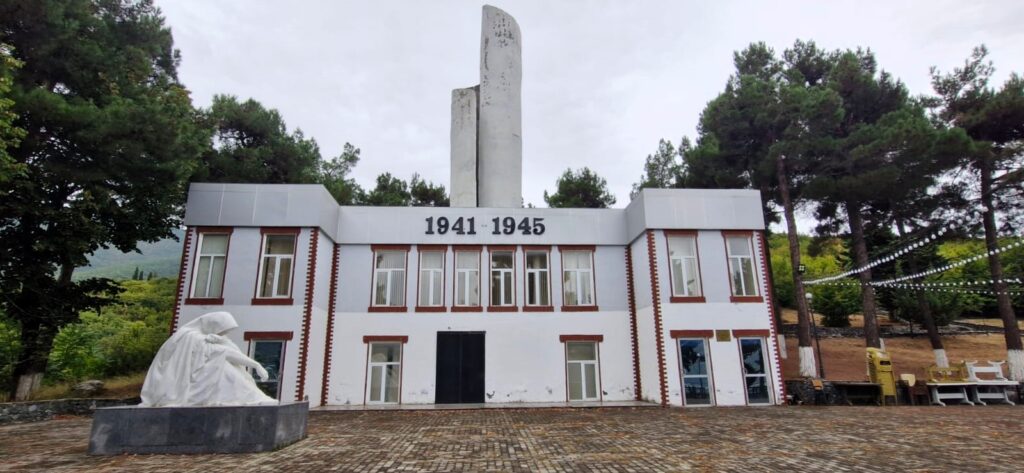
It was a reminder that Azerbaijan, then part of the USSR, bore its share of sacrifice.
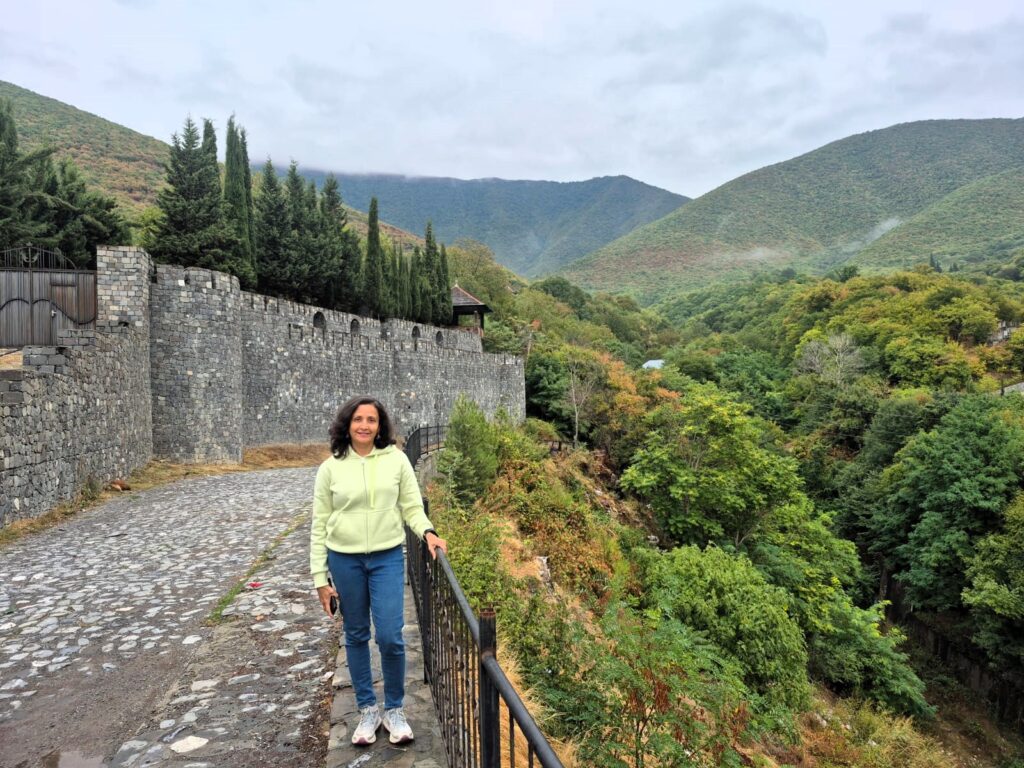
Our first stop was the Sheki Fortress, whose walls once stretched 1.3 kilometres, enclosing the khan’s summer residence. Inside the fortress lies the jewel of Sheki — the Palace of Shaki Khans.
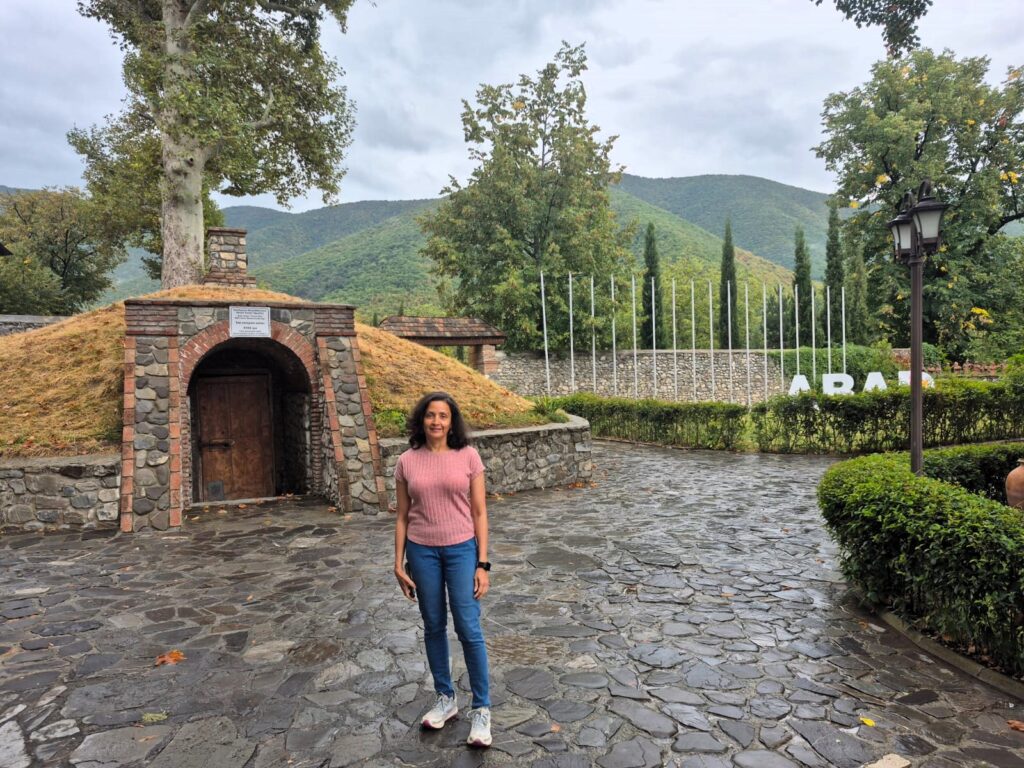
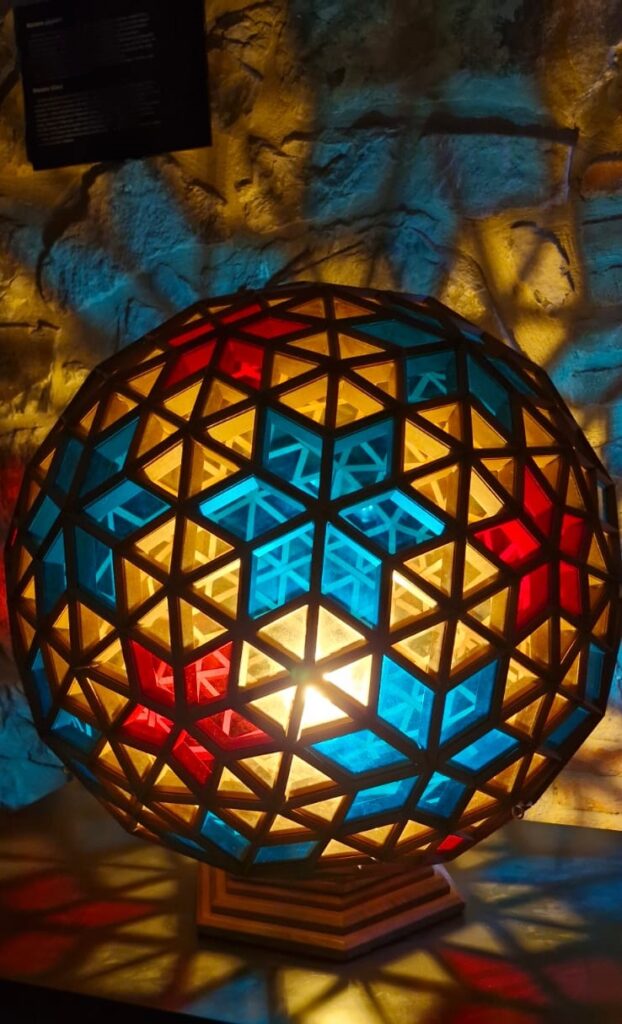
Inside the fortress lies the jewel of Sheki — the Palace of Shaki Khans. Built in 1797 under the rule of Muhammad Husayn Khan Mushtaq, the palace is famed for its dazzling interiors: walls painted with Persian and Ottoman floral motifs, and facades covered with intricate shebeke — stained-glass mosaics made without a single nail or drop of glue.
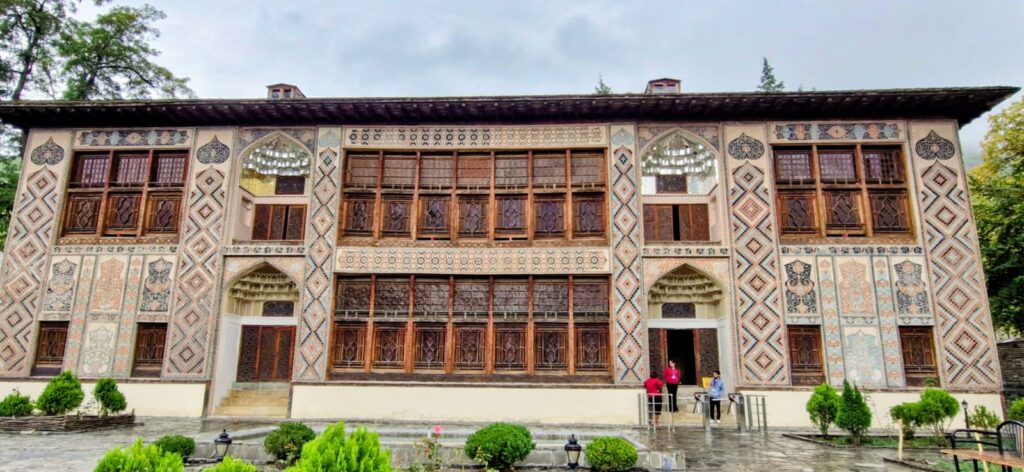
The entrance fee was a modest 9 Manat (₹450), and worth every bit. Standing inside, you can see why UNESCO singled it out — it’s a masterpiece of Eastern architecture, blending human creativity with the natural surroundings. Every pane fits perfectly into handmade wooden lattices, crafted by local artisans with mathematical precision. The palace, built entirely from brick, oak, and tinted glass, served as the summer residence of the khans who ruled this Silk Road city. Its design ensures natural light filters through colored glass, bathing the rooms in soft hues — an effect that feels almost otherworldly. The entrance fee was a modest 9 Manat (₹450), and worth every bit. Standing inside, it was easy to see why UNESCO singled it out — a masterpiece of Eastern architecture that perfectly blends artistry, craftsmanship, and harmony with its natural surroundings.
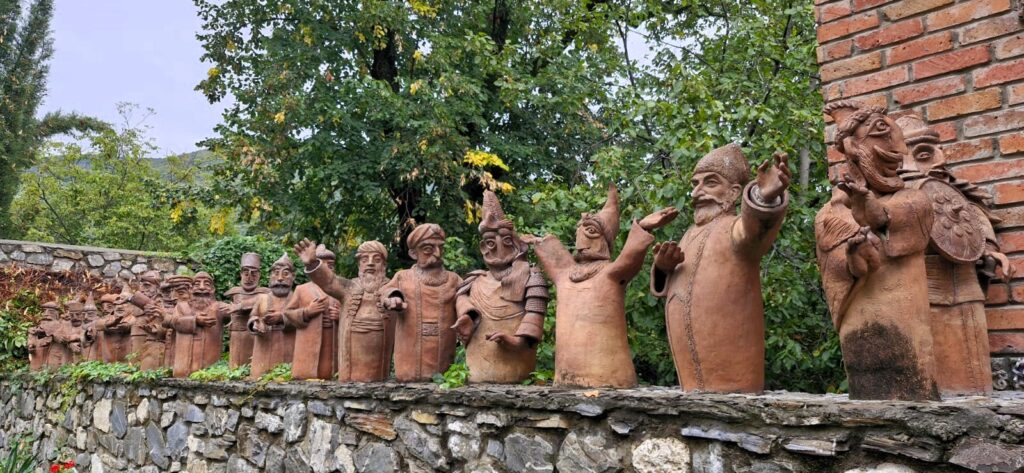
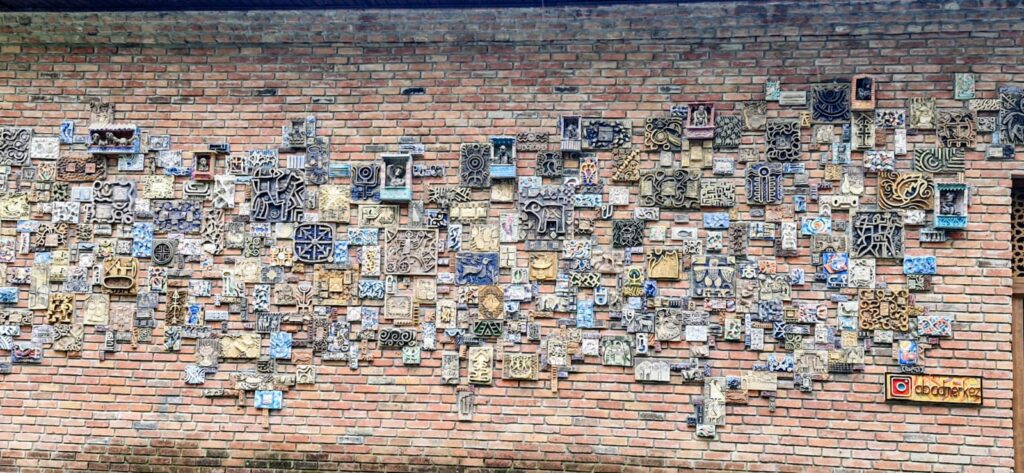
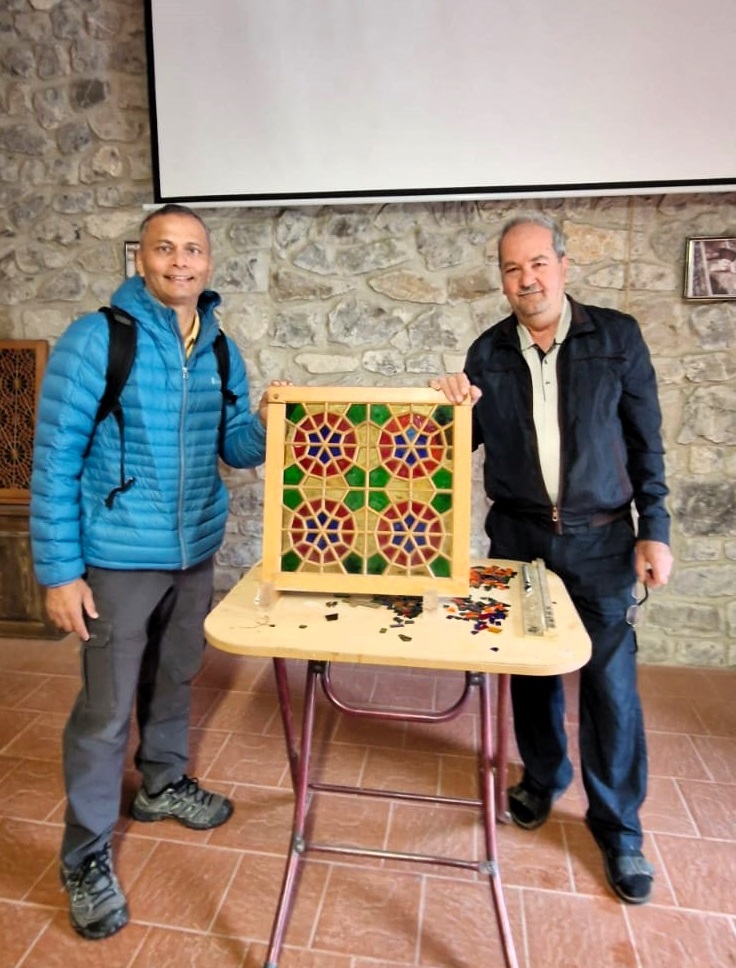
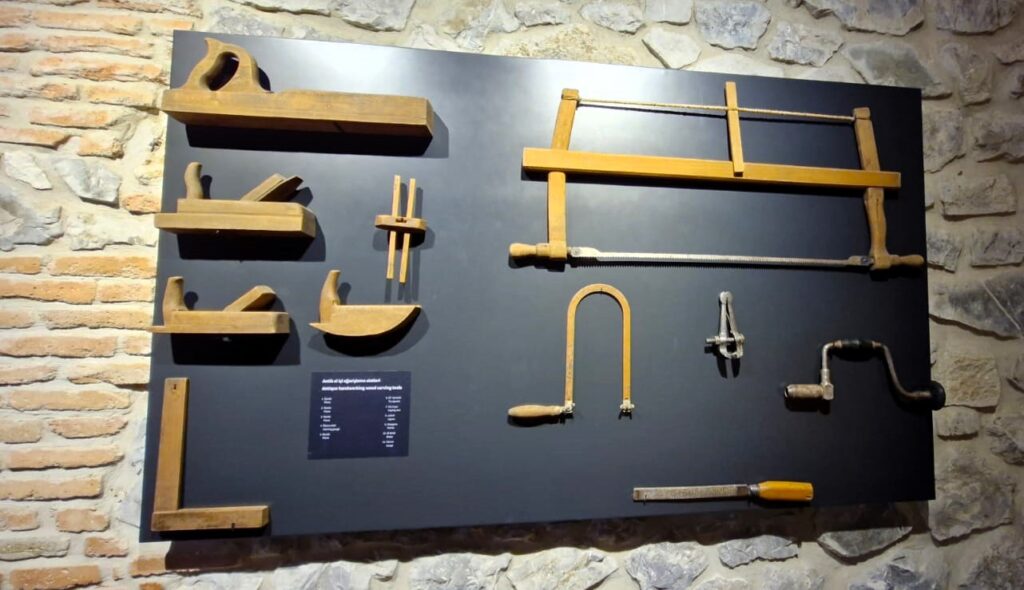
Inside the fortress, we met a local artisan practicing the traditional Shebeke craft — a centuries-old art form unique to this region.
Shebeke windows are made by fitting tiny pieces of colored glass into intricate wooden grids, all assembled without glue or nails.
The craft has been passed down through generations, and the artisan we met represented the fourth generation of his family, keeping this tradition alive. Watching him patiently fit each colored piece into place, it was clear that this delicate art requires immense precision and calm — a living link between Sheki’s royal past and its cultural present.
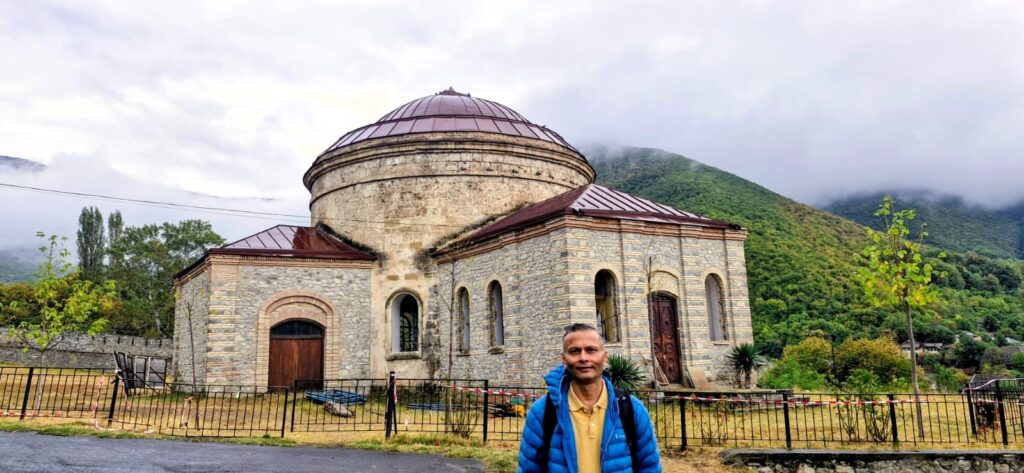
The Sheki Round Temple — a 19th-century Albanian church near the Sheki Fortress, later used as an Orthodox church during the Russian Empire. Its circular structure and serene mountain backdrop make it one of Sheki’s quieter but beautiful historical landmarks
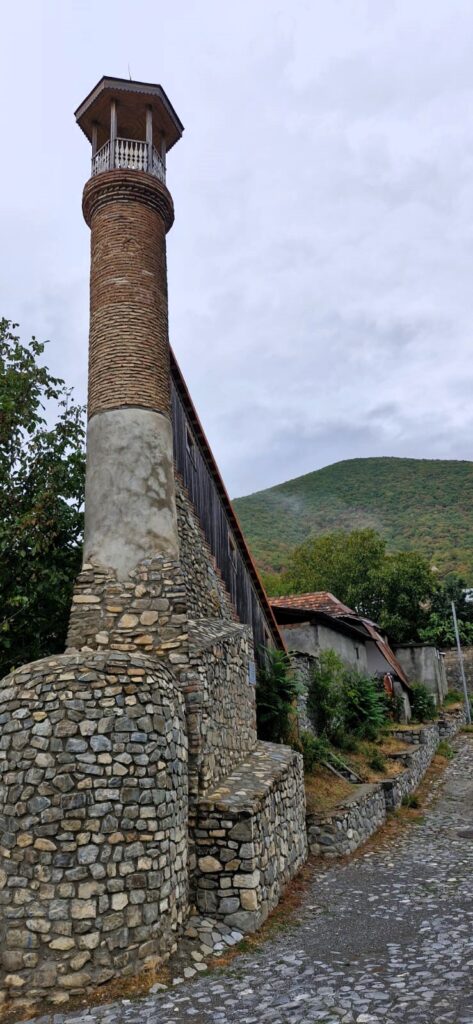
Still within the fortress area, we came across the Gilahli Mosque, first built in 1749 by Sheki Khan Haji Chalabi Khan and later rebuilt in 1805 by Haji Shamseddin Bey.
The mosque’s minaret is interesting, but what makes it special is its setting — nestled amid the tall green mountains that surround Sheki.
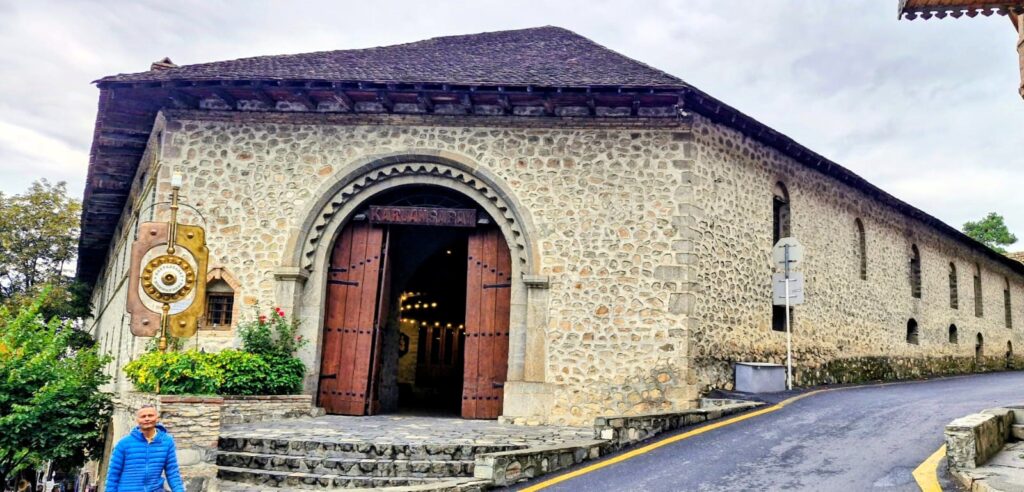
A short walk away stood the Sheki Caravanserai, an 18th-century complex that once housed traders and travelers along the Silk Road.
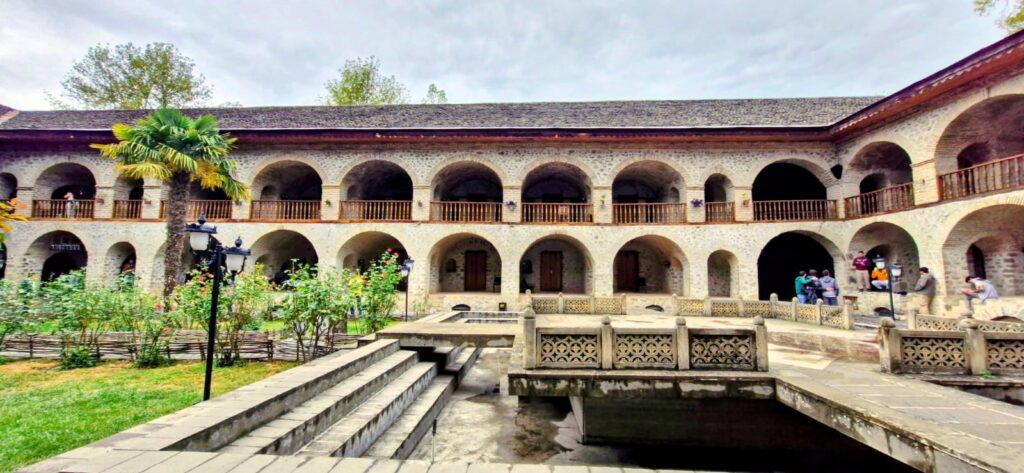
It consists of two parts — the Upper and Lower Karvansaray — each built around a central courtyard.
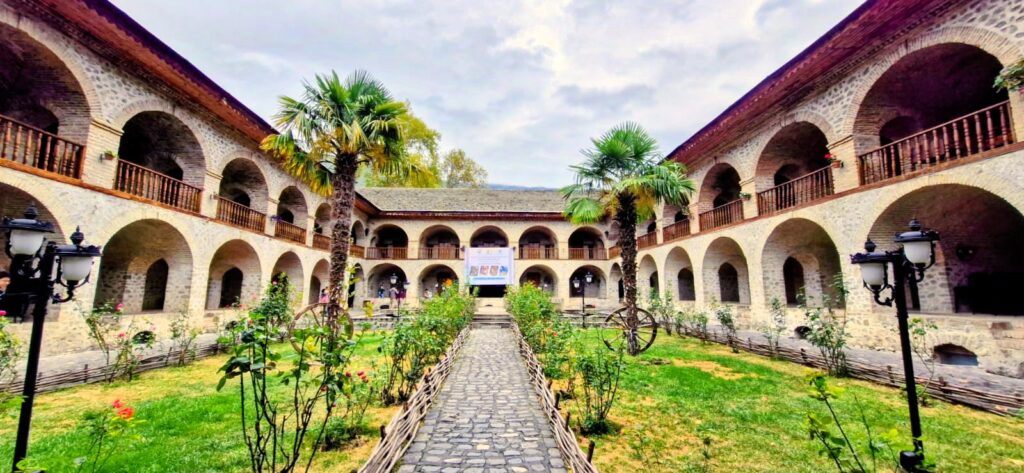
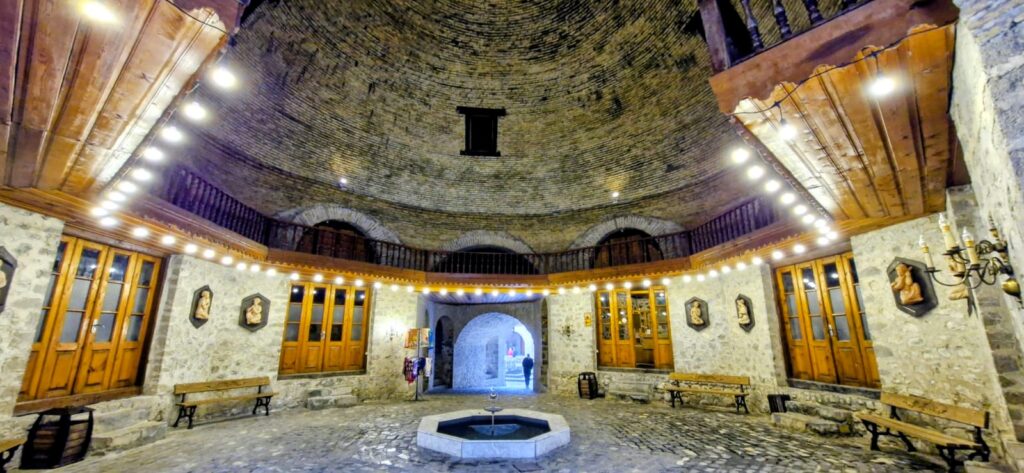
Parts of the complex have now been converted into a hotel and museum, allowing visitors to experience what life might have been like for merchants resting here centuries ago.
We also visited a small but charming Miniature World Museum, where scale models of Sheki’s key buildings are recreated with remarkable craftsmanship.
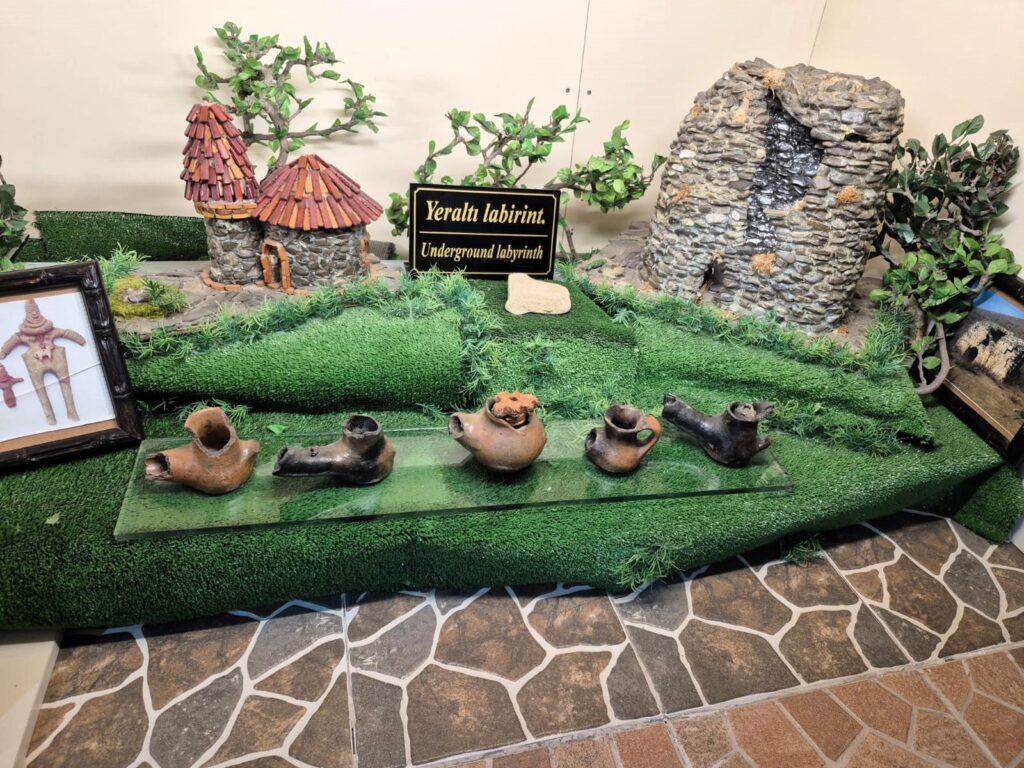
The entry fee was just 2 Manat. The lady at the counter didn’t have change for 5 Manat — a reminder that in small towns, cash is still king — but she was warm and enthusiastic. Though she could hardly speak English, she took the effort to explain every building in the display. Her sincerity stood out.
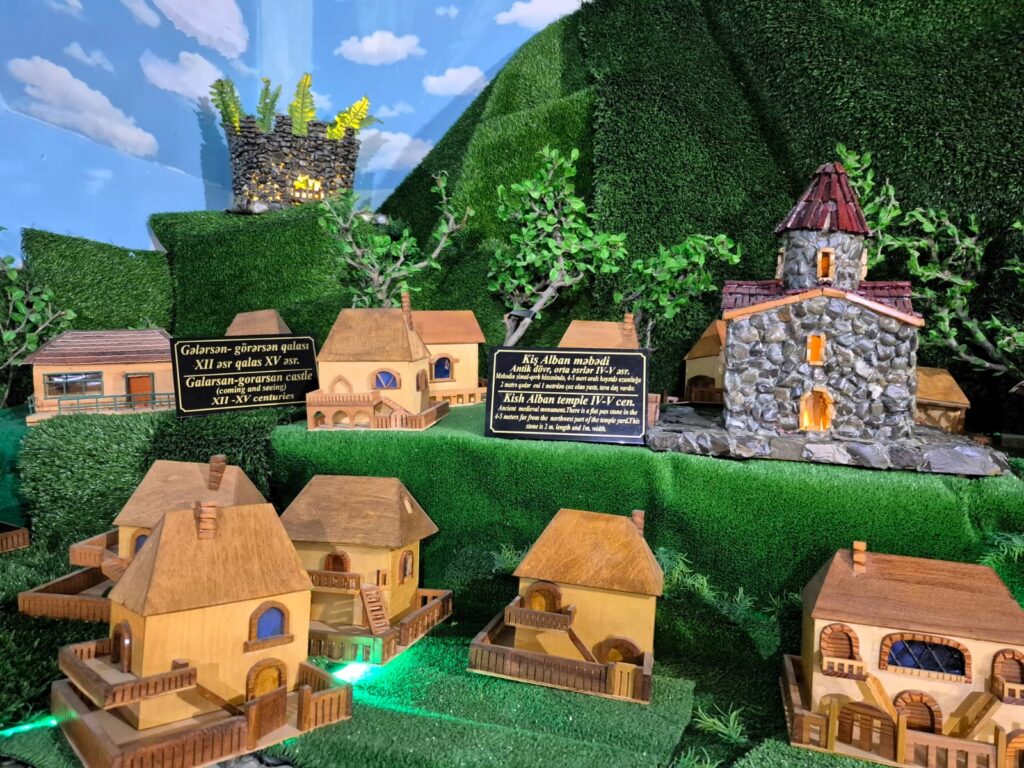
People in Azerbaijan are genuine; they’re not out to overcharge you or take advantage. Even though India and Azerbaijan have political differences, ordinary people here are simple and kind, oblivious to such matters.
Next, we visited the Khan Mosque, built in the 18th century by Muhammadhuseyn Khan. The Khan Mosque (Xan Məscidi) in Sheki dates back to the 18th century, built during the rule of Muhammadhuseyn Khan Mushtaq, one of the last khans of the Sheki Khanate. It stands inside the Sheki Fortress, close to the Palace of the Shaki Khans, and served as the private mosque of the khan and his court.
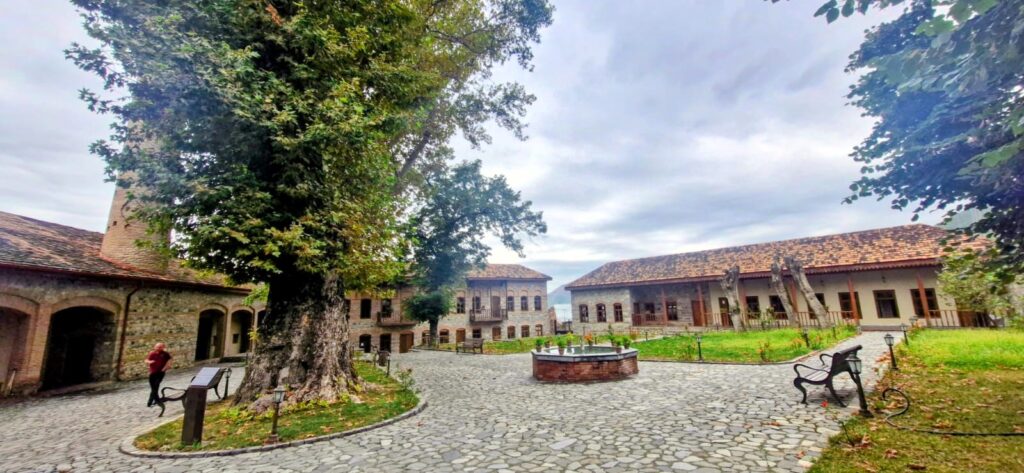
The mosque was constructed using river stones, baked bricks, and local woods such as walnut, plane, and pistachio — materials typical of the region’s architecture. It has a modest but elegant design, with a single dome, tall arched windows, and a graceful minaret that once called worshippers from within the fortress walls.
Our final stop was the Kish Albanian Church, located in the small village of Kish, about 5 km north of Sheki. This ancient stone church is believed to have been founded in the 1st century AD and is often called the “Mother Church of the Caucasus.” It once served as the main spiritual center of Caucasian Albania, the ancient Christian kingdom that existed here long before modern Azerbaijan.
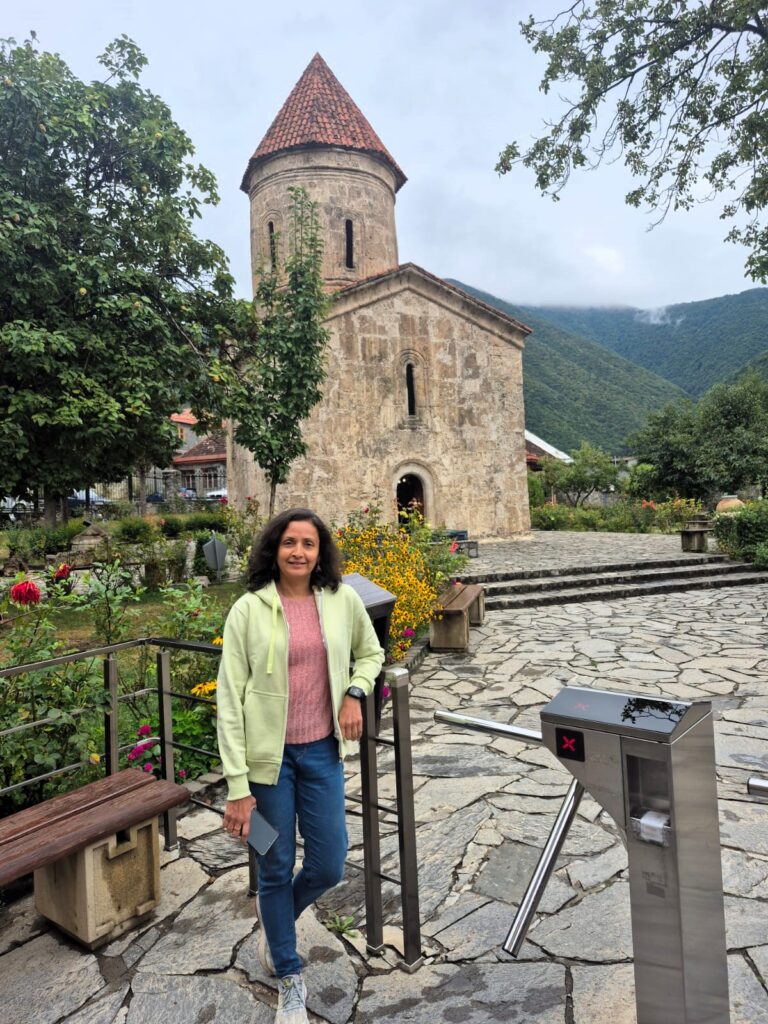
The structure we see today dates largely from the 12th century, rebuilt over earlier foundations. It was carefully restored with help from Norwegian archaeologists in the early 2000s — legend says Thor Heyerdahl, the Norwegian explorer, even visited the site and supported its preservation, intrigued by the possible links between ancient Norse and Caucasian civilizations.
The interior is simple and serene, with sunlight filtering through small arched windows. Excavations inside revealed ancient burial chambers and human remains, displayed now under glass panels on the floor, connecting visitors to centuries of history beneath their feet.
After finishing our sightseeing, we stopped for a late lunch — red lentil soup, salad, and more tendir bread. A half loaf of bread is usually served complimentary with every meal. Chai, as always, accompanied it. The meal cost 19 Manat and was simple, healthy, and satisfying.
By around 2 p.m., we began our drive back to Baku — a journey of about 350 km that took roughly five and a half hours. The road was good for most parts, except for a 30–40 km stretch under construction.
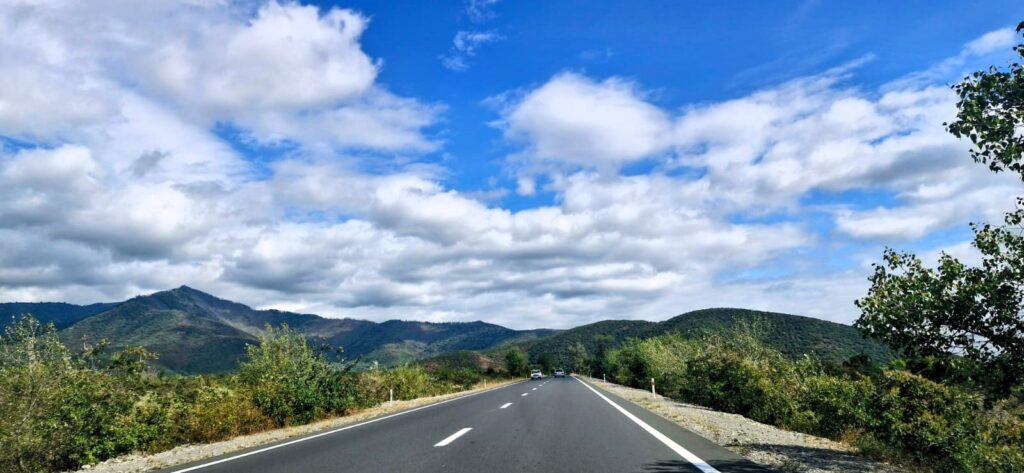
Driving in Azerbaijan was an experience in itself — a mix between the discipline of Western countries and the chaos of India. Drivers respect red lights and roundabouts, and there’s no honking. But overtaking is done impatiently and often recklessly, with cars tailgating or squeezing into narrow gaps. On highways, many stretches don’t even have lane markings. Outside the city, driving is smooth; inside Baku, especially during rush hour, it can get harrowing.
Petrol is cheap here — around 1.10 Manat per liter (₹60) — 92 octane.
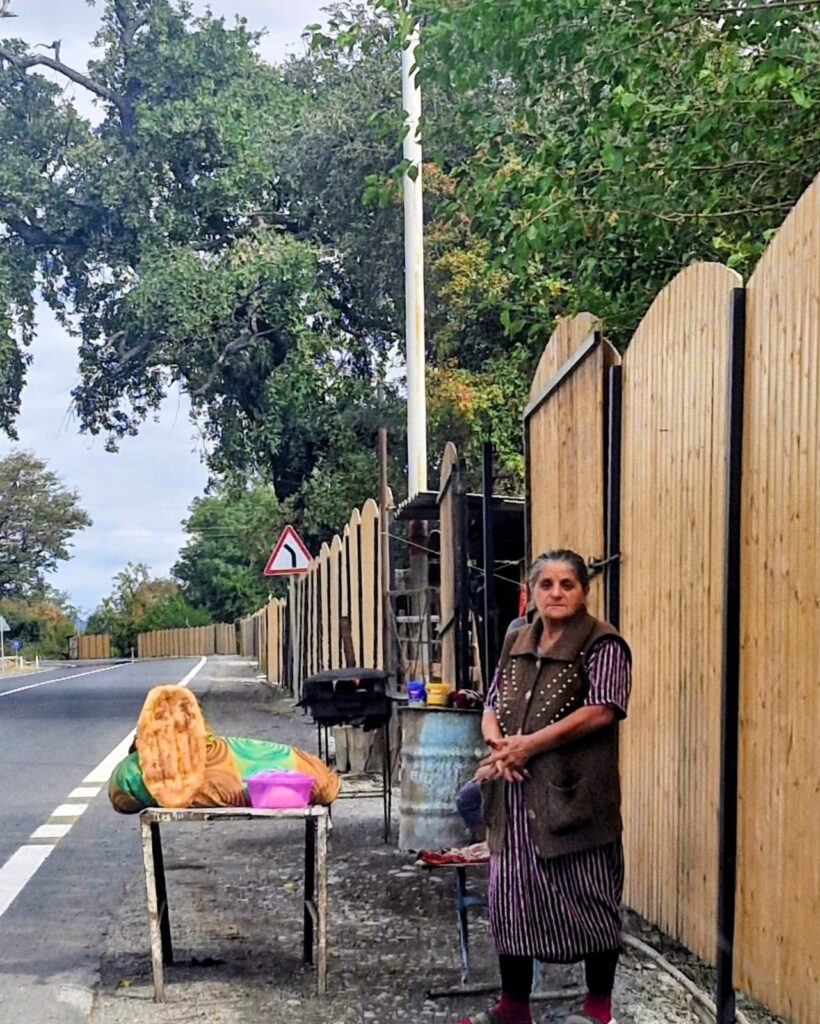
Along the highways, women sell tendir bread outside their homes.
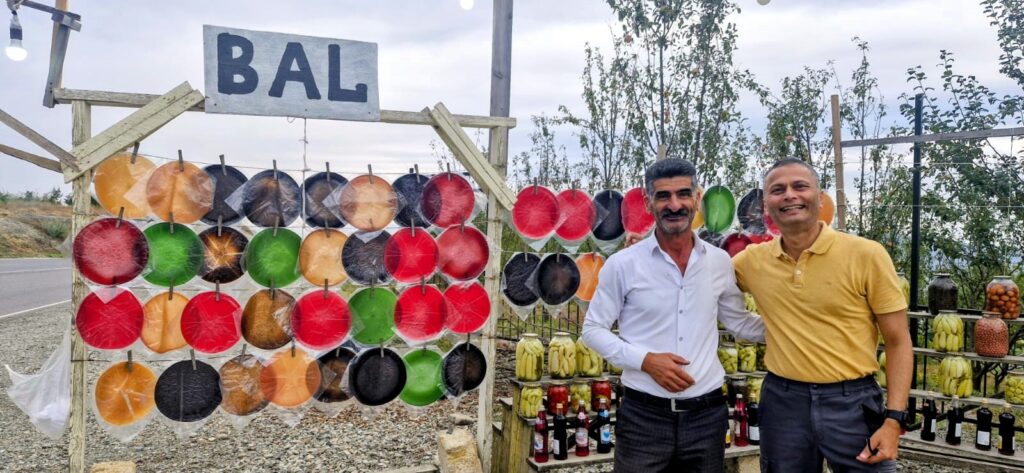
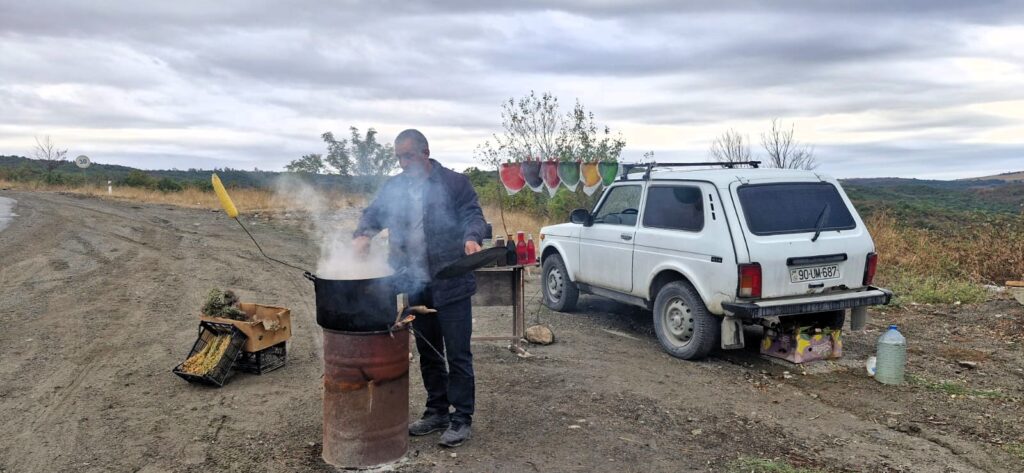
Small roadside stalls offer fruit papad made from pomegranate, apricot, and kiwi, or boiled corn and hazelnuts, each for about 2 Manat. It reminded us a lot of India, where people set up simple stalls along the road.
In Baku city, in traffic, people were selling balloons in the middle of heavy traffic.
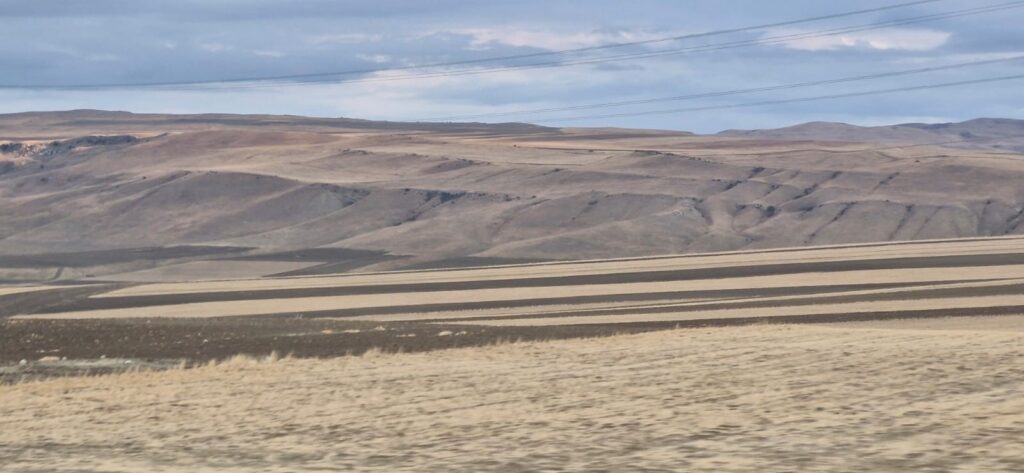
We returned our rental car around 9 p.m. and checked into our hotel. It had been a long but rewarding day — a journey through history, faith, and genuine human warmth.
Day 3: Sunday, September 14 — Exploring Baku Old City, Culture & Streets
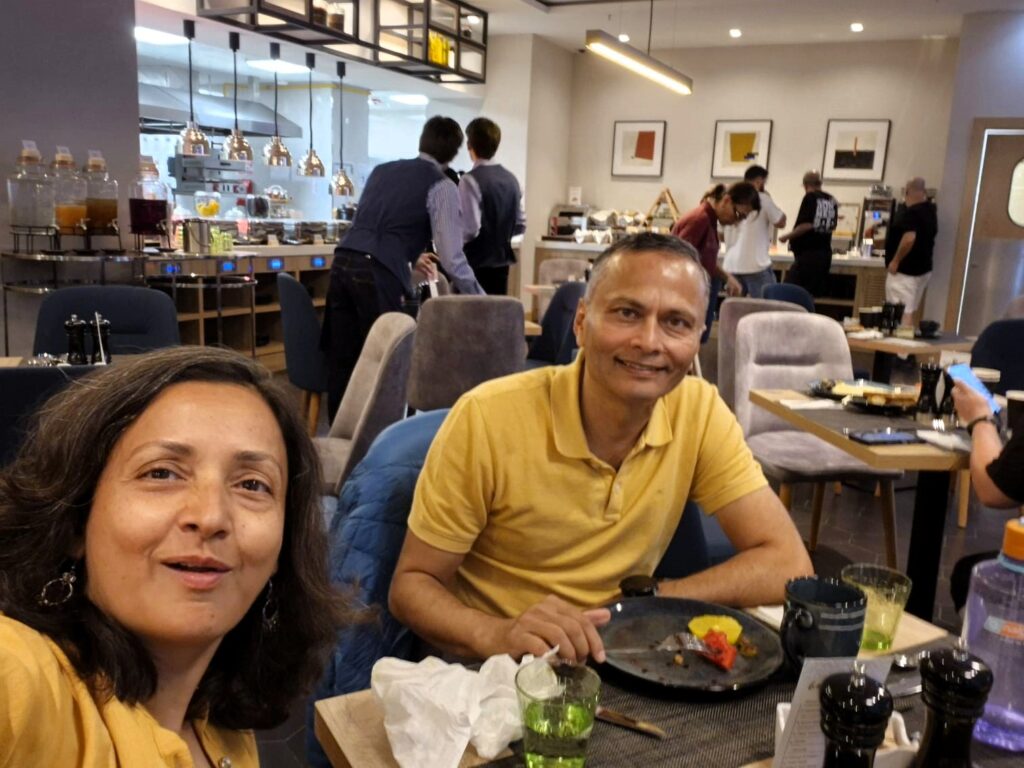
We started our day with a leisurely breakfast at the Hilton Garden Inn Hotel at around 9 am.
We took a free walking tour of Baku Old City, with Gani as our guide.
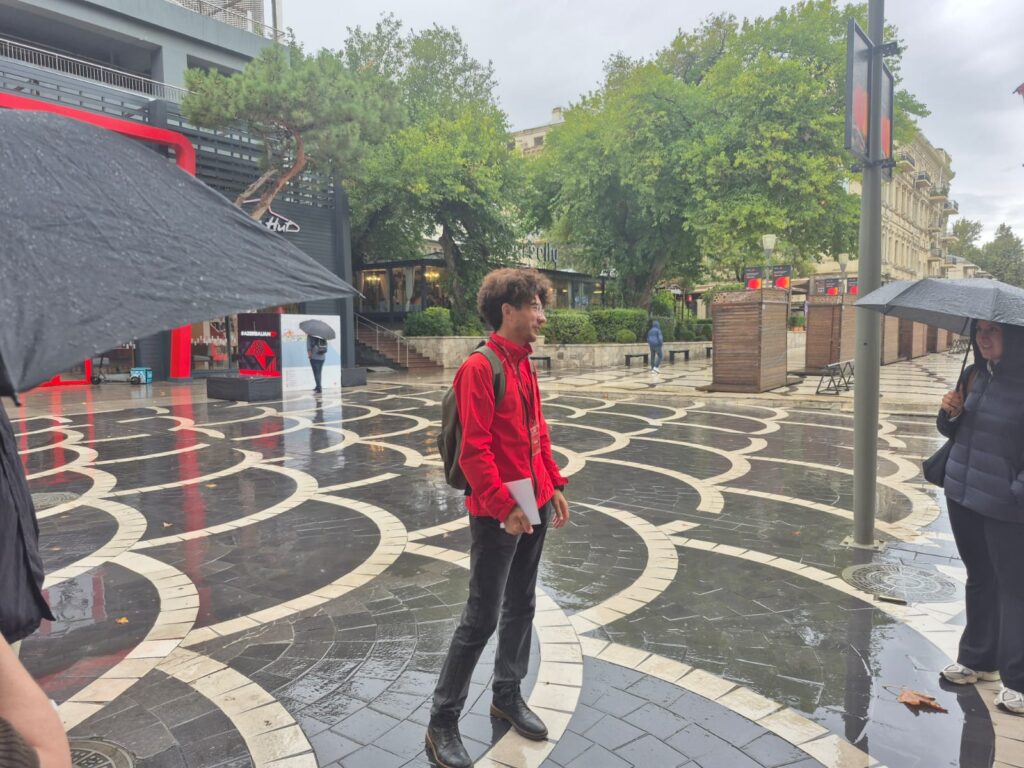
Our first stop was the Twin Fortress Gates, the symbolic entrance to Old Baku. These gates once protected a city that was no larger than a few square kilometers, encircled by tall defensive walls built in the 12th century.
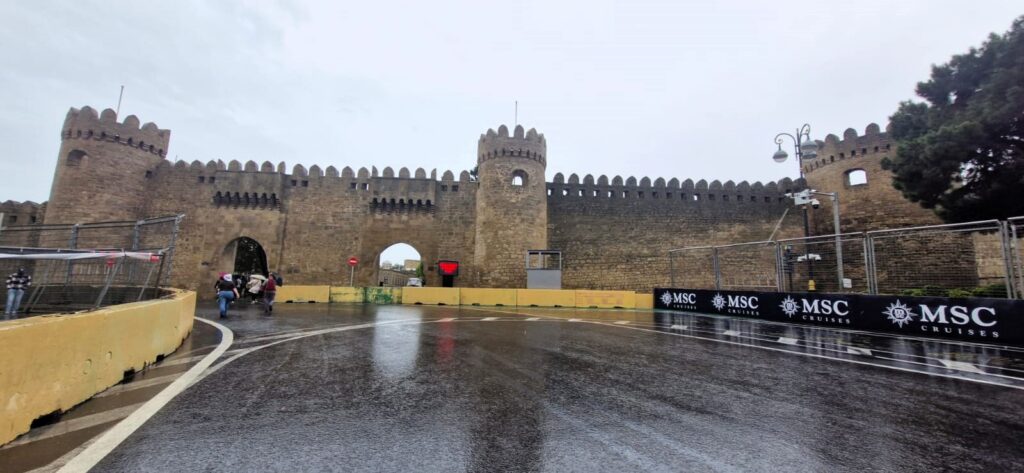
The gates are made from golden limestone, still bearing the scars of time and battle. Standing there, you can almost imagine camels entering with goods, merchants greeting guards, and the air filled with the smell of spices and the sea. Until the late 1800s, this was all Baku was — a small port town, quiet and self-contained, before oil turned it into one of the richest cities of the Russian Empire.
From there, we walked toward the Maiden Tower, Baku’s most famous landmark and one of its great mysteries.
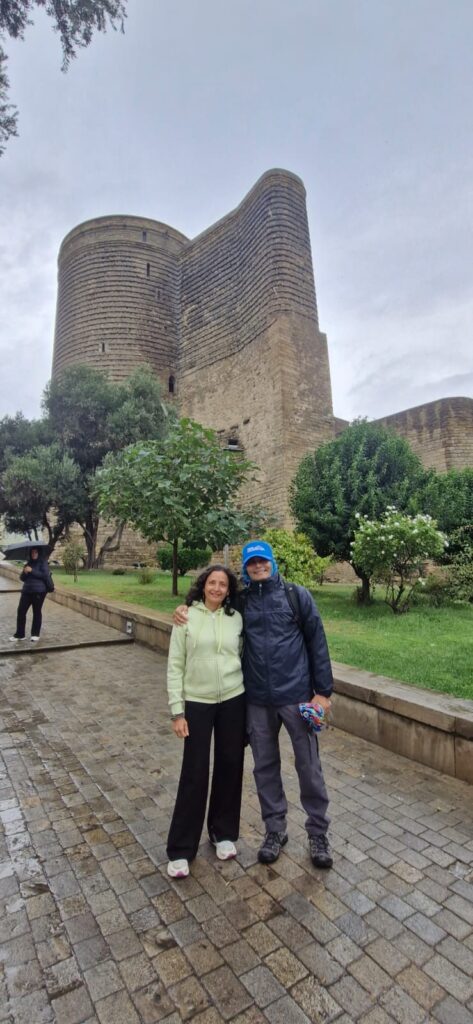
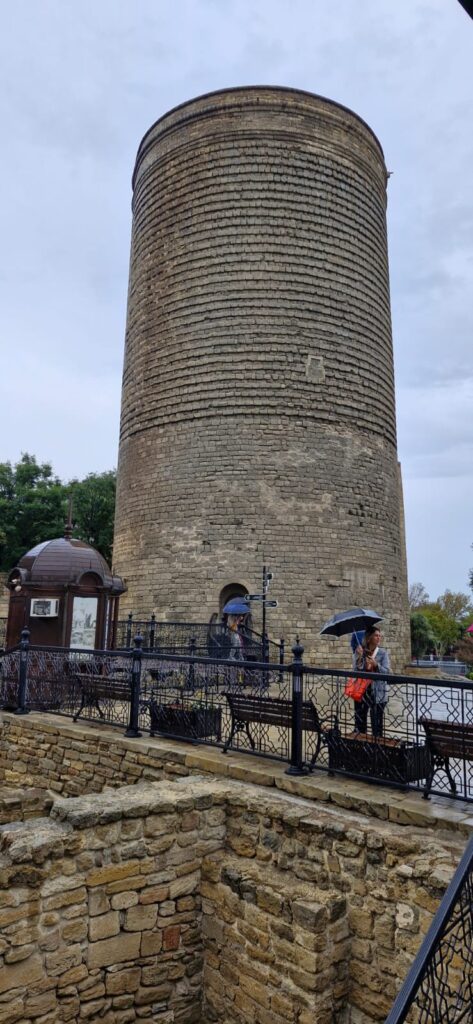
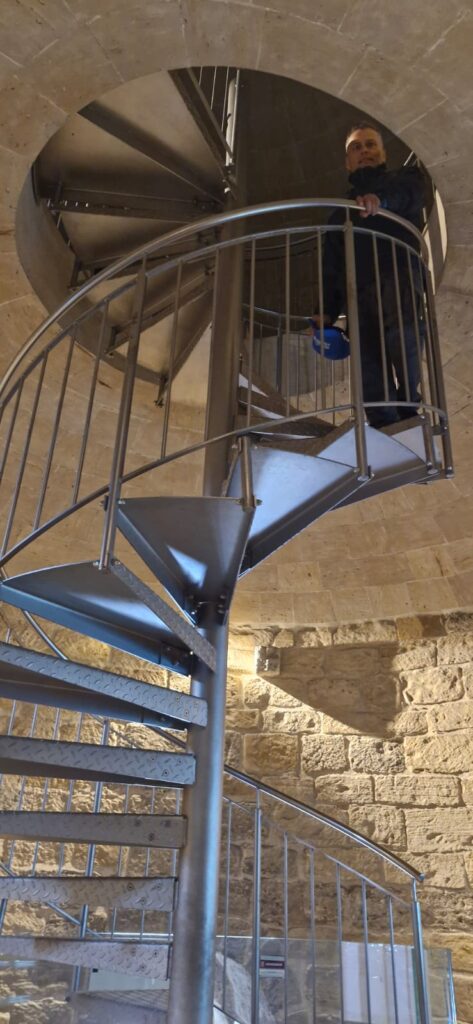
Built between the 12th and 13th centuries, the tower rises about 29 meters with eight floors inside, connected by a narrow spiral staircase. Historians still debate its original purpose — whether it was a fire temple, an astronomical observatory, or a fortress. One legend says it was never captured, which is why it is called “Maiden.” Another tells the story of a princess who threw herself from its top to escape an unwanted marriage.
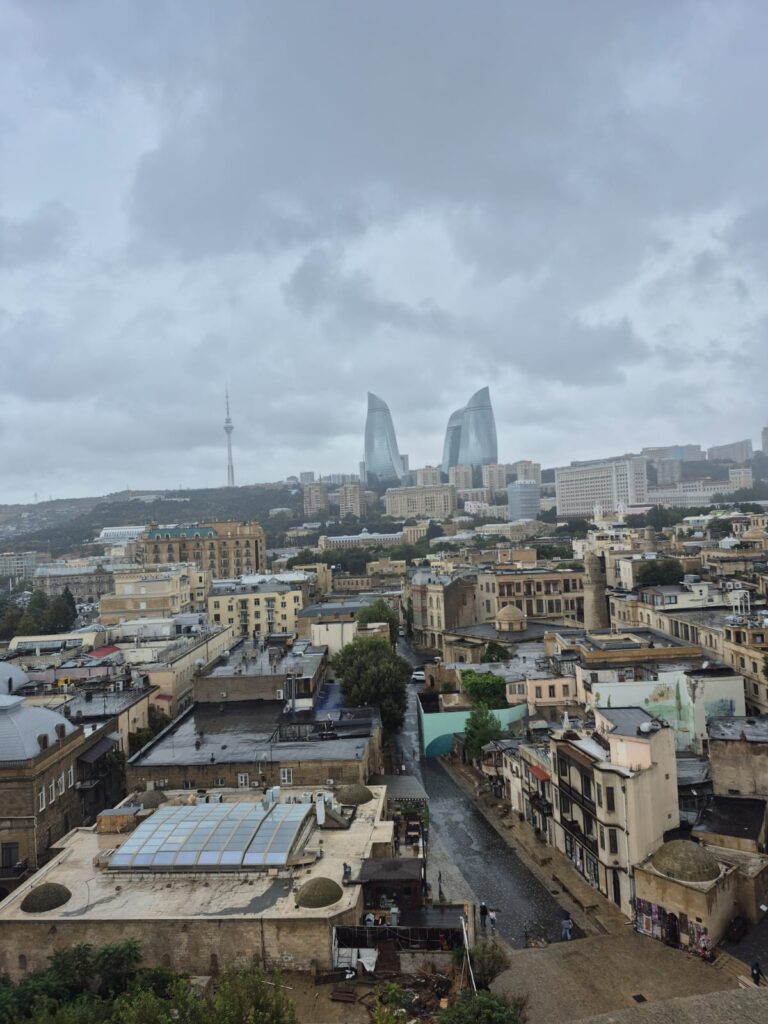
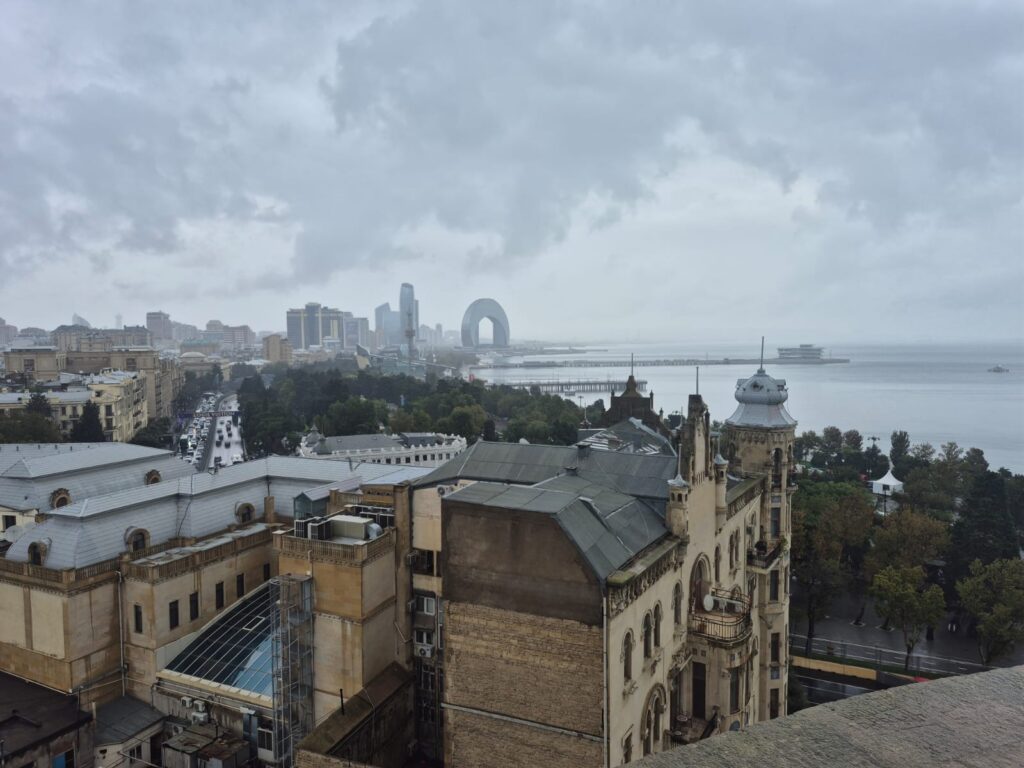
The tower’s thick stone walls keep the heat out and offer panoramic views from the top. It’s a view that perfectly captures the contrasts of Baku — ancient and futuristic at once.
Next, we passed an old hammam, now converted into a souvenir shop. Once, these bathhouses were where life in Baku unfolded — people met, talked, negotiated, and relaxed.
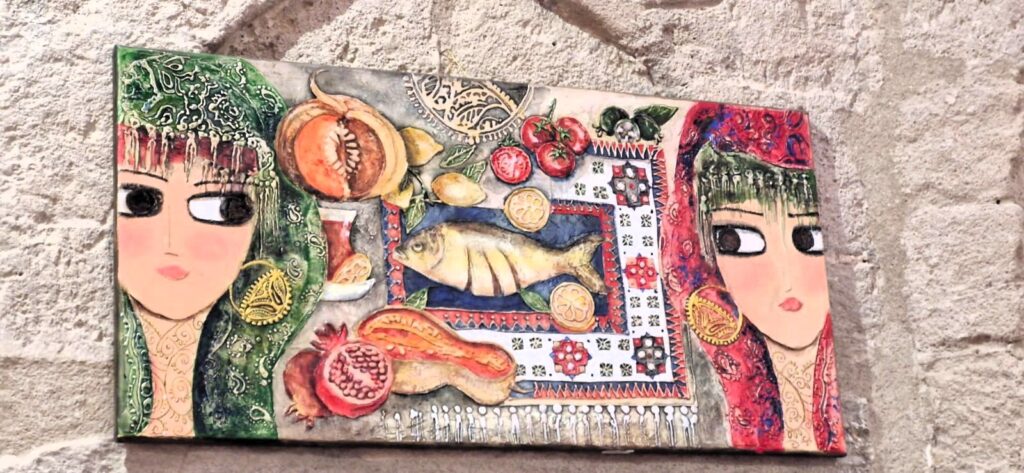
Hammams were the social centres of the city, divided by day for men and women, with domed ceilings and hot marble floors.
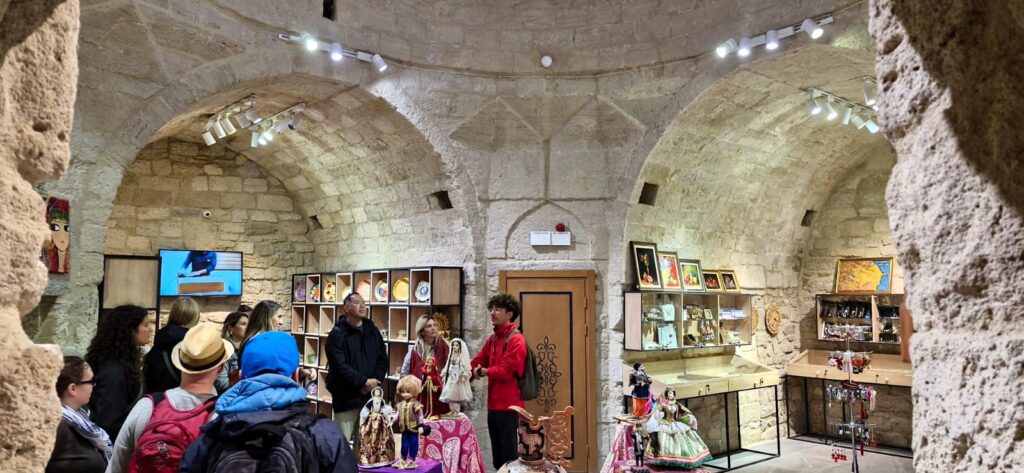
Even in its new role, the building still holds the feel of those conversations that must have once echoed through the steam.
As we continued walking, the Flame Towers came into view. These three skyscrapers, completed in 2012, rise like tongues of fire — 182 meters of glass and steel shaped to reflect Azerbaijan’s ancient identity as the “Land of Fire.” The country’s name itself comes from the word “Azer,” meaning “flame.” Natural gas vents that burned endlessly in the hills around Baku inspired the Zoroastrian temples that once stood here. Today, the Flame Towers carry that legacy in a modern form — at night, LEDs light up their curved façades with shifting patterns of red, orange, and blue, like flickering fire seen from afar.
As we continued walking, the Flame Towers came into view. These three skyscrapers, completed in 2012, rise like tongues of fire — 182 meters of glass and steel shaped to reflect Azerbaijan’s ancient identity as the “Land of Fire.”
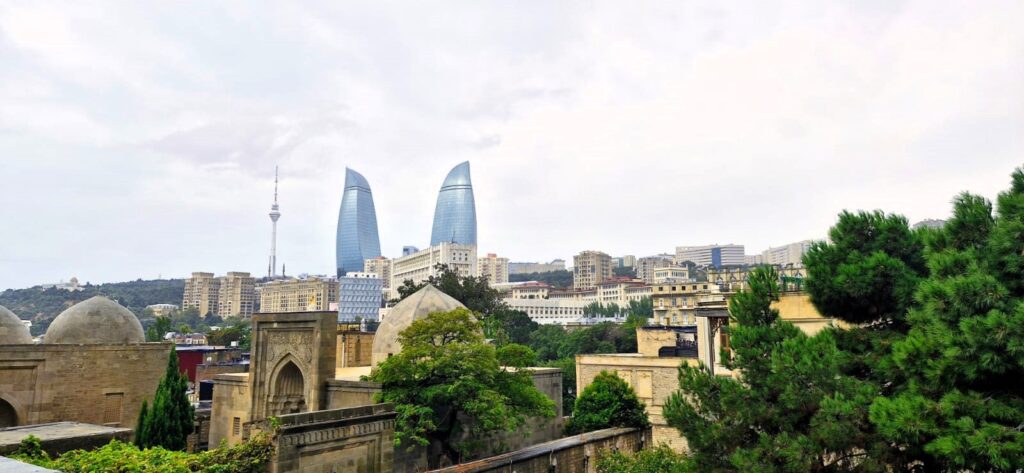
The country’s name itself comes from the word “Azer,” meaning “flame.” Natural gas vents that burned endlessly in the hills around Baku inspired the Zoroastrian temples that once stood here. Today, the Flame Towers carry that legacy in a modern form — at night, LEDs light up their curved façades with shifting patterns of red, orange, and blue, like flickering fire seen from afar.
Our guide Gani, open and easy to talk to, spoke about politics too. I asked him about Azerbaijan’s support for Pakistan in recent times, given the tension with India. He explained it simply: Pakistan supported Azerbaijan during its war with Armenia over Nagorno-Karabakh, and Turkey, their close ally, has always sided with Pakistan — so the alignment followed naturally. It wasn’t ideological, he said, just practical politics. It was interesting to hear a straightforward, local view of what we usually see through headlines.
From there, we reached the Palace of the Shirvanshahs, a UNESCO World Heritage Site and one of the great architectural treasures of Azerbaijan. Built in the 15th century when an earthquake forced the Shirvan dynasty to move their capital from Shamakhi to Baku, the palace complex includes the royal residence, a mosque, a bathhouse, and a mausoleum.
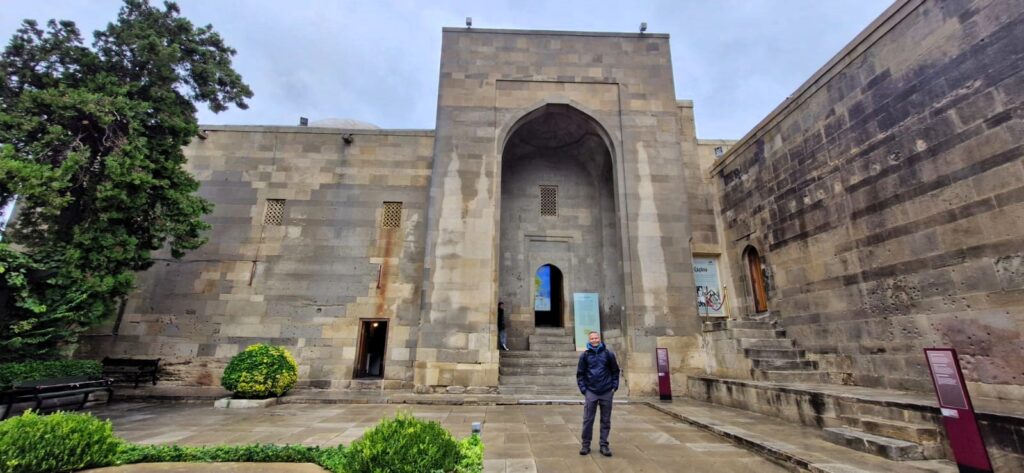
Its honey-colored stone glows warmly even under grey skies. Intricate carvings, Arabic inscriptions, and geometric patterns adorn its arches and doorways.
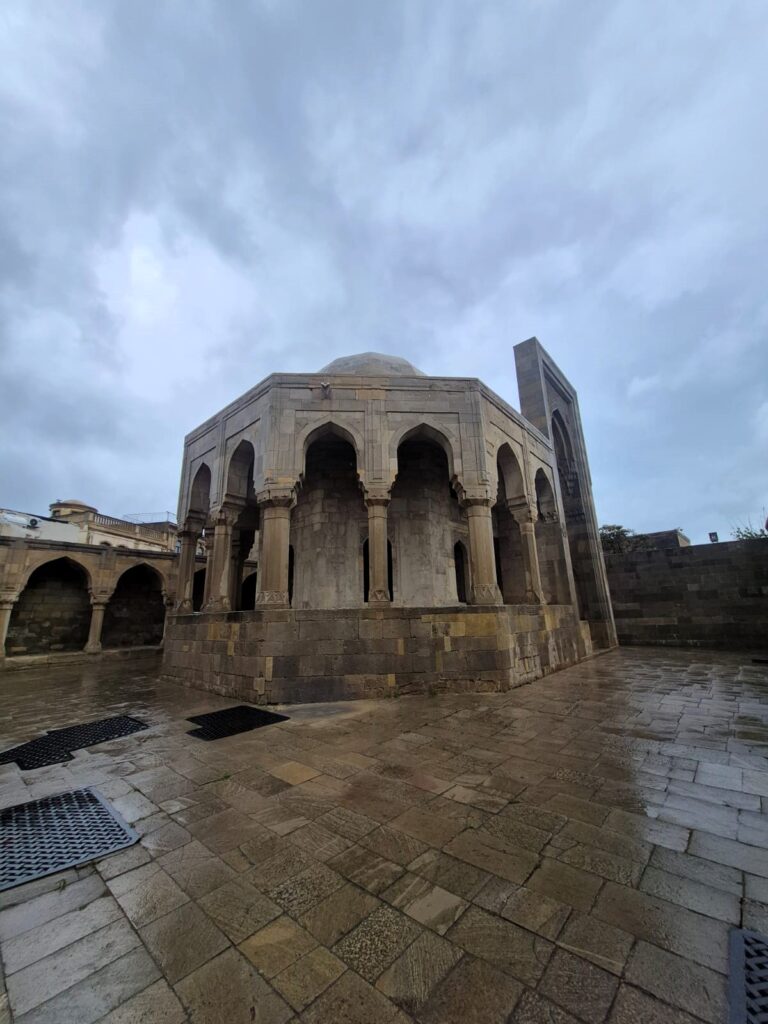
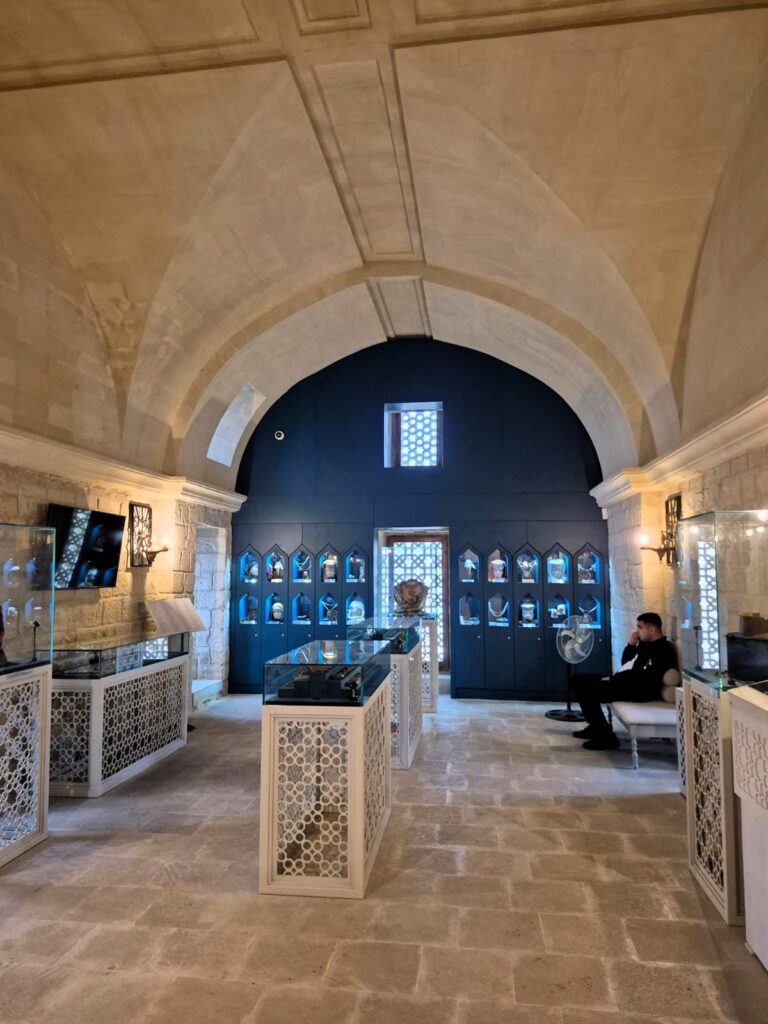
The architecture combines Persian and Islamic influences, but it feels uniquely Azerbaijani — refined yet grounded. The palace is often called “the pearl of Baku’s architecture,” and walking through its quiet courtyards, it’s easy to see why.
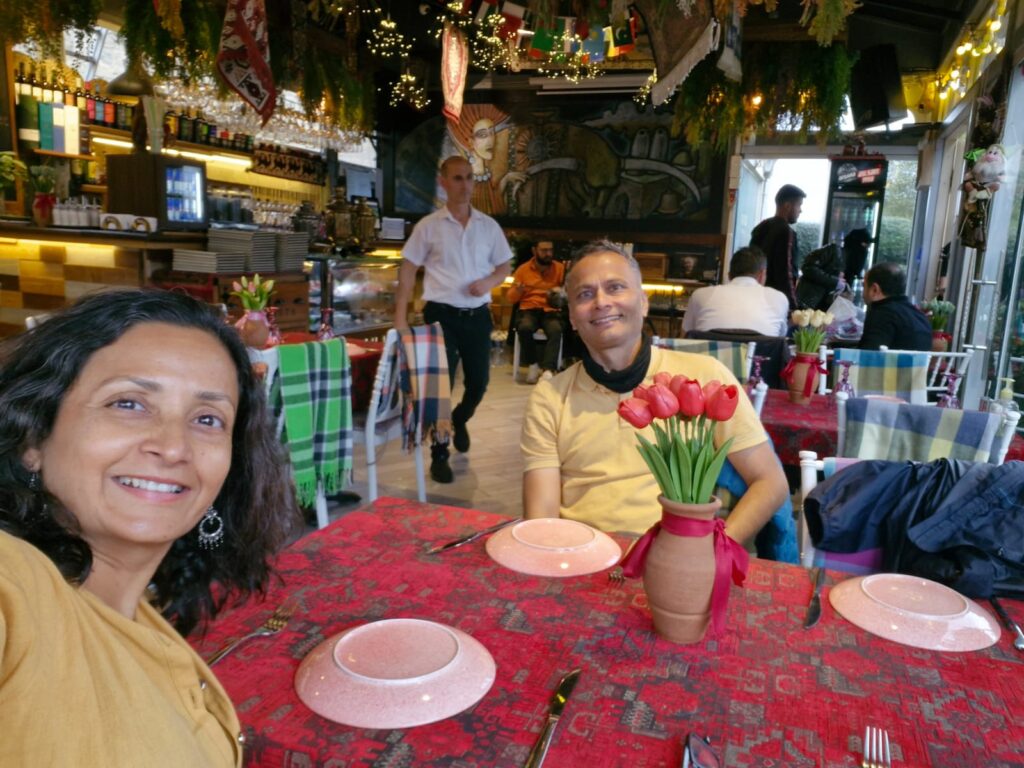
We stopped for lunch at a small café — lentil soup, fresh bread, hummus, and baba ghanoush. Simple food, but the kind that warms you when it’s raining outside.
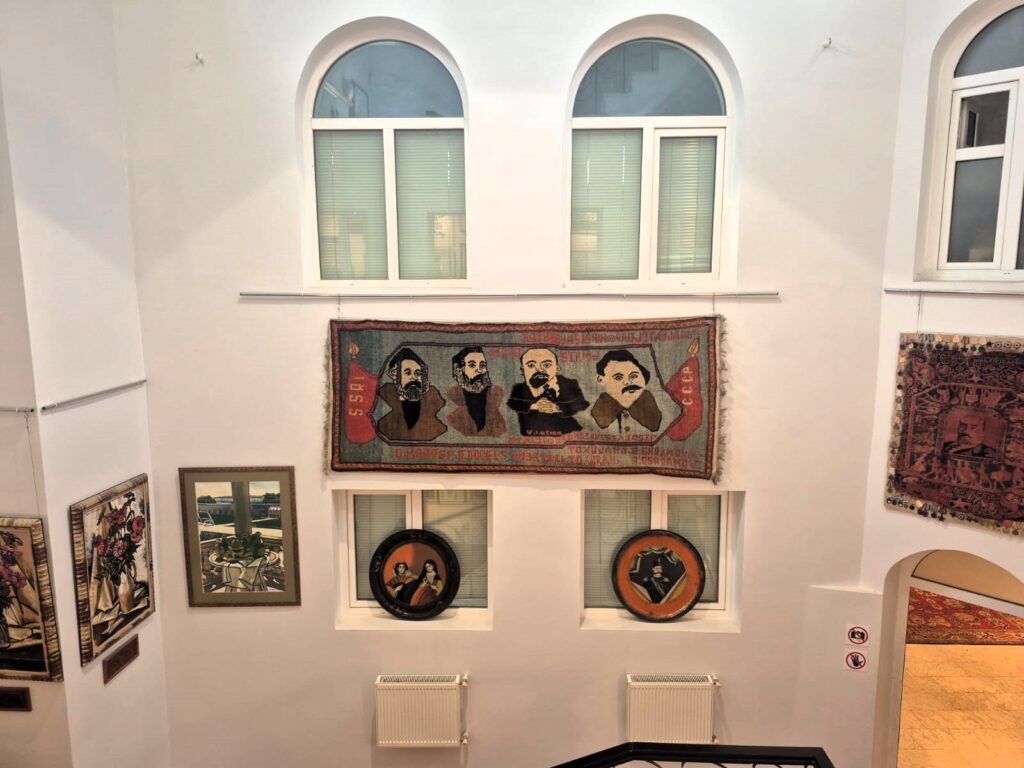
After lunch, we visited the Tahir Salahov Museum, dedicated to the renowned Azerbaijani painter. Tahir Salahov (1928–2021) was one of the most important figures of Soviet art, known for developing the “Severe Style.” This movement rejected propaganda-like cheerfulness and instead portrayed real people — workers, musicians, and thinkers — with strength and restraint.
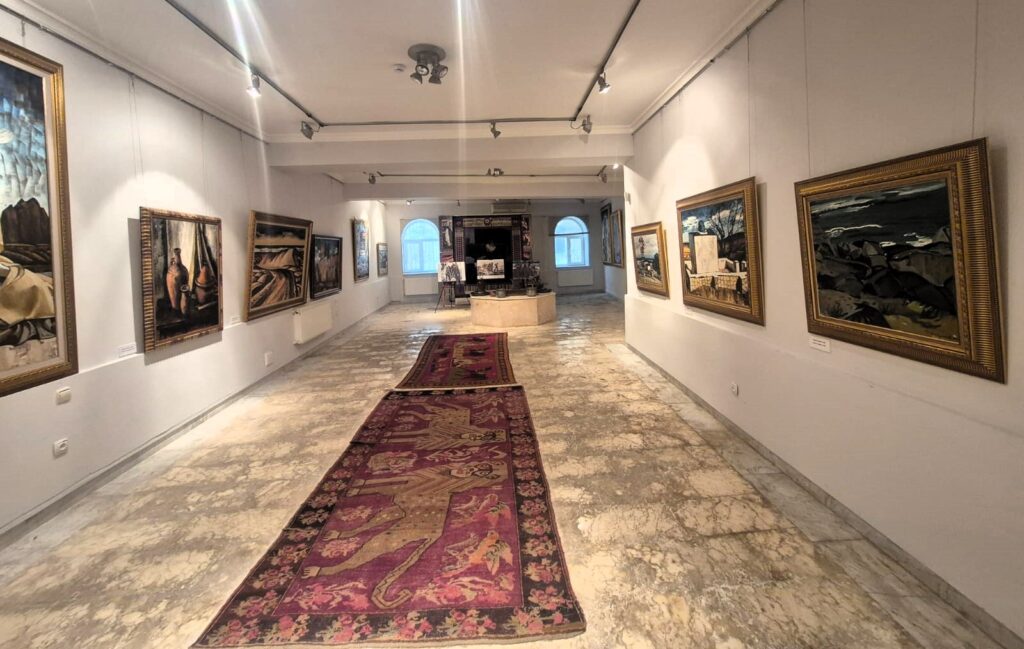
Salahov’s portraits are powerful, his brushstrokes bold and honest. The museum houses both his early Soviet-era work and later paintings, more colourful and expressive, created after Azerbaijan’s independence. His career is almost a visual chronicle of the nation’s transition from Soviet republic to modern state.
Before leaving the Old City, we visited the underground hammam baths nearby. Our guide shared an interesting custom — when a red cloth hung outside the hammam, it signalled that it was “women’s day.” On those days, women would gather to bathe, gossip, and show jewelry, sometimes even arrange marriages for their sons.
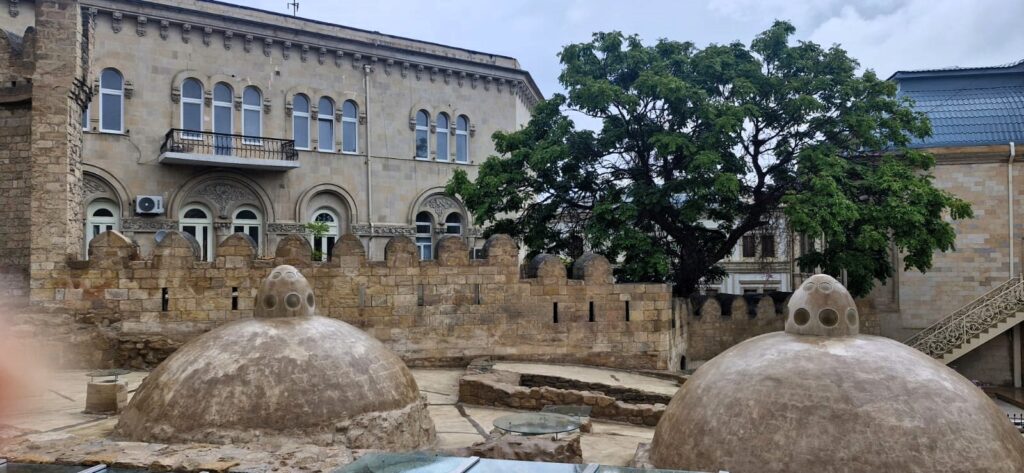
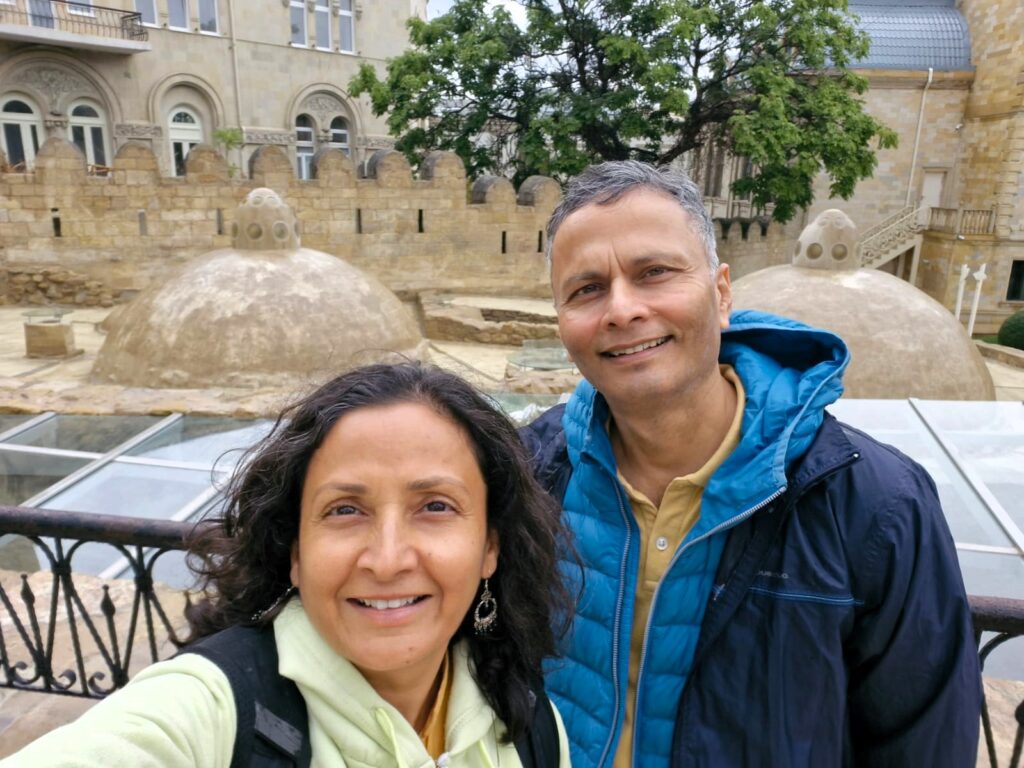
It was a charming insight into the social life of another time.
We left the Old City around 3:15 p.m. and walked through streets being prepared for the Azerbaijan Grand Prix scheduled for September 20–21. Workers were setting up tall fences and safety nets, transforming the city into a racing circuit. Even the calm sea breeze felt charged with anticipation.
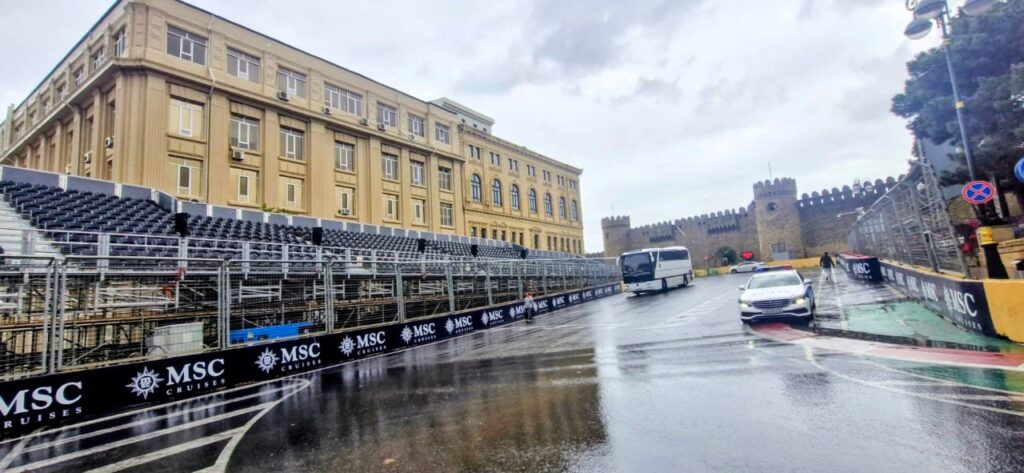
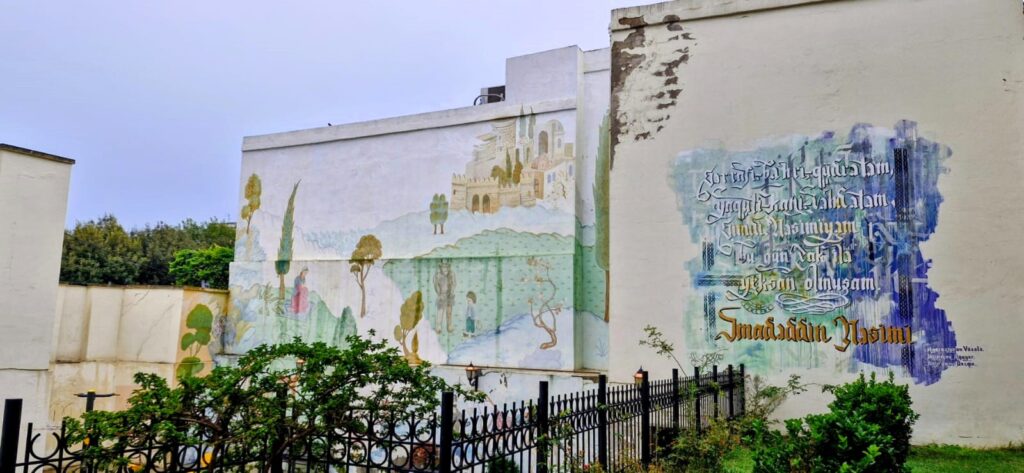
We passed the Ismailiyya Palace, one of the finest buildings from Baku’s oil boom era. Completed in 1913, it was commissioned by oil baron Musa Naghiyev in memory of his son Ismail, who died young. The architect, Józef Ploszko, designed it in a Venetian Gothic style, inspired by palaces along the Grand Canal in Venice.
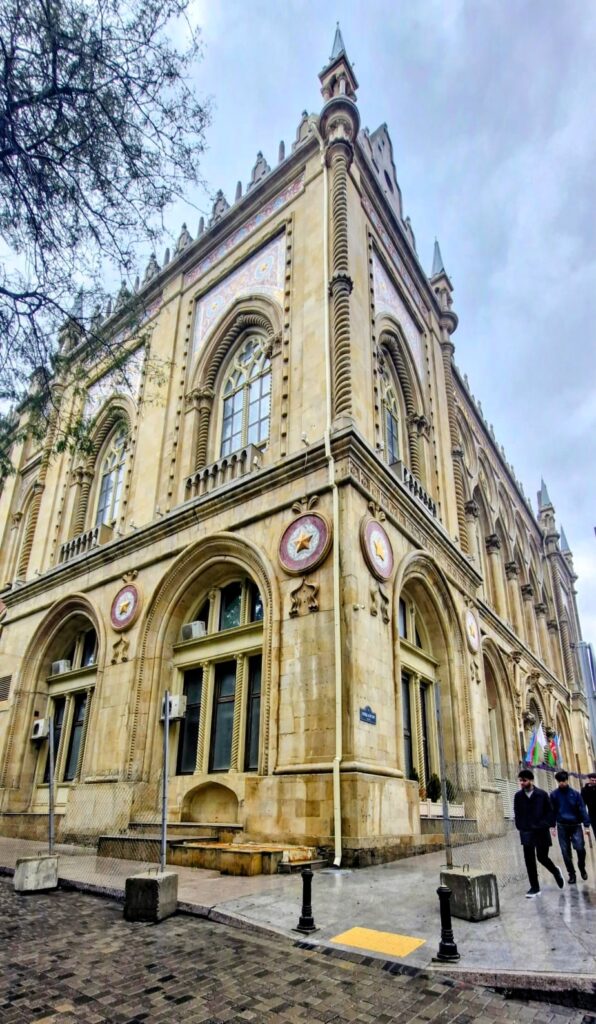
Its intricate stone carvings and arched windows make it look more Italian than Eastern. Today, it houses the Presidium of the Academy of Sciences, but even from the street, it’s impossible not to pause and admire the craftsmanship.
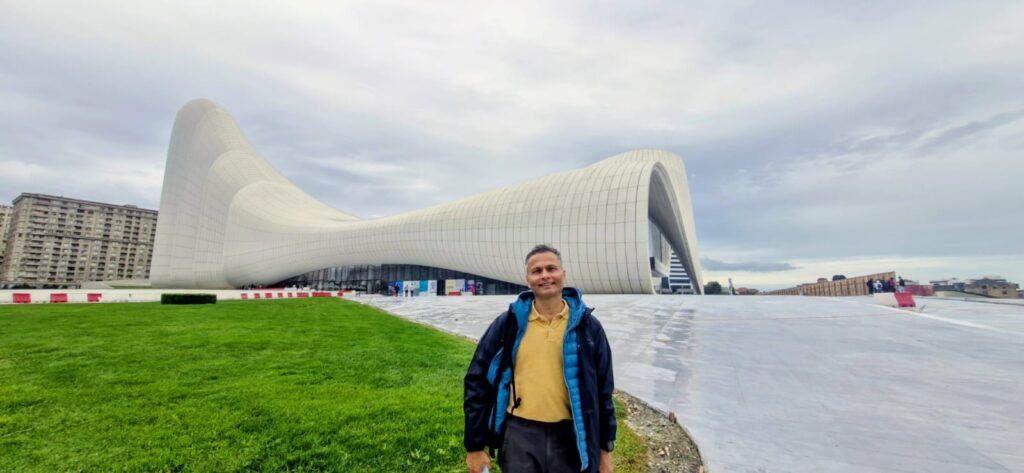
From there, we headed to the Heydar Aliyev Cultural Center, a futuristic white structure that curves and folds into itself without a single straight line.
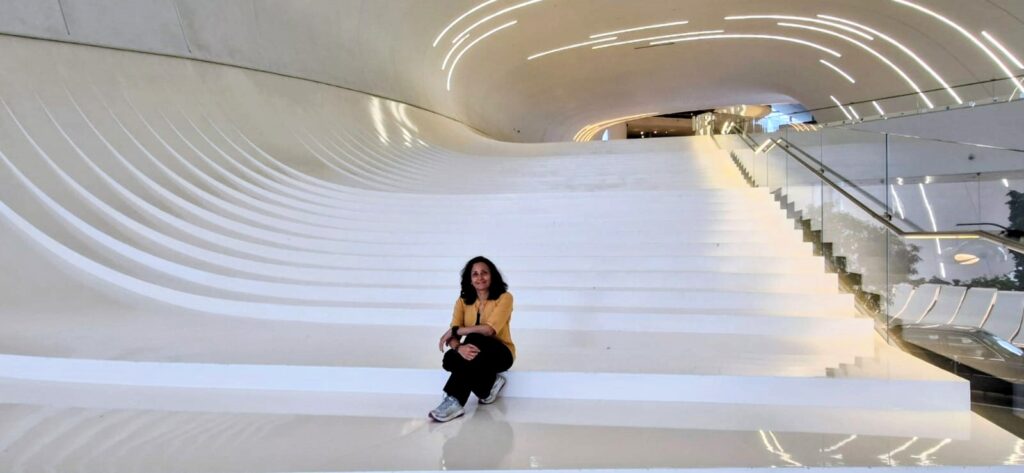
Designed by the world-renowned architect Zaha Hadid, the building was completed in 2012 and immediately became a symbol of modern Azerbaijan.
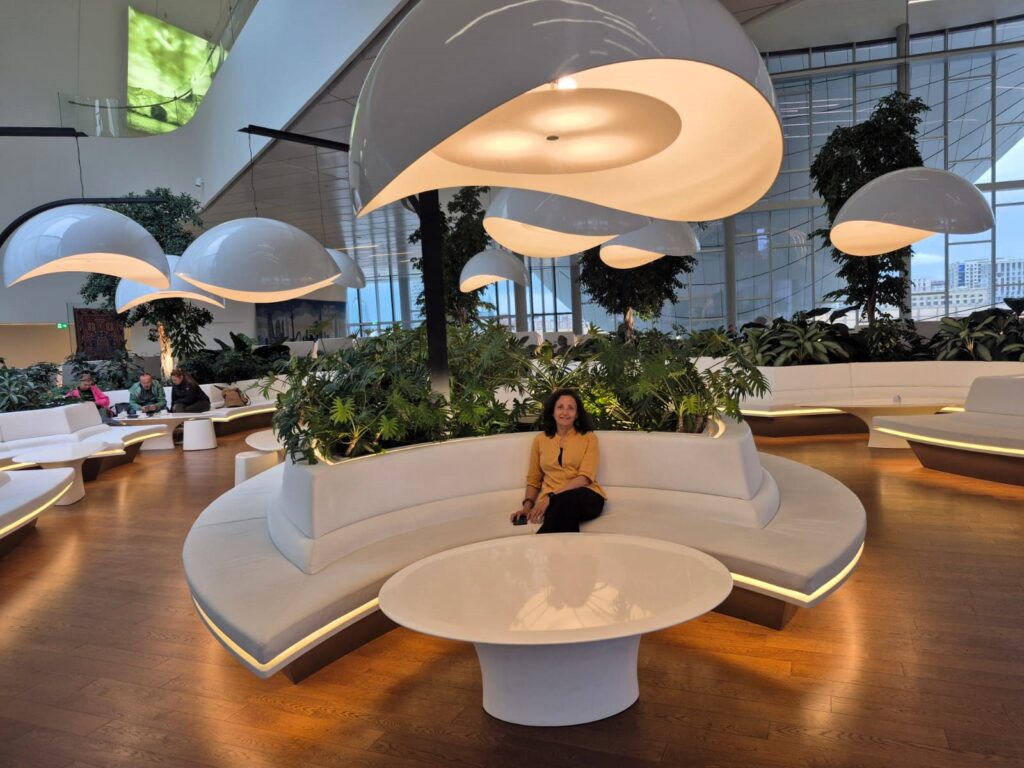
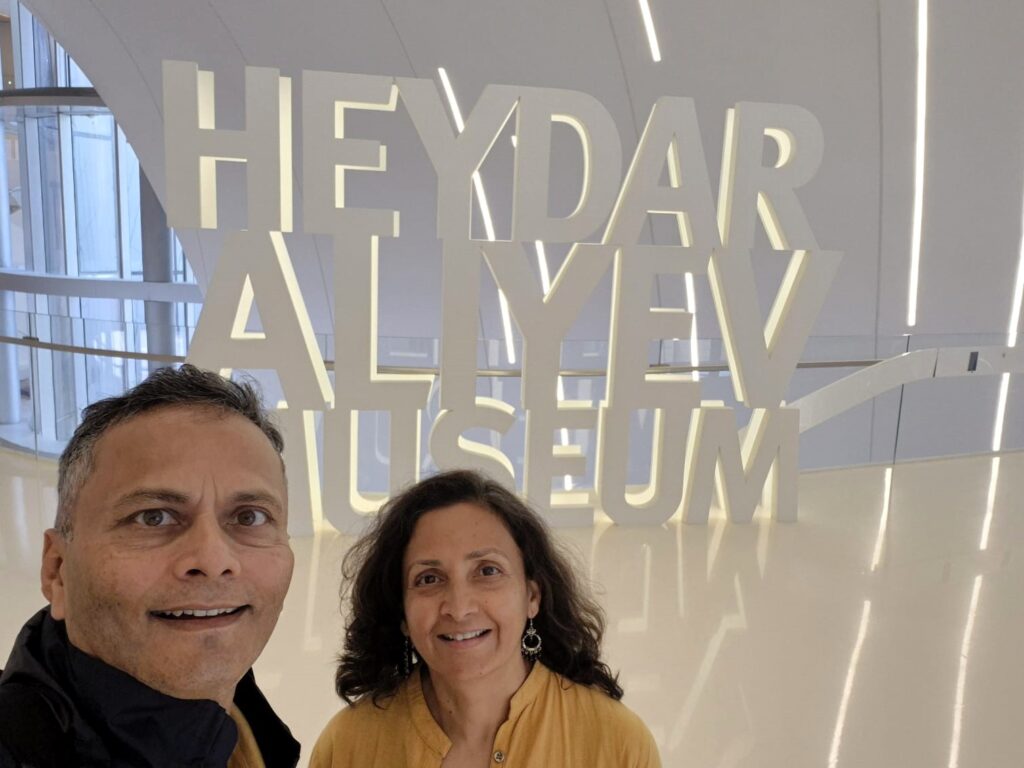
Inside, the vast spaces are filled with exhibitions on Azerbaijani culture — traditional costumes, carpets, sculptures, musical instruments, and even classic cars.
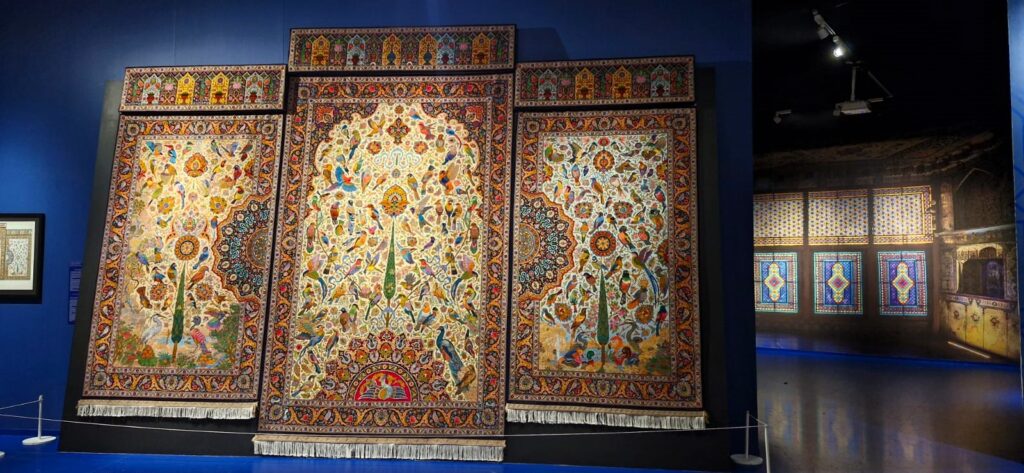
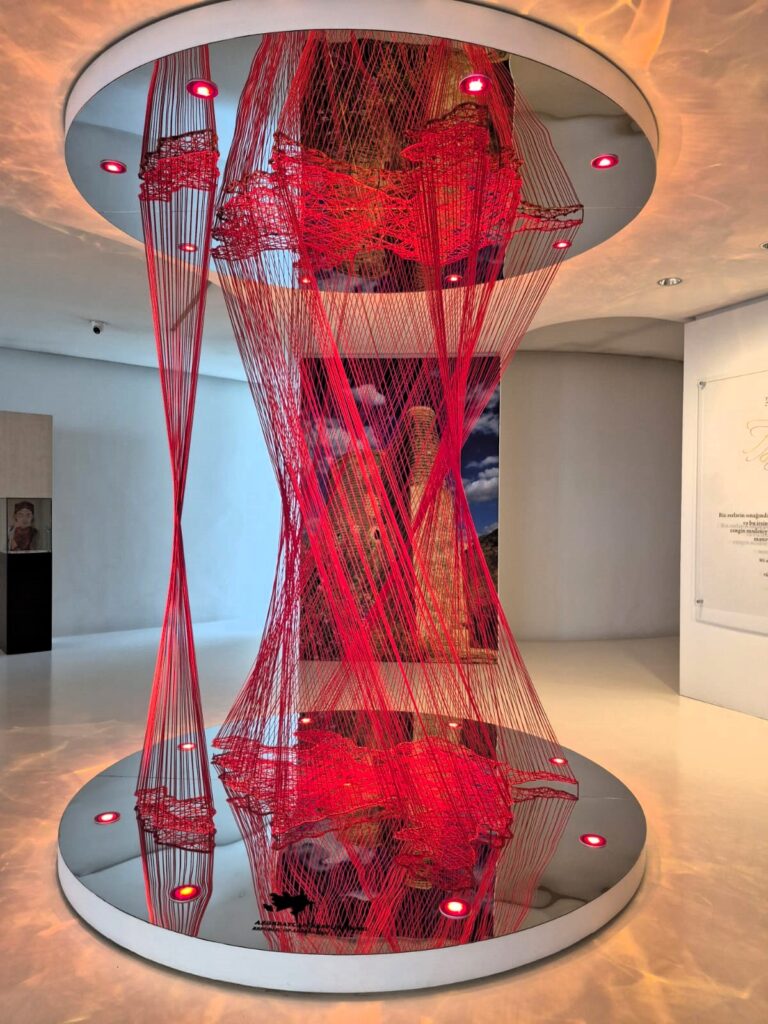
The center is named after Heydar Aliyev, the leader who guided Azerbaijan through its Soviet and early independent years. The combination of scale, light, and design inside the center is remarkable — both a museum and a statement about the country’s ambitions.
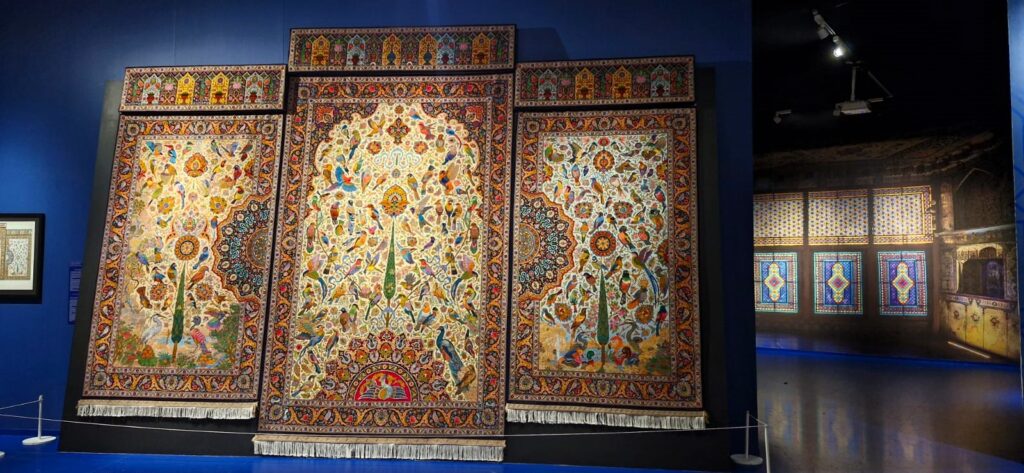
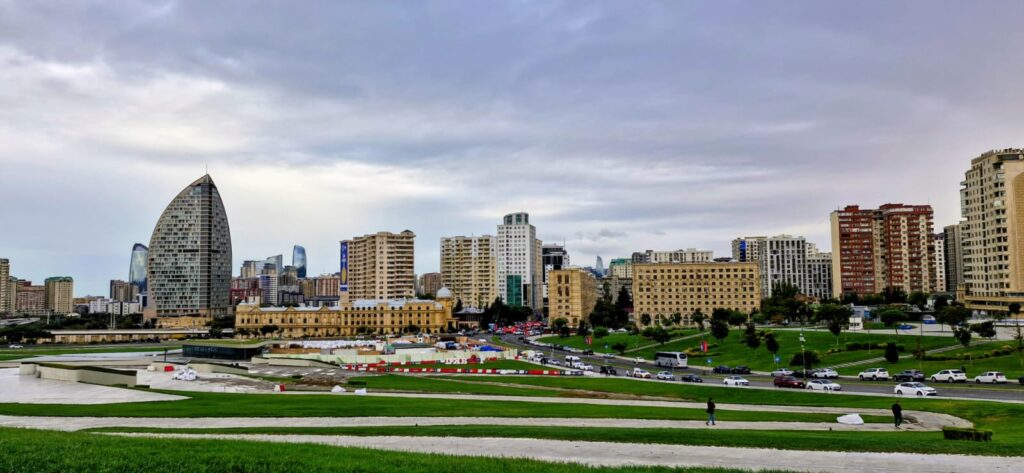
We moved around Baku using Yango and Bolt taxis throughout the day. They were quick, clean, and extremely affordable — most rides cost just $2–3, and a trip to the airport about $10.
In the evening, we wandered down Nizami Street, a long pedestrian avenue named after the 12th-century poet Nizami Ganjavi.
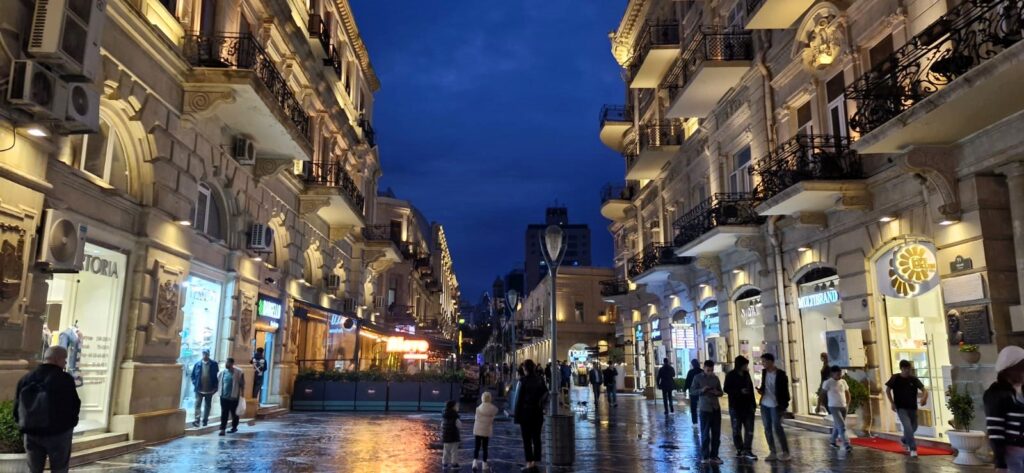
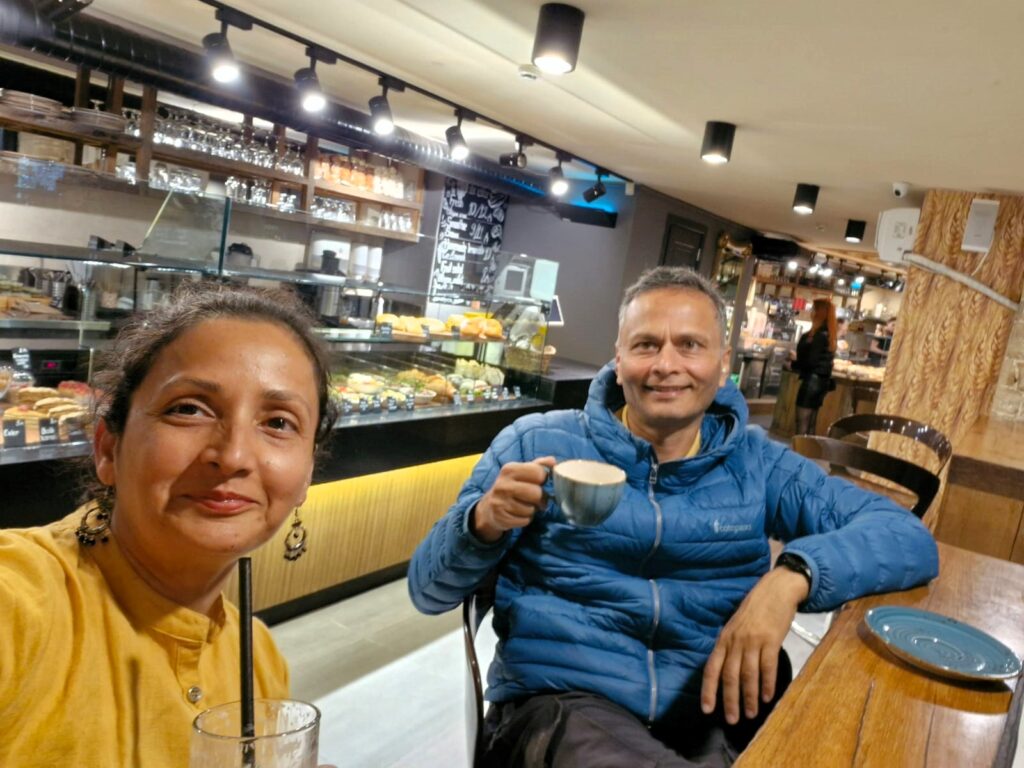
We stopped for a short break at a café called Entree — Anu had an iced latte while I had some chai.
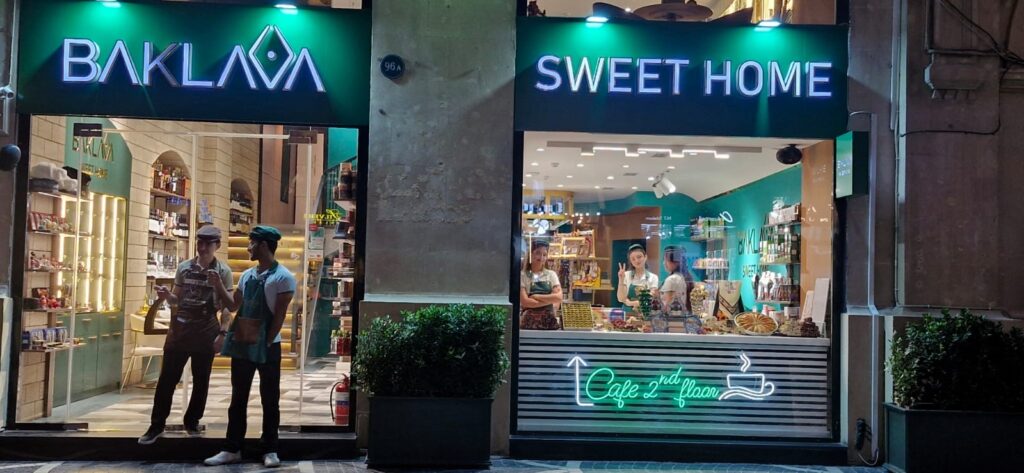
The day with a light dinner at a Jordanian restaurant: hummus and a falafel wrap. Simple, flavorful, and fresh.
We got back to the hotel around 8:30 p.m. It had been a full day — history and modernity side by side, the quiet charm of the Old City balanced by the bold confidence of new Baku
Day 4: Monday, September 15 – More of Baku: Fire, Flames, & Flight to Georgia
We started the day early at 8:15 a.m., ready for one last deep dive into Baku before heading onward to Georgia.
Our first stop was the Baku Crystal Hall, located on the Caspian waterfront. Built in 2012 to host the Eurovision Song Contest, it’s now one of Azerbaijan’s main venues for concerts and international events.
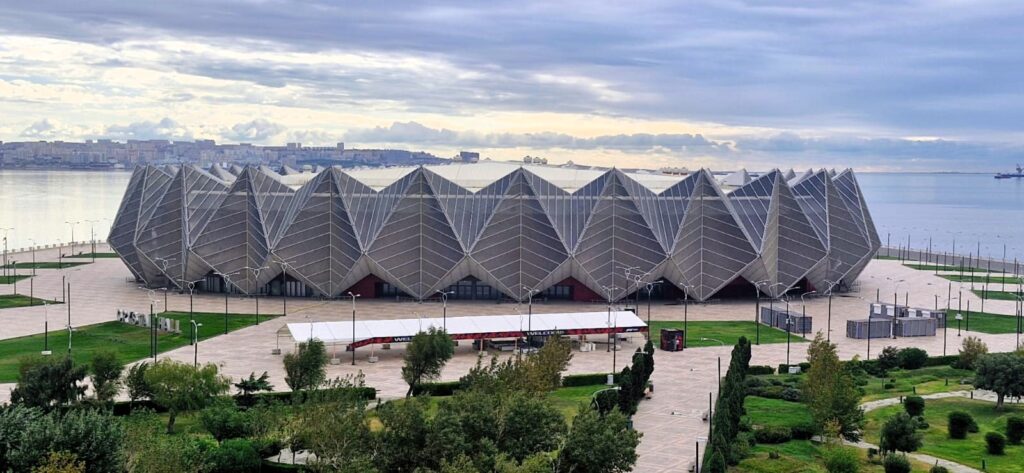
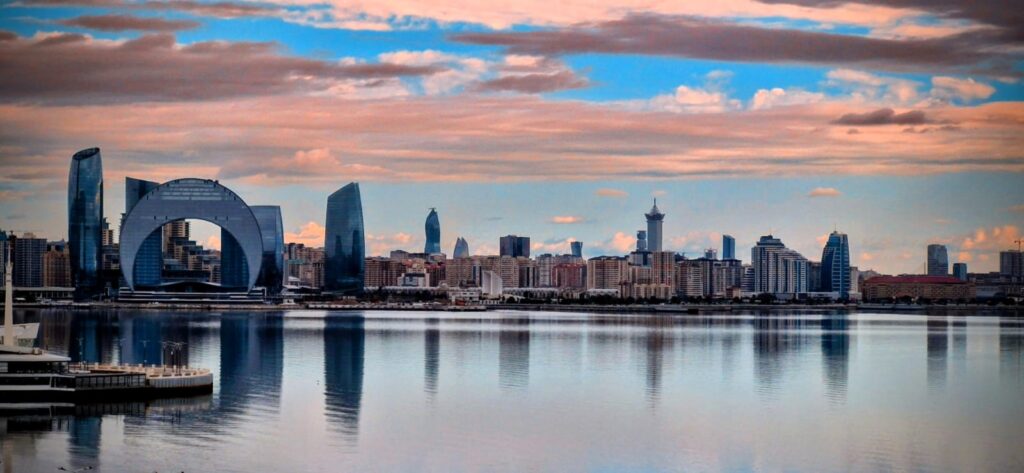
Standing there, we could see almost the entire Baku skyline stretching along the bay — a clean, modern contrast to the medieval walled city we’d explored the previous day.
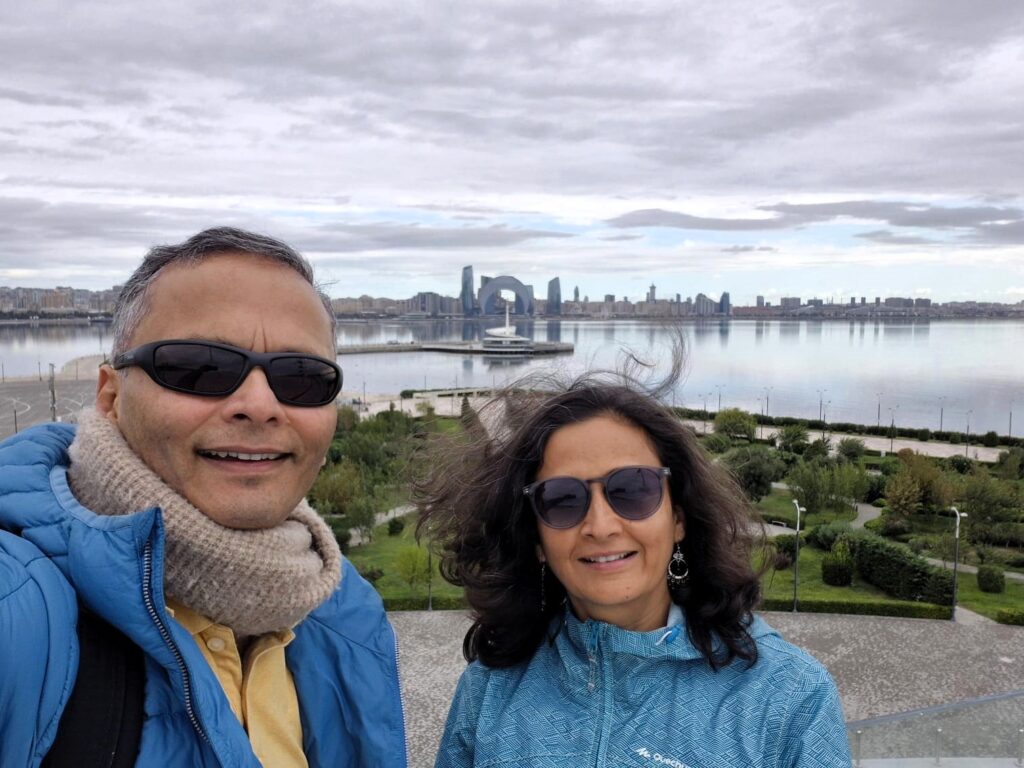
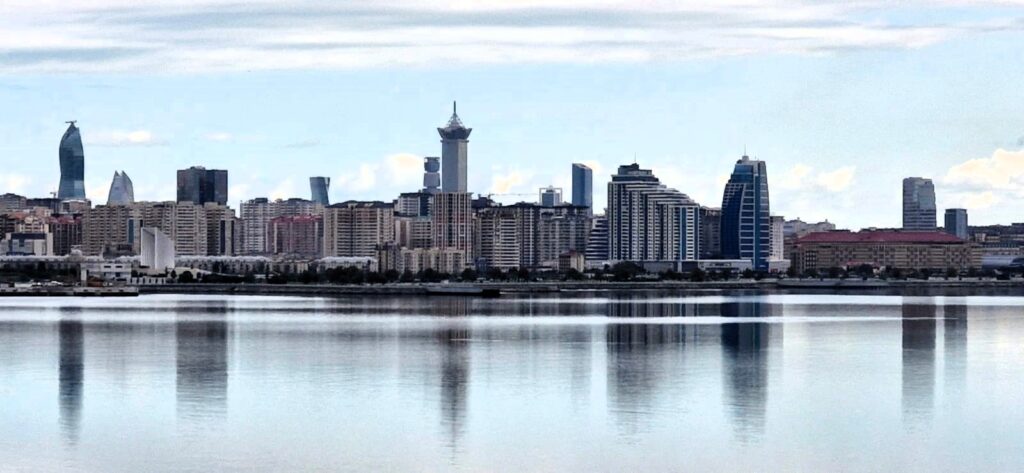
Just next to it lies the National Flag Square, a vast open plaza covering over 300,000 square feet.
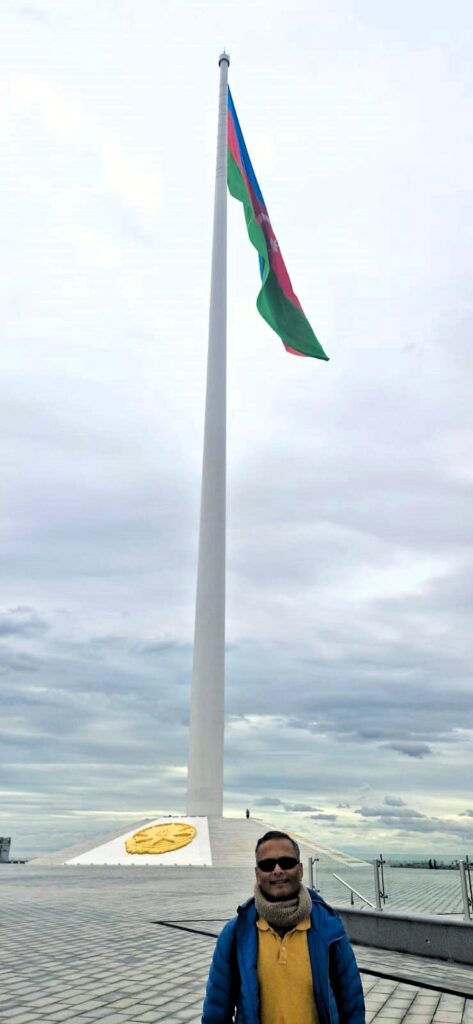
The flagpole here is 162 meters tall — once among the tallest in the world — and the flag itself, 35 by 70 meters, waves dramatically over the city.
The site was inaugurated in 2010 to mark Azerbaijan’s independence and pride, and the view from this point is impressive — sea on one side, and the sleek curve of Baku Boulevard on the other.
From the Flag Square, we drove up to the Highland Park area, home to the Martyrs’ Alley, one of Baku’s most moving landmarks.
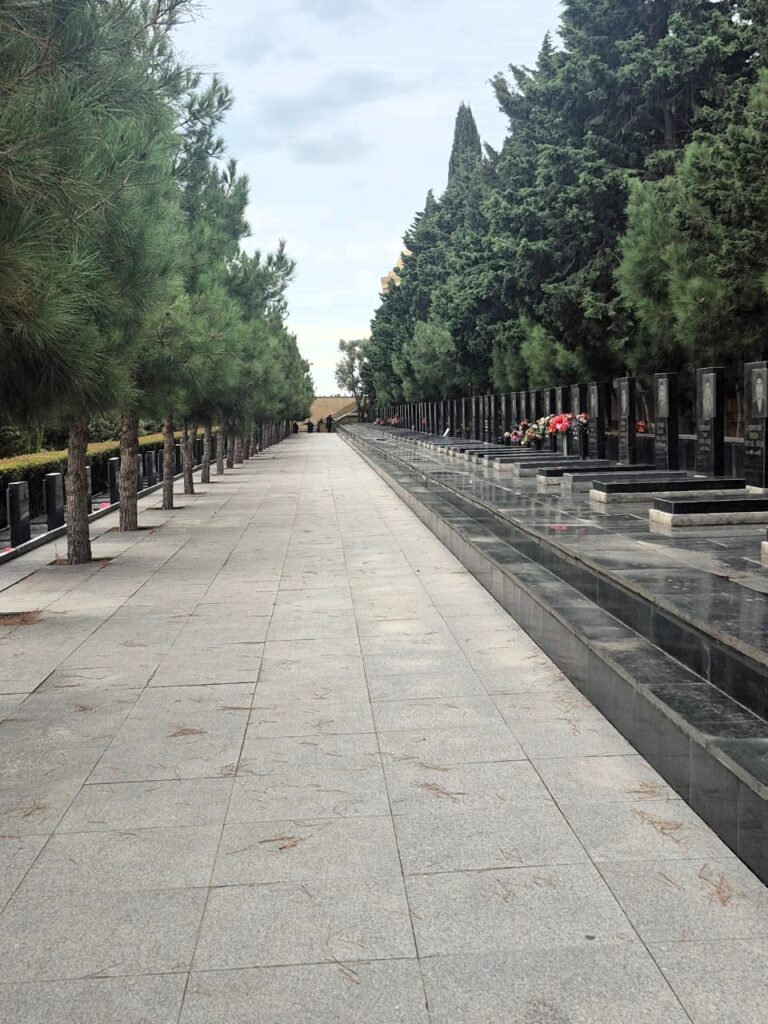
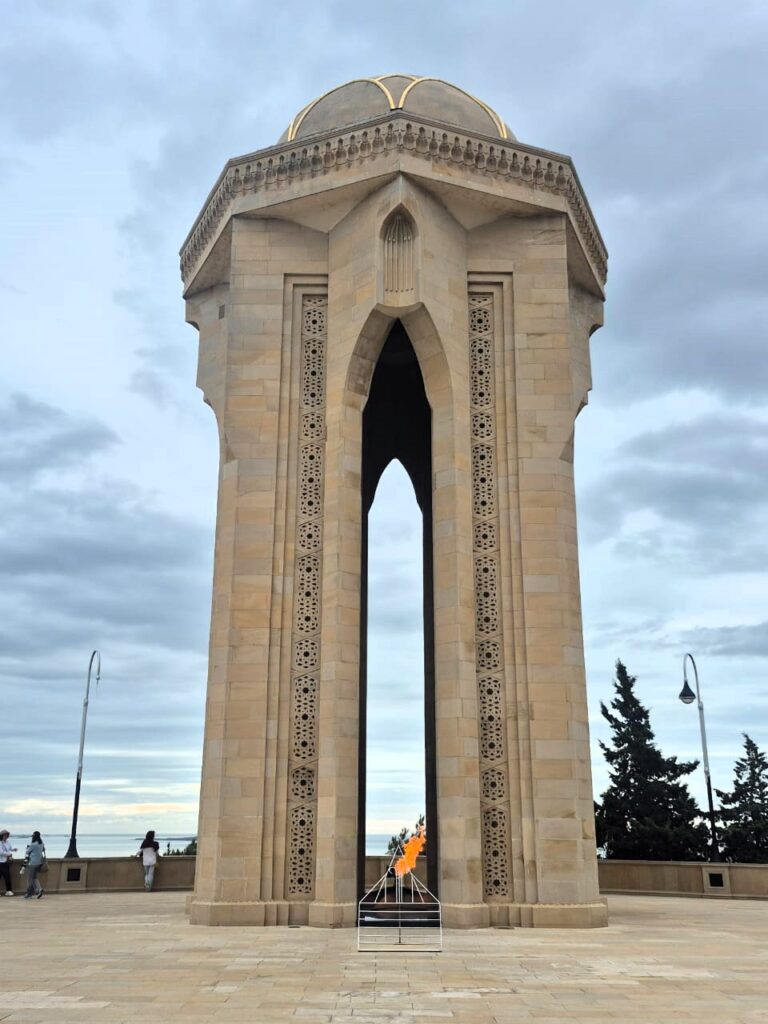
The site overlooks the city and honors those who lost their lives during Black January in 1990 and the Nagorno-Karabakh War between 1988 and 1994. Each gravestone carries a portrait and name of the fallen — many were barely 19 or 20. The long black marble walls and the eternal flame make it a solemn space.
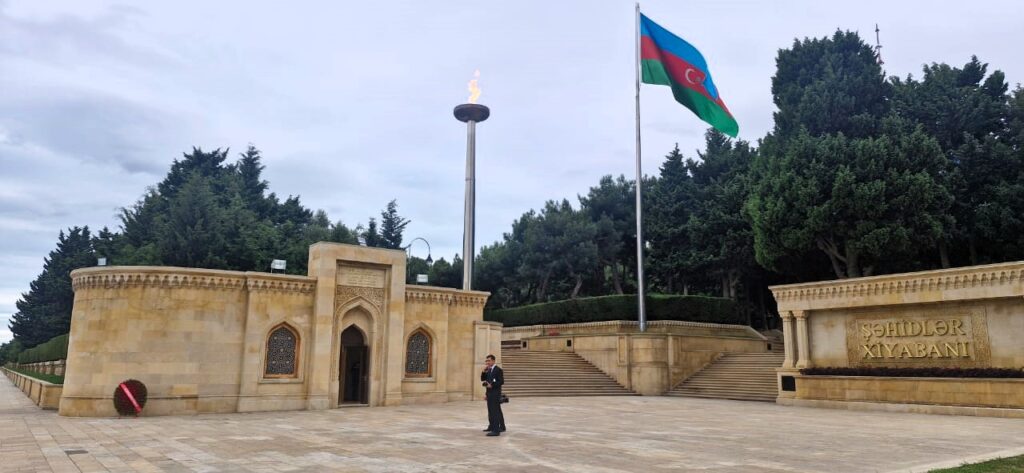
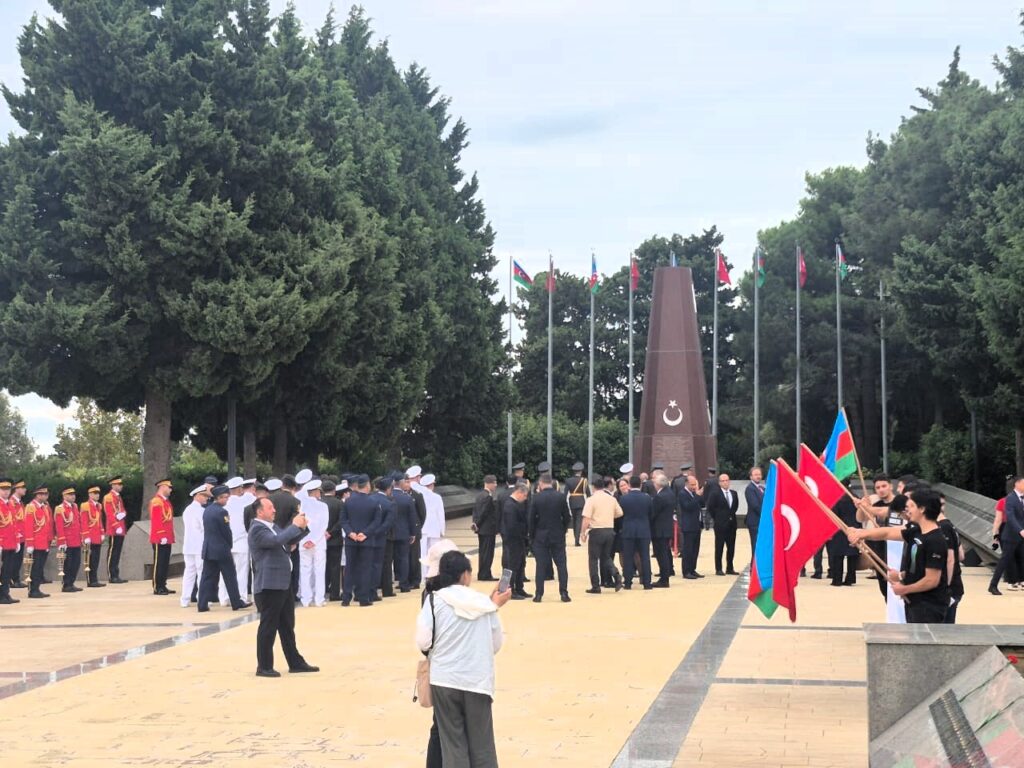
When we visited, a small memorial function was taking place; the atmosphere was quiet and reverent. Standing there, with the Flame Towers glowing faintly behind and the Caspian in the distance, we could sense how much history and emotion this small country has endured.
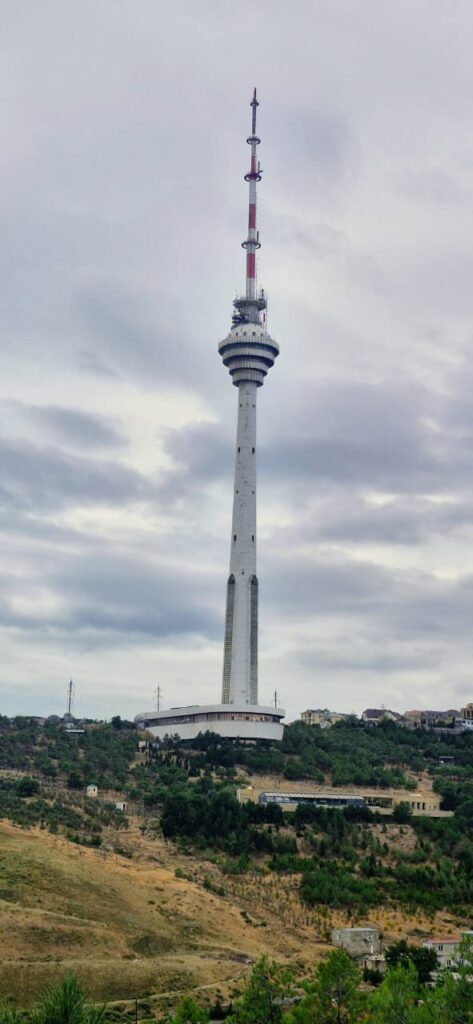
From the same point, the Baku TV Tower dominates the skyline — a slender needle of concrete and steel rising 310 meters into the air. Built in 1996, it remains Azerbaijan’s tallest structure and an important broadcasting tower.
From Highland Park, we had a clear view of the Flame Towers, Baku’s most striking modern landmark. The trio of curved skyscrapers rises 182 meters high, shaped like tongues of fire against the skyline.
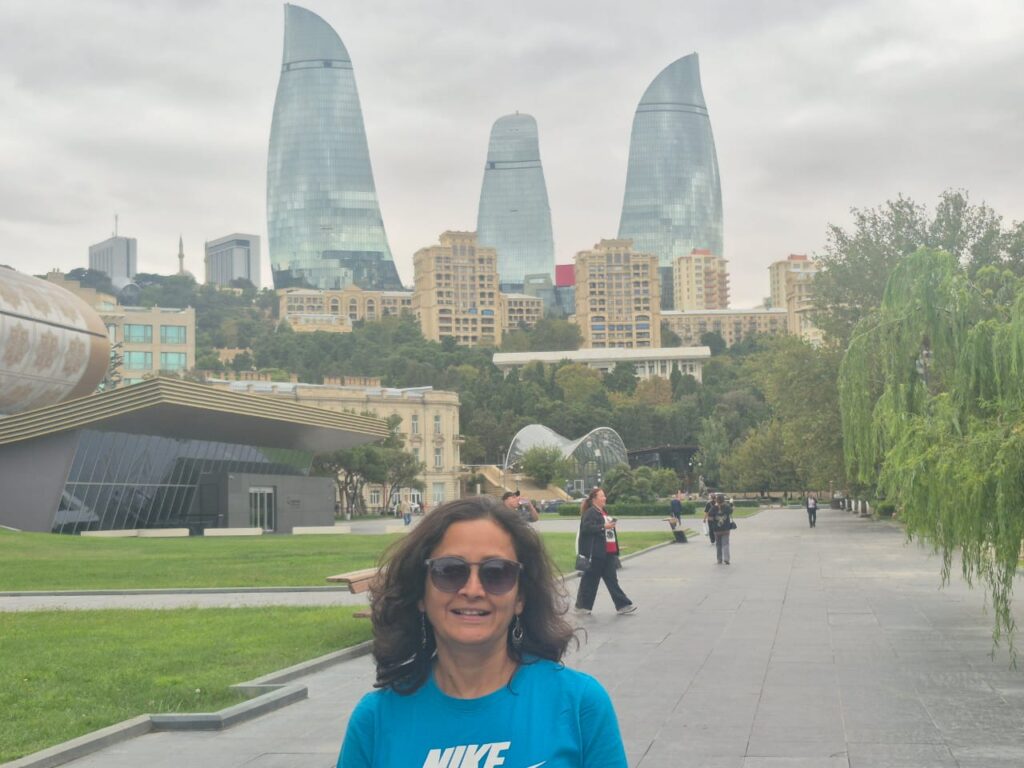
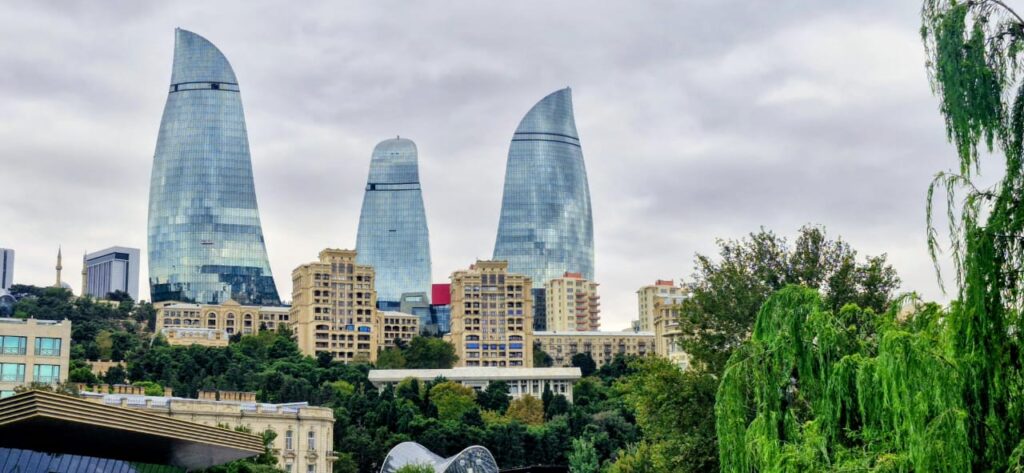
They symbolize Azerbaijan’s ancient identity as the Land of Fire — a name rooted in the natural gas seeps that have burned on this soil for millennia. Centuries ago, Zoroastrian worshippers built temples around these eternal flames, believing them to be divine. The Flame Towers carry that legacy into the present — at night, their glass façades light up with LED displays that ripple like flickering fire. It’s a remarkable blend of symbolism and modern engineering, a reminder of how Baku manages to hold on to its history even as it keeps looking forward.
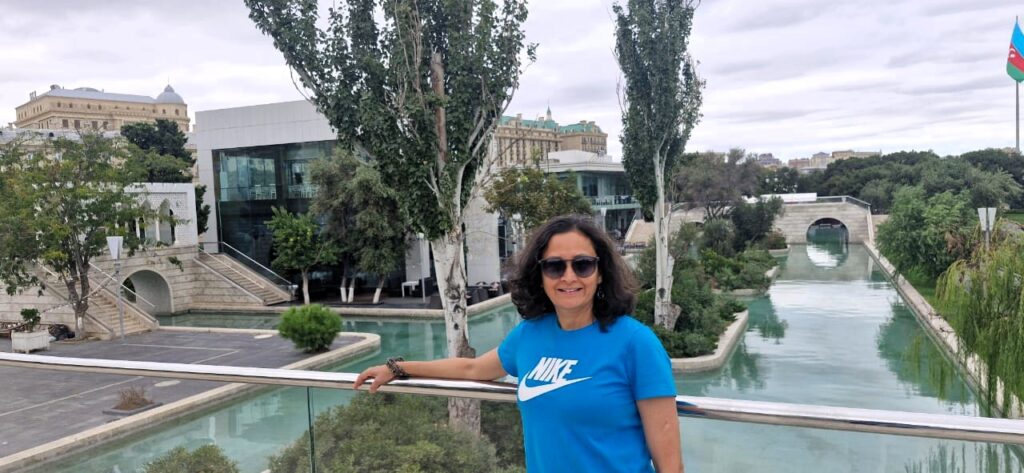
We stopped briefly at Mini Venice, a small but charming attraction built on Baku Boulevard. Narrow canals weave through landscaped pathways with little bridges and gondola rides — a fun modern touch amid all the history.
Across the road stands the National Assembly of Azerbaijan, a grand building housing the legislative branch of the country.
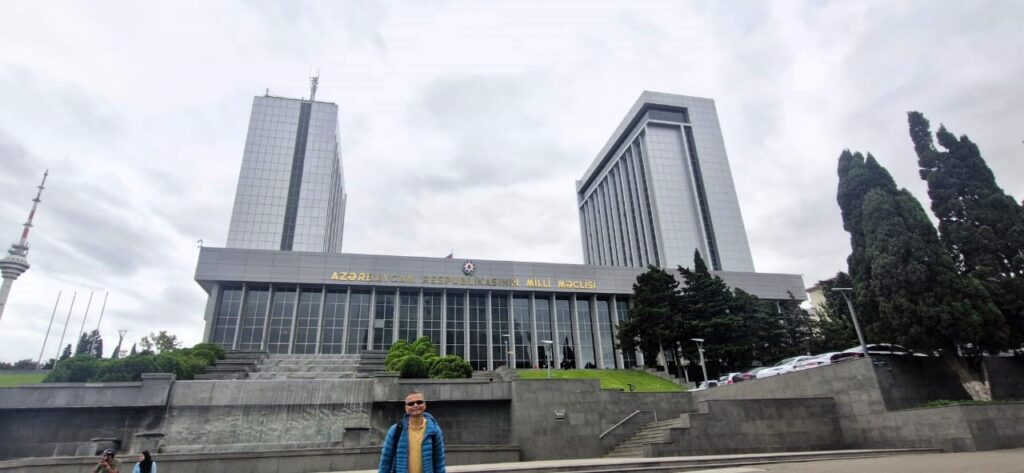
Its monumental Soviet-era architecture and the large flag flying outside make it hard to miss.
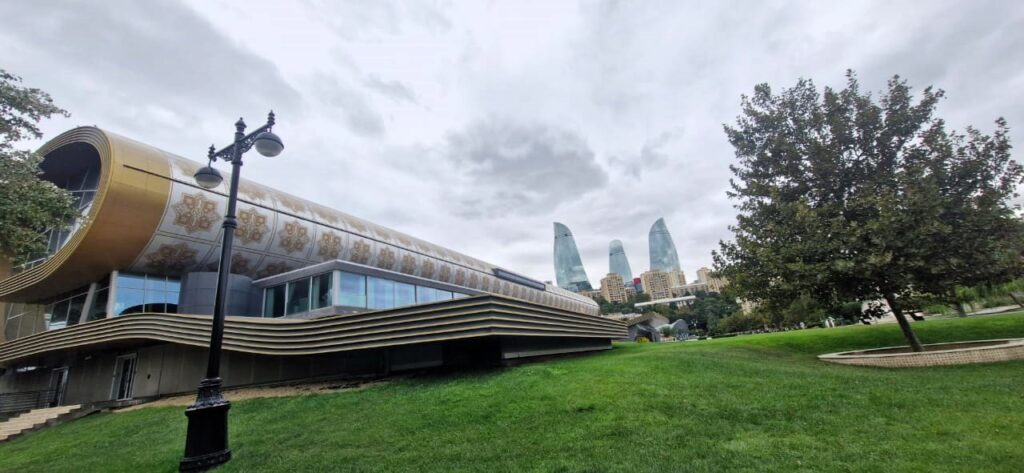
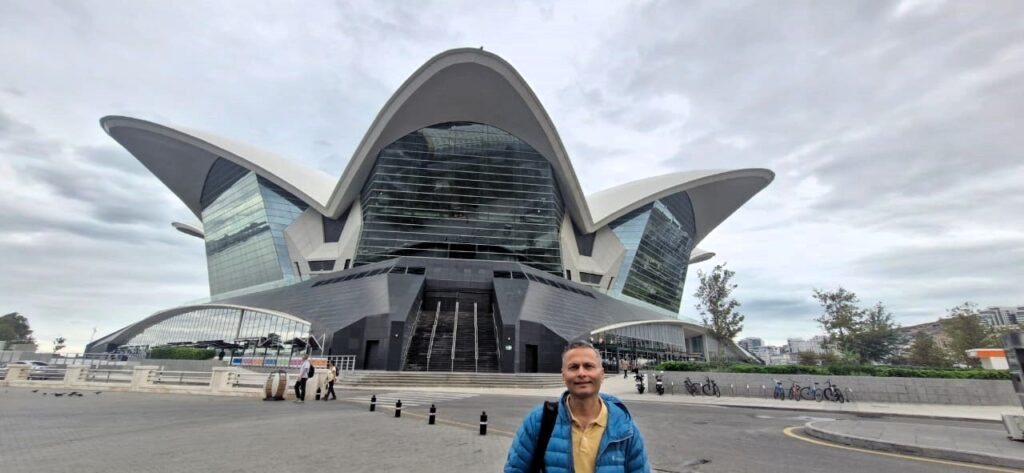
We then walked along the Caspian Sea promenade toward Freedom Square, also known as Azadliq Square. It’s the largest city-center plaza in Baku and a symbolic place for gatherings and parades. Unfortunately, because the city was preparing for the Formula 1 Grand Prix scheduled for September 20–21, the area was completely cordoned off with tall safety barriers.
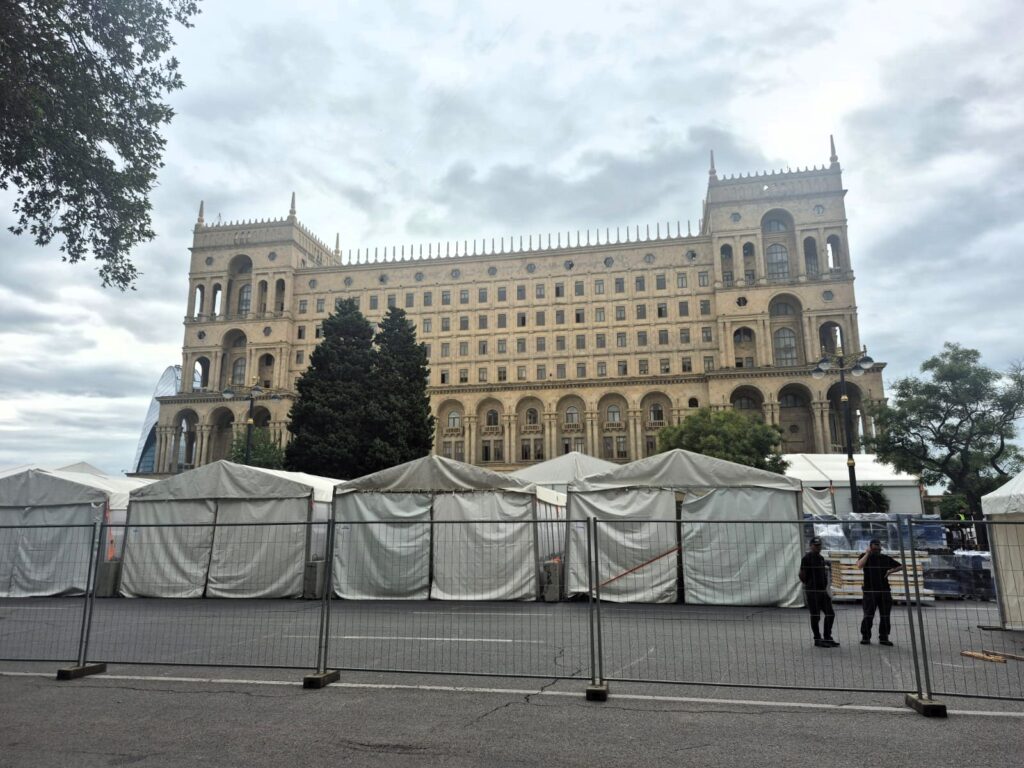
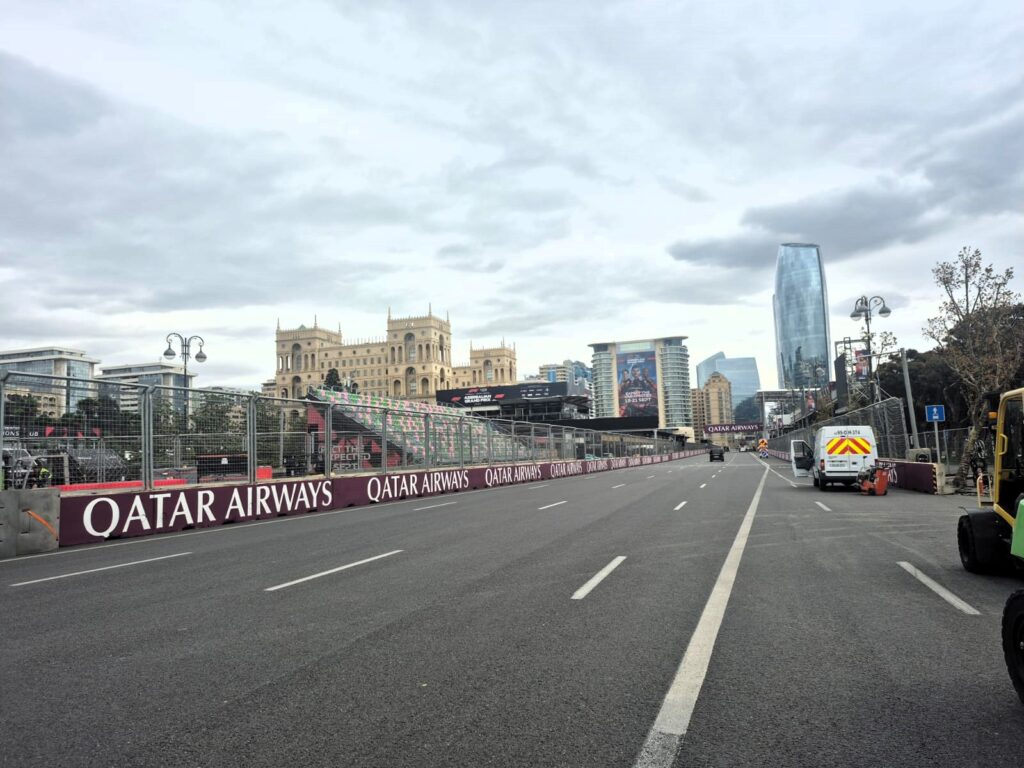
We could only peek through the nets at the patterns being laid out for the race track — even the city’s main roads had been reconfigured for the event.
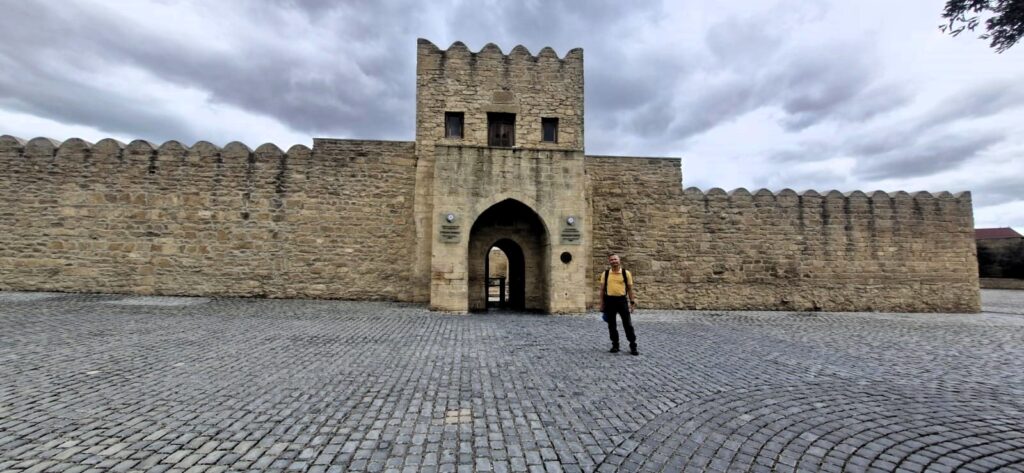
Next, we took a taxi directly to Yanar Dagh, or “Fire Mountain,” one of the most fascinating natural wonders of Azerbaijan. This hillside, located on the Absheron Peninsula near Baku, has been burning continuously for centuries, fed by natural gas seeping through porous sandstone. The flames rise as high as three meters, glowing brightest after sunset. It’s a simple site — just a slope of earth and stone — but there’s something almost mesmerizing about it.
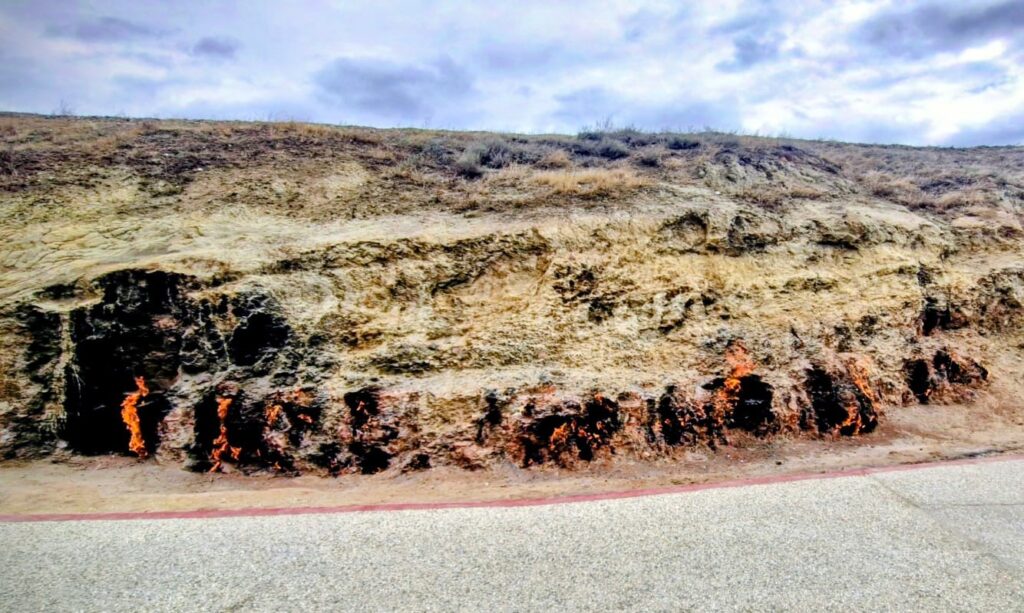
The phenomenon at Yanar Dagh is completely natural, not man-made, and is believed to have been burning since ancient times. Marco Polo wrote about flames like these during his travels in the 13th century, describing lands “where fire issues spontaneously from the soil.” Centuries before that, Zoroastrian priests revered such fires as divine, seeing them as a symbol of purity and eternal life. The very name Azerbaijan is thought to derive from “Azer”, meaning fire.
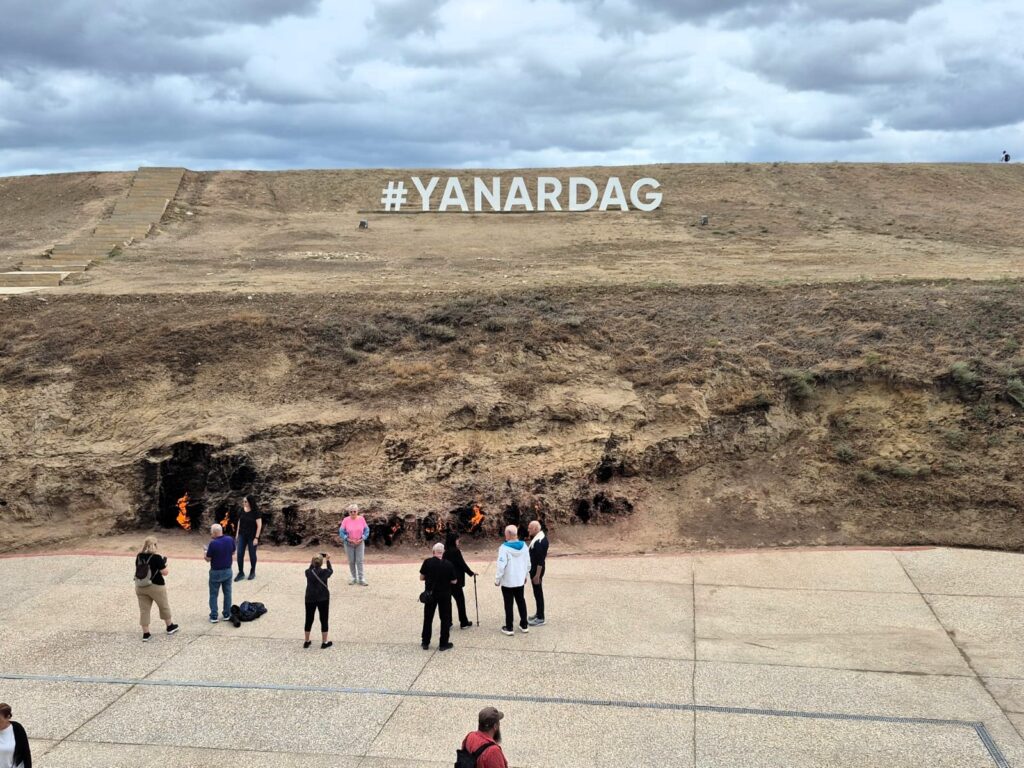
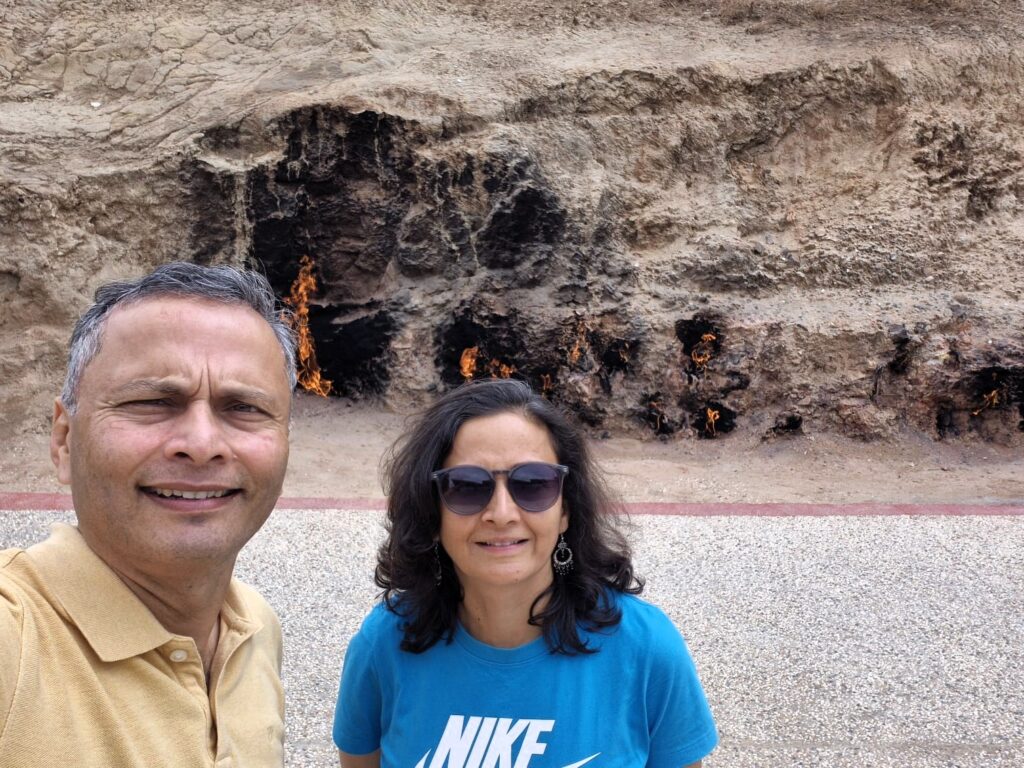
Standing before the glowing hillside, it was easy to understand how deeply the element of fire is woven into this country’s identity — from its myths and religion to its modern architecture. The flames at Yanar Dag might flicker with the wind, but they’ve never gone out.
From Yanar Dagh, a 20-minute taxi ride brought us to Ateshgah, the Fire Temple complex at Surakhany, another of Azerbaijan’s iconic landmarks.
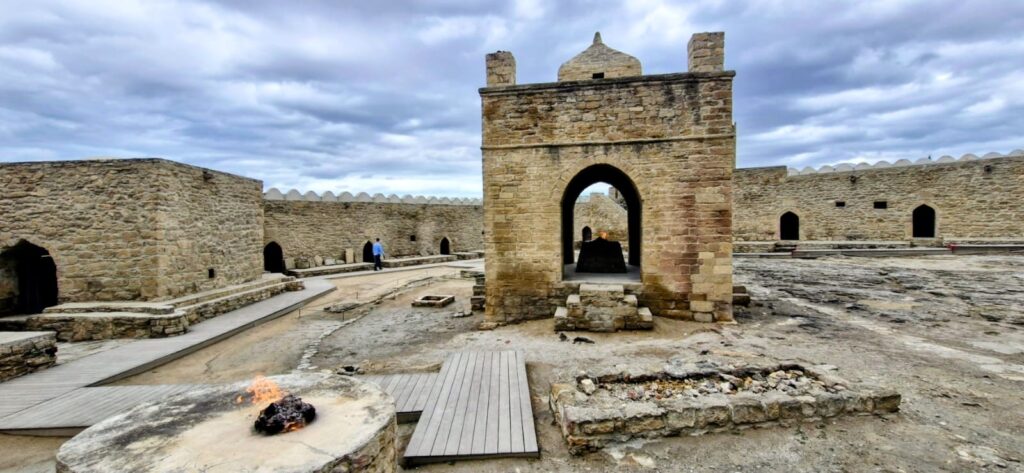
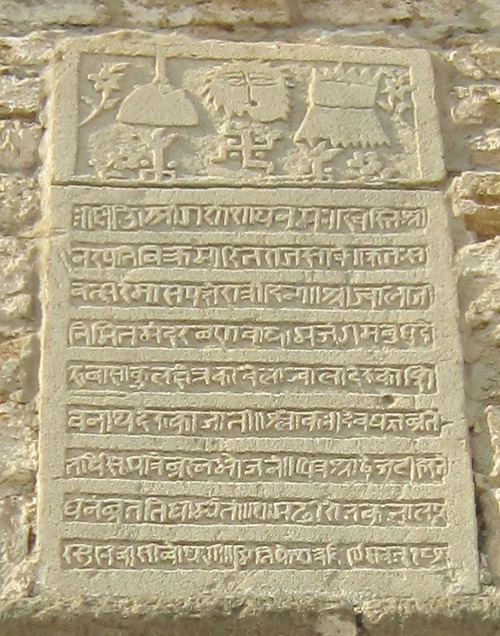
The word “Atesh” means “fire,” and “gah” means “place” — literally, the House of Fire. This pentagonal-walled complex was built in the 17th and 18th centuries by Indian merchants traveling the Silk Route. Based on Persian and Sanskrit inscriptions found here, the site once served as a place of worship for Hindus, Sikhs, and Zoroastrians.
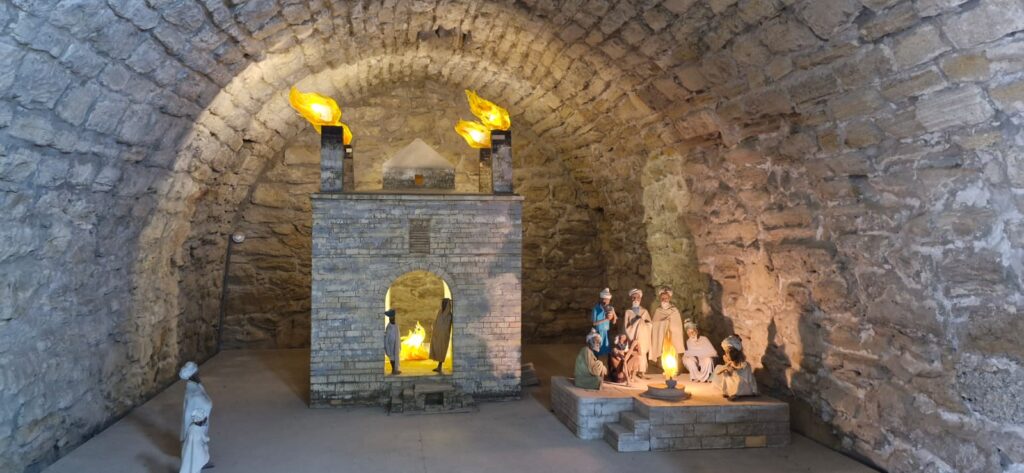
The central altar flame was once naturally fueled by underground gas, but that fire went out in 1969 after oil drilling in the region lowered gas pressure. The flame we see today is maintained through a controlled supply, but the spiritual symbolism remains untouched.
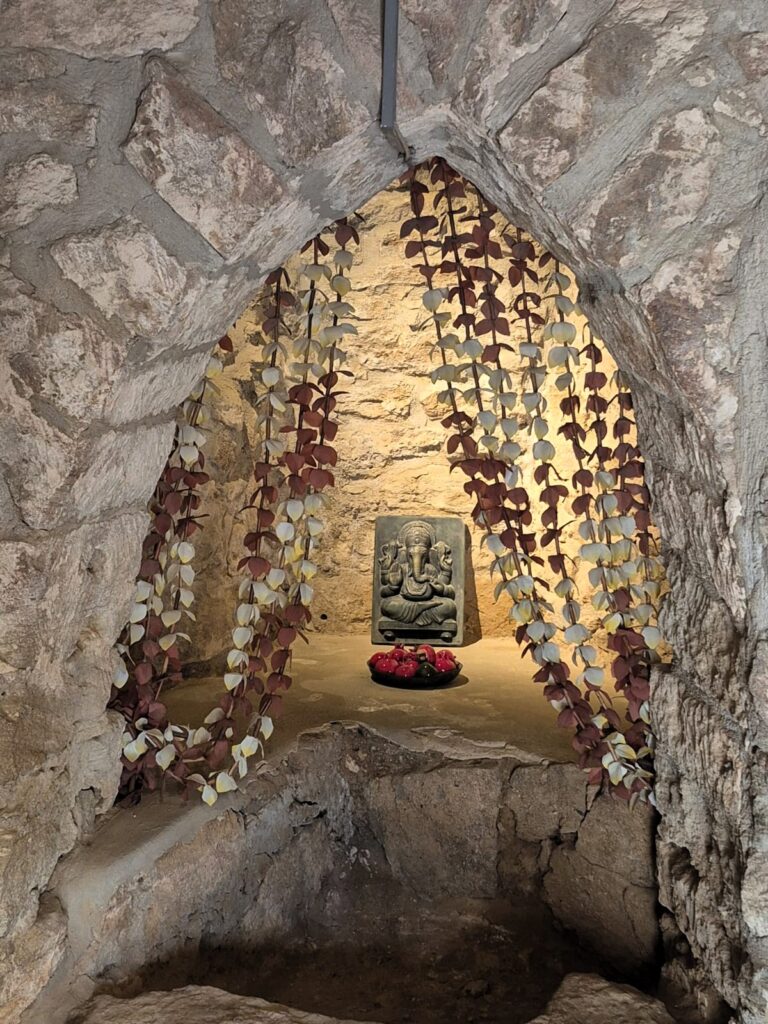
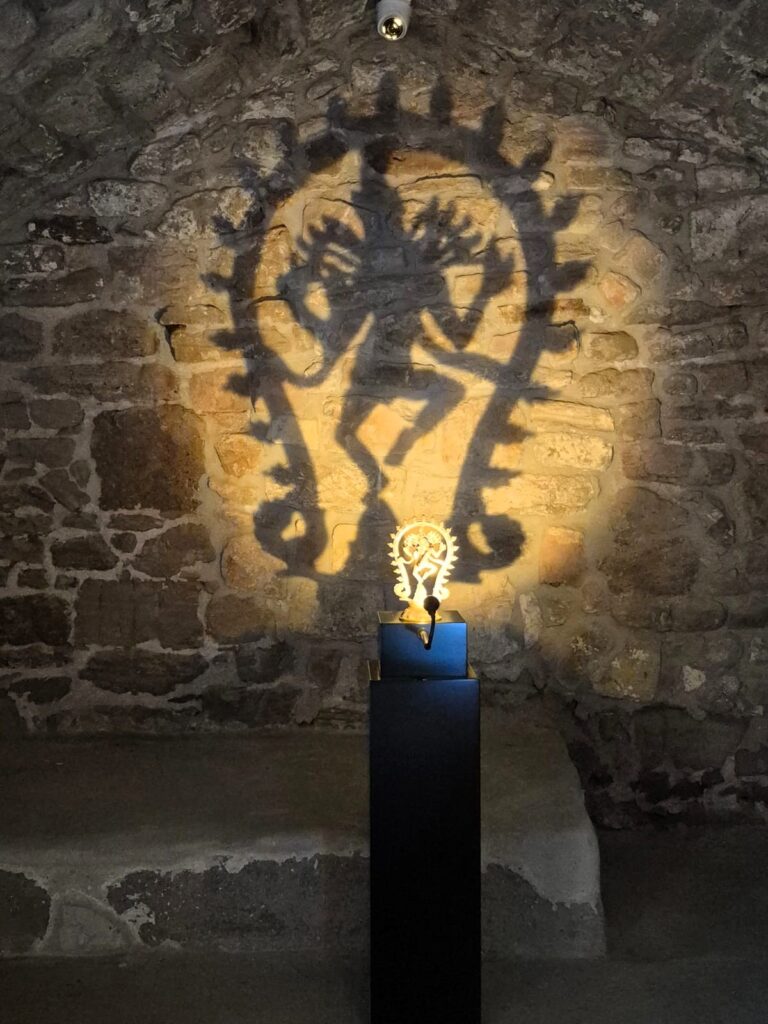
Walking through the stone courtyard surrounded by monk cells, we heard Ganesh Vandana playing softly through the speakers and even saw a small Ganesh idol — a quiet reminder of India’s historic ties to this part of the world. It was remarkable to realize how far-reaching the Indian presence once was across the Silk Road.
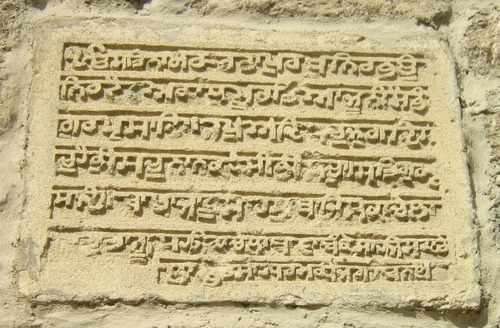
Garmukhi inscription at Atesgah Fire Temple, Baku
Sanskrit inscription describing Lord Shiva
On the drive back, we passed Surakhany, known for its oil fields — this was where the first kerosene factory was established in 1855. Oil has shaped Baku’s destiny for over a century; even today, the landscape around the city is dotted with old rigs and pump jacks.
We returned to Nizami Street around 2:45 p.m. to pick up some food for our evening flight to Tbilisi.
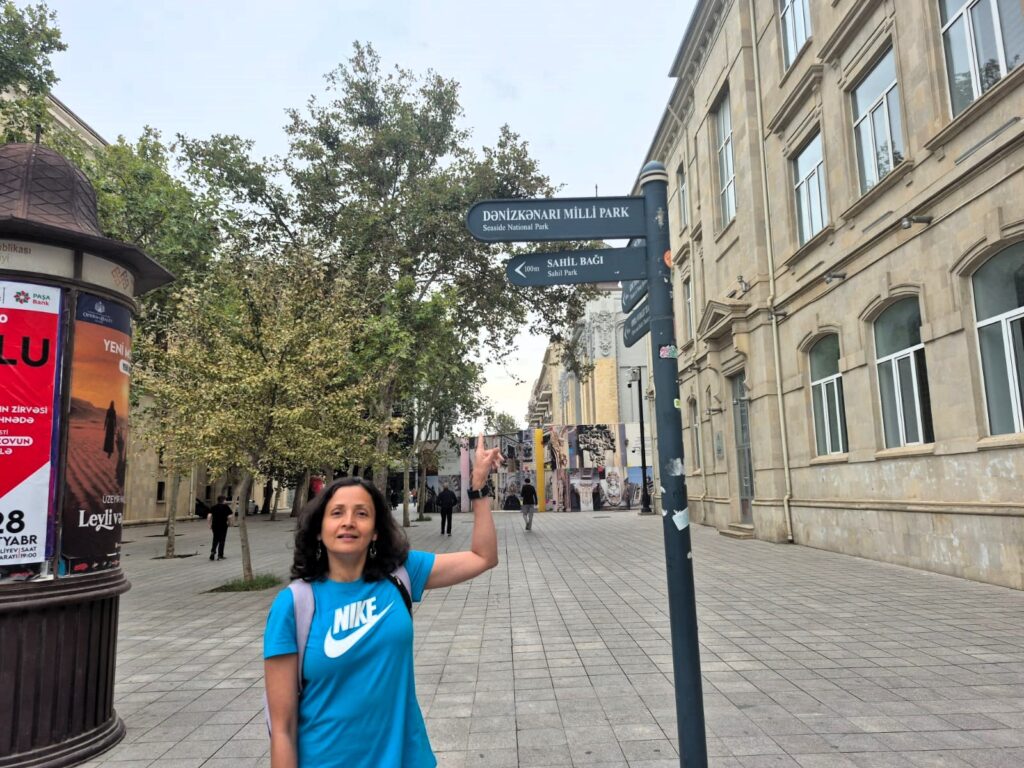
We then walked about half an hour back to our hotel, packed up, and left for the airport around 4:30 p.m., reaching by 5:15.
Check-in was smooth. Our flight departed at 7:50 p.m. and landed in Tbilisi at 9 p.m. Immigration in Georgia was quick and easy. The Ibis Hotel was conveniently next to the airport — we simply walked over and checked in for the night.
It had been a long but fulfilling day — from Baku’s modern skyline to its ancient fires, we had seen every face of this fascinating city.
Day 5: Tuesday, September 16 — Georgia: Akhaltsikhe, Borjomi & Kutaisi
We picked up our rental car from Avis at Tbilisi International Airport early in the morning and began our drive westward toward Akhaltsikhe, Borjomi, and Kutaisi — a long 500 km day. Both Anu and I took turns driving.
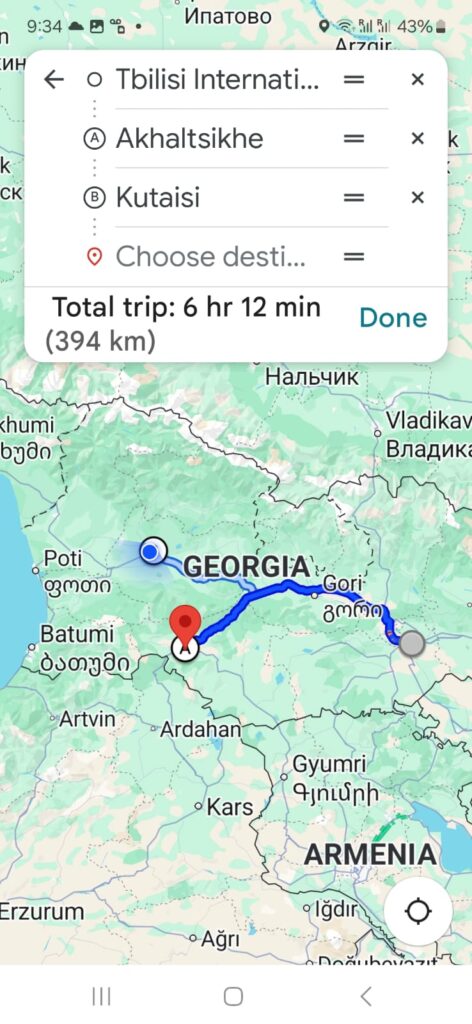
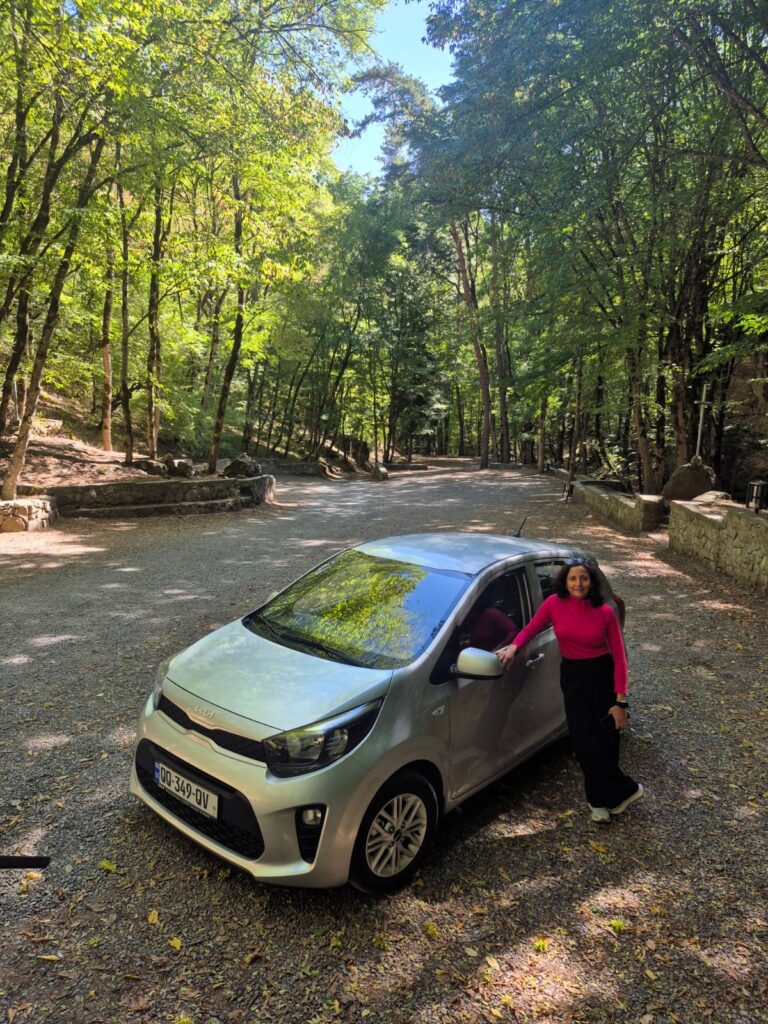
Leaving the small Tbilisi airport around 7 am, the landscape quickly changed. Unlike the brown, arid hills near Baku, here the mountains were lush and green, rivers gleaming in the valleys — a refreshing contrast.
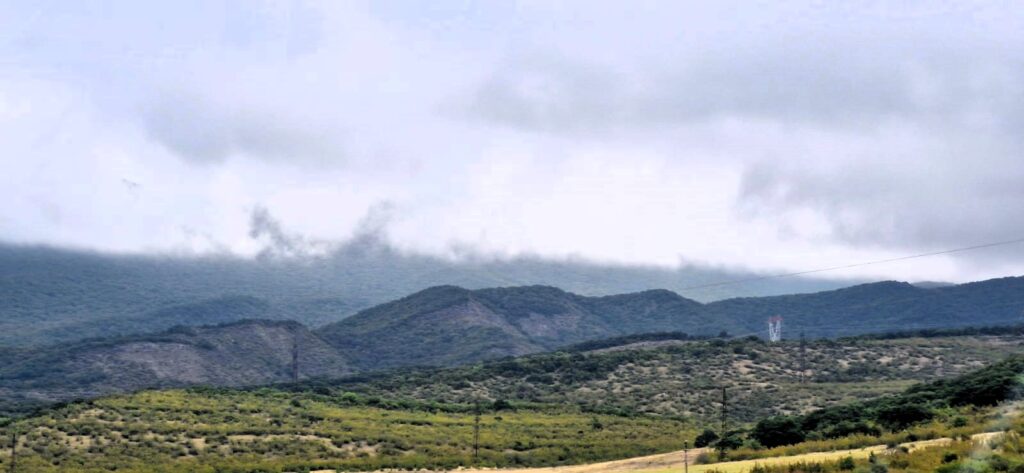
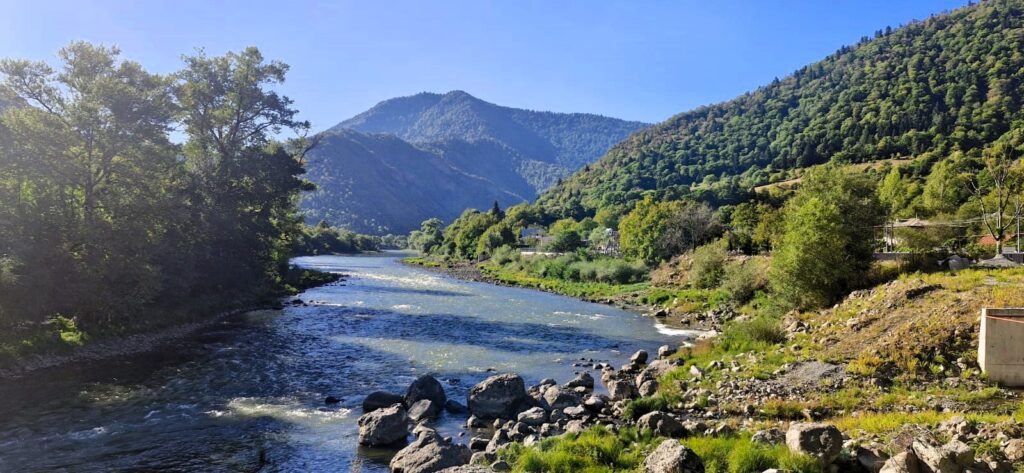
By 10 am, we reached the resort town of Borjomi, famous for its mineral water.
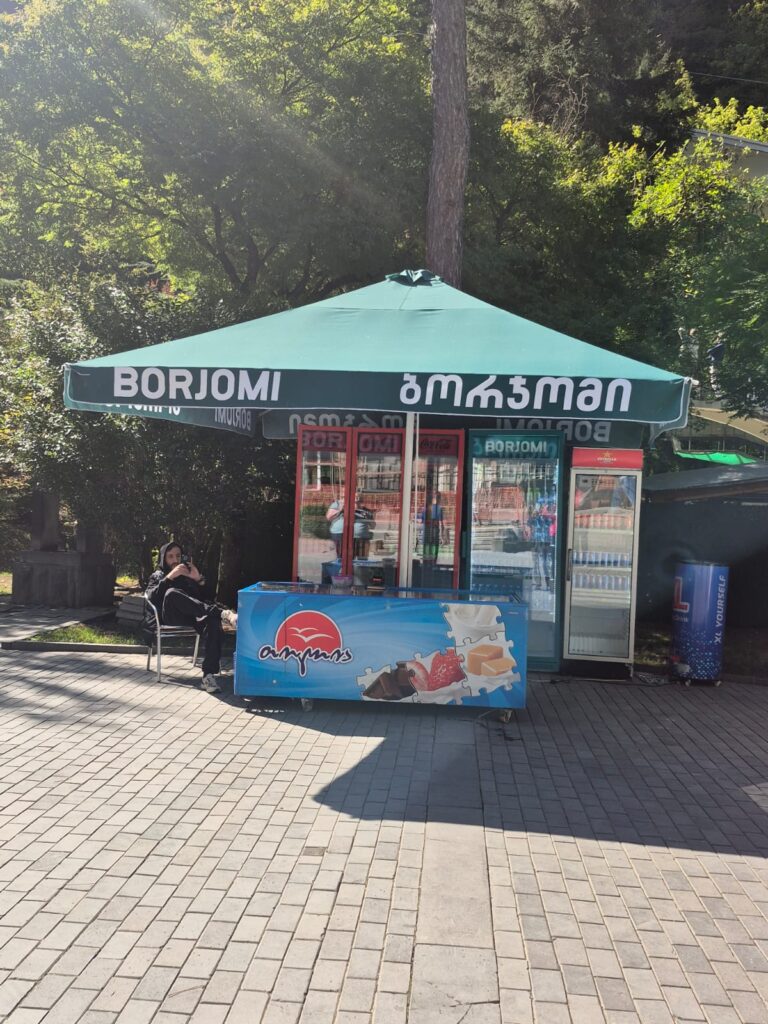
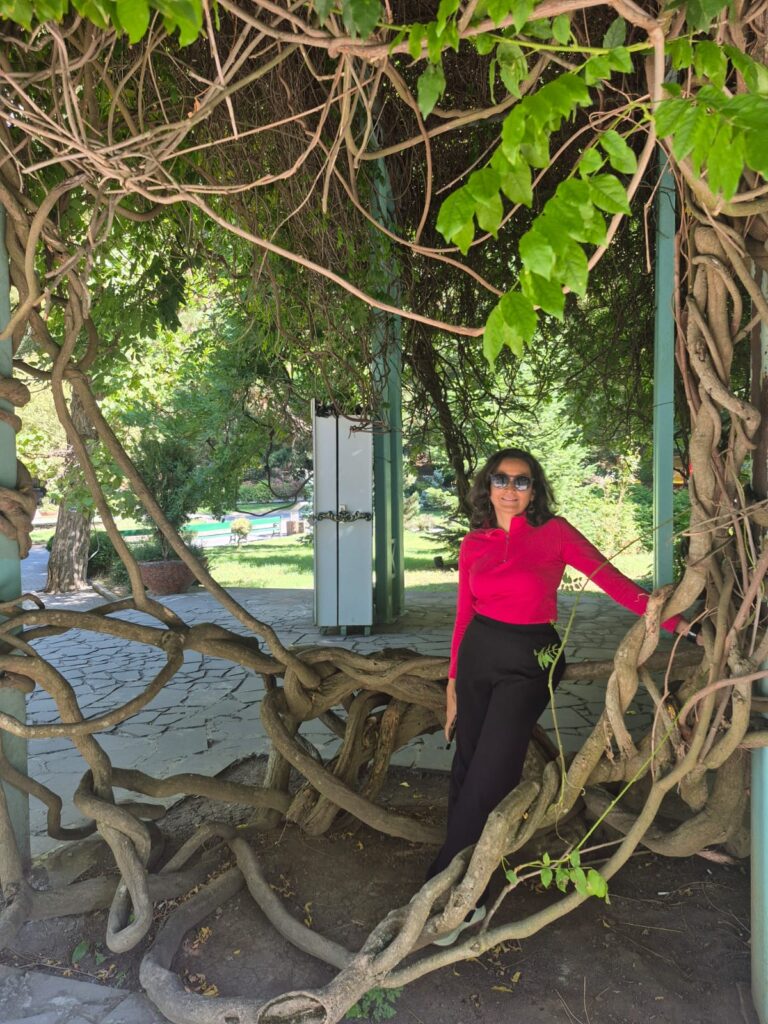
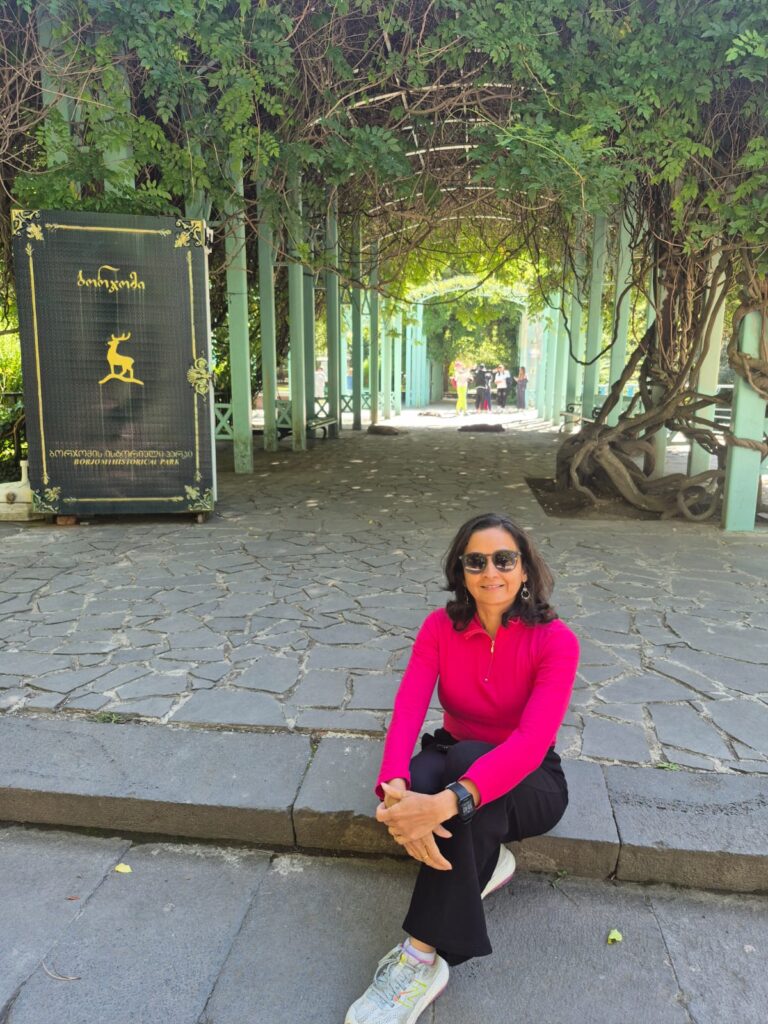
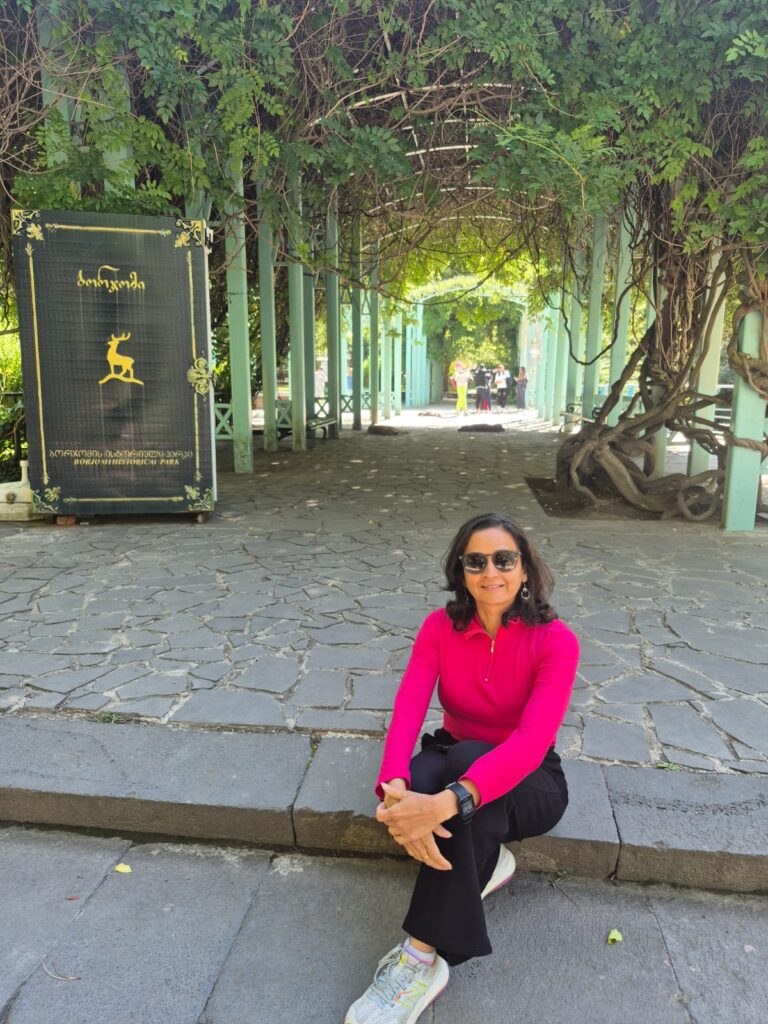
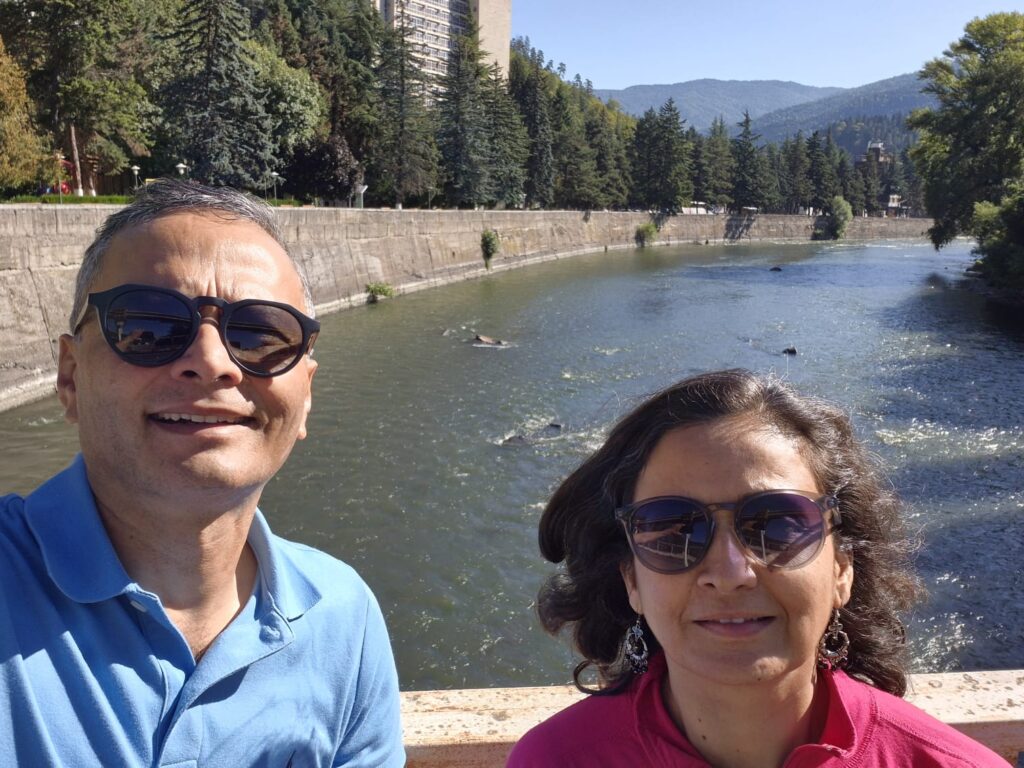
We stopped first at the Borjomi bridge for photos, then visited the Borjomi Central Park. Established in the mid-19th century, the park is a scenic valley lined with trees and walkways. It’s home to Ekaterina Spring, named after the daughter of a Russian governor general who was said to have been cured after drinking Borjomi water in the 1850s.
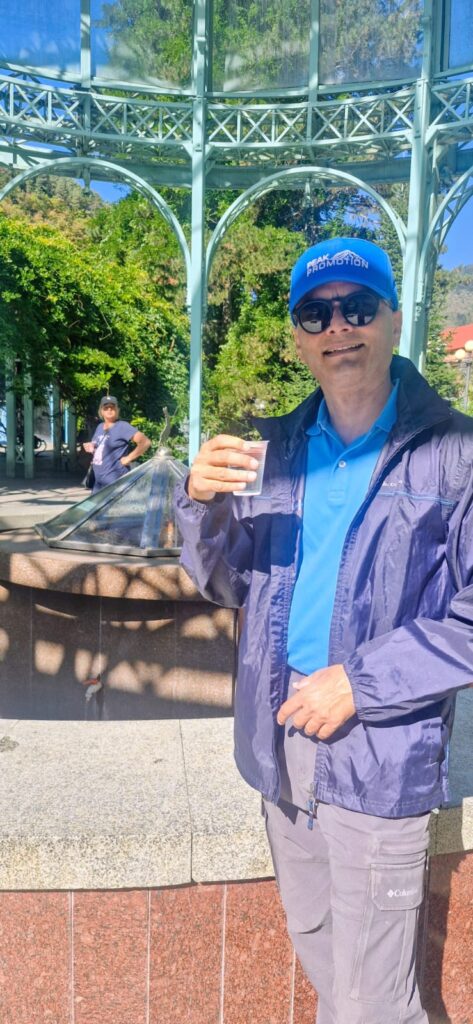
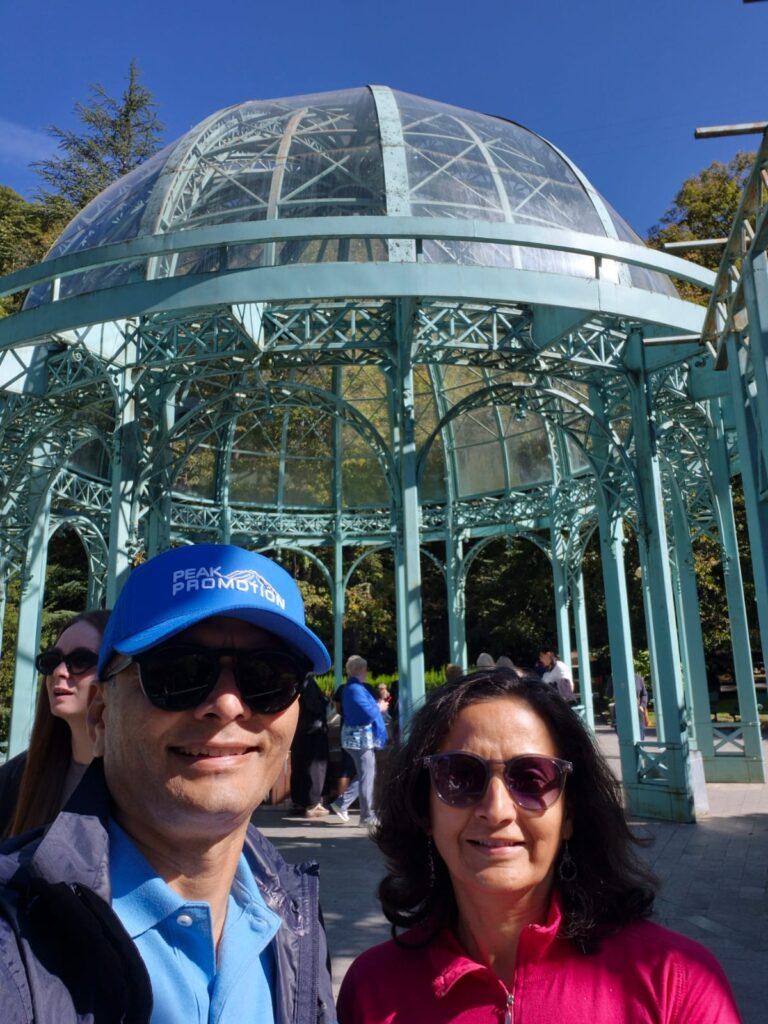
The water comes naturally carbonated and rich in minerals, believed to have therapeutic qualities. Anu and I tried it directly from the spring — it had a strong sulphuric taste, definitely an acquired one!
Georgia exports about US $150 million worth of mineral water annually, much of it to Russia.
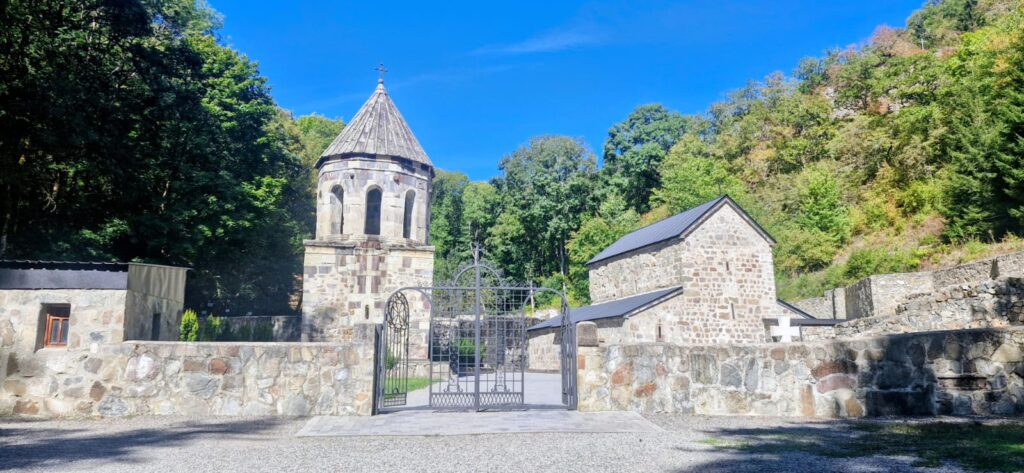
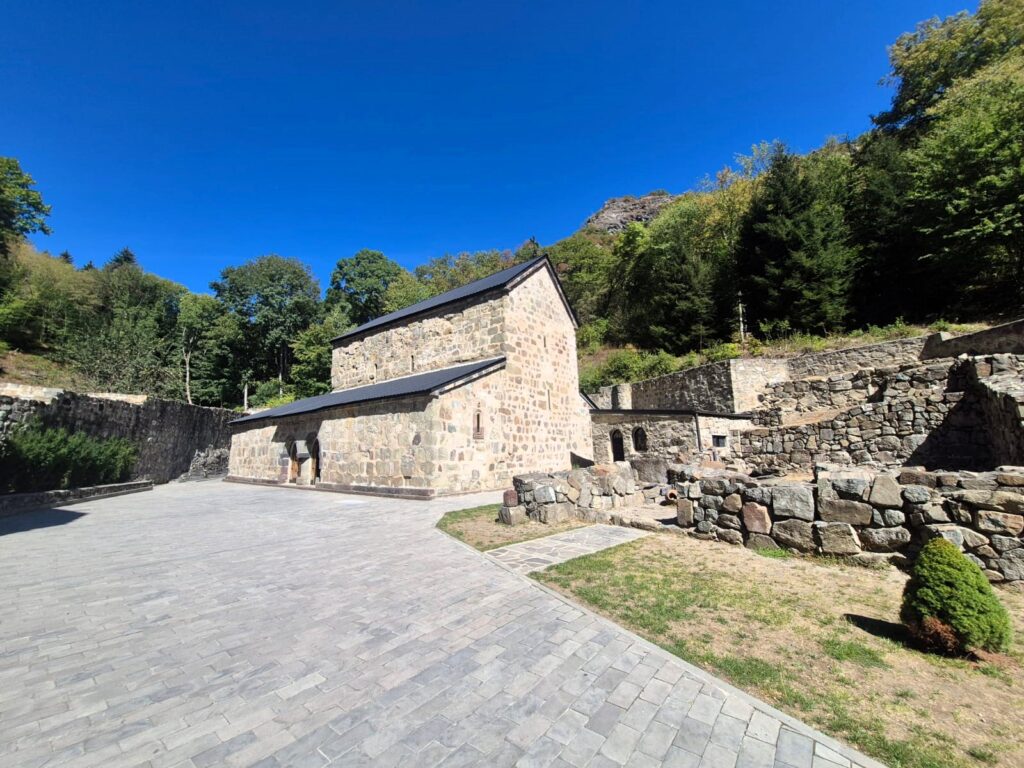
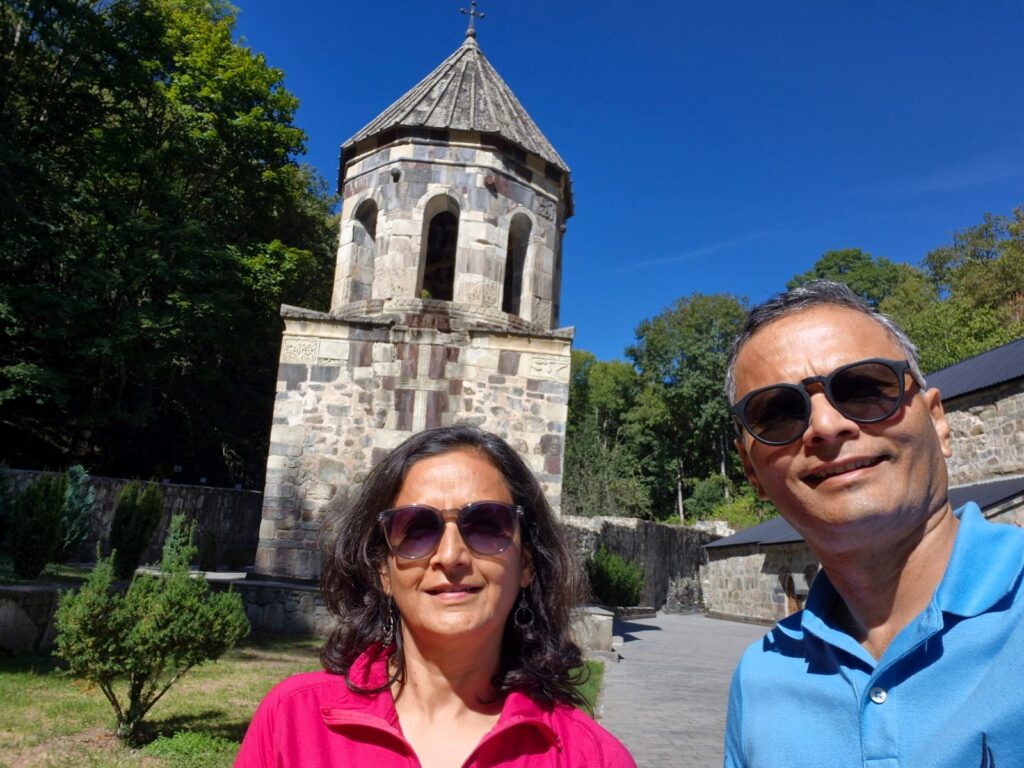
A short drive away stands the Mtsvane (Green) Monastery, dating from the 9th century and dedicated to St. George. Hidden among the forested hills, it’s one of the oldest Georgian Orthodox monasteries still standing. Christianity became Georgia’s state religion in the 4th century AD, making these ancient monasteries feel deeply rooted in national identity.
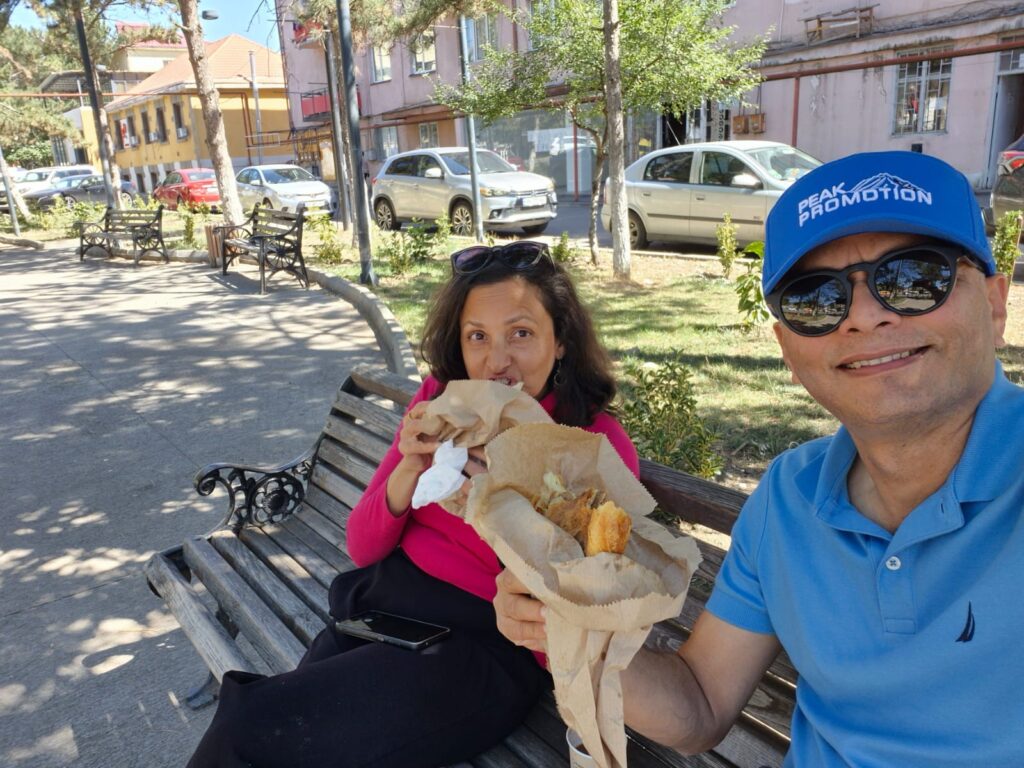
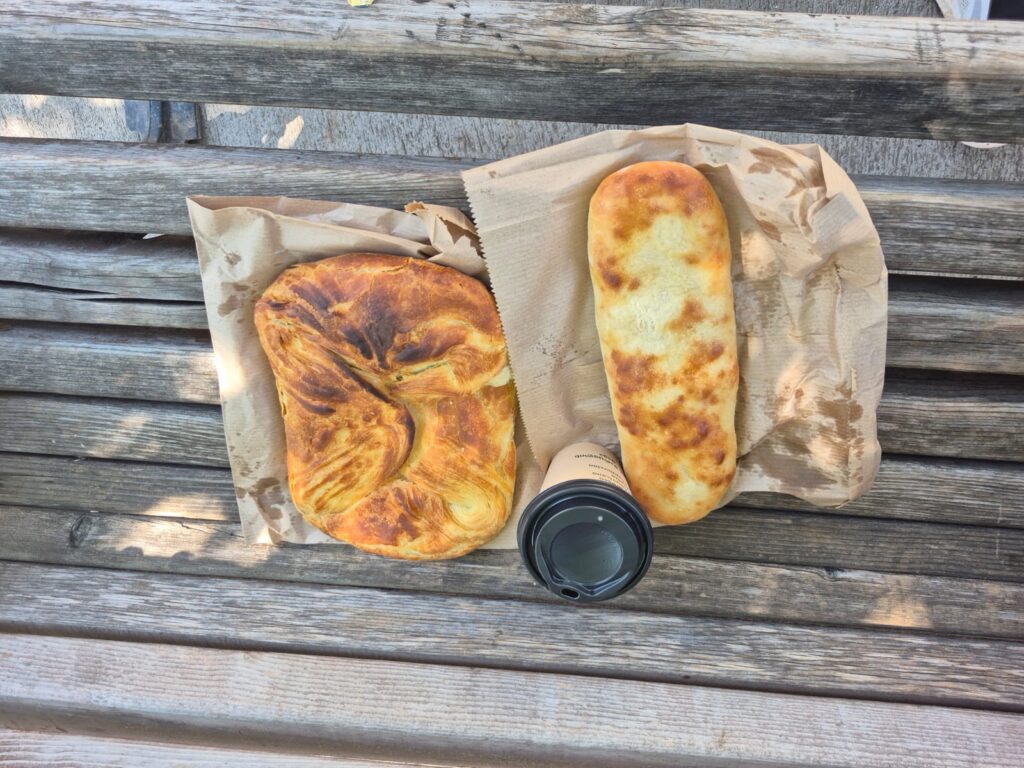
For lunch, we grabbed a simple meal: potato piroshki (a Russian snack) and lobiani, a Georgian pastry filled with mashed beans — paired with hot chocolate. Delicious, hearty, and only 9 laris (about $3.50).
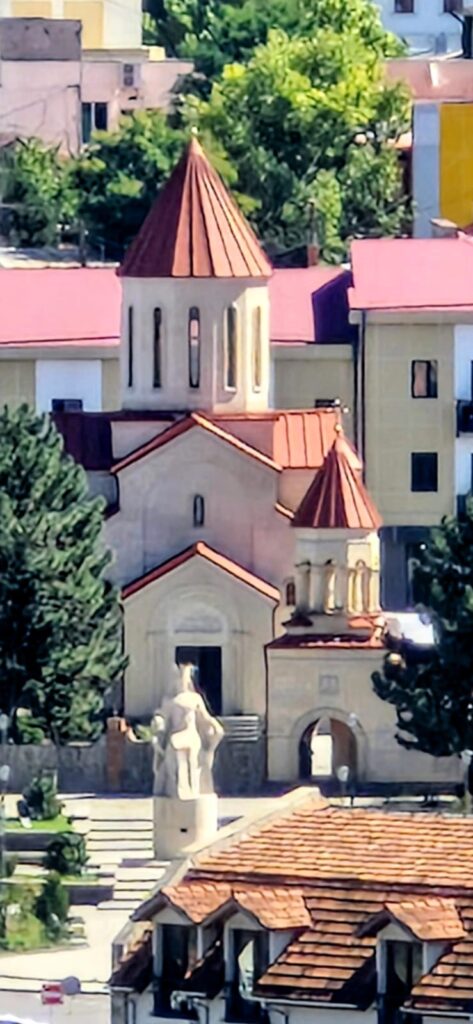
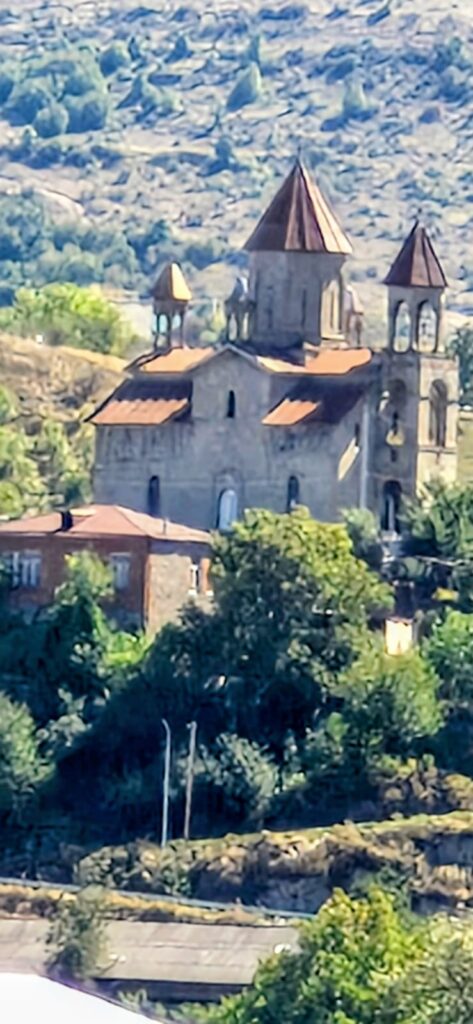
The main highlight of the day was Rabati Castle in Akhaltsikhe. Originally built in the 9th century, the fortress grew into a political and cultural center.
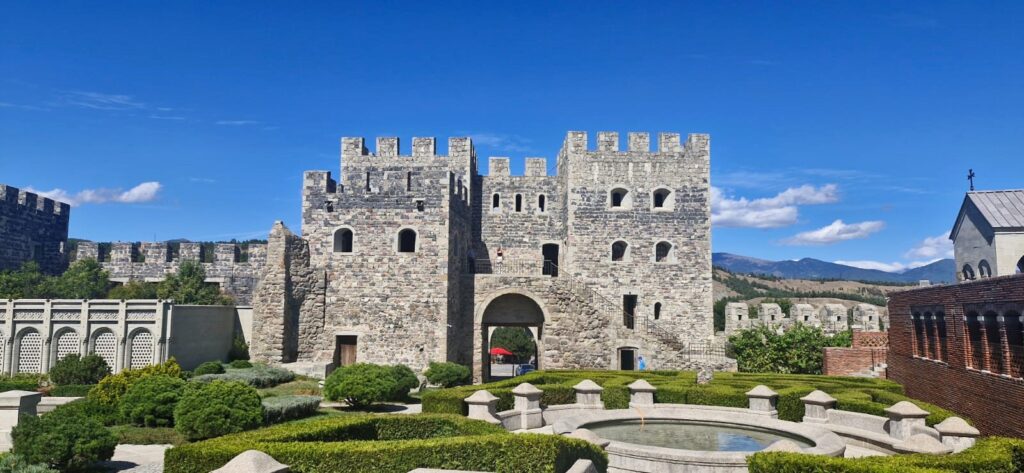
From the 13th to 14th centuries, it served as the capital of Samtskhe-Saatabago, ruled by the Georgian noble Jaqeli family. Later, it endured invasions and Ottoman rule. The term “Rabat” itself means “fortified place” or “capital.” The complex covers several hectares and includes high stone walls, watchtowers, the Church of St. Marine, a mosque modeled after Jerusalem’s Al-Aqsa, a madrasa, and the Pasha’s palace.
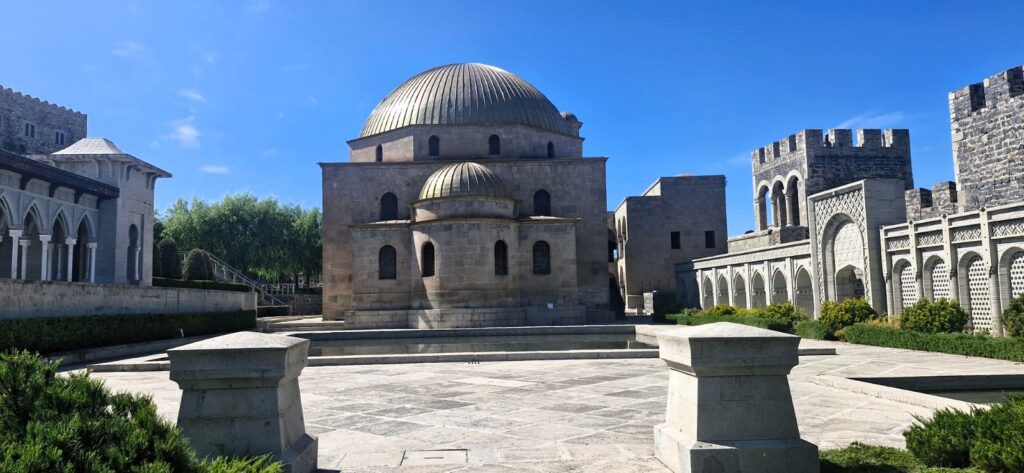
The entire structure was extensively restored between 2011 and 2012, transforming it into one of Georgia’s best-preserved fortresses.
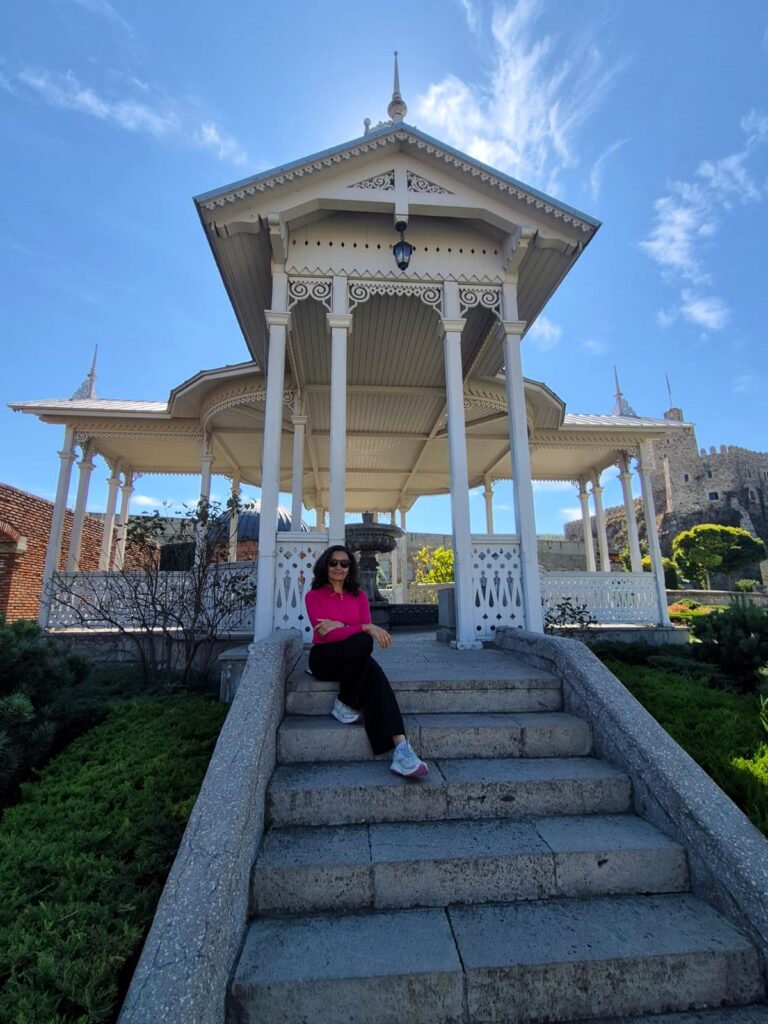
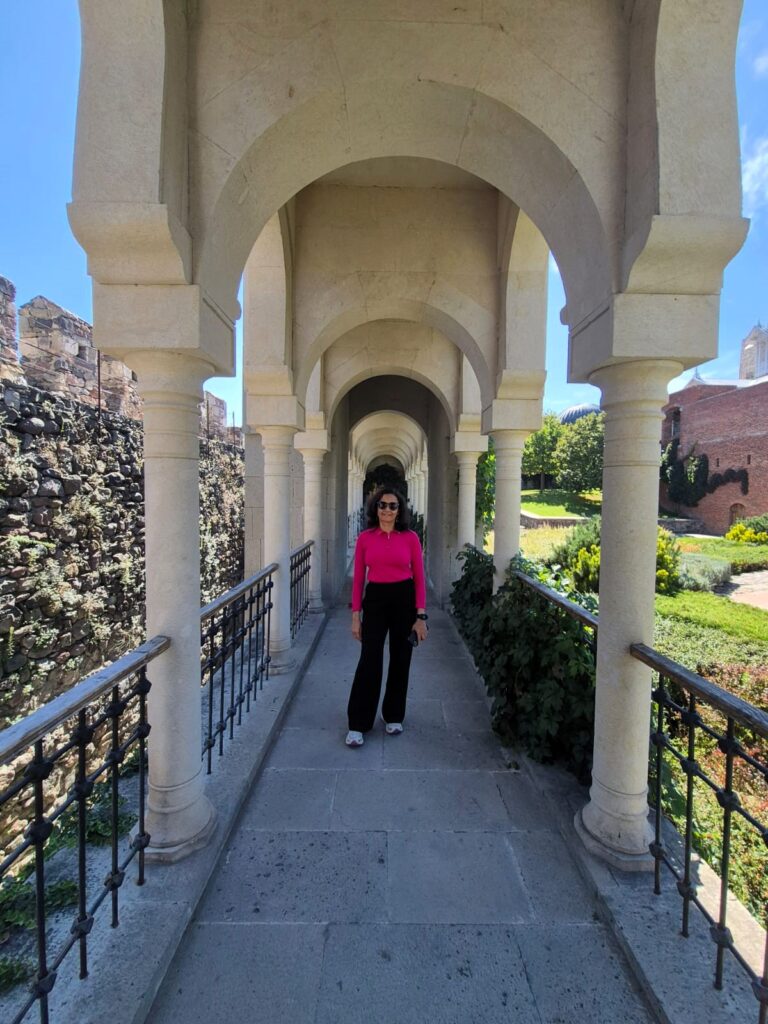
The entrance fee was 20 lari per person (about $7), and it was well worth it. The red-tiled roofs against the brick-red cliffs made for a stunning backdrop.
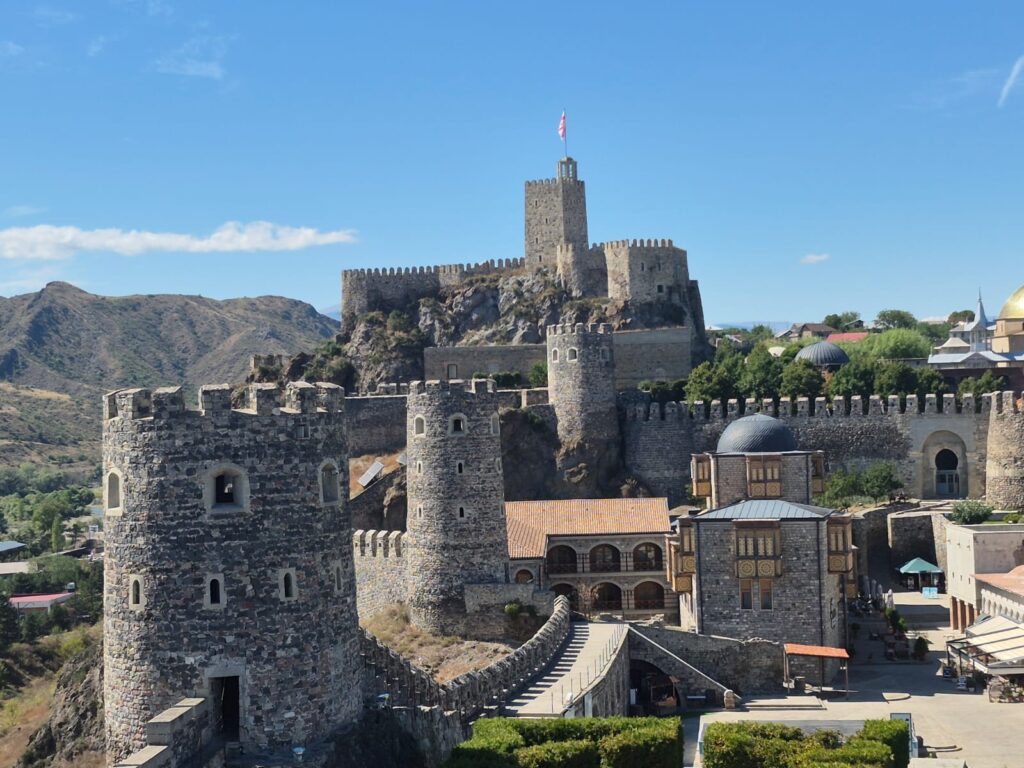
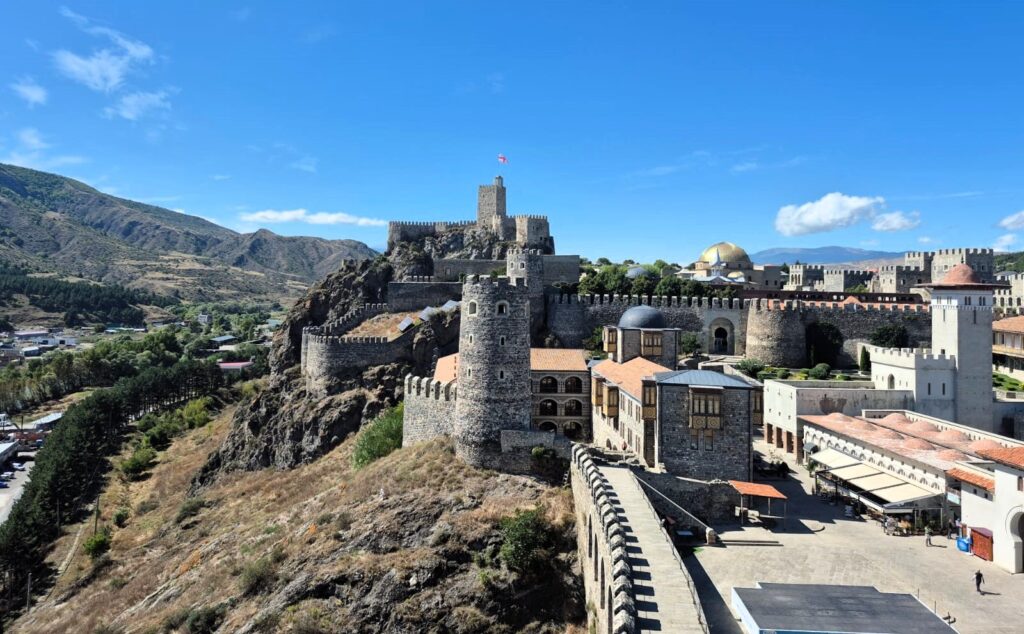
From the ramparts, we could see the Turkish border only 20 km away — a reminder of the centuries-old tensions and trade routes that shaped this region.
From Akhaltsikhe, we continued west to Kutaisi, one of the oldest continuously inhabited cities in Europe.
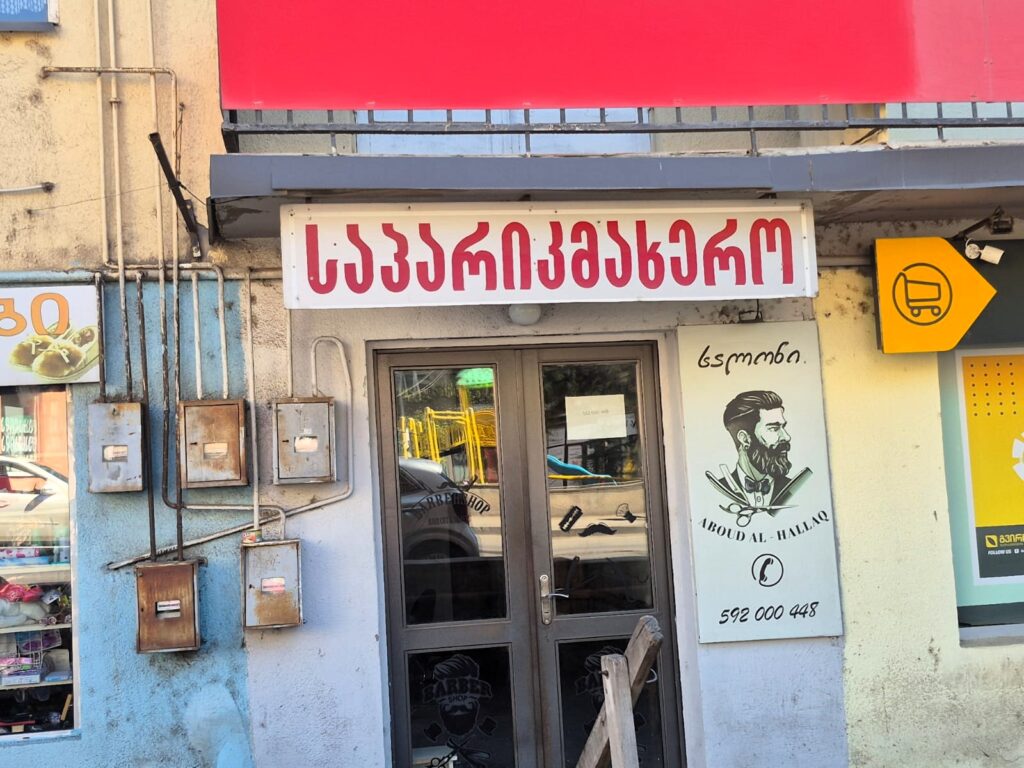
A roadside barber shop that caught my attention — a little slice of daily life that looked straight out of another time.
We reached Hotel Continental in Kutaisi at 5:50 pm. The hotel was clean and comfortable, but not particularly luxurious.
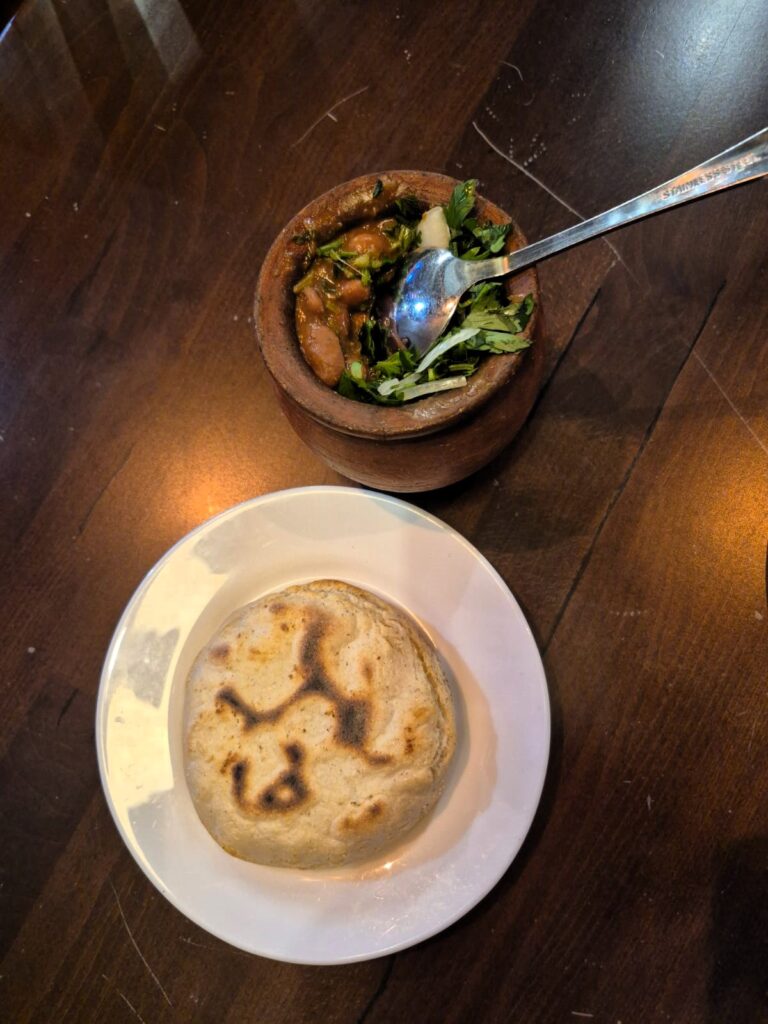
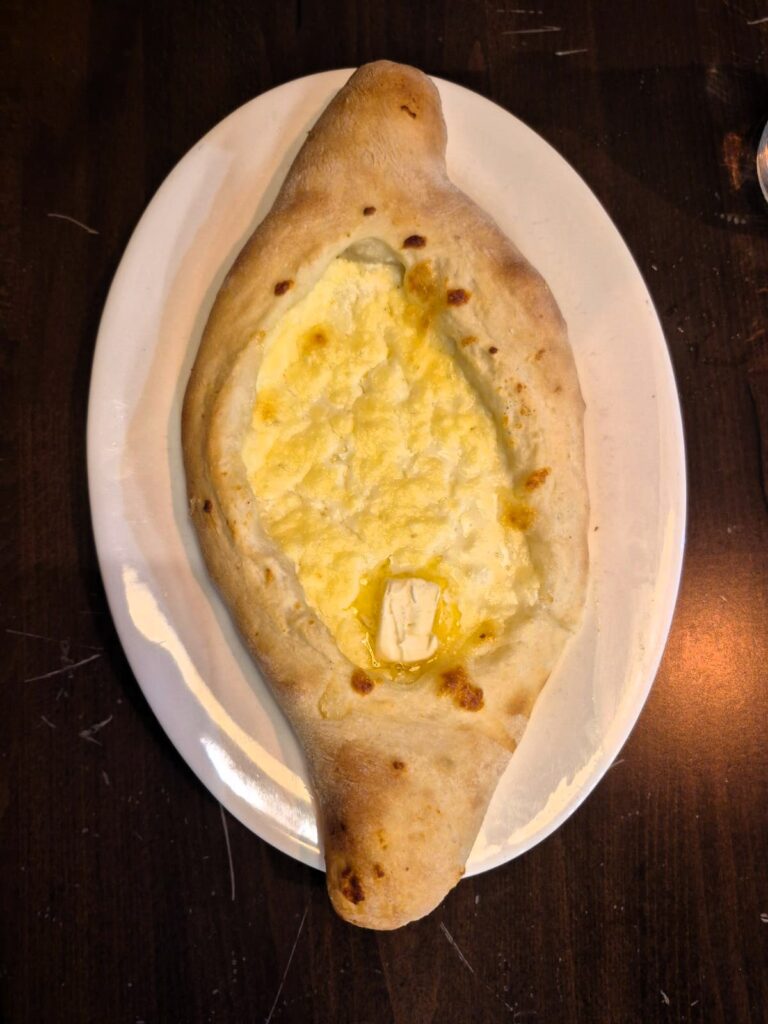
In the evening, we explored Kutaisi’s city center and dined at El Paso, a restaurant that cheerfully made vegetarian food for us. We had khachapuri, lobio, and mchadi bread — classic Georgian dishes. Khachapuri is Georgia’s national dish: a soft, boat-shaped bread stuffed with molten cheese. There are many regional varieties — Imeretian, Adjarian, and Megrelian — each with slight differences in dough and filling. Mchadi is a simple cornbread made from cornmeal and water, often fried and eaten with beans or cheese. It’s humble yet perfectly complements lobio, the Georgian kidney bean stew.
In front of the restaurant stood the Colchis Fountain, a dazzling circular fountain adorned with gilded replicas of ancient Colchian artifacts — a nod to Georgia’s mythic heritage of the Golden Fleece.
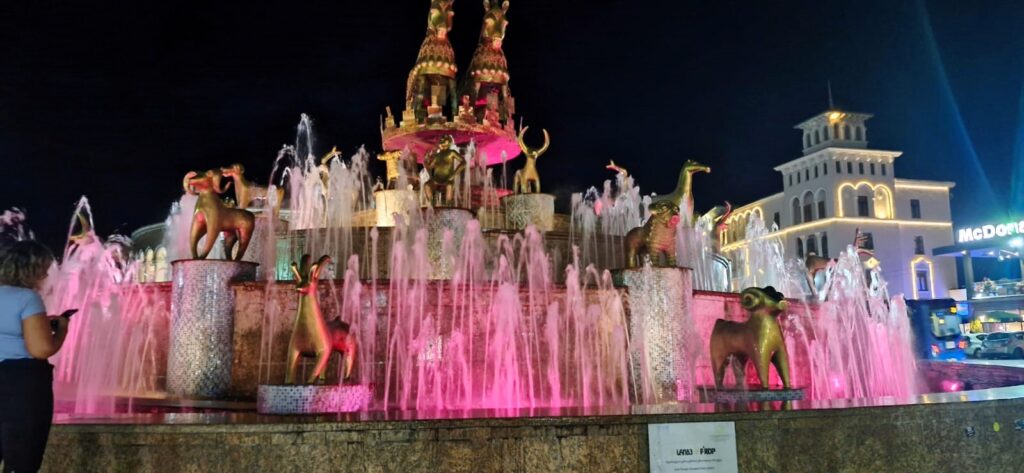
We strolled across the square, realizing that walking in Georgia feels a lot like India — few pedestrian crossings, but drivers generally stop for you. The same cars, though, become impatient and daring when overtaking!
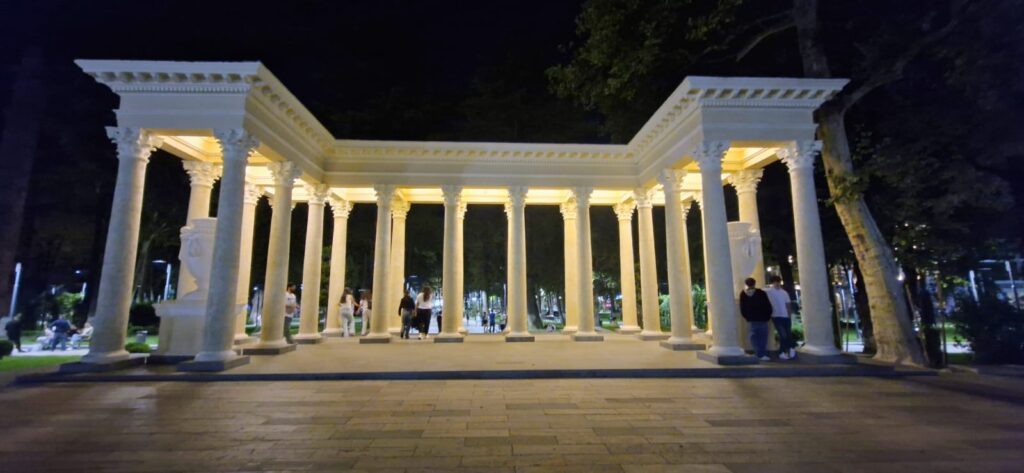
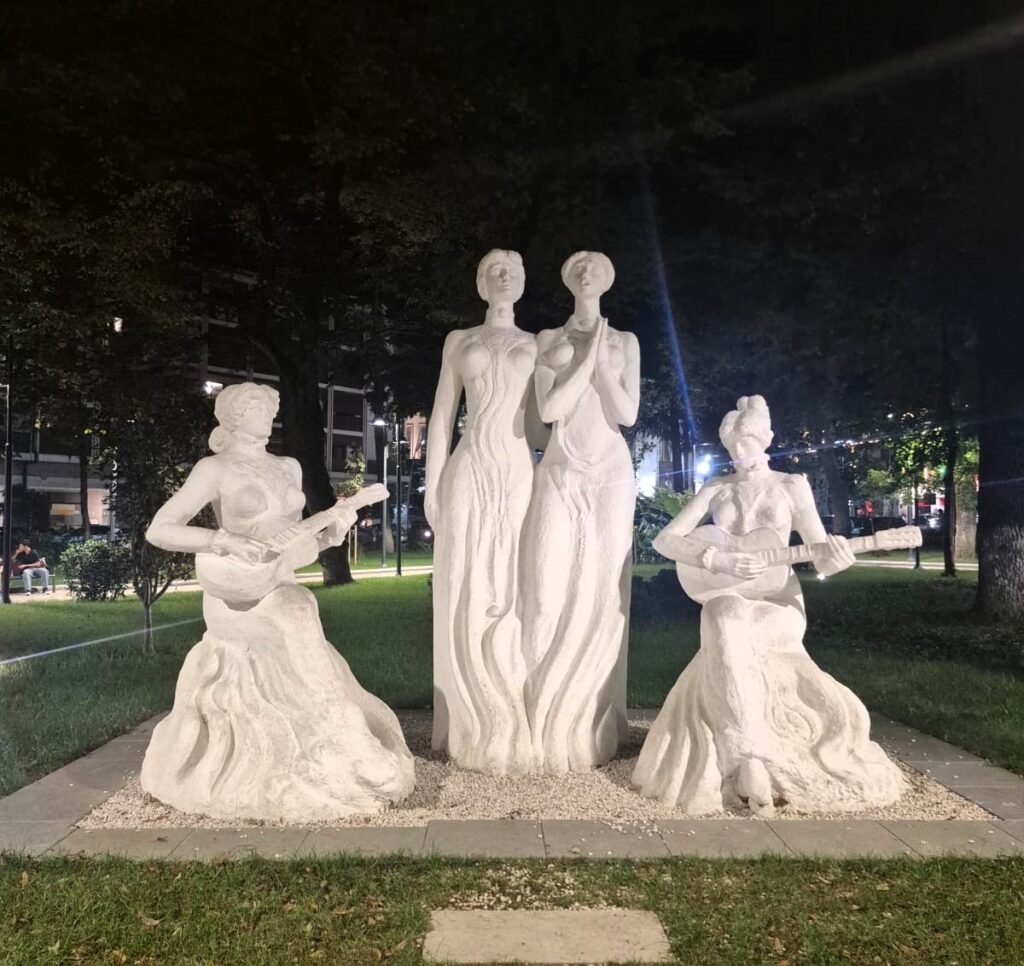
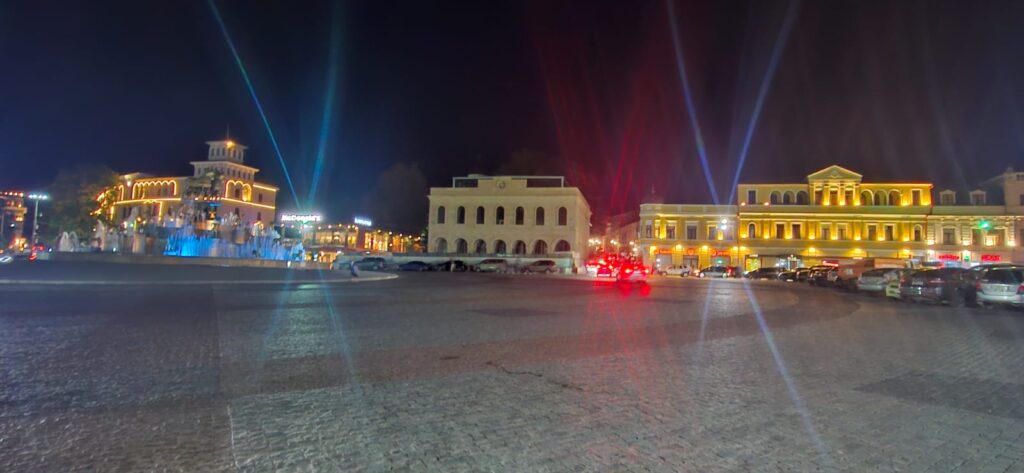
Finally, we drove uphill to Bagrati Cathedral, built in the 11th century by King Bagrat III. Though destroyed by invasions and earthquakes, it has been carefully restored, with major conservation completed in 2012.
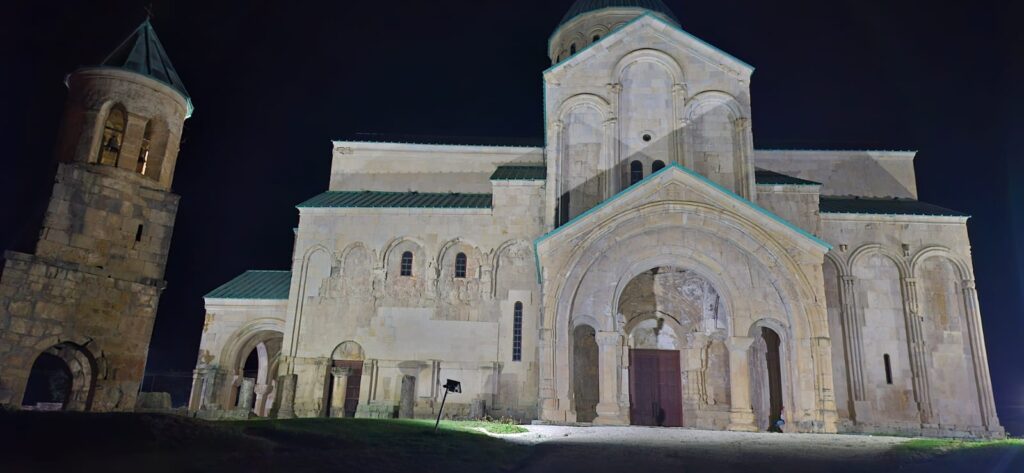
From its hilltop, the cathedral offers sweeping views of Kutaisi lit up at night. We returned to our hotel by 9 pm, after a day full of natural beauty, history, and Georgian hospitality.
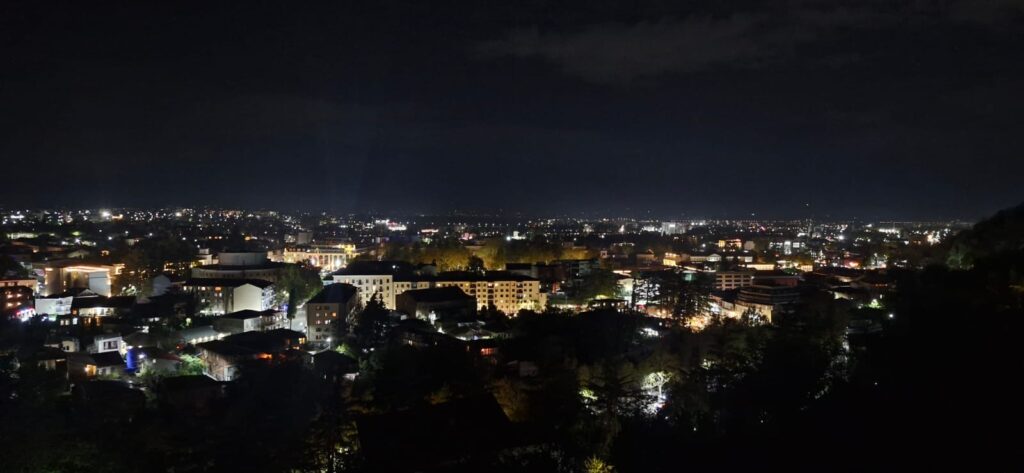
Day 6: Wednesday, September 17 — Kutaisi, Martvili Canyon & Prometheus Cave
We started the day by leaving Hotel Continental at 8:45 am. For breakfast, we picked up freshly baked Georgian bread — warm and soft, straight out of the oven.
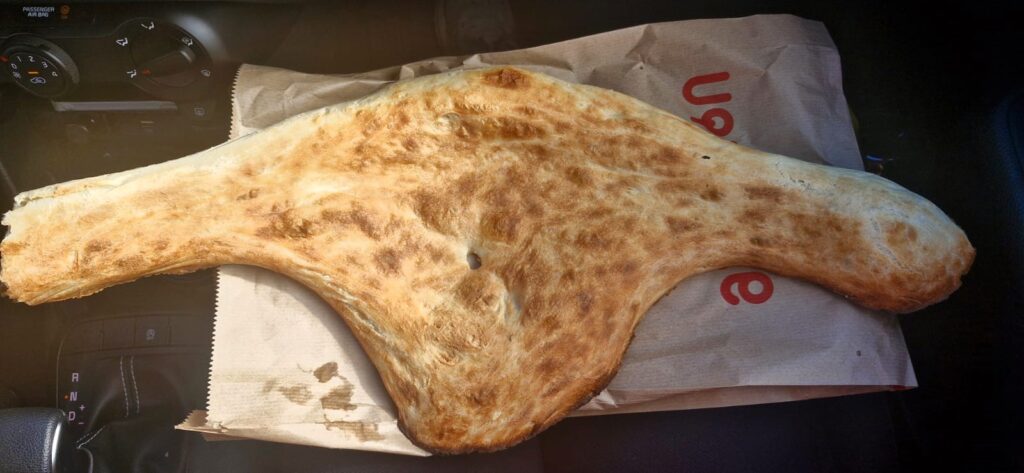
We paired it with yogurt, sour cream, and hot chocolate. It was simple but delicious, and just right before a day of exploring canyons and caves.
Our first stop was Martvili Canyon, about 45 km west of Kutaisi. We reached around 10:30 am. The canyon, also known as Gachedili Canyon, is one of Georgia’s most popular natural attractions and a favorite day trip from Kutaisi.
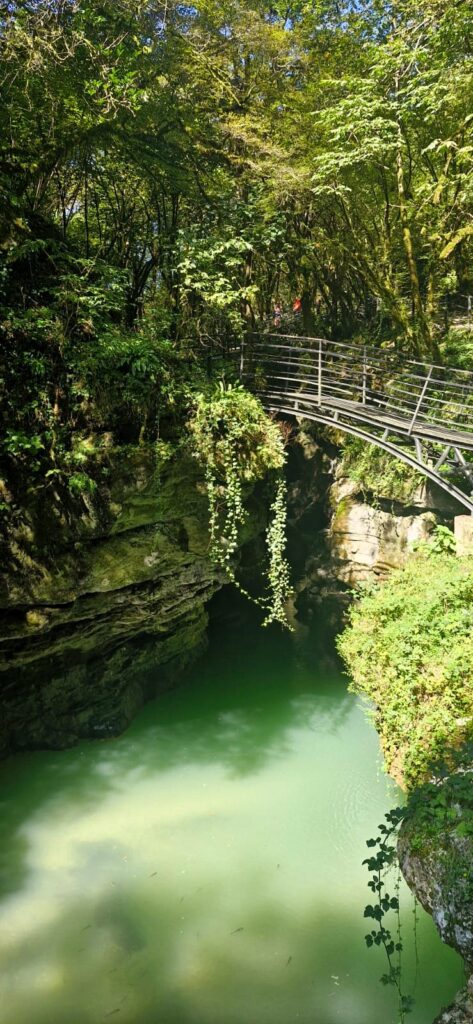
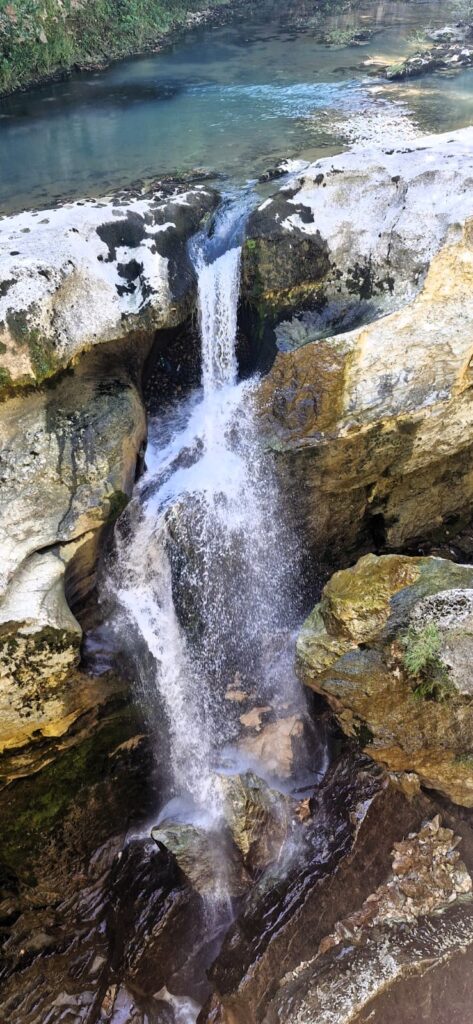
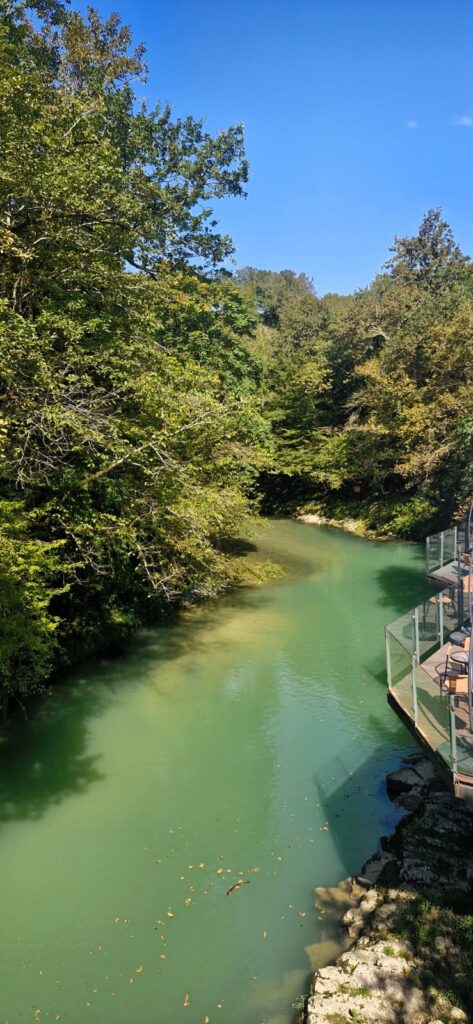
Carved by the Abasha River, it stretches for about 2.4 kilometers, with steep rock walls 50 to 70 meters high.
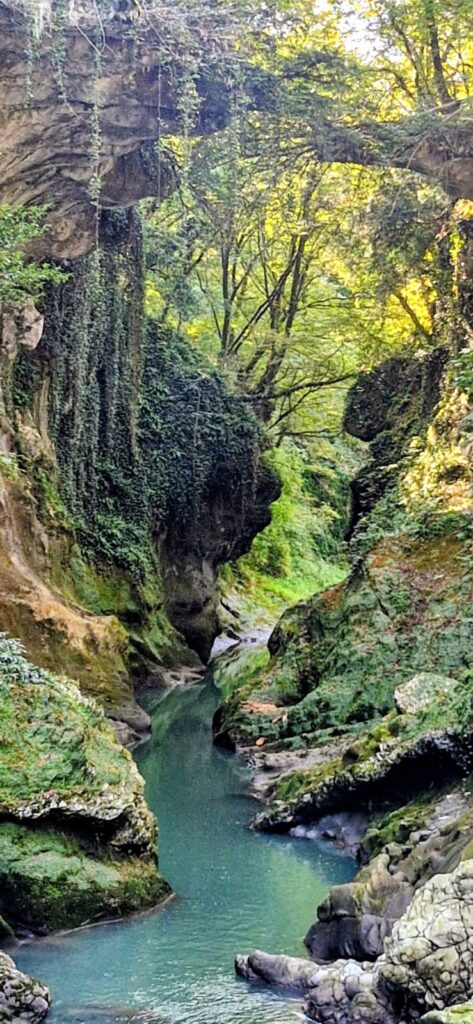
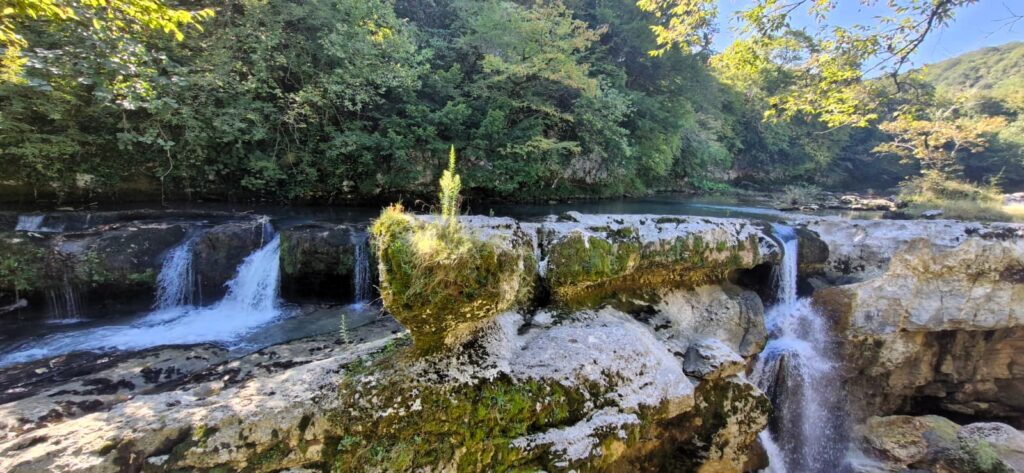
Over thousands of years, the water has shaped the limestone cliffs into striking patterns, and the area now features waterfalls and emerald pools. Visitors can explore by walking trail (700 mtr) and take a short 15-minute boat ride through the gorge.
Some reviews we had read said Martvili Canyon was overrated, but we disagreed. It was beautiful — the air was fresh, the scenery lush, and the sound of rushing water filled the place with calm. We skipped the boat ride but enjoyed the walking trail and took many photos.
We left Martvili around 11:30 am and headed for Prometheus Cave, reaching there by 12:55 pm. We managed to join the 1 pm guided tour just in time. The Prometheus Cave, near the village of Kumistavi, is the largest cave in Georgia and among the most impressive in the Caucasus.
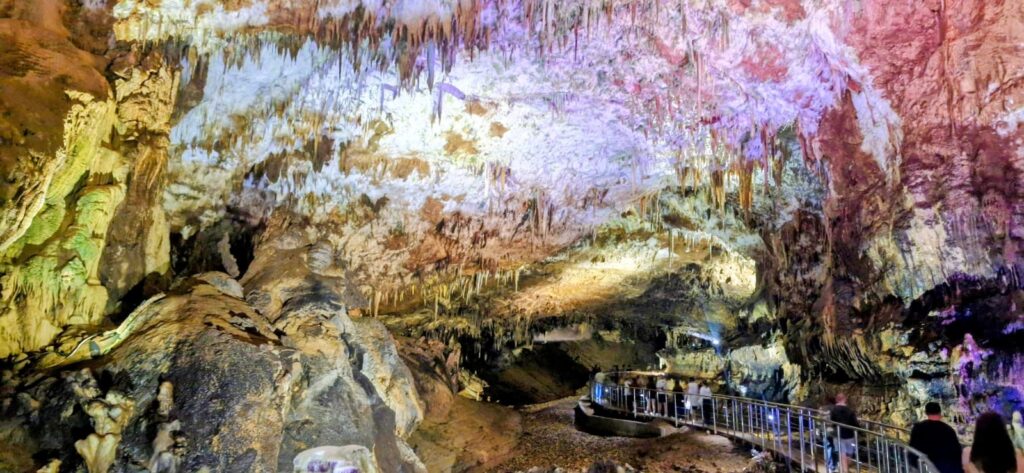
Discovered in 1984 by Georgian scientists searching for potential nuclear fallout shelters, the cave revealed a spectacular network of chambers filled with stalactites, stalagmites, and mineral curtains.
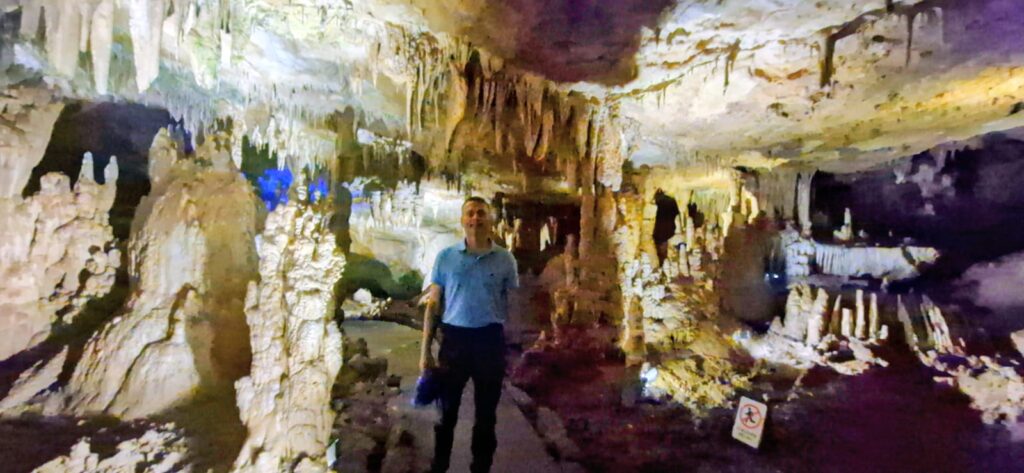
Visitors can walk through a 1.4 km illuminated path that showcases six massive halls — each with its own formations and color lighting. There’s also an underground river that can be explored by boat when conditions allow.
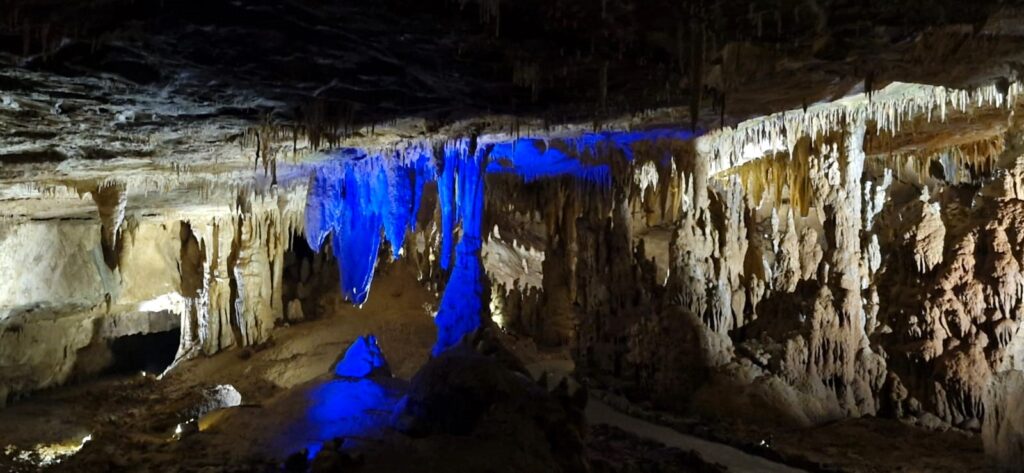
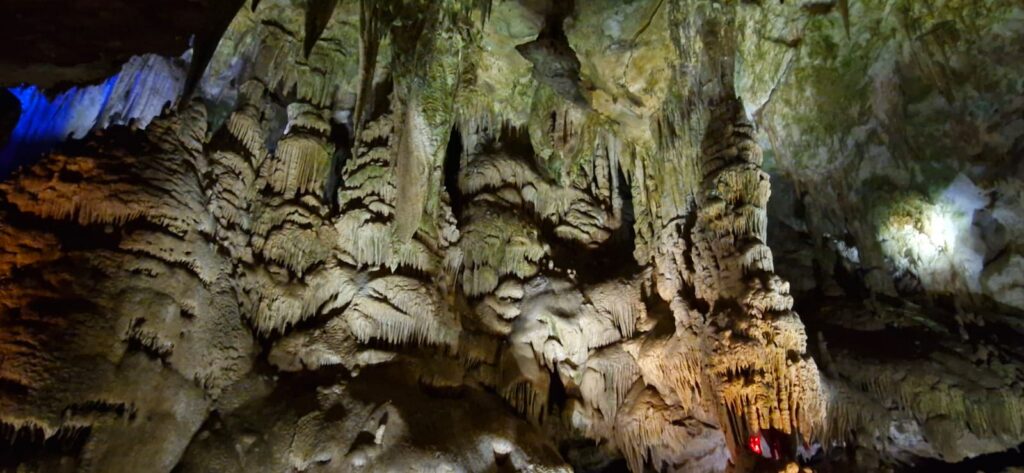
As we walked through the cave, the guides explained how water had sculpted these shapes over millions of years, drop by drop. The atmosphere inside was magical — cool, echoing, and full of surreal beauty.
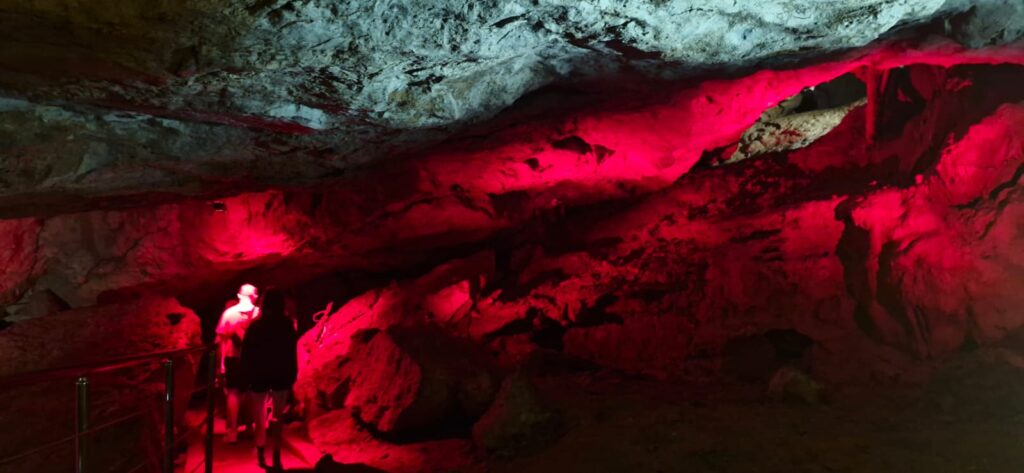
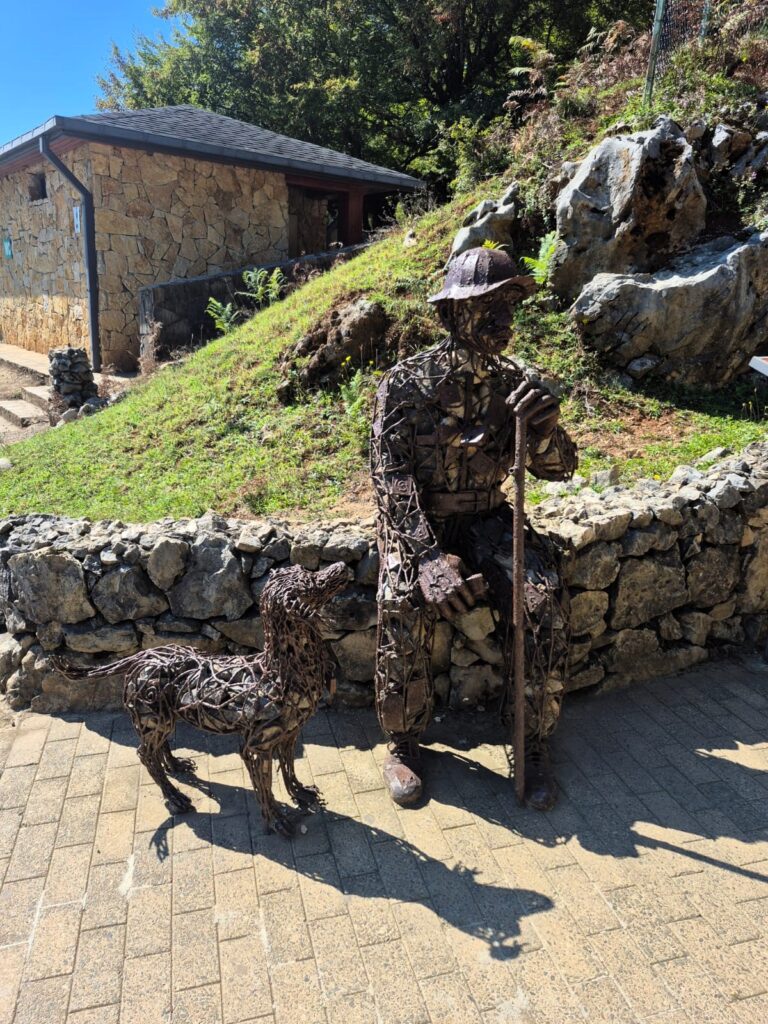
When we exited after an hour and a half, we saw a statue of Giorgi Tkabladze, the cave’s longtime guardian. After its discovery in 1984, Tkabladze protected the site for over 30 years before it became a tourist attraction. His statue stands at the exit as a tribute to his devotion — a touching reminder of how much individuals can do to preserve nature’s wonders.
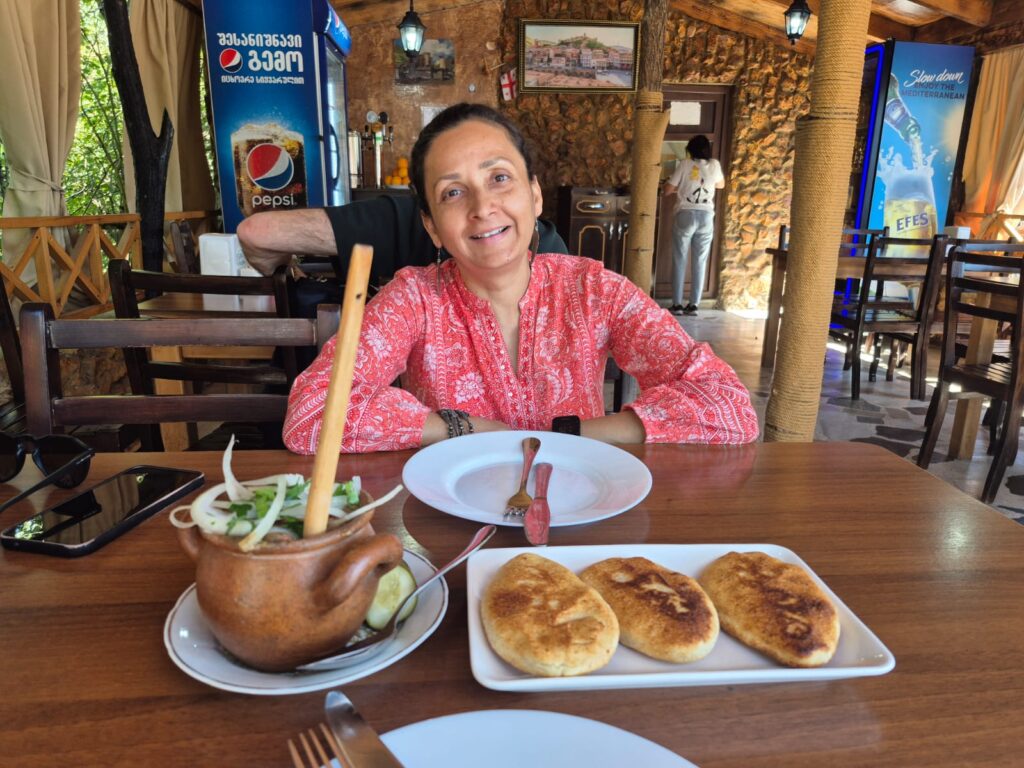
We had lunch at the visitor center — lobiani (bean pot) and mchadi bread again, the same combination we had the previous day. Even though it was a repeat, it was wholesome and comforting, especially after a long walk underground.
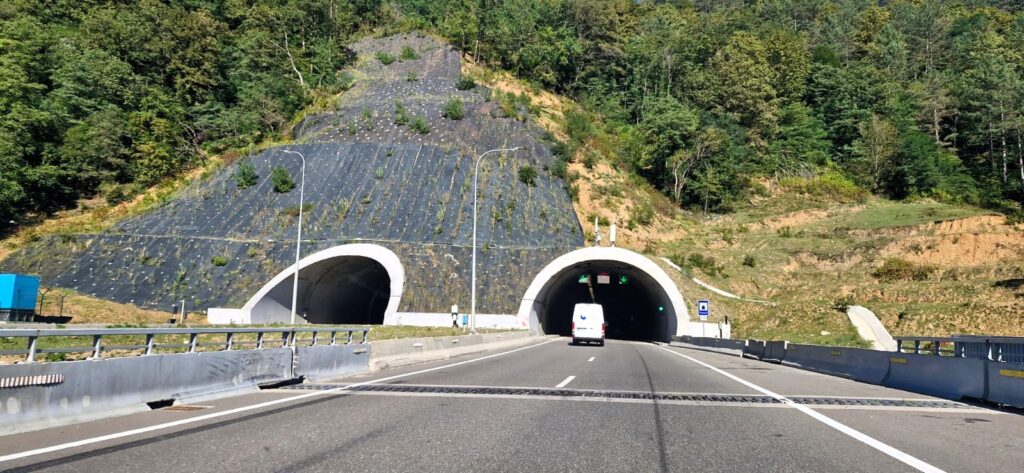
By 2:30 pm, we began our drive back to Tbilisi, roughly 250 km away. The road was good, mostly a freeway, passing through rolling hills and several tunnels burrowed under the mountains.
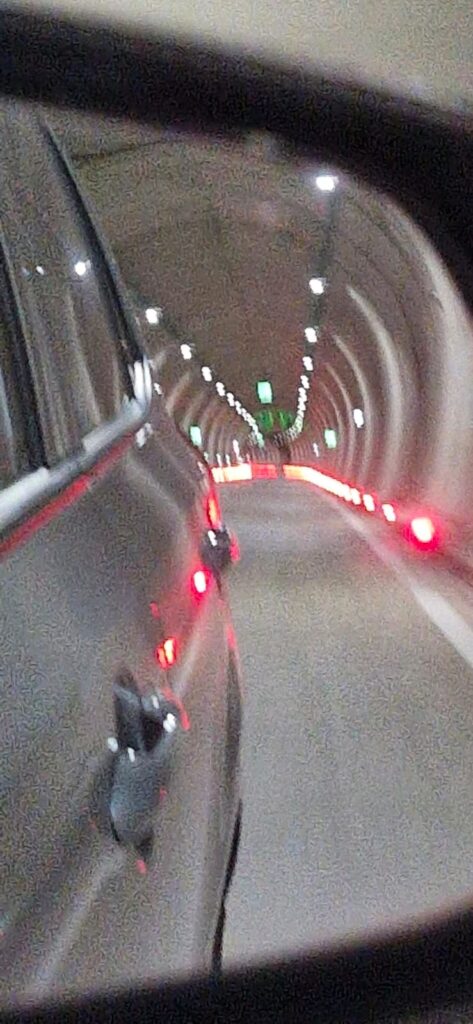
It still took about four and a half hours because of construction work and occasional traffic jams. Driving through the tunnels was interesting — the LED lights inside glowed green when moving in the right direction but appeared red when seen in the rear-view mirror.
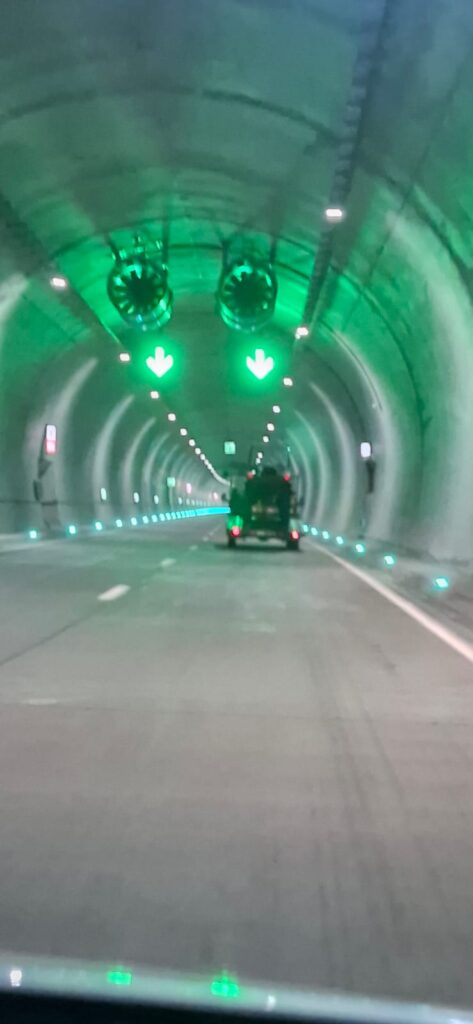
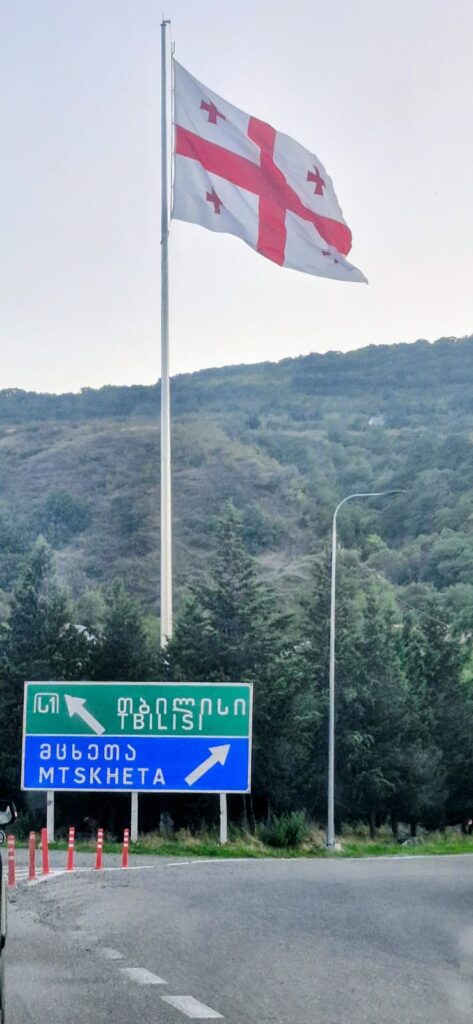
On one stretch of the smaller highway, we saw a long line of parked trucks — perhaps waiting for a specific time window to continue, though no one seemed in a hurry.
The smaller highways reminded us of Indian countryside roads — lively, a bit chaotic, and full of character. We reached Tbilisi around 7:30 pm, returned the car, and got back to the Hilton Garden Inn at about 8:10 pm.
It had been a great two-day trip to Akhaltsikhe, Borjomi, and Kutaisi, and this day — with its caves, canyons, and mountain drives — was the perfect conclusion. We went to bed excited for our next day’s adventure to Gudauri and Kazbegi.
Day 7: Thursday, September 18 — Gudauri & Kazbegi Day Tour
We had booked a guided tour to the northern mountains of Georgia — Gudauri and Kazbegi. At 9 am we reported at Avlabari metro station, where the bus set off promptly with our group.
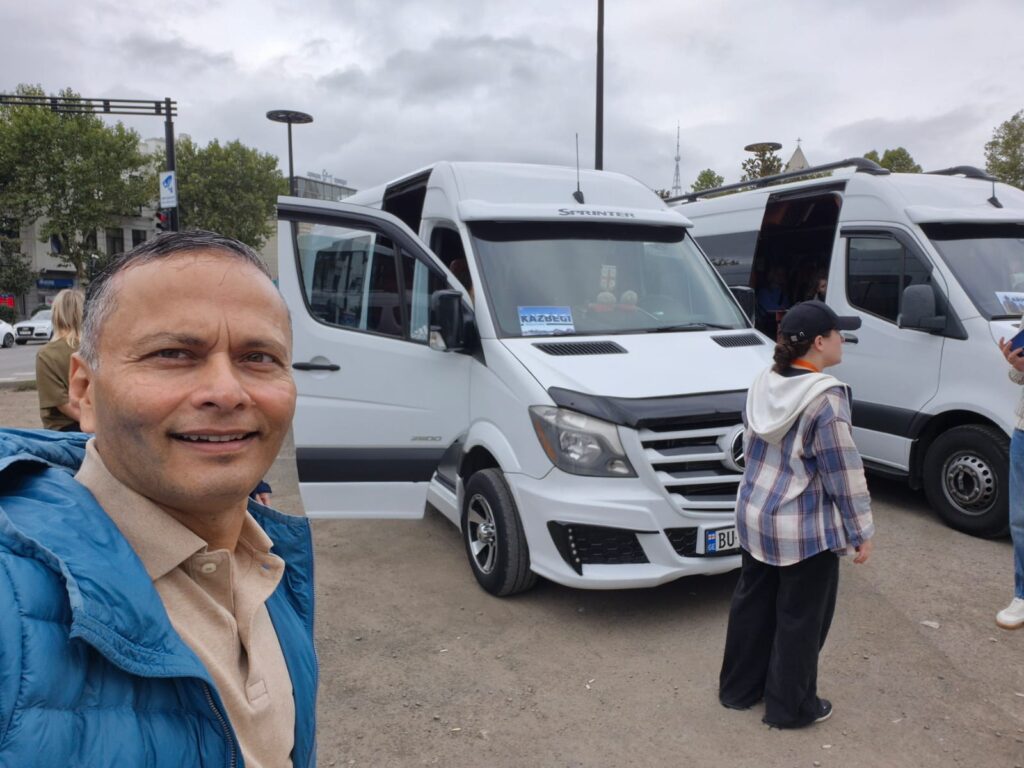
Our first stop was the Zhinvali Reservoir, formed by the Zhinvali Dam built in 1986. The dam is part of a large hydroelectric complex on the Aragvi River, providing water and electricity to the region.
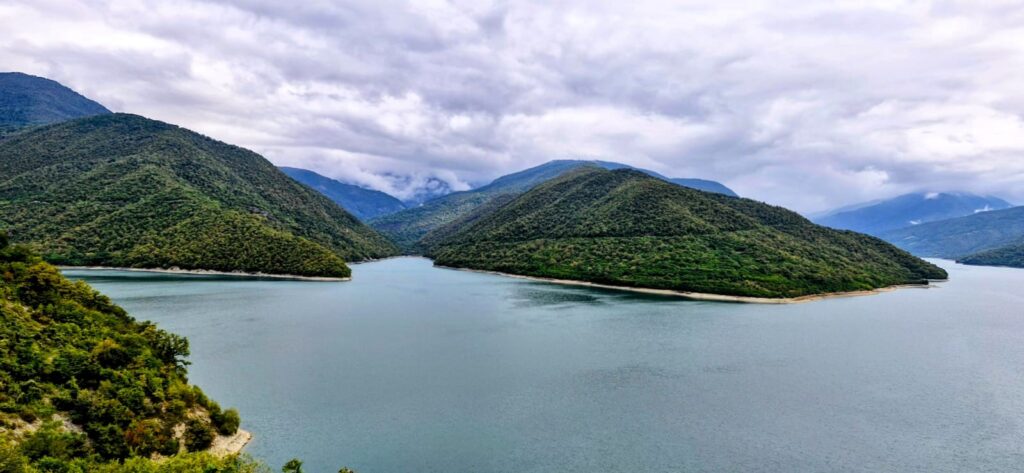
The turquoise lake it created is surrounded by rolling hills and dense forests, making it one of the most photographed spots on the Georgian Military Highway.
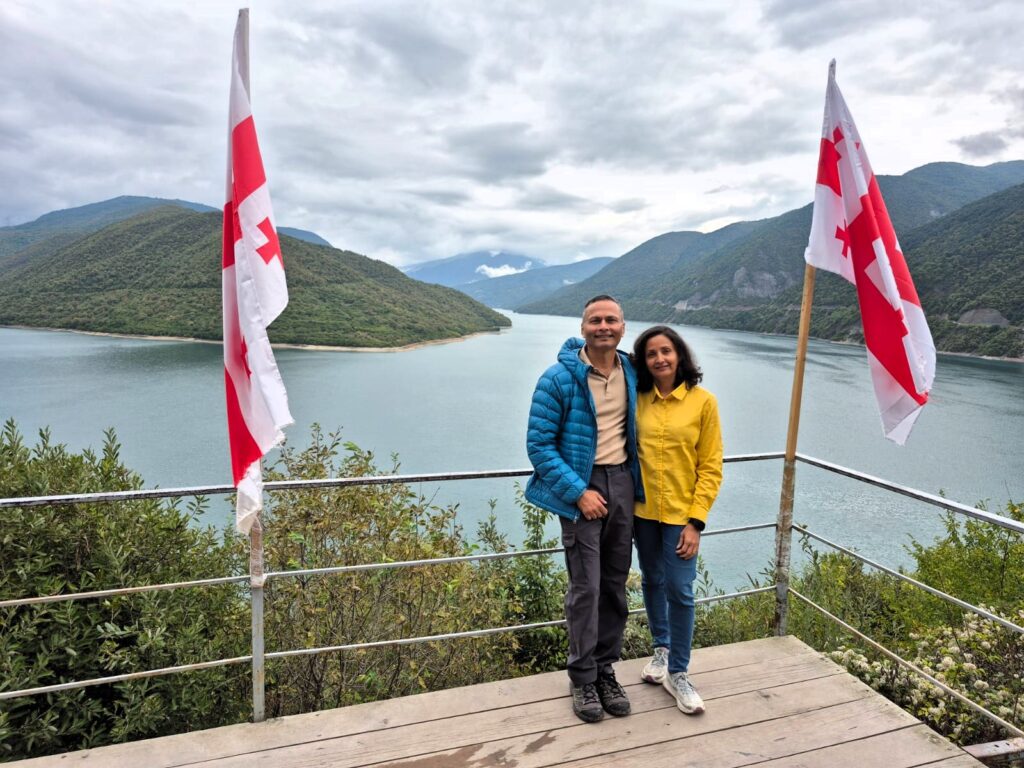
On misty mornings, the water reflects the sky and mountains, creating a dreamlike scene.
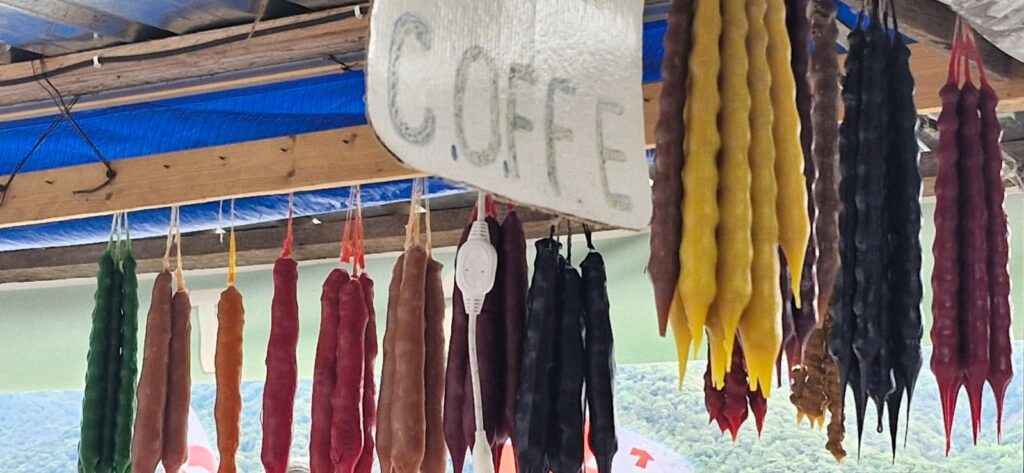
Near the reservoir we noticed colorful candy hanging in bunches. This was churchkhela, Georgia’s traditional sweet. Strings of walnuts or hazelnuts are dipped repeatedly into a thick paste of grape juice and flour, forming a chewy coating around the nuts, and then dried for several days. Beyond being a festive treat, churchkhela was historically carried by Georgian warriors as a source of long-lasting energy during campaigns. It remains a symbol of hospitality and is often prepared in homes during the grape harvest season.
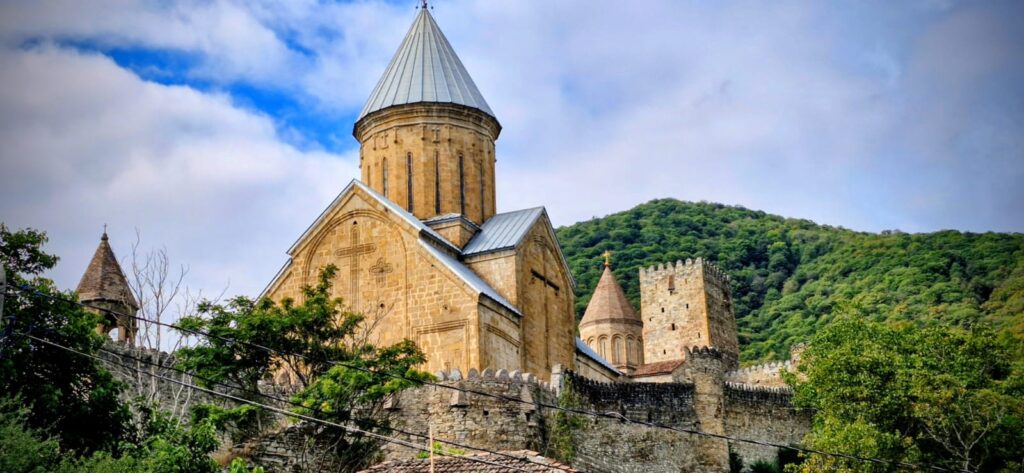
Just a few minutes away stood the Ananuri Fortress, guarding the Aragvi valley.
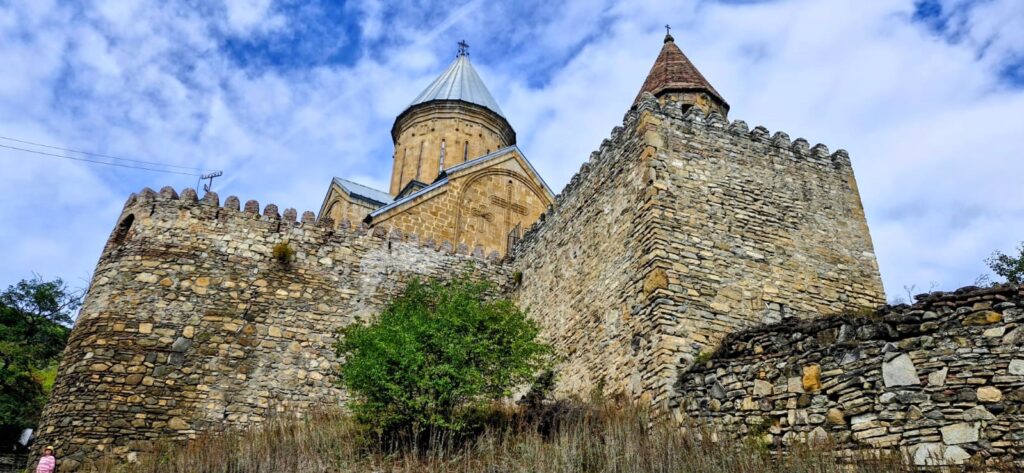
Its name comes from the story of Ana, a woman from Nuri village, who was captured during a siege in the 1700s. Tortured to reveal the secret tunnel supplying the fortress with food and water, she refused and chose death, becoming a local legend.
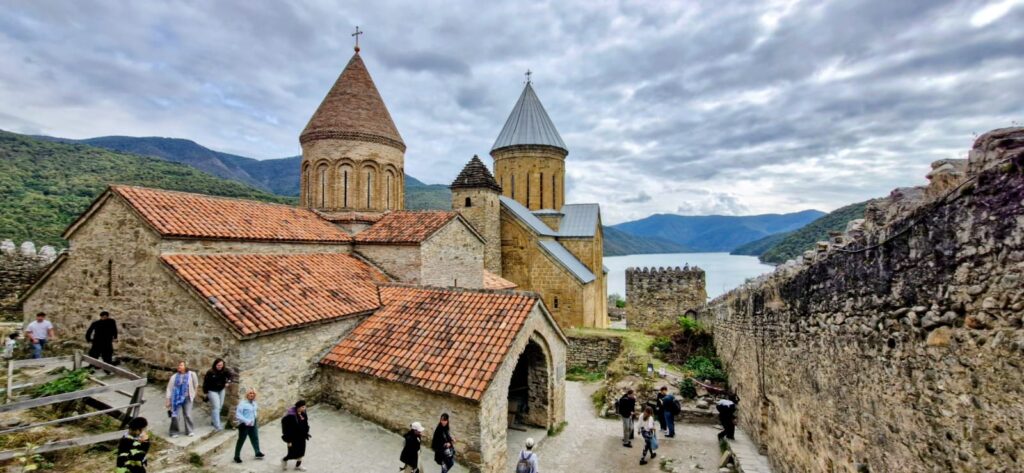
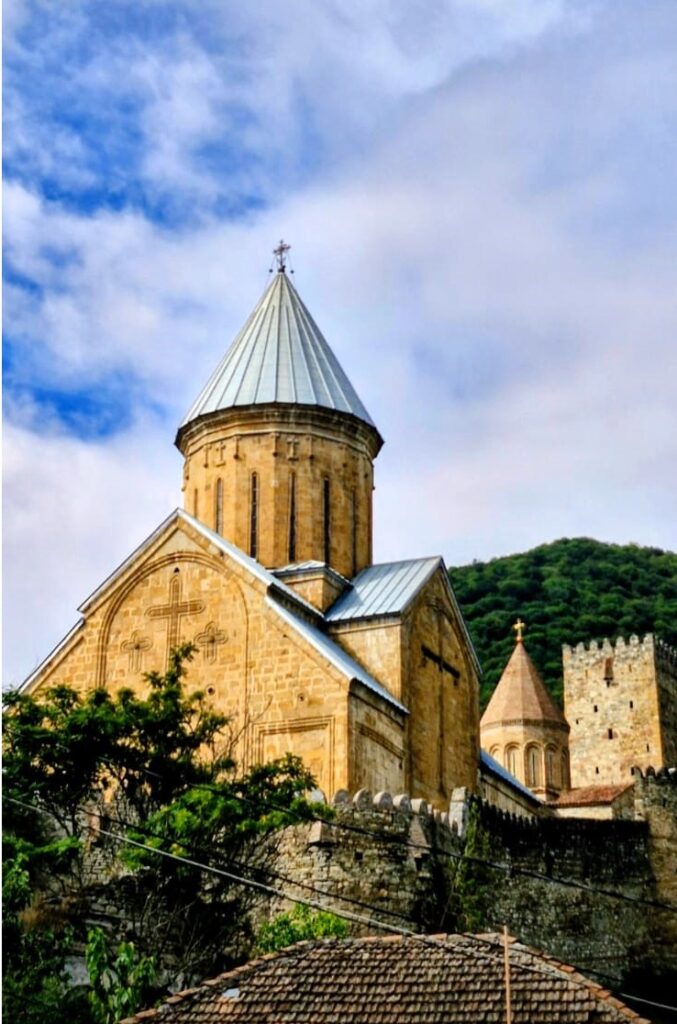
The fortress complex includes defensive walls, towers, and churches, and still commands an impressive view over the reservoir.
We stopped for lunch at a scenic riverside café.
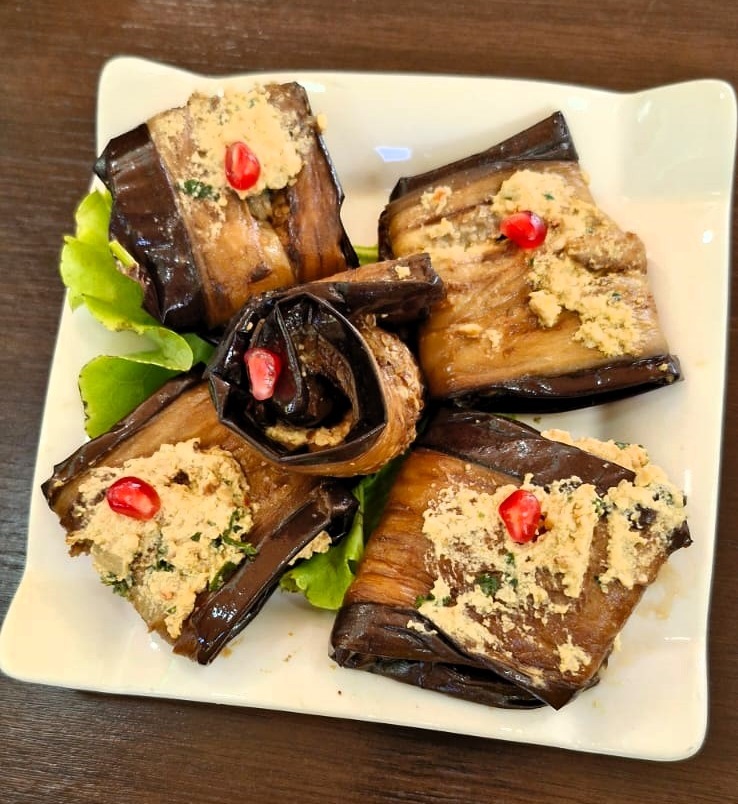
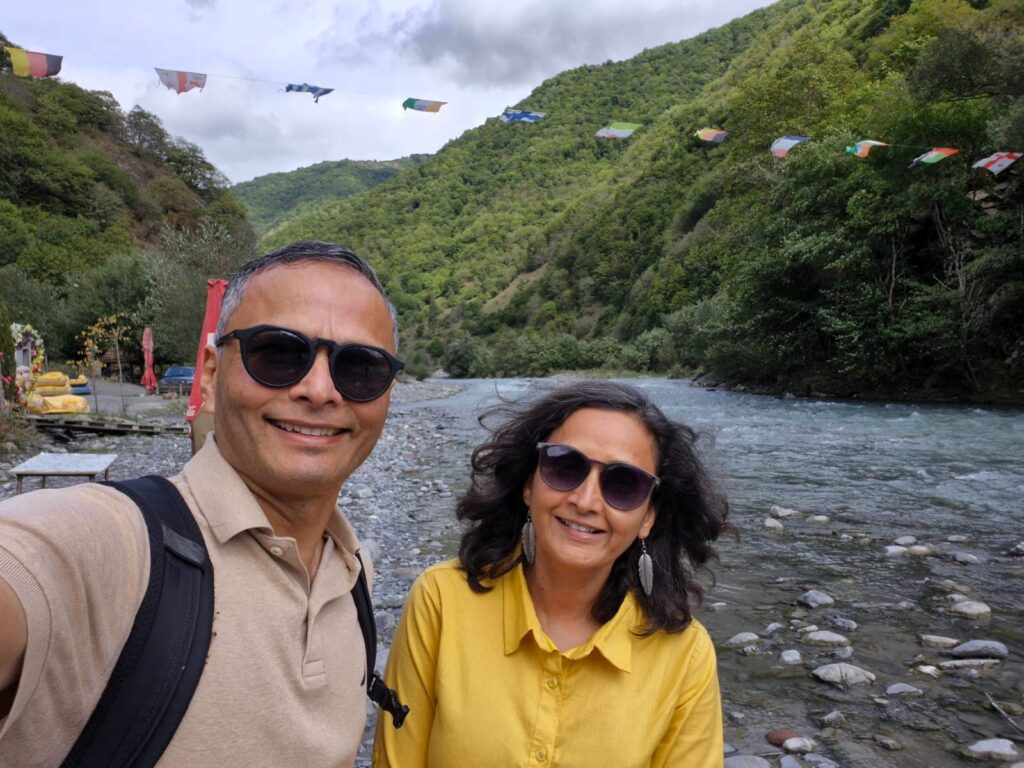
A new dish we tried was eggplant with walnuts, delicate slices of eggplant rolled and filled with walnut paste — light but satisfying. Georgian food has been very accommodating for vegetarians, using simple, fresh ingredients without being heavy.
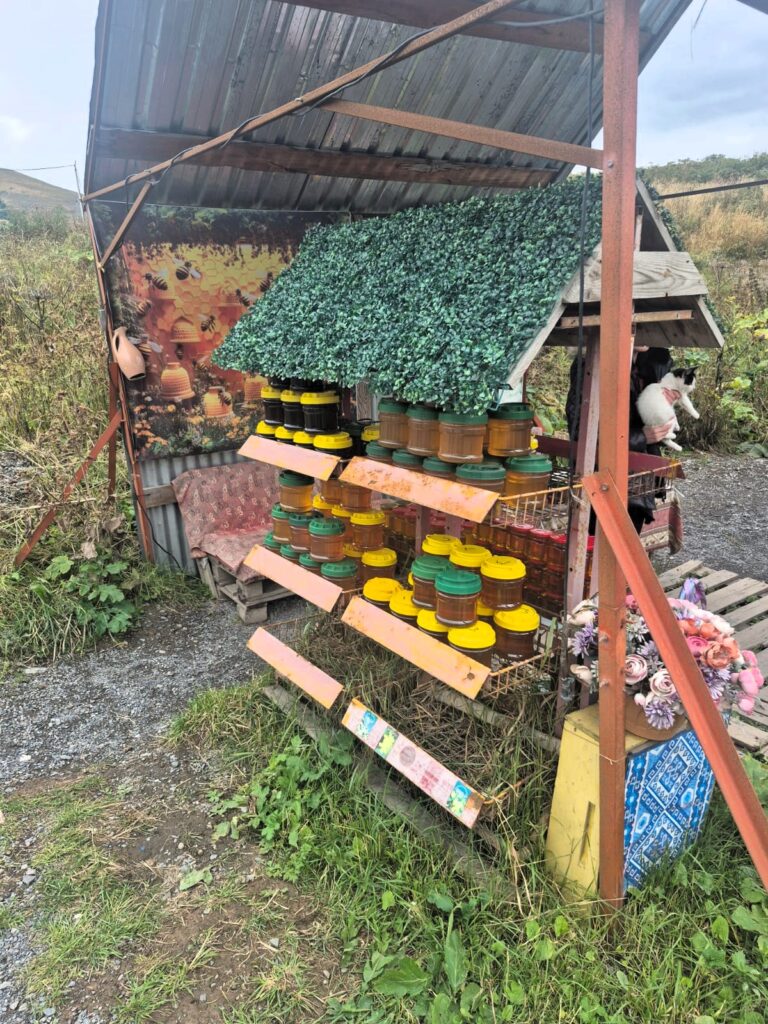
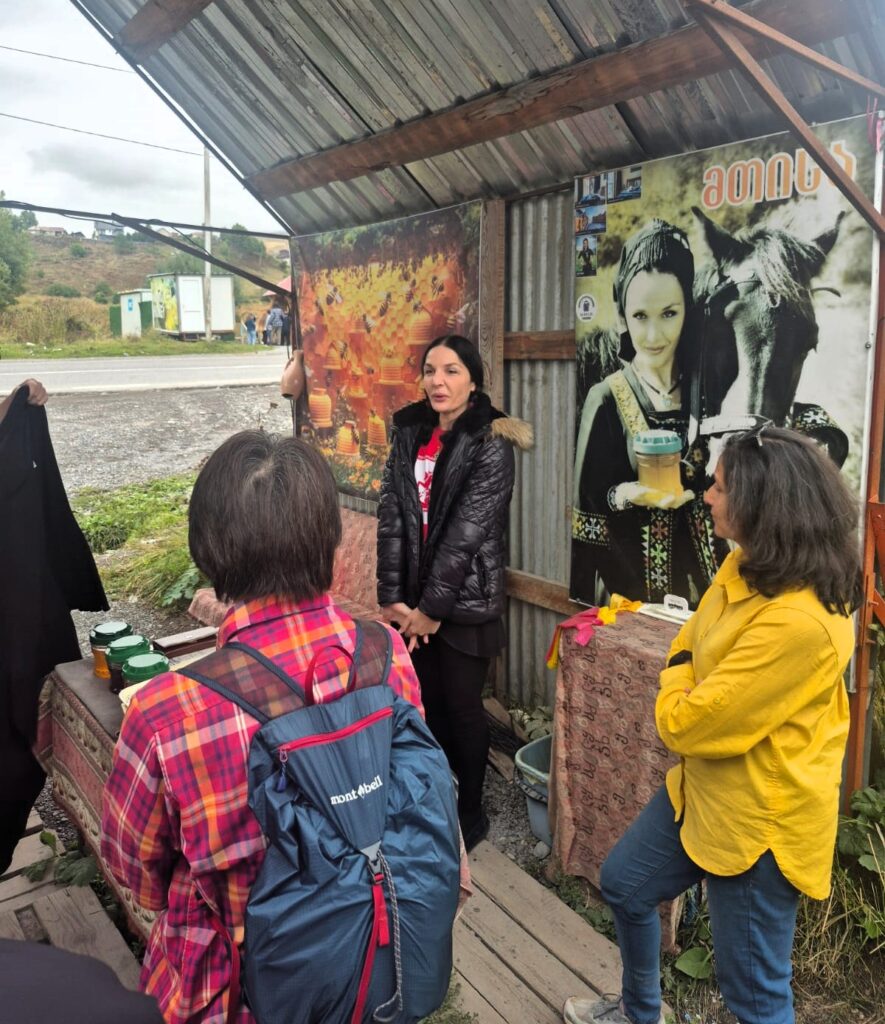
On the way, we also paused at a honey-tasting center. Local honey from Gudauri is prized for its alpine purity. We sampled mint, chestnut, and raspberry flavors, each distinct and delicious.
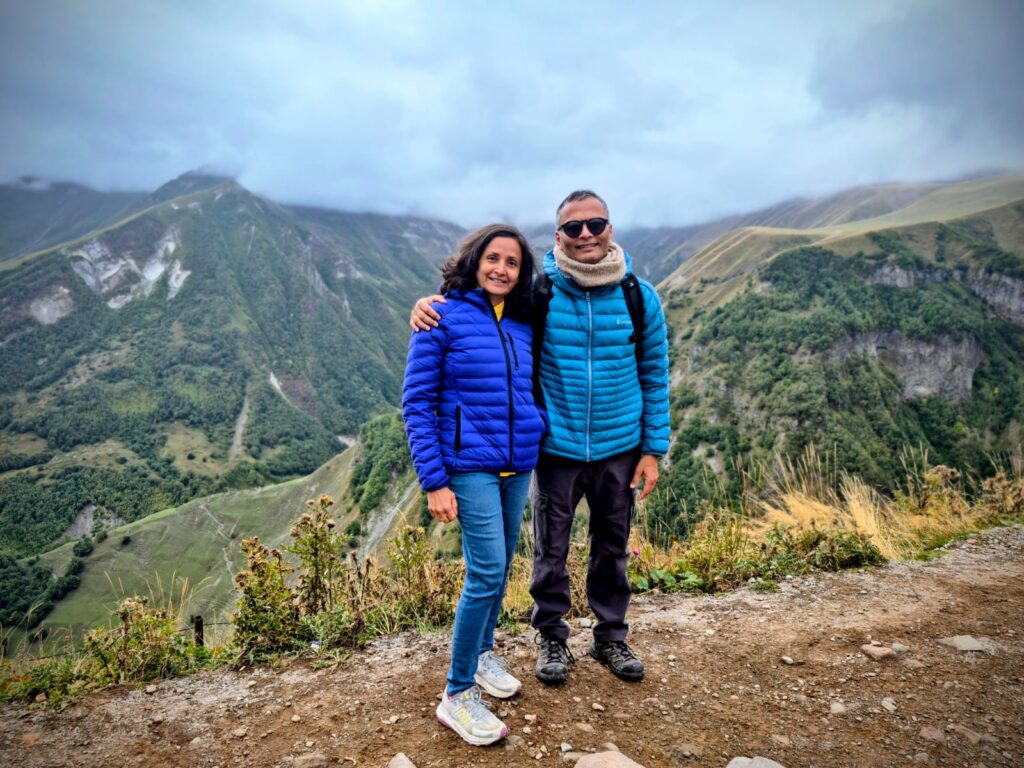
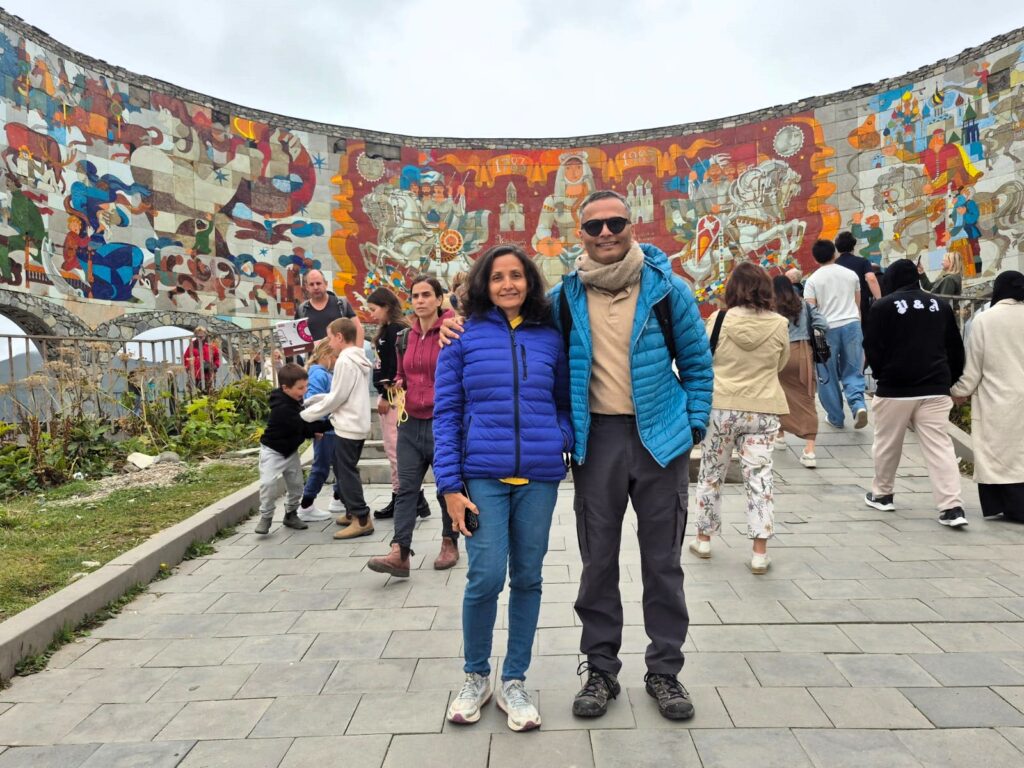
We visited the Russia–Georgia Friendship Monument, built in 1983 to commemorate the bicentennial of the Treaty of Georgievsk. The round stone structure has a massive mural inside, wrapping around its circumference, illustrating Georgian and Russian history in vivid scenes of battles, unity, and socialist ideals.
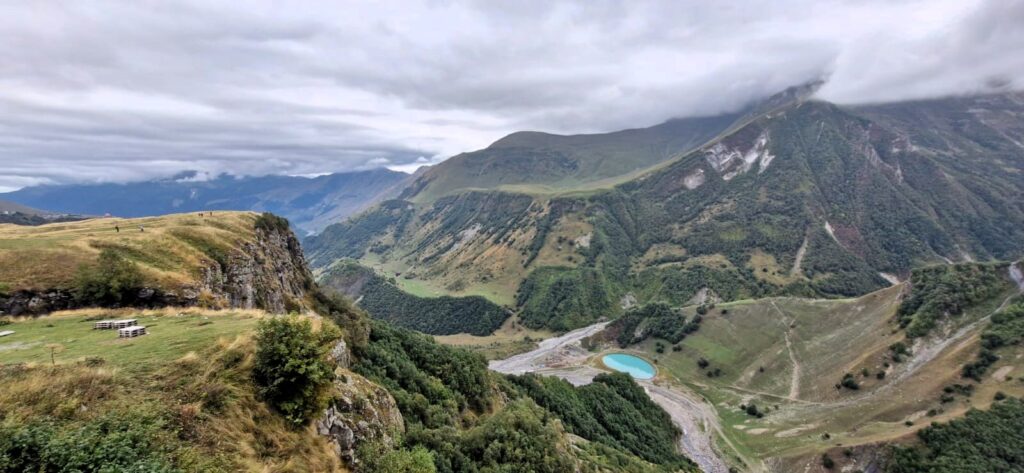
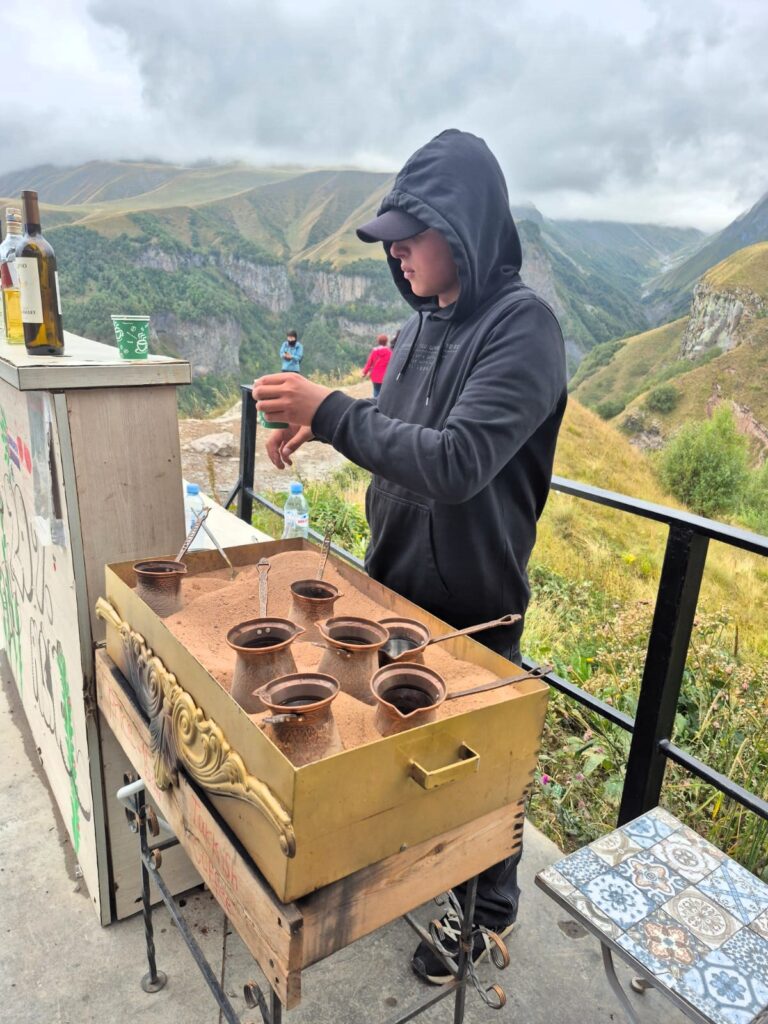
In Gudauri we also discovered “sand coffee,” where coffee is placed in a small pot and slowly heated in hot sand rather than directly over flame, giving it a unique richness.
Our final and most iconic stop was the Gergeti Trinity Church, near the town of Kazbegi (today Stepantsminda).
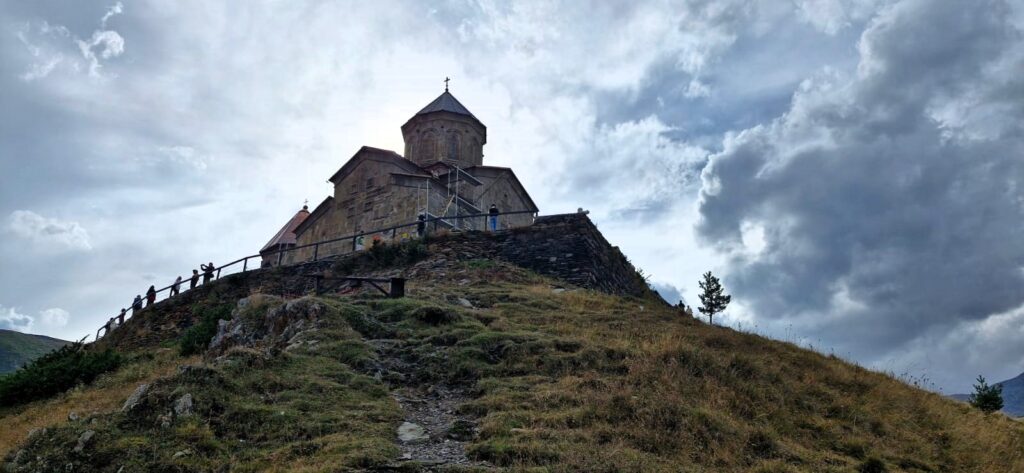
The church stands at 2,170 meters, high on a ridge with Mount Kazbek rising behind it. Built in the 14th century, the stone church and bell tower are isolated, accessible only by steep paths or winding roads.
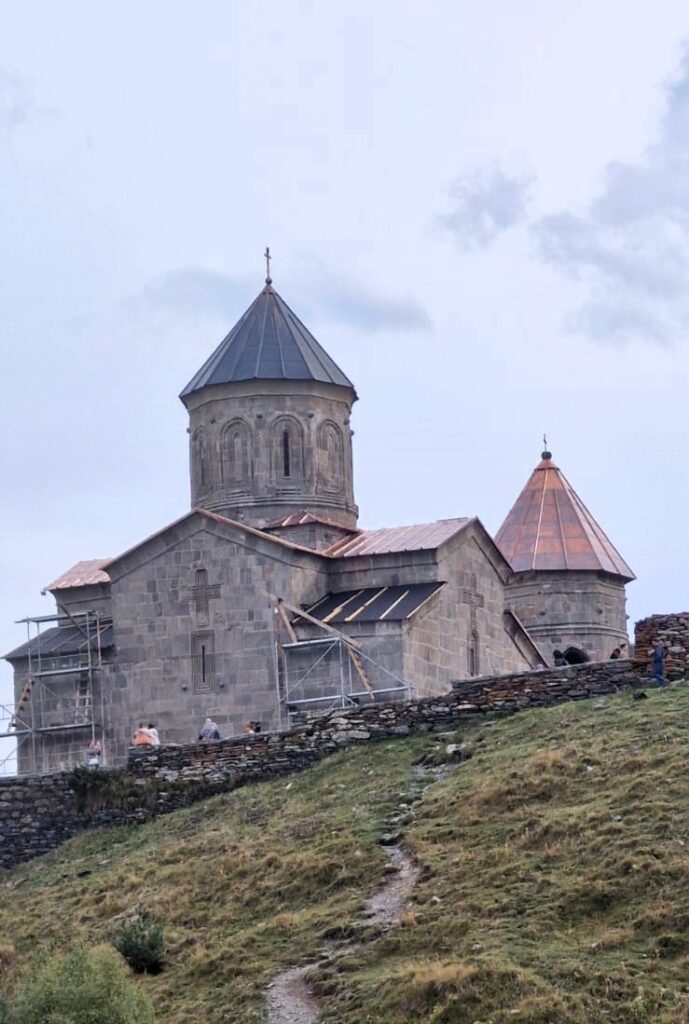
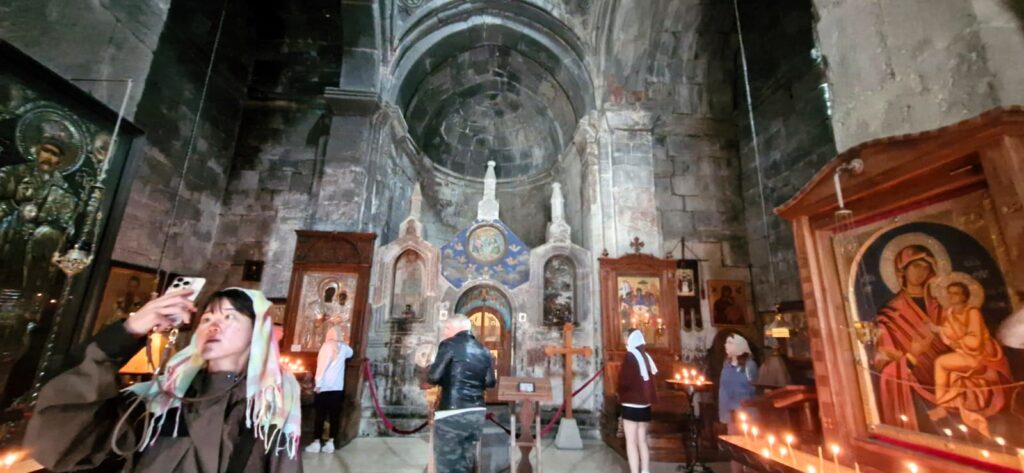
For centuries, its remote position made it a refuge: during invasions, Georgian treasures and relics were hidden here. Today, it is not only a working monastery but also one of the most photographed sites in Georgia, symbolizing the unity of faith, history, and breathtaking landscape.
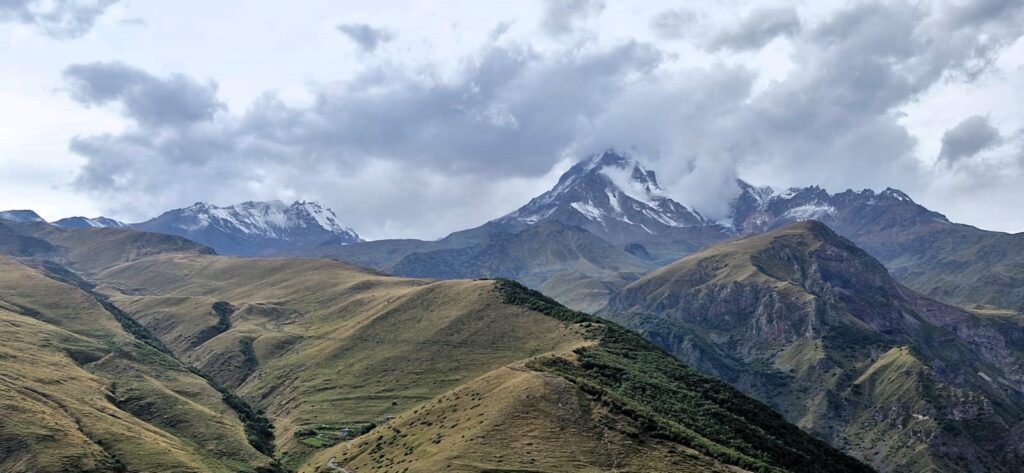
At Gergeti we also met many Indian tourists. One couple, Aditya and Pragya Chowdhary from Mumbai, were especially memorable.
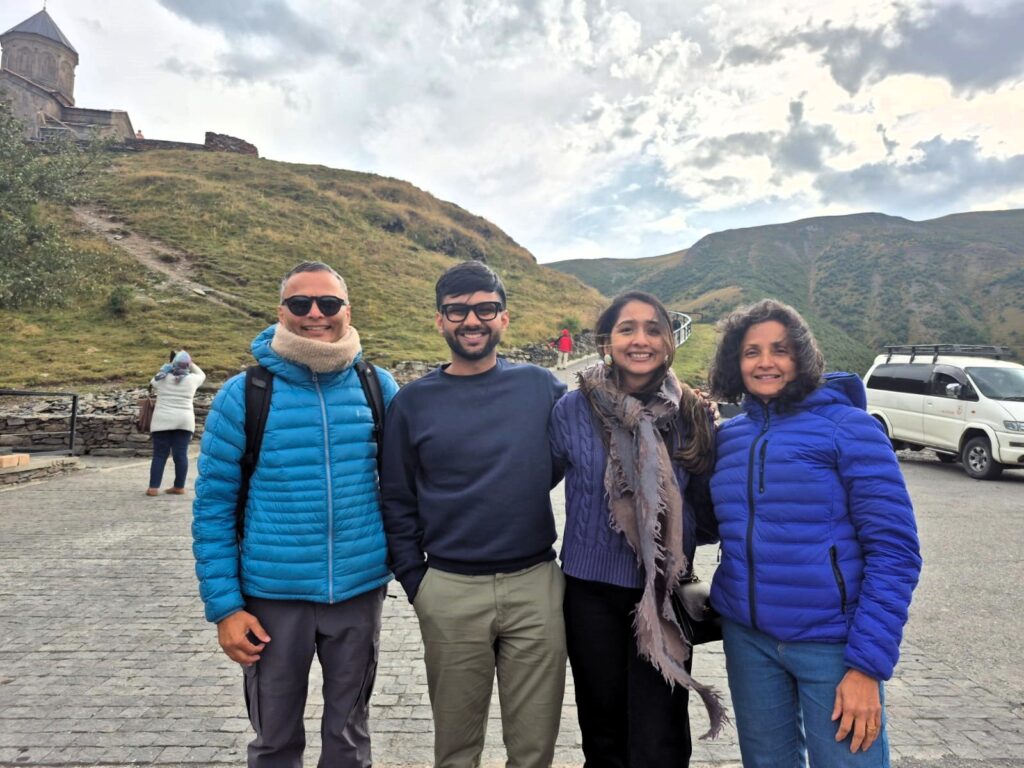
Aditya, at 28, is the same age as my son Aditya. We had a lively chat and learned they were staying back to trek in the mountains for three days. It was nice to connect with familiar faces so far from home.
By 4:30 pm, the tour wrapped up, and we began the return journey. We reached Tbilisi around 8:30 pm. From there we took the metro to our hotel. The Tbilisi metro is very affordable — just $0.56 for a ride of any distance — and modern enough to accept Visa and Mastercard taps. Like Moscow’s metro, its stations are often 50–100 meters deep, originally designed to serve as nuclear shelters.
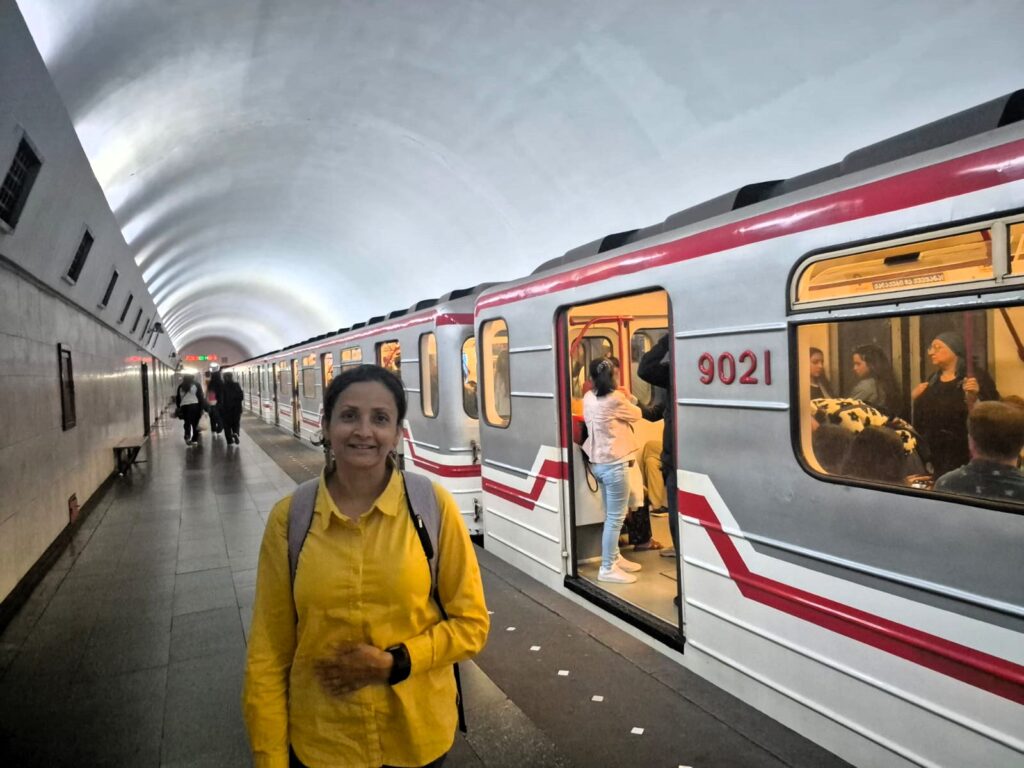
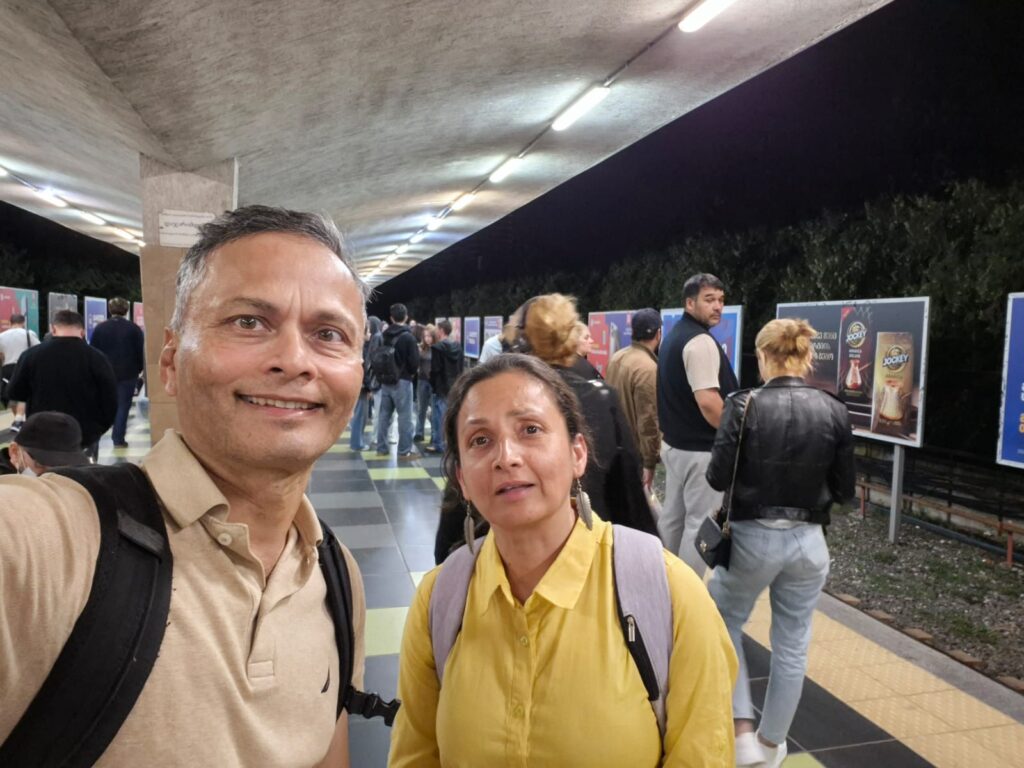
We reached our hotel by 8:45 pm, wrapping up a day filled with fortresses, churches, mountains, and new friendships.
Day 8: Friday, September 19 — Tbilisi: Old Town, New Town, Hills & Museums
We dedicated the whole day to exploring Tbilisi. We started around 10 am, eager to roam the streets and soak in the city life.
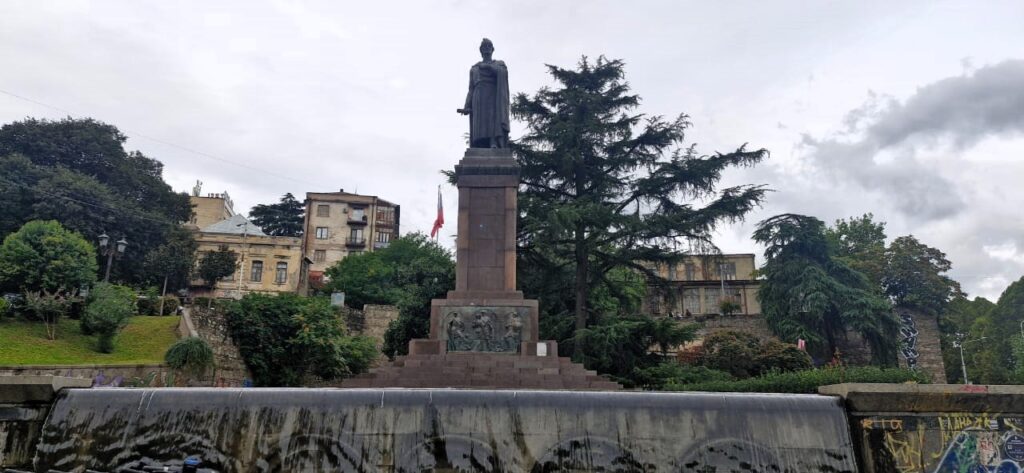
We began at the statue of Shota Rustaveli, near Rustaveli Metro station. Rustaveli was a medieval Georgian poet, considered the pre-eminent voice of the Georgian Golden Age. He’s best known for The Knight in the Panther’s Skin, a national epic poem — the kind of work that’s deeply woven into Georgia’s sense of identity.
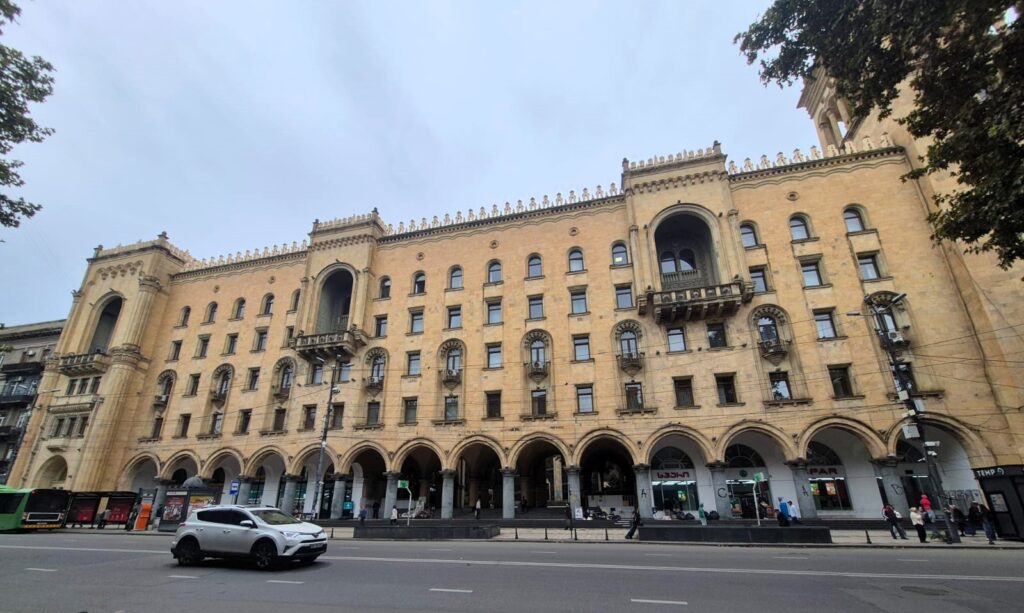
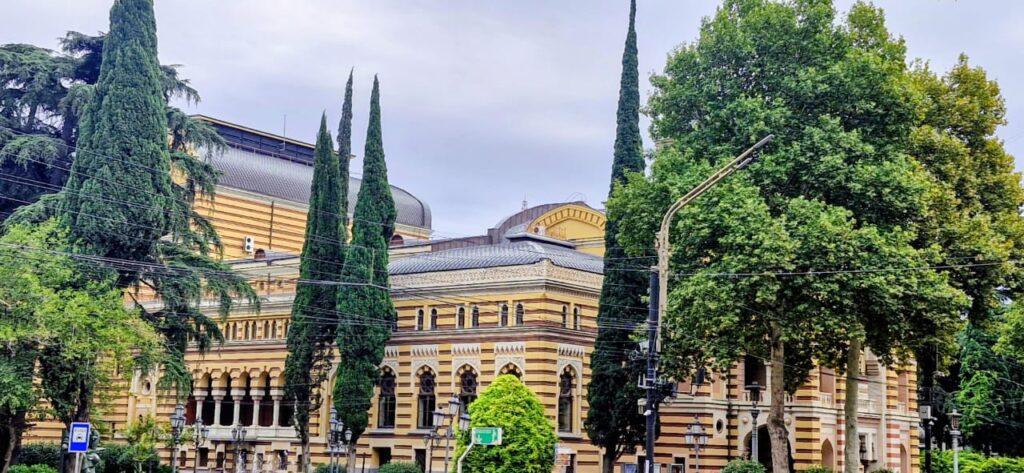
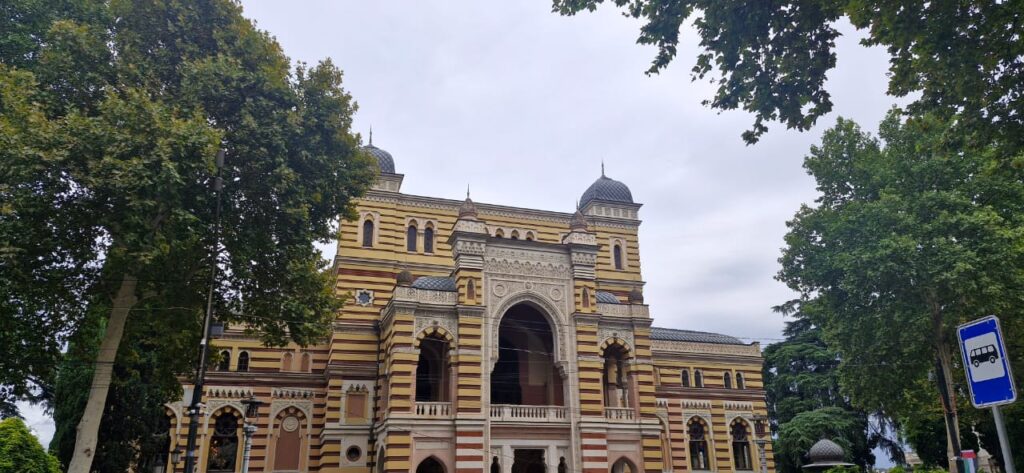
The Georgian Opera and Ballet Theatre is a lovely building on Rustaveli avenue
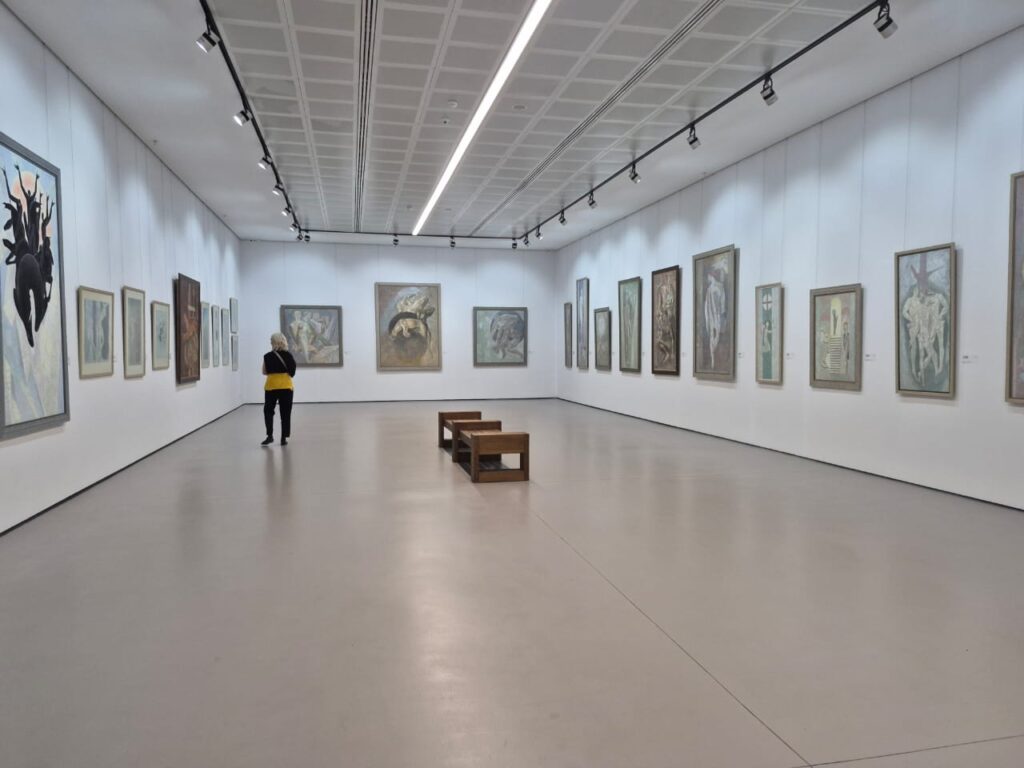
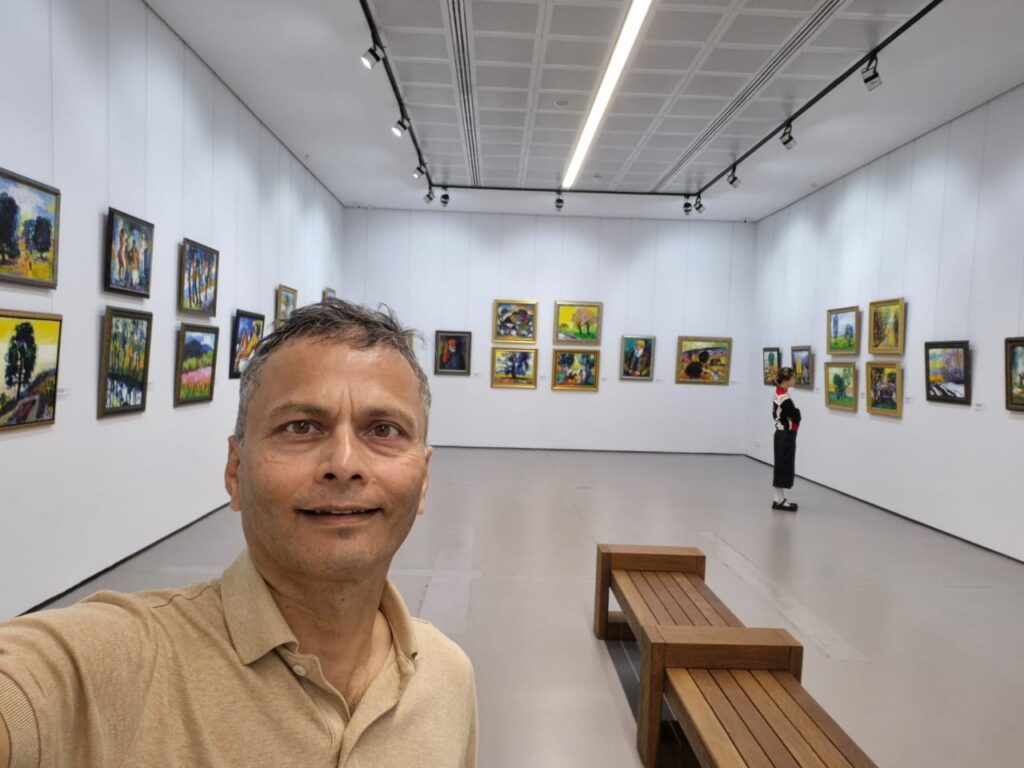
At the Georgian Museum of Fine Arts, we saw works by Georgian artists and sculptors.
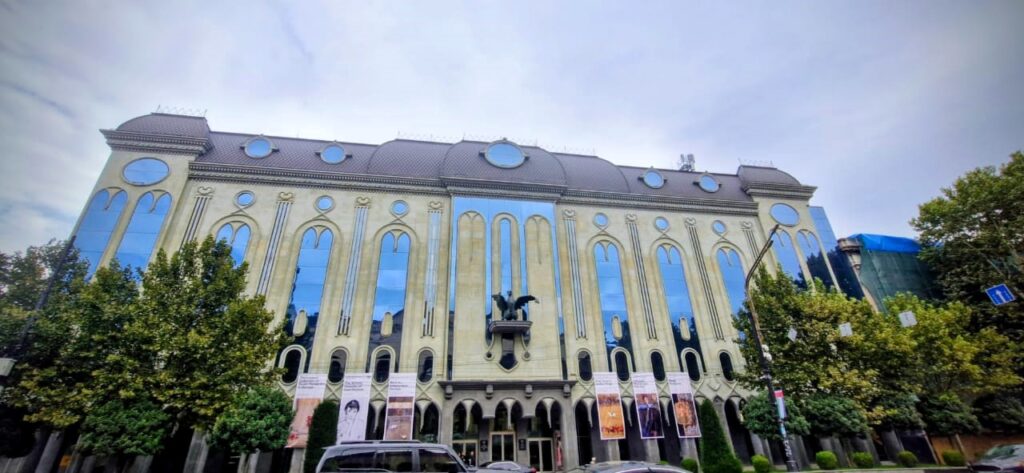
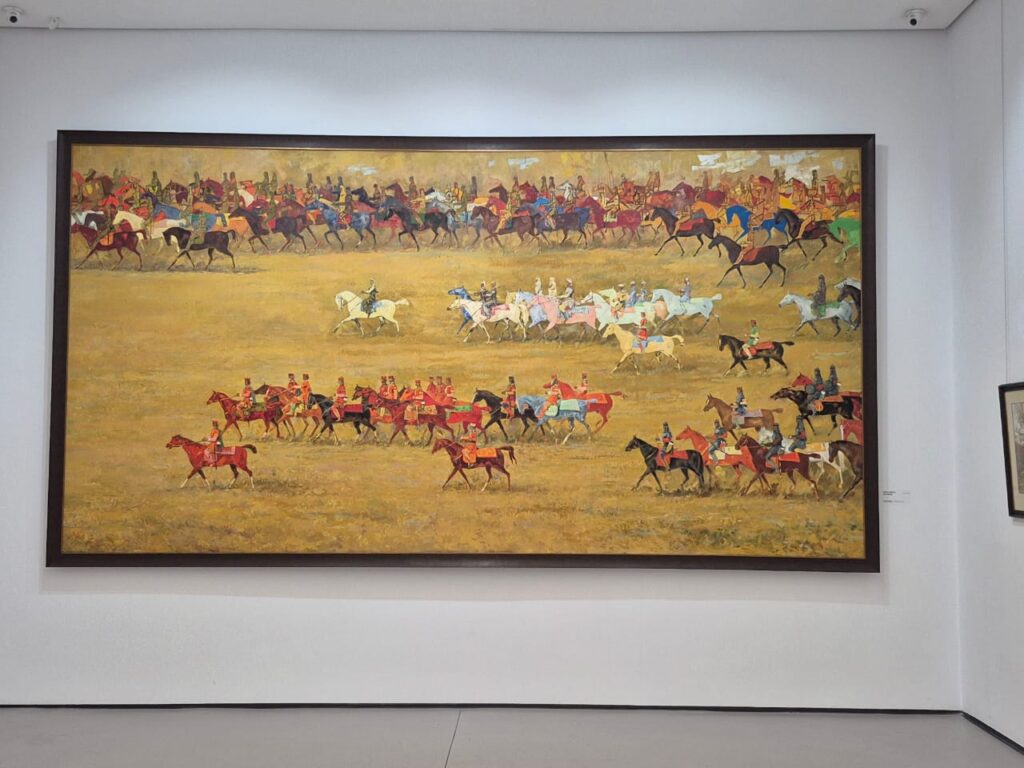
I learned something new: many artists here were constrained by “Socialist Realism” under the Soviet era — an imposition of a style that demanded idealized, optimistic depictions of Soviet life. It shaped art, literature, and architecture — many pieces we saw still show that influence.
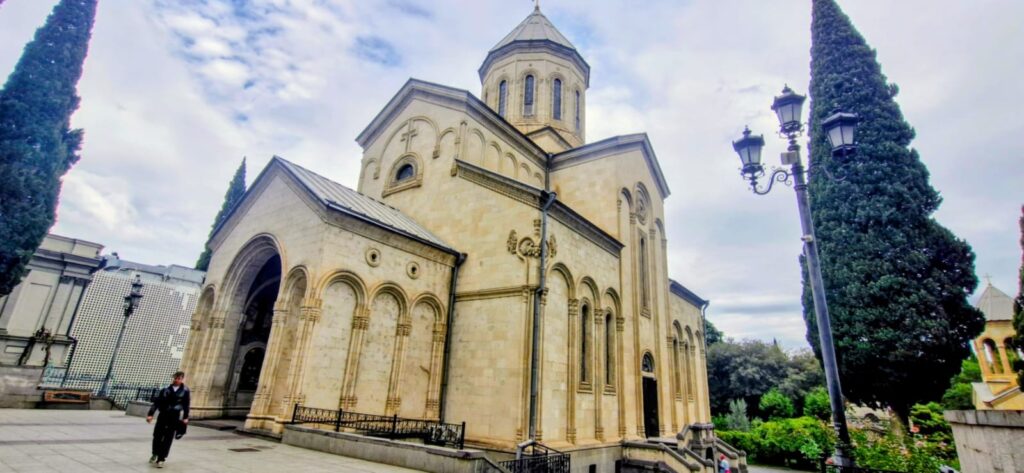
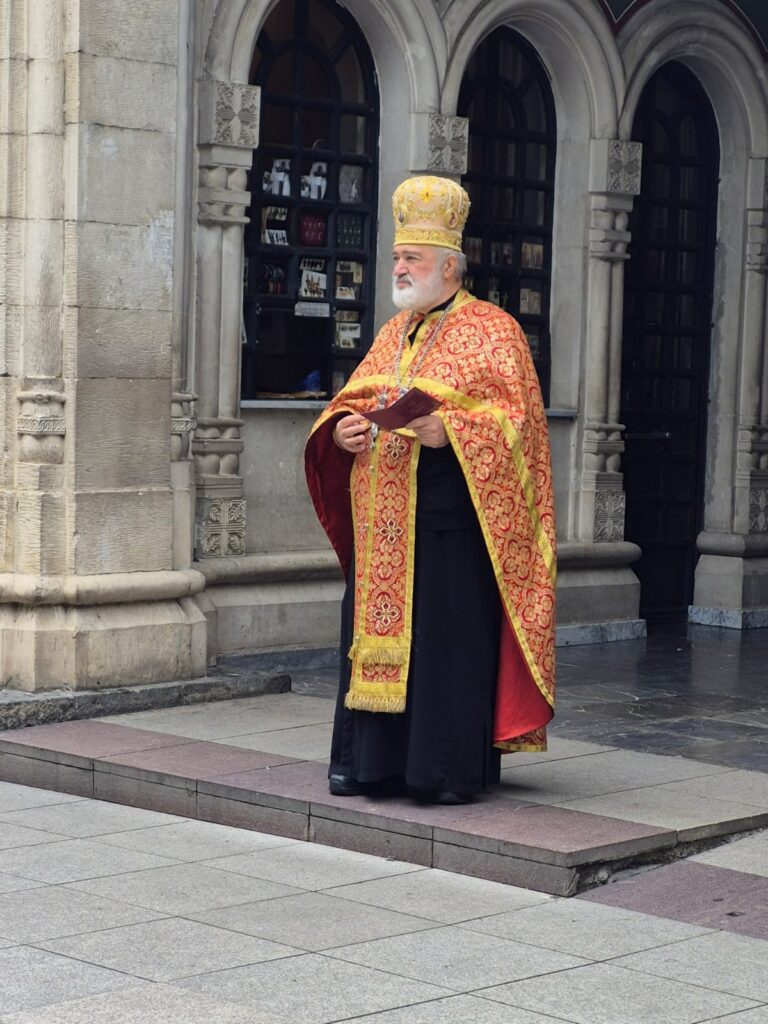
We visited St. George’s Cathedral on Rustaveli Avenue — a Georgian Orthodox service was in progress; priests in robes, people entering quietly.
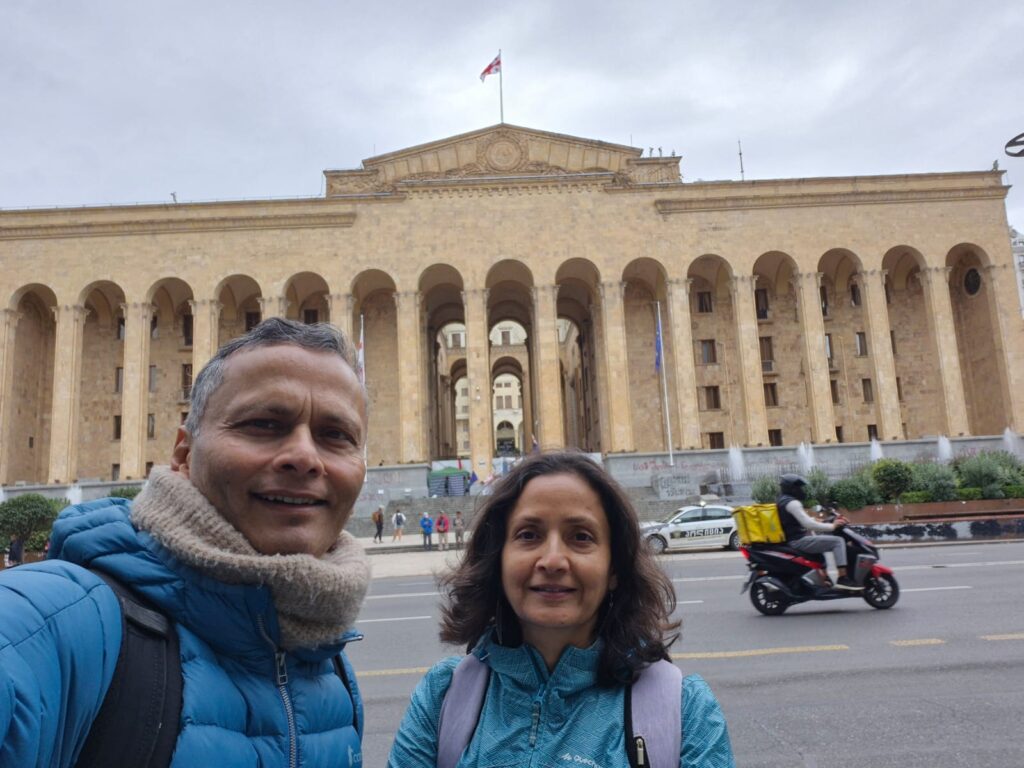
Our last stop in New Town was Liberty (Freedom) Square, which has had many names in the past — Beria Square, Lenin Square — reminders of Georgia’s turbulent political history.
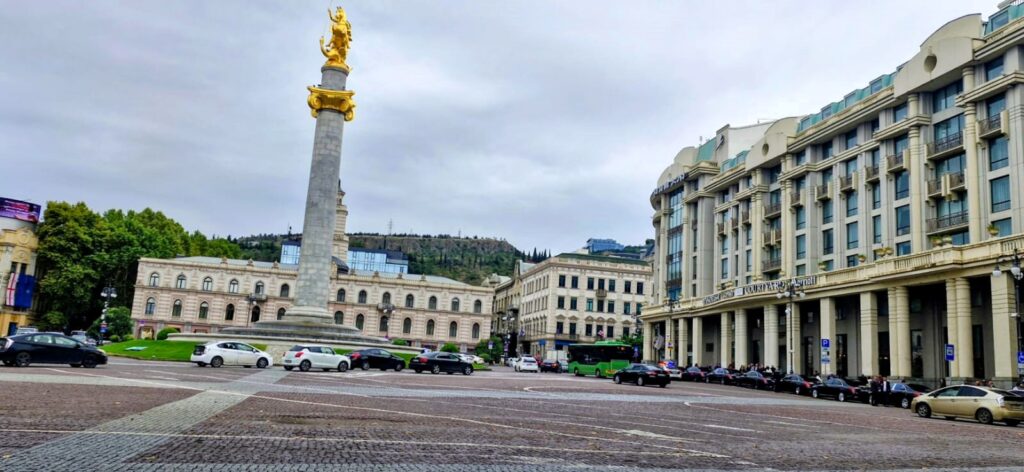
Liberty Square, also known as Freedom Square, lies at the heart of Tbilisi and has long been a symbol of Georgia’s national spirit. Surrounded by grand Soviet-era and modern buildings, it has witnessed the city’s key historical moments — from independence rallies to public celebrations. At its center stands the Saint George statue, slaying a dragon, representing freedom and courage. Today, it’s a bustling crossroads connecting the old and new parts of Tbilisi, full of life and movement.
Then we headed into Old Town.
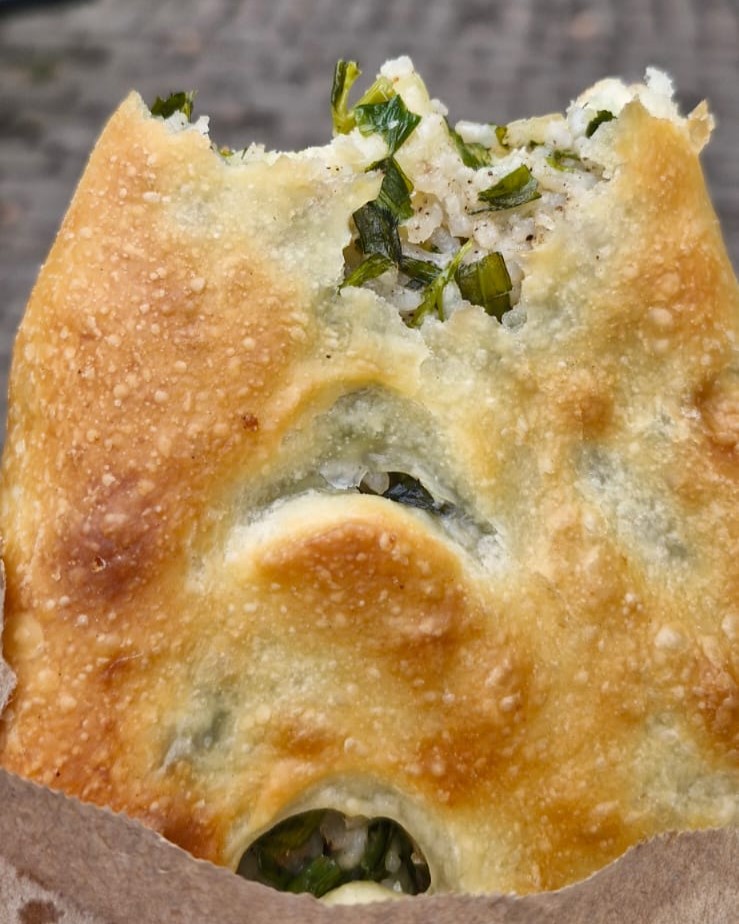
For lunch, we picked up spinach bread — simple, warm, comforting.
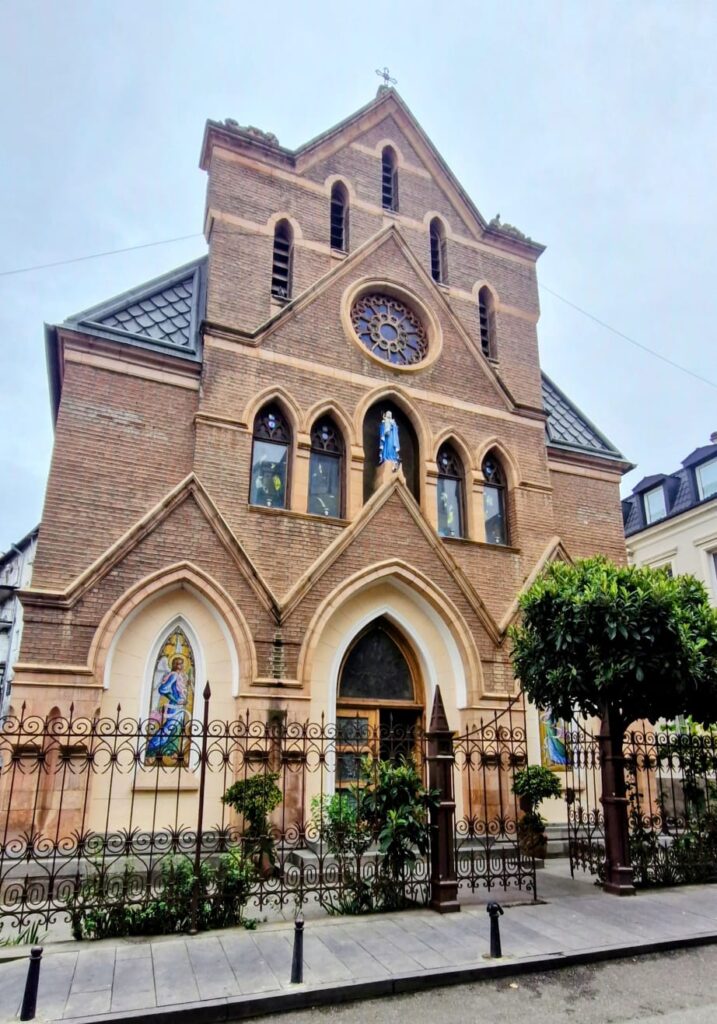
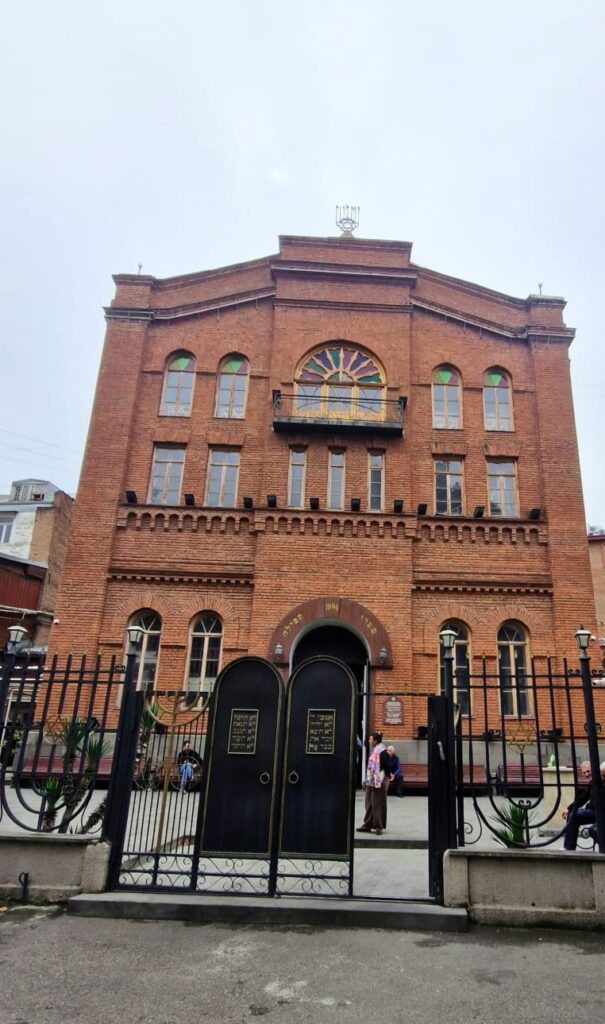
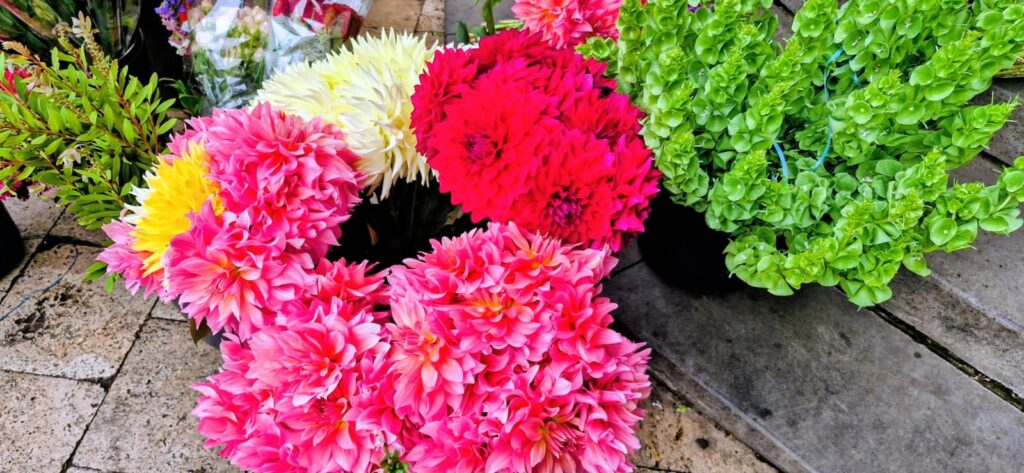
We walked by the Church of Virgin Mary, a Jewish Synagogue, flowers for sale lining the streets, and saw how everyday life mixes with history.
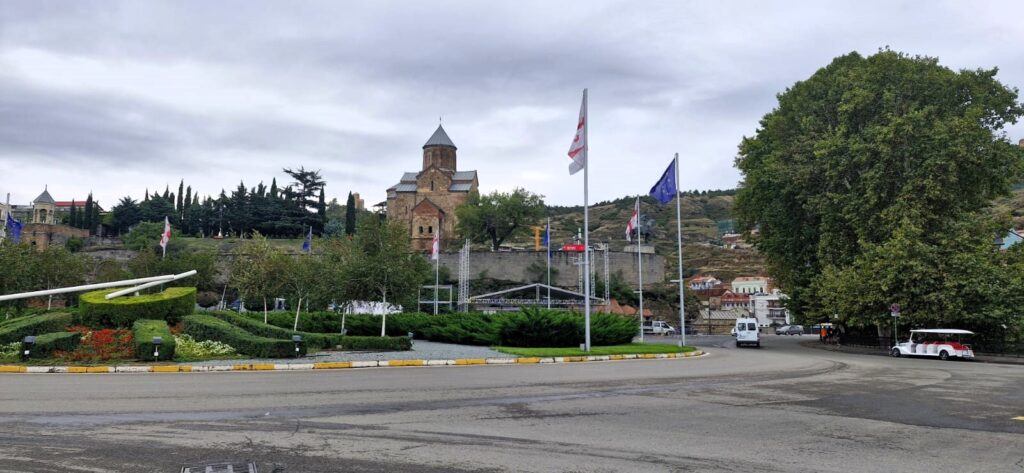
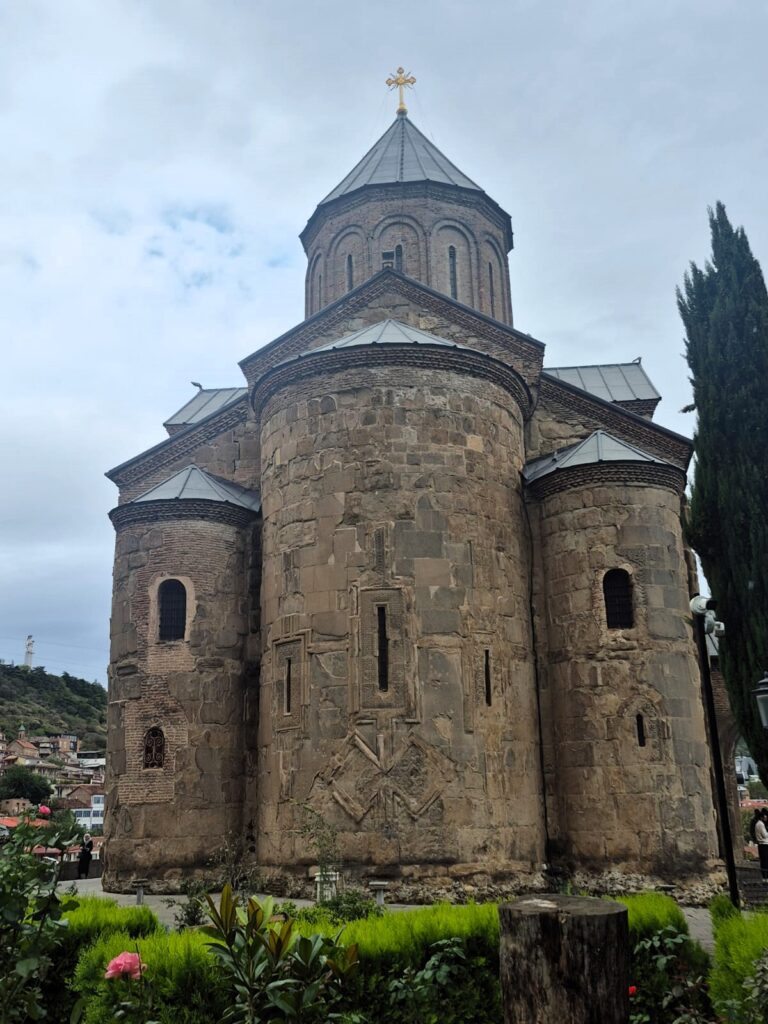
We climbed up to Metekhi Church, perched on its cliff overlooking the Old Town.
Much of what stands now dates to the late 13th century, built 1278–1289 AD under King Demetrius II. The views over the river and city are lovely from there.
From Metekhi, we continued up to the Narikala Castle. We hiked up (even though there was a cable car) because it felt more immersive. Unfortunately, when we got there, the fortress was under renovation, so we couldn’t go inside.
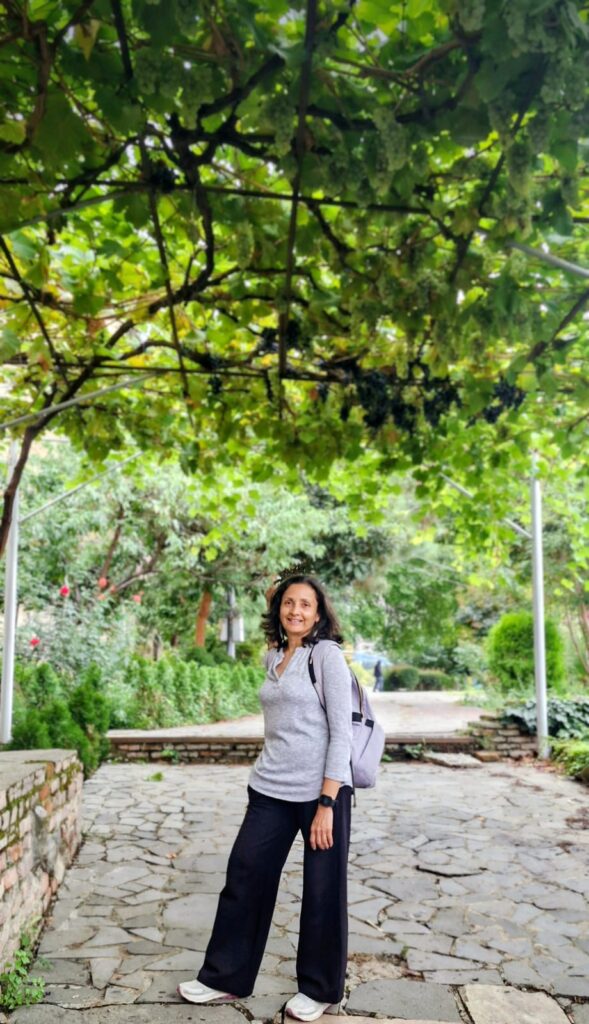
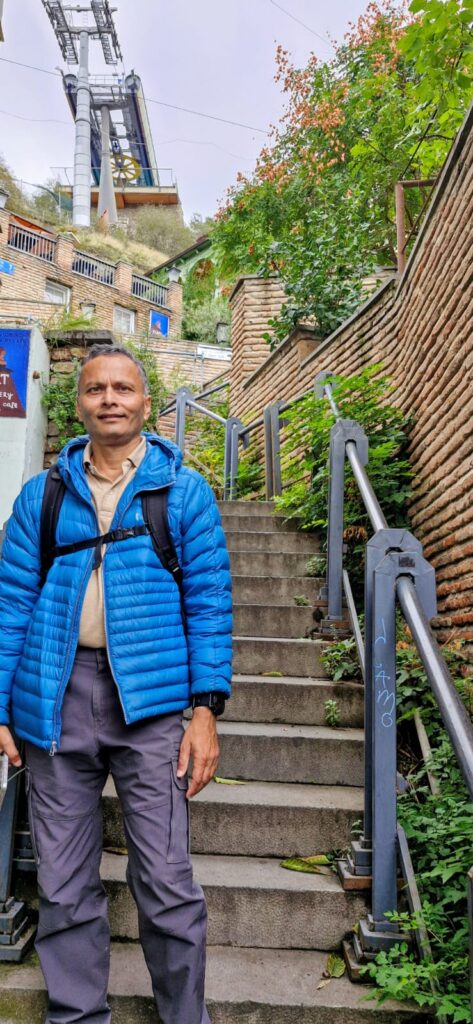
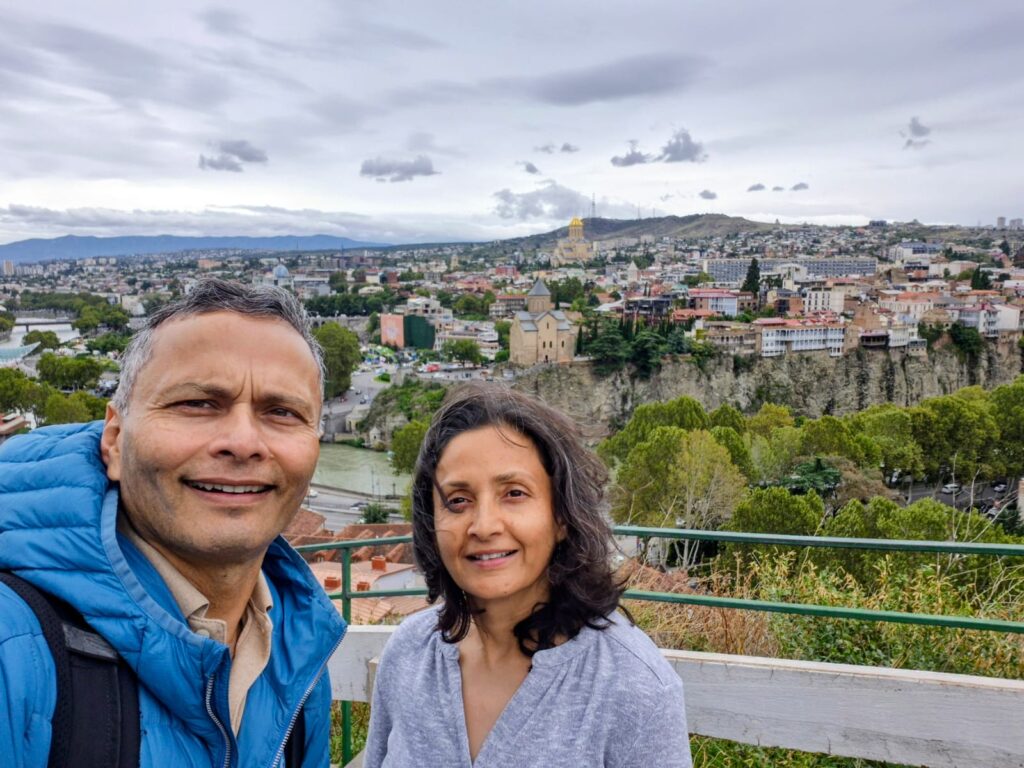
The panorama over Tbilisi — with its mix of old, new, red roofs and church spires — was great.
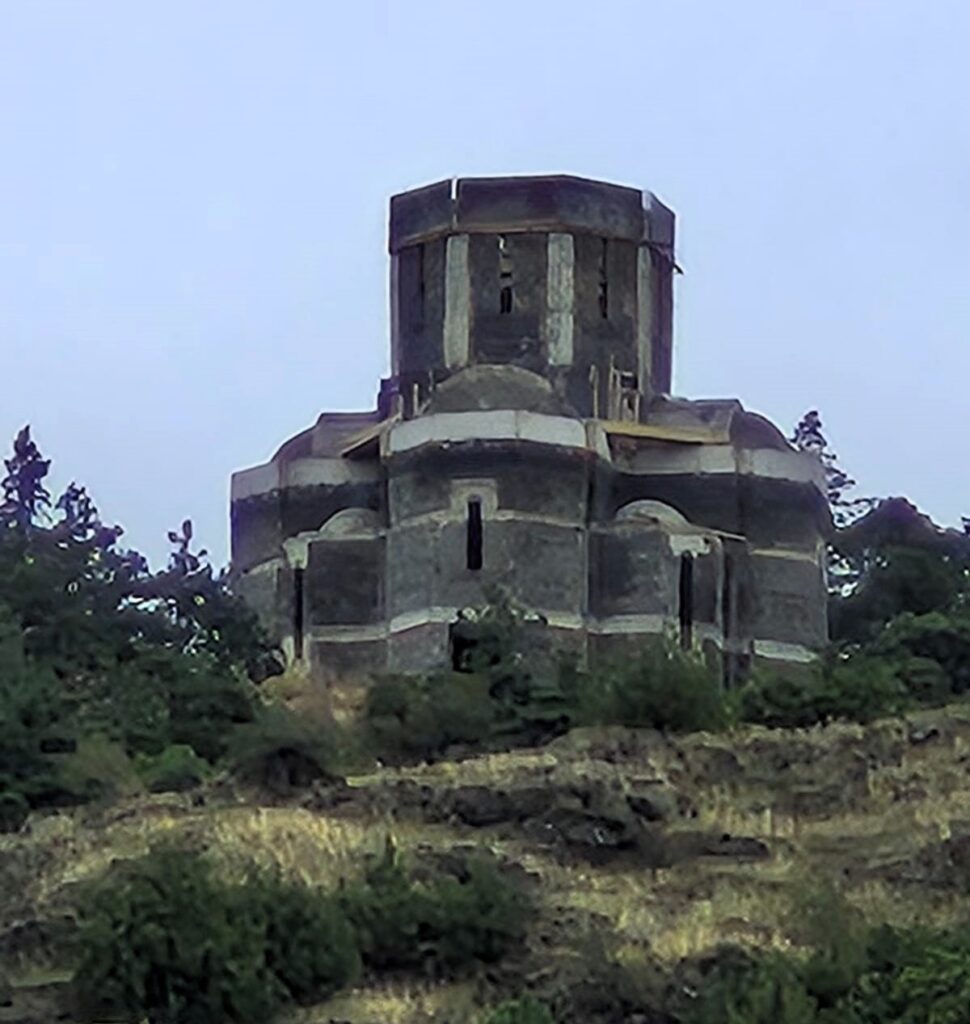
The Mother of Georgia statue, or Kartlis Deda, stands tall on Sololaki Hill, watching over Tbilisi with grace and strength. Erected in 1958 to mark the city’s 1500th anniversary, the 20-meter aluminum statue was designed by Georgian sculptor Elguja Amashukeli. She holds a bowl of wine in one hand to greet friends and a sword in the other to defend against enemies — symbolizing the Georgian spirit of warmth and resilience. Visible from almost anywhere in the city, she has become one of Tbilisi’s defining landmarks, embodying both pride and protection for the nation.
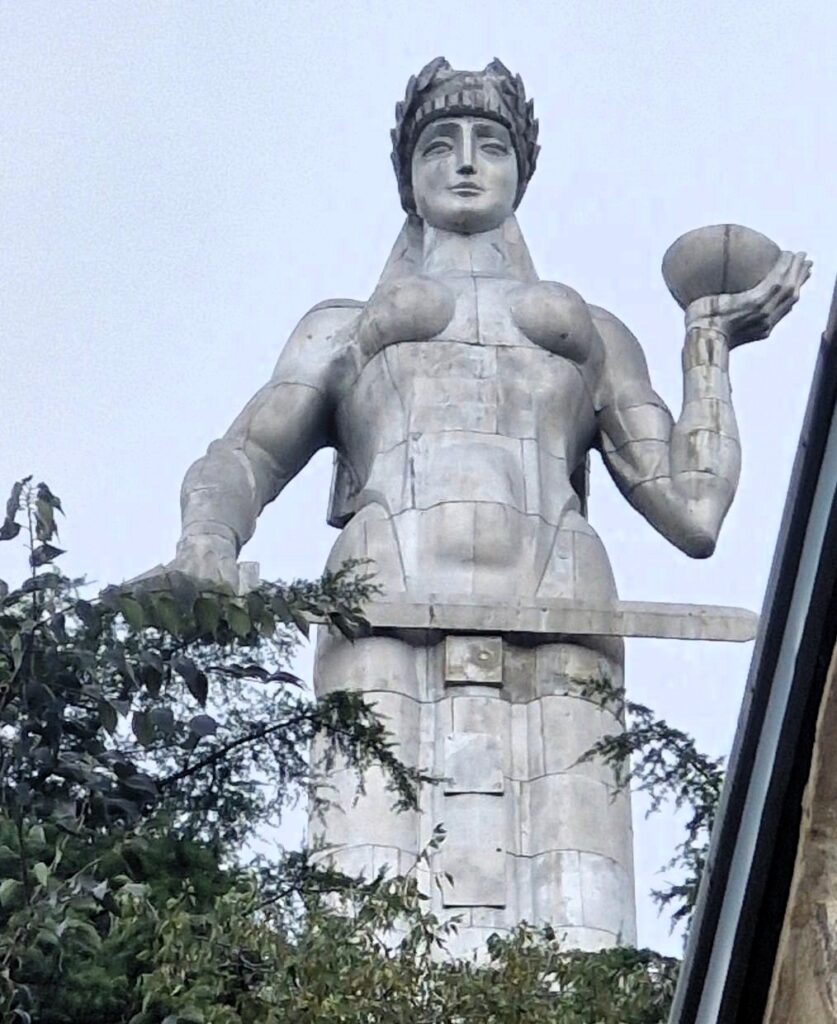
The figure is aluminium, 20 meters tall, dressed in Georgian national costume. Her left hand holds a bowl of wine (for friends), her right a sword (for enemies) — symbolic of Georgia’s character. Climbing up was a little work, but worthwhile. The city stretched out below.
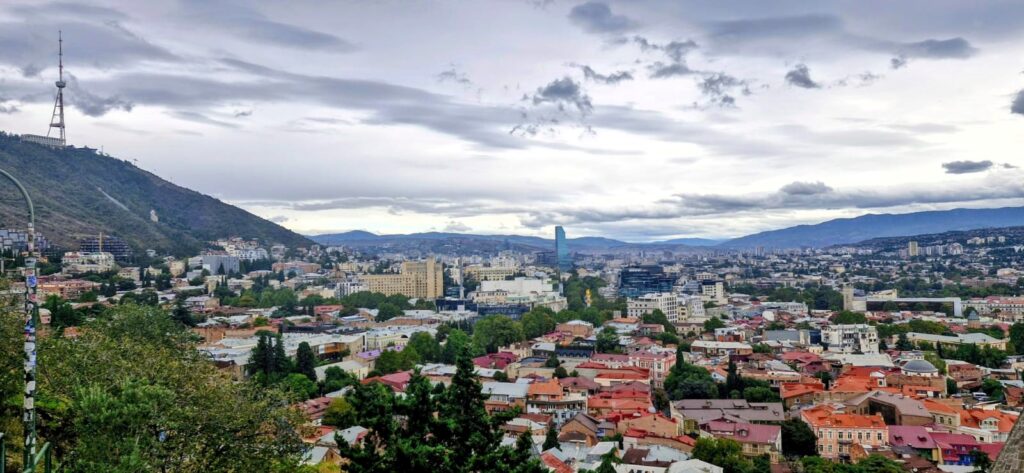
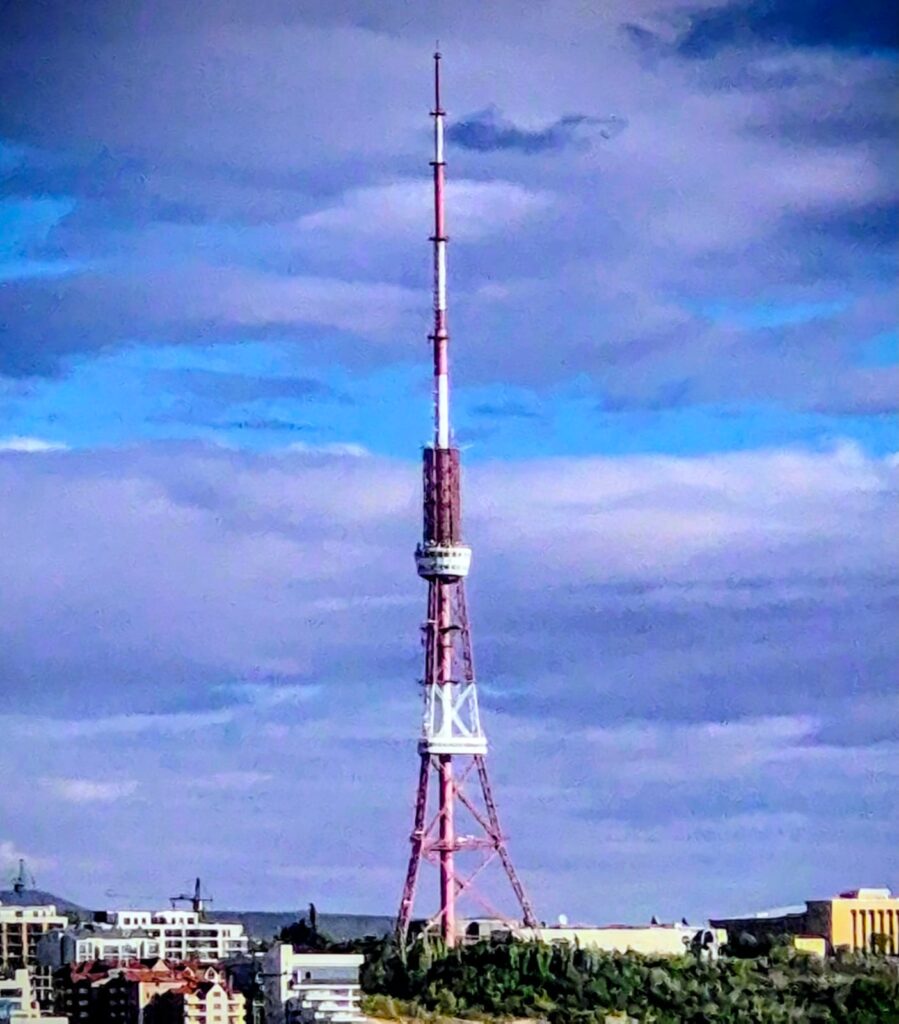
We took a Bolt taxi down to Tbilisi TV Tower and Mtatsminda Park.
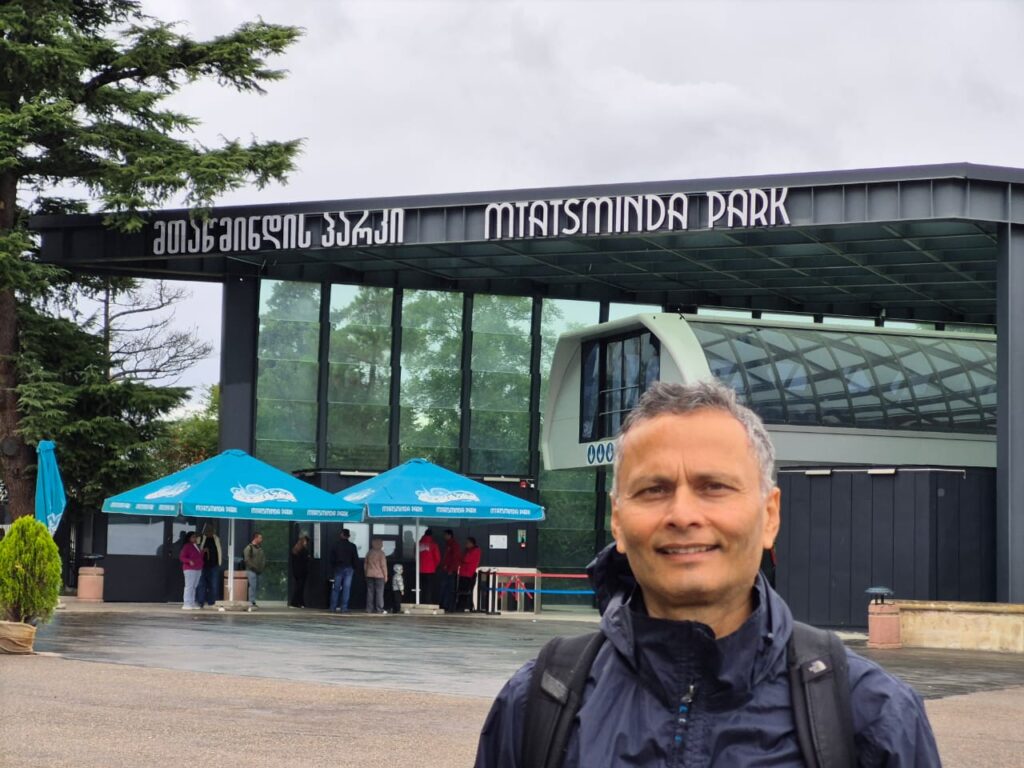
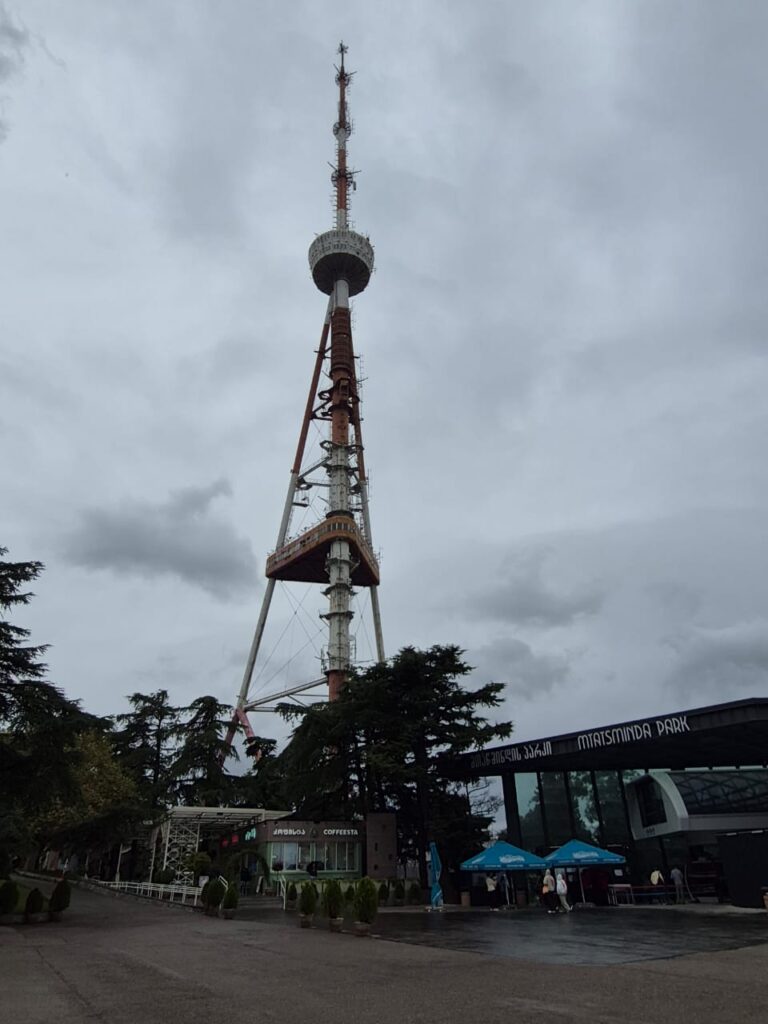
At the top of Mount Mtatsminda, the park sits at about 770 meters altitude, making it one of the highest viewpoints over Tbilisi. The park’s history is over 100 years old, with amusement rides, a Ferris Wheel, cafés, restaurants, and beautiful terraces. The funicular that takes people up has been part of Tbilisi’s heritage too. Walking around there, seeing the city light up, was magical.
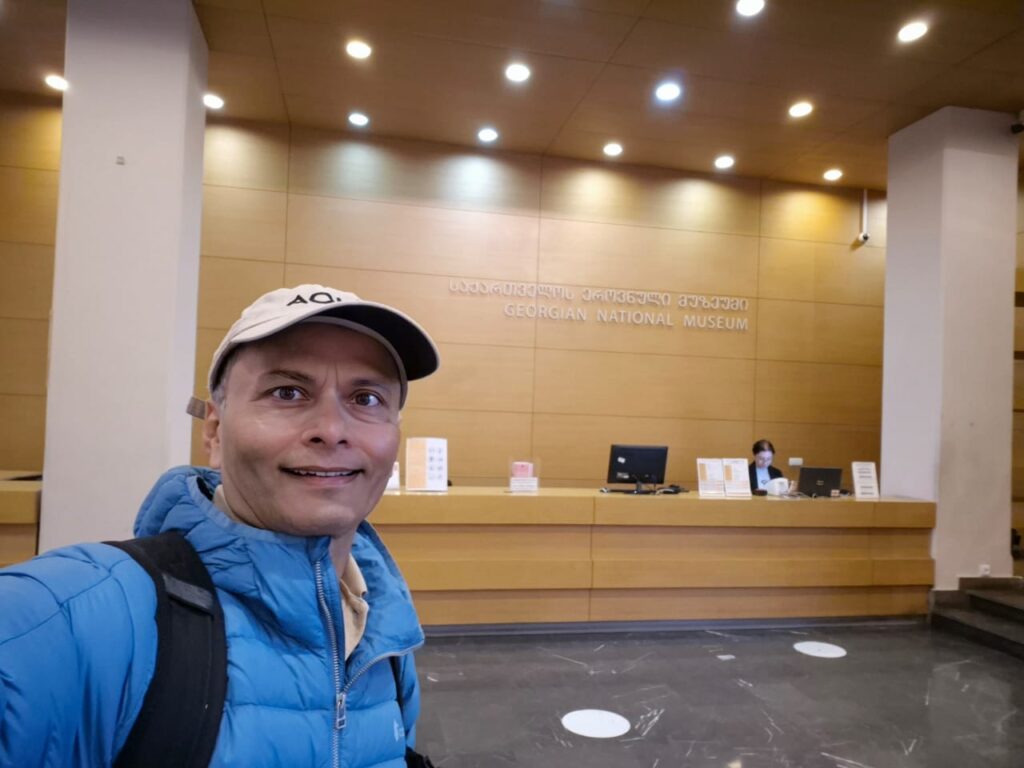
We tried to visit the Georgian National Museum, but they wouldn’t sell us tickets — closing in 30 minutes. So we headed back to the hotel.
Later that night, we made our way to Tbilisi Central train station for our train to Yerevan. The trains here are slow compared to car travel, and border controls at night make them even more tiring. We left around 10:40 pm.
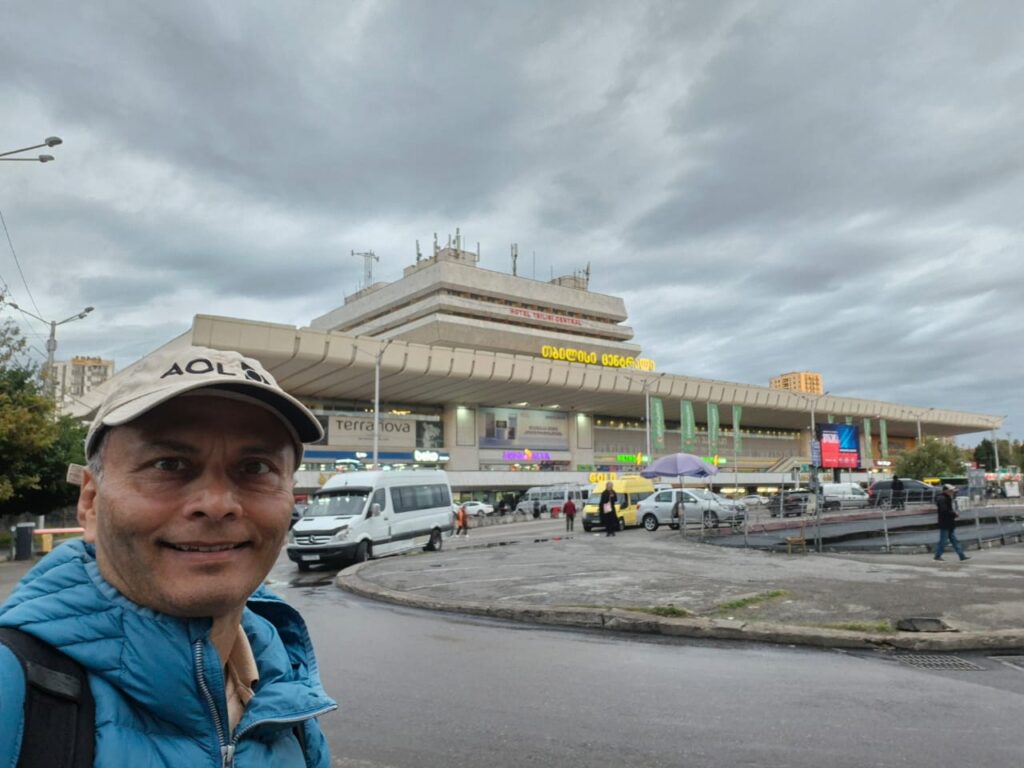
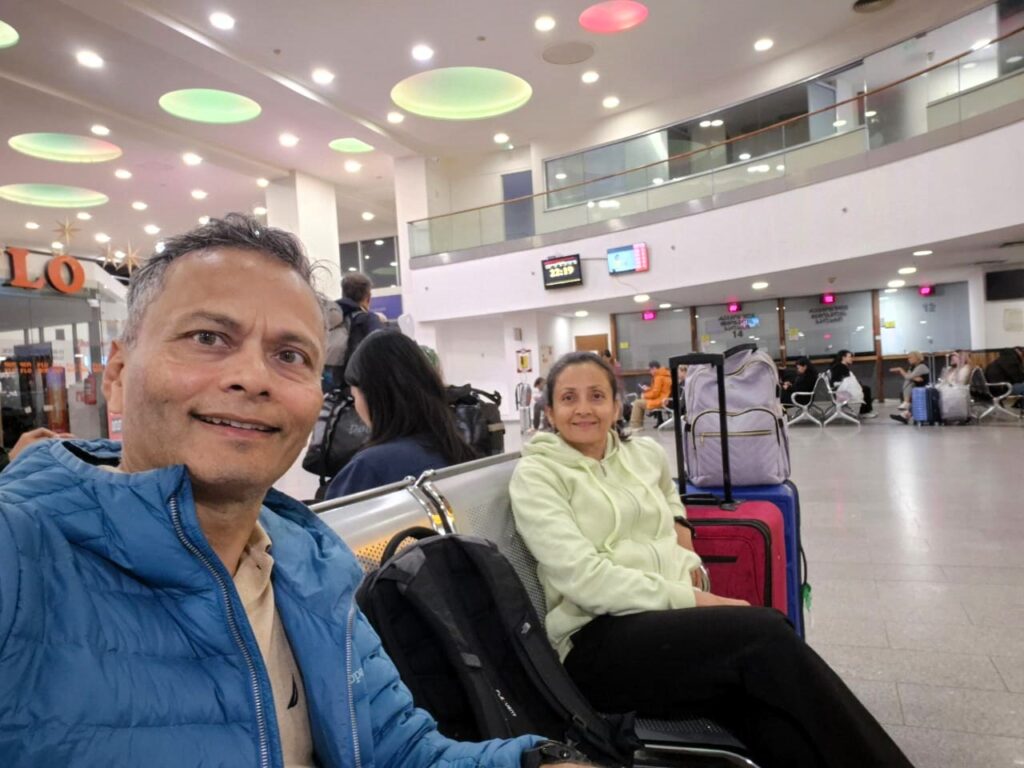
It had been a full, unforgettable day in Tbilisi.
Day 9: Saturday, September 20 — Overnight Train & Yerevan Tour
The train from Tbilisi to Yerevan was more comfortable than expected — exciting yet smooth.
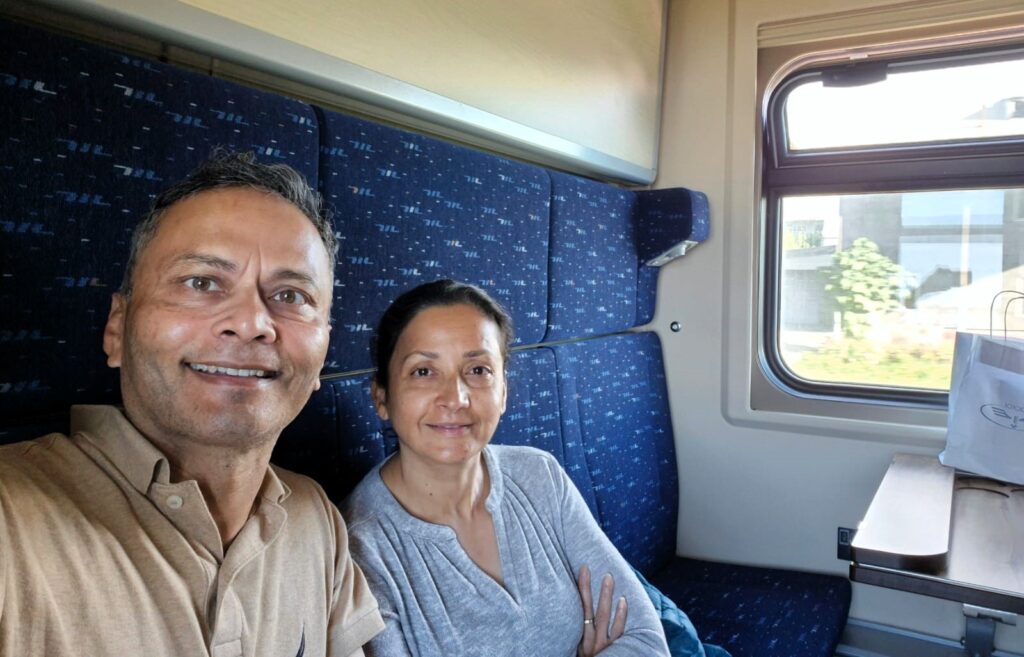
We left Tbilisi at 11 pm, in a four-berth compartment. One berth was empty, so it was just Anu, me, and another passenger.
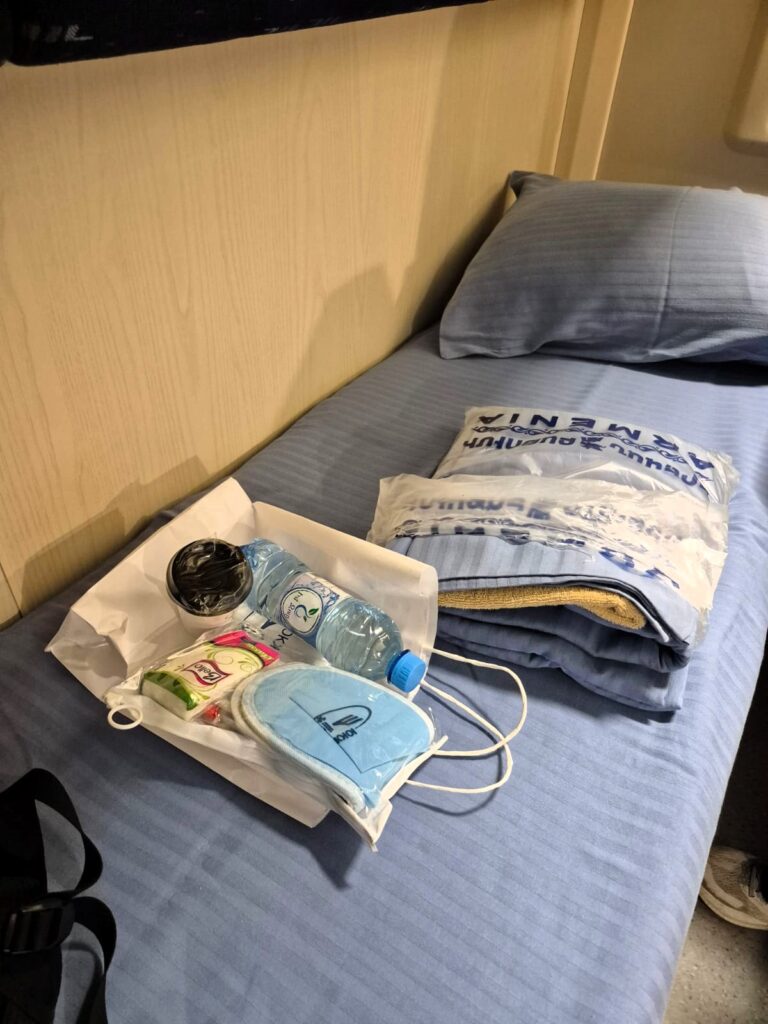
Bedding, water, and slippers were provided, and the attendant checked on us.
At 1:30 am, we disembarked briefly at the Georgia side for exit immigration. It took about an hour.
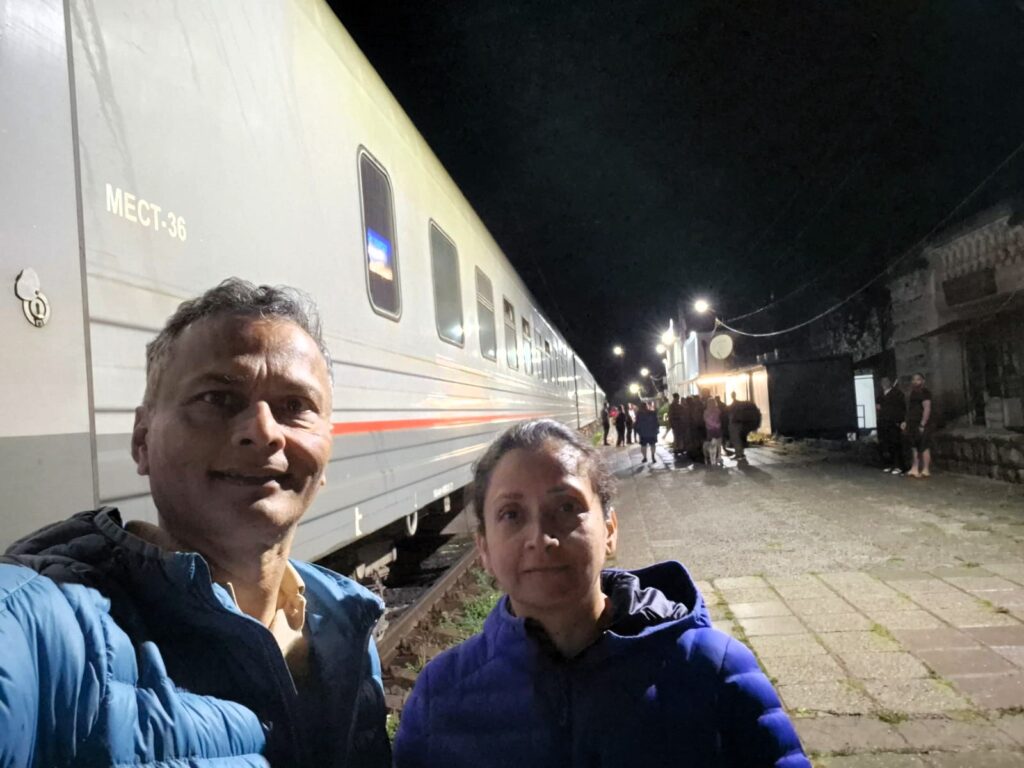
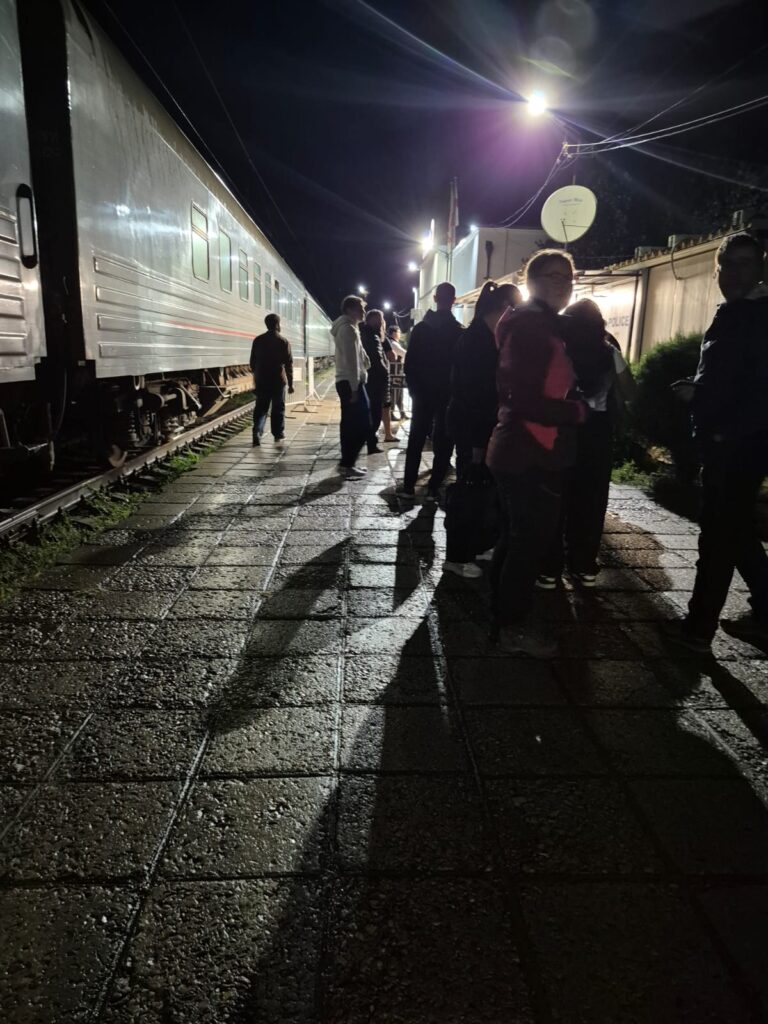
Then Armenian immigration officers boarded the train. They carried small laptops, entered our details, and asked questions — notably about why we had visited Azerbaijan, given Armenia’s tense relations with its neighbor. By 3:30 am, the formalities were done, and we were rolling onward.
Morning light revealed beautiful Armenian landscapes. In the distance stood Mount Ararat, snow-capped and iconic. Though physically across the border in Turkey, the mountain is a central symbol for Armenians, appearing on the country’s coat of arms.
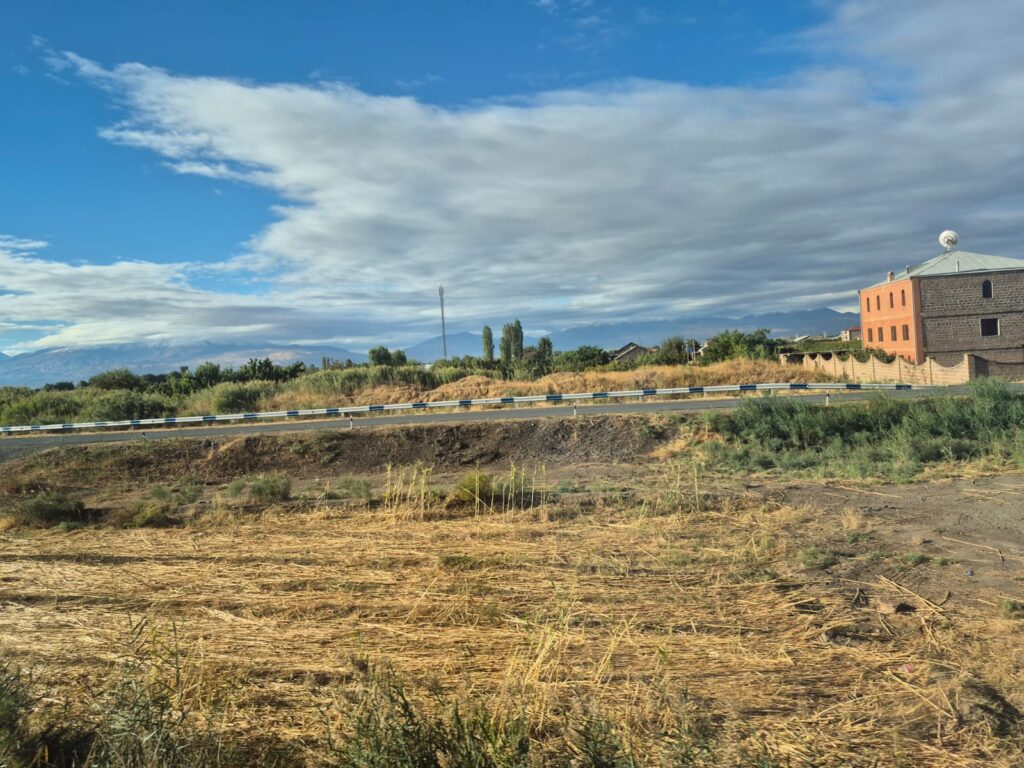
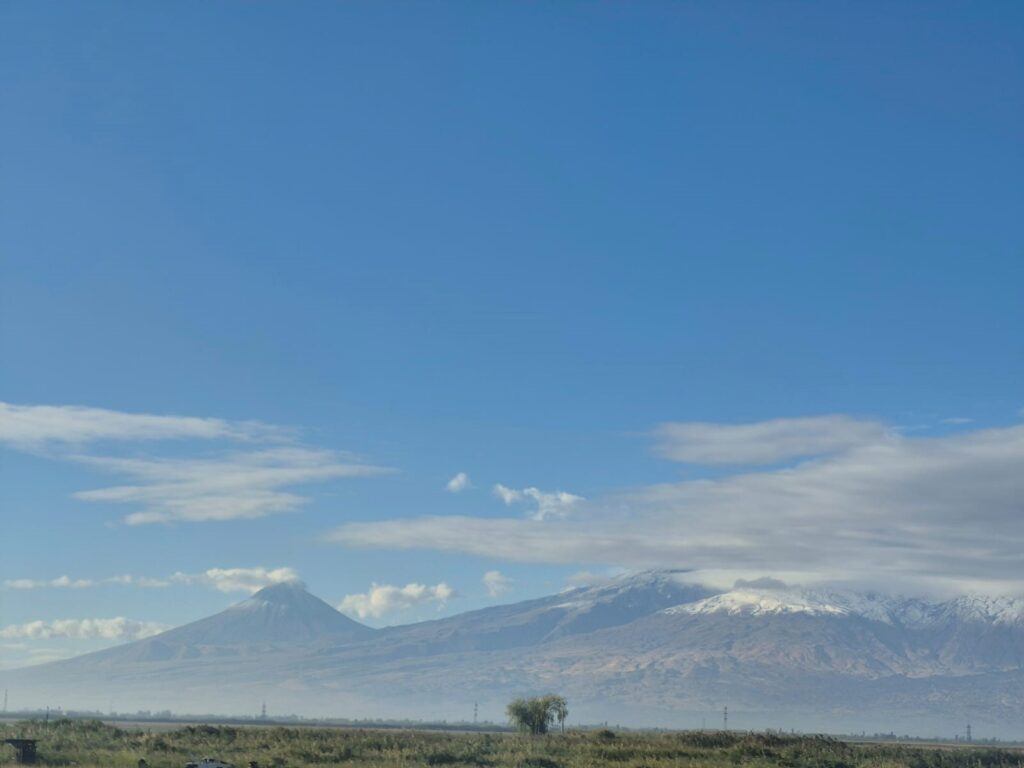
For Armenian Christians, it holds biblical significance: according to tradition, Noah’s Ark came to rest on its slopes after the flood.
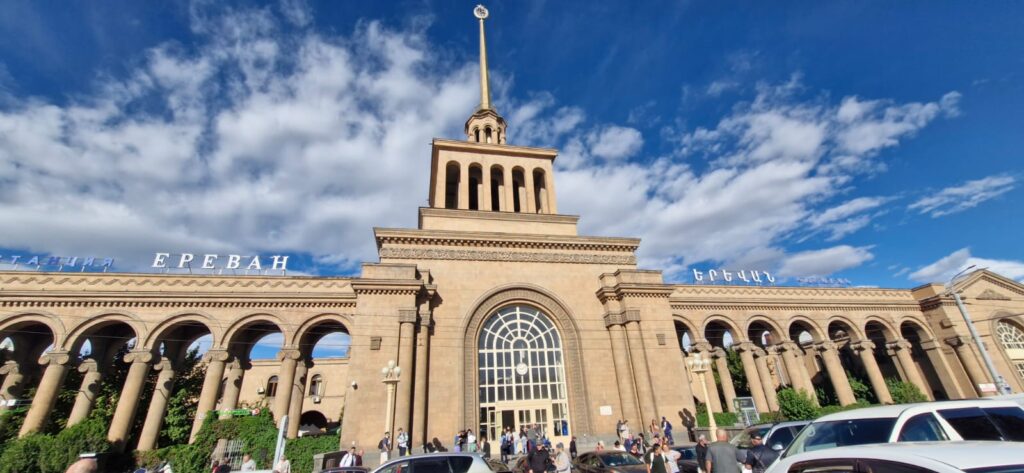
We arrived at Yerevan station by 9 am.
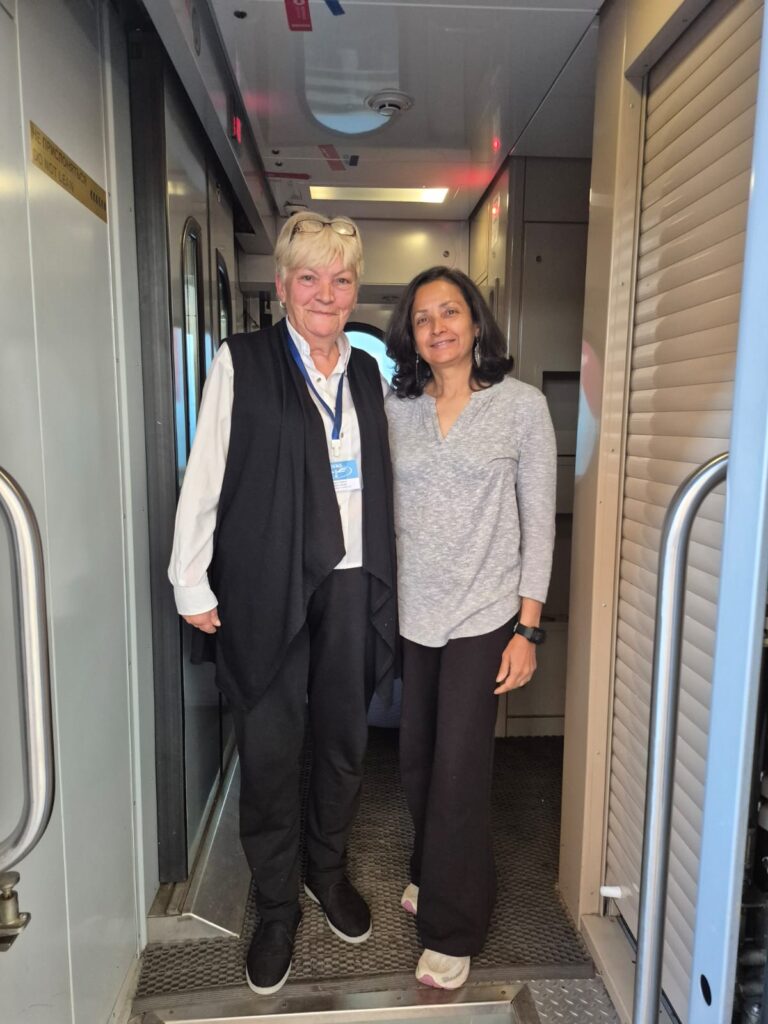
We even took a photo with the smiling train attendant, who seemed thrilled. Highly recommend this train — more relaxing than the long road route.
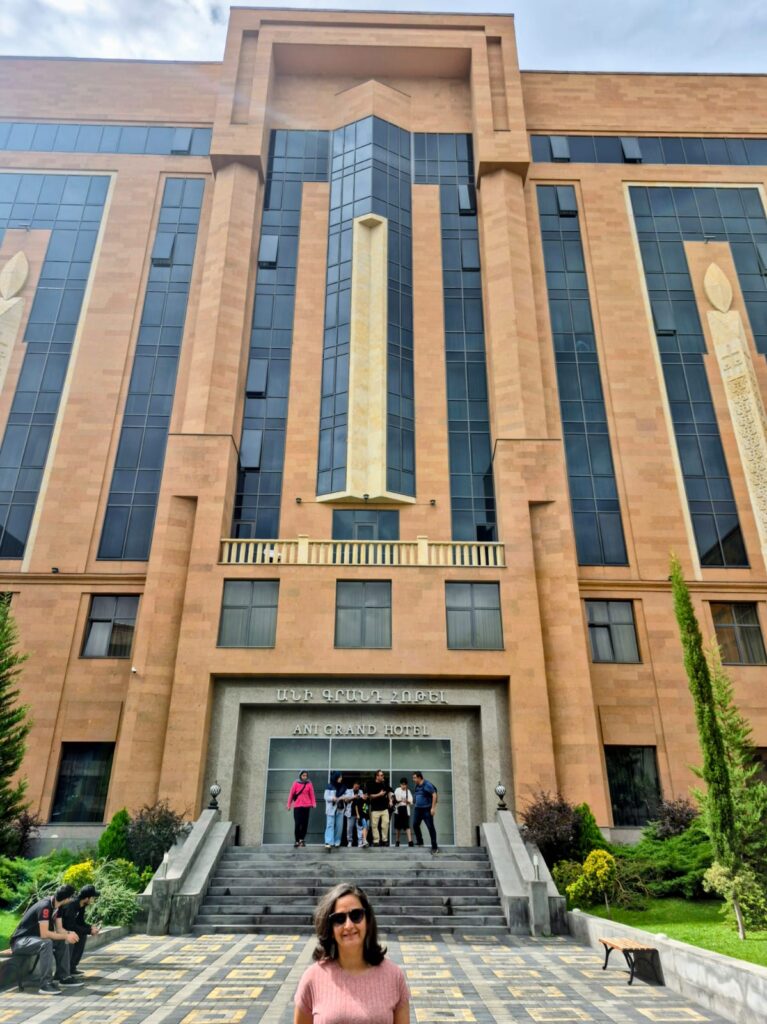
By 9:45 am, we checked into Ani Grand Hotel, and thankfully allowed an early check-in.
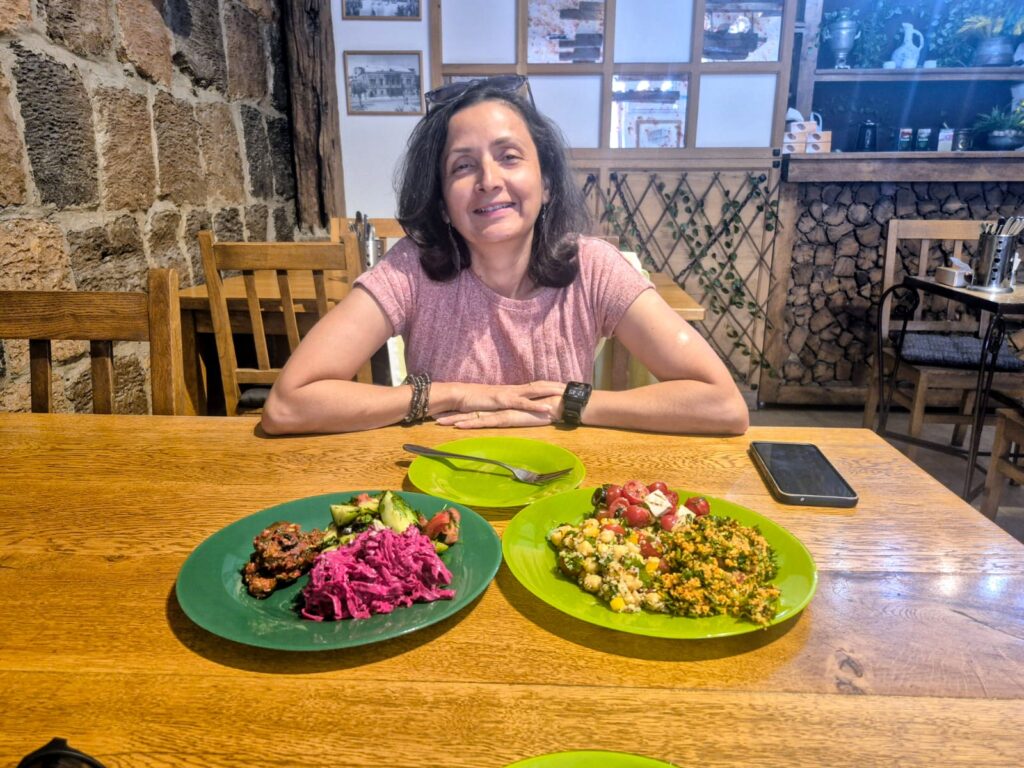
Lunch was at Salad House, where vegetables are picked by weight — fresh and light.
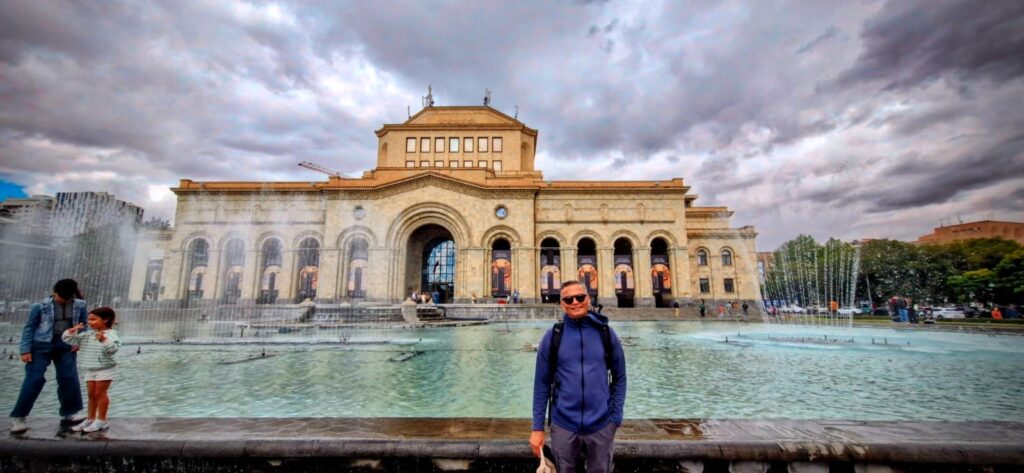
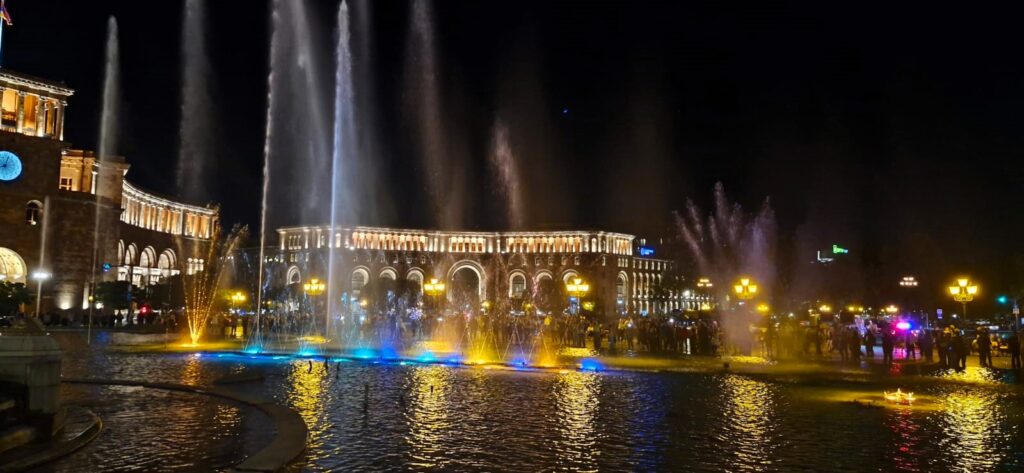
Our city walk began at Republic Square, where the History Museum of Armenia dominates the grand architecture.
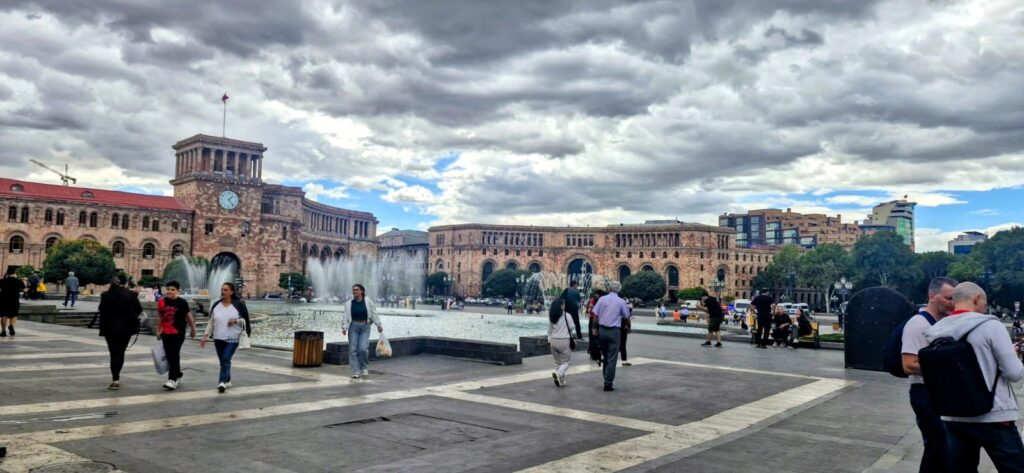
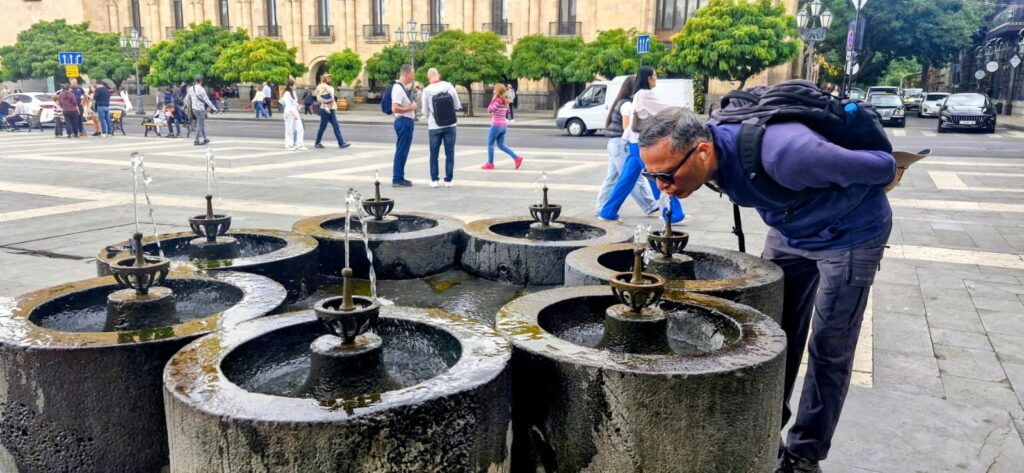
Republic Square also has a large pulpulak, one of the many public water fountains spread all across Yerevan.
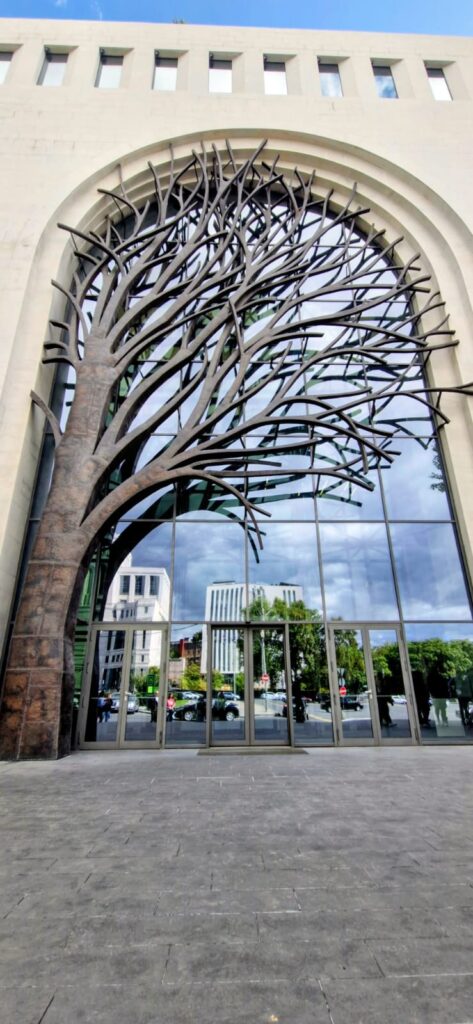
We walked over to Hotel Alexander, now a Marriott hotel.
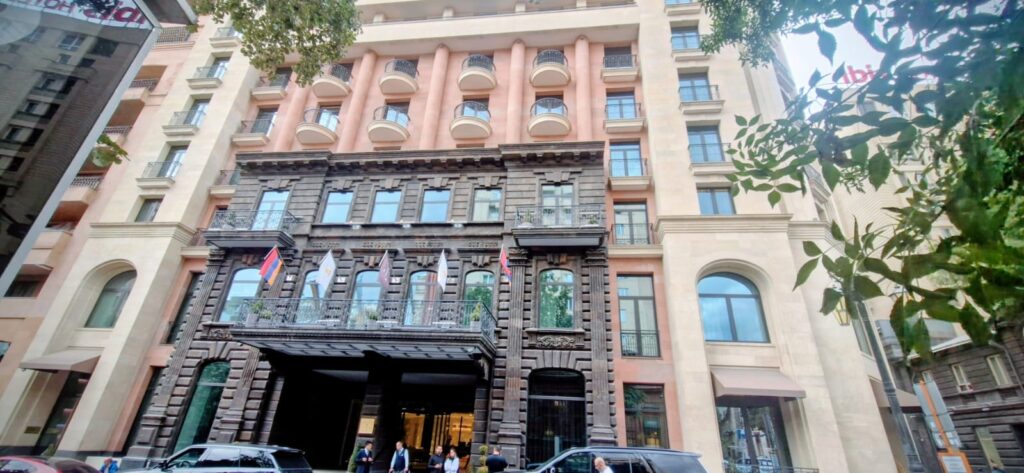
The Alexander, a Luxury Collection Hotel, Yerevan, is located in the heart of Yerevan’s historic quarters and allows guests to access the best of Armenia while staying in a truly luxurious hotel. Even the hotel’s facade, with a history dating back to the 18th century, presents a unique glimpse into the country’s fascinating past.
The building was originally built as a workshop for a well-known tannery company and named after the owner’s father, who was a famous war hero. Today, after more than three centuries, this same building with its stunning black facade has been transformed into one of Yerevan’s most elegant hotels.
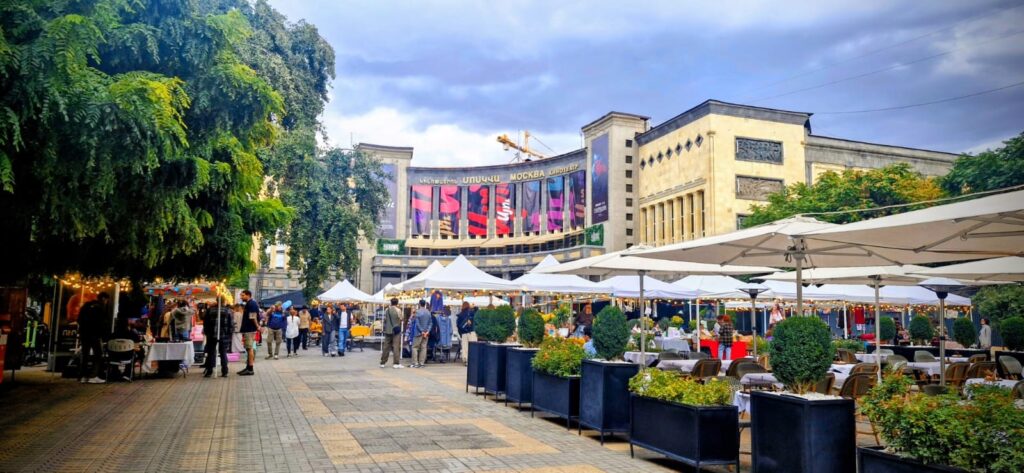
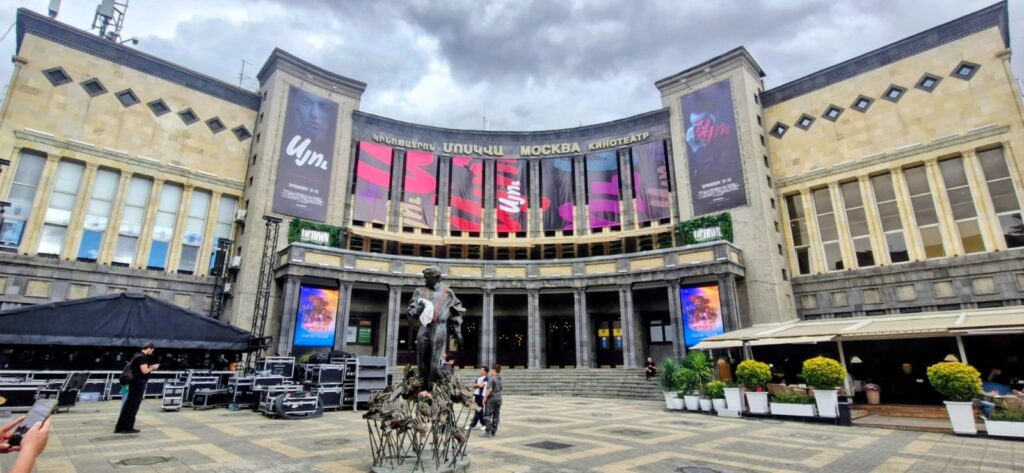
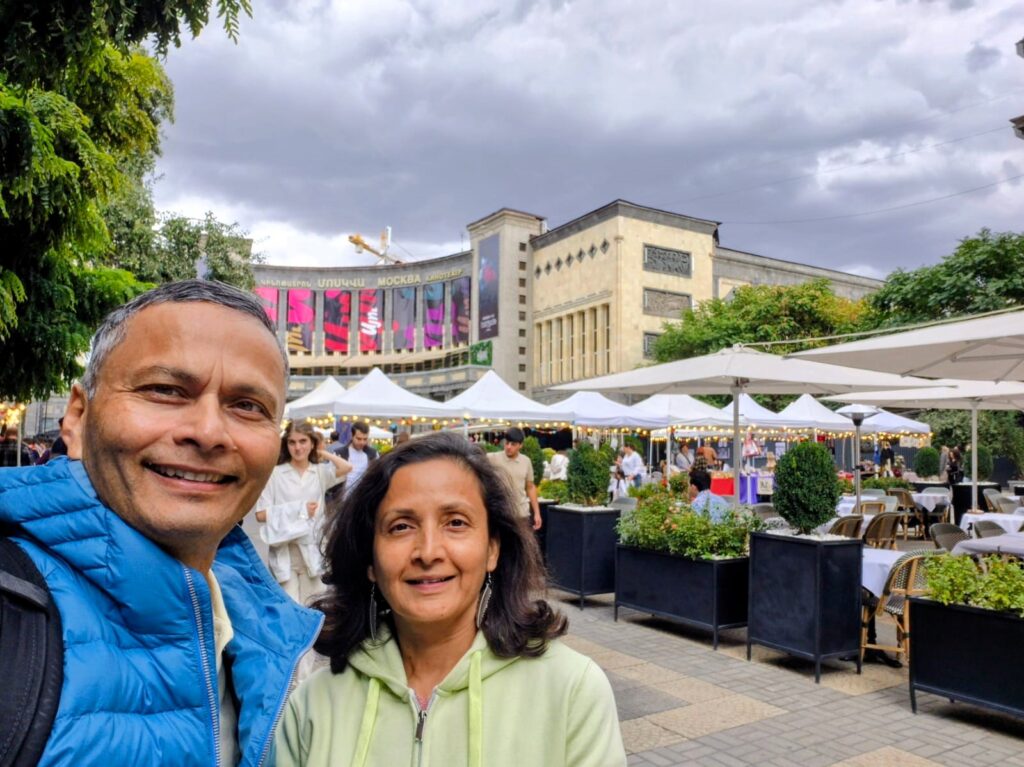
At Charles Aznavour Square, we saw the Moscow Cinema, built in 1936 on the remains of an old church. The square itself buzzed with food stalls and people.
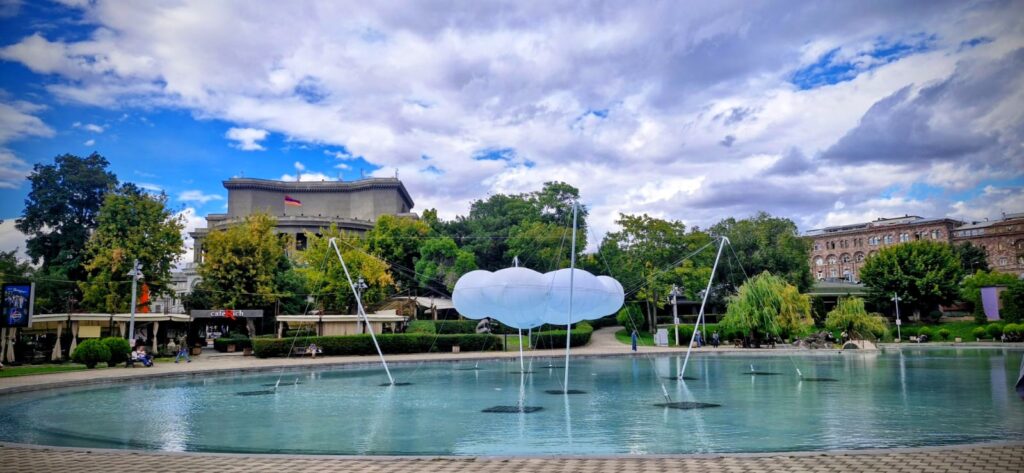
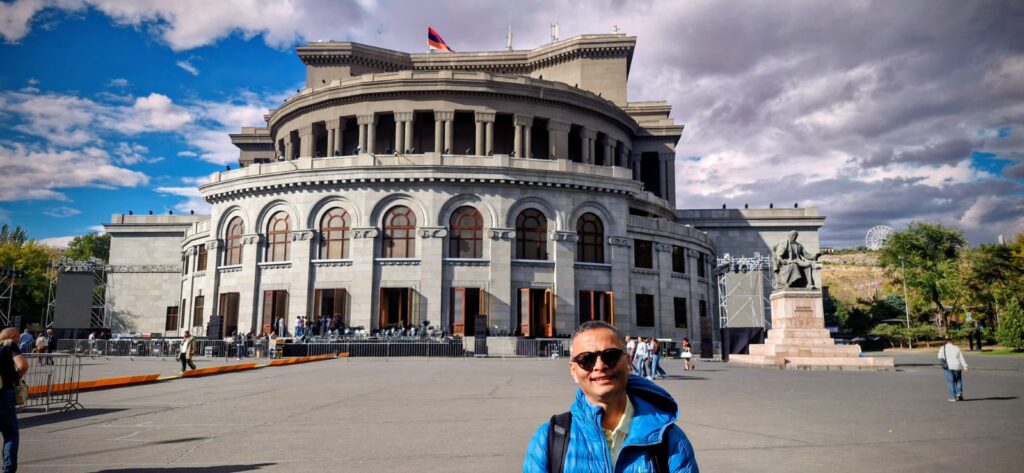
From there, we continued to Swan Lake, a small but pleasant artificial lake, and then the grand Armenian National Opera and Ballet Theater, a venue for many cultural events.
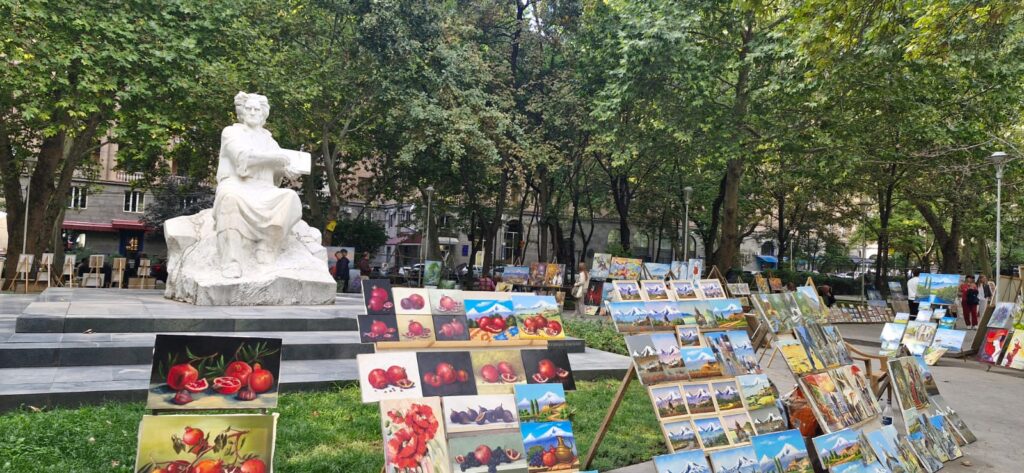
Nearby Martiros Saryan Park was lively with local artists displaying their work.
We reached the statue of Alexander Tamanyan, the Russian-born Armenian architect who designed much of modern Yerevan.
Locals joke that his posture looks more like a DJ behind a set of turntables.
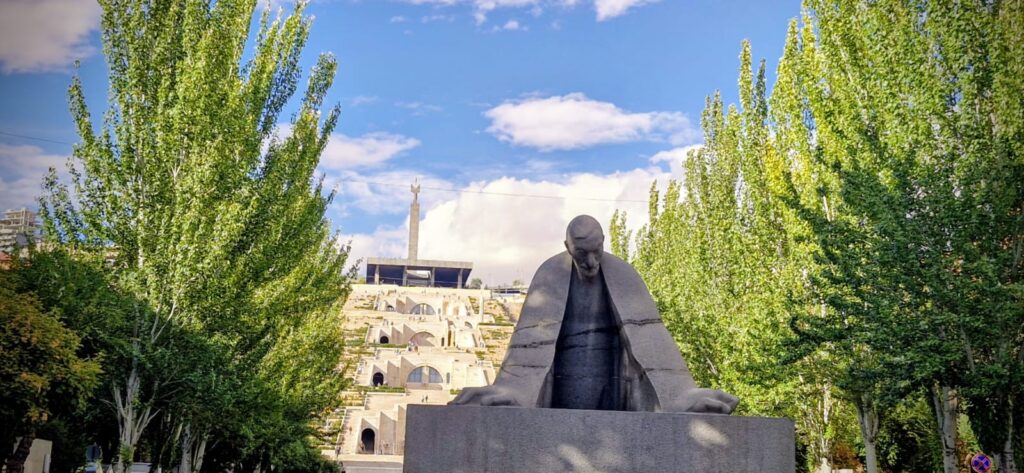
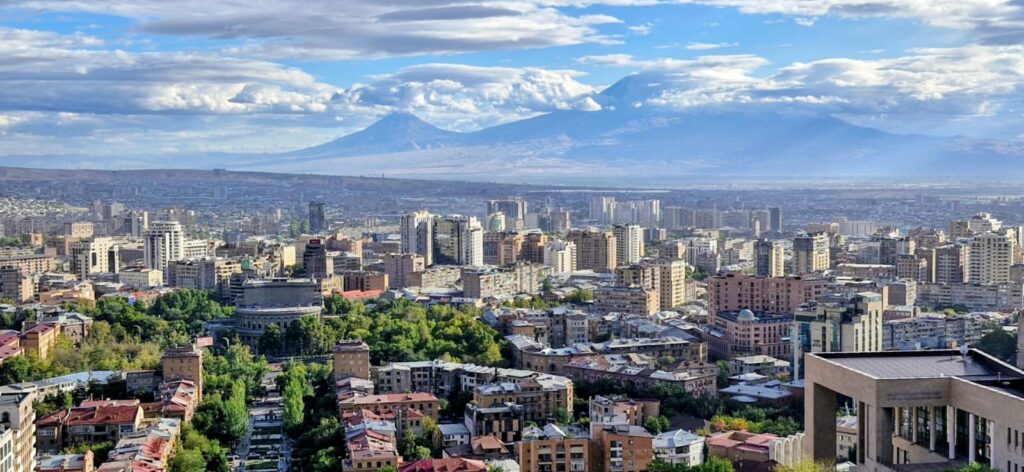
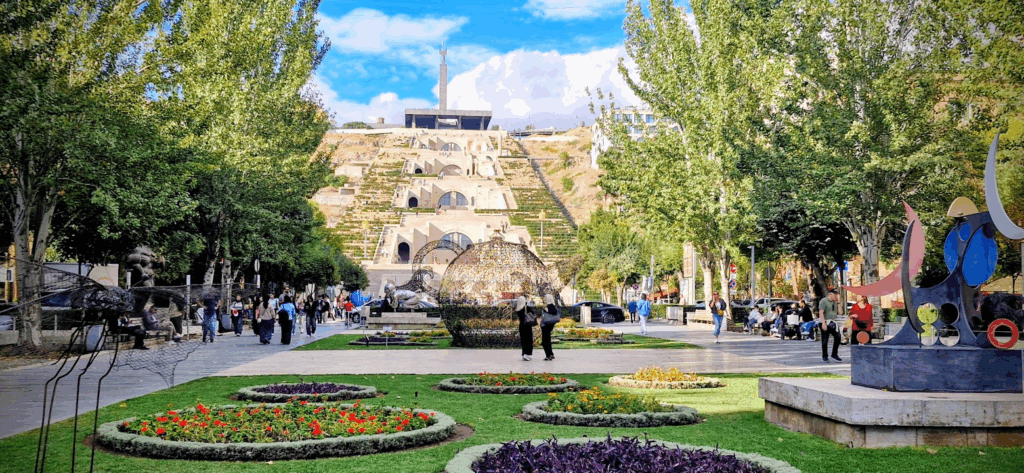
Behind him, the steps of the Yerevan Cascade stretched up — 572 in all — to the Soviet-era monument commemorating the 50th anniversary of the October Revolution.
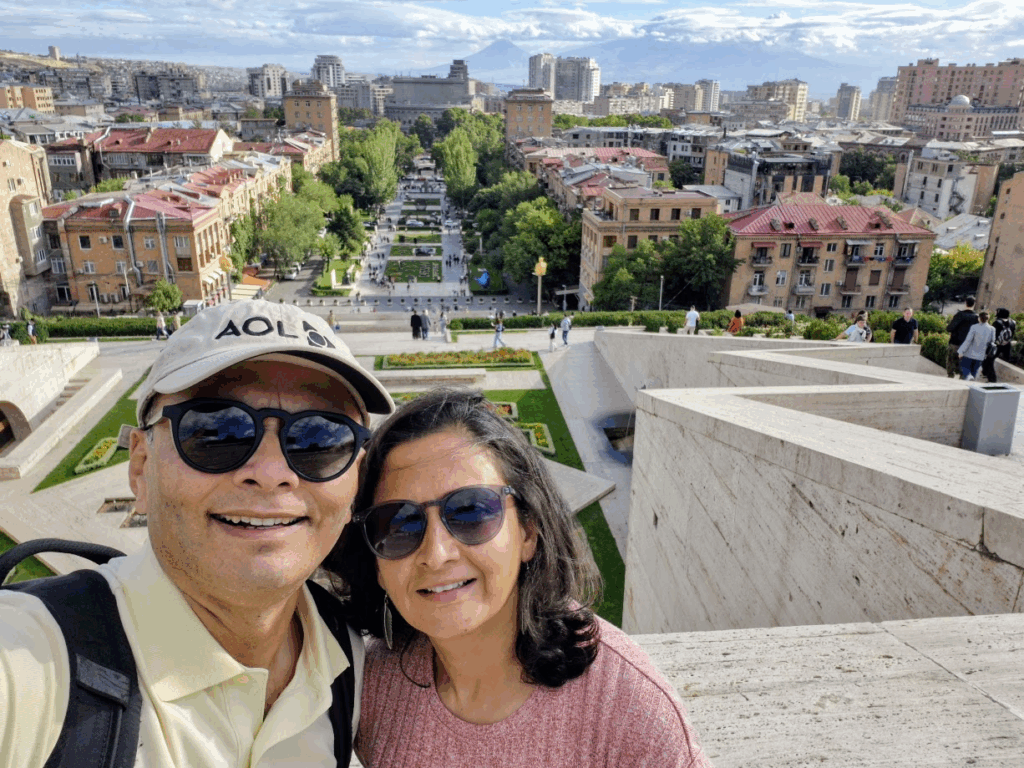
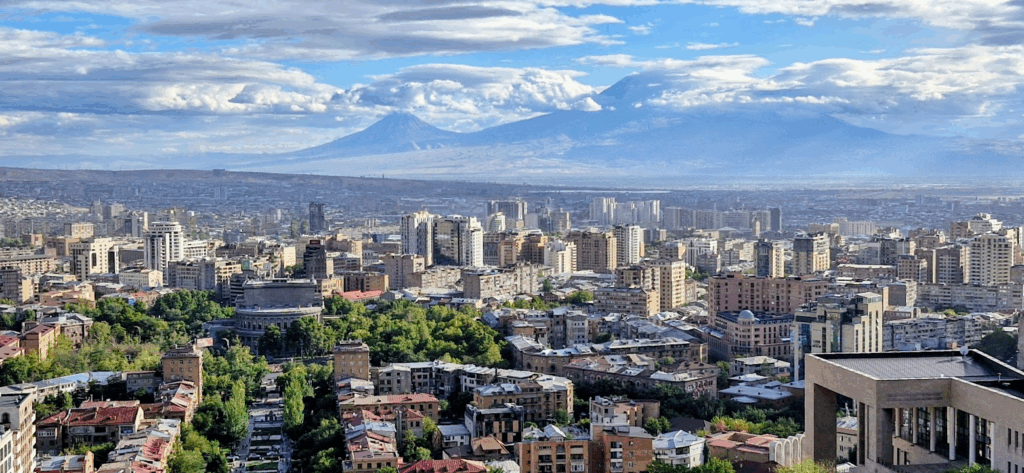
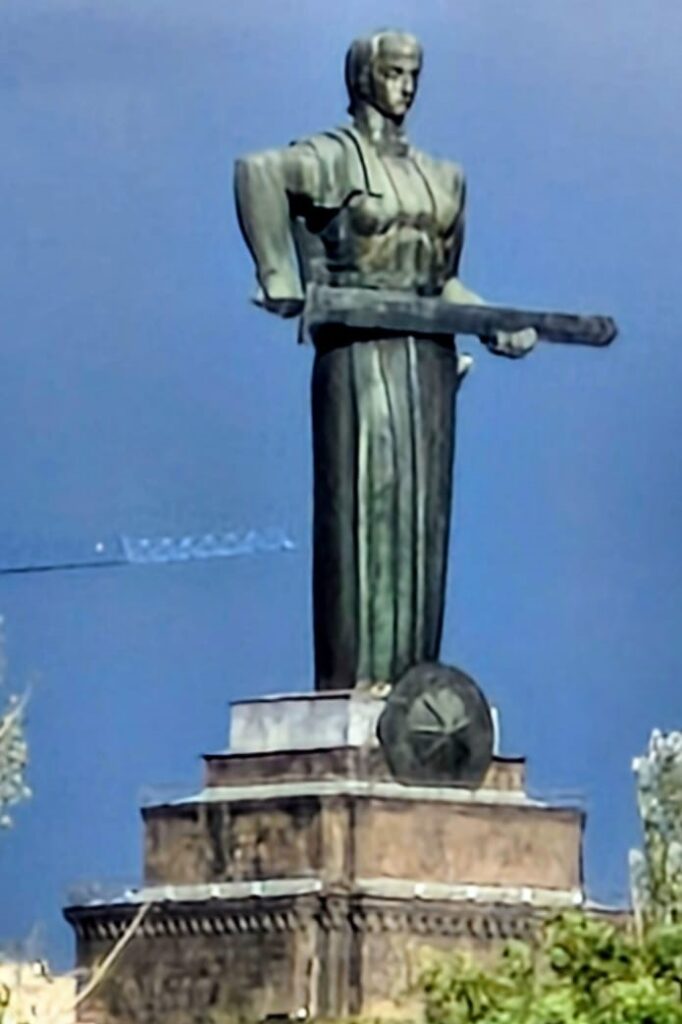
From the top, sweeping views of the city and distant Mount Ararat appeared. To one side, the Mother Armenia statue in Victory Park stood tall, symbolizing strength and protection.
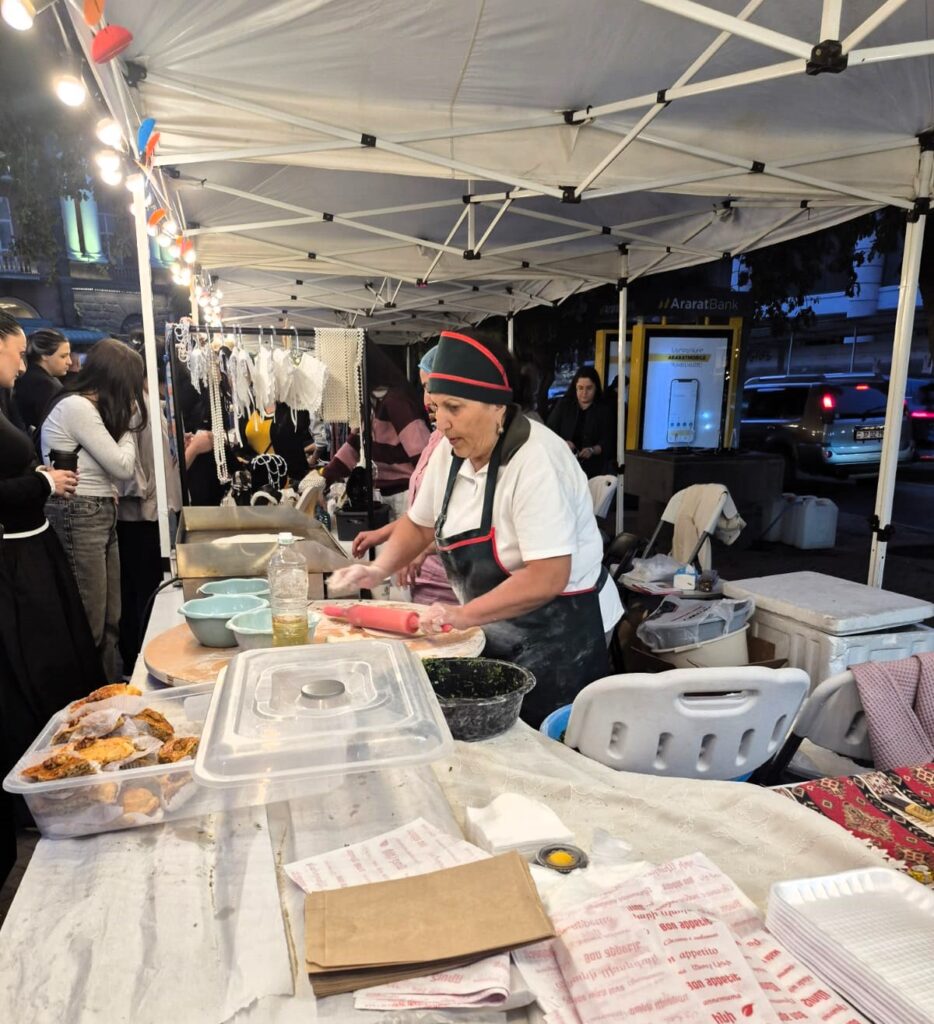
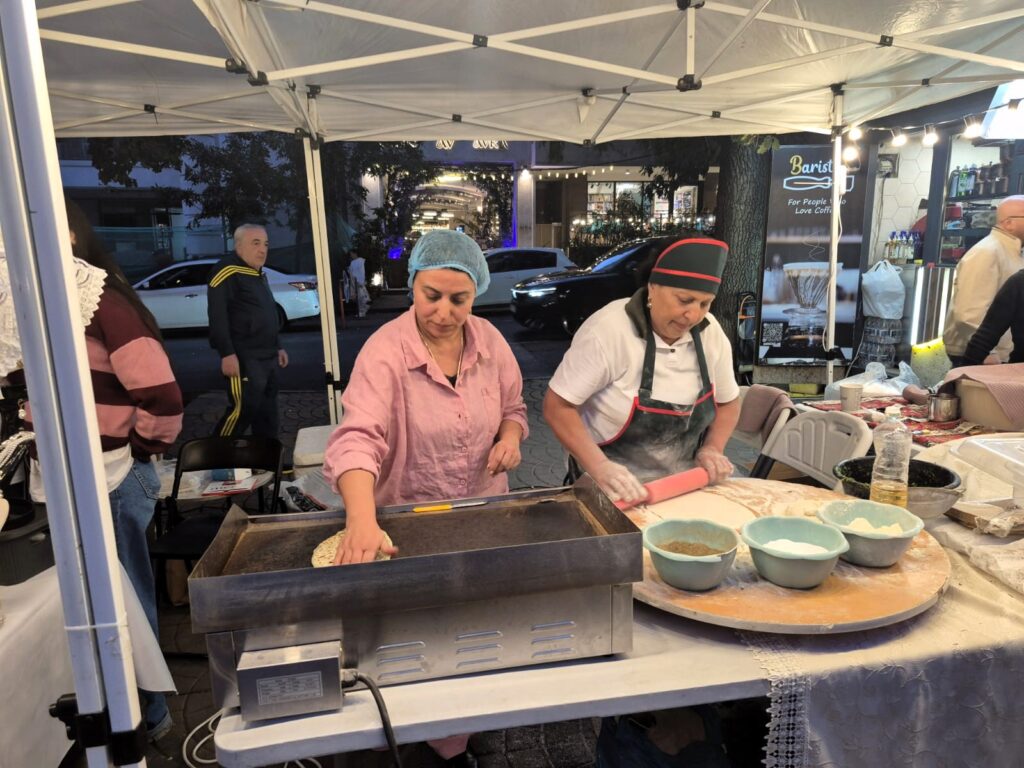
Evening dinner was at a local spot where we tried Zhingyalov Hats. This is a flatbread stuffed with finely chopped herbs — often more than a dozen varieties like parsley, coriander, dill, and sorrel. Traditionally from the Artsakh region, it’s a staple of rural Armenian cuisine, particularly during Lent. The thin dough is lightly crisped on a griddle, and the filling is aromatic, green, and wholesome.
At 8 pm, we returned to Republic Square for the fountain show — 15–20 minutes of lights, water, and music.
We walked back to the hotel and turned in early.
Day 10: Sunday, September 21 — Geghard, Symphony of Stones & Garni
This day’s guided tour took us outside Yerevan to explore Armenia’s history and landscapes.
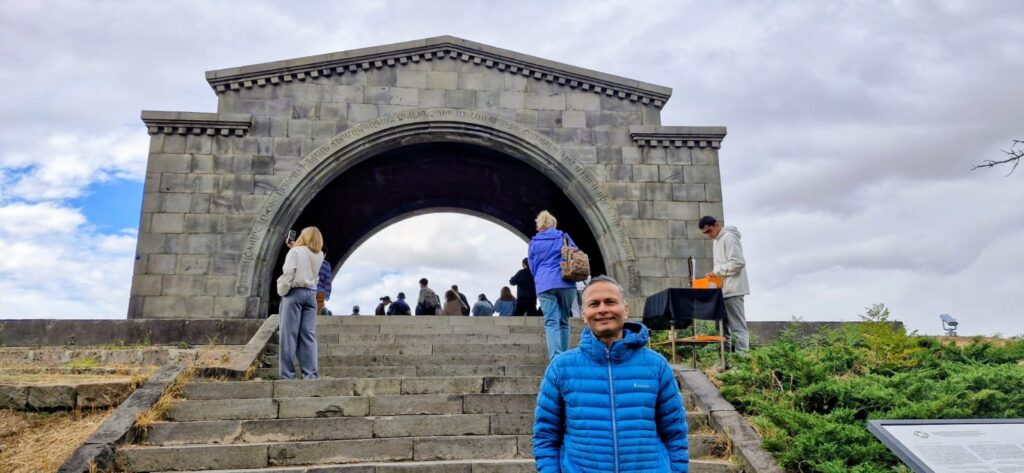
The first stop was the Arch of Charents, also called the Arch of Ararat. Built in 1957, the stone arch honors poet Yeghishe Charents, who loved Armenia and Mount Ararat. He once wrote that “only my Armenia can be seen from here.” The arch is simple yet powerfully placed, framing Mt. Ararat in the distance.
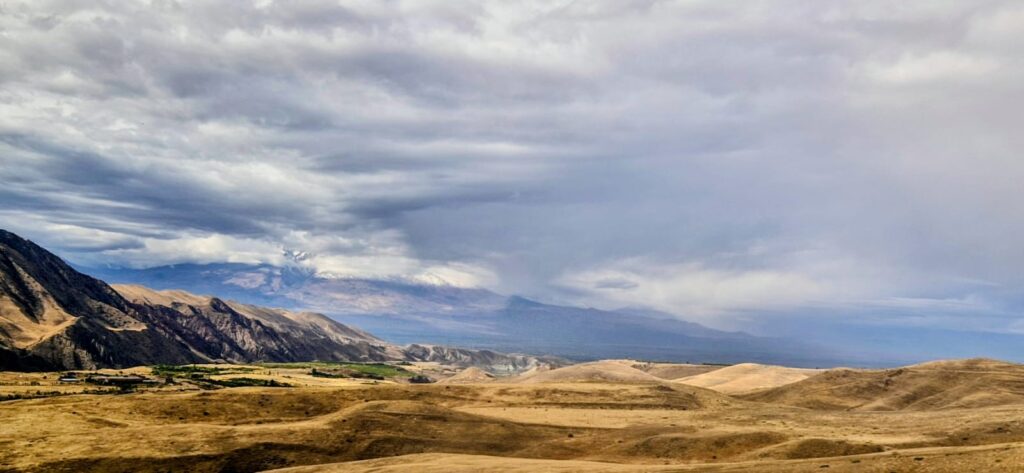
Mount Ararat itself dominates the view. Rising to 5,137 m, it is sacred to Armenians. According to the Book of Genesis, Noah’s Ark came to rest here after the great flood.
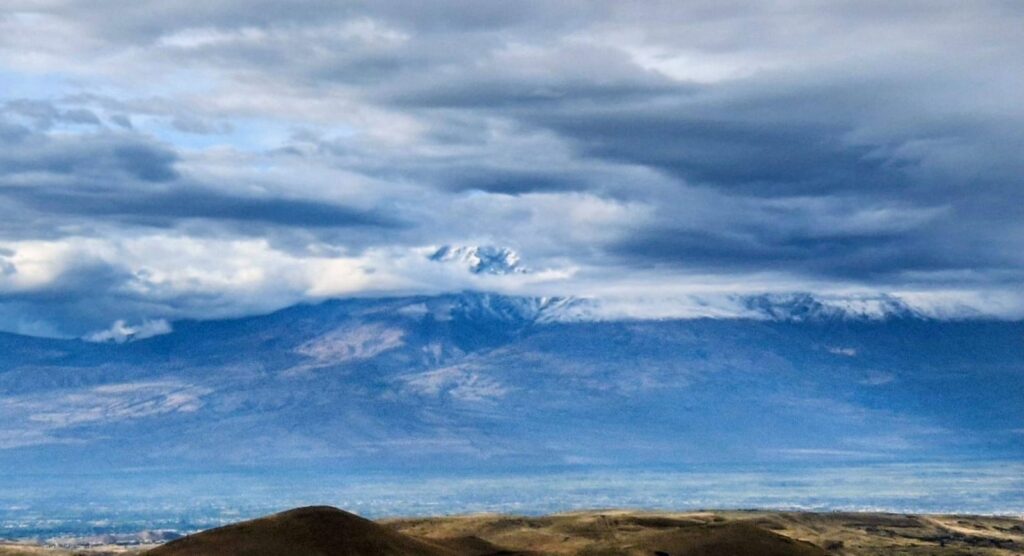
Although today the peak lies across the closed Turkish border, it remains Armenia’s national symbol and appears prominently on the coat of arms.
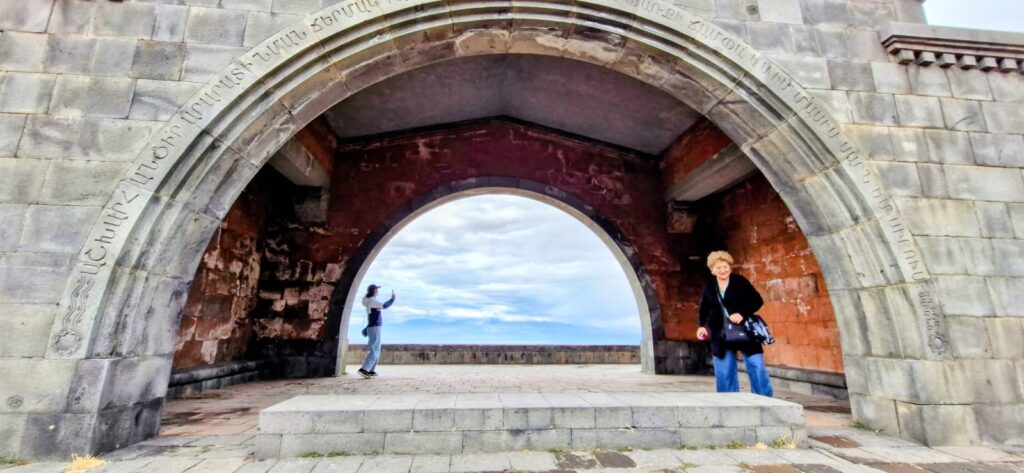
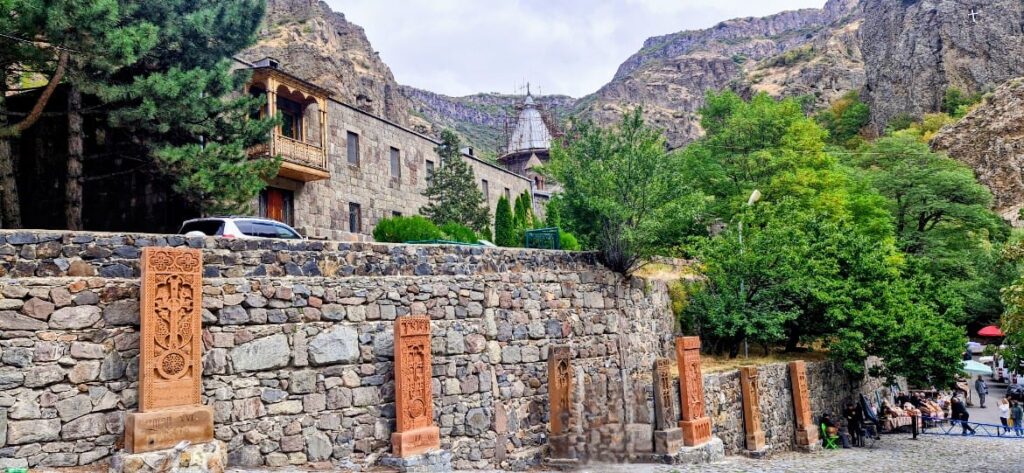
Next, we stopped at Geghard Monastery, a Christian monastery originally founded in the 4th century, though the main chapel dates to 1215 AD. The name Geghard means “the spear”, referring to the Holy Lance that pierced Jesus at the Crucifixion — said to have been brought to Armenia by Apostle Jude (Thaddeus).
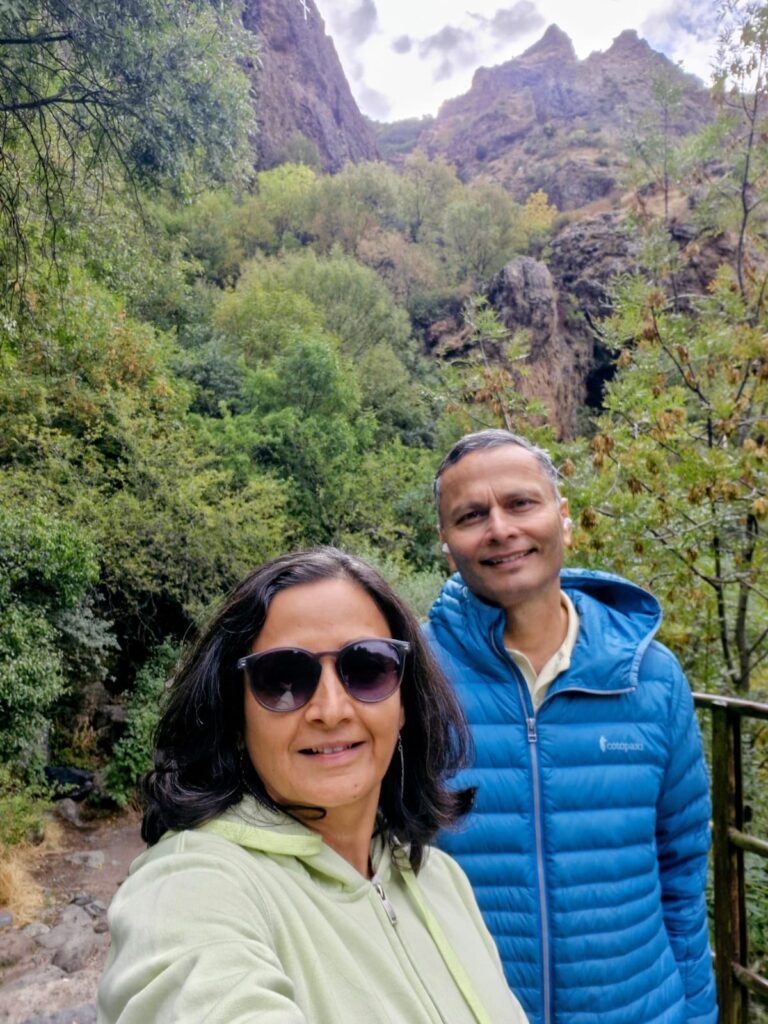
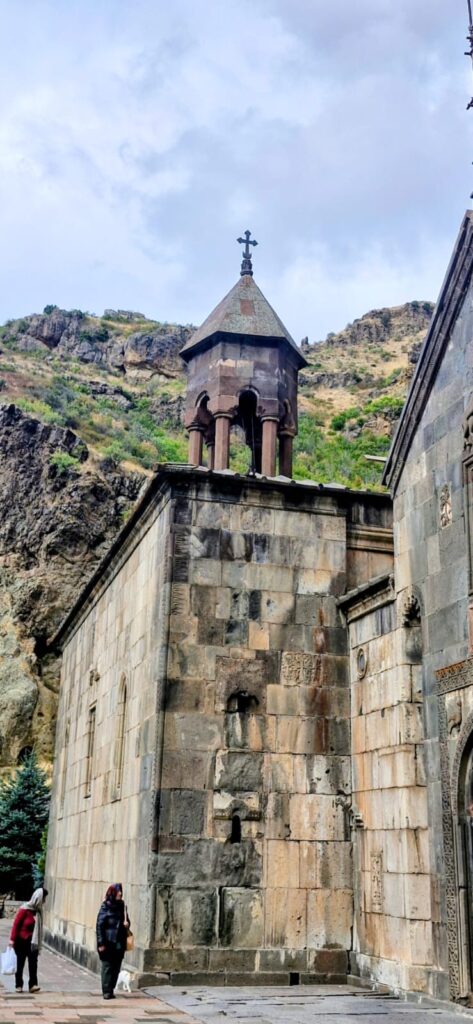
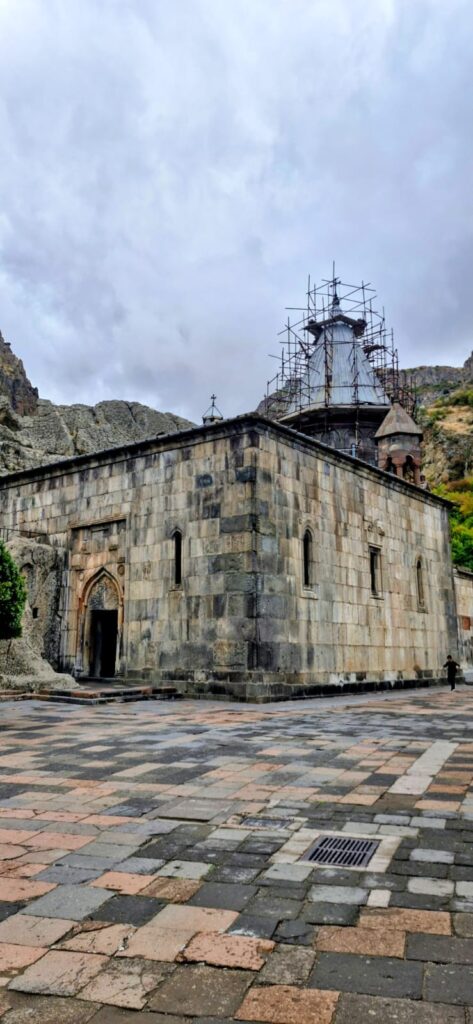
The monastery sits in a narrow gorge of the Azat River, surrounded by towering cliffs that seem to cradle it in stone. The entire complex is part of a UNESCO World Heritage Site, recognized not only for its history but also for its unique architecture. Many of its chapels are carved directly into the rock, blending nature and faith — some are little more than caves, others elaborate chambers that extend deep into the cliff.
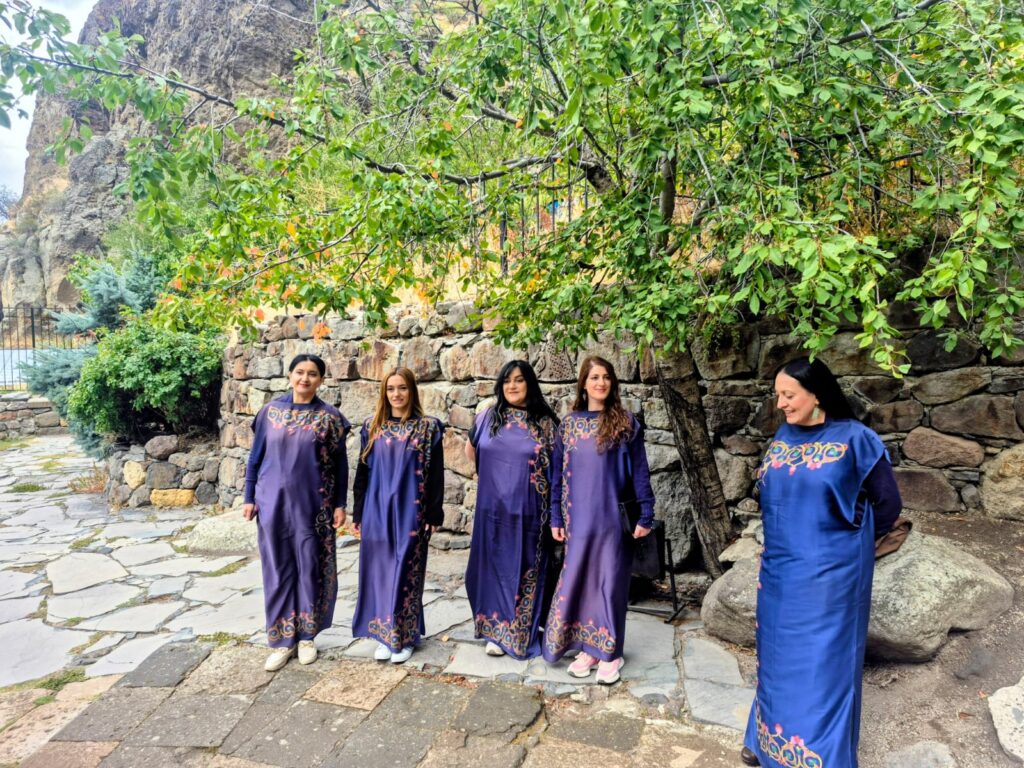
Walking through its dimly lit passages, we could see shafts of sunlight piercing through the openings, illuminating the ancient crosses carved on the walls. The sound of dripping water echoed softly through the stone — the whole place had a quiet, mystical feel.
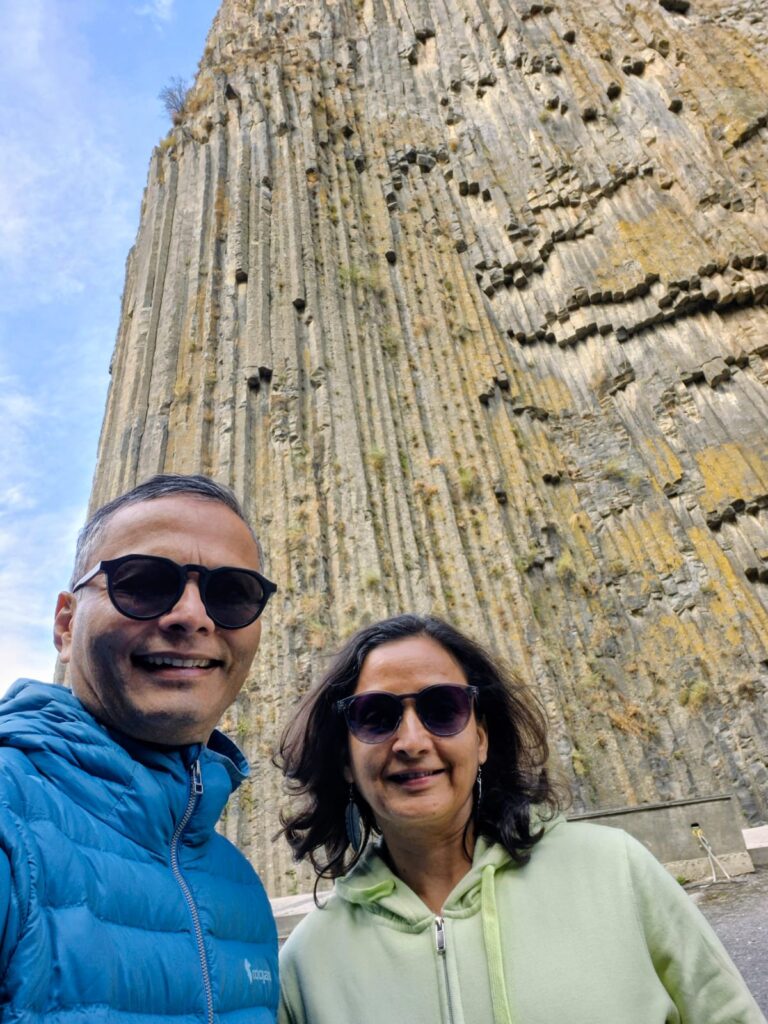
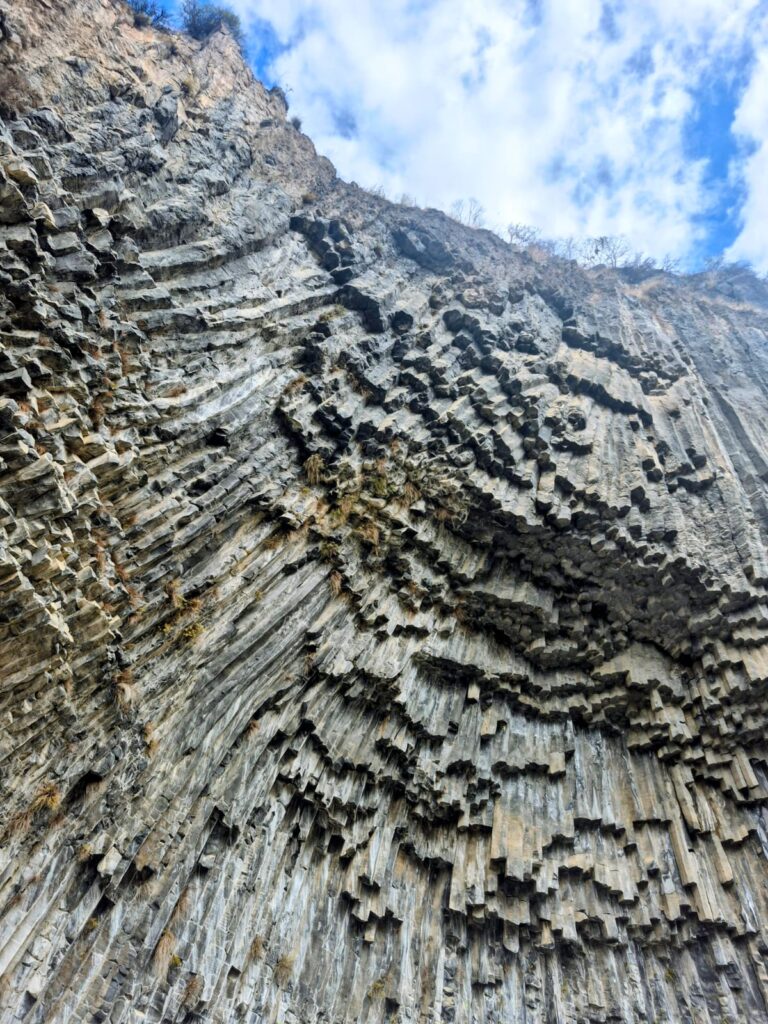
Nearby was the Symphony of Stones, a natural wonder of towering basalt columns along the cliff walls.
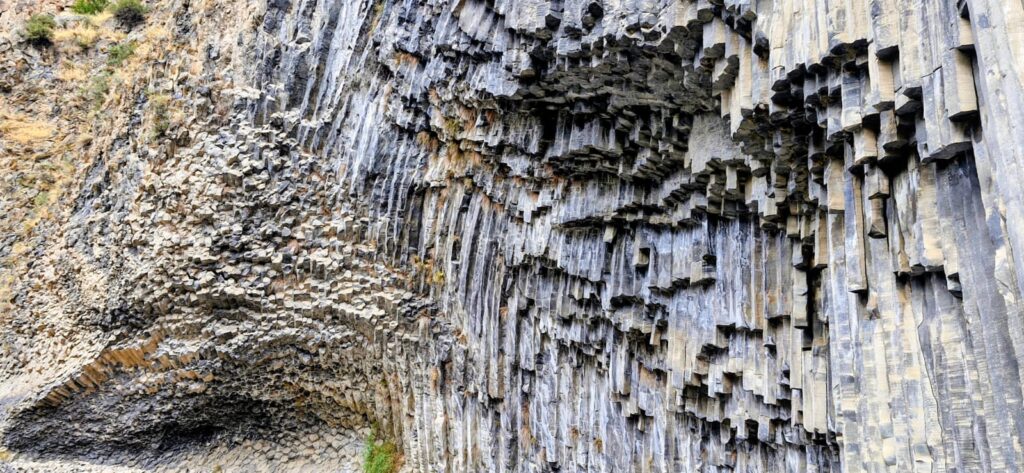
Formed by cooling lava flows, the vertical rock formations look like giant organ pipes. We had seen similar landscapes in Iceland and California, but here the scale was even greater.
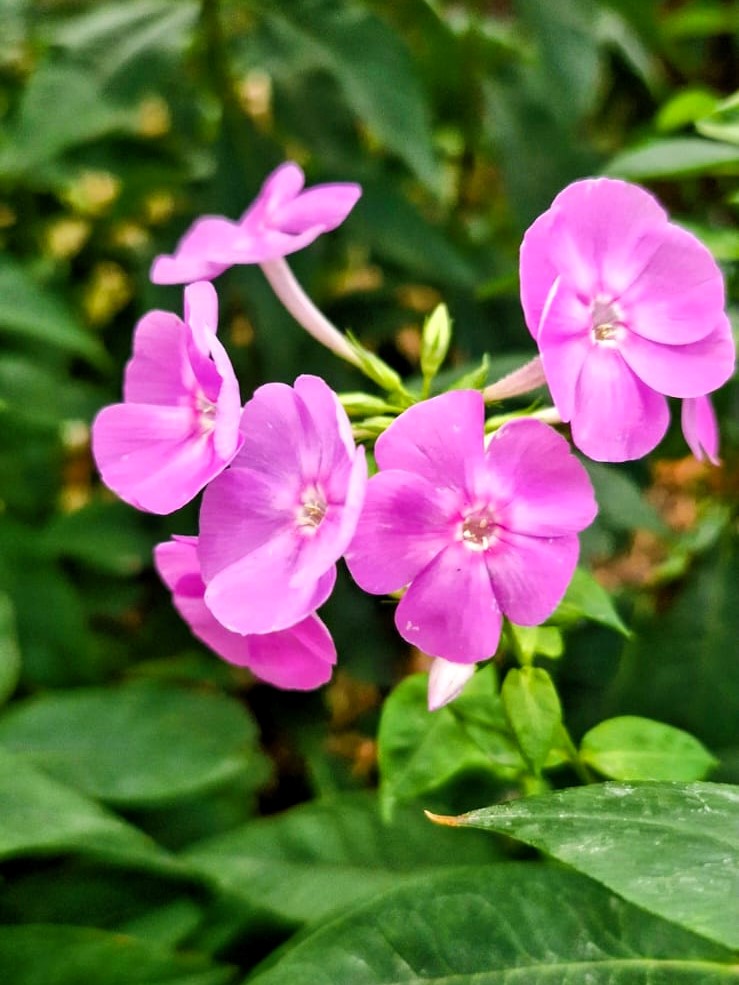
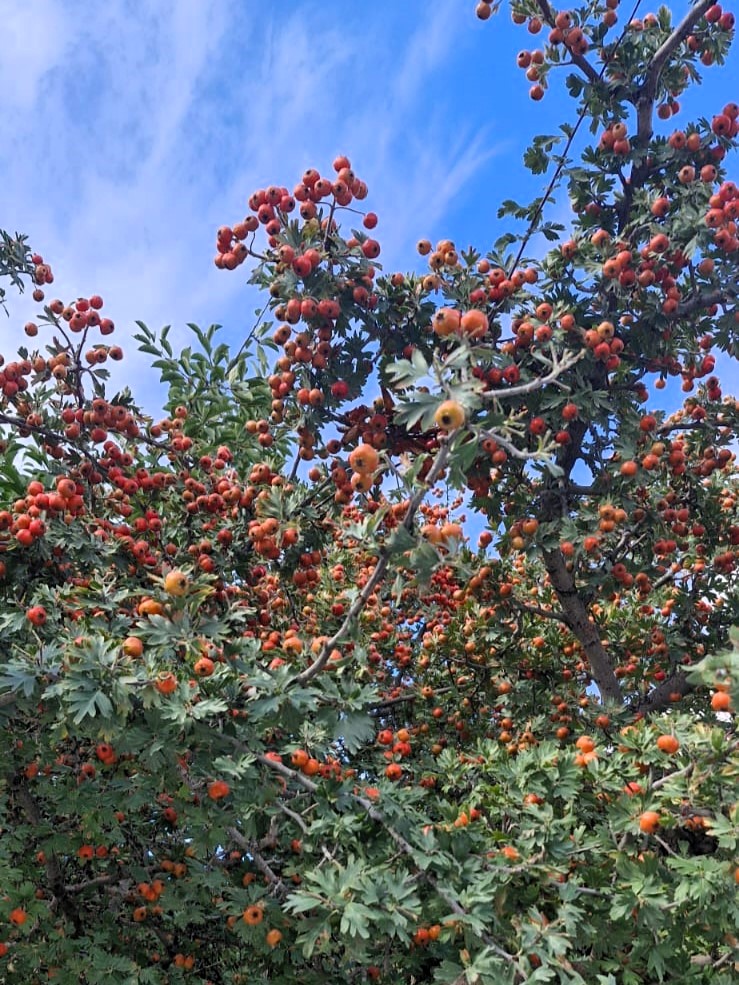
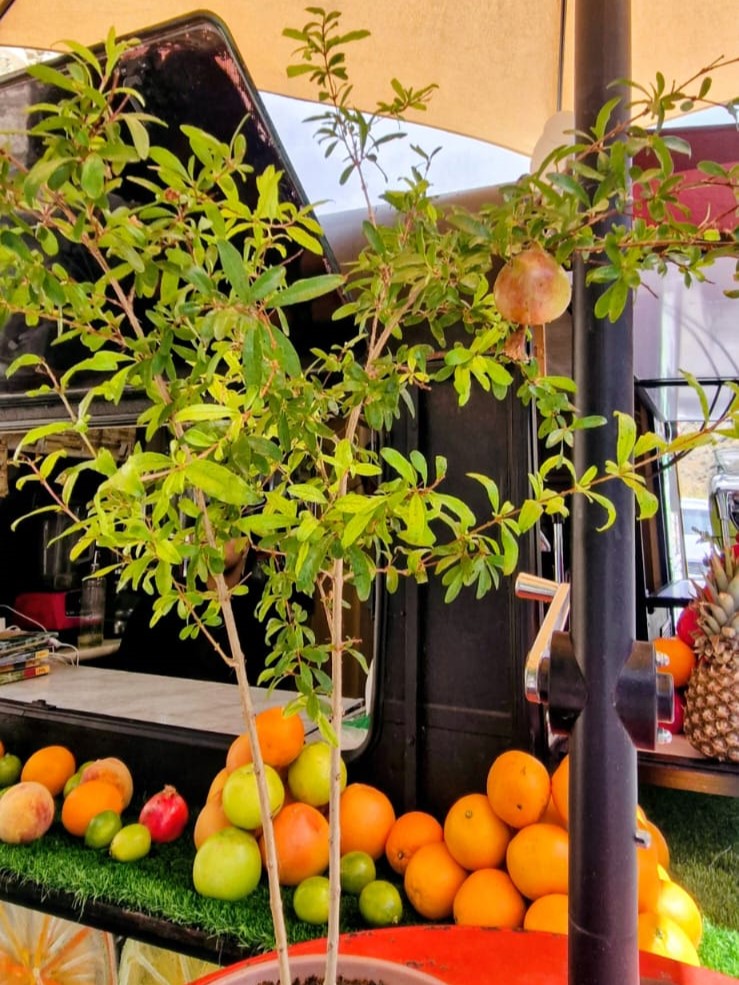
Our next destination was the Garni Temple. On the way, we saw some nice flowers and berries on the way.
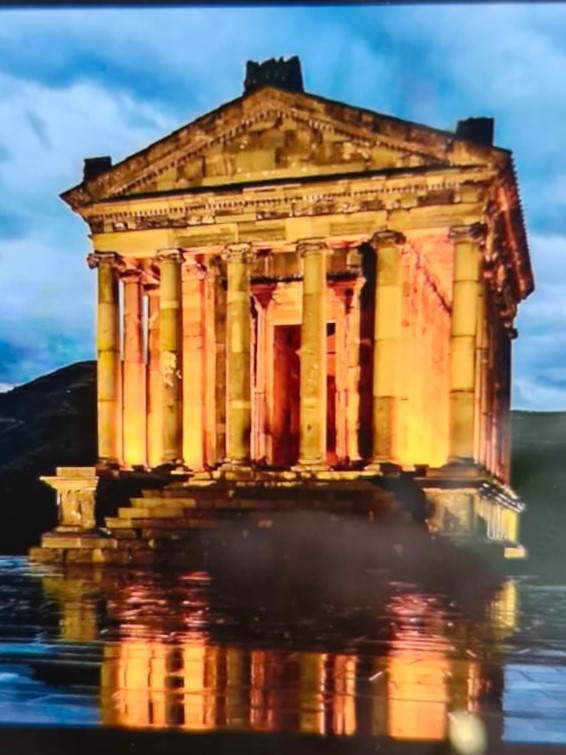
Built in the 1st century AD by King Tiridates I, Garni Temple is the only surviving Greco-Roman style temple in Armenia. Scholars believe it was dedicated to Mihr, the sun god.
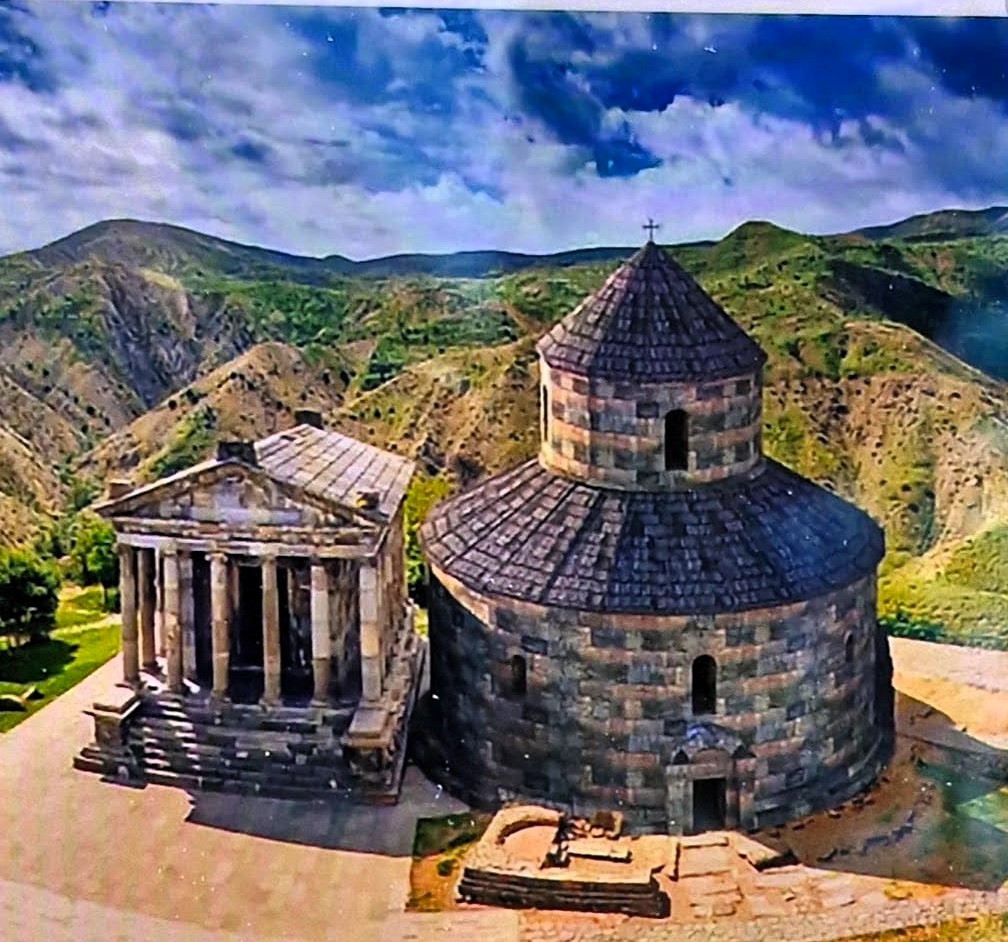
Destroyed by an earthquake in 1679, it was reconstructed in the 20th century. The temple is perched dramatically above the Azat gorge, with views of the Symphony of Stones below.
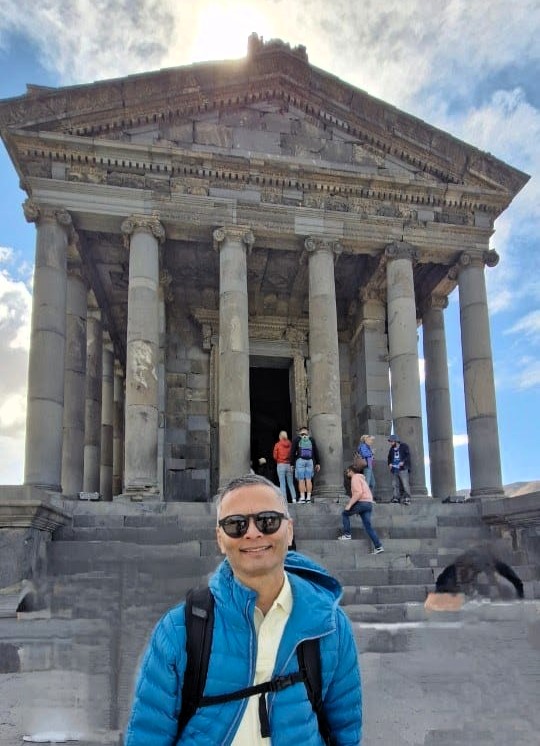
The site also includes ruins of a royal summer palace and Roman baths with mosaics.
Before lunch near the temple, we watched a demonstration of lavash baking. Dough was stretched thin and slapped onto the inside walls of a tonir (tandoor-like oven).
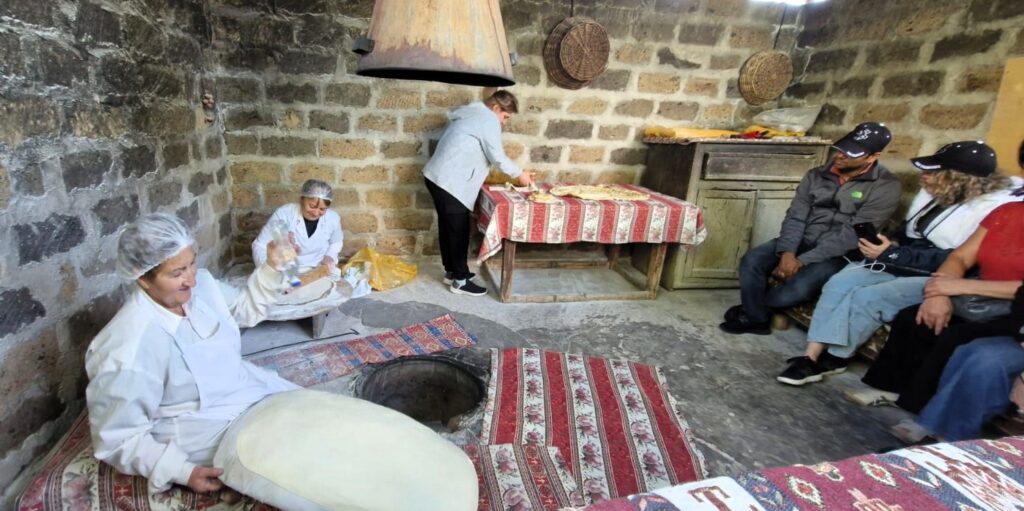
The result resembled rumali roti or naan — soft, warm, and fragrant. Lunch was simple: vegetable soup with fresh lavash.
It happened to be Armenia’s Independence Day (September 21, 1991, marking the end of Soviet rule). Back in Yerevan, a flea market had been set up in a park. Statues of an Armenian warrior and a freedom fighter watched over the space. A man played music on glass bottles, creating a cheerful atmosphere.
Dinner was Lahmajun, thin Armenian pizza topped with beans and mushrooms, along with Zhingyalov Hats and salad. Simple but delicious.
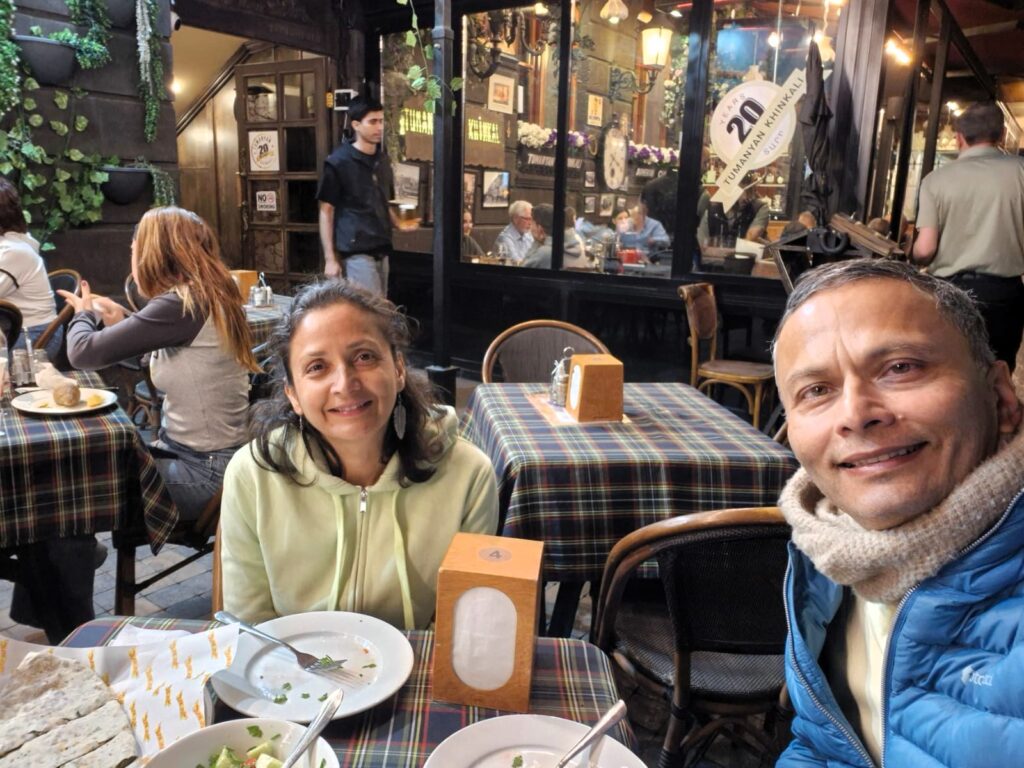
We returned to our hotel by 8 pm.
Day 11: Monday, September 22 — Khor Virap, Norovank, Jermuk & Areni Winery
We joined another guided tour today. Our first stop was Khor Virap Monastery, located near the Turkish border.
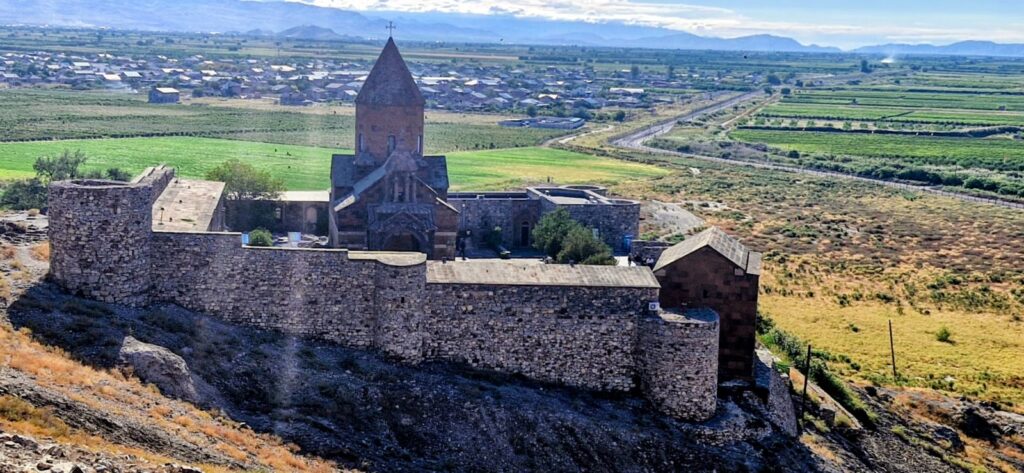
Its significance lies in a remarkable story — this is where Saint Gregory the Illuminator was imprisoned for 13 years by King Tiridates III, who was then a pagan ruler. When Gregory survived miraculously, the king converted to Christianity, and in 301 AD, Armenia became the first Christian nation in the world.
The monastery itself sits on a small hill, stark and humble, but its setting is dramatic. Just beyond its stone walls rises Mount Ararat, with both its snow-capped peaks — the greater and the lesser — visible in full glory that day. For Armenians, Ararat is more than a mountain; it’s a national symbol, believed to be the resting place of Noah’s Ark, even though it now lies just across the border in Turkey.
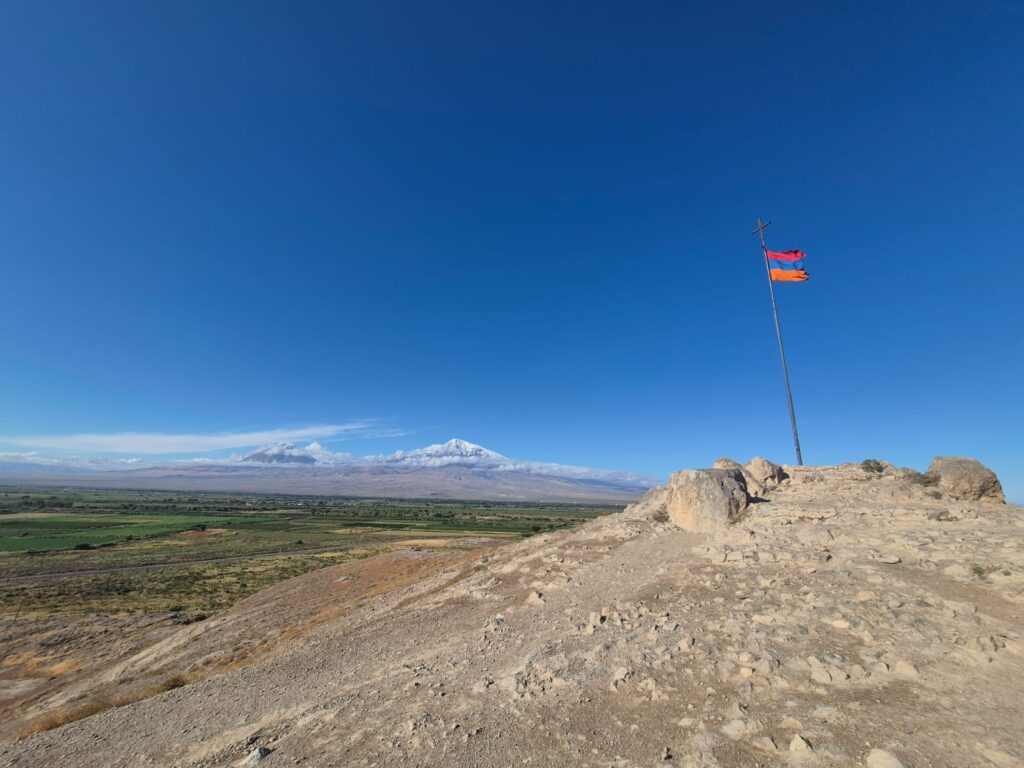
Standing there, barely a kilometer from the Turkish frontier, it’s hard not to feel the weight of geography and history intertwined. The border itself is closed — a reminder of the uneasy relations between the two countries — yet Ararat remains ever-present, visible from nearly every high point in Armenia, like a silent guardian of the nation’s faith and past.
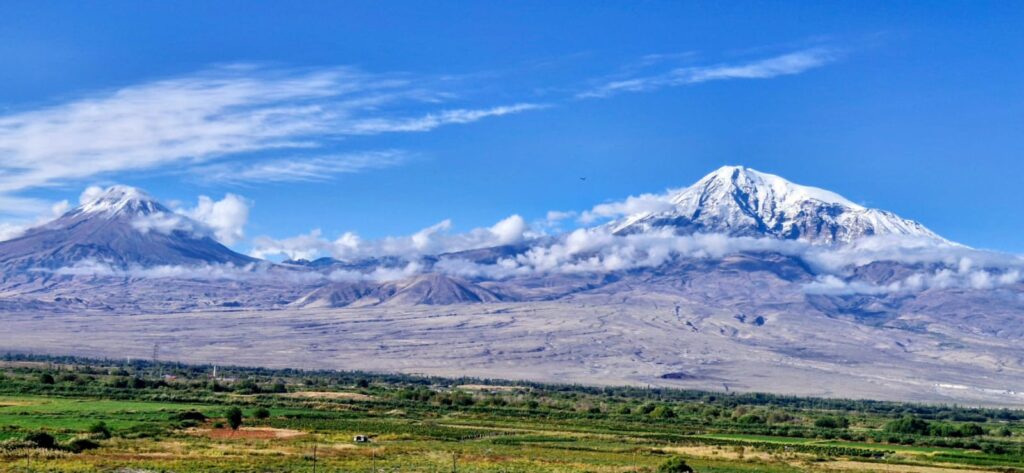
Our next stop was Norovank Monastery, dating to the 13th century and perched in a narrow gorge carved by the Amaghu River, about 122 km southeast of Yerevan.
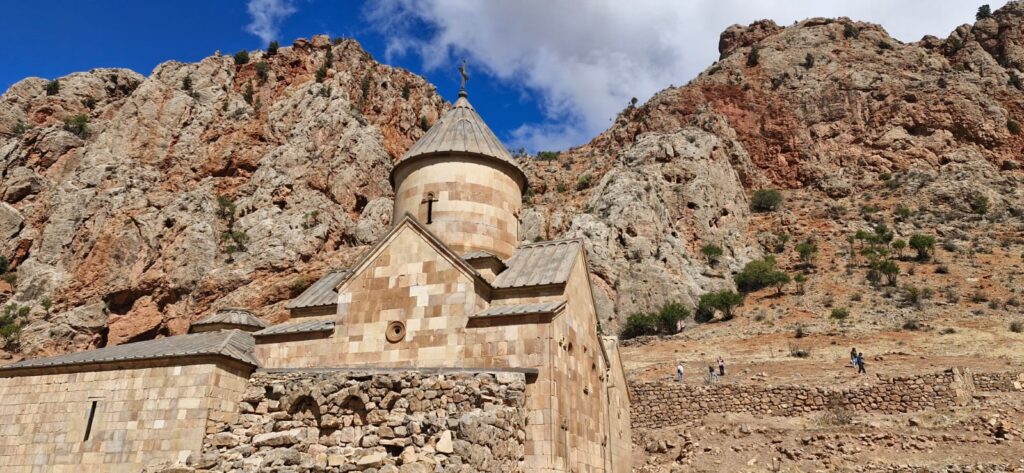
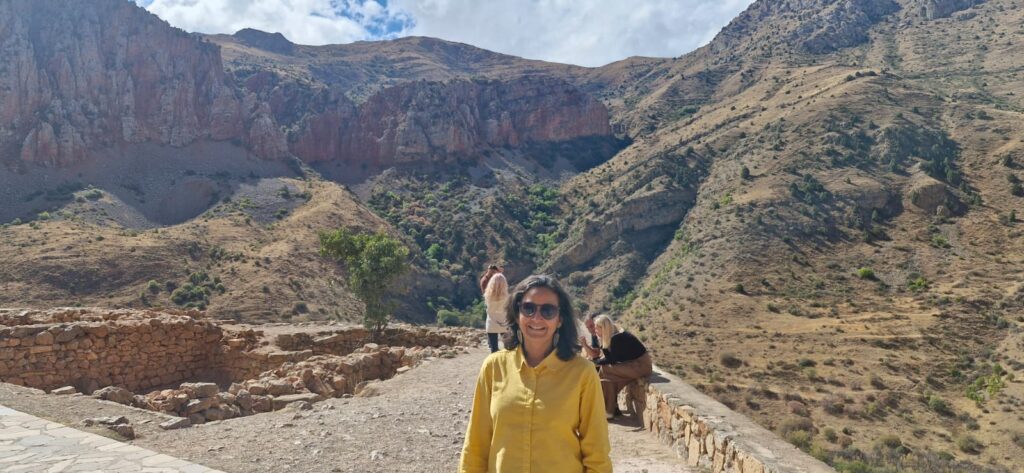
The gorge is dramatic — cliffs of deep red rock rise behind the monastery, giving it a cinematic setting.
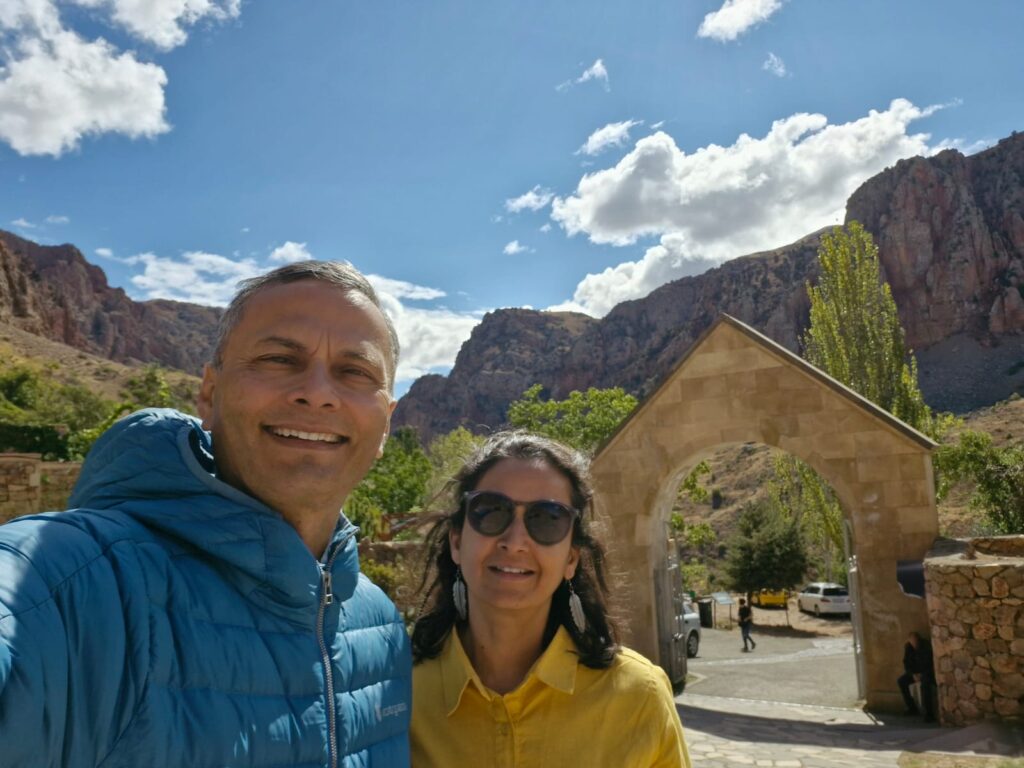
Several parts of the complex, such as the Surp Karapet church and the Surp Astvatsatsin chapel, are joined with ornate stone carvings, and the site has long been a cultural and spiritual center in the Vayots Dzor region.
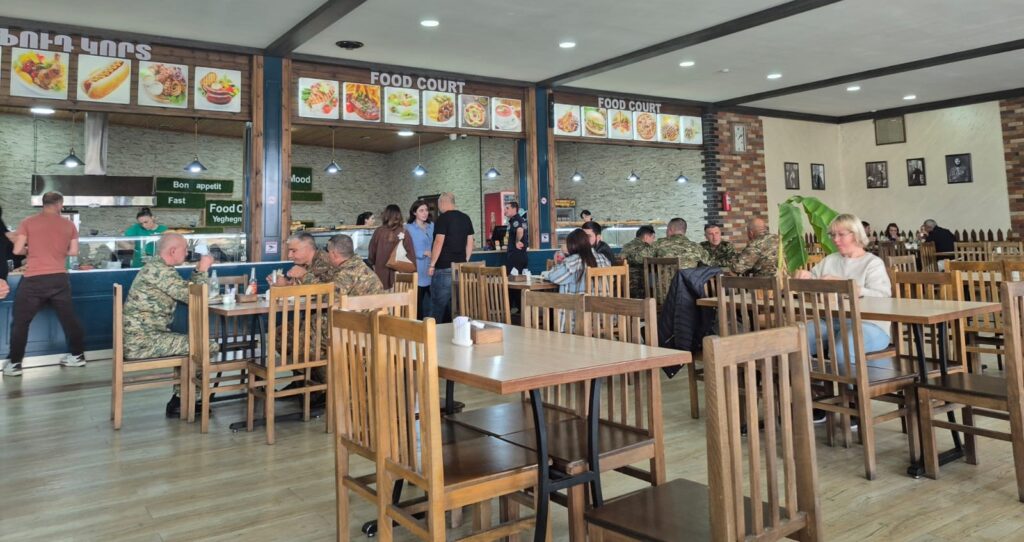
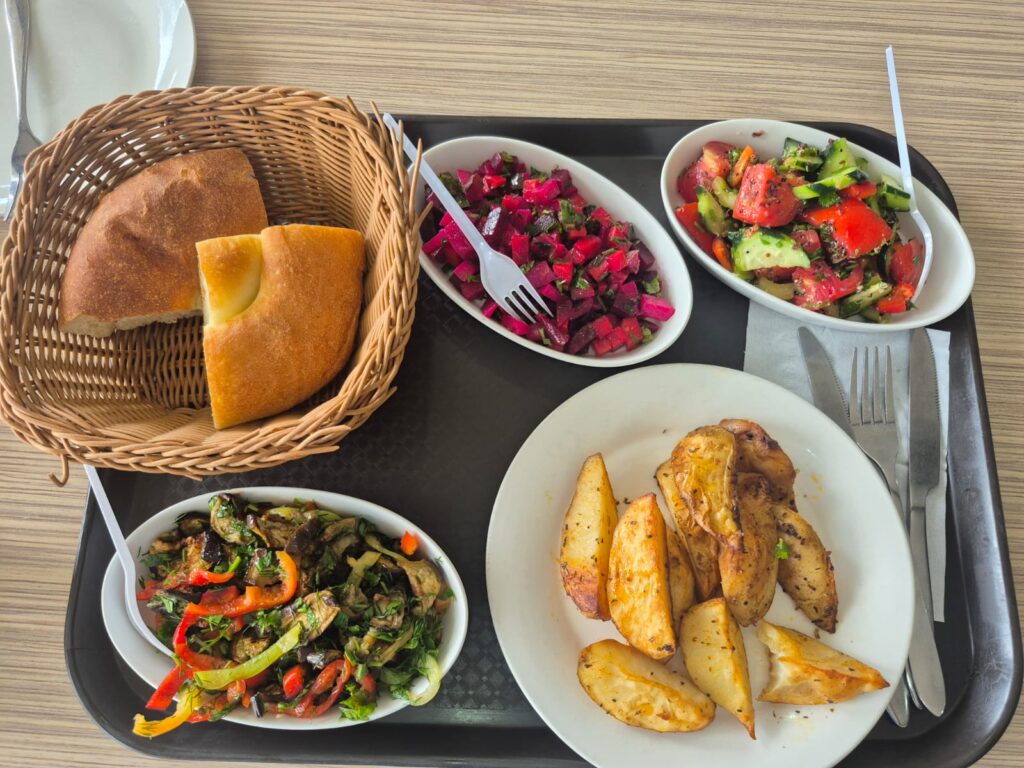
After visiting Norovank, we lunched in Yeghegnadzor, having salad and bread — simple, light, just right for travel.
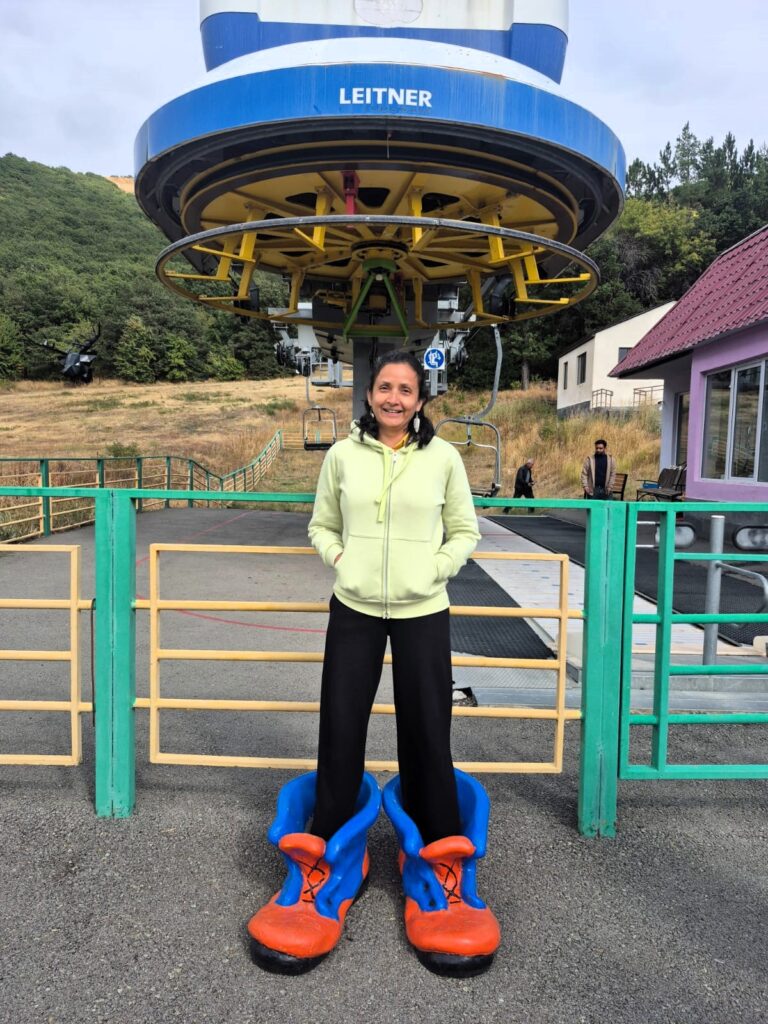
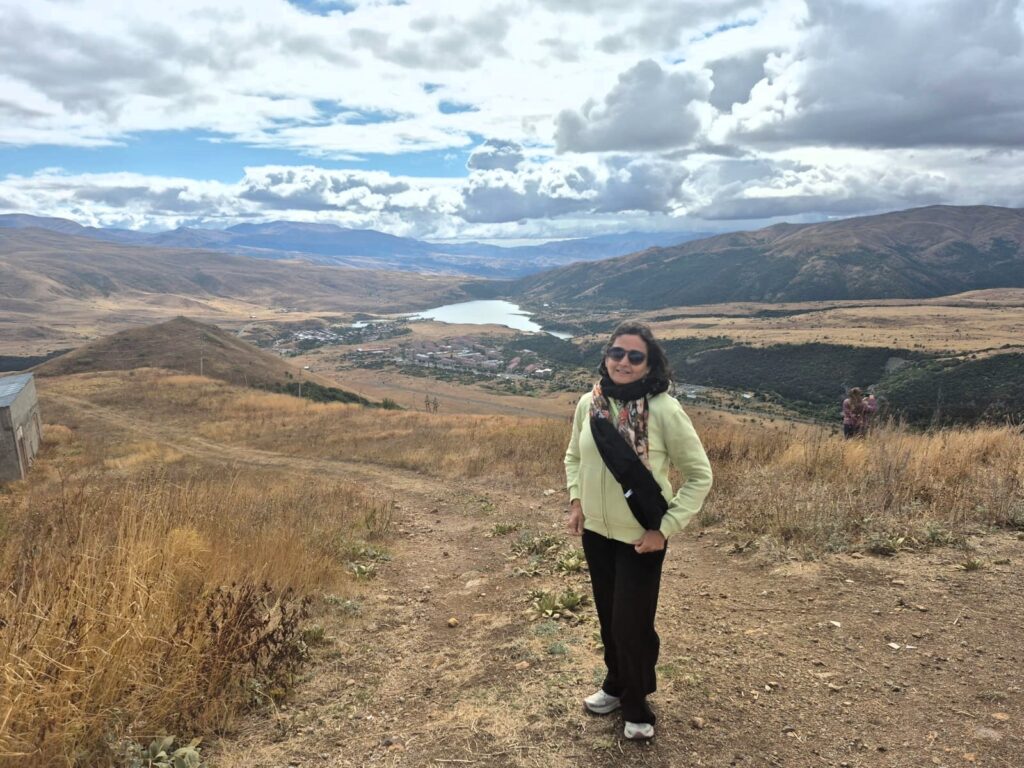
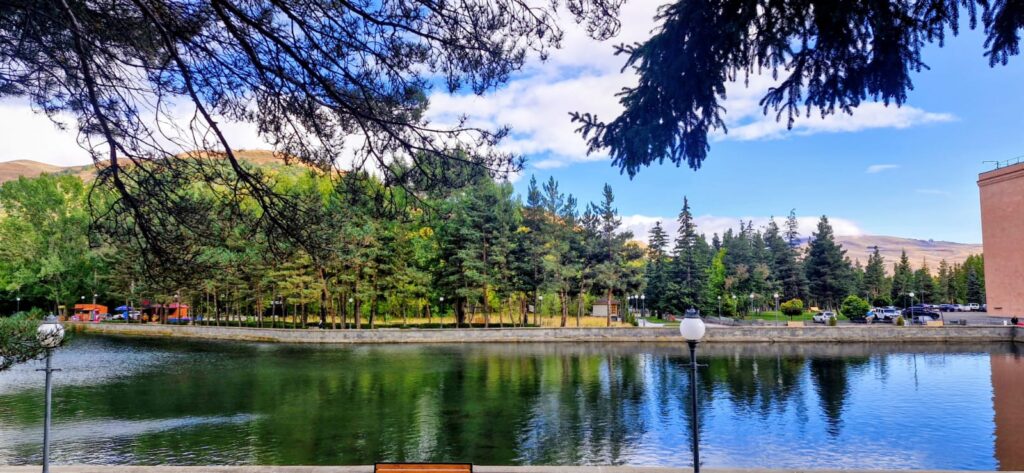
Then we drove to Jermuk, where a cable car took us up the mountain for sweeping views.
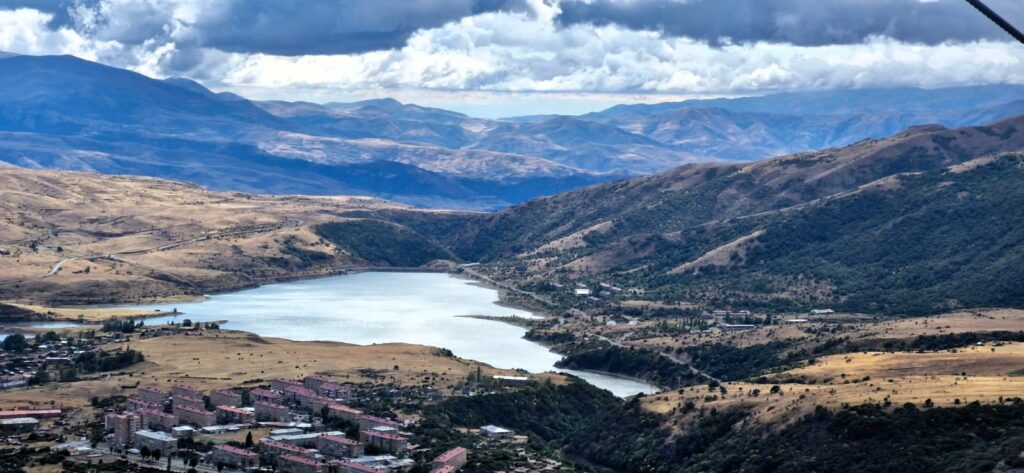
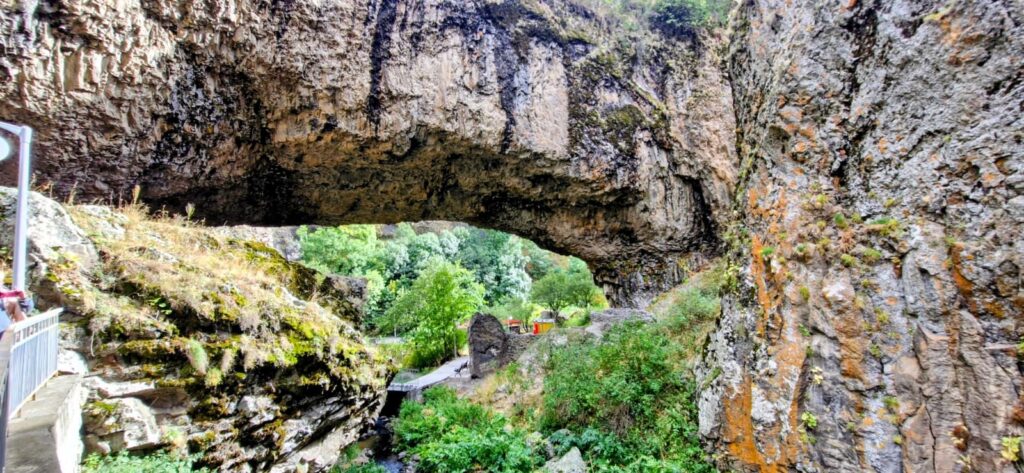
Near Jermuk, we visited the Mermaid’s Hair Waterfall (Jermuk Waterfall).
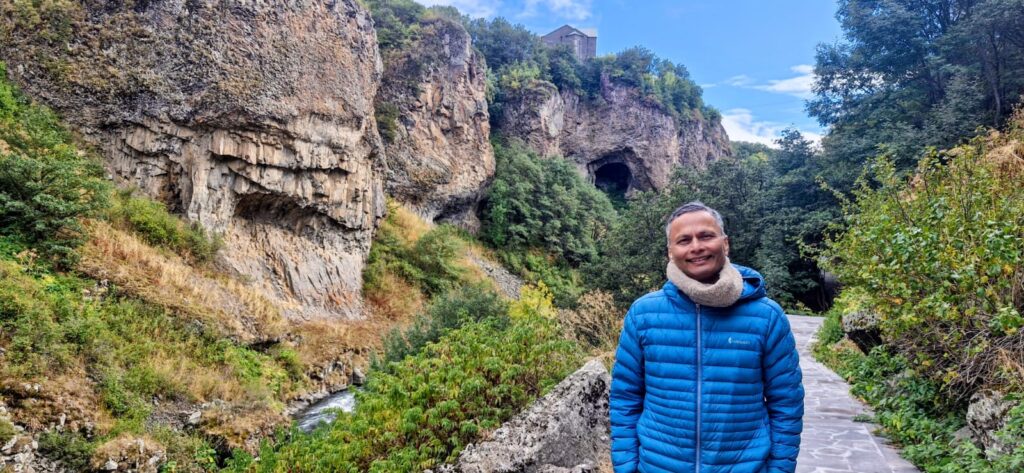
It’s not a massive torrent, but the water trickling down over rock faces looks like flowing hair. Local legend says that passing under an Arch of Dreams nearby, making a wish, can help it come true.
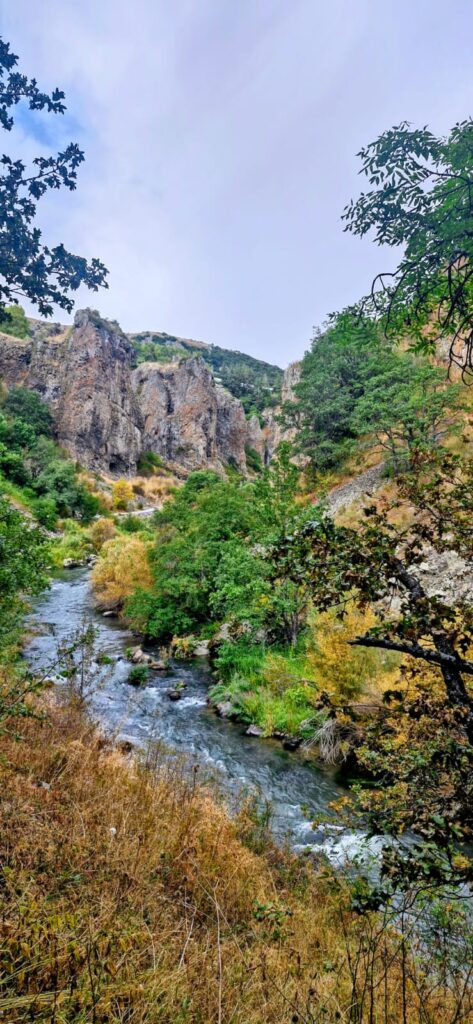
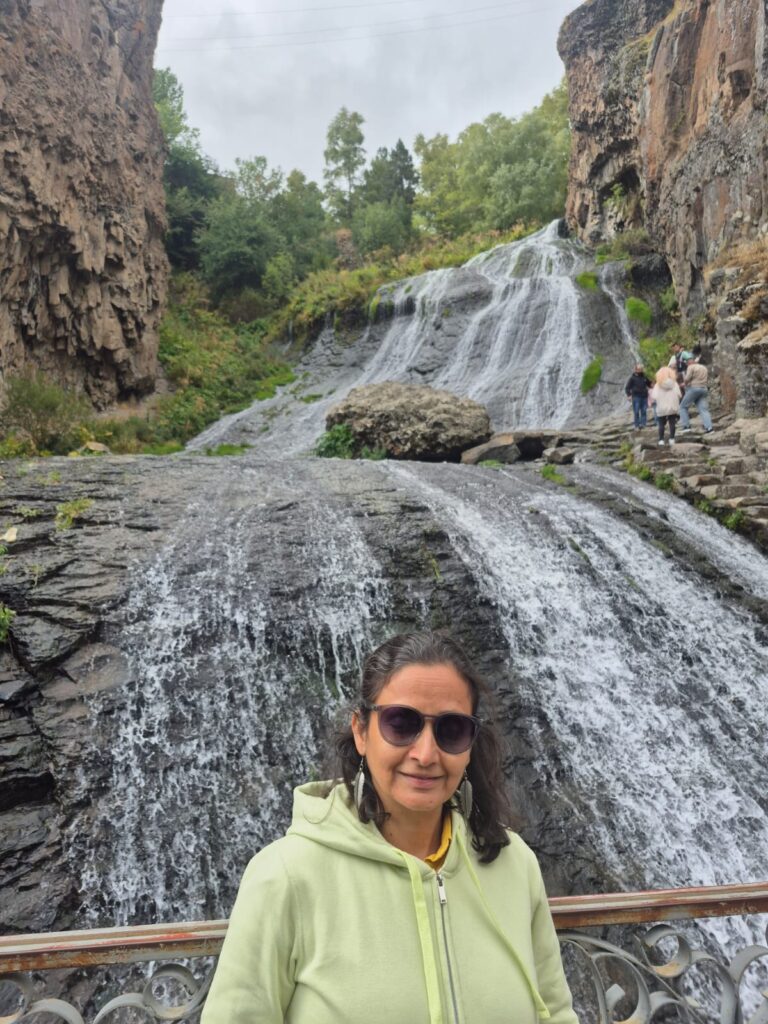
The arch is about 30 meters long and 15 meters high. In Jermuk, mineral water is famous for its alleged healing properties — we tasted it, enjoyed the mountain scenery, and relaxed with hot chocolate.
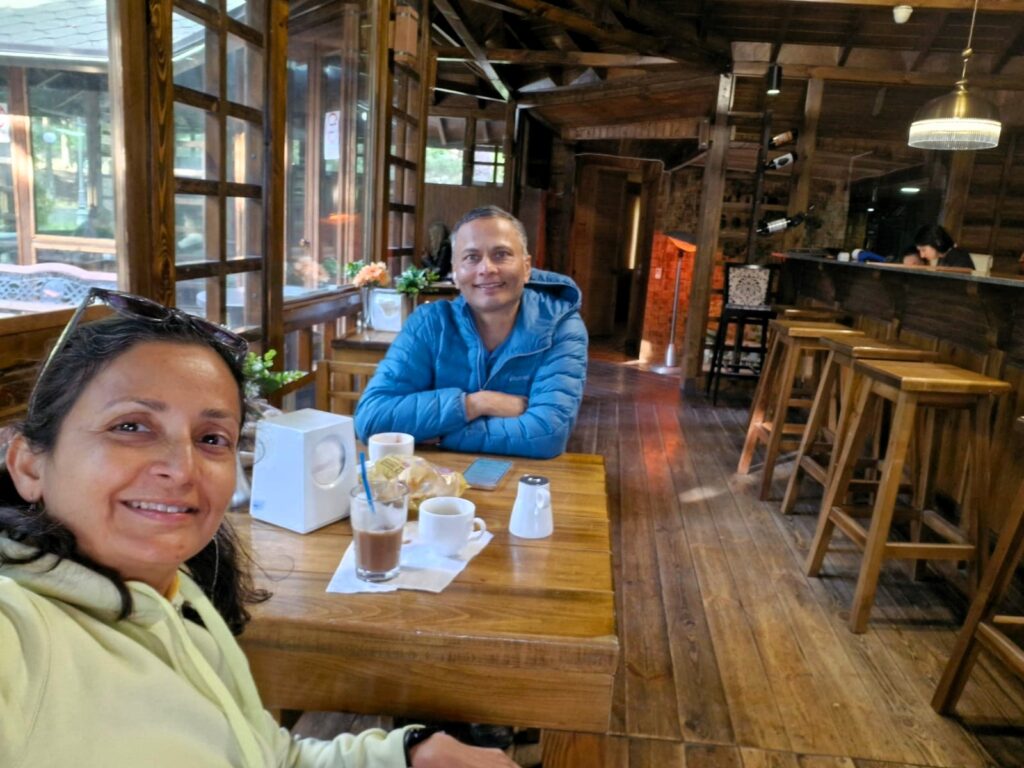
Our final stop was Areni Winery. Armenia (and Georgia) both claim ancient wine traditions, and in the Areni region, archaeologists discovered a 6,000+-year-old wine cellar in the Areni-1 cave. The local grape “Areni Noir” is indigenous and grown at high altitude on volcanic soils, giving it unique character.
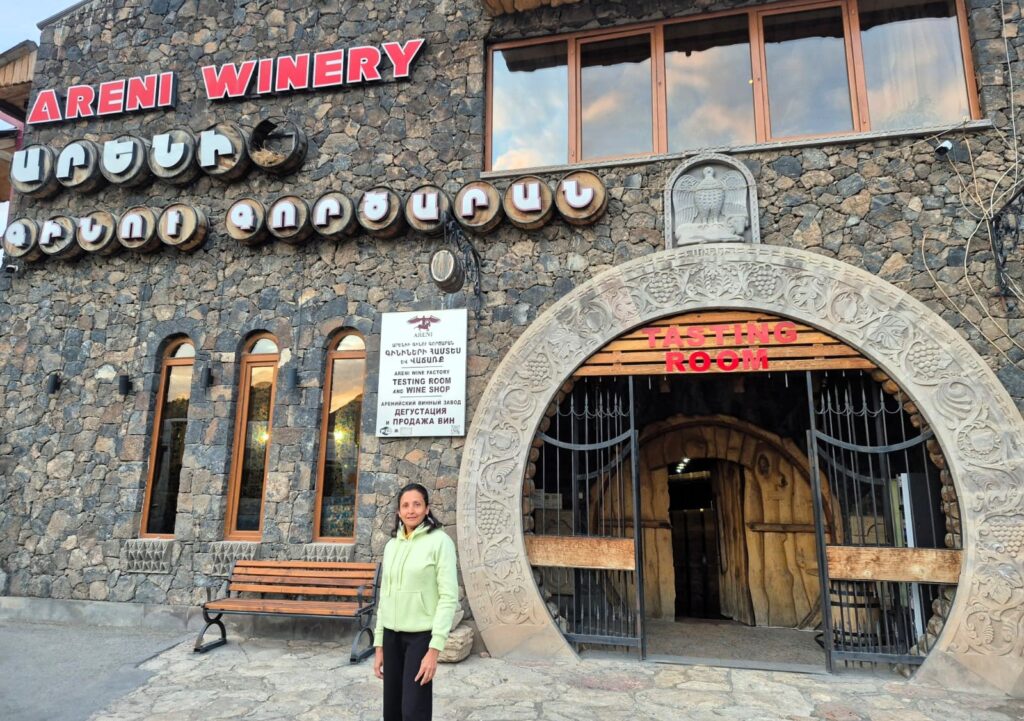
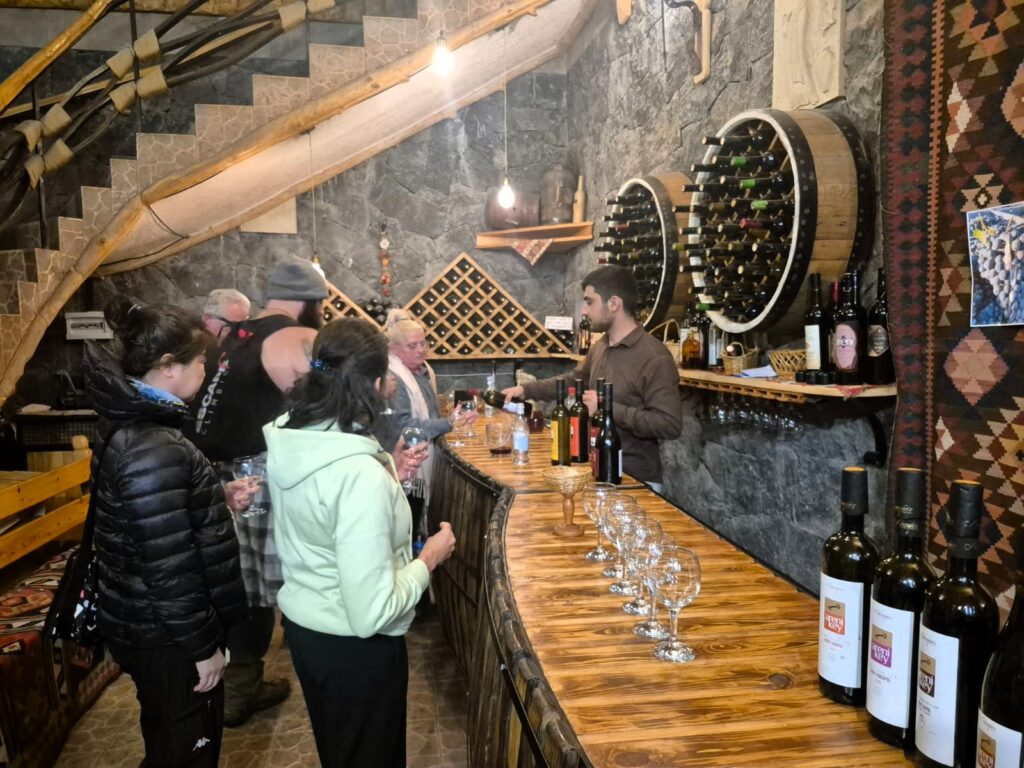
Today, grape growers still cultivate it, producing wines both locally and for export. Although Anu and I don’t usually drink wine, the tasting was fun — we tried small amounts and appreciated how embedded wine is in the region’s heritage.
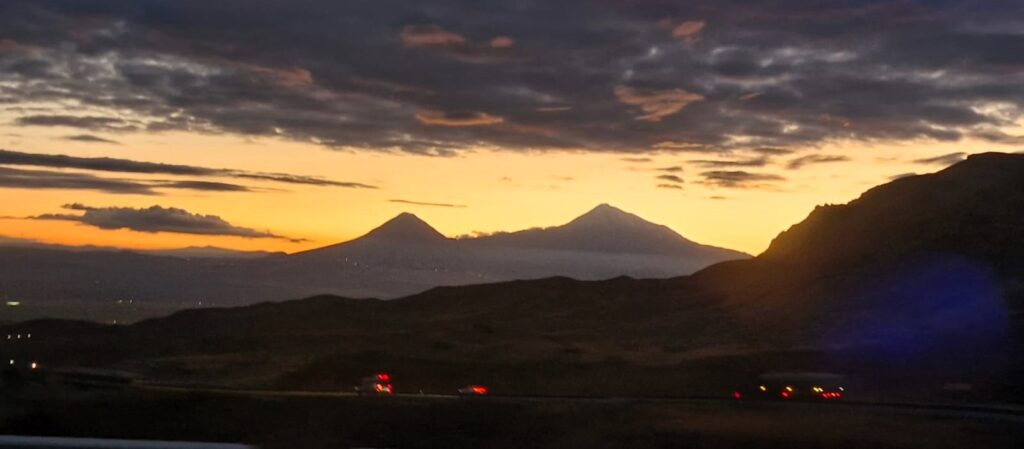
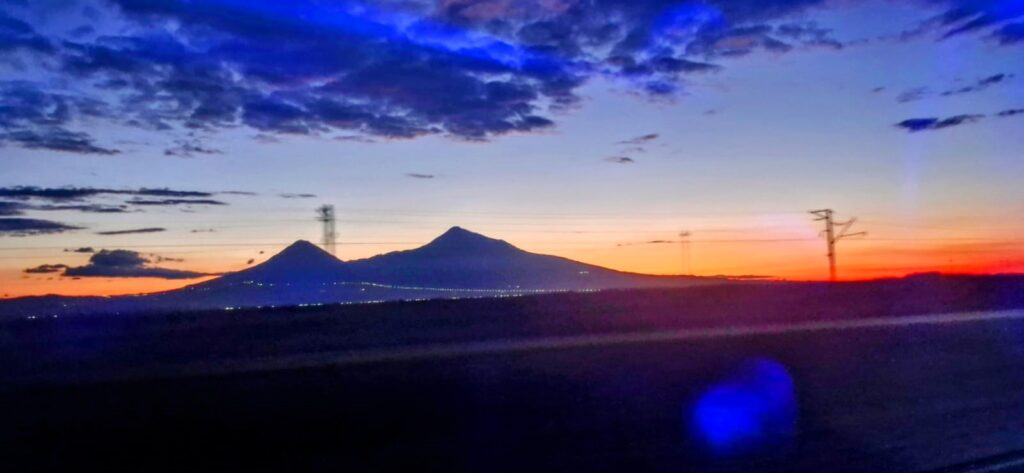
On the drive back to Yerevan, the late afternoon light made Mount Ararat glow — unforgettable. We reached our hotel around 9:30 pm, ready to rest before tomorrow’s trek to Mt. Azhdahak.
Day 12: Tuesday, September 23 — Trek to Mt. Azhdahak, Armenia
After days of sightseeing, we were ready for something different — a real adventure. So we planned a day trek to Mt. Azhdahak, about 2.5 hours from Yerevan in central Armenia.
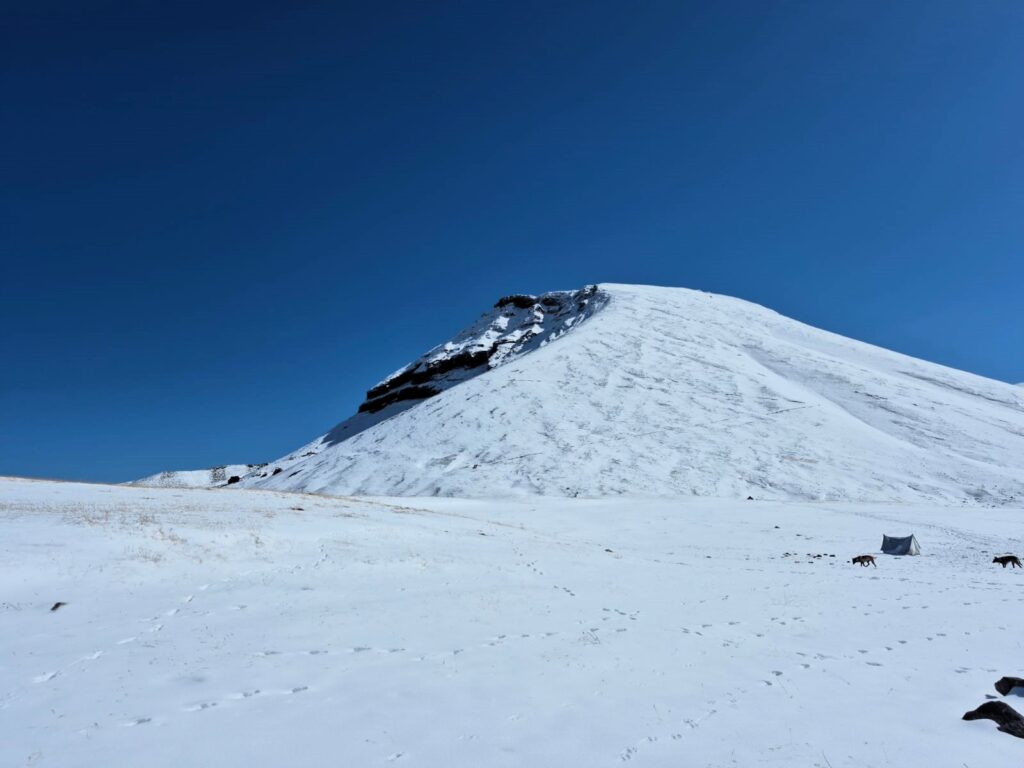
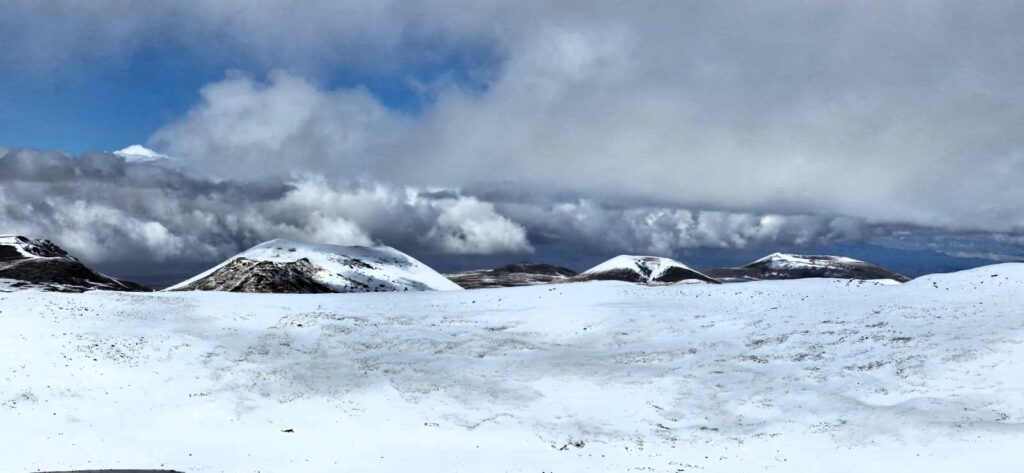
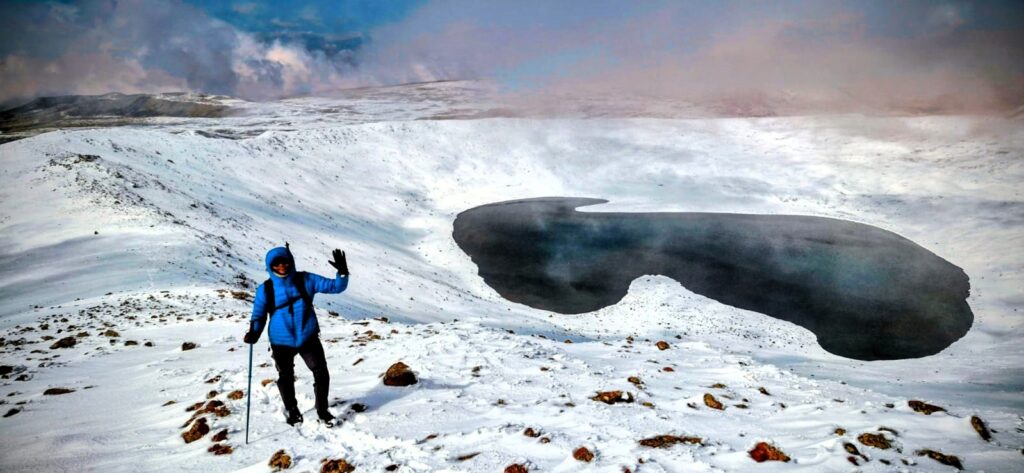
Mt. Azhdahak is the highest peak of the Gegham Mountains, a volcanic range stretching between Lake Sevan and the Ararat plain. The mountain rises to 3,597 m (11,800 ft) and last erupted around 1900 BC. Over millennia, glacial and volcanic activity carved its unique landscape, and a crater lake now sits in the old volcanic caldera, formed by melting snow.
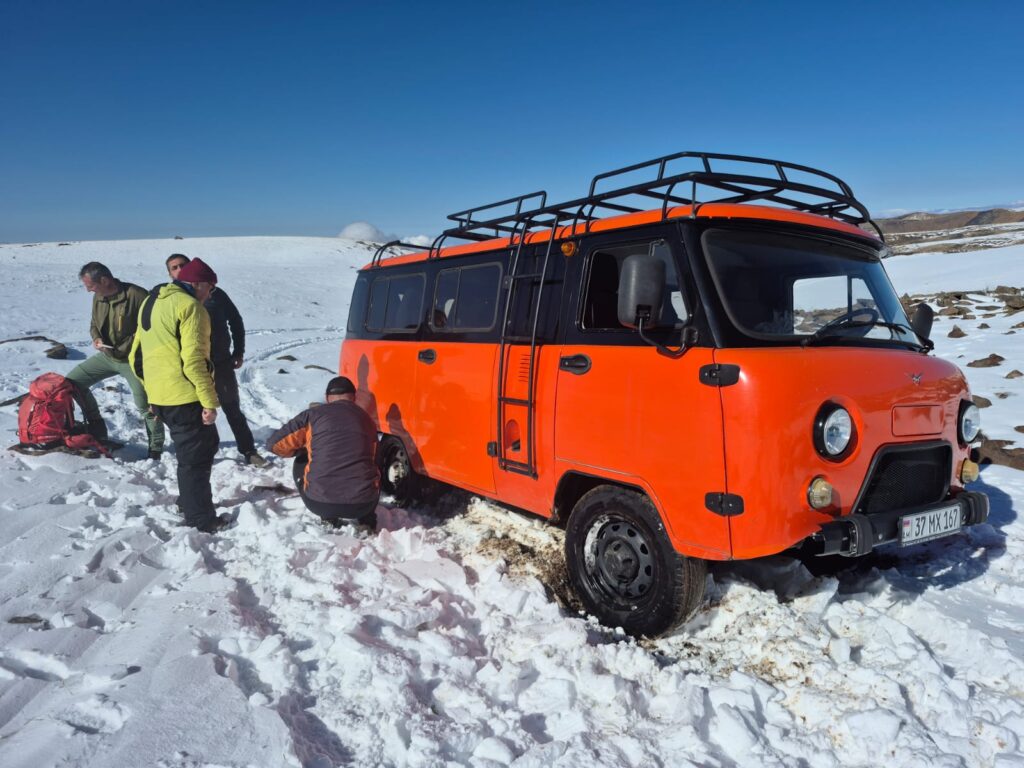
We left Yerevan early in the morning, driving first to Garni village and then heading off-road for another 1.5 hours to the Mt. Azhdahak base camp. The final stretch was true off-roading — in a sturdy Russian 4×4 bouncing across boulders, loose rocks, and patches of snow. At a couple of points, the vehicle got stuck in deep snow before the driver wriggled us out. It was rough, but that was part of the thrill.
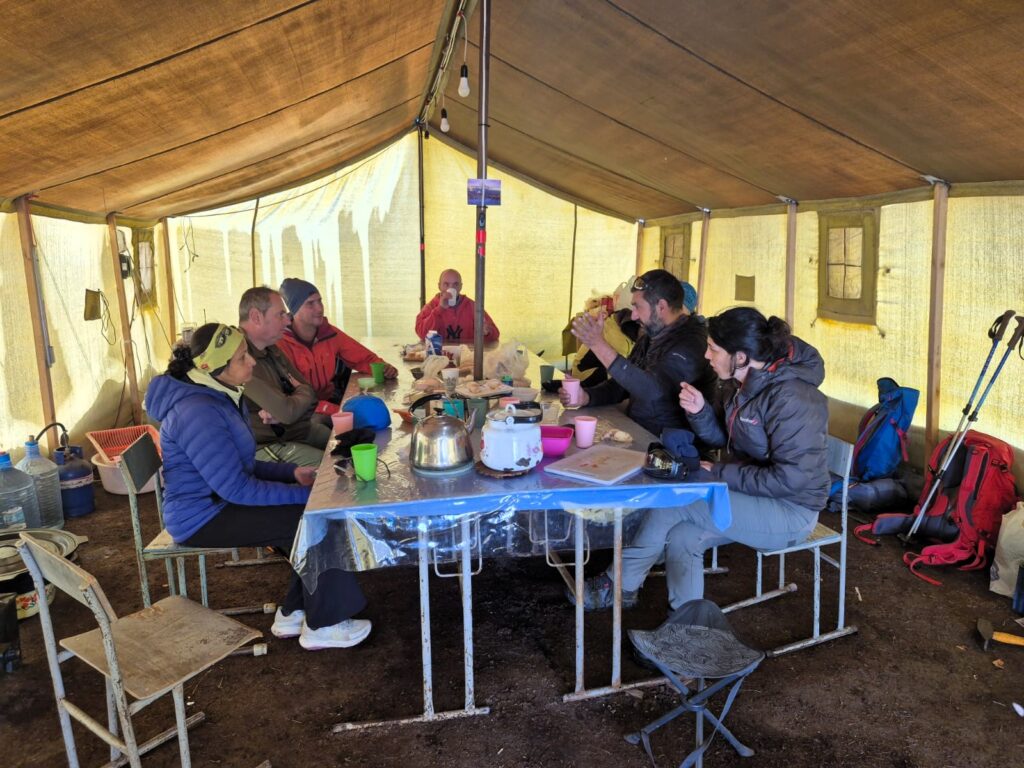
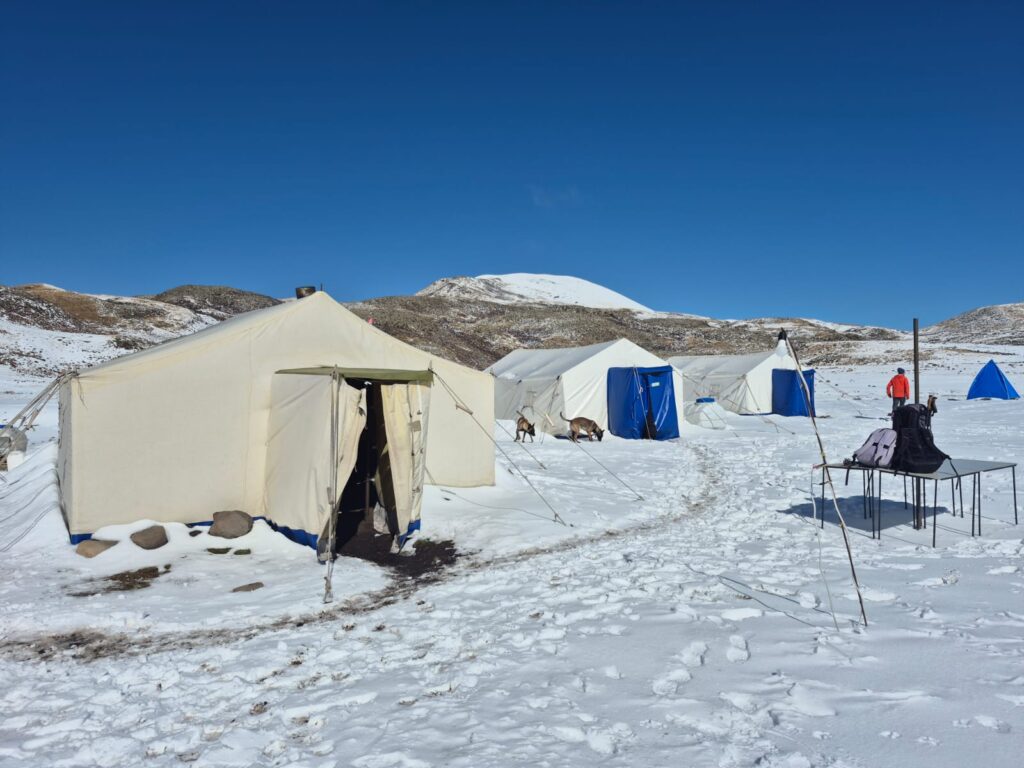
At base camp, we were greeted by Highland Expeditions, the local company organizing the climb. The owner, Tigran (+374 94 520567), and his team were welcoming and professional. Their setup was simple but well-organised, and their hospitality made the whole experience seamless.
The trek itself wasn’t steep, but it was definitely challenging because much of the trail lay under snow. Breathing was steady but effortful at that altitude.
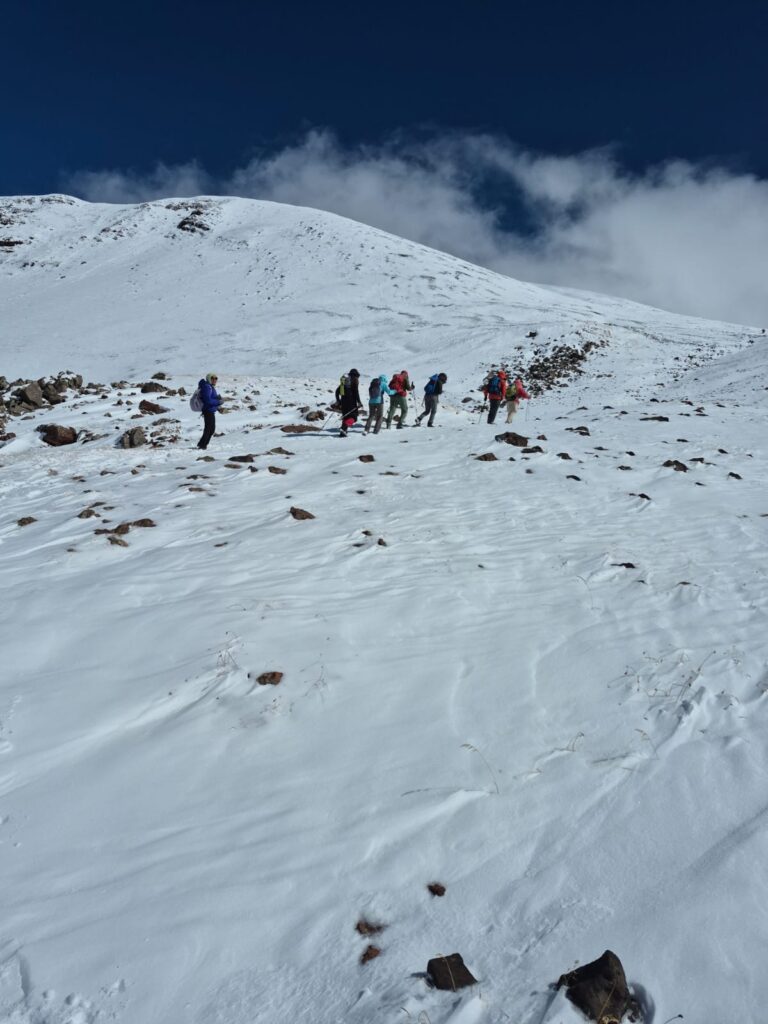
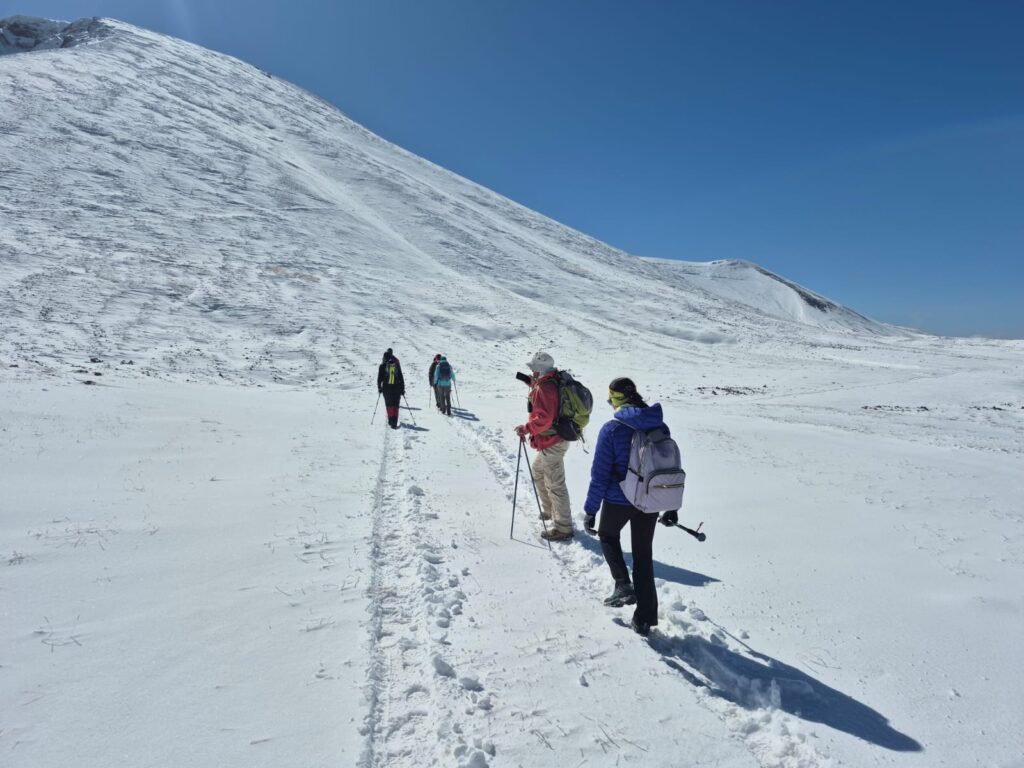
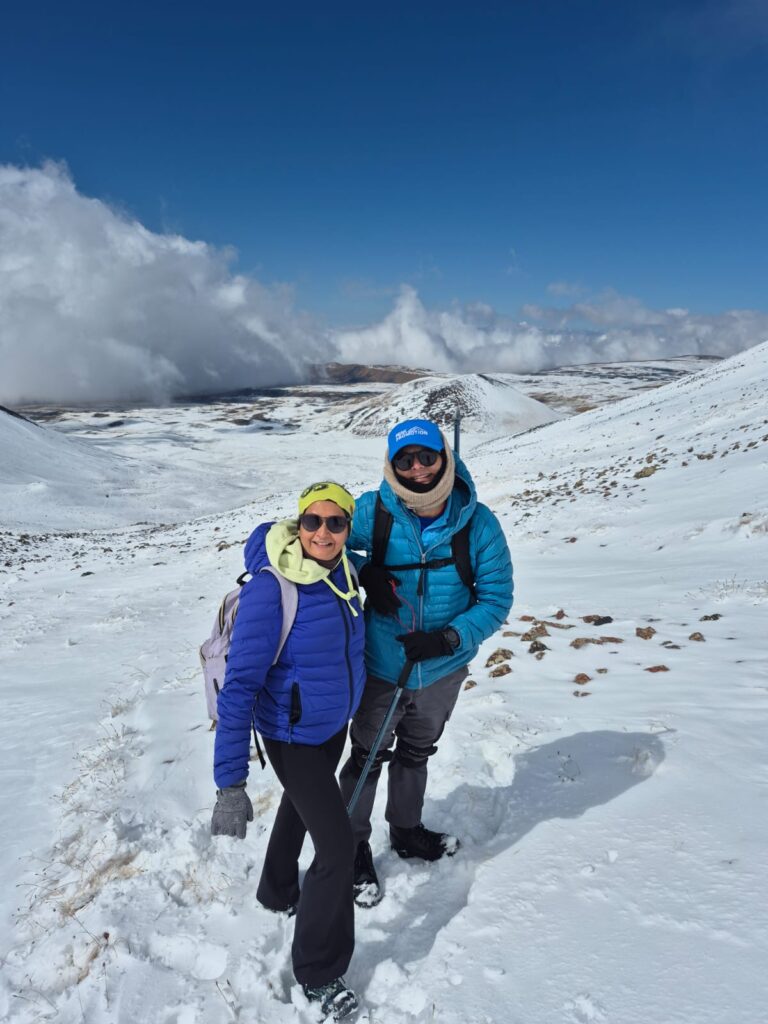
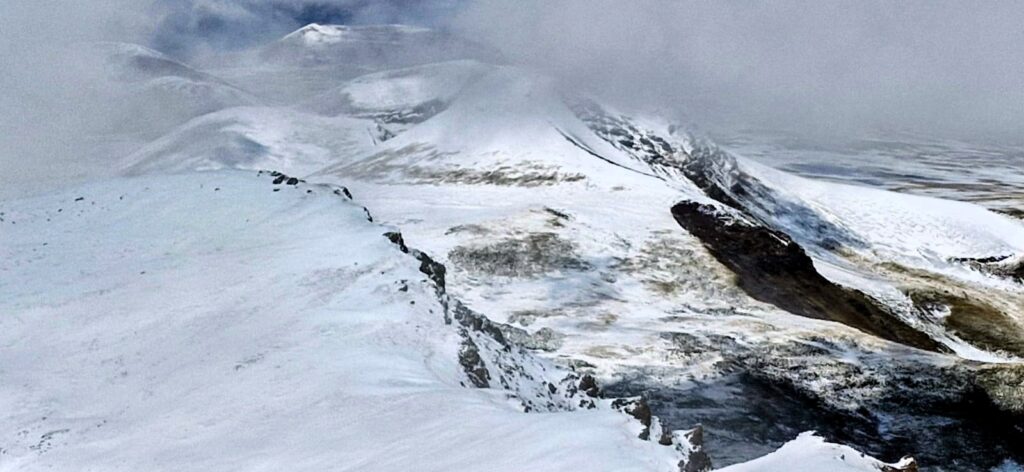
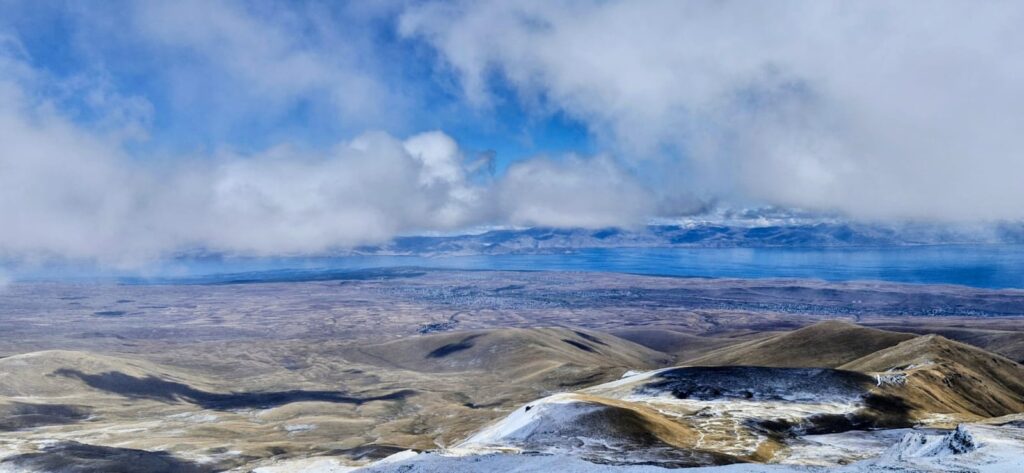
We reached the summit in about 1 hour 30 minutes, surrounded by brilliant sunshine and complete calm — no wind, no chill, perfect weather for a climb. The views were breathtaking: the blue crater lake nestled below, another volcanic cone behind, and Lake Sevan glimmering in the distance.
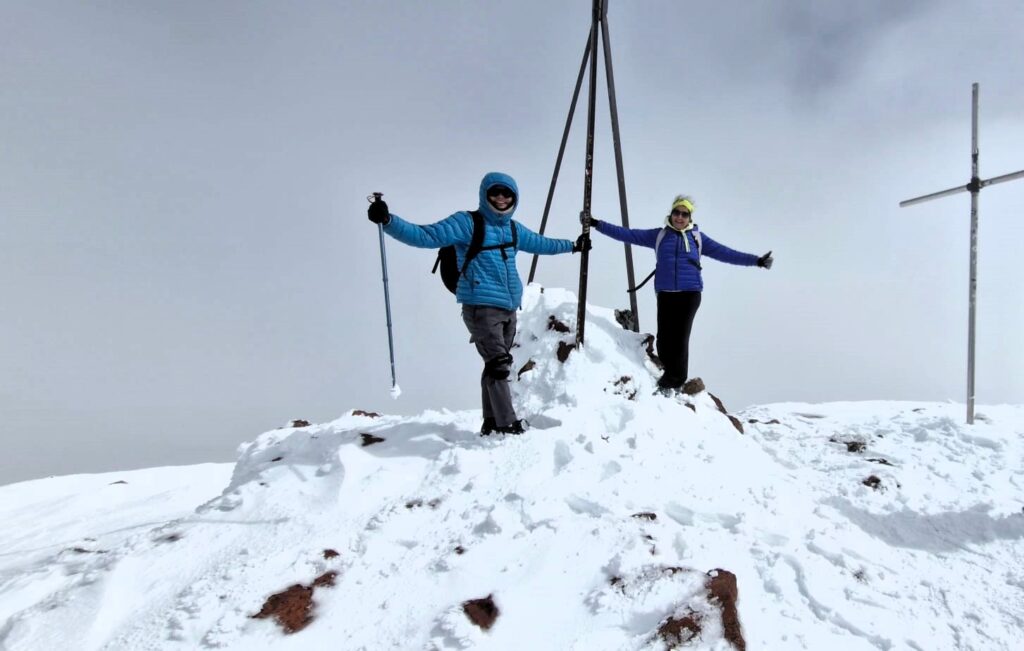
We spent time on the summit soaking in the panorama and filming the surroundings — an otherworldly landscape of snow, stone, and silence.
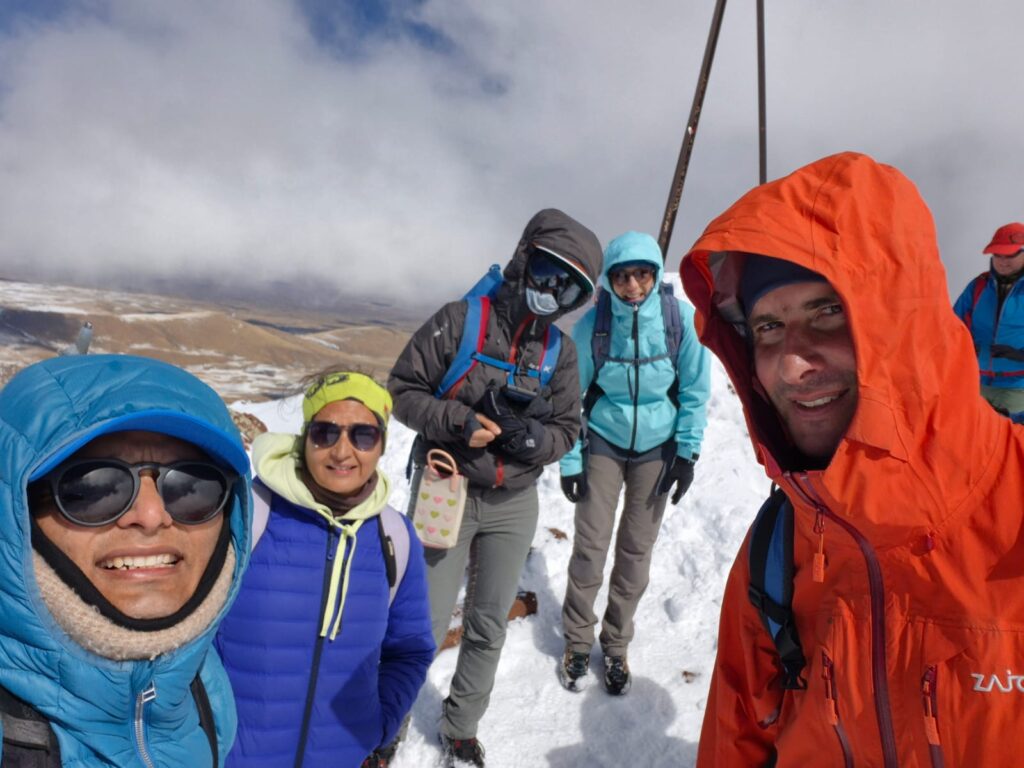
Our group of five trekkers included two Italians, one Hungarian, and the two of us.
The descent took about 1 hour 10 minutes, an easier walk though the snow was still deep in parts. Our guide Daniel was patient, keeping pace when we slowed down.
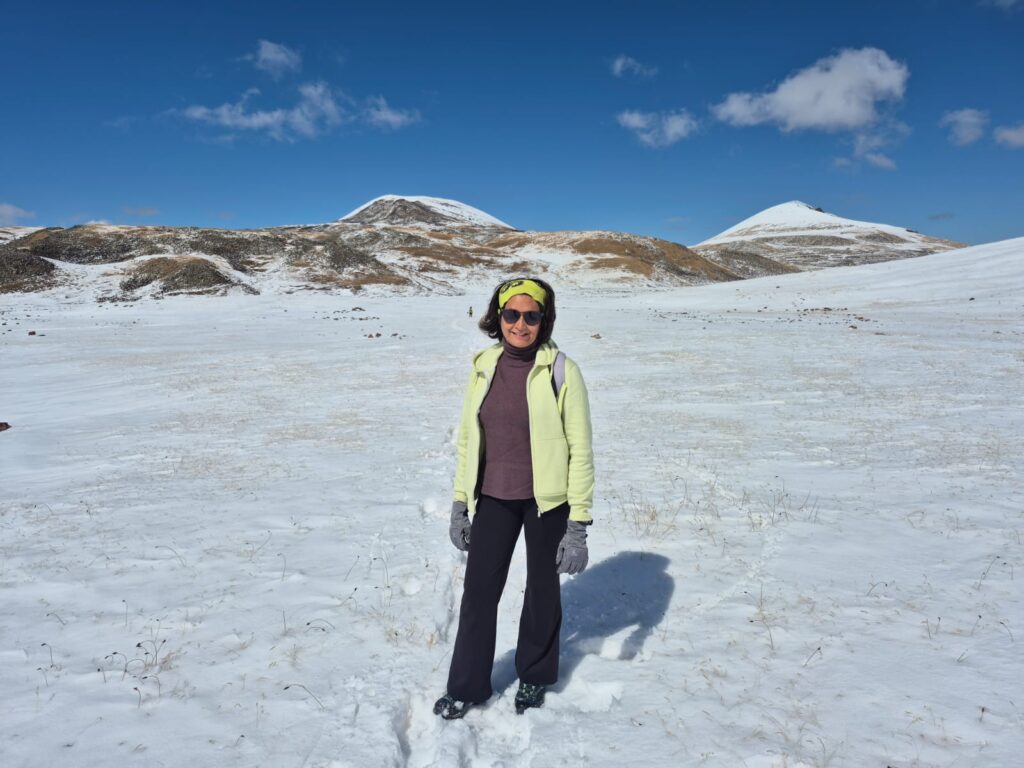
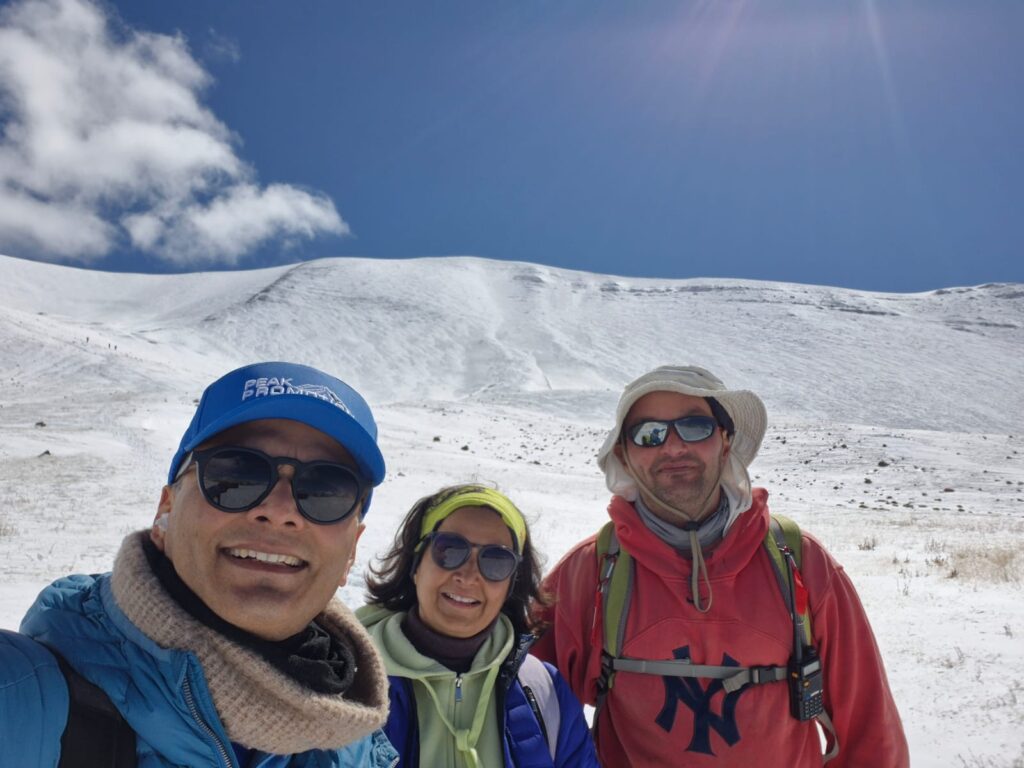
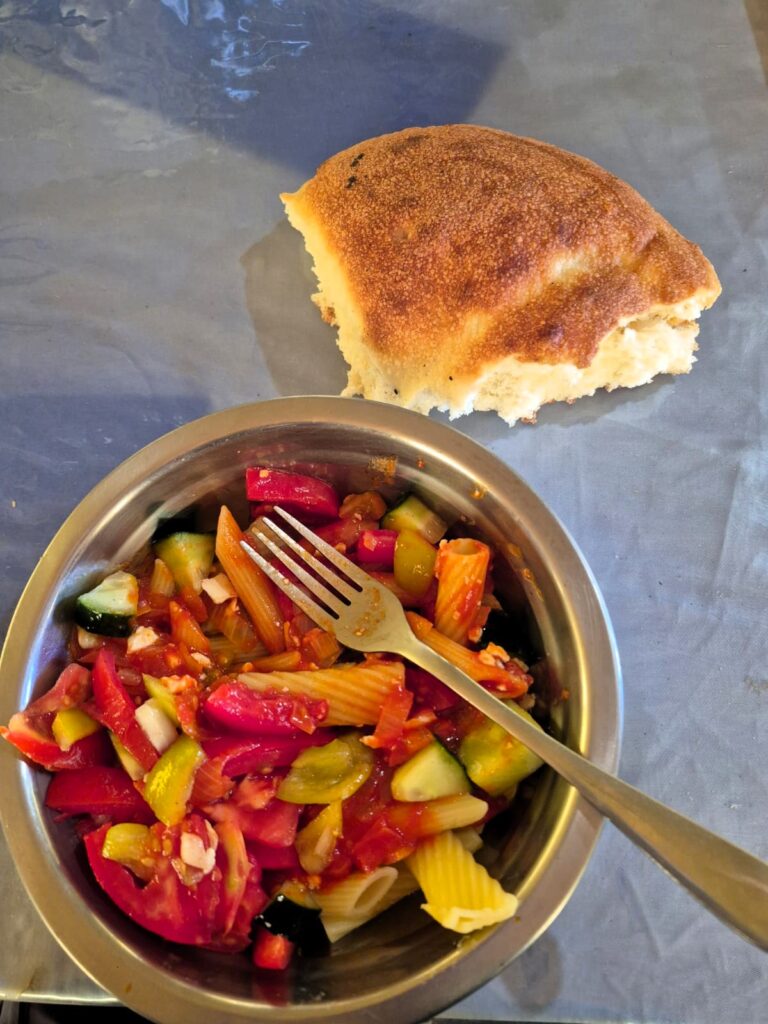
Back at base camp around 2 pm, lunch was waiting — hot pasta, fresh bread, and salad. After the climb, it tasted wonderful.
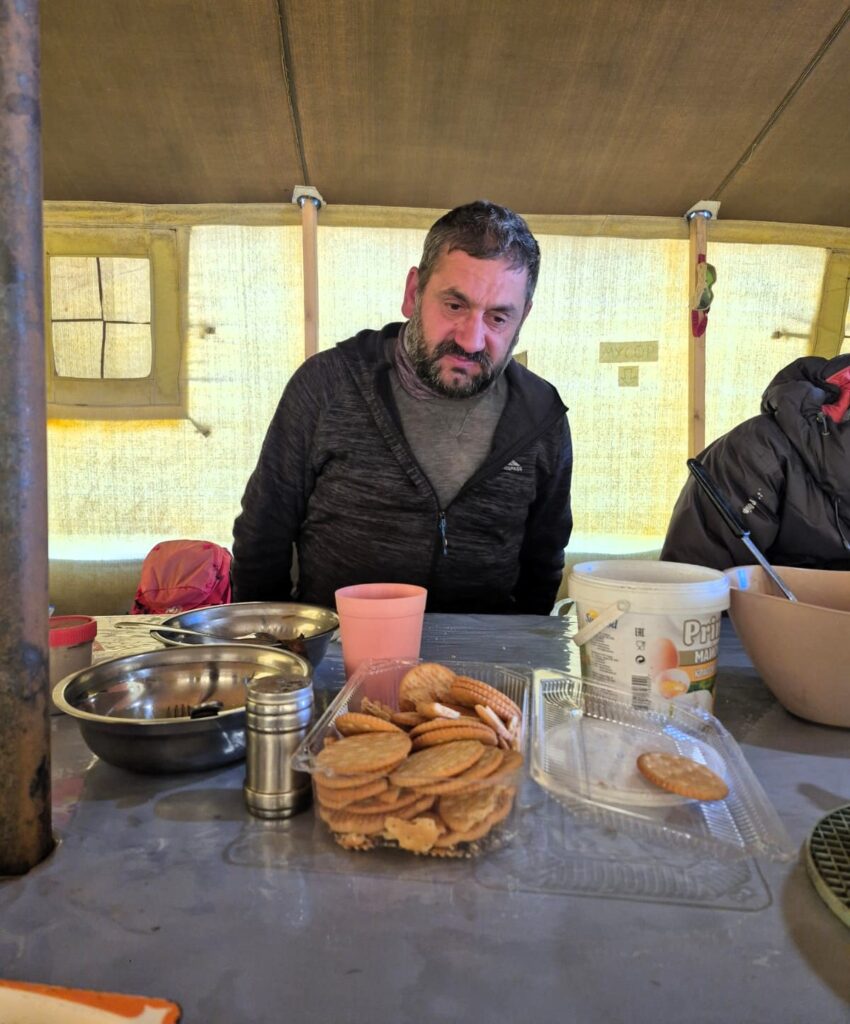
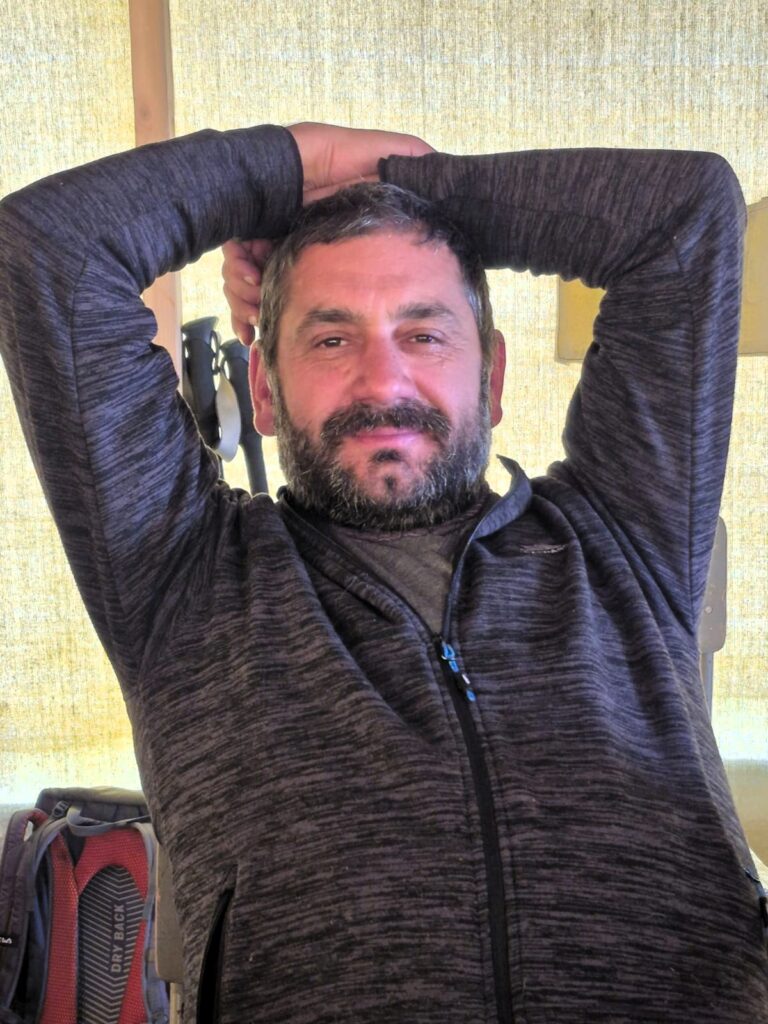
A funny moment: we realized Tigran, the owner, bore an uncanny resemblance to Captain Haddock from Tintin — when we told him, he laughed heartily.
By 6:45 pm, we were back at our Yerevan hotel — tired, satisfied, and full of stories. It was our last day in Armenia, and what a fitting finale: a blend of nature, adventure, and the warmth of local hospitality.