


Day 0: June 14, Saturday – Ashburn, VA → Washington, DC → Ottawa → Calgary
Our journey began in Ashburn, Virginia, where we left home in the morning and headed toward Washington Dulles International Airport. We arrived at the Capital One Lounge around 11:25 am, giving ourselves some time to relax before the long travel day ahead.
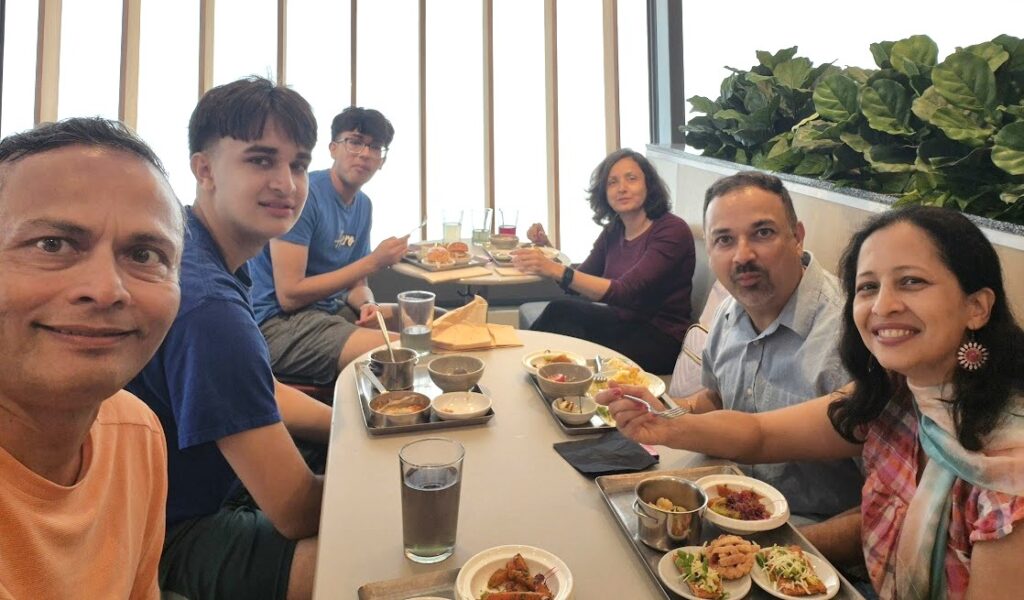
The lounge was a great place to unwind. We enjoyed a leisurely brunch, sipped on blue pineapple juice and coffee, and chatted about the upcoming adventures.
Our flight departed from Washington to Ottawa at 1:00 pm Eastern Time. From Ottawa, we connected onward to Calgary, landing at 10:38 pm local time. A long day of travel, but excitement was in the air as we stepped into Alberta — ready to begin our 9-day exploration of the Canadian Rockies and beyond.
We touched down at Calgary International Airport late in the evening, around 10:30 pm local time. It was one of those cool Canadian summer nights — calm and quiet. Things took a slight detour at the Avis car rental counter, where we learned that the van we had reserved wasn’t available. A minor hiccup in the grand scheme of the adventure.
Instead, we summoned an Uber and made our way through the sleepy city streets to the home of our longtime family friend, Vishwas Sail. It was nearly midnight when we arrived. The warm hospitality and a cozy bed were all we needed after a long day of travel. We finally turned in around 1 am, ready to start fresh the next day.

Day 1: June 15, Sunday – Calgary → Bar U Ranch → Head-Smashed-In Buffalo Jump → Waterton Lakes → Cardston
We picked up our van from the airport at 8 am, with the morning sun casting a golden hue over Calgary’s skyline. The majestic Rockies loomed faintly in the distance as we set off south toward Waterton Lakes National Park, following a scenic route through Alberta’s cowboy country.
Our first stop was at Bar U Ranch, a Parks Canada National Historic Site near Longview. This wasn’t just a typical ranch — it felt like a living museum of Canada’s ranching history.
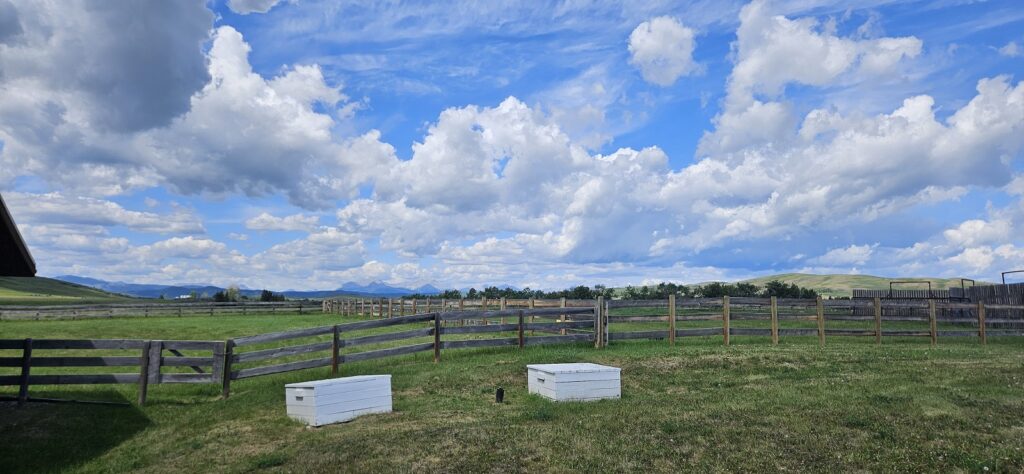
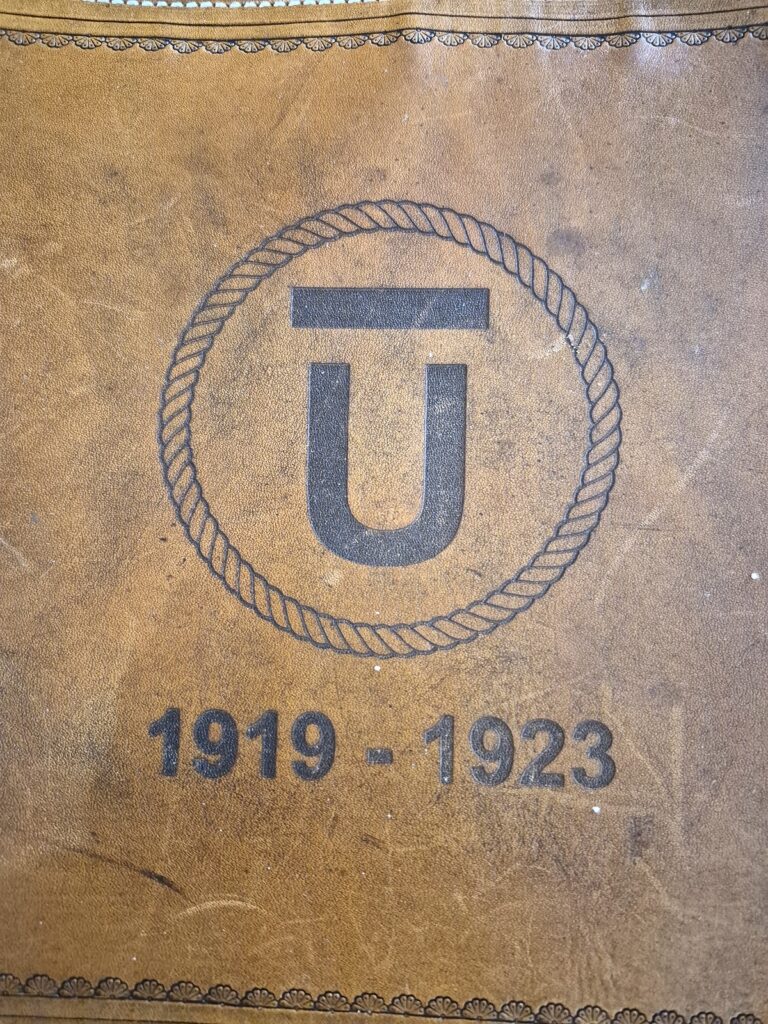
Founded in 1882, Bar U Ranch became one of the most influential ranching operations in Canadian history. Originally run by the Northwest Cattle Company, it managed over 30,000 head of cattle across more than 150,000 acres of southern Alberta. The ranch’s distinctive brand — a horizontal bar over the letter “U” — was burned into their cattle. That’s how the animals came to be known as Bar U cows, and eventually, the company itself adopted the name Bar U Ranch.
Bar U played a key role in shaping Canada’s West, employing skilled cowboys, Indigenous peoples, and even iconic figures like Harry Longabaugh — better known as the Sundance Kid. At its peak, it symbolized the rugged spirit of the frontier and the resilience of the ranching community.
The Northwest Cattle Company with this logo. This was the brand imprinted on their cows.
Today, the ranch preserves more than 35 original buildings — including bunkhouses, barns, and stables — all set against the sweeping backdrop of the Rocky Mountains. Visitors can see blacksmithing demonstrations, learn about chuckwagon cooking, and get a glimpse into what daily life was like for a working cowboy in the late 19th century.
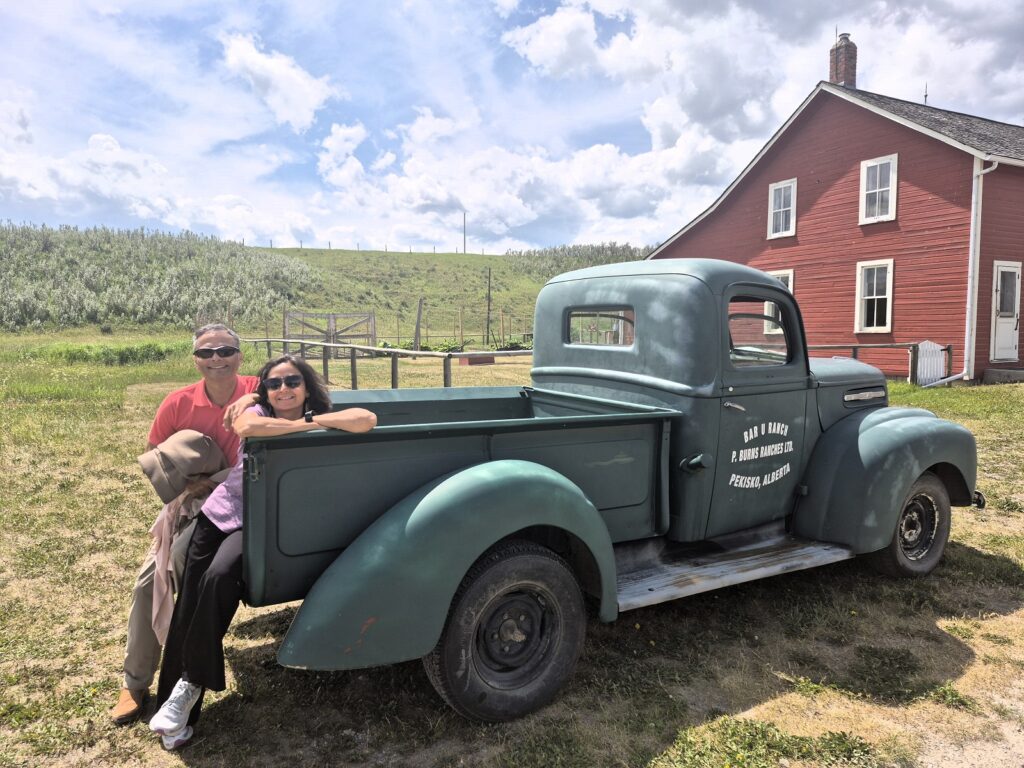
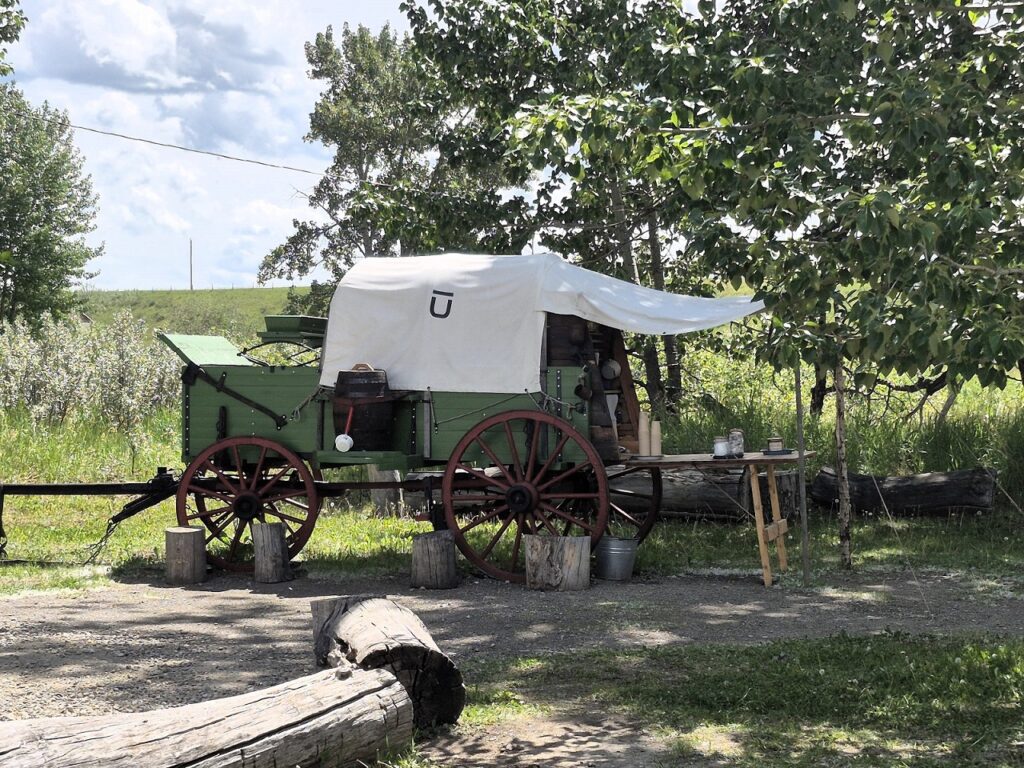
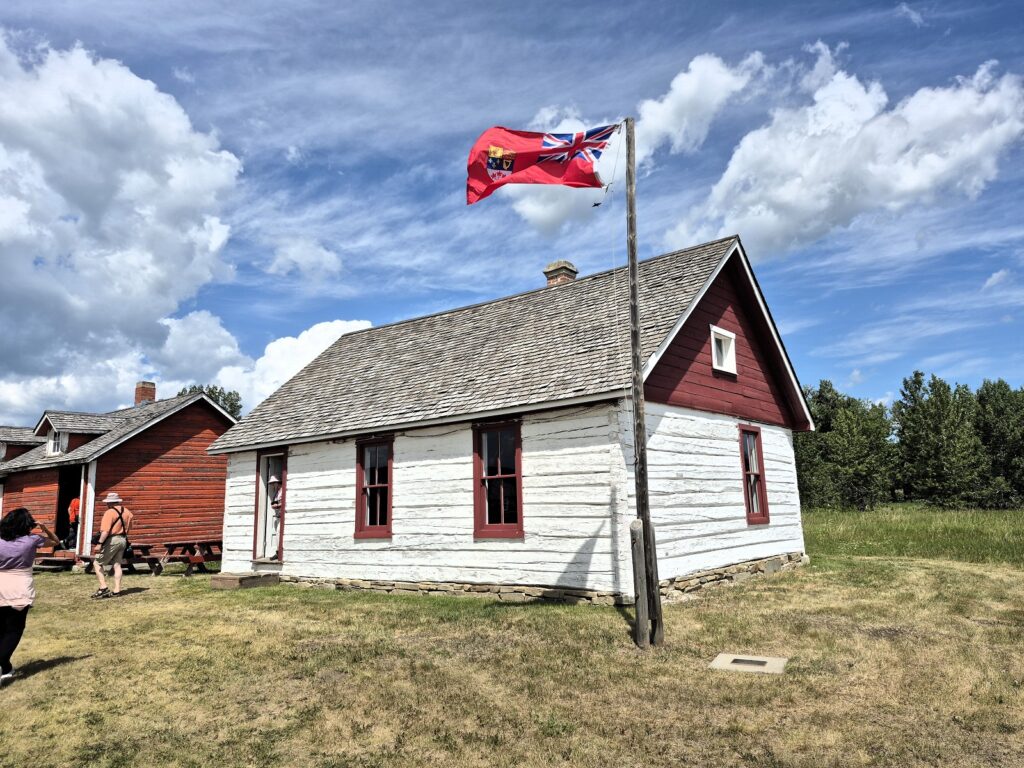
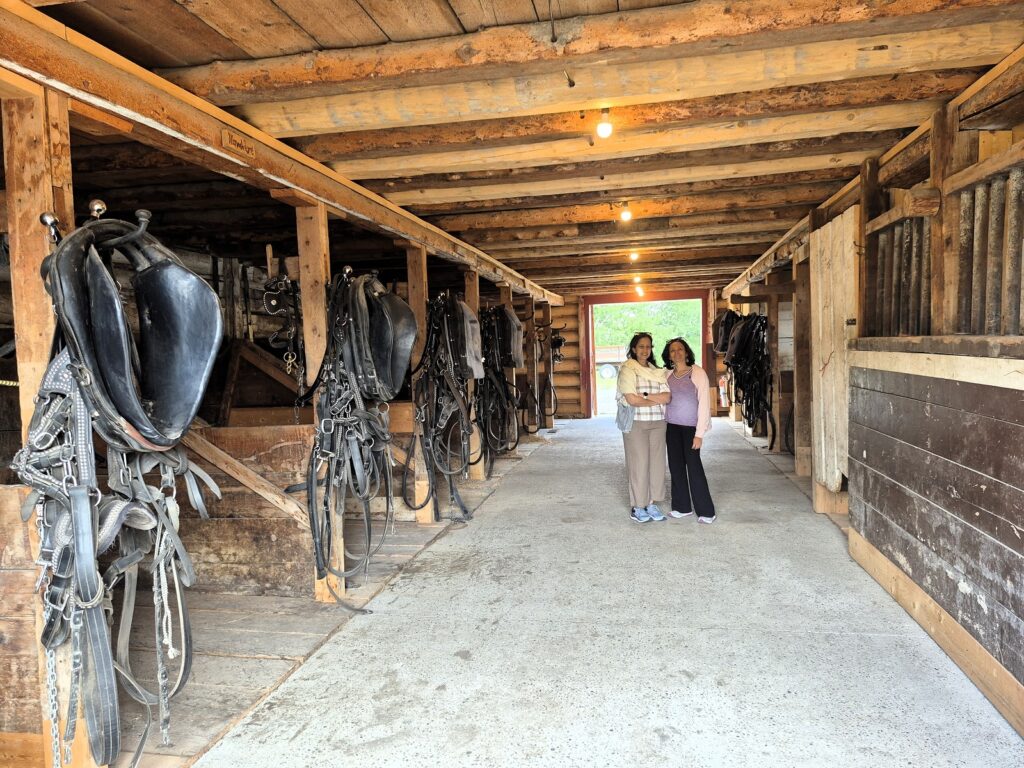
Wandering through the grounds felt like stepping into the 1800s. We saw an old pickup truck, a medical wagon from the American Civil War era that was later used to transport supplies in the late 1800s, classic horse stables, a quaint post office, and a blacksmith’s tool shed filled with antique equipment. A Parks Canada ranger guided us through these historic spaces, sharing stories that brought the ranch to life — tales of gruelling cattle drives, frigid prairie winters, and the tight-knit communities that thrived in this harsh environment.
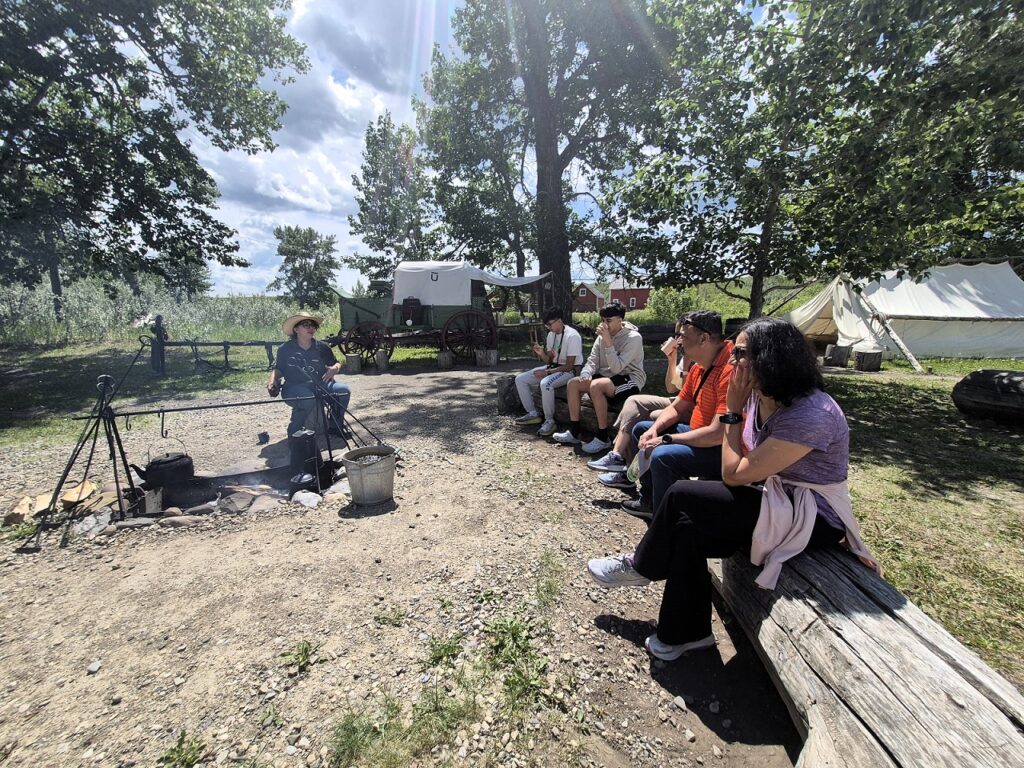
You could almost hear the crunch of boots on gravel and the low hum of cattle in the wind. With its rich history, authentic structures, and immersive atmosphere, Bar U Ranch is more than a stop — it’s a journey into the heart of Alberta’s cowboy country.
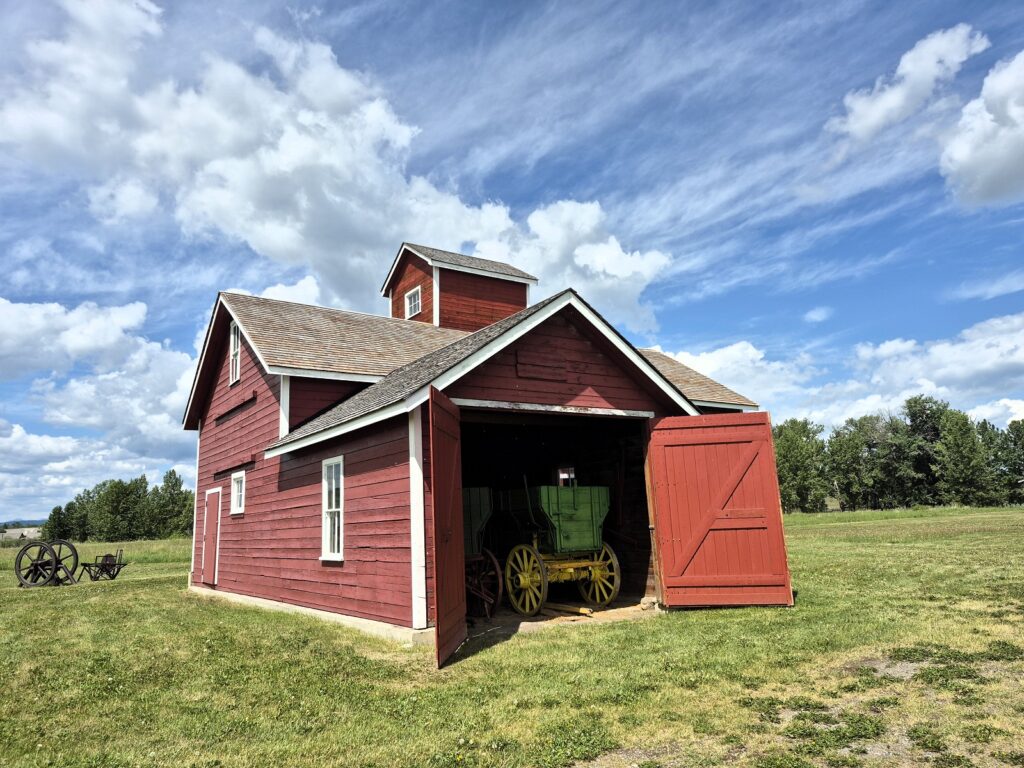
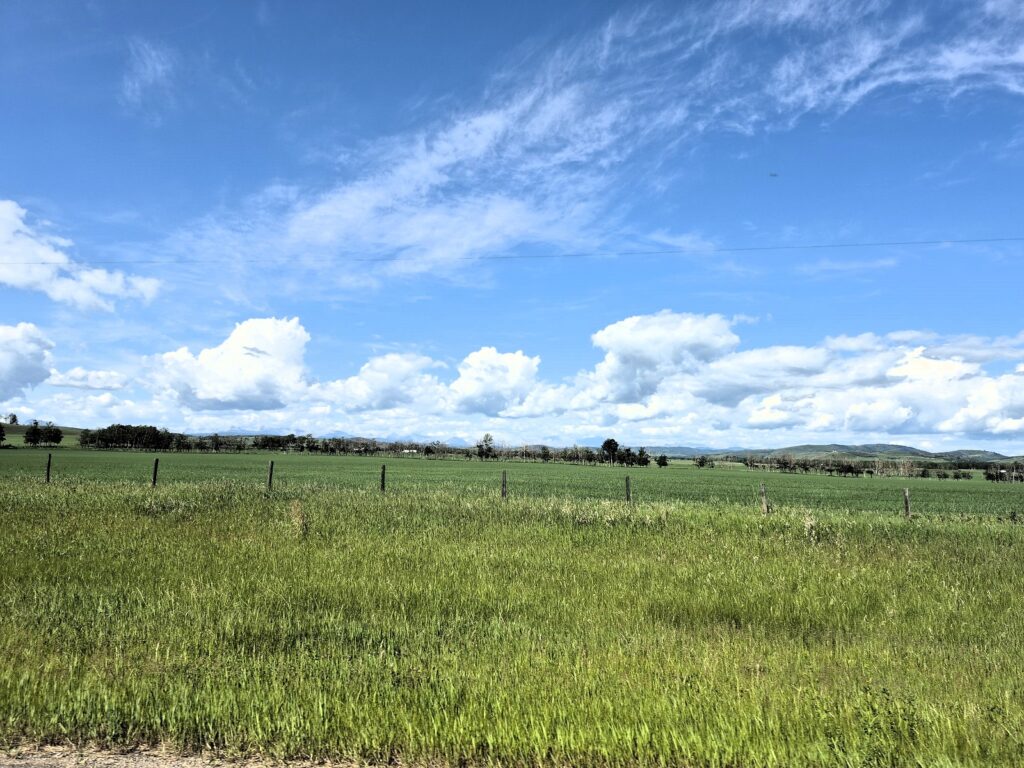
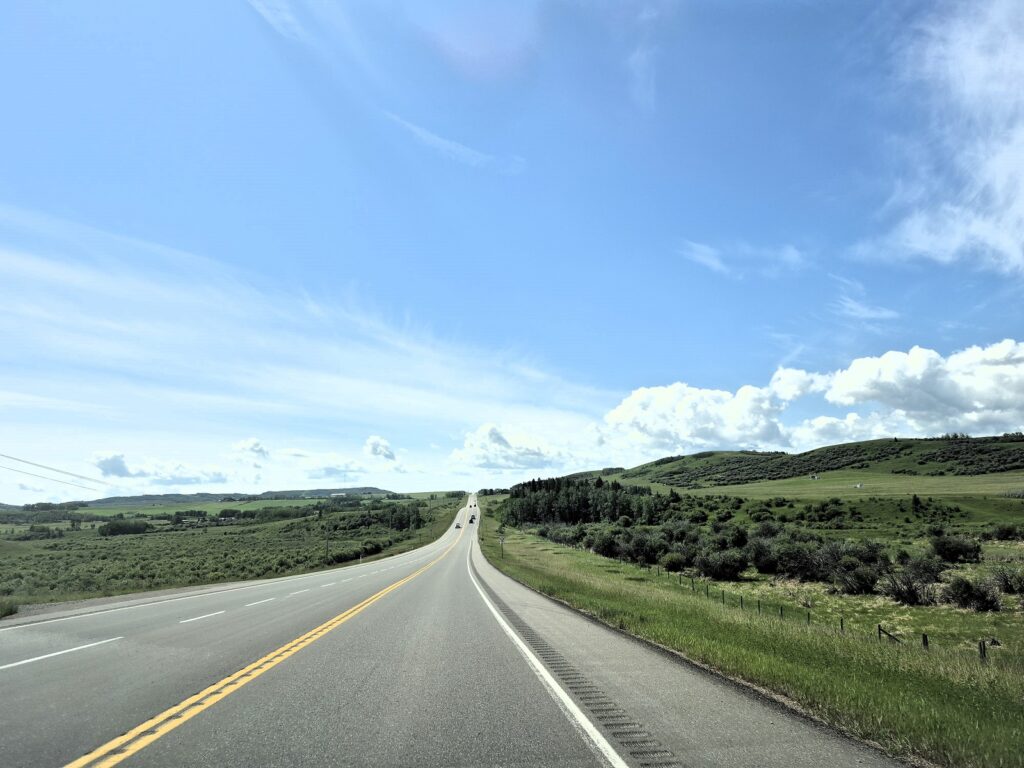
Calgary lies to the east of the Canadian Rocky Mountains. The scenery as we drove towards Waterton was stunning, with rolling hills and plains.
Our next stop was one of the most fascinating historical sites in Alberta — Head-Smashed-In Buffalo Jump, a UNESCO World Heritage Site located near Fort Macleod.
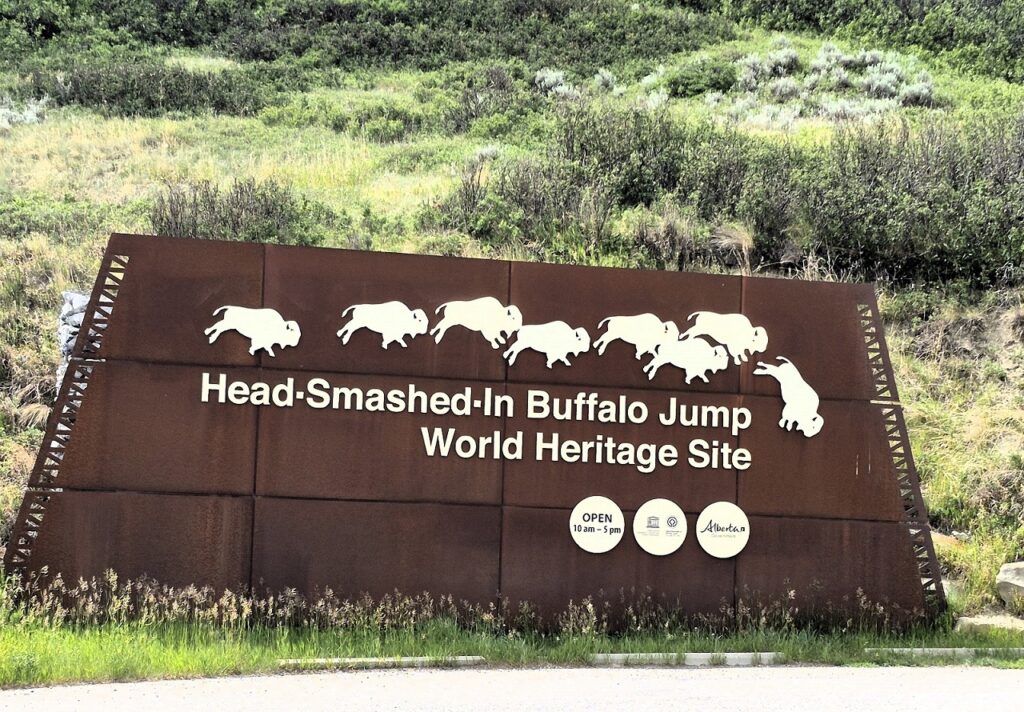
This cliff was used by the Blackfoot Indians (Niitsitapi) for over 6,000 years as a highly organized hunting ground. The method was brilliant in its simplicity: skilled hunters would drive herds of bison into a controlled stampede toward the edge of a cliff. As the animals reached full speed, they had no time to stop and plunged to their deaths, where waiting hunters would process them for meat, hides, and tools — nothing was wasted.
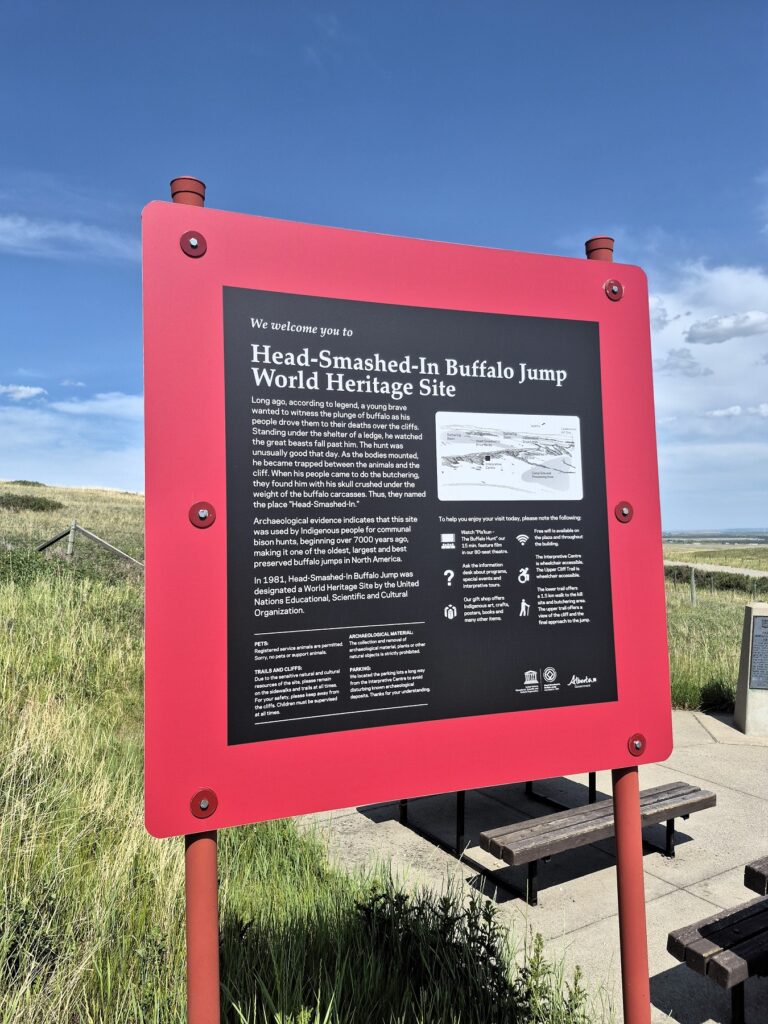
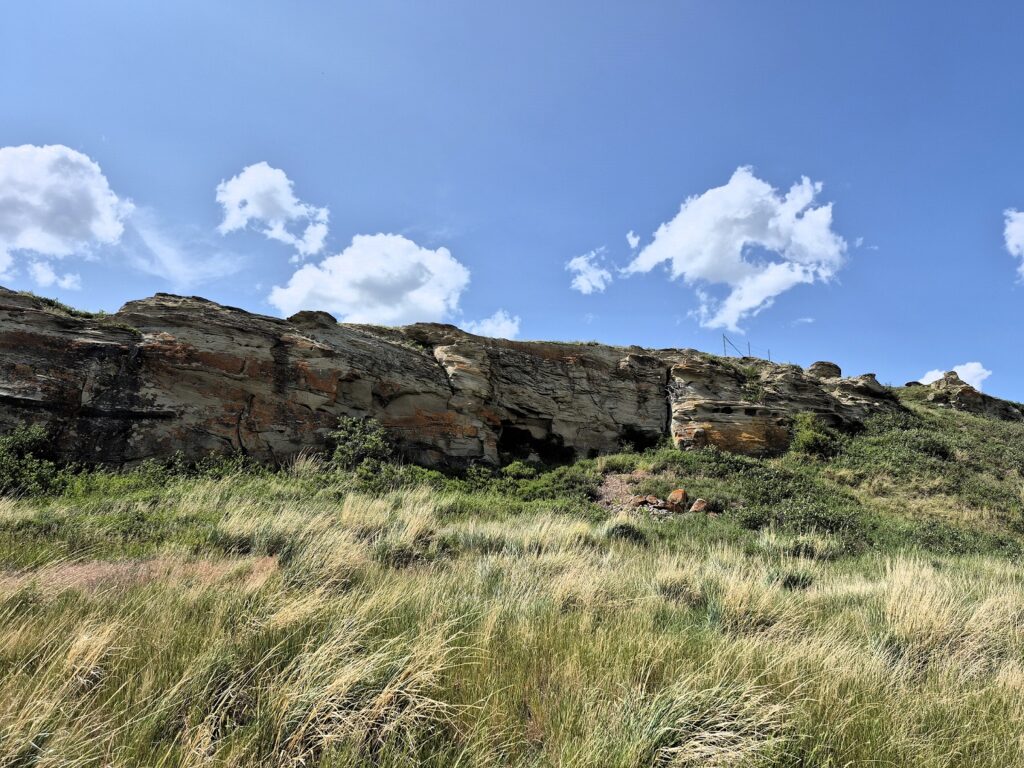
The name of the site comes from a local legend about a young Blackfoot boy who stood under the cliff to watch the hunt. Tragically, he was crushed by the falling bison, and the place came to be known as “Head-Smashed-In.”
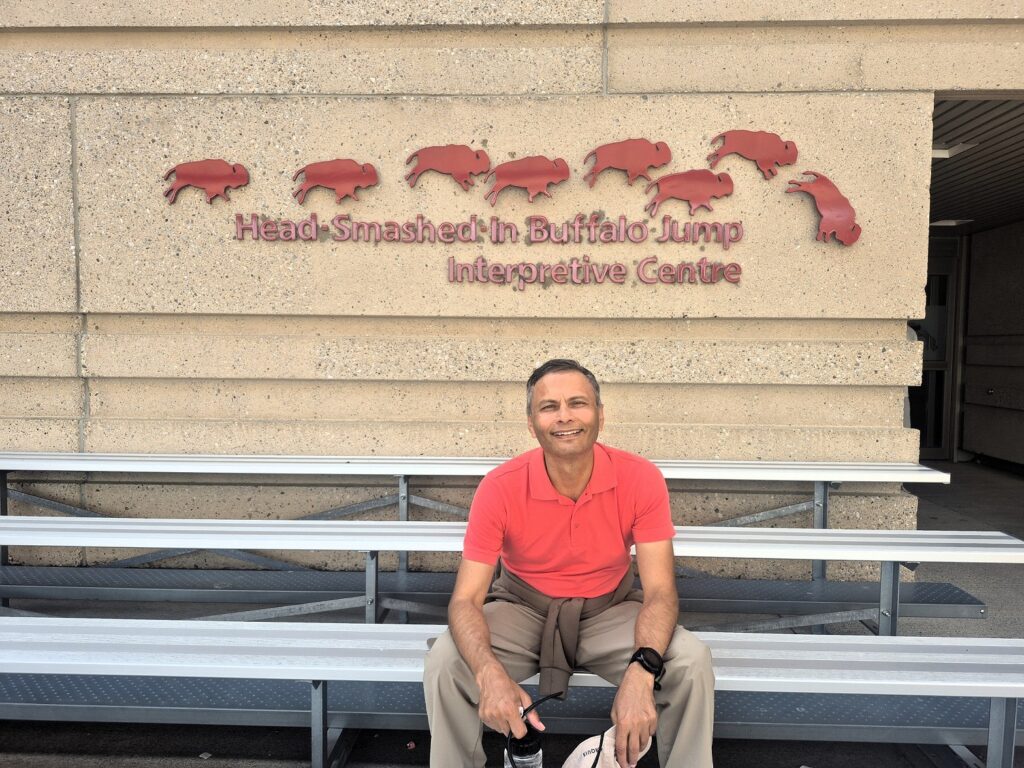
We didn’t go inside the museum this time, but chose to walk the interpretive trail outside instead. The views from the top were expansive and beautiful, and being on the cliff’s edge really helped bring the history to life.
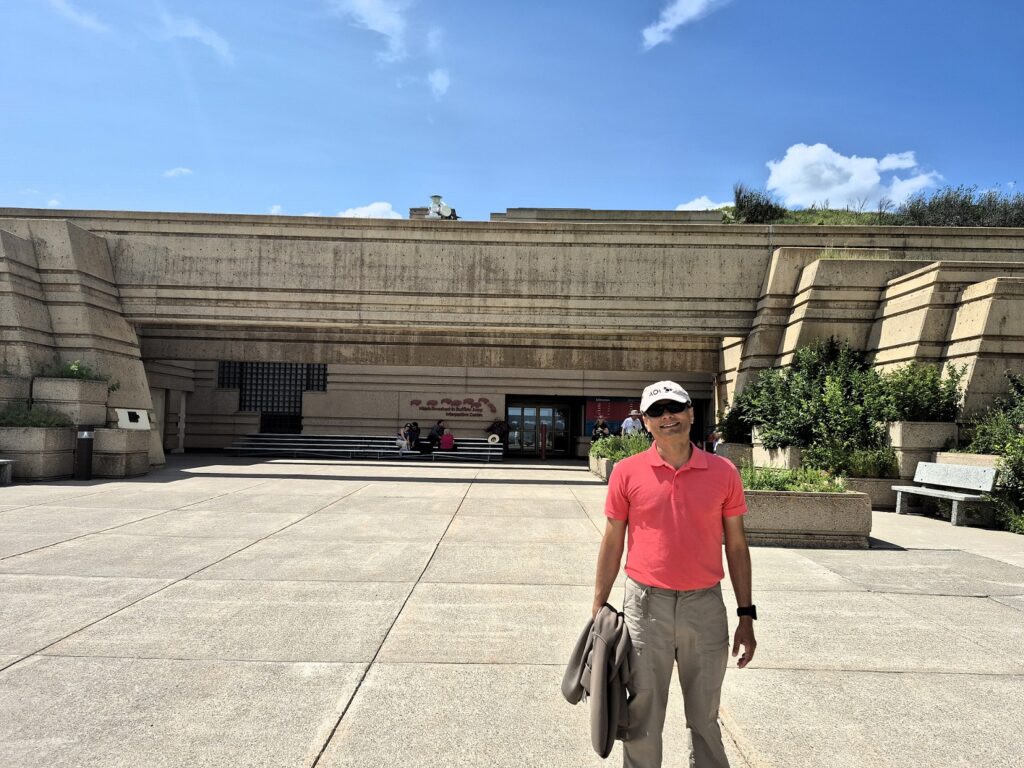
You could almost imagine the thundering hooves, the dust, and the precision of the hunters. It was a powerful reminder of the intelligence, culture, and survival strategies of Indigenous communities long before modern tools or technology.
By late afternoon, we arrived in Waterton Lakes National Park, often considered the quieter cousin of Banff and Jasper — but just as spectacular.
One of the most fascinating things about Waterton is that it joins seamlessly with Glacier National Park in Montana (USA) to form the Waterton-Glacier International Peace Park — the first of its kind in the world.
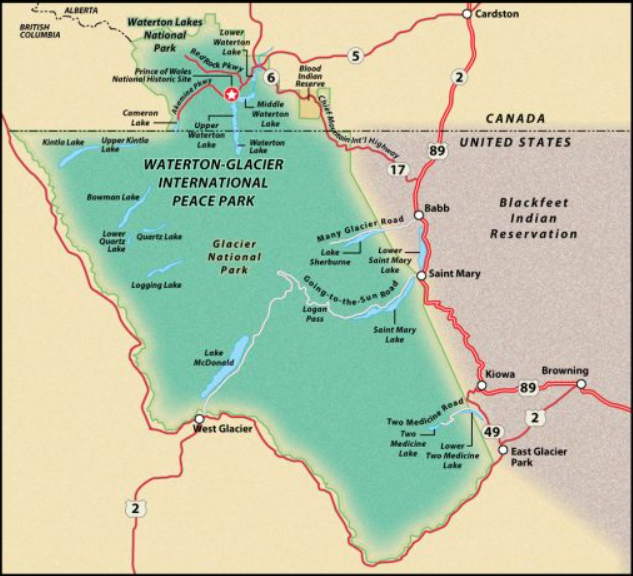
Although they lie in two different countries, the landscape doesn’t care — the ecosystem, wildlife, and mountains are continuous across the border. This shared protected area is a symbol of cooperation between Canada and the U.S., and a reminder that nature knows no boundaries.
Our first stop inside the park was Driftwood Beach on Upper Waterton Lake.
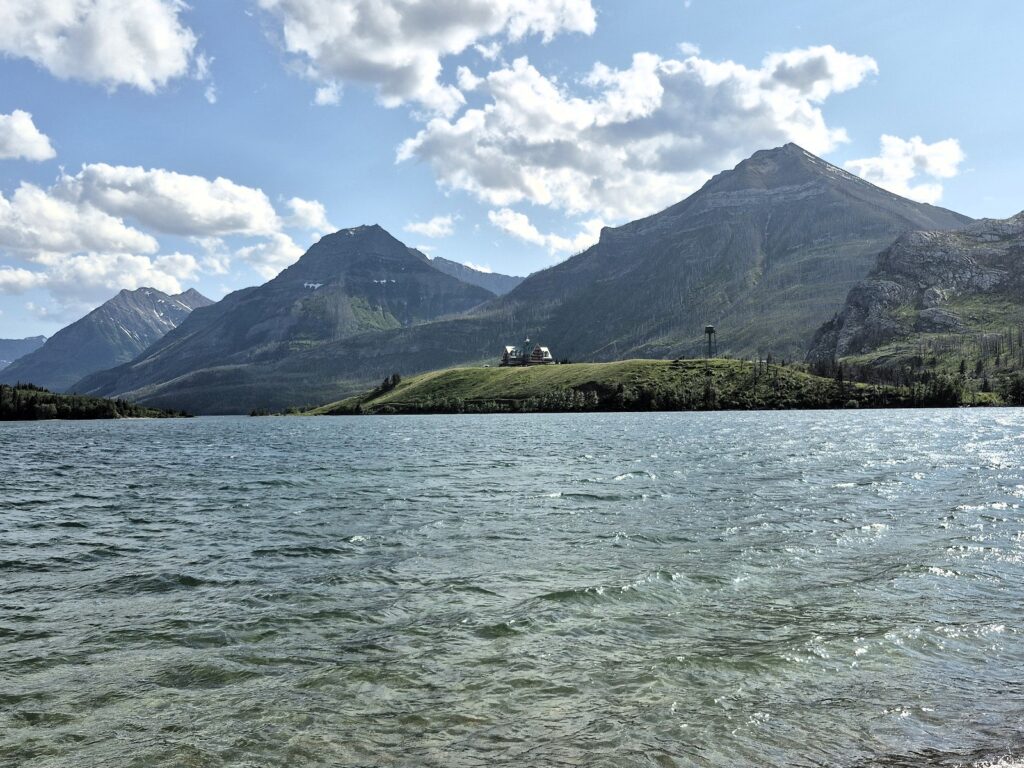
It’s a quiet, lesser-known spot where windblown logs and silver driftwood line the rocky shore. The contrast between the rugged wood, deep blue water, and snow-capped mountains was absolutely beautiful.
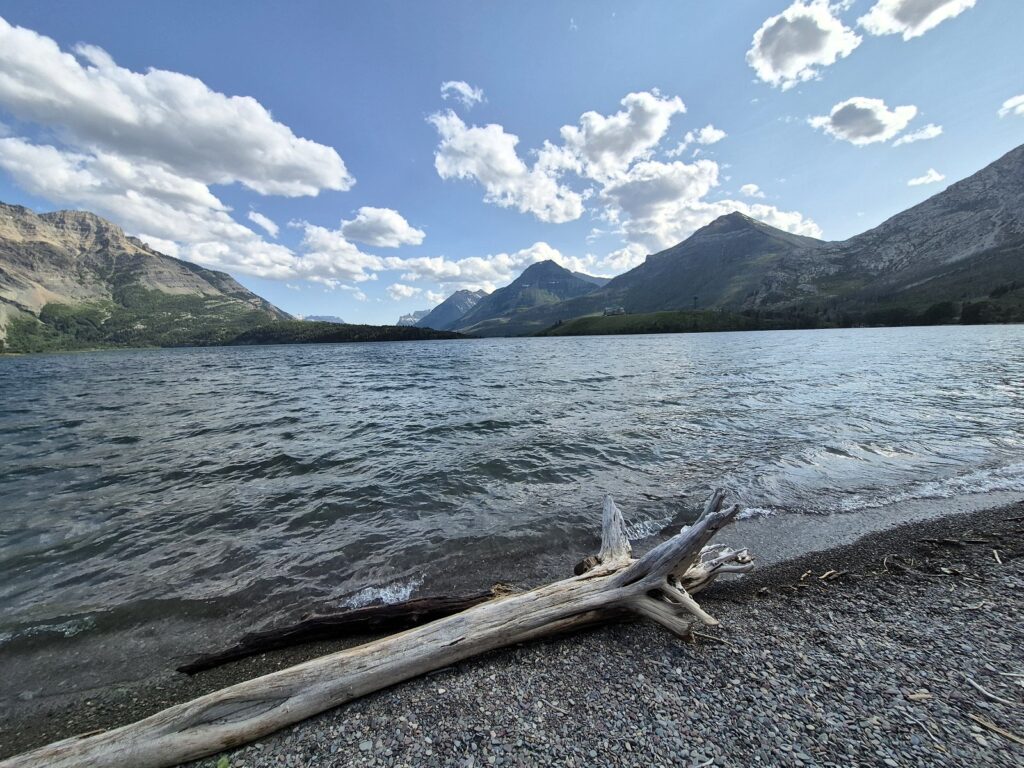
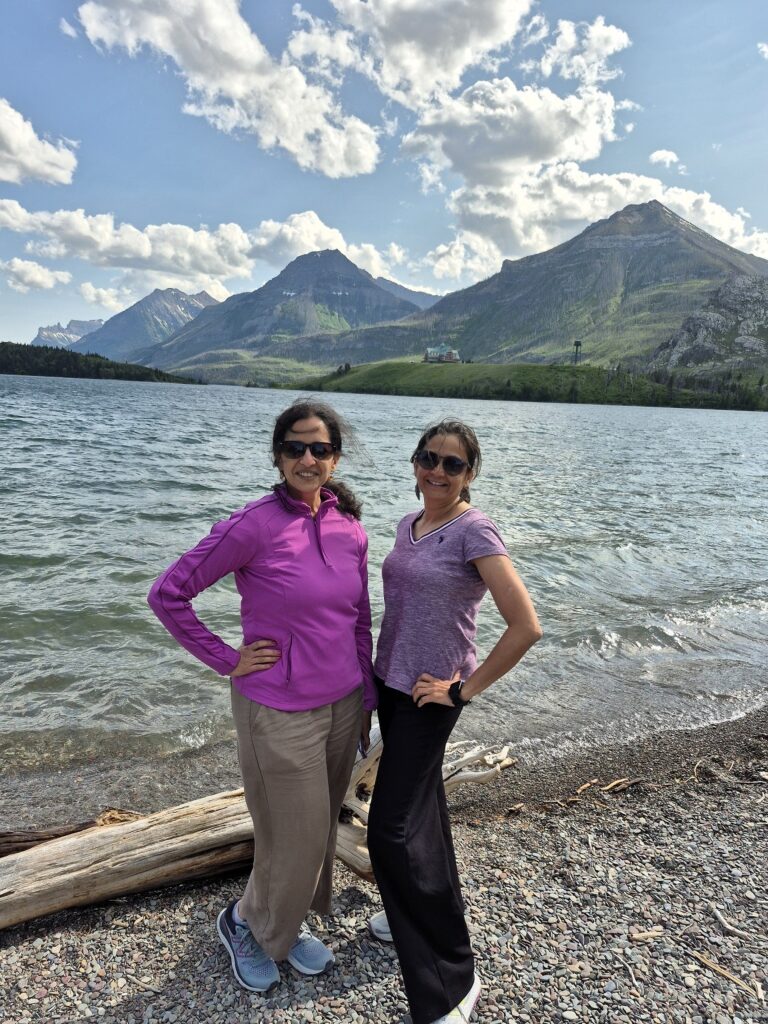
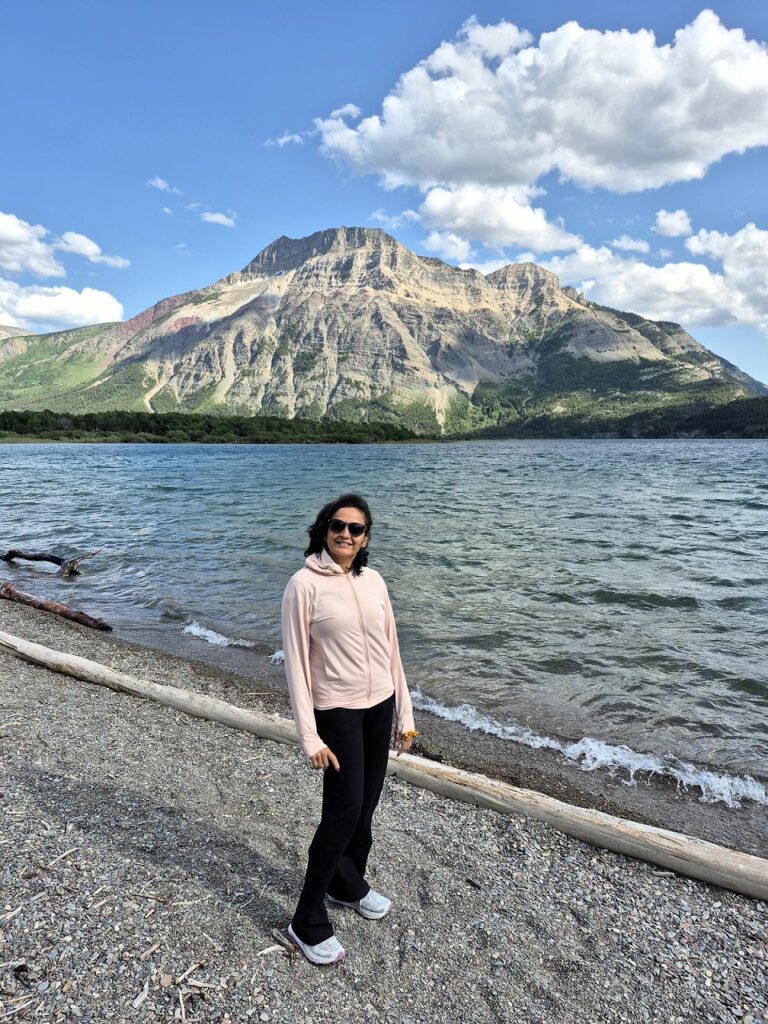
Across the lake, jagged peaks rise steeply into the sky — the U.S. side of the park begins just beyond them. It felt surreal to stand in Canada and gaze directly into Montana’s wilderness.
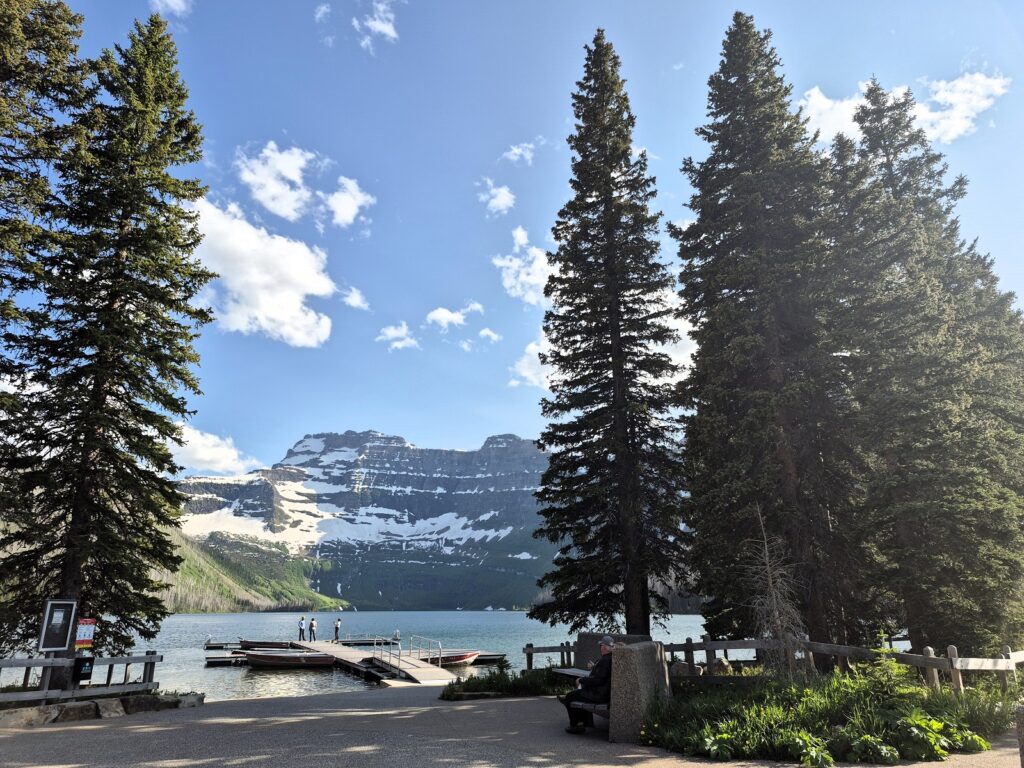
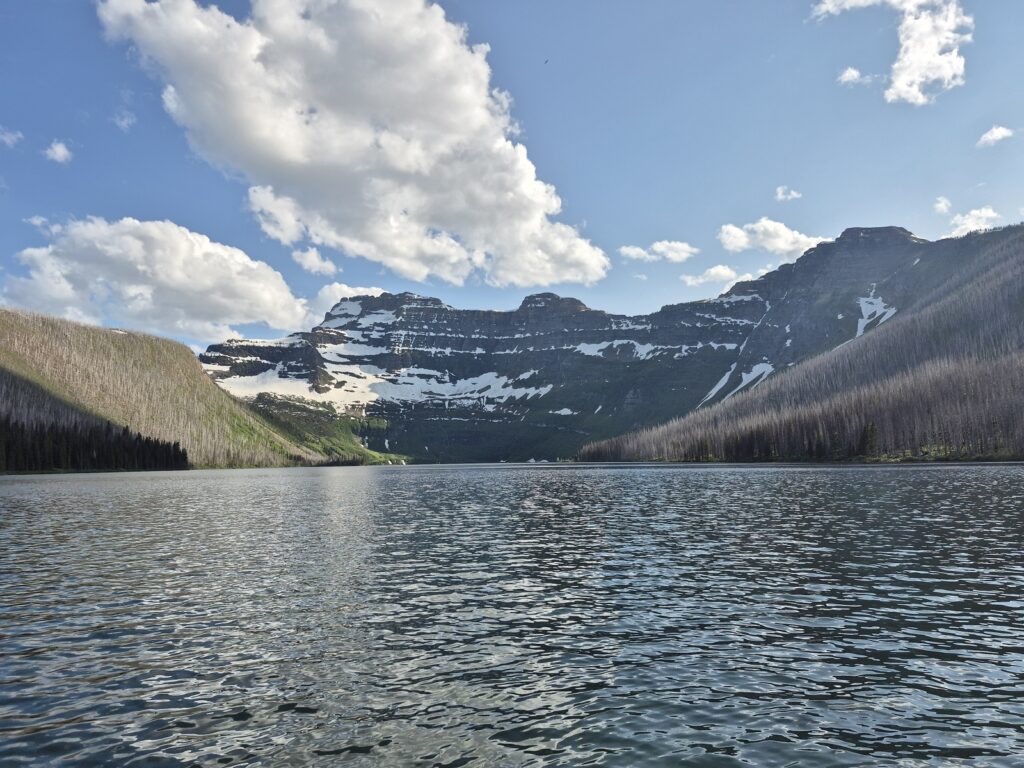
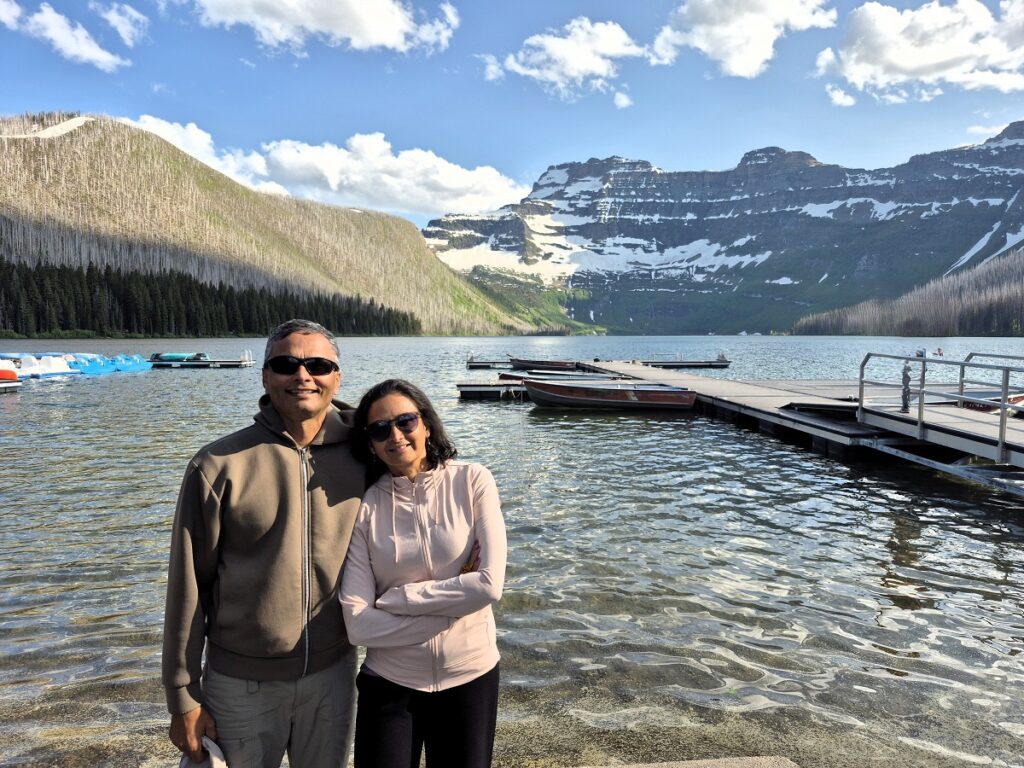
We then drove to Cameron Lake, a peaceful alpine lake nestled at the end of a winding road. Though we didn’t rent boats, we stood by the water, soaking in the tranquil views. At the far end of the lake is the Canada-US border, and it felt surreal to be looking across the water into another country.
As evening fell, we drove to the small town of Cardston, about 20 km from the US border. It’s a great base for visiting both Waterton and Glacier National Parks. Our Airbnb was cozy and comfortable. After a quick dinner at Pizza Hut — comfort food after a long day — we called it a night by 10:15 pm.

It was a perfect start to the trip — a blend of Alberta’s ranching heritage, Indigenous history, and the awe-inspiring beauty of the Canadian Rockies. Day one set the tone for an unforgettable journey.
Day 2: Monday, June 16 — Glacier National Park, Montana, USA
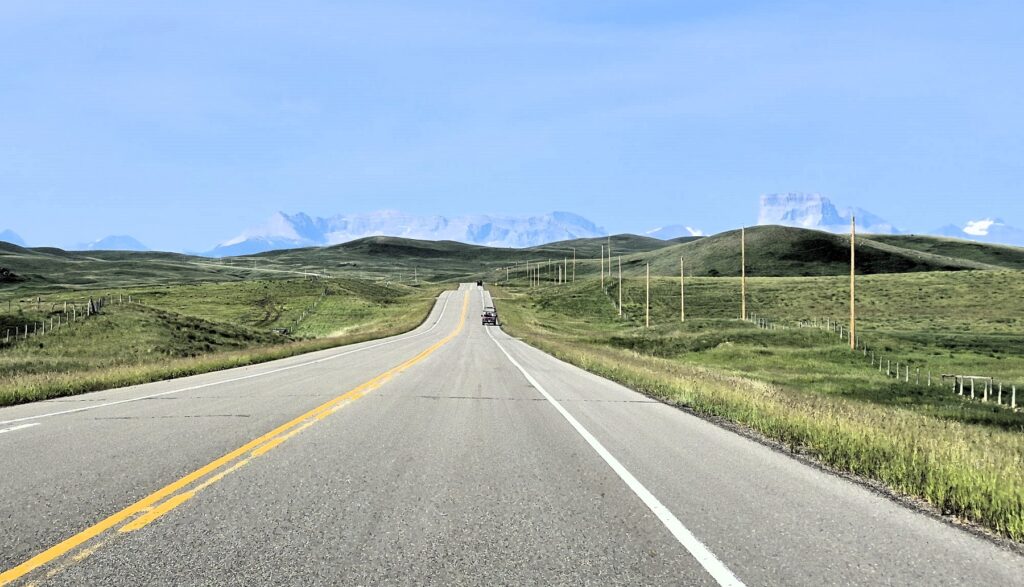
We started our day early, heading out from our Airbnb in Cardston, Alberta around 8:00 am. Before we set off for the US border, we picked up a Subway sandwich that we planned to eat later for lunch. The route to the US-Canada border was scenic — long, straight stretches of road surrounded by vast open spaces and views of the Rocky Mountains in the distance. The peaceful drive set the tone for the adventurous day ahead.
The border crossing was a simple affair. The US Immigration post is located about 15 minutes from Cardston (roughly 20 km). We pulled up to the booth, handed over our passports, and answered a few routine questions.
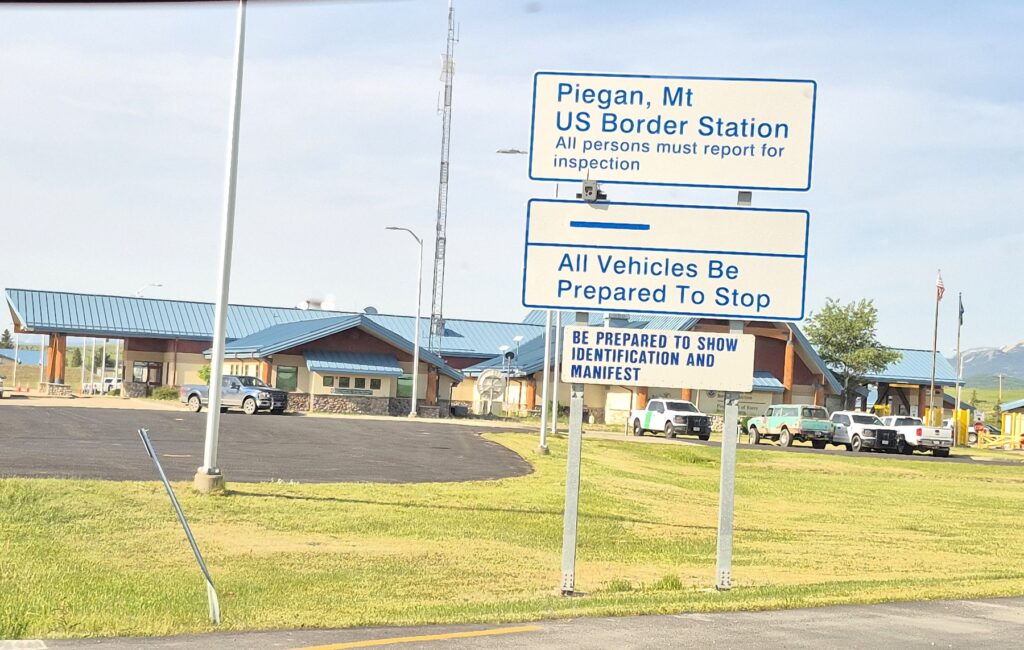
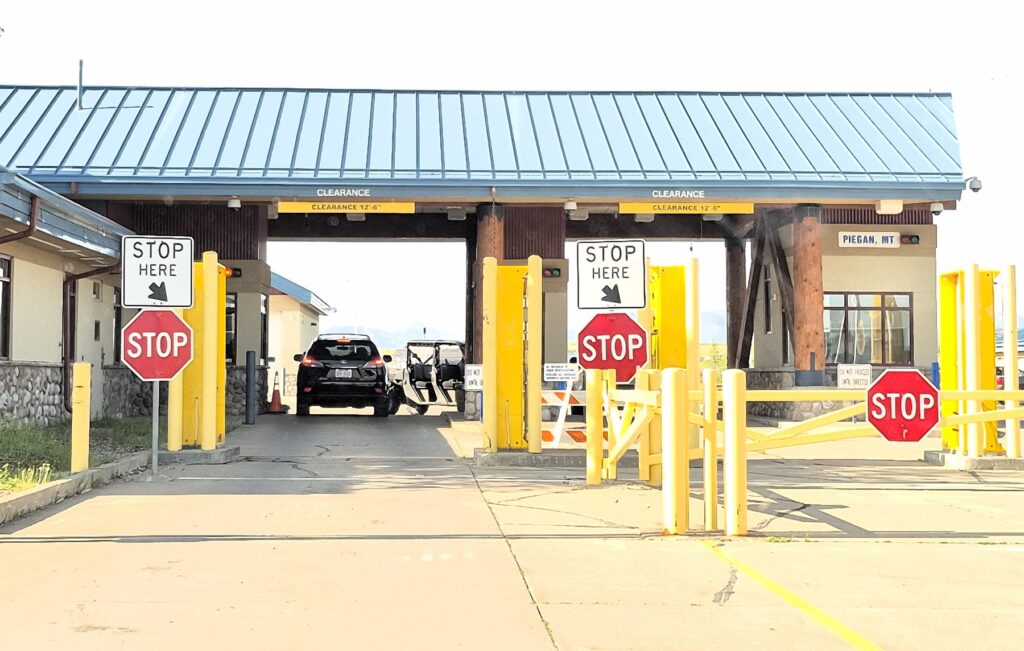
The officer entered our details and returned the passports within minutes. Crossing international borders doesn’t always go this smoothly — this was one of the easiest we’ve experienced!
We were now officially in Montana, USA, and our stop was Glacier National Park, one of the crown jewels of the American National Park system.
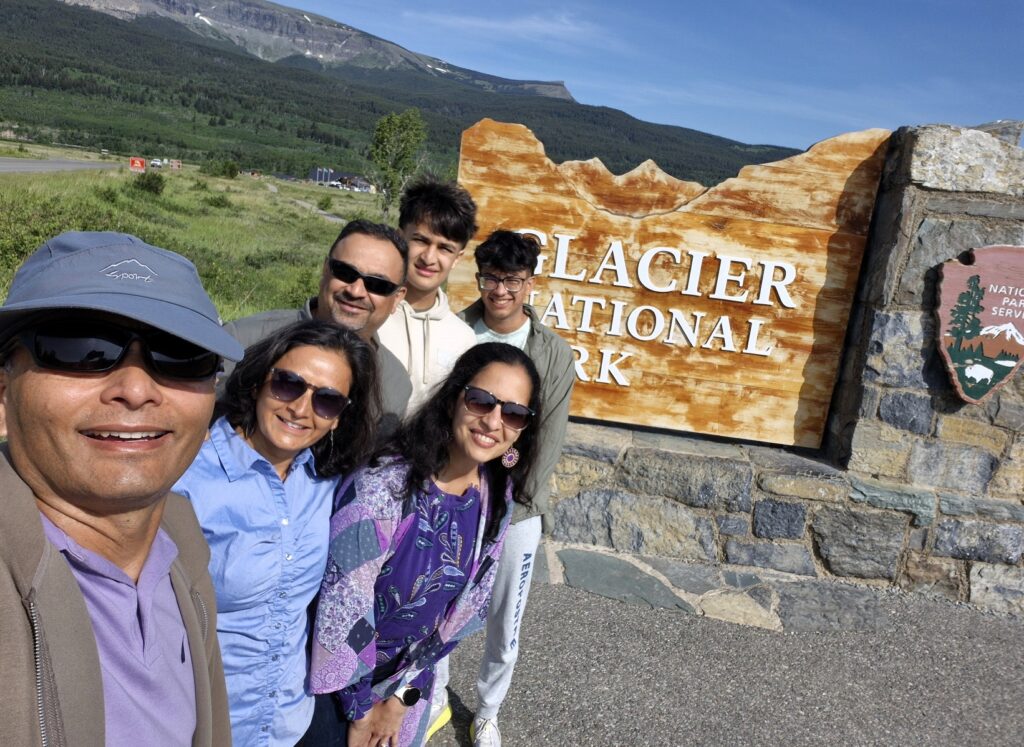
We entered the park from the St. Mary entrance, located near the small town of the same name on the park’s eastern side. By about 9:30 am, we had reached the St. Mary Visitor Center, where we took some time to orient ourselves.
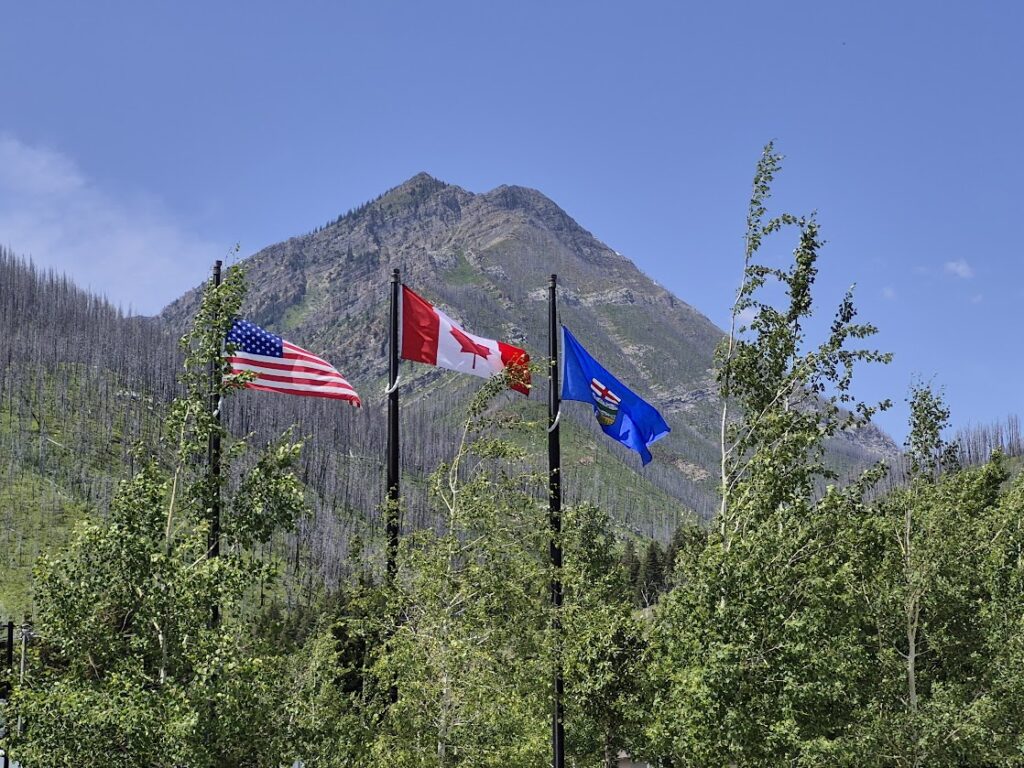
The rangers at the visitor center were incredibly helpful. They explained the different regions of the park and hiking options, including trail conditions, wildlife warnings, and places of interest. We were fascinated to see three flags flying at the park entrance — the United States, Canada, and the Blackfoot Confederacy. It was a reminder that this region holds deep cultural significance for Indigenous peoples, particularly the Blackfeet Nation, whose ancestral lands span both sides of the border.
The cooperative spirit of the park was also striking. Glacier and Canada’s Waterton Lakes National Park together form the Waterton-Glacier International Peace Park, designated in 1932 as the first such peace park in the world. It’s a symbol of peaceful relations and environmental cooperation between the two countries — something worth celebrating.
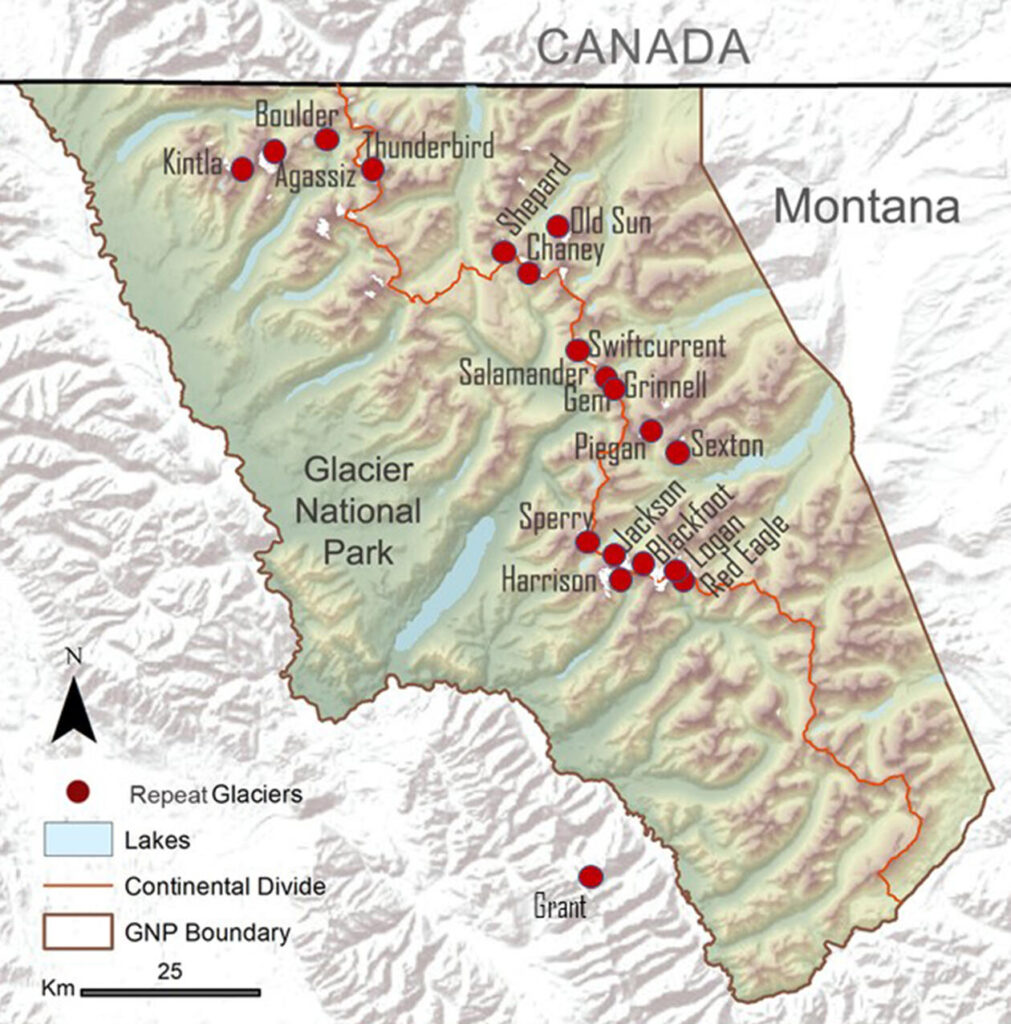
At the visitor center, we looked at a large map that helped put things into perspective. To the north, just across the border, lay the compact and serene Waterton area. In contrast, Glacier National Park stretched dramatically southward into the Montana wilderness, with towering peaks, deep glacial valleys, and turquoise lakes.
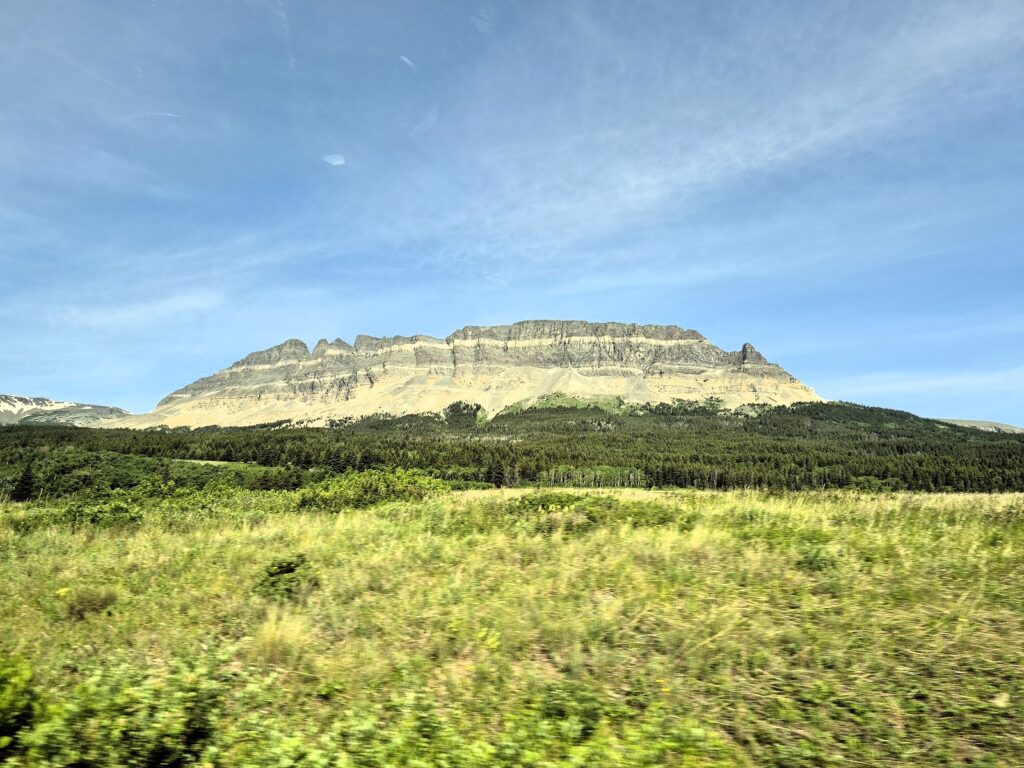
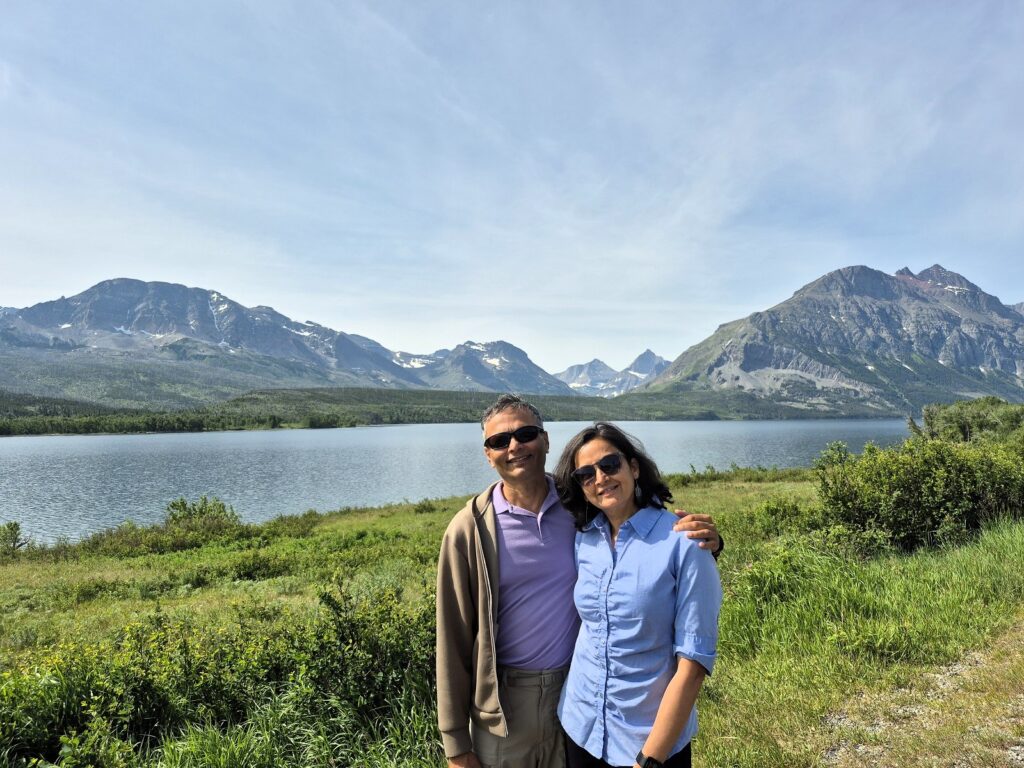
Our drive along the Going-to-the-Sun Road began shortly after. This road is the backbone of Glacier National Park, cutting through its heart and offering some of the most breathtaking views in North America. One of the first stunning sights we encountered was St. Mary Lake, a pristine, elongated body of water stretching over 10 miles. The calm, icy-blue surface reflected the surrounding snow-capped peaks.
We stopped several times along the lake to take photos. In one location, we saw a dramatic waterfall plunging down a cliff, melting into a snowy patch at its base. These seasonal waterfalls are fed by the melting snowpack, which in June still blankets much of the higher elevations.
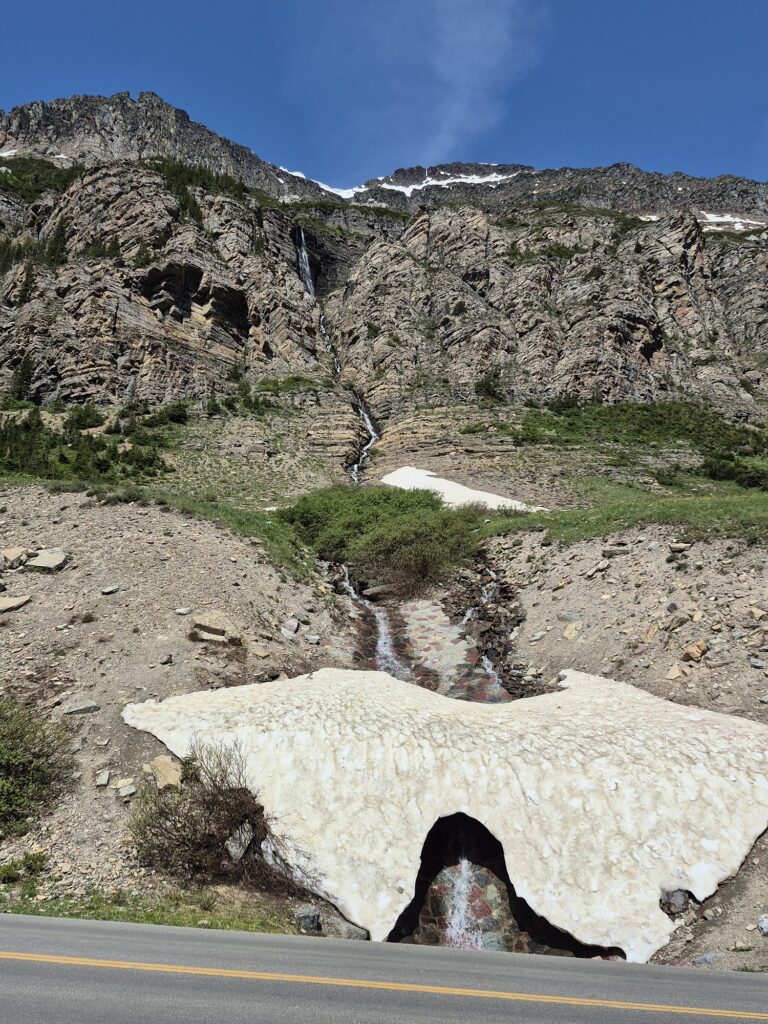
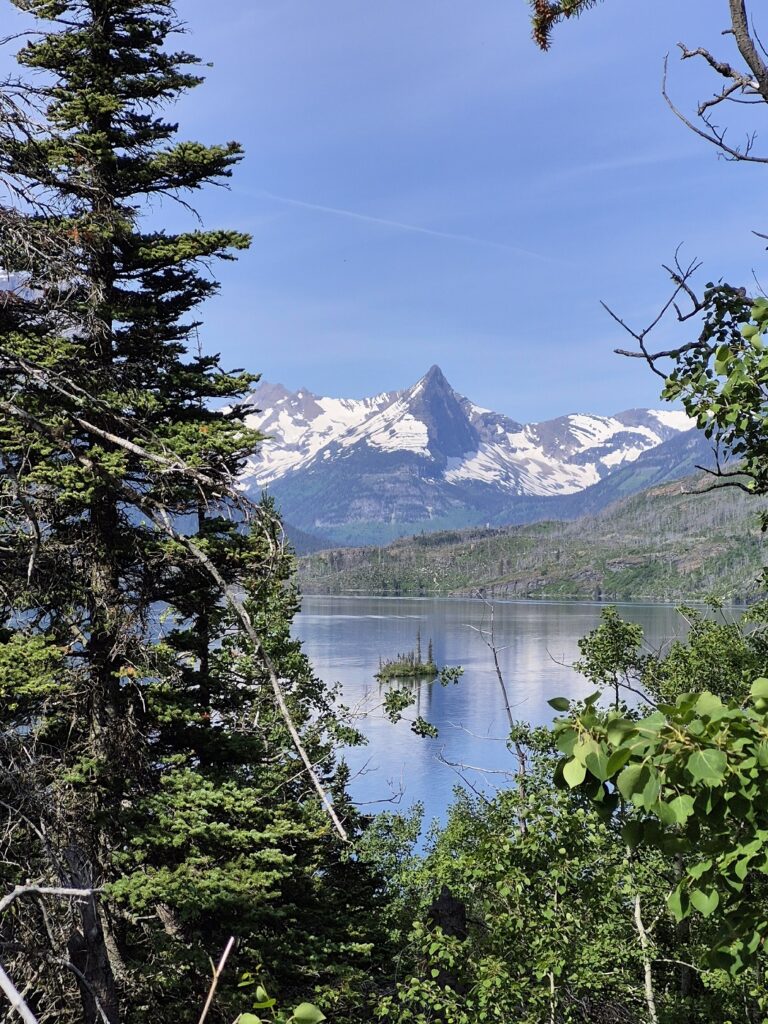
One fascinating fact we learned: Every year, the National Park crews spend up to three months clearing the Going-to-the-Sun Road of snow. In some places, snow can pile up to 80 feet high. The monumental effort is necessary to make the park accessible to visitors during the summer — and we were grateful to be among those lucky enough to witness it in its early-season glory.
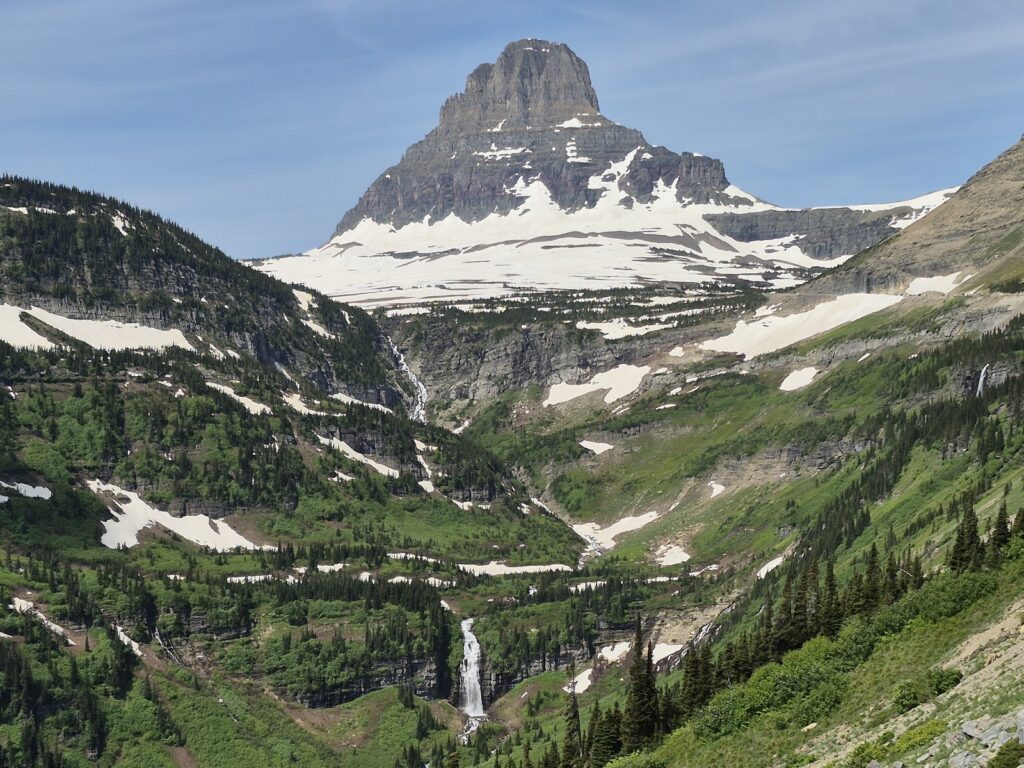
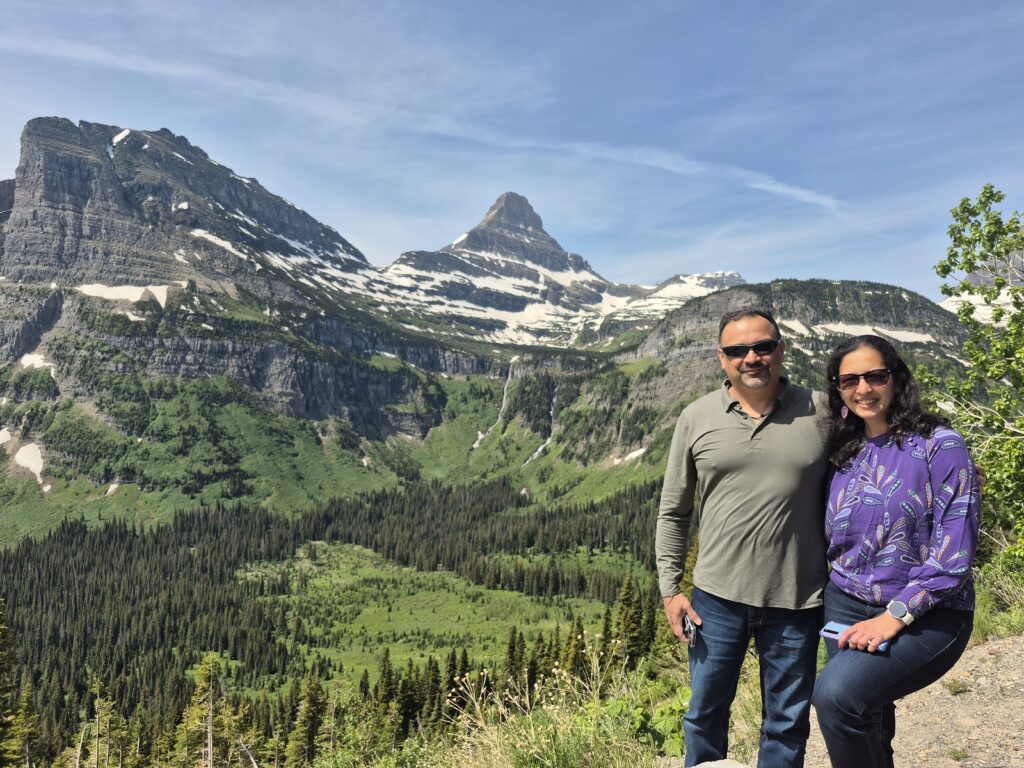
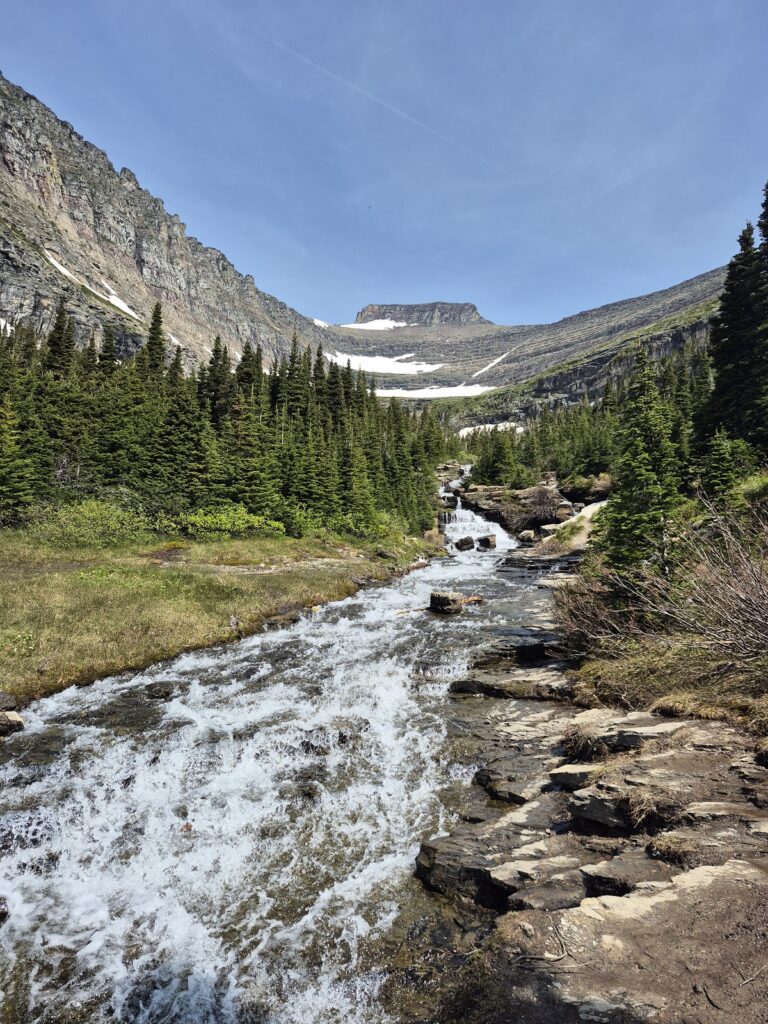
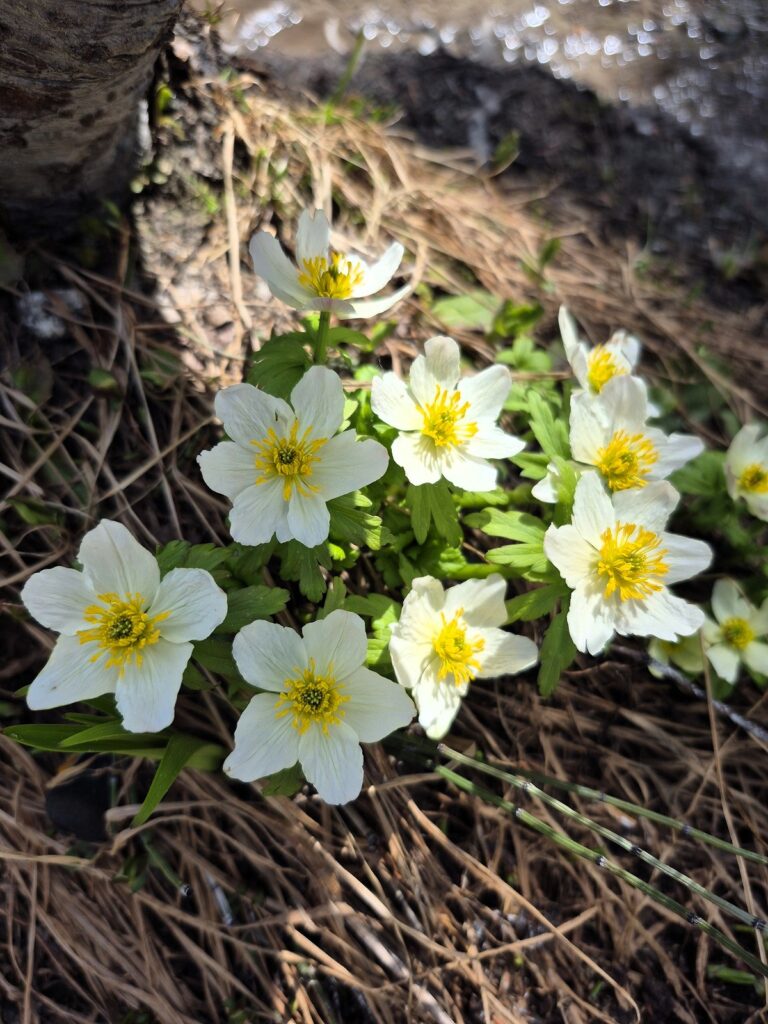
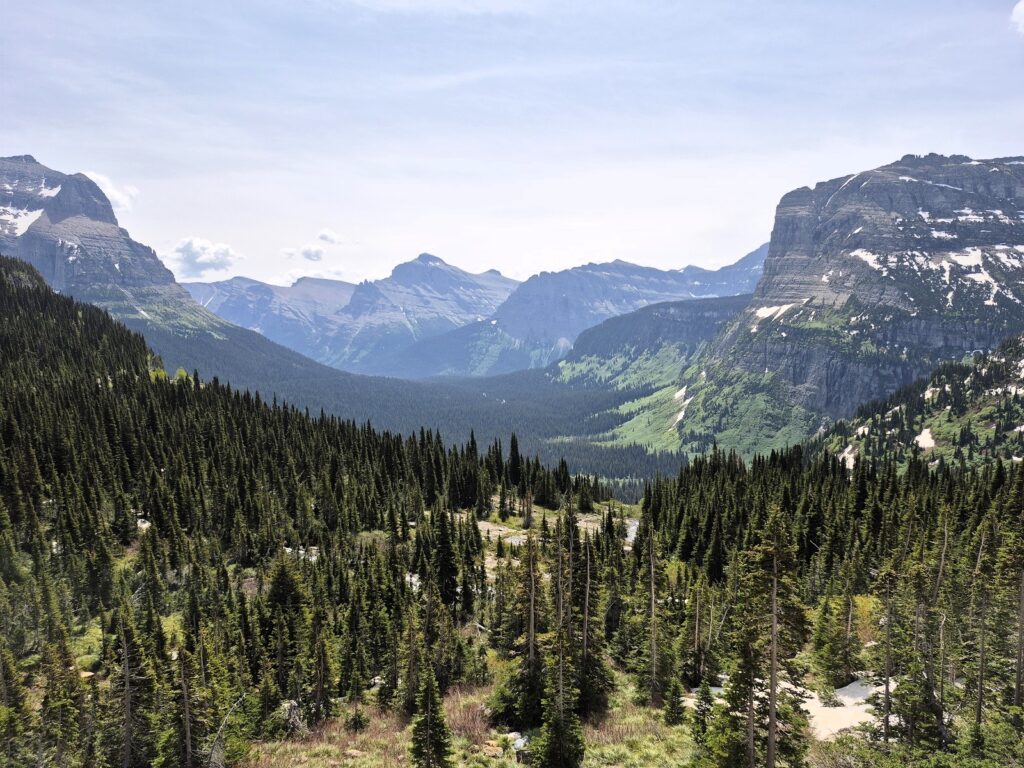
Our next major stop was the Logan Pass Visitor Center, perched at 6,646 feet (2,026 meters), making it the highest point on the iconic Going-to-the-Sun Road. Surrounded by snow-dusted peaks and alpine meadows bursting with wildflowers, Logan Pass offers sweeping views of Glacier National Park’s rugged heart.
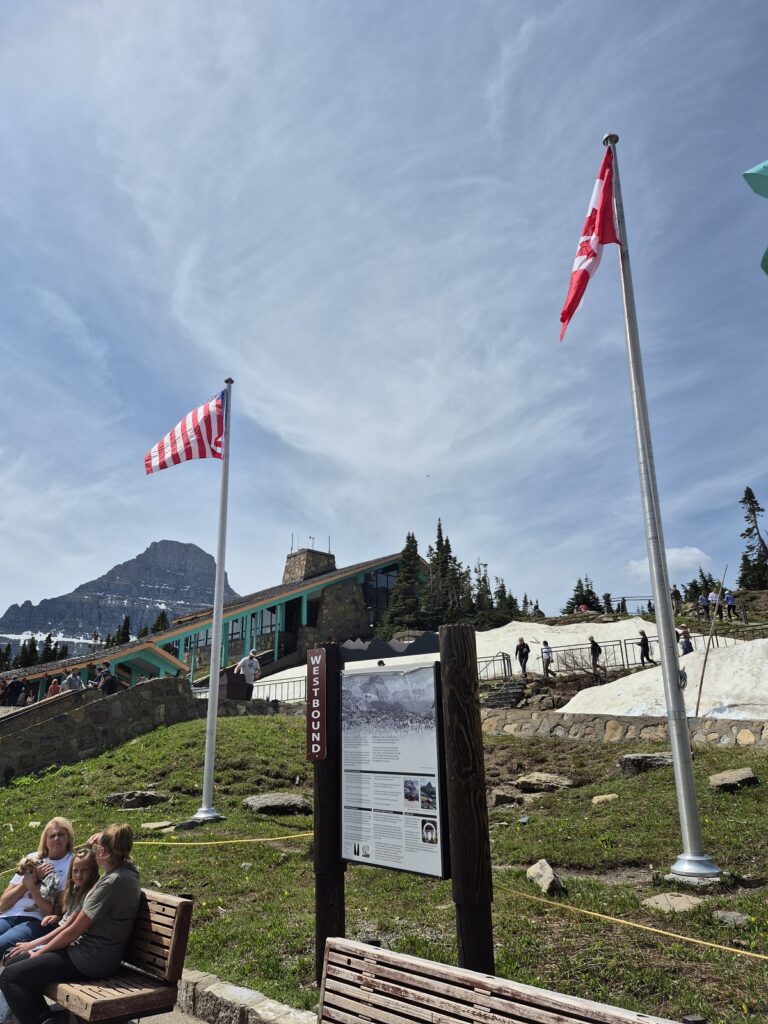
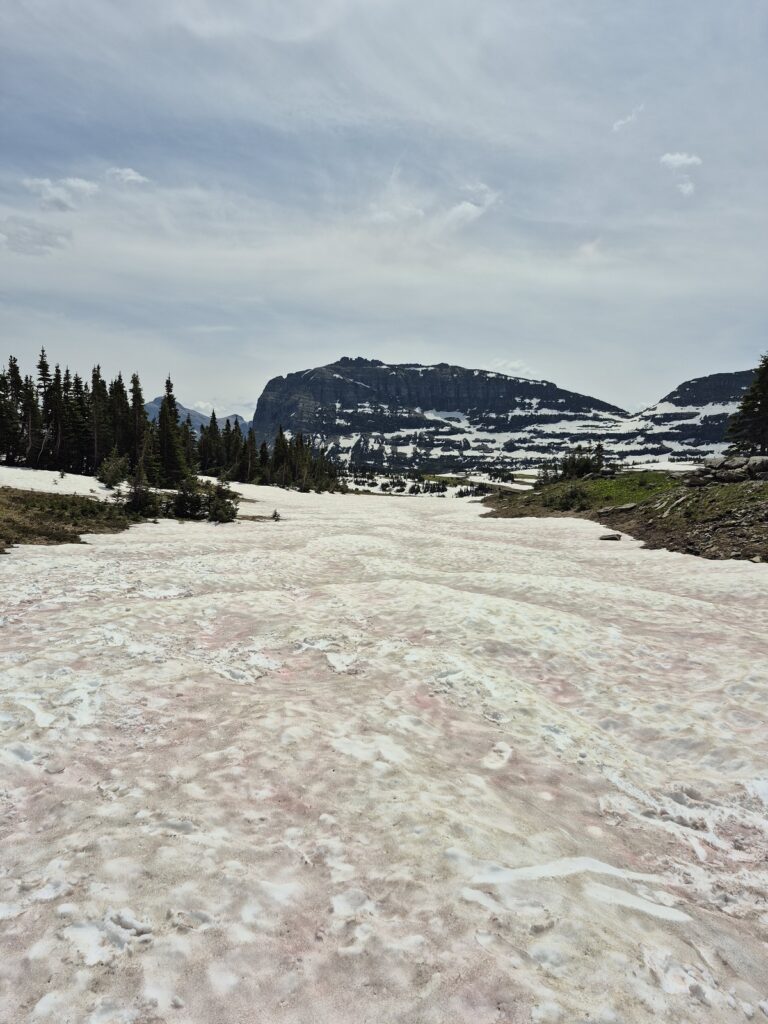
This scenic mountain pass straddles the Continental Divide, a remarkable geographical boundary that runs the entire length of the Americas. Here, rainwater falling on one side of the divide will eventually flow into the Pacific Ocean, while water on the other side journeys to the Atlantic. It’s not just a line on a map — it’s nature’s great drainage divide, running from the tip of Alaska, through the Canadian Rockies, down the spine of the US Rockies, and all the way to the Andes in South America.
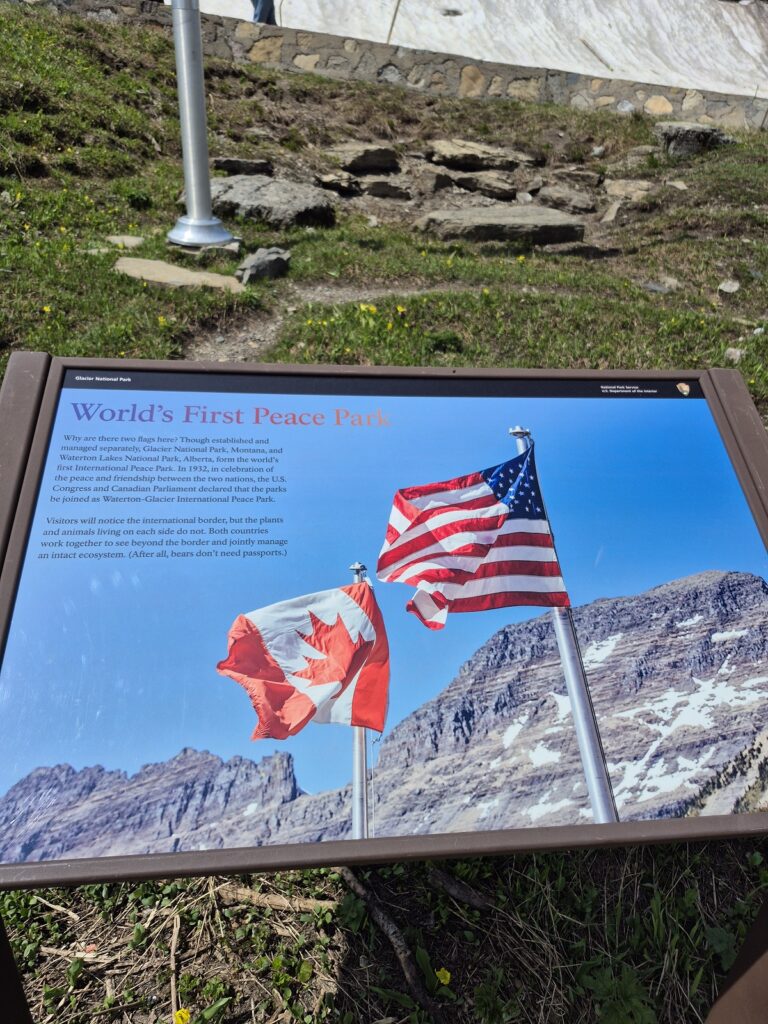
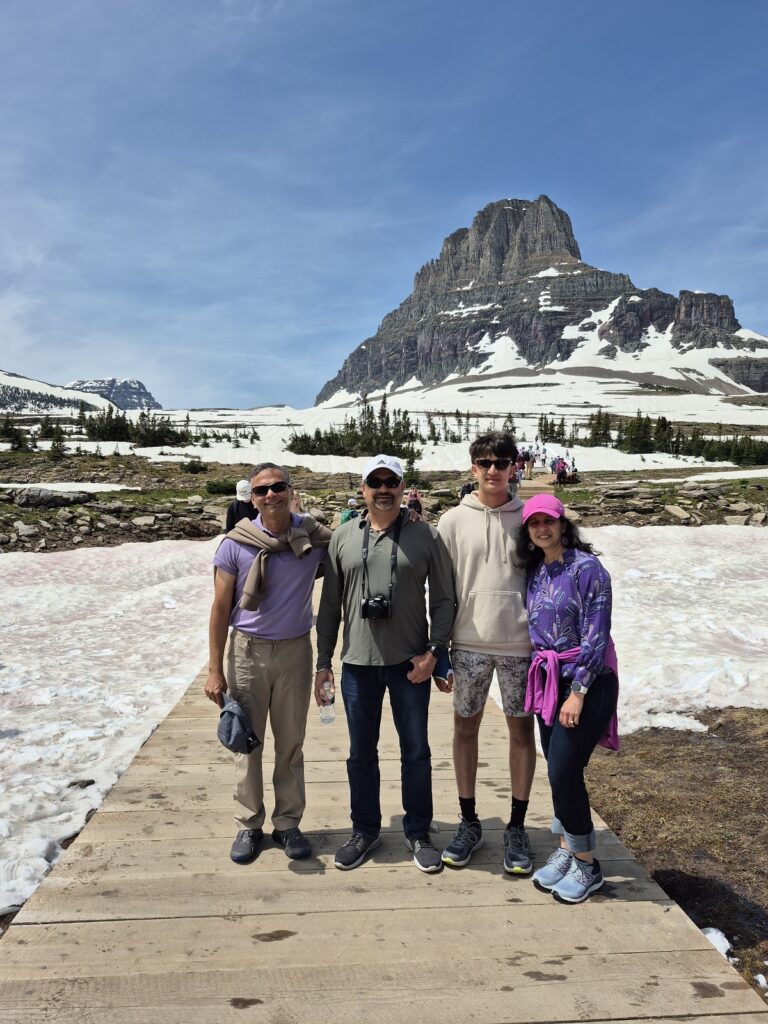
The Continental Divide is a natural ridge line that runs along the Rocky Mountains, stretching from the Canadian Rockies in British Columbia and Alberta all the way down through the U.S. Rockies into Mexico and beyond. It marks the hydrological boundary of North America — water on the west side flows to the Pacific Ocean, while water on the east side flows to the Atlantic or Arctic. In the Rockies, this divide cuts through dramatic mountain peaks, alpine lakes, and valleys, shaping the geography, climate, and ecosystems on either side. Crossing the divide — like at Logan Pass — means literally standing at the seam of a continent.
Standing at Logan Pass, you’re quite literally at the crossroads of a continent, where geology, hydrology, and sheer natural beauty collide. We took in the crisp alpine air, admired the sweeping valleys below, and even caught a glimpse of mountain goats making their way across the steep ridgelines. It was one of the most spectacular viewpoints of our journey through Glacier National Park.
From Logan Pass, we set out on the Hidden Lake Overlook Trail — a popular yet challenging hike, especially under current conditions.
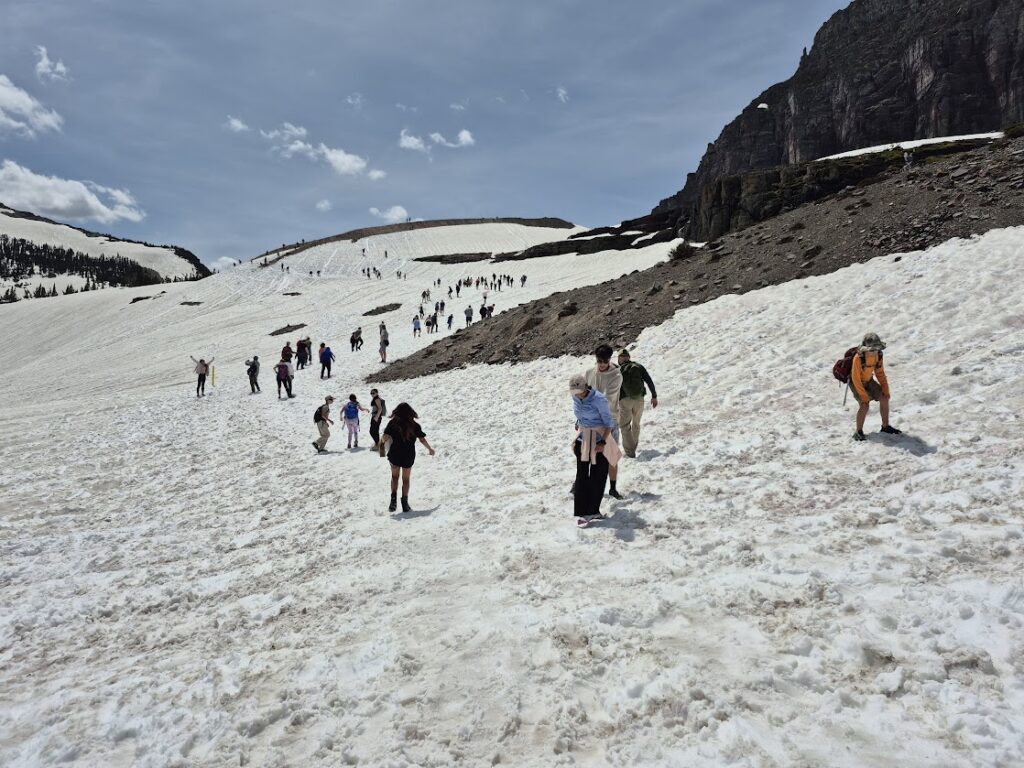
Though the trail is only 2.6 miles (4.3 km) round trip, it was entirely covered in snow and ice, and we weren’t equipped with hiking boots or crampons. It made for slow, careful walking, but the experience was worth every step.
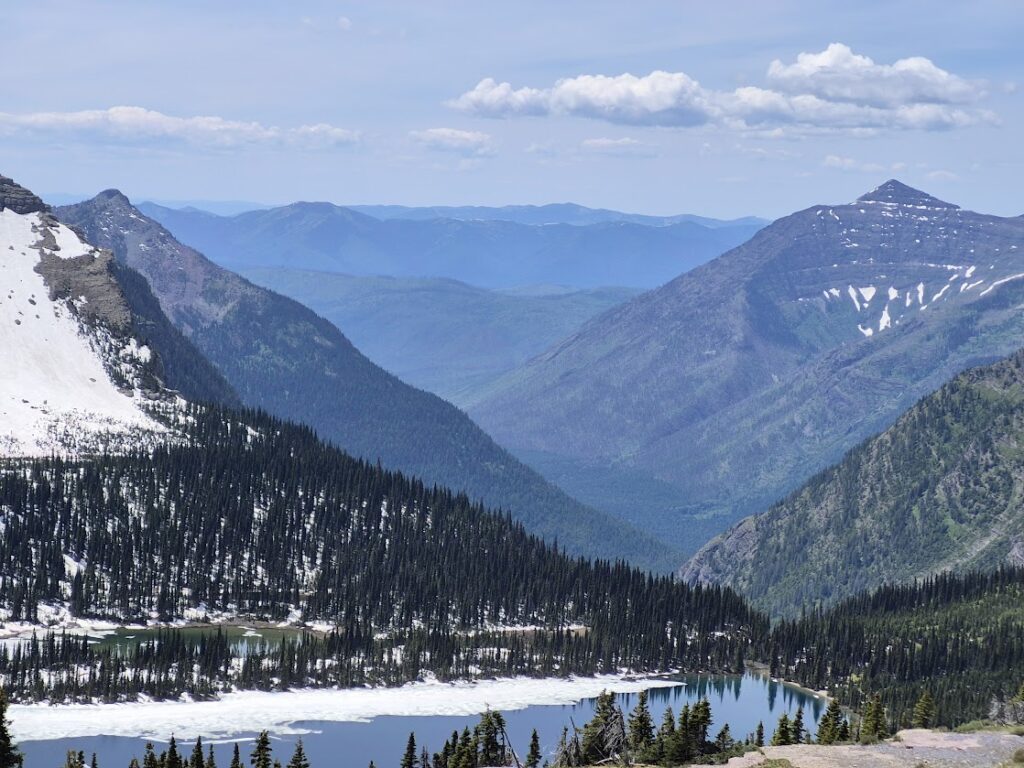
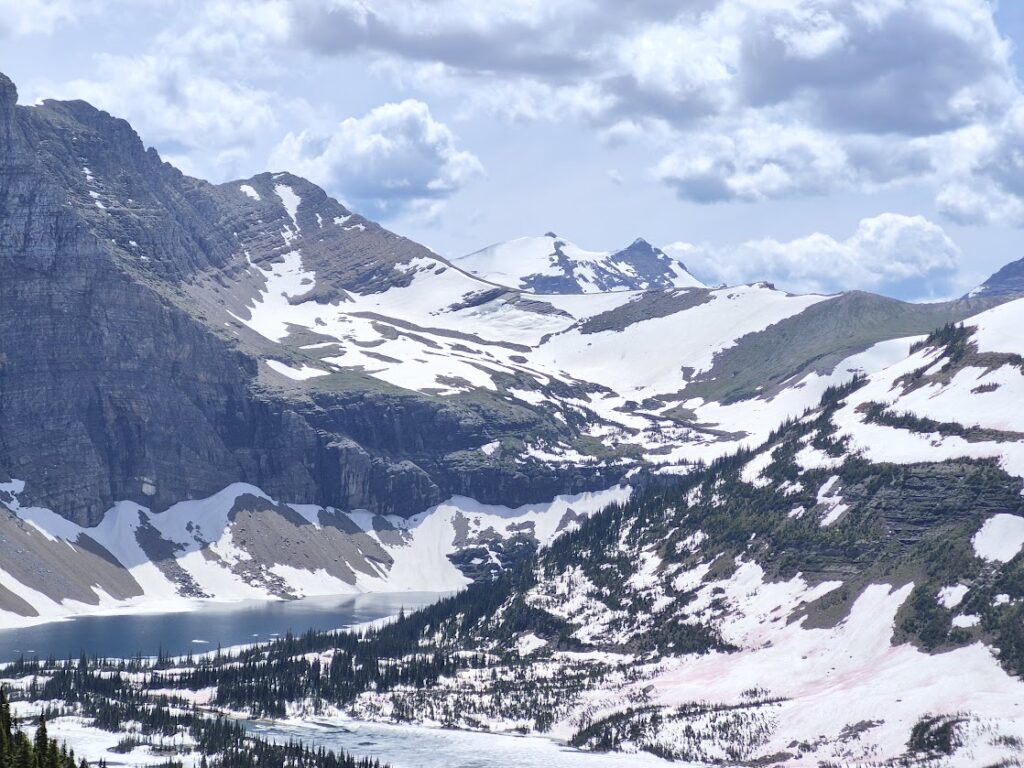
We took it slow, savouring the fresh mountain air and the stunning silence.
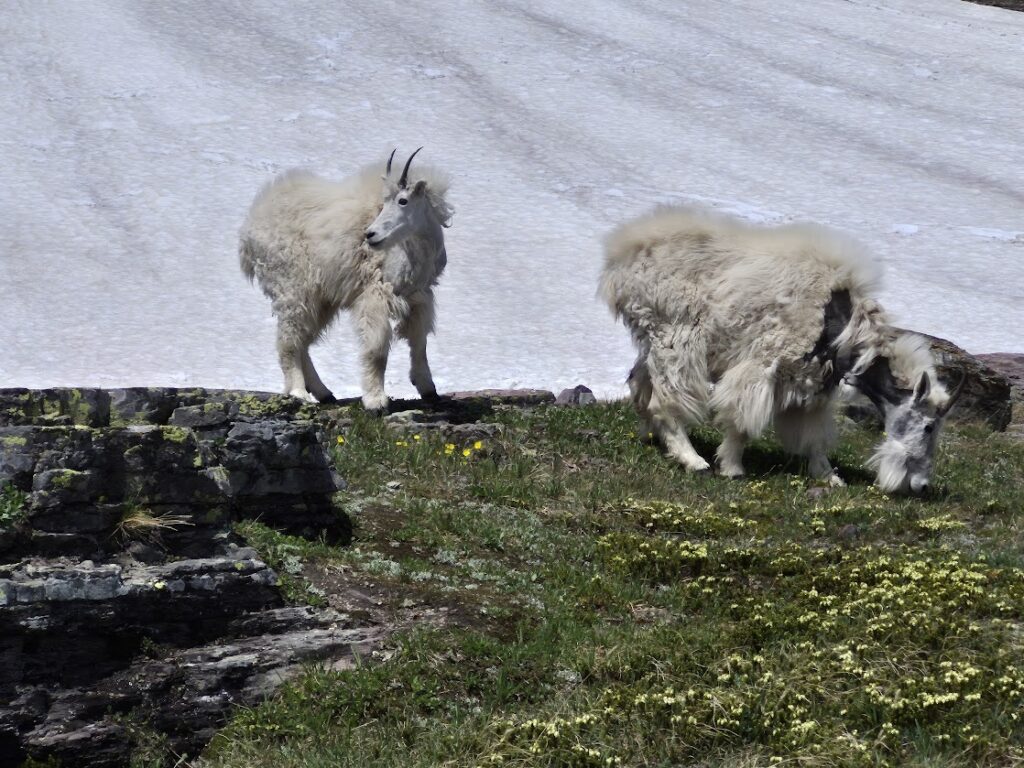
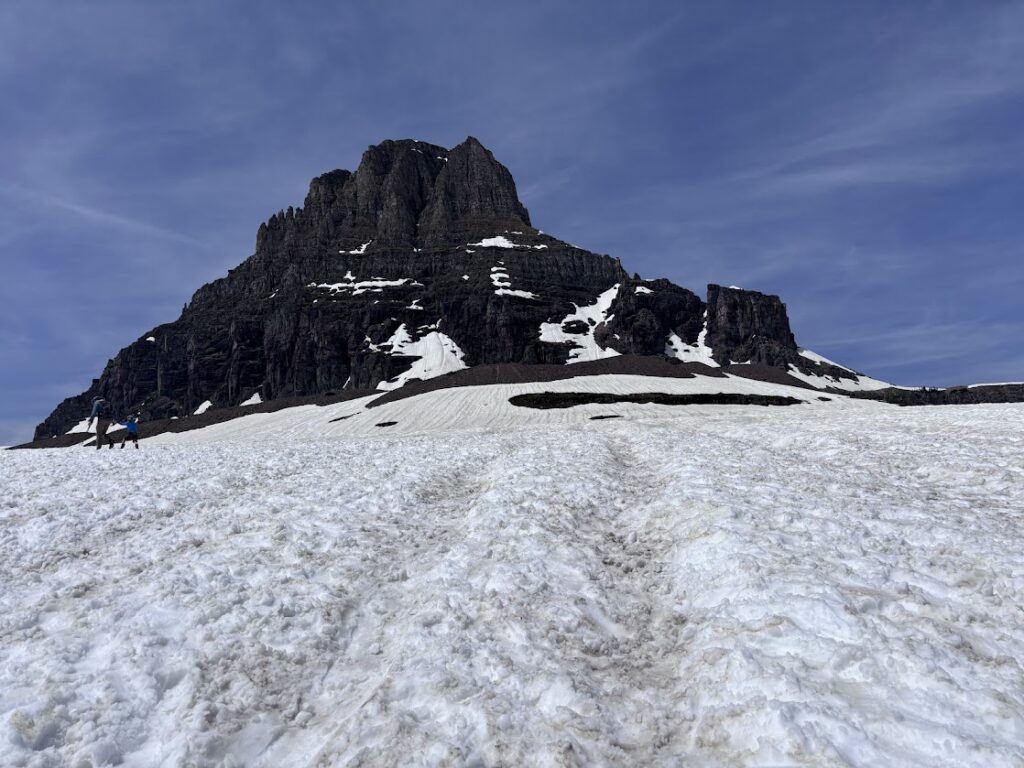
The hike took about 2.5 hours — partly because of the slippery conditions, and partly because we couldn’t help stopping frequently to admire the scenery.
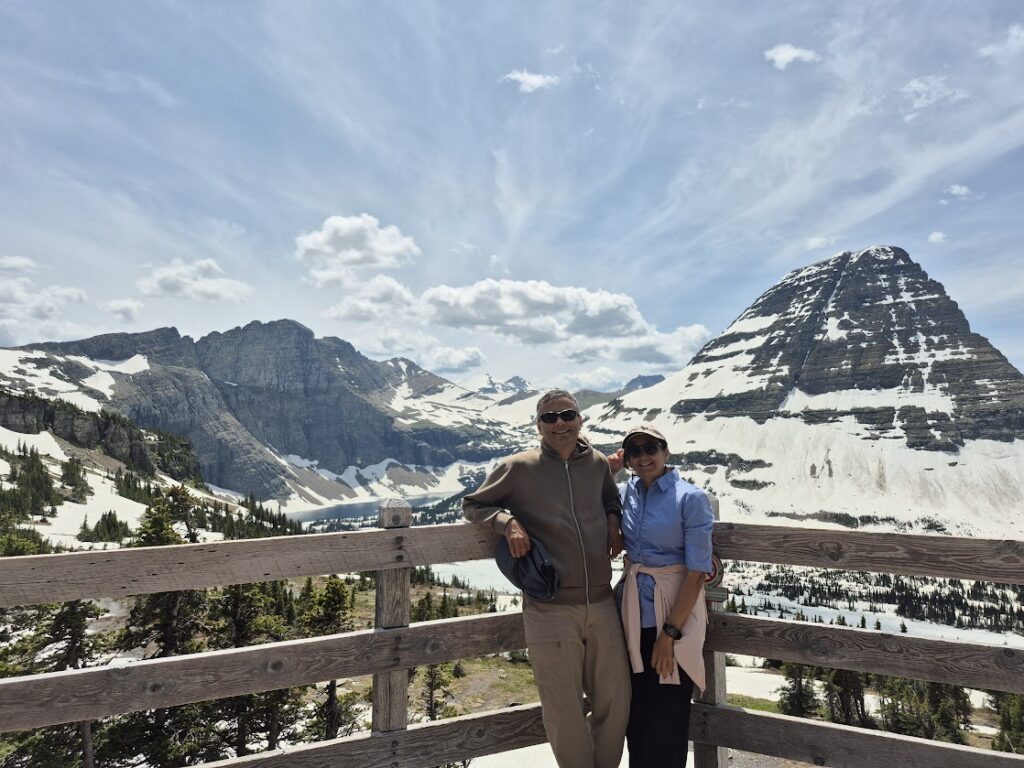
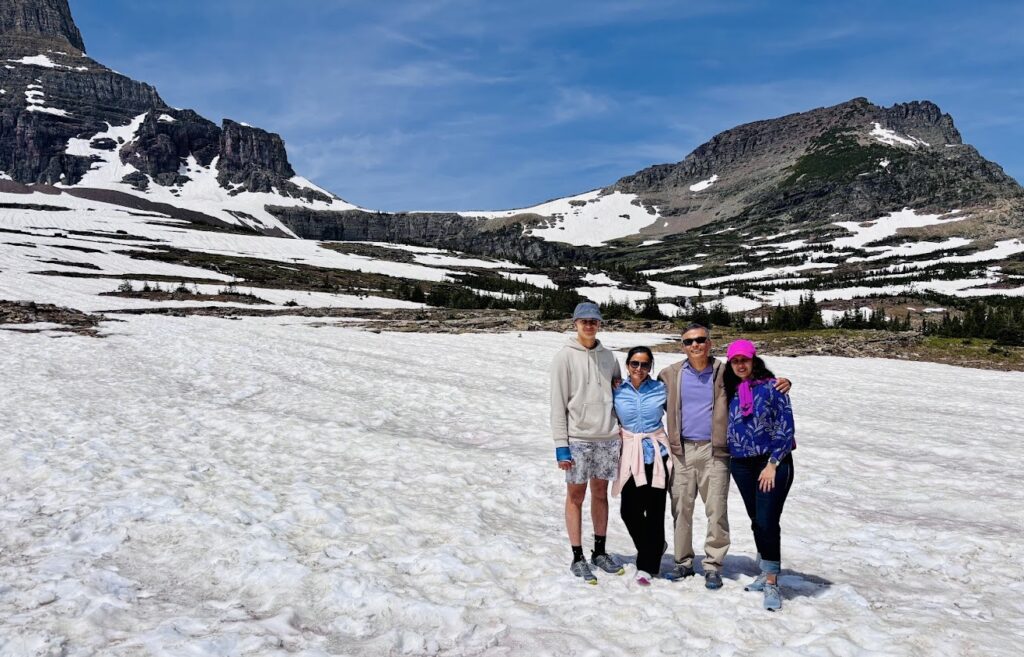
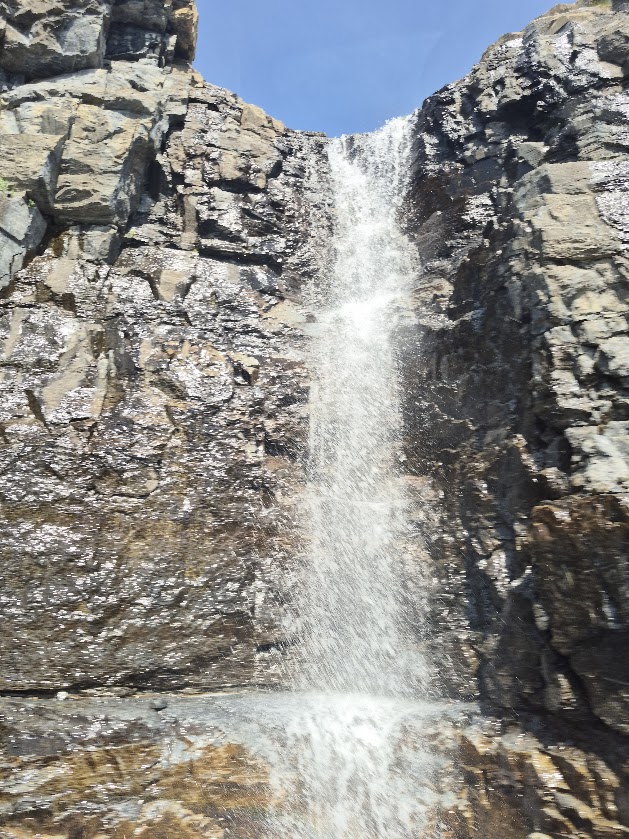
After returning to the car, we continued westward, descending gradually from Logan Pass. Along the way, we passed the Weeping Wall, a natural curtain of water that pours over the cliff face right beside the road — like driving through a waterfall.
Another stop was at Bird Woman Falls, a towering waterfall visible from the road.
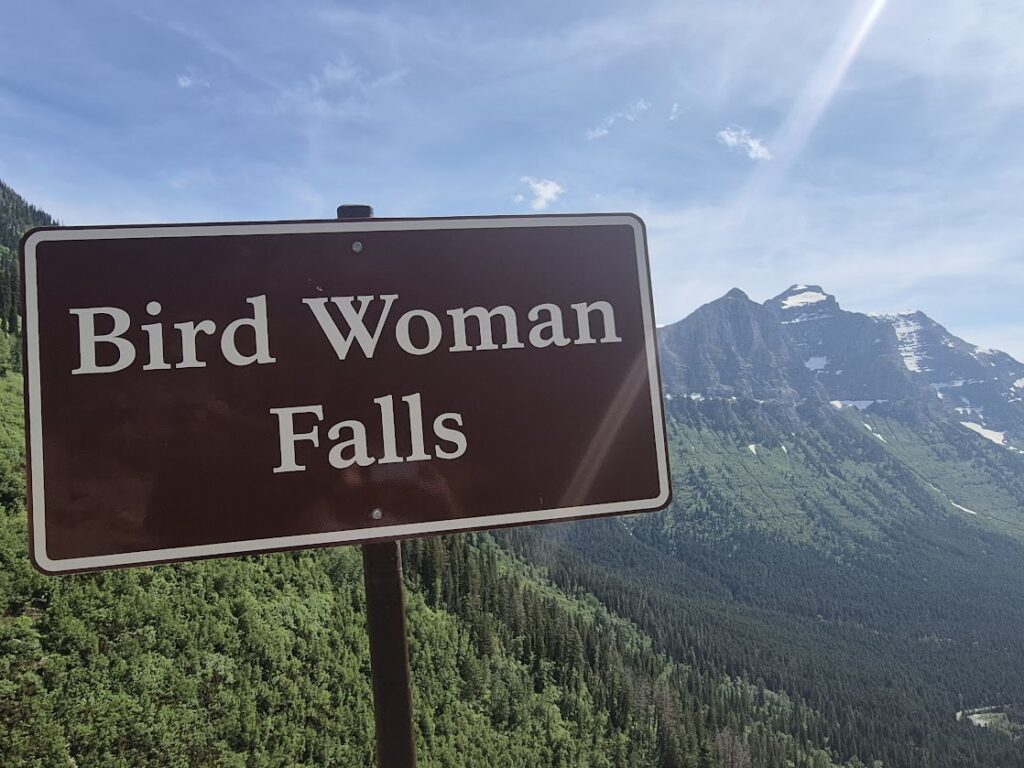
Bird Woman Falls drops over 560 feet from Mount Oberlin. It’s one of the tallest waterfalls in the park and is named in honor of Sacagawea, the Native American guide and interpreter who helped Lewis and Clark during their famous expedition.
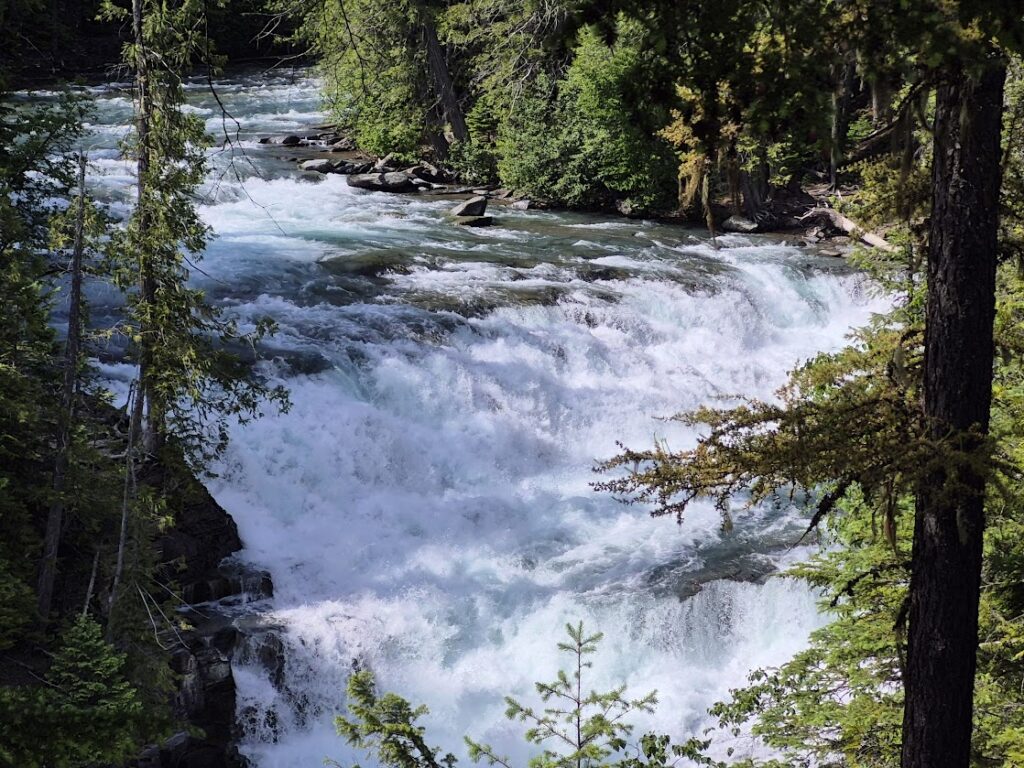
Further ahead, we stopped at a scenic spot known as Red Rock, where a crystal-clear mountain stream gushes over vividly colored rocks — a peaceful, picturesque place that felt straight out of a painting.
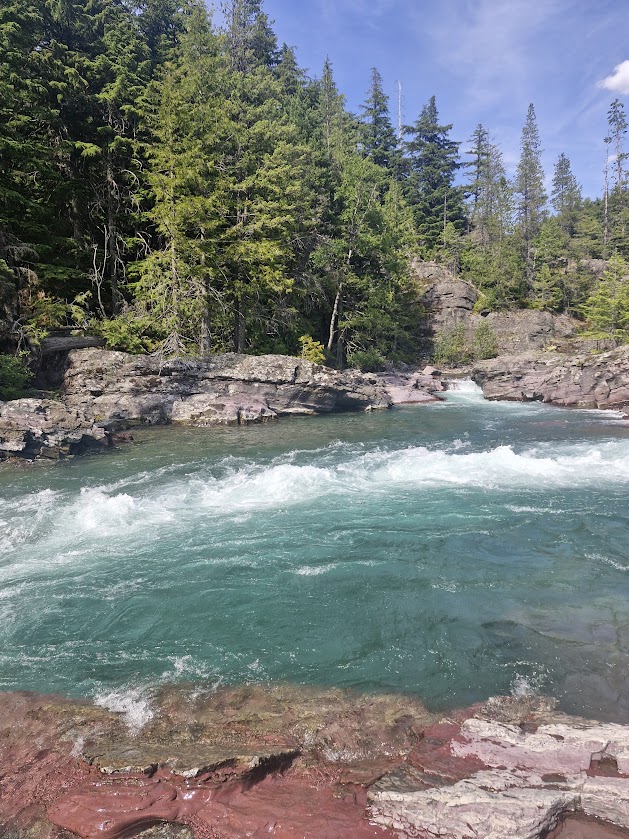
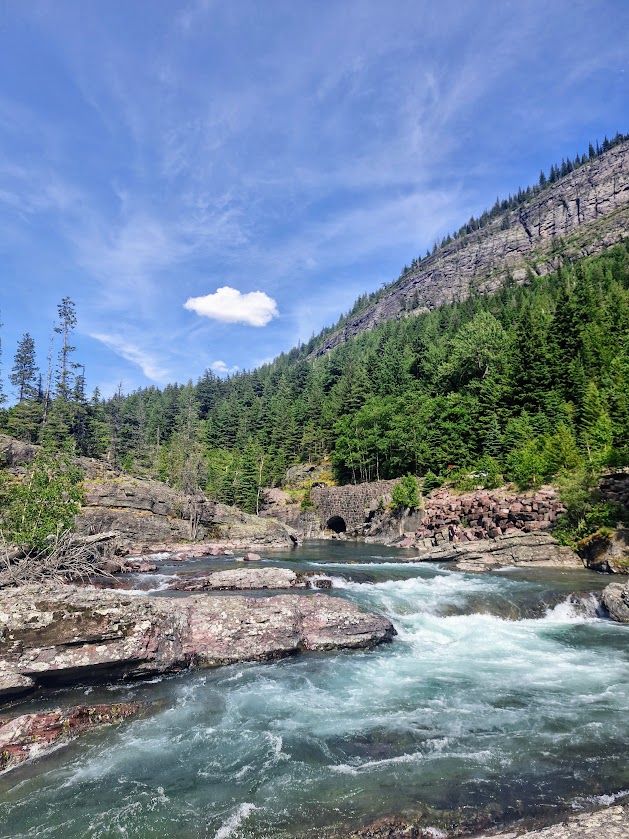
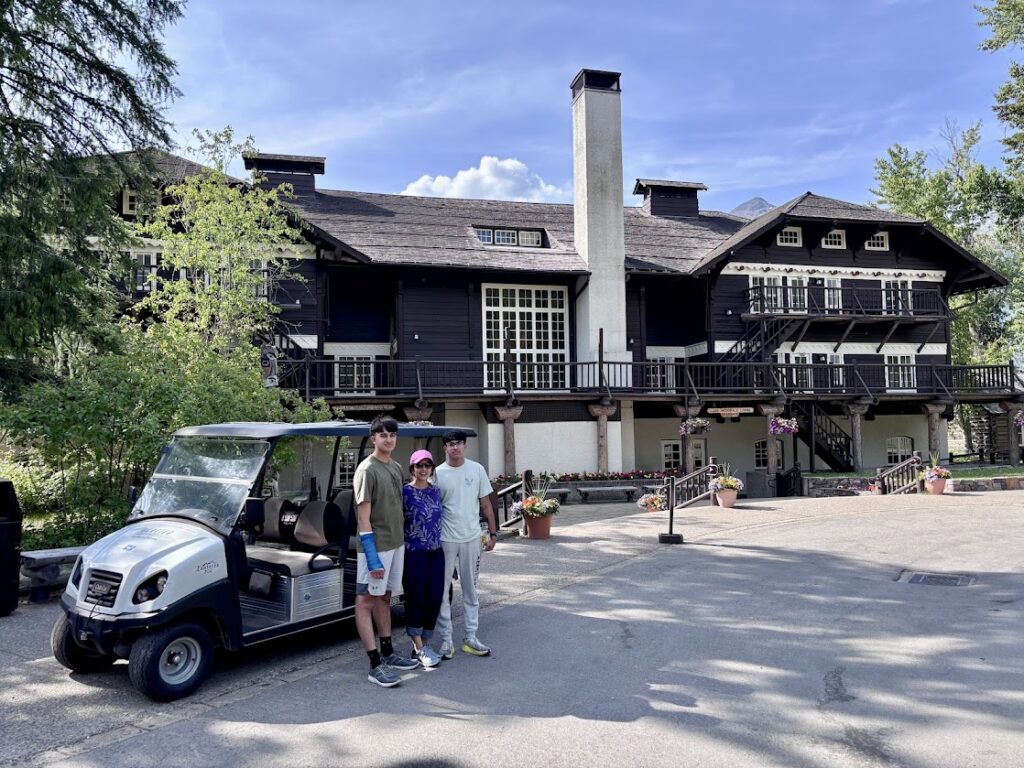
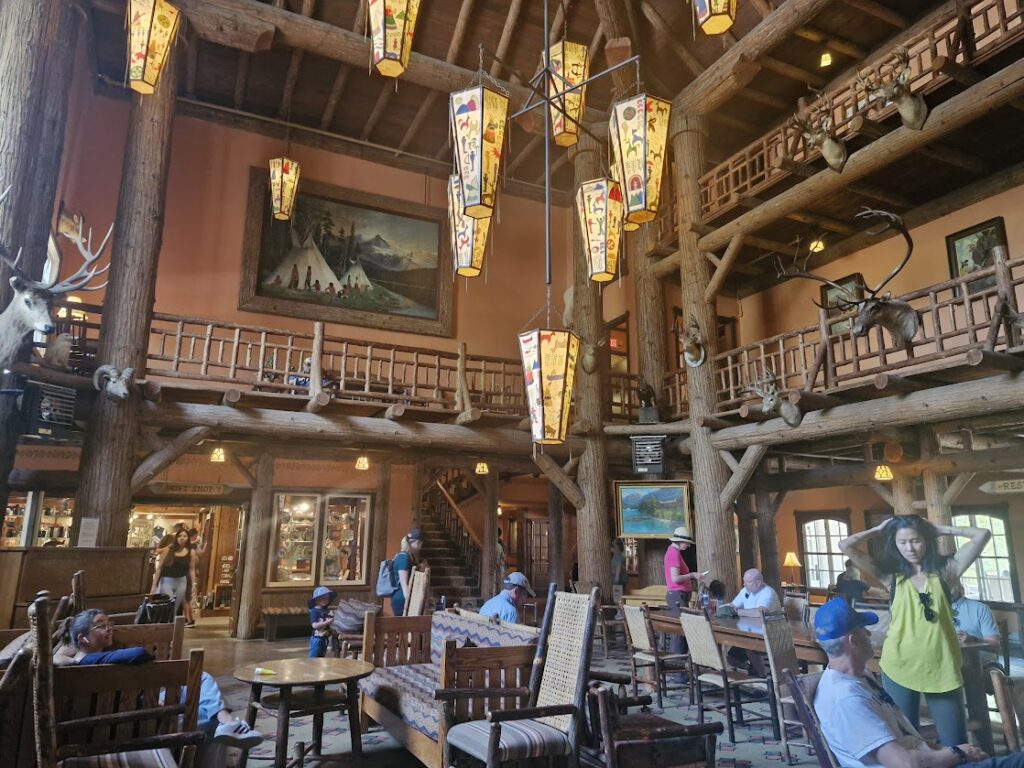
Our final destination within the park was the Lake McDonald Lodge.
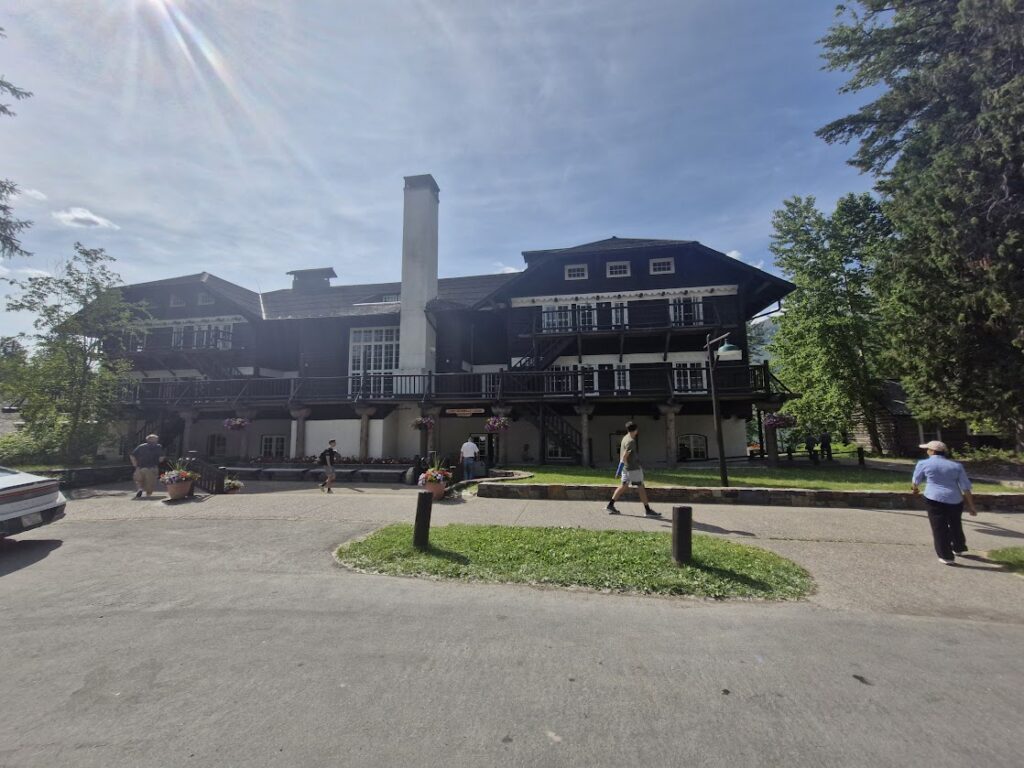
Lake McDonald Lodge, built between 1913 and 1914, is a rustic lodge designed in a Swiss alpine chalet style. Nestled at the eastern shore of Lake McDonald, it was part of a campaign by the Great Northern Railway to promote the area as the “American Alps.” The lodge’s log architecture and scenic location make it one of the most iconic buildings in any US national park.
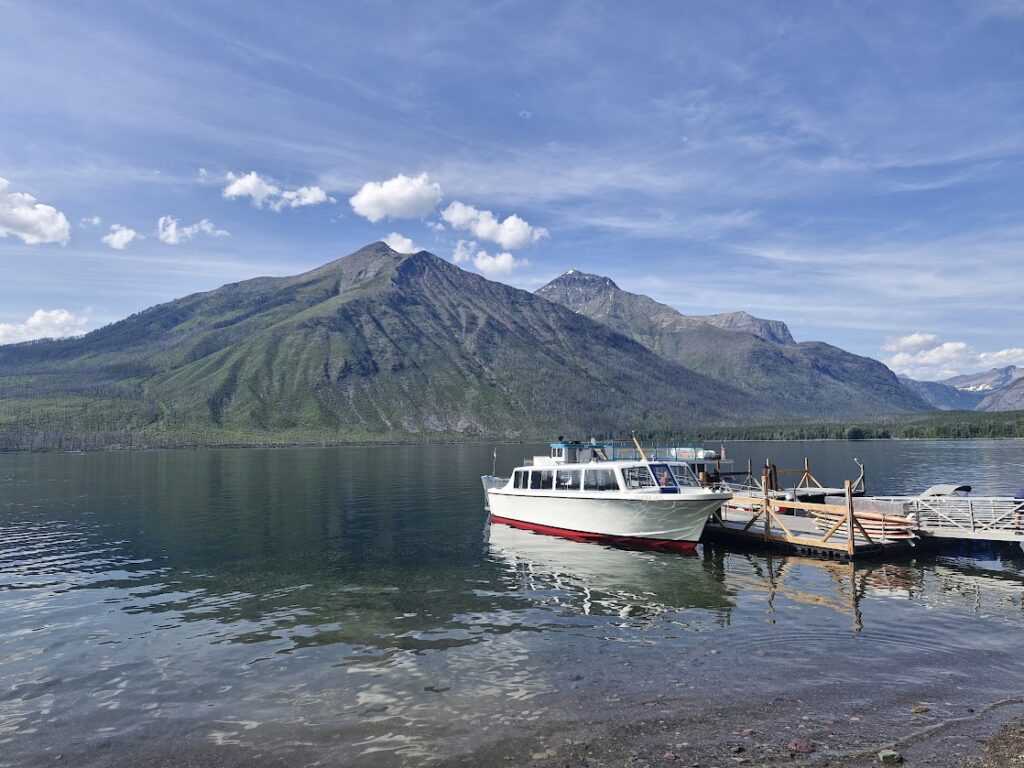
After relaxing at the lodge, we began our return journey along the Going-to-the-Sun Road, retracing our steps back to the east.
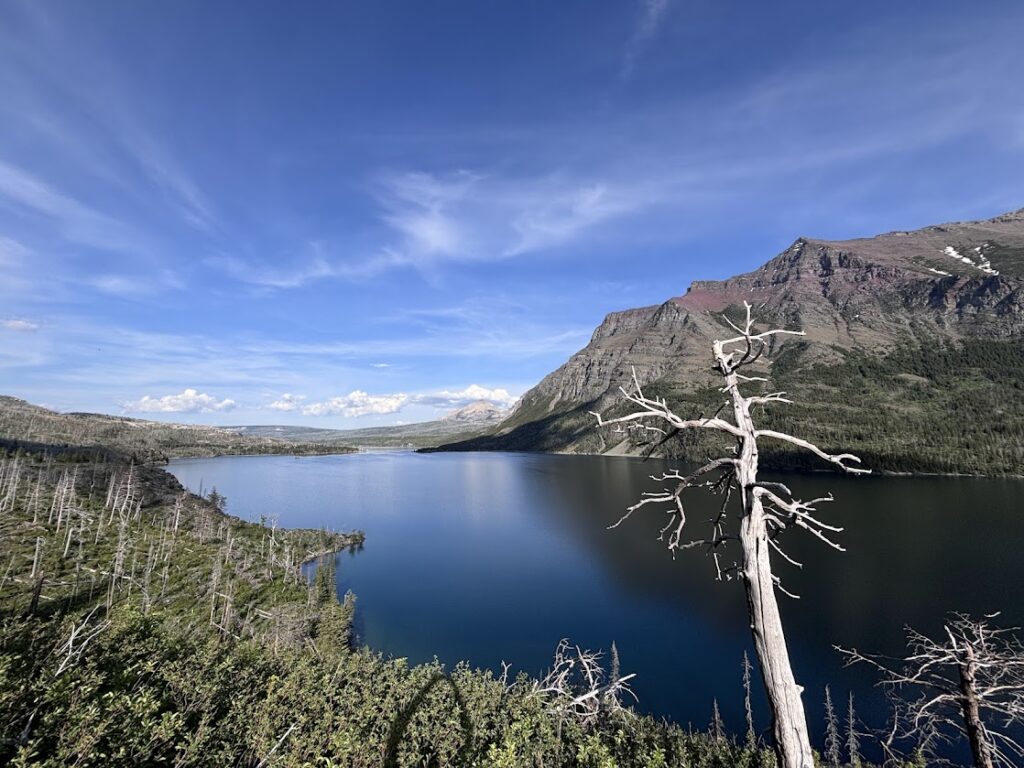
We stopped briefly at Rising Sun, a viewpoint that offered an incredible panorama of St. Mary Lake, framed by the last golden rays of the evening sun.
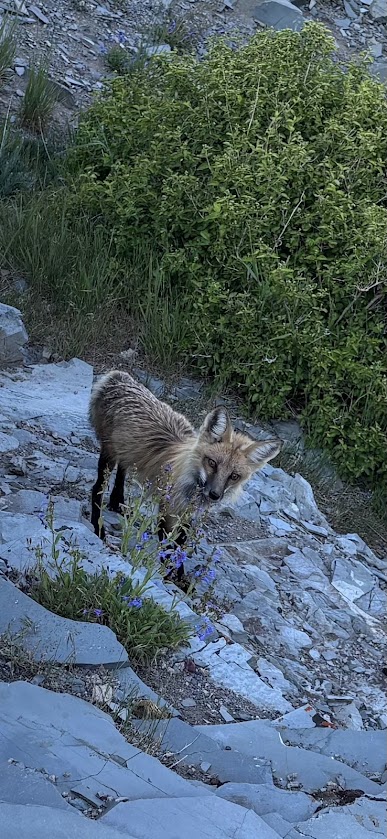
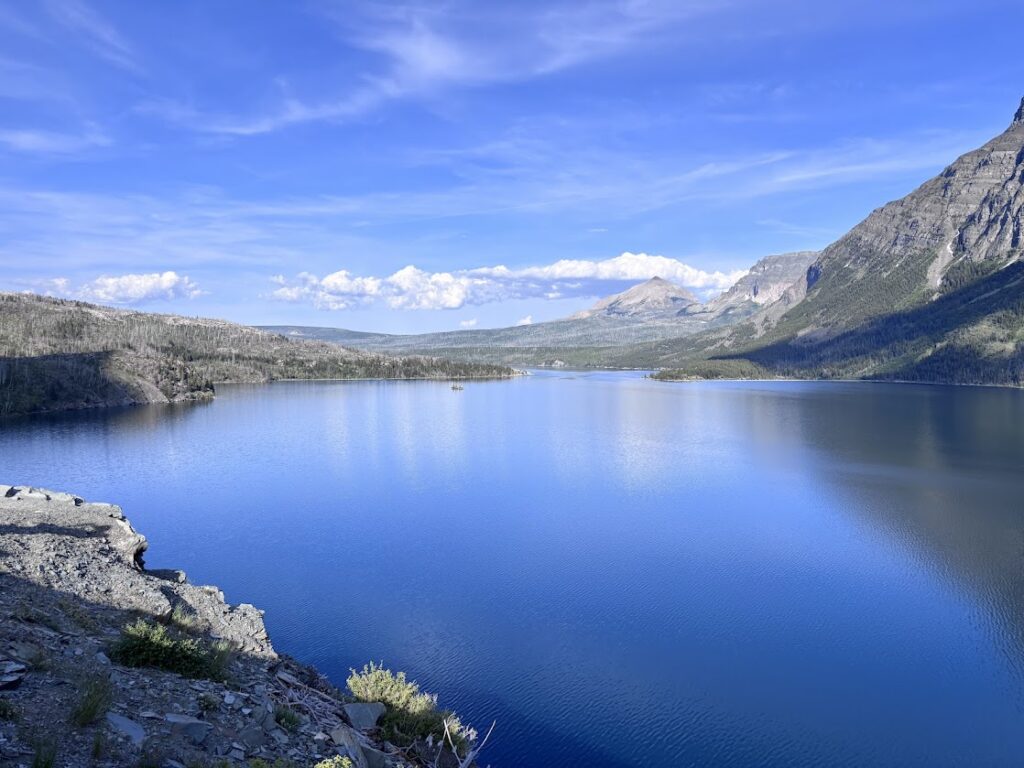
Just as we thought the day was winding down, we spotted a fox darting through the grass near the road. It paused long enough for us to snap a photo — a special wildlife encounter to end a day full of natural wonders.
As we exited the park, we stopped at Two Sisters Café near Babb for dinner.
The quirky little place served up hearty burgers and fries, which were just what we needed after a long day of hiking and driving.
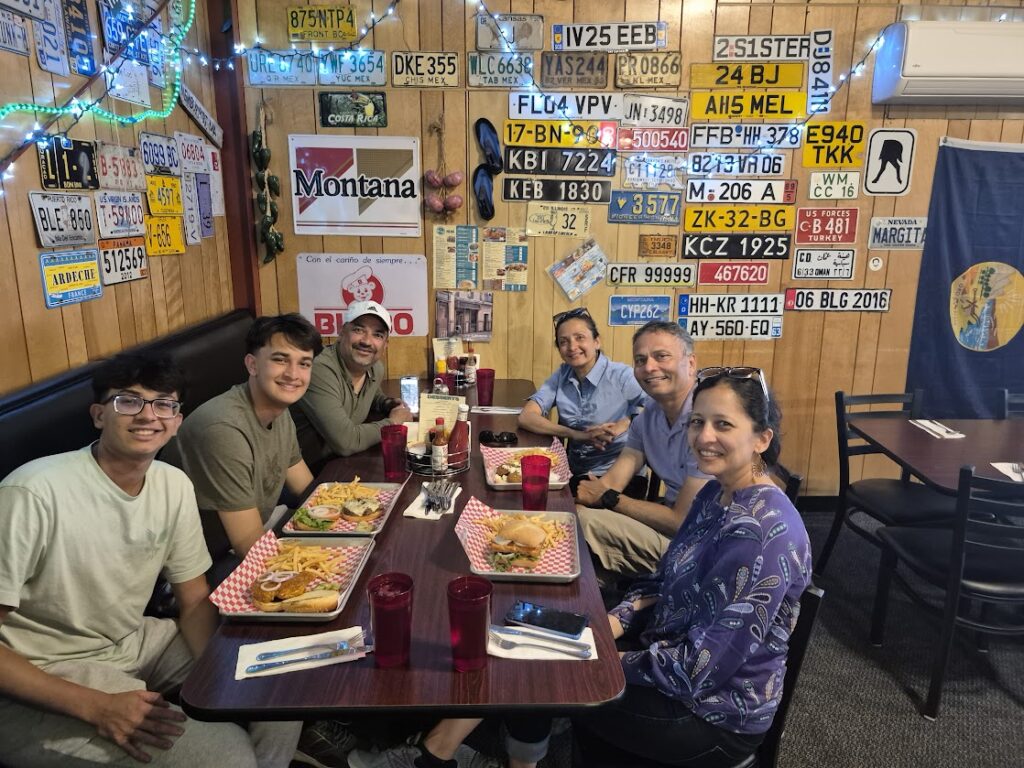
We crossed back into Canada with another easy immigration check and reached Cardston around 8:30 pm, tired but completely exhilarated. It was a magical day filled with jaw-dropping scenery, a bit of snow trekking, waterfalls, wildlife, and unforgettable mountain views.
Day 3: Tuesday, June 17 – Waterton Lakes National Park & Many Glacier (Glacier National Park)
We left our Airbnb in Cardston around 8:30 am and made our way back to Waterton Lakes National Park, this time focusing on its western reaches.
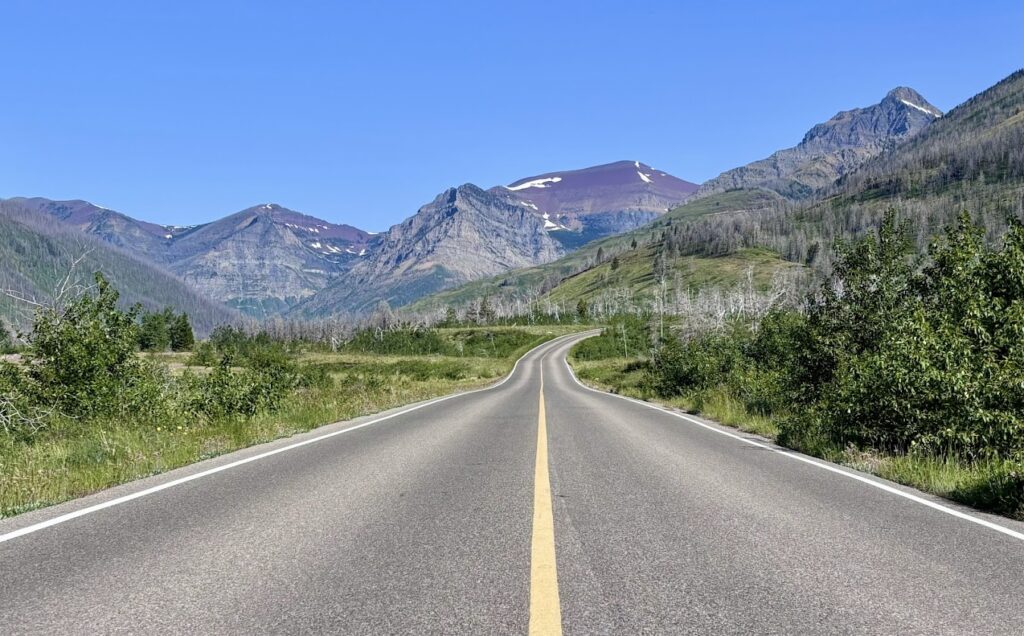
Our first destination was Red Rock Canyon—a striking natural feature where erosion has exposed layers of vivid red and green argillite rock, shaped over centuries by flowing water. The short scenic drive to the canyon, called the Red Rock Parkway, is itself a marvel with its undulating hills and mountain vistas.
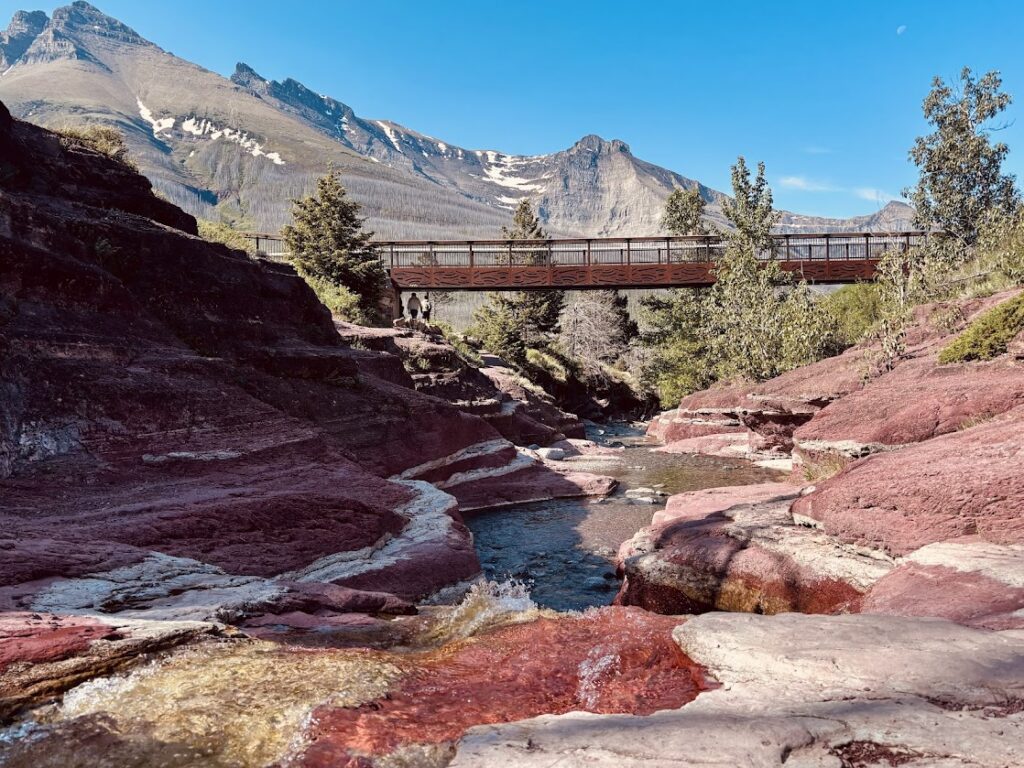
We explored the loop around Red Rock Canyon and ventured down into the canyon floor. The contrast between the lush greenery and the red rock was dramatic.
From there, we embarked on a short 1.3-mile roundtrip hike to Blakiston Falls.
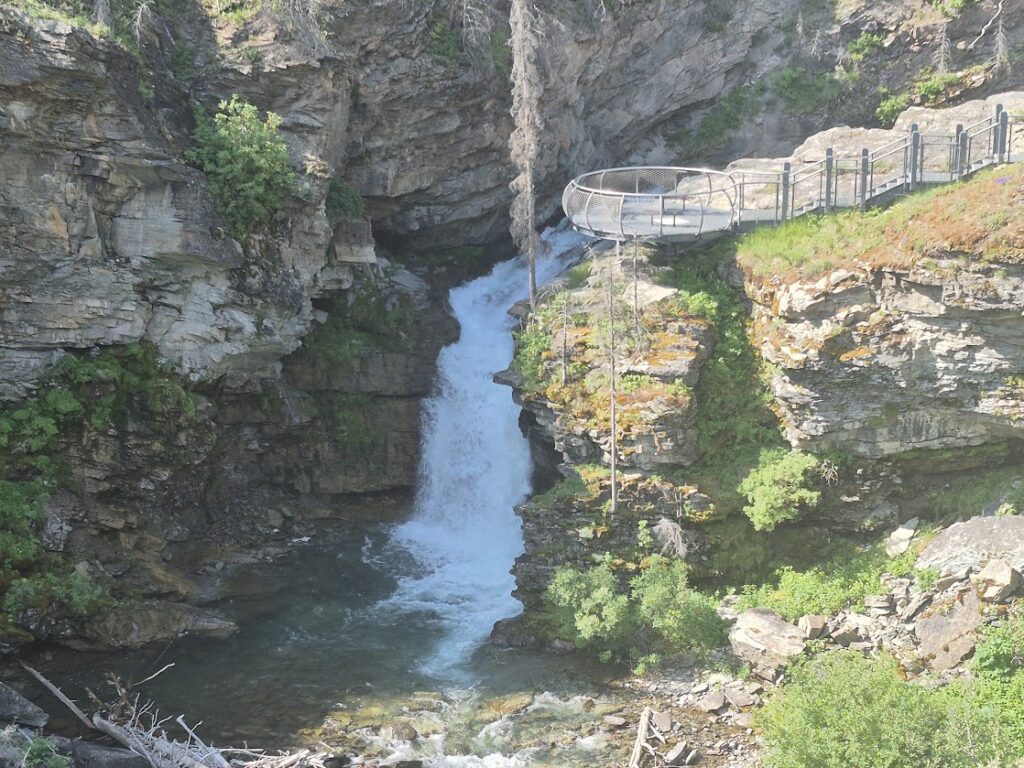
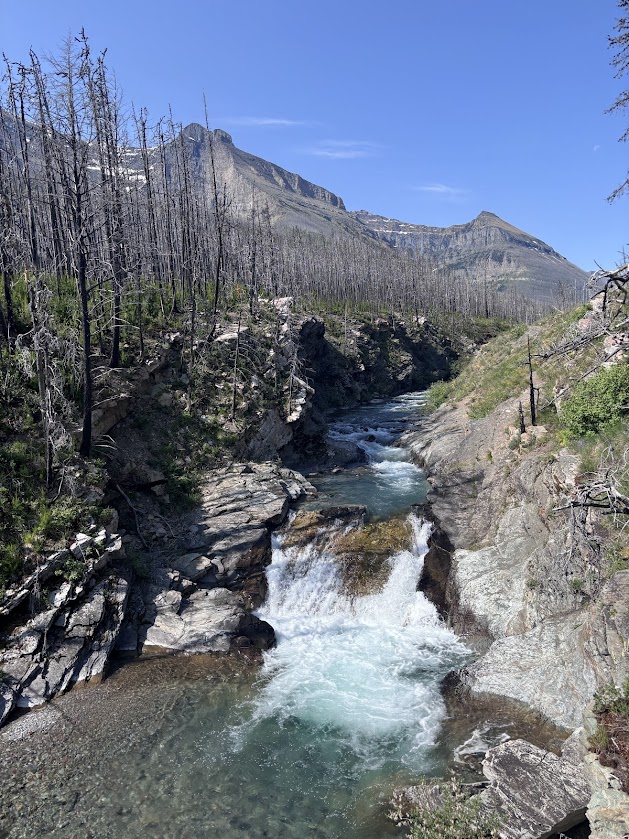
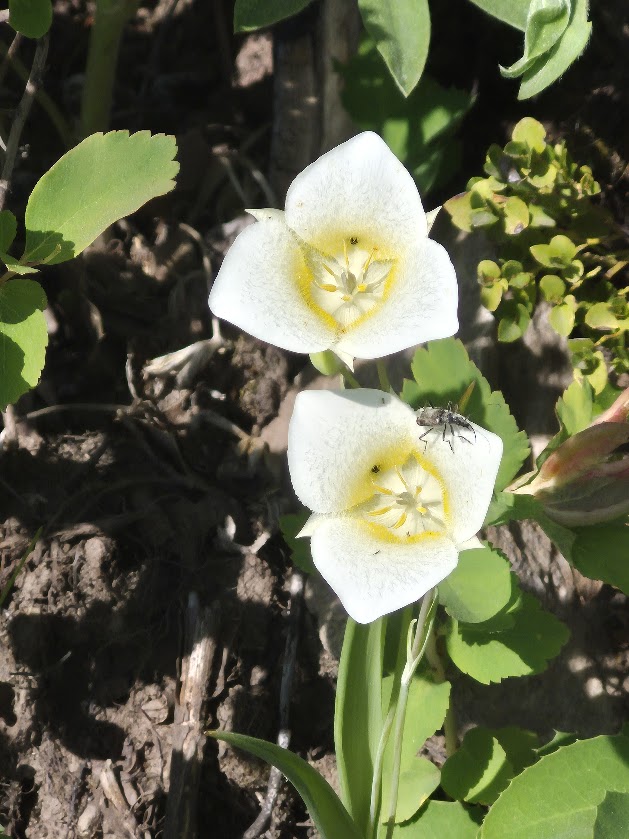
Named after Thomas Blakiston, a British explorer and naturalist, the falls are a picturesque cascade surrounded by dense forest. The trail to the falls winds through vibrant alpine meadows, bursting with a stunning variety of wildflowers—lupines, beargrass, Indian paintbrush, and glacier lilies blanketed the landscape.
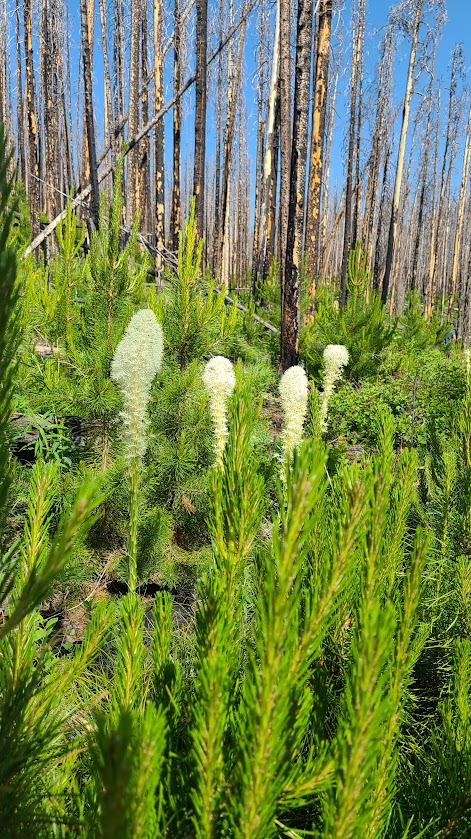
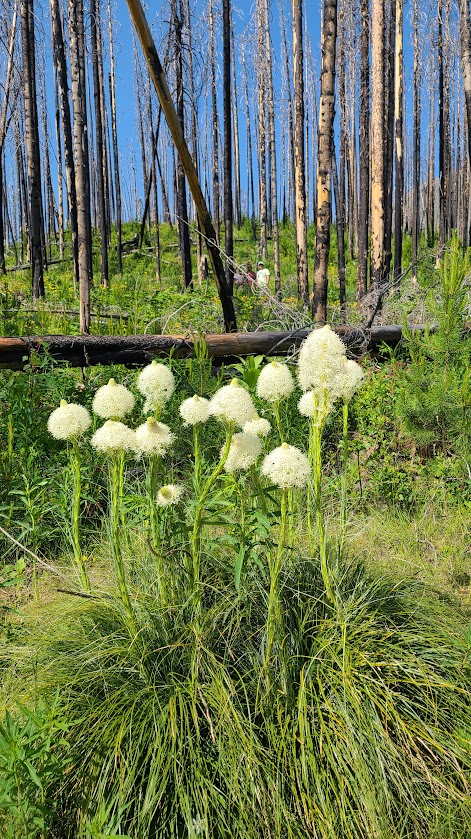
After returning from the hike, we proceeded to the Bear’s Hump Trailhead for a more strenuous challenge. The 2.4-mile round-trip hike includes a 700-foot elevation gain and offers one of the best panoramic views in the entire park.
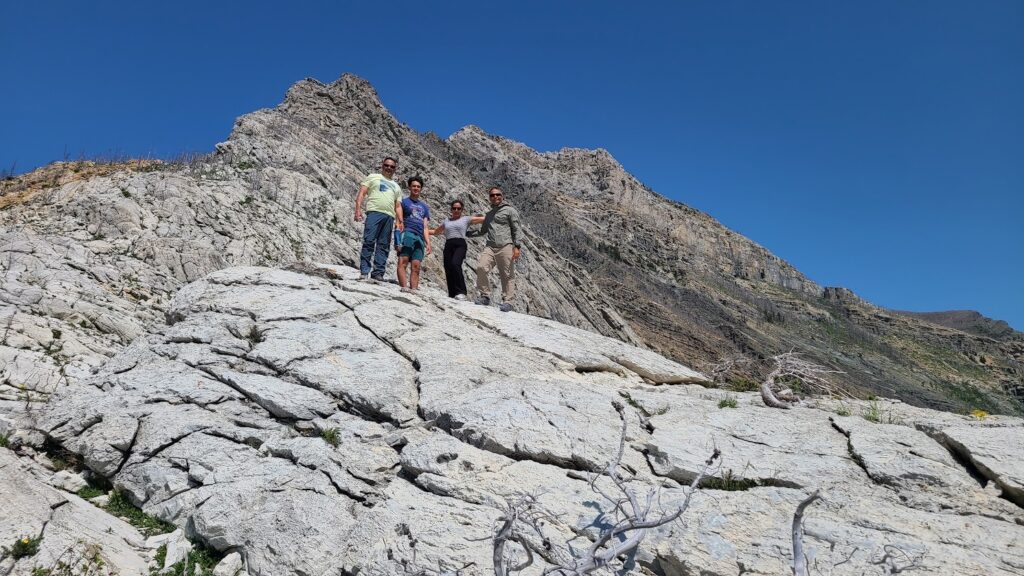
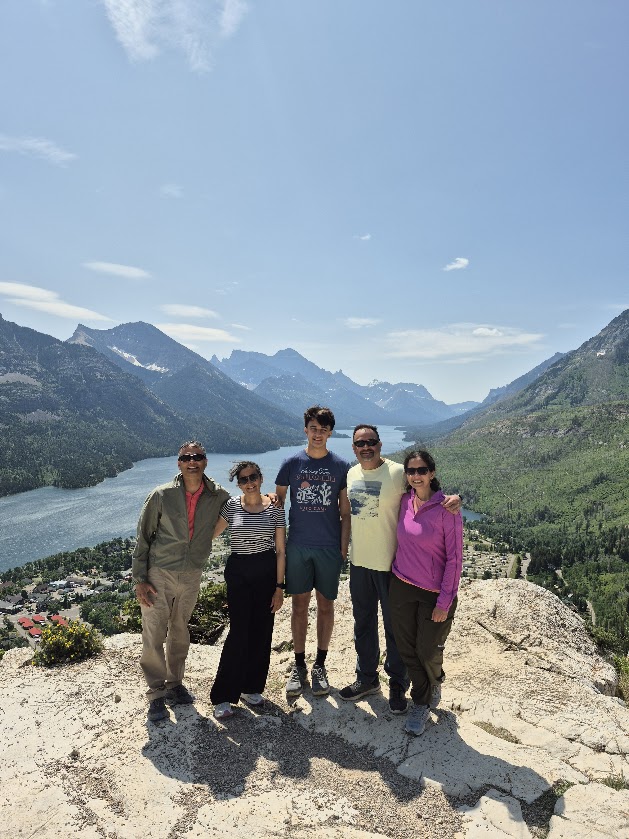
In about 30 minutes of steep climbing, we reached the summit of Bear’s Hump, a large rocky outcrop with a commanding view over the town of Waterton and the chain of Waterton Lakes—Lower, Middle, and Upper—all framed by towering mountains and deep valleys.
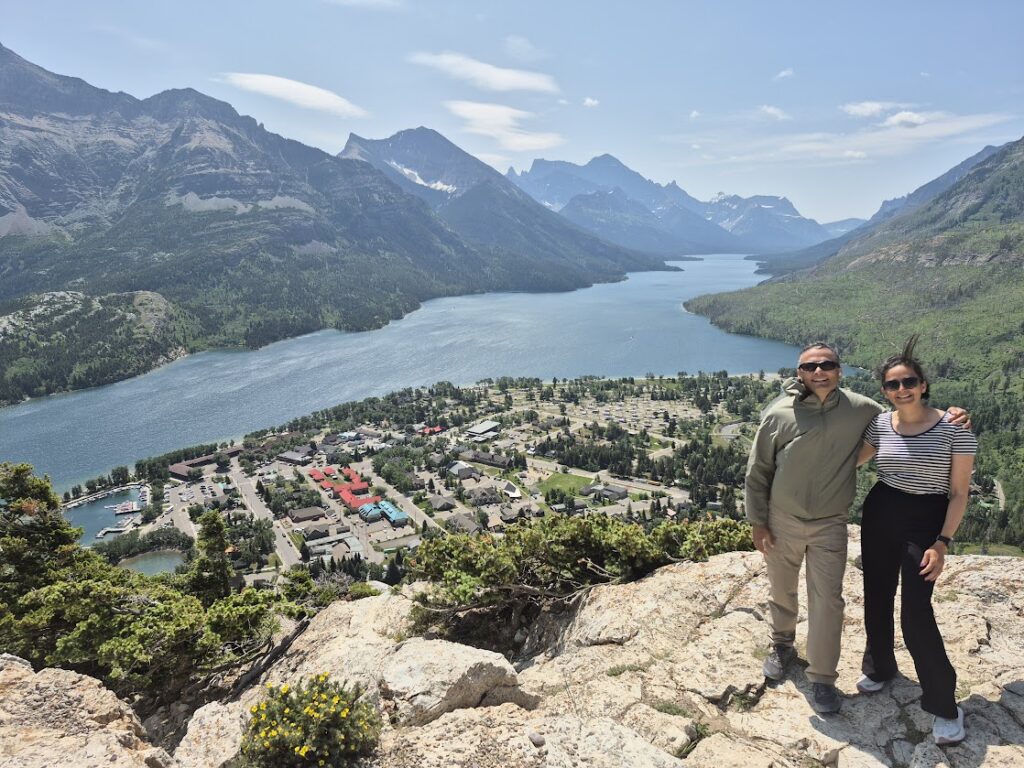
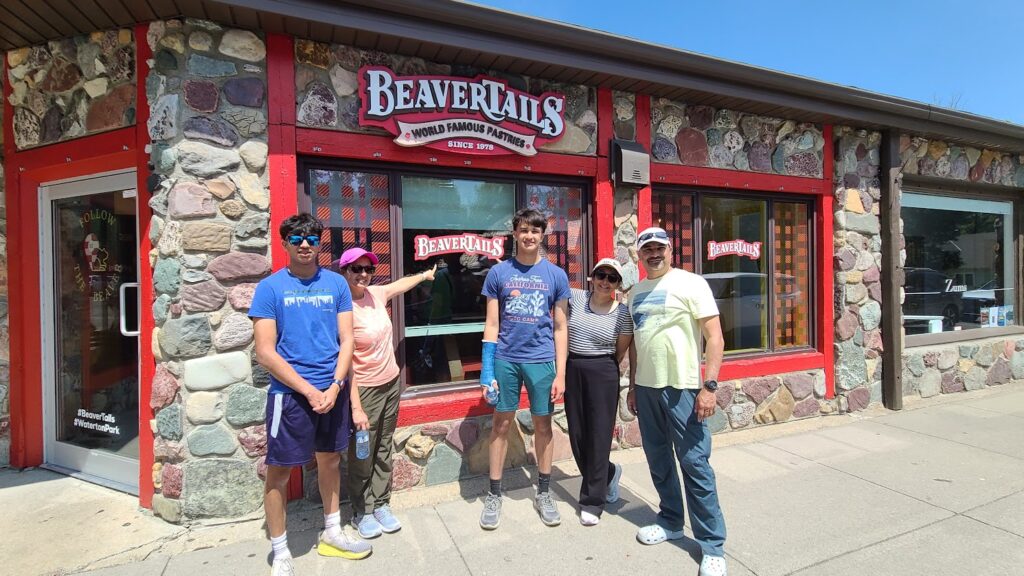
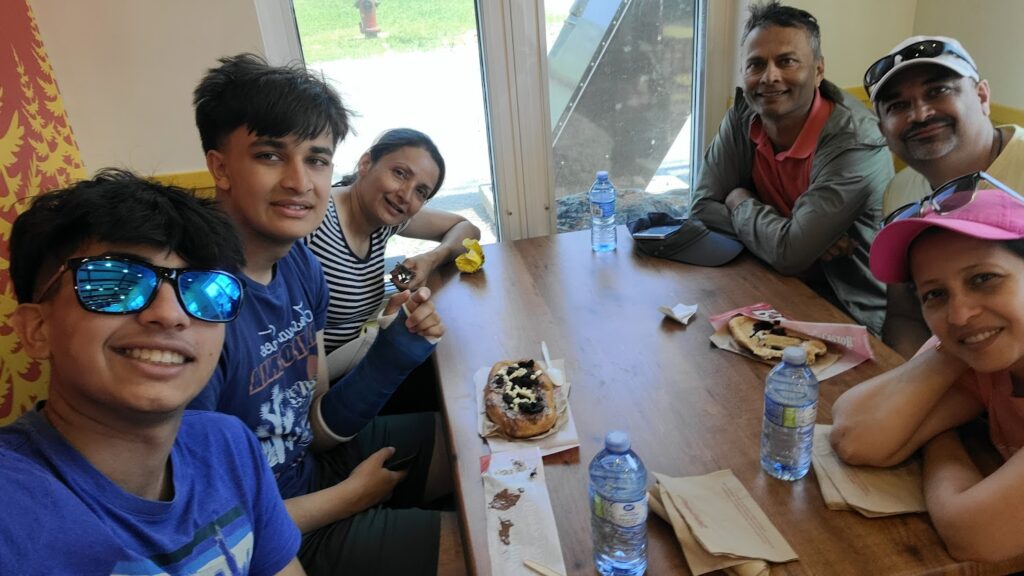
We descended back into Waterton Village, where we enjoyed our packed lunch at the visitor center and treated ourselves to a local favorite dessert—Beavertails, a fried dough pastry topped with various sweet spreads. Delicious and well-earned!
With the afternoon still young, we spontaneously decided to revisit Glacier National Park, this time entering through the Chief Mountain Border Station. Open only seasonally, this border crossing offers access to the Many Glacier area, a lesser-visited but spectacularly beautiful region of the park.
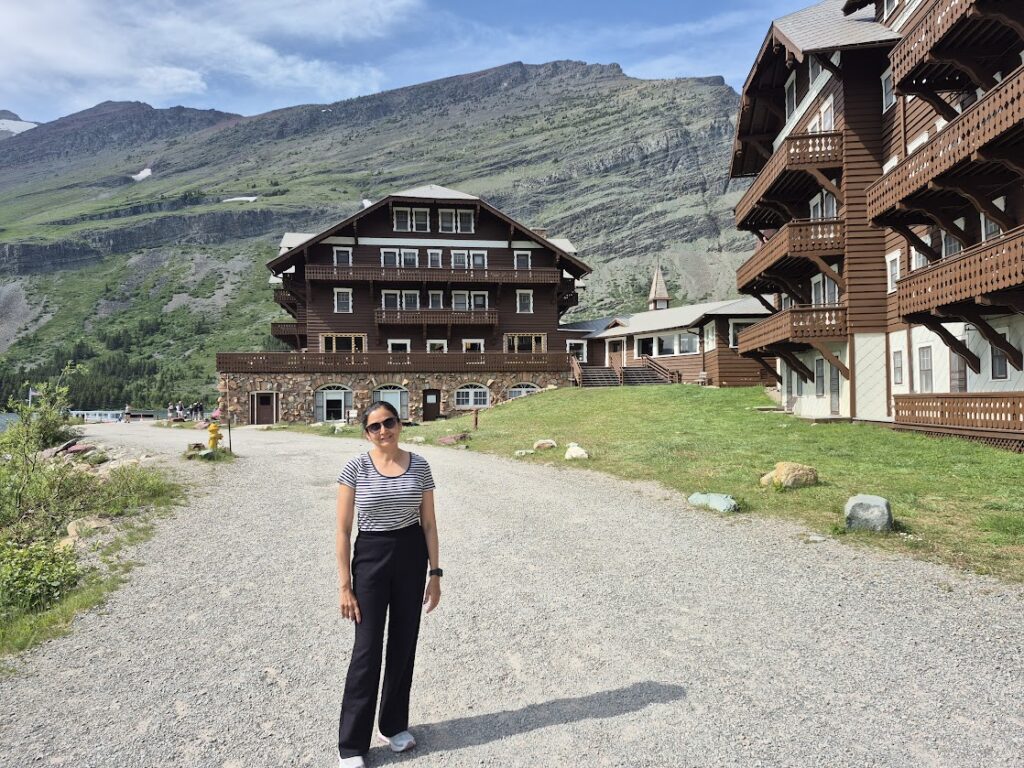
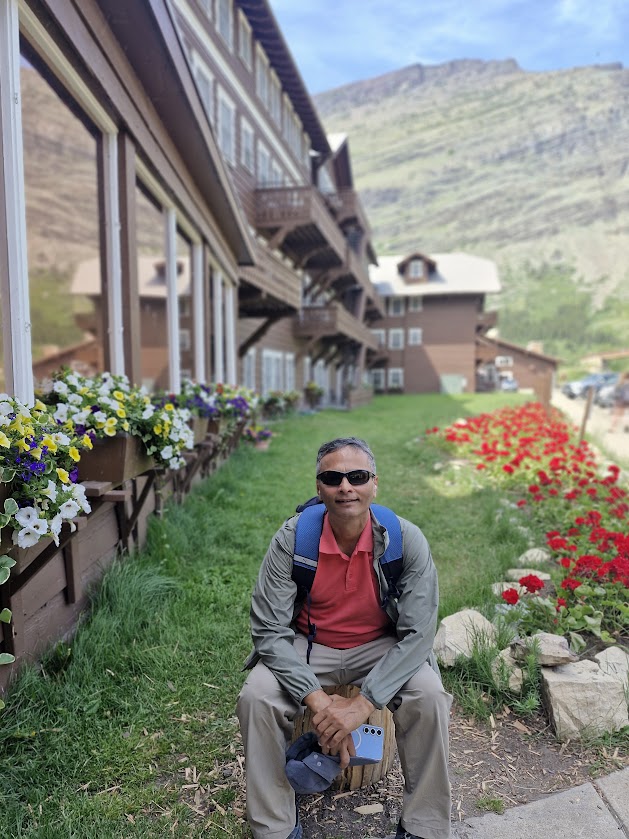
Our destination was the Many Glacier Lodge, an iconic Swiss-style lodge built in 1915 on the shores of Swiftcurrent Lake.
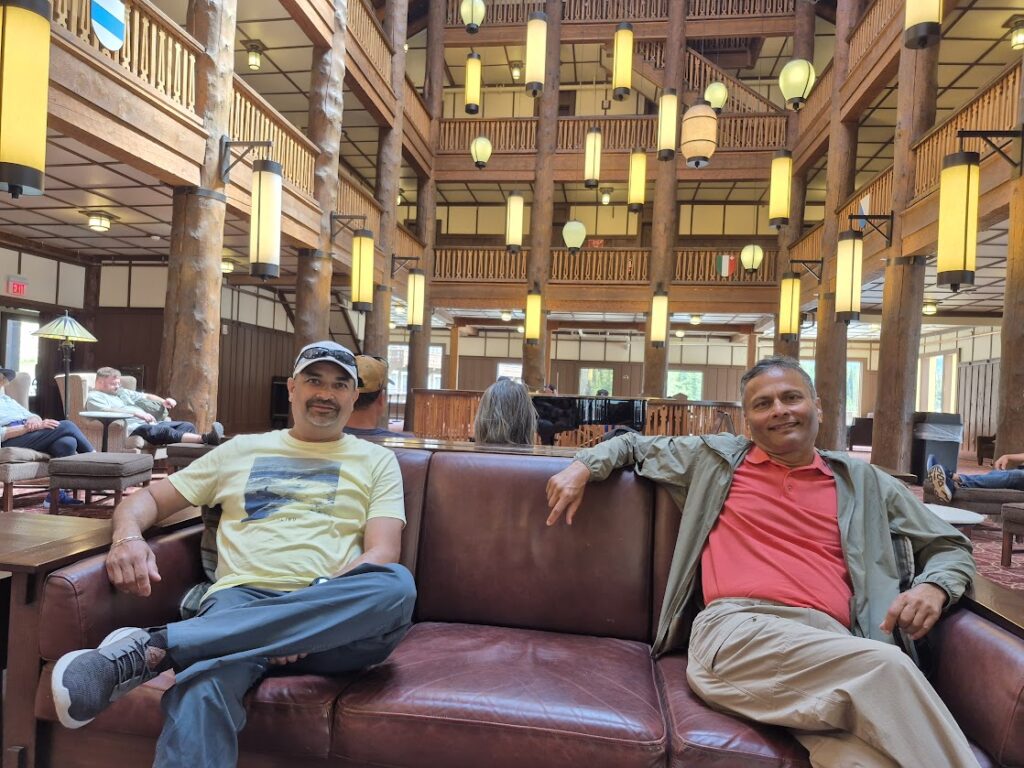
Many Glacier Lodge is one of the most iconic and picturesque lodges in Glacier National Park, located on the shores of Swiftcurrent Lake and surrounded by towering peaks. Built in 1915 by the Great Northern Railway, the lodge was designed to resemble a Swiss alpine chalet, reflecting the “American Alps” theme that once promoted the park. With its rustic wooden interiors, panoramic lake views, and proximity to popular hiking trails, Many Glacier Lodge offers both comfort and a front-row seat to the wild beauty of the park. It’s a perfect blend of history, charm, and mountain serenity.
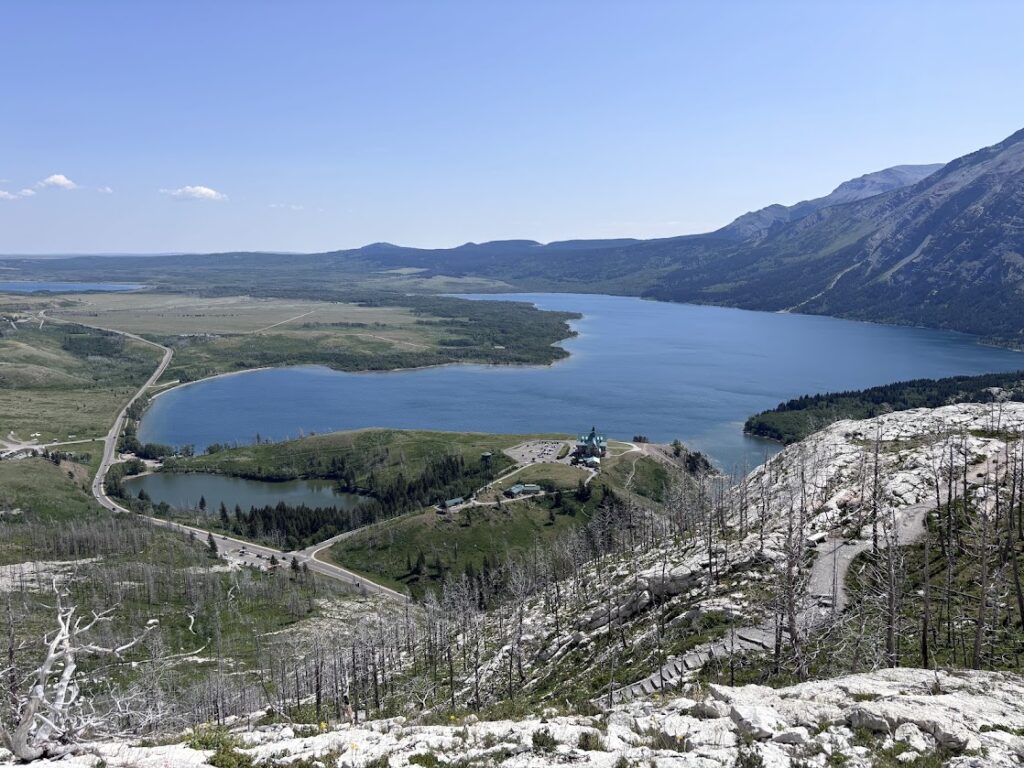
Overlooking a dramatic backdrop of glaciers and peaks, the hotel offers some of the most photogenic views in the Rockies.
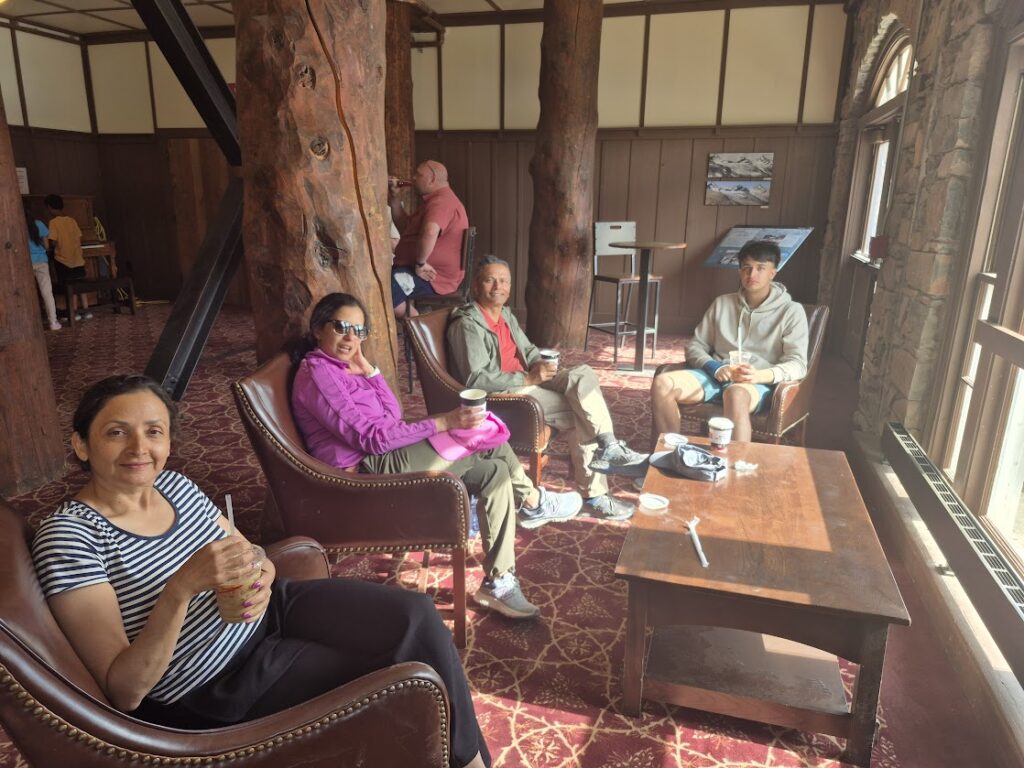
After admiring the lodge’s rustic wooden interiors and enjoying a quick cup of tea and coffee, we set off on a gentle 2.4-mile (4 km) roundtrip hike that circled Swiftcurrent Lake and led us to Lake Josephine.
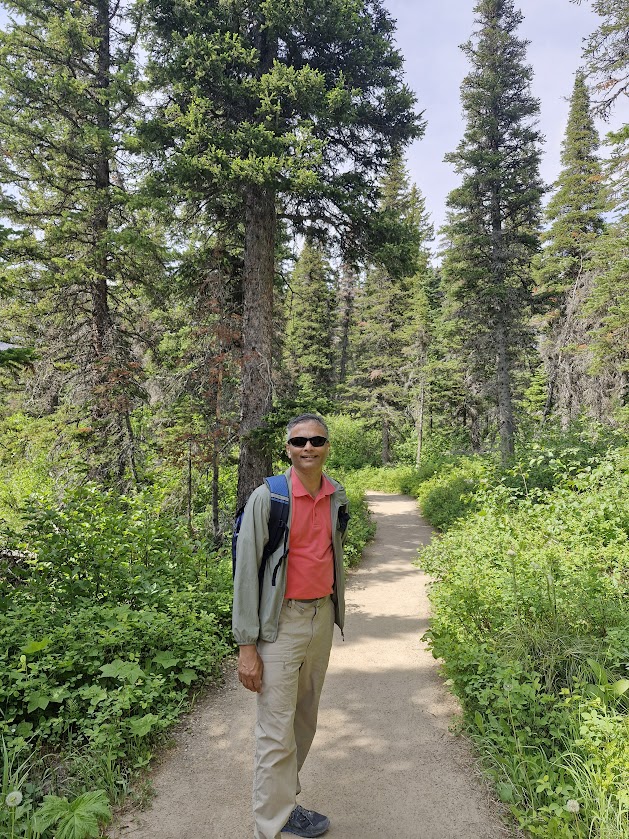
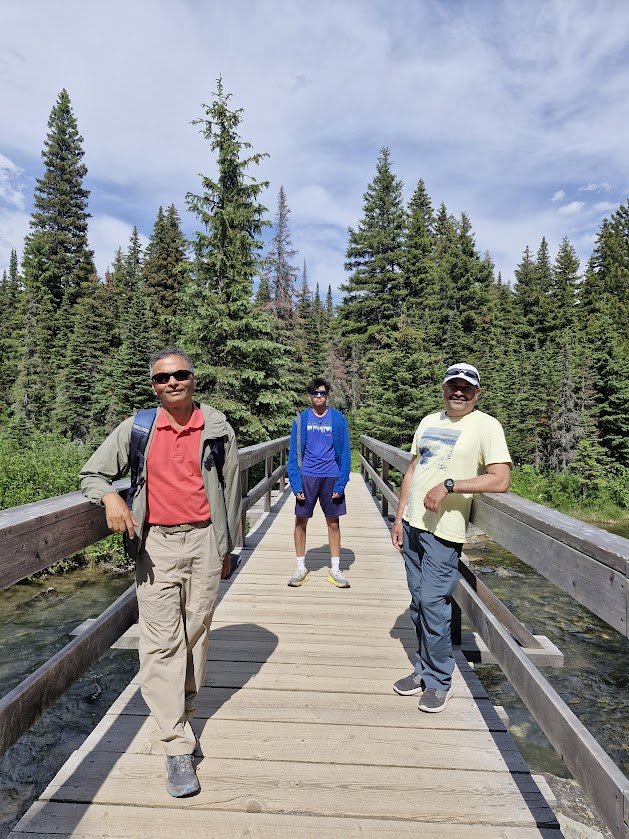
The views along the trail were magical—crystal-clear waters reflecting jagged peaks, birds chirping overhead, and the sense of being completely surrounded by wilderness.
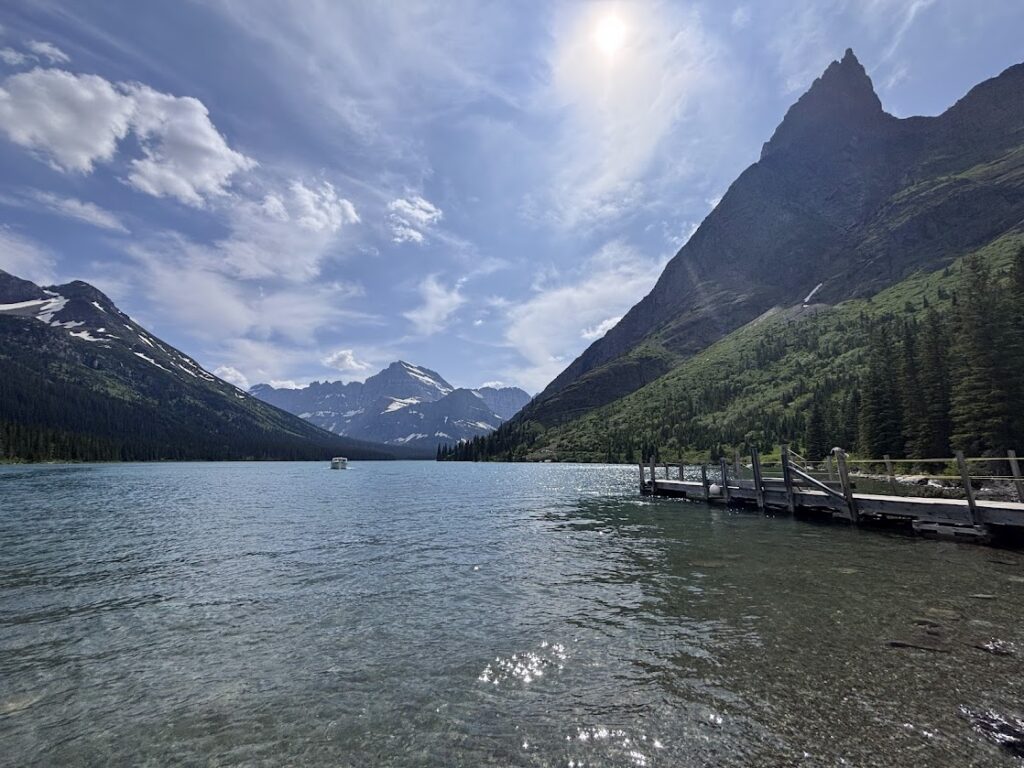
Compared to the views along the Going-to-the-Sun Road, the Many Glacier region offers a quieter, more secluded experience. Here, the glaciers feel closer, more raw, and the surrounding peaks seem to rise more steeply from the valley floor.
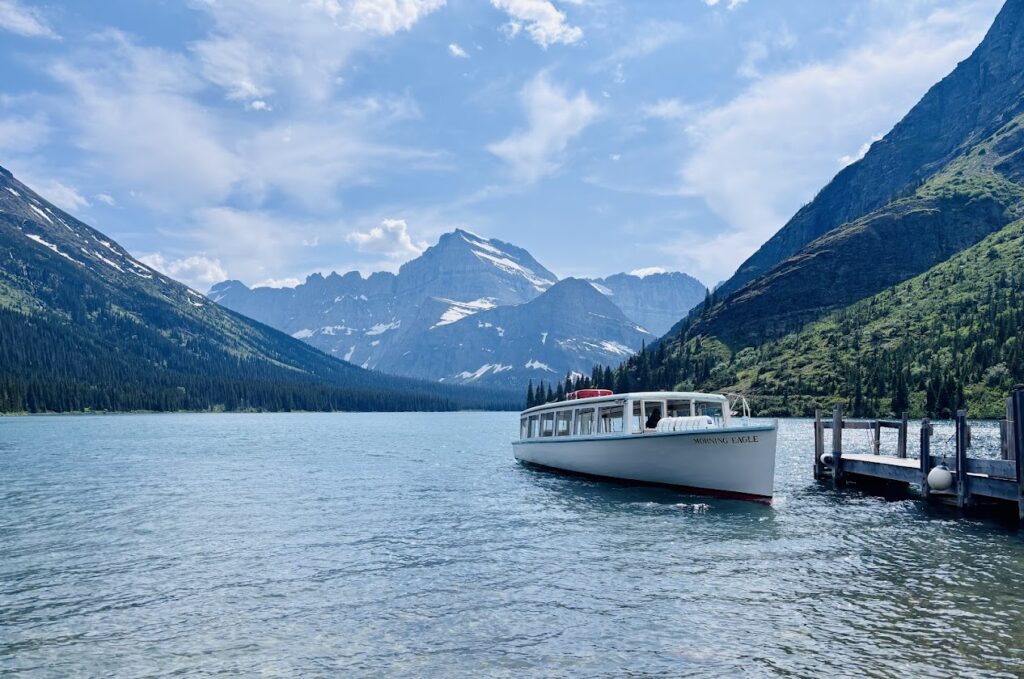
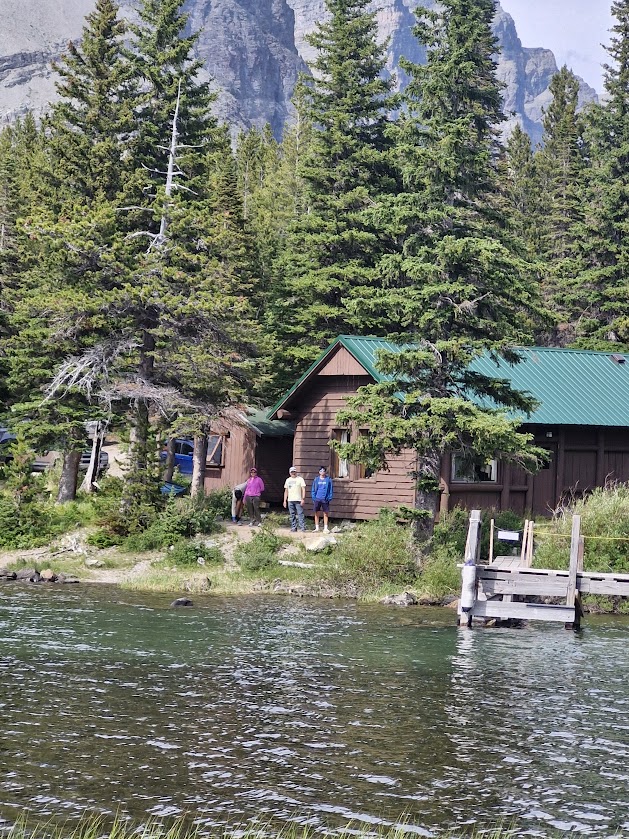
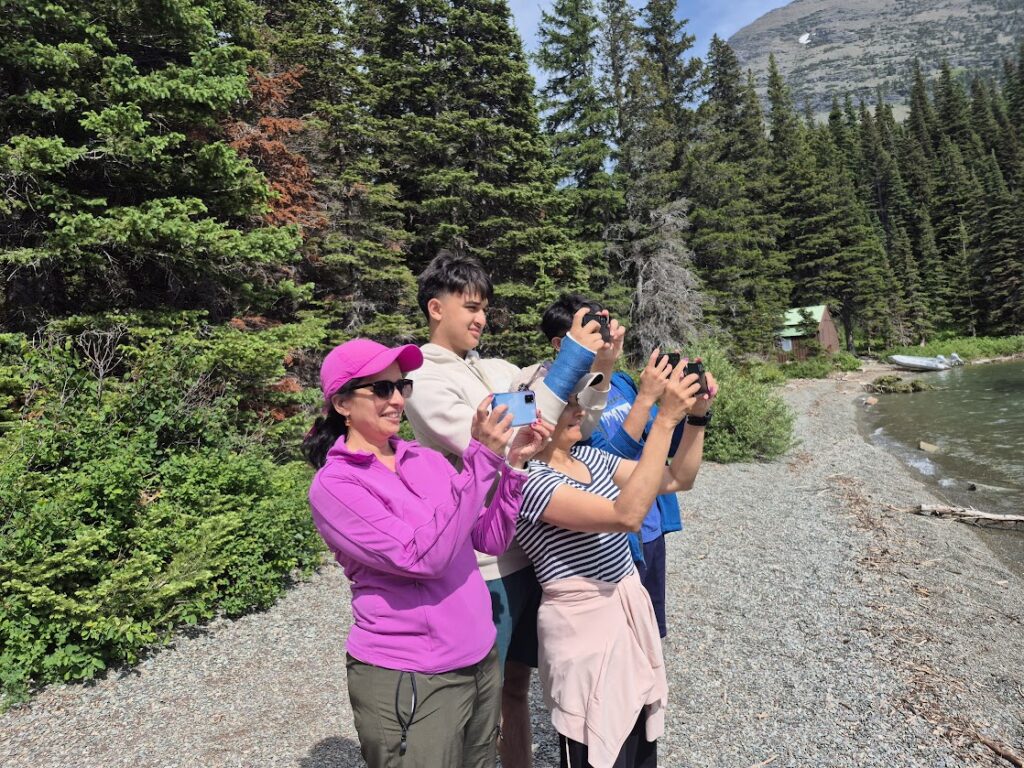
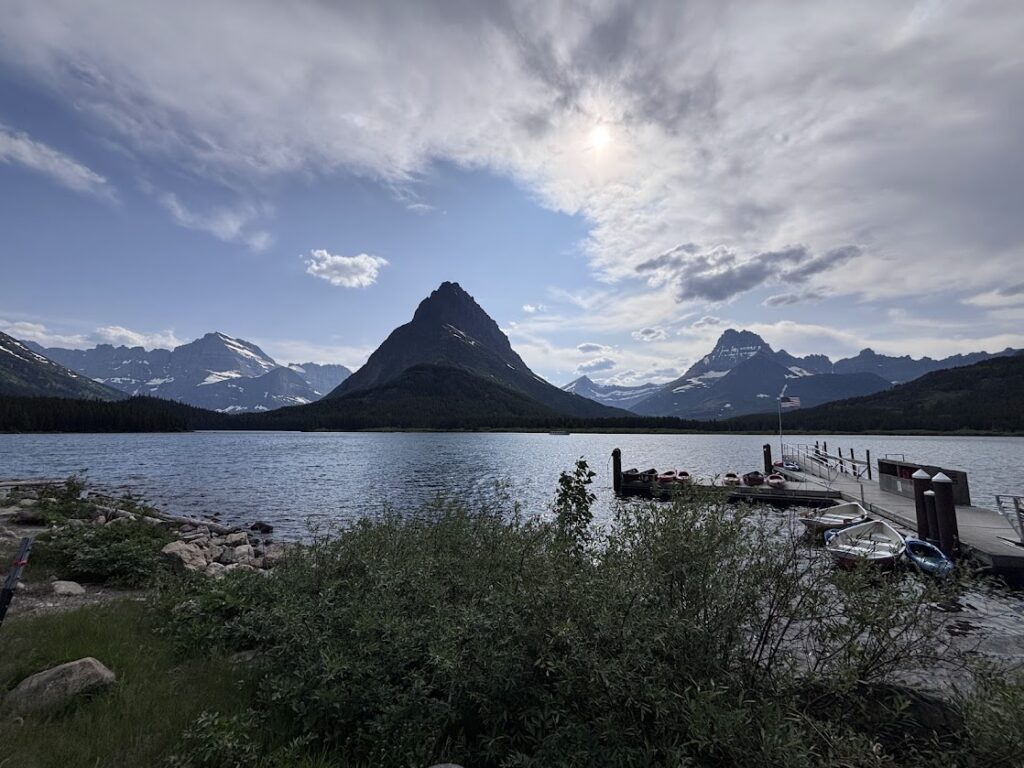
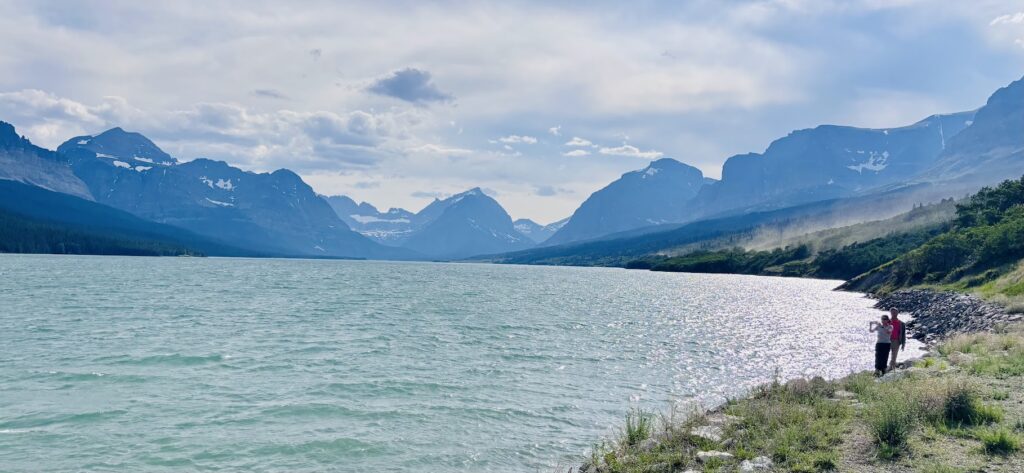
As the sun began to descend, we stopped at Lake Sherburne to capture the stunning reflections in the calm evening light. The sky had softened into a golden hue, and the serenity of the scene made it one of our favorite photo stops.
We crossed back into Canada around 6:15 pm and reached Cardston by 7 pm. Dinner was at Guero Tacos, a surprisingly excellent Mexican joint in this small Alberta town. The tacos and burrito bowls were fresh, flavorful, and satisfying—a great way to end a full day of hiking, border crossings, and alpine magic.
Day 4: Wednesday, June 18 – Cardston, Okotoks, Calgary, and Banff
After three days of early starts and high-energy exploration, we decided to begin Day 4 at a more relaxed pace. Our itinerary for the day primarily involved transitioning from Cardston back to Calgary, with a few meaningful and scenic stops along the way. The morning in Cardston was quiet and peaceful, a small-town atmosphere that had grown on us over the last few days.
Before leaving, we visited one of Cardston’s most unique attractions—the Remington Carriage Museum.
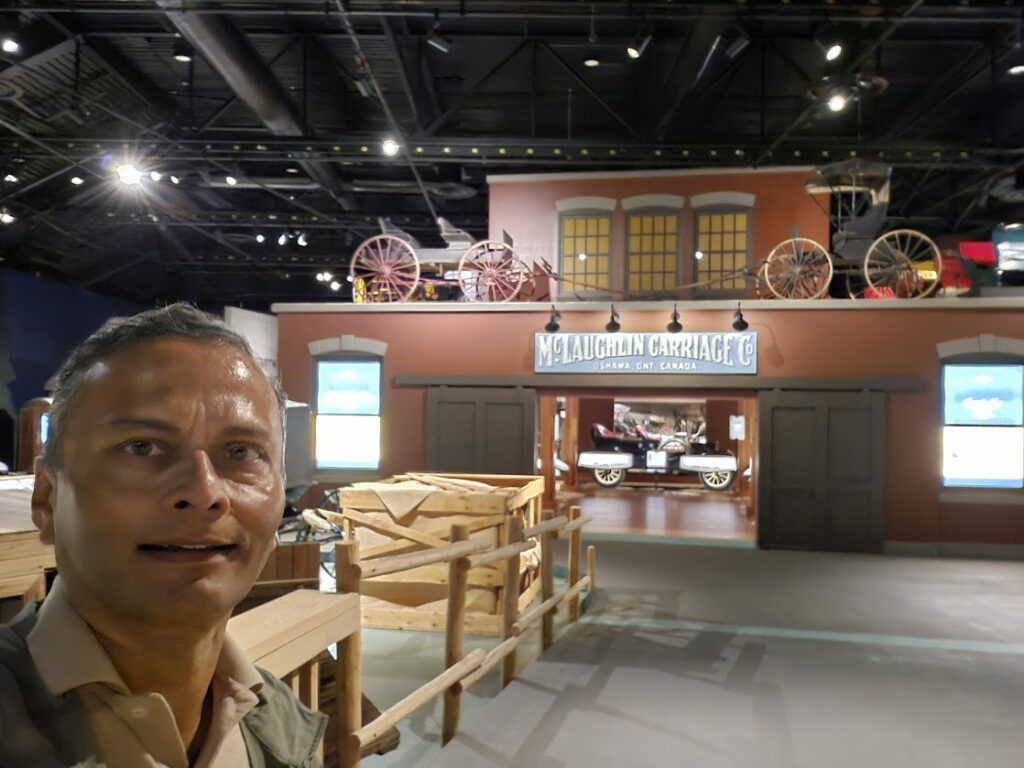
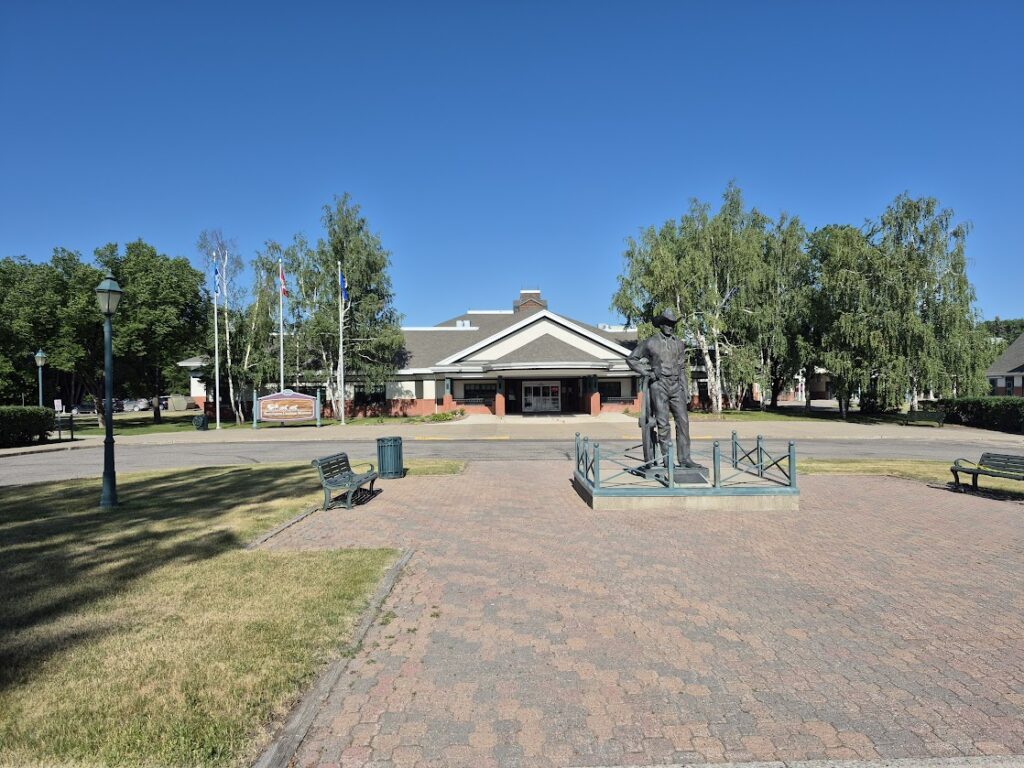
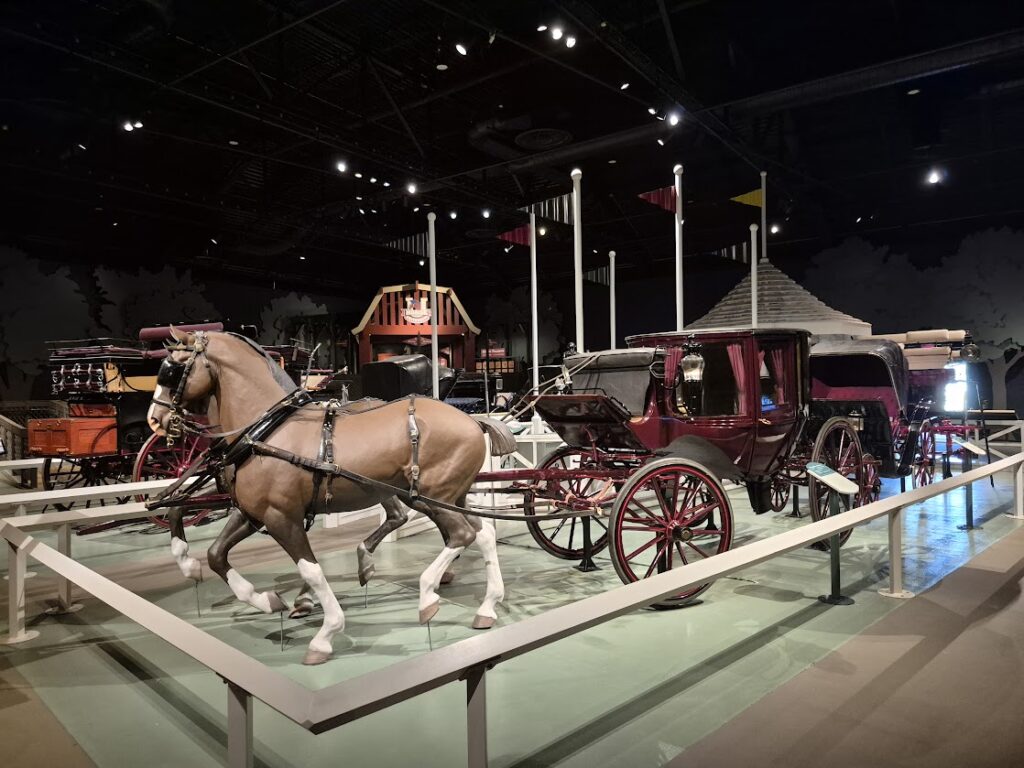
Located right in the town, this museum houses the largest collection of horse-drawn vehicles in North America. The museum exists thanks to the generosity of Don Remington, who donated 48 historic carriages on the condition that they remain in Cardston. The exhibits walked us through the fascinating evolution of transportation—from elegant Victorian-era buggies and sleighs to stagecoaches and delivery wagons—illustrating how crucial horse-drawn vehicles were before the age of automobiles.
What made the museum especially captivating were the real-life stories and characters associated with the vehicles. One anecdote that stood out was about J.J. McLaughlin, a major carriage manufacturer who once dismissed the automobile as a “passing fad.” Ironically, his sons would later help found General Motors Canada, successfully embracing the motor age their father had once scoffed at. This museum turned out to be a hidden gem—much more immersive and engaging than we had anticipated.
With that enriching start, we grabbed iced coffees from Tim Hortons, Canada’s beloved coffee chain founded by NHL player Tim Horton in the 1960s.
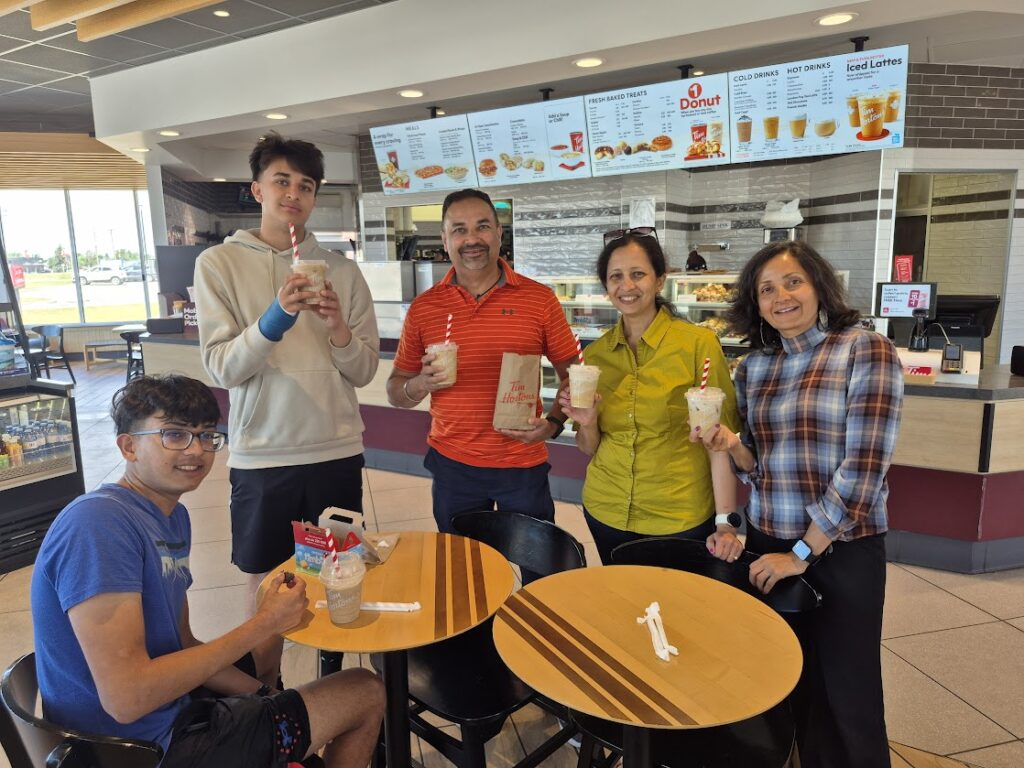
Horton, a four-time Stanley Cup winner, opened his first coffee shop in Hamilton, Ontario, in 1964, and the brand has since become a Canadian cultural icon. The refreshing drinks gave us just the right boost for the next stretch of the drive.
Founded in 1964 by NHL hockey legend Tim Horton and businessman Ron Joyce, the brand quickly became known for its affordable coffee, signature Timbits (bite-sized doughnut holes), and warm, no-frills atmosphere. Today, “Timmies,” as locals affectionately call it, is more than just a café — it’s a daily ritual for millions of Canadians. Whether you’re grabbing a double-double (coffee with two creams and two sugars) or a breakfast sandwich on the go, Tim Hortons is a familiar comfort across cities, towns, and highway stops from coast to coast.
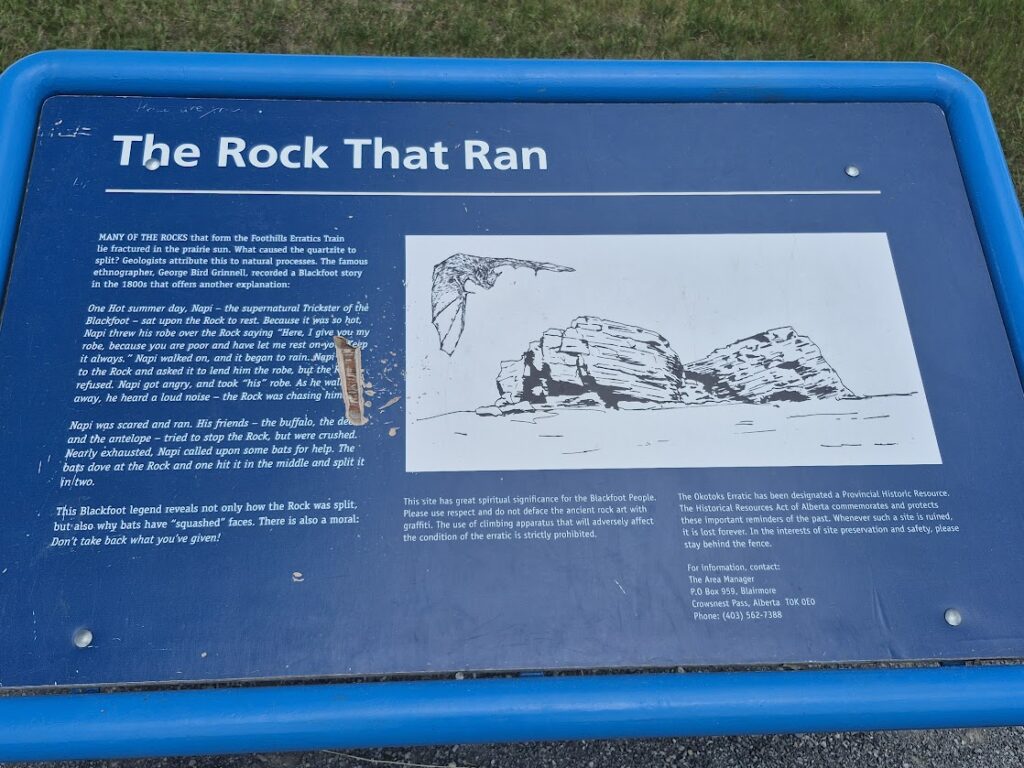
Our route northward took us through the town of Okotoks, located south of Calgary. Okotoks is known for a natural curiosity—the Okotoks Erratic, or “Big Rock.”
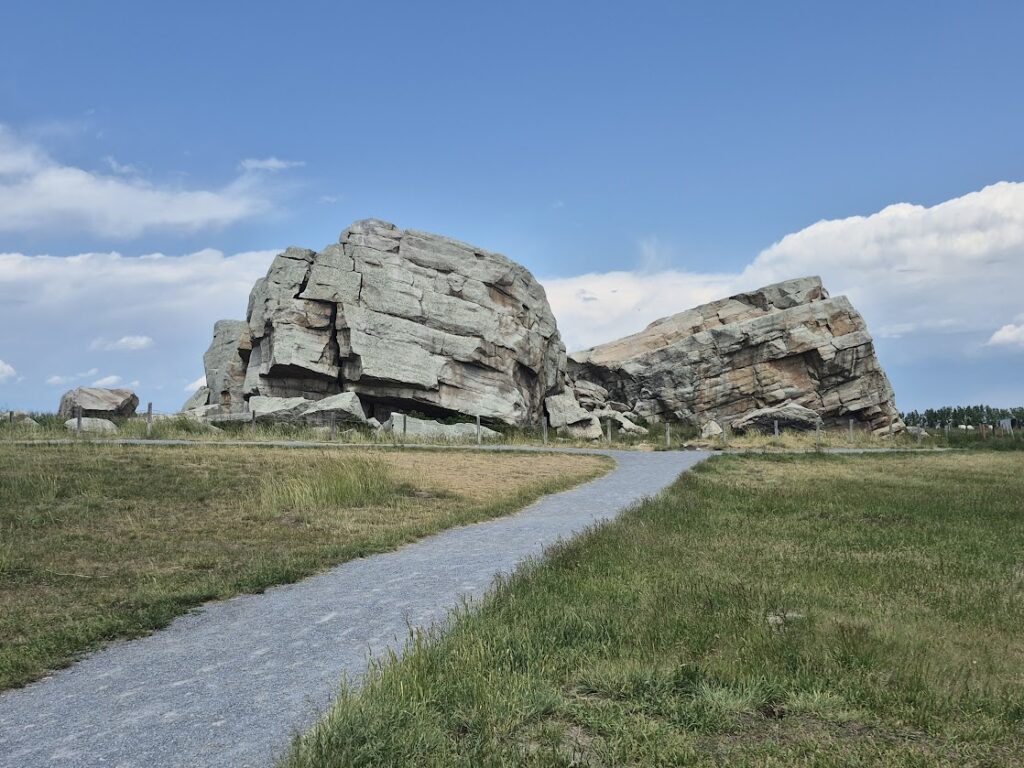
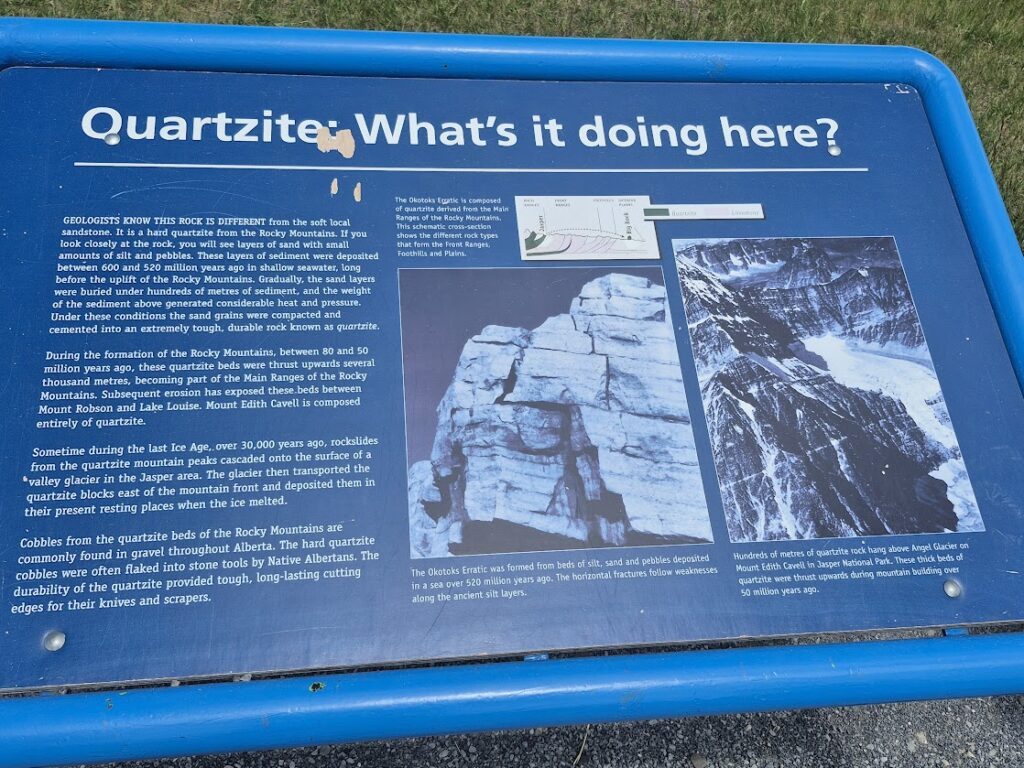
This massive quartzite boulder, weighing an estimated 16,500 tonnes, stands out dramatically in the middle of the plains. What makes it even more fascinating is its origin: geologists believe it was transported from the Jasper area by glacial ice during the last Ice Age.
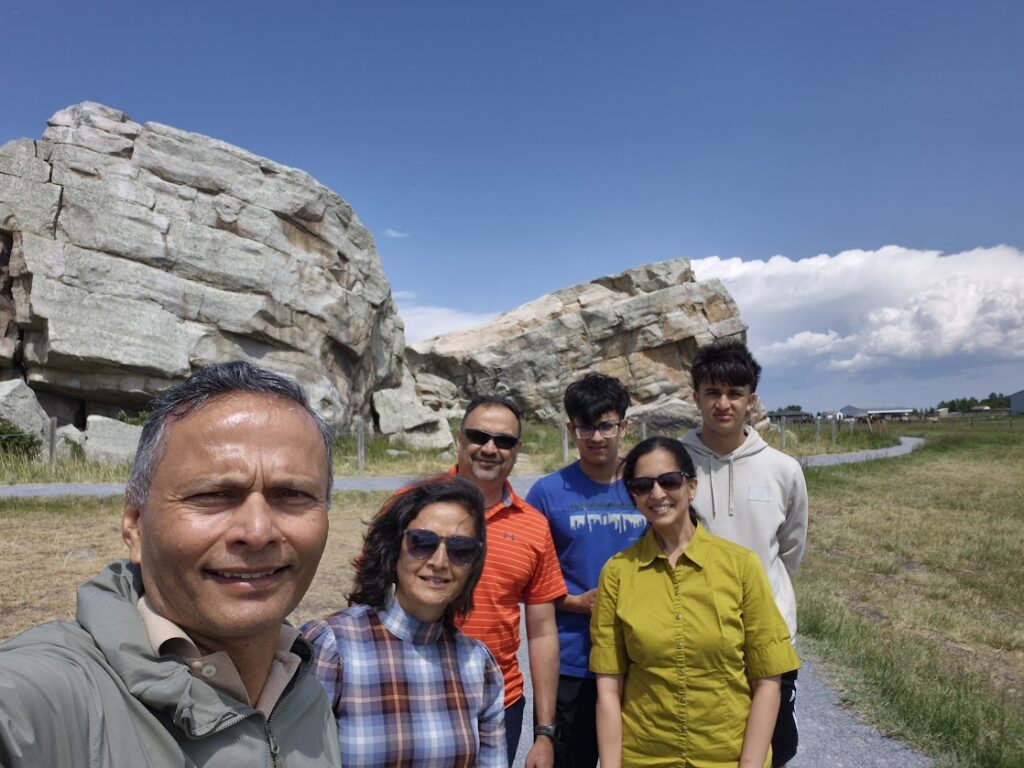
The rock’s mineral composition is strikingly different from anything found locally, confirming its journey over hundreds of kilometers. Standing before it was like witnessing a piece of Earth’s deep past dropped inexplicably into the present.
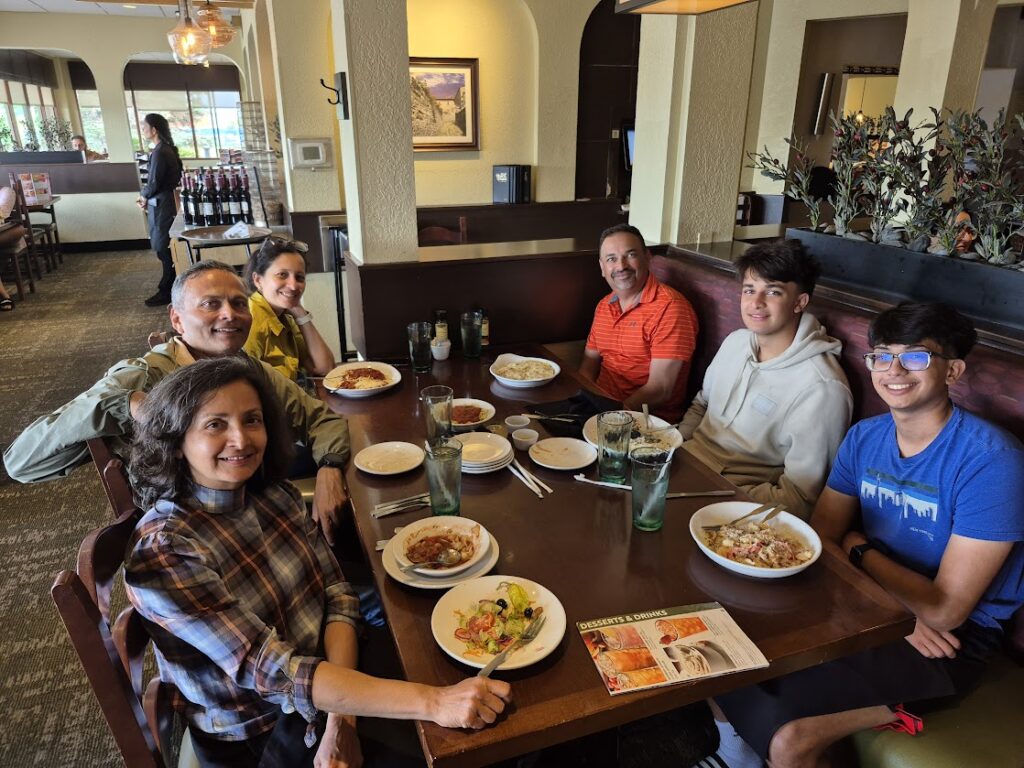
We stopped for lunch at Olive Garden, a comforting pause with familiar food. Their signature minestrone soup was especially satisfying, warm and hearty.
After lunch, we arrived in Calgary and reached the home of Vishwas and Kalpana Sail, long-time family friends from Vadodara. Though they were traveling in Australia at the time, their son Vivek welcomed us warmly.
The original plan was to relax in the evening, but in true spontaneous travel spirit, Vivek suggested an impromptu trip to Banff. With the sun not setting until nearly 10:30 pm and clear skies overhead, it was too good an opportunity to pass up. So, around 6:30 pm, we set out westward once again—this time headed for the famous Banff National Park.
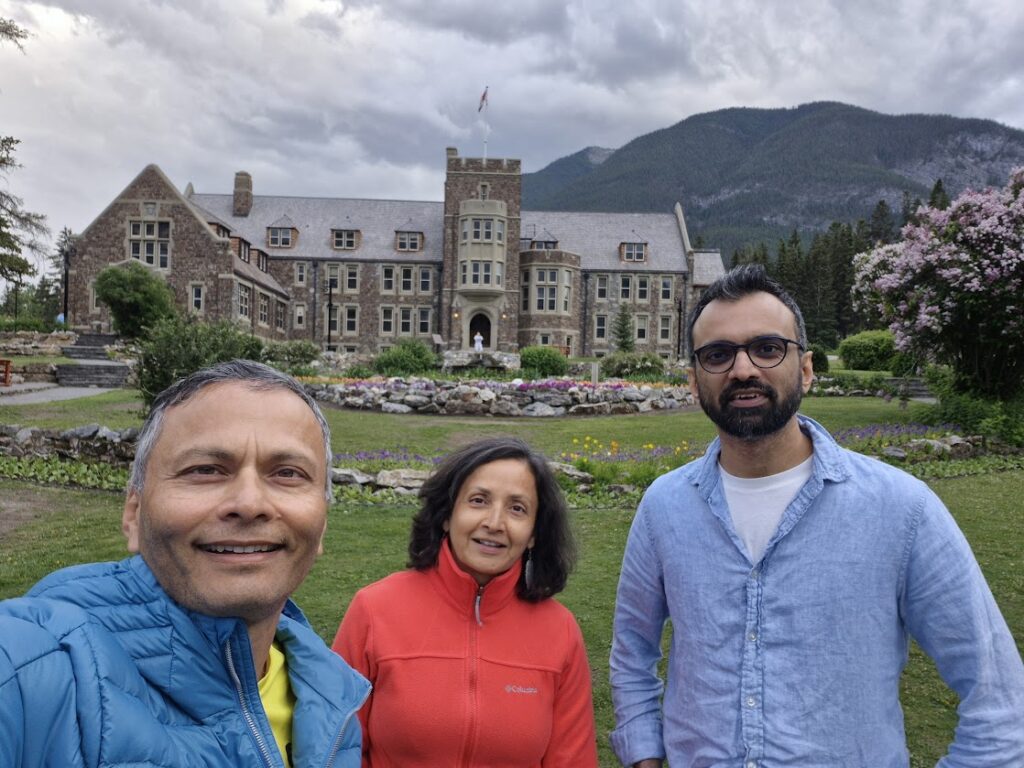
Upon arriving in the charming town of Banff, nestled in the heart of the Canadian Rockies, we were greeted by postcard-worthy views: steep mountain faces, fir-lined streets, and the smell of pine in the air.
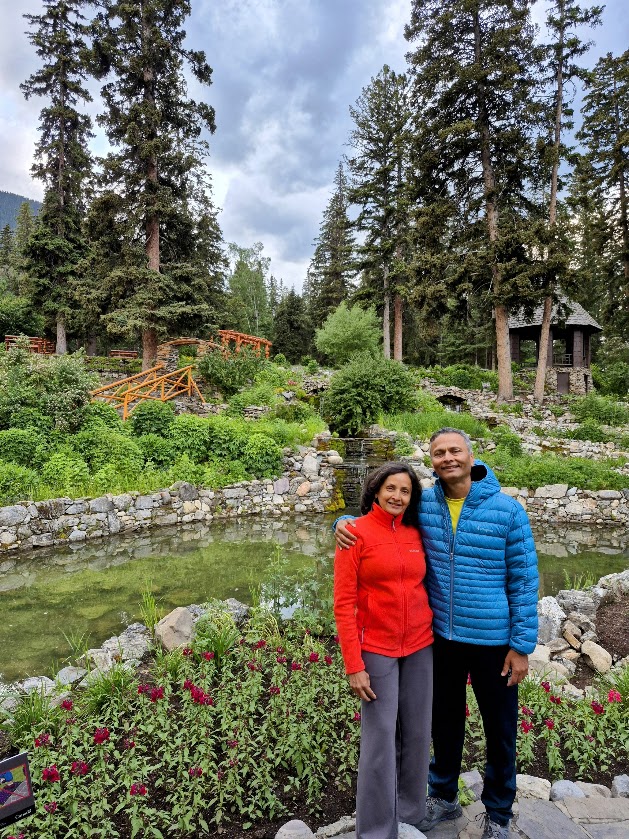
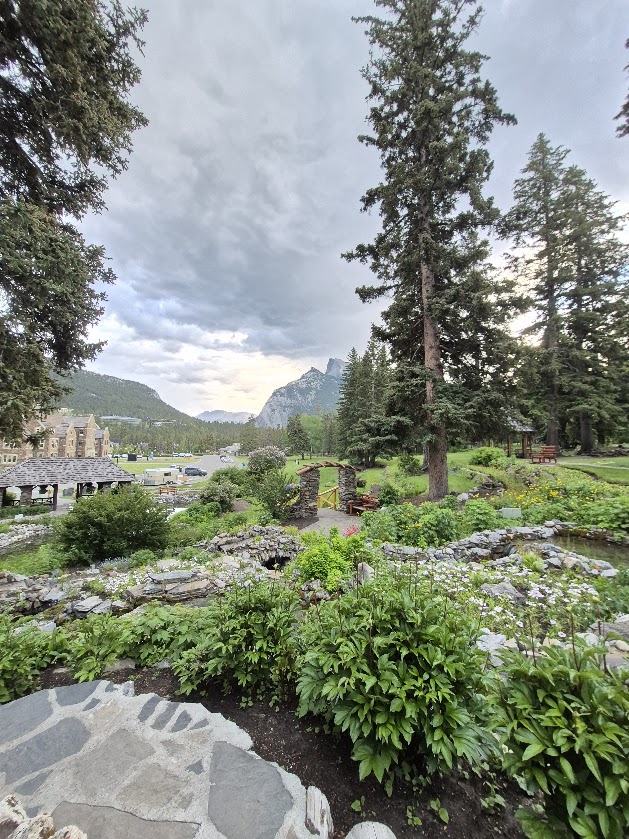
We made a quick stop at the Parks Canada building, where the surrounding Cascade of Time Gardens offered a peaceful stroll amidst beautifully manicured flower beds and mountain views.
From there, our group split briefly. Amit, Meenal, Yash, and Neel took the Sulphur Mountain Gondola, a modern cable car that carries visitors to a summit offering 360-degree views of six mountain ranges, the Bow Valley, and the Banff townsite below.
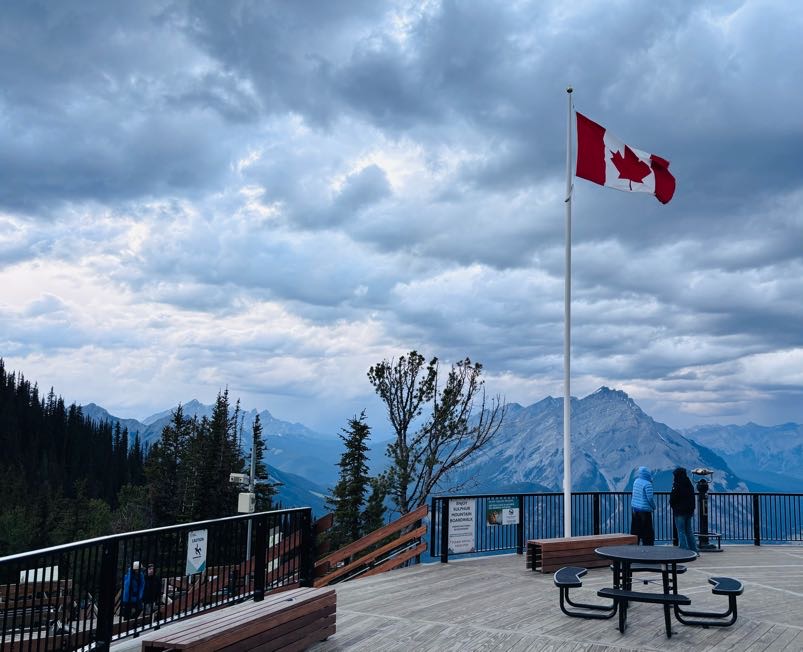
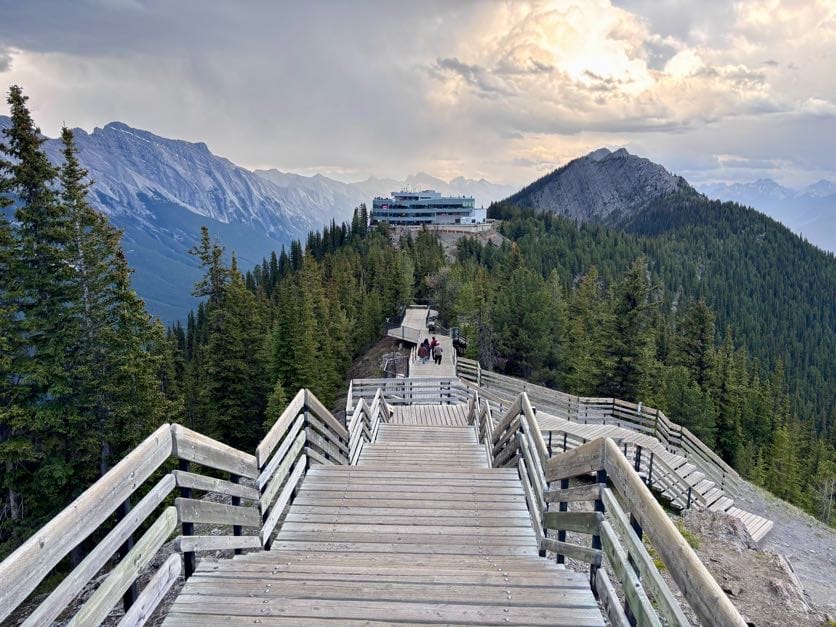
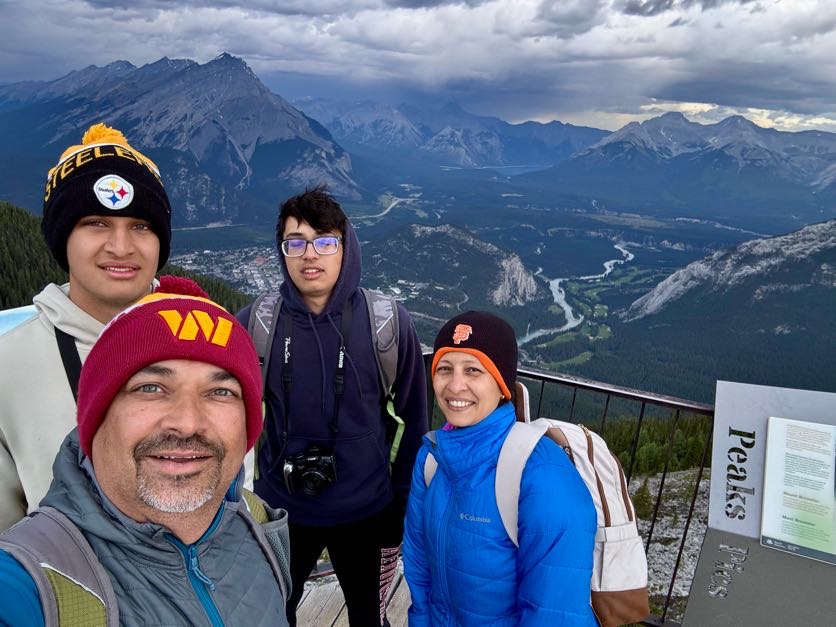
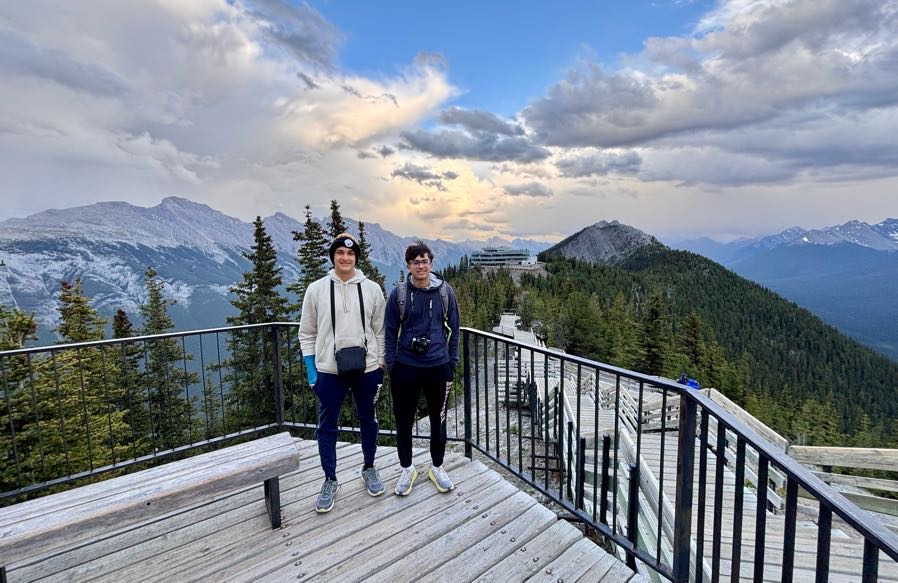
Sulphur Mountain towers over the town of Banff in Alberta’s Rocky Mountains, offering sweeping panoramic views of the Bow Valley. Named for the natural hot springs found at its base, the mountain is accessible by a scenic gondola ride or a challenging hike along switchback trails. At the summit, a boardwalk leads visitors to the historic Cosmic Ray Station and Sanson’s Peak. From up there, the vastness of Banff National Park stretches out in every direction — a breathtaking reward for those who make the climb.
Anu and I opted to explore the town instead, having already hiked up Sulphur Mountain during a visit back in 2002. That hike had taken nearly two hours of strenuous ascent, so we knew firsthand the reward that awaited them at the top.
Meanwhile, the rest of us enjoyed a quiet walk through town, soaking in Banff’s alpine charm. The streets were lined with quaint shops, boutiques, and cozy cafes. We stopped for a delicious burrito and followed it with a hot chocolate from a boutique coffeehouse. With the crisp evening air and surrounding mountain silhouettes, the moment felt almost cinematic.
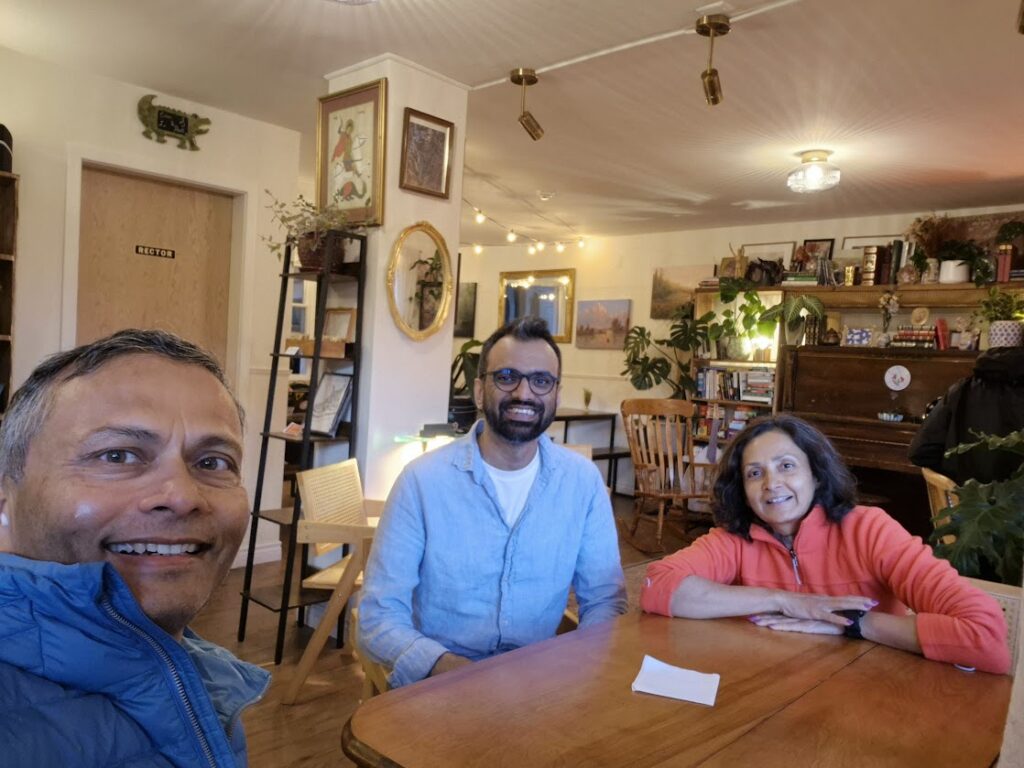
Around 10:00 pm, we regrouped and began the drive back. On our way, we stopped in Canmore, another mountain town just outside Banff, to grab a late dinner at Boston Pizza. Even though it was almost 11:00 pm, the town still had a gentle buzz of activity, thanks to the long daylight hours of the Canadian summer.
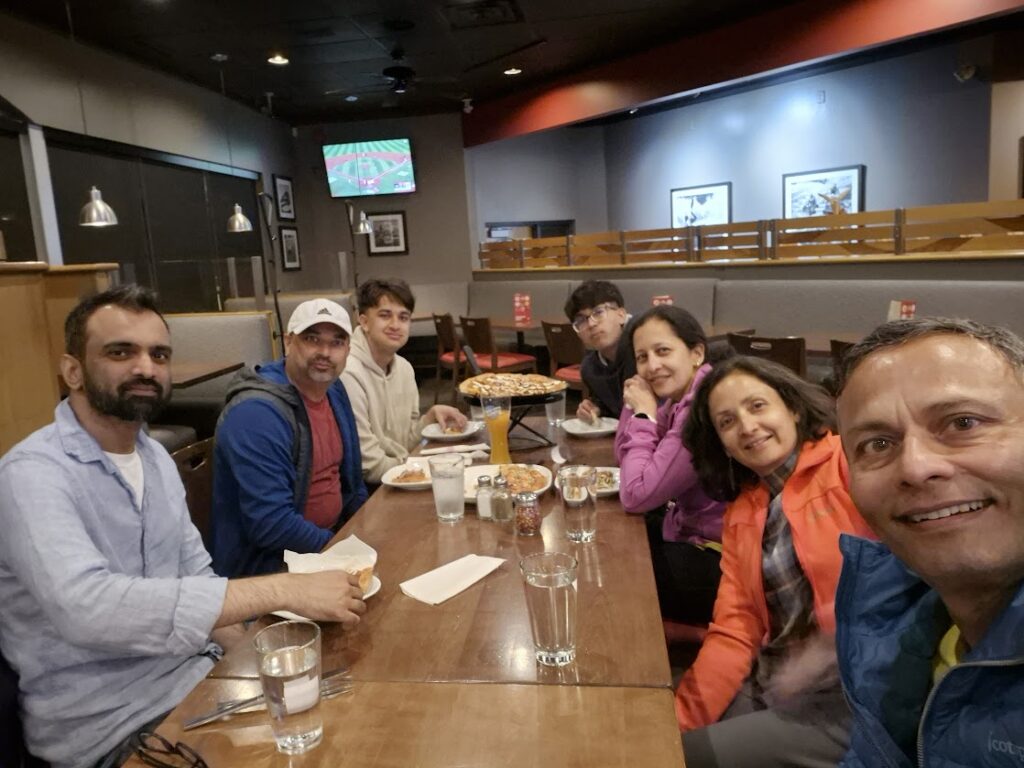
We finally reached Calgary around 12:15 am. It was well past midnight by the time we got to bed, with only a few hours to rest before setting out again early the next morning for our next grand adventure—Banff and Jasper National Parks. But despite the short sleep, the spontaneity, natural beauty, and warm company made this one of the most memorable evenings of the entire trip.
Day 5: Thursday, June 19 – Lake Louise, Icefields Parkway, Jasper, and Hinton
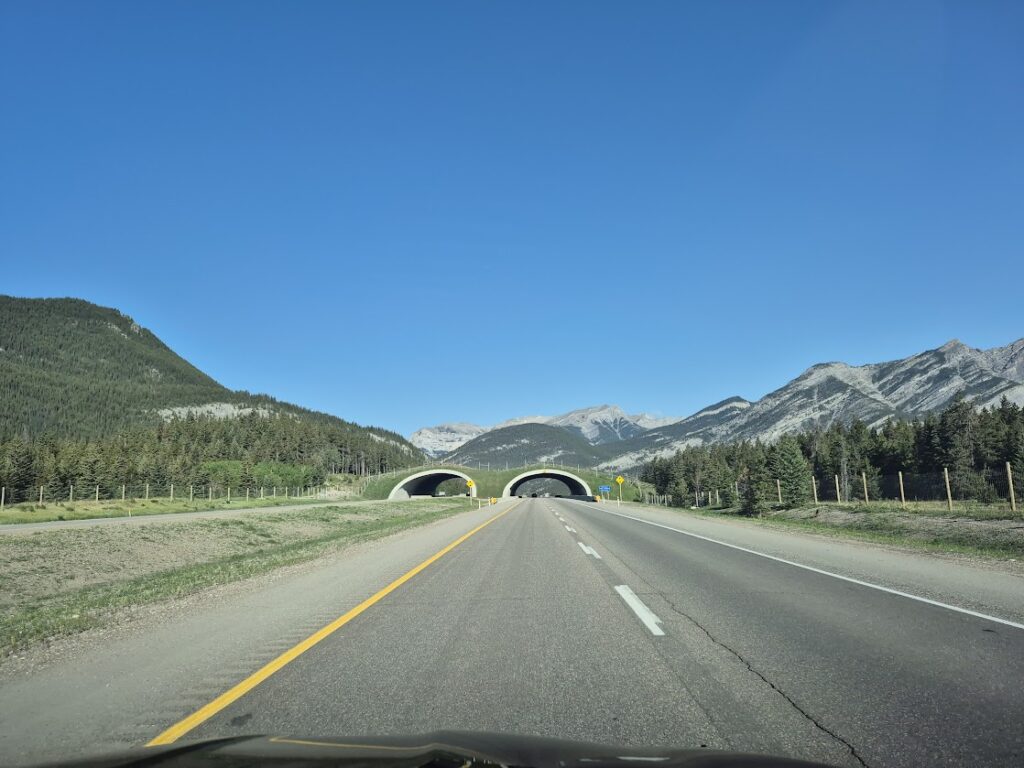
We began our day early, leaving Calgary at 7:00 am with the aim of reaching one of the Canadian Rockies’ crown jewels—Lake Louise, located in Banff National Park. The highway north was smooth, and we were especially intrigued by the wildlife crossings built over the road—arched, vegetated bridges that allow animals to cross highways safely, a thoughtful integration of infrastructure and conservation.
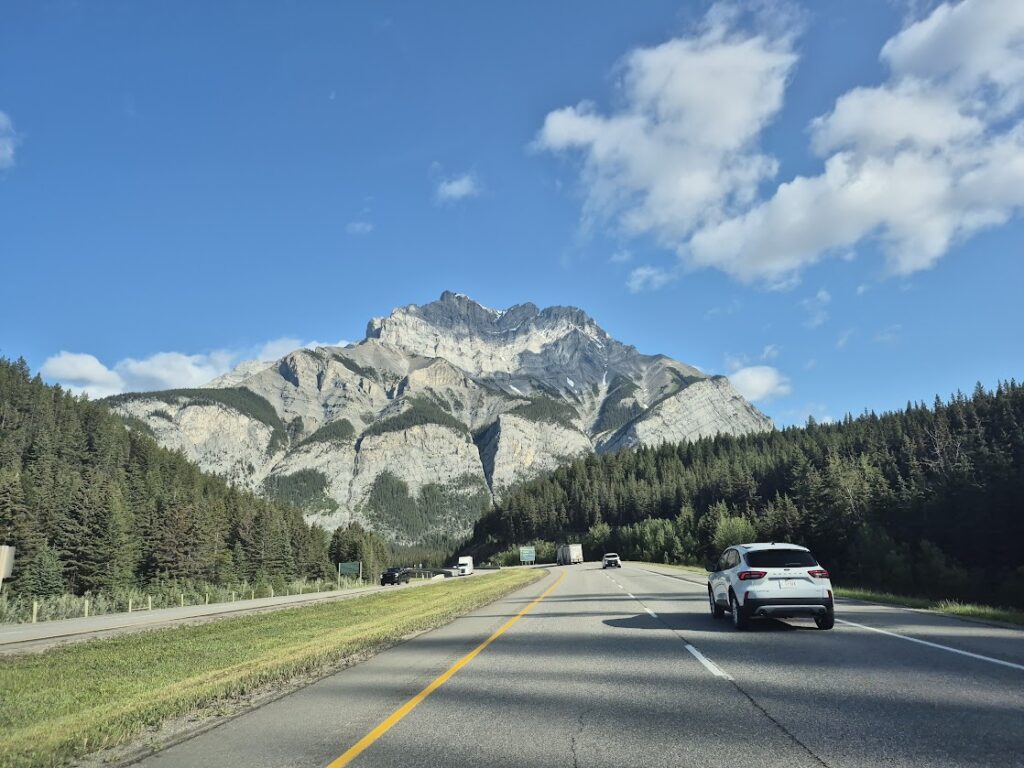
Road to Lake Louise
Lake Louise, nestled in the heart of Banff National Park, is one of Canada’s most iconic alpine lakes. Its striking turquoise waters, fed by glacial melt, sit framed beneath the towering peaks of the Rockies and the majestic Victoria Glacier. Whether you’re paddling across its glassy surface, walking the lakeside trail, or simply soaking in the views from the Fairmont Chateau, Lake Louise feels like a postcard brought to life — serene, grand, and unforgettable.
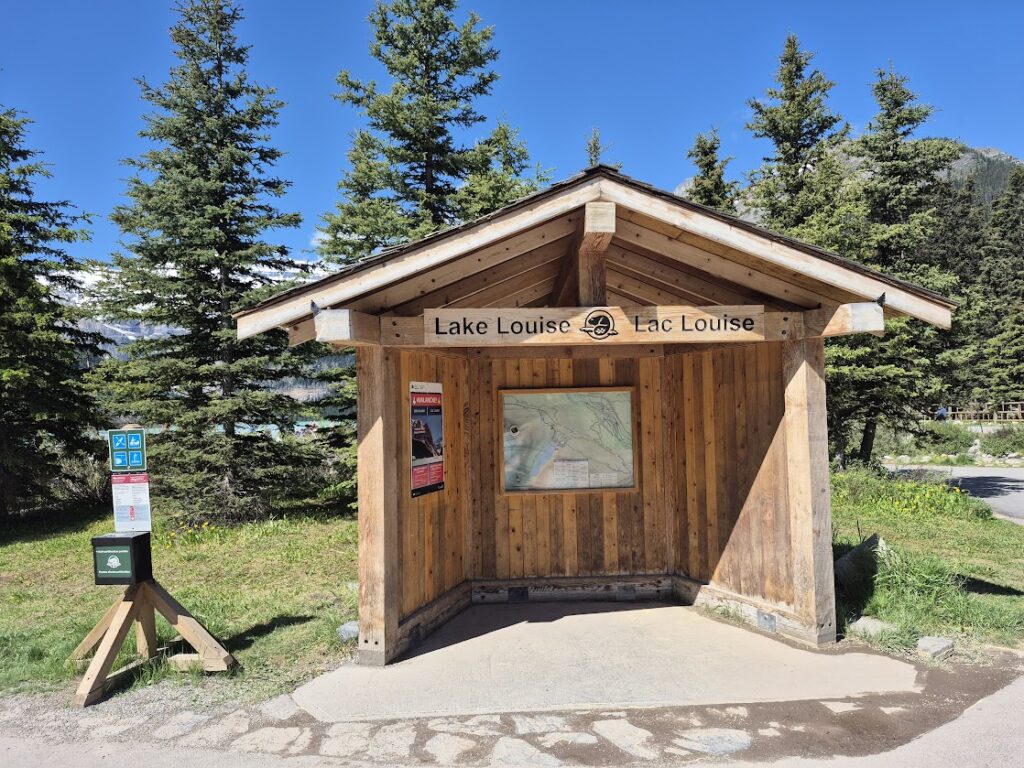
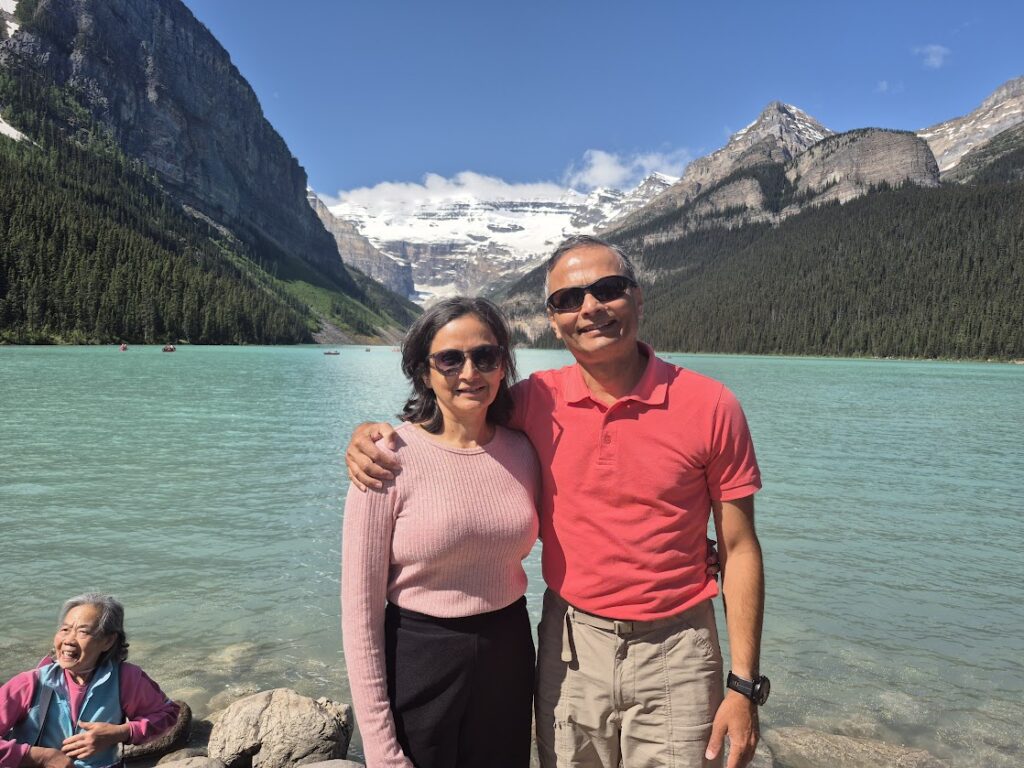
As we approached Lake Louise, the views became increasingly stunning. The road wound through snow-capped peaks and alpine valleys, and the weather could not have been better—bright, clear, and comfortably cool.
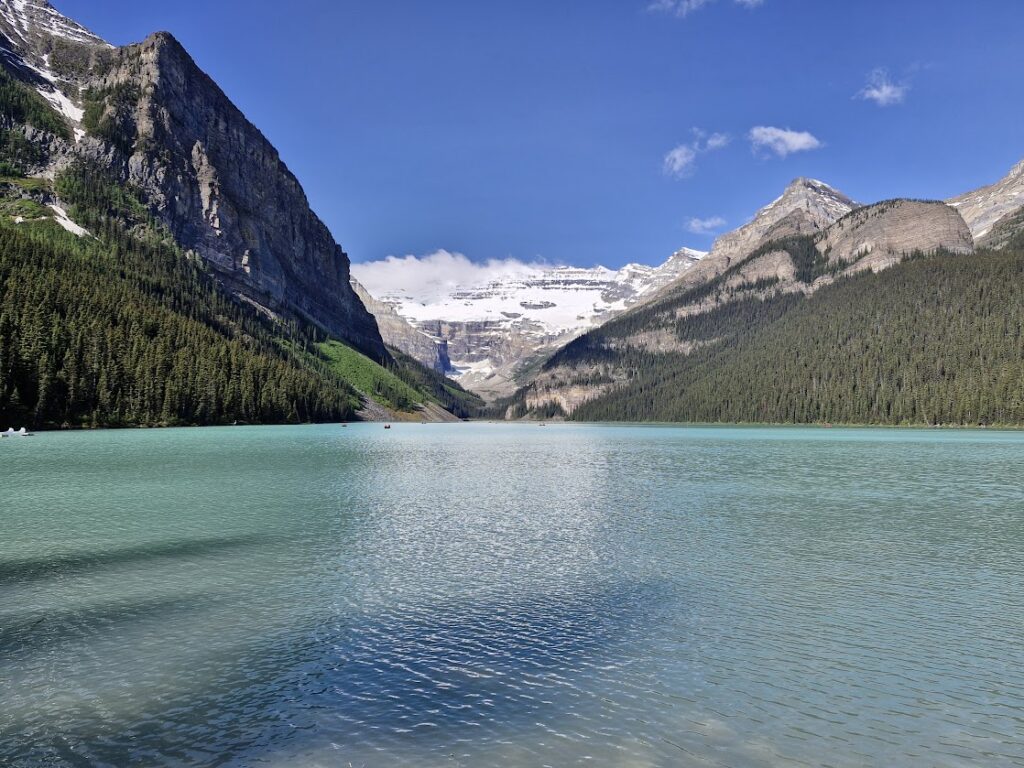
While the scenery was incredible, the lake’s popularity as a global tourist destination was obvious. The area was crowded, and we couldn’t find parking. The shuttle system was already fully booked, and we had to visit the lake in two phases—Samir dropped off the rest of the group first, then returned later when someone else could take the wheel. Although the lake was stunning, some of us felt that several lesser-known lakes in the region were equally beautiful and far less crowded.
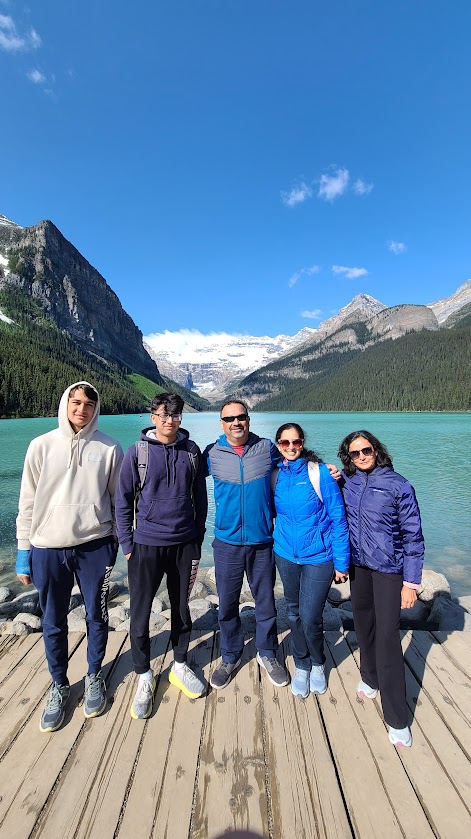
Lake Louise itself was breathtaking: a turquoise glacial lake framed by dramatic mountain peaks and dominated at its far end by the Victoria Glacier, which feeds its vibrant color.
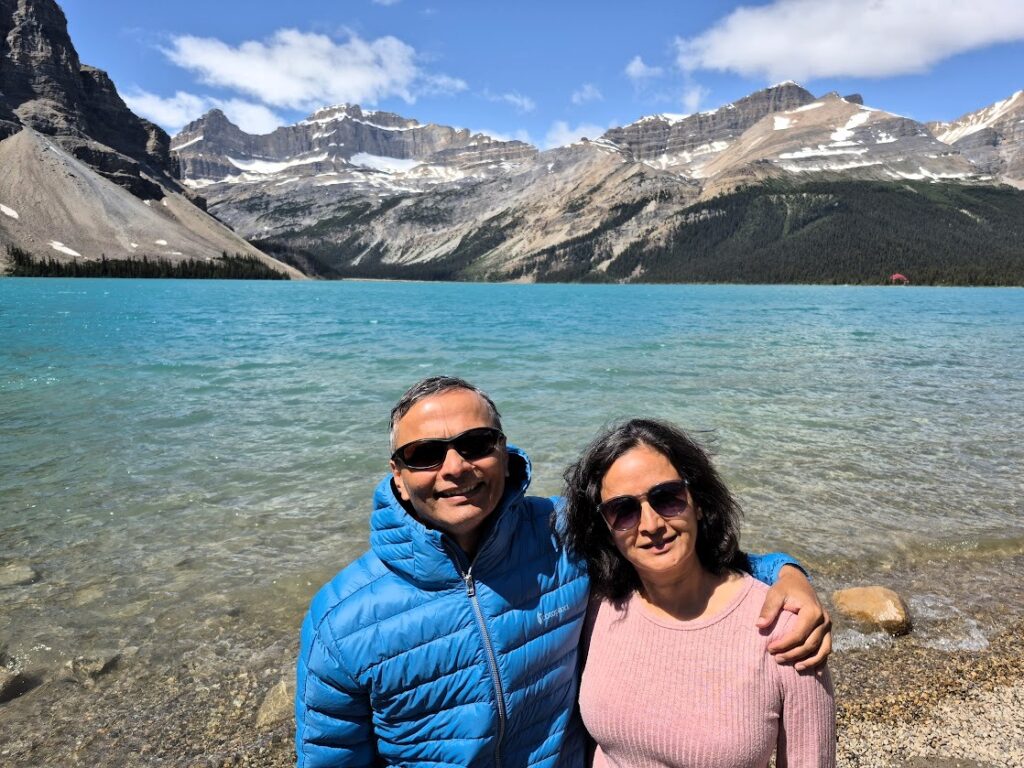
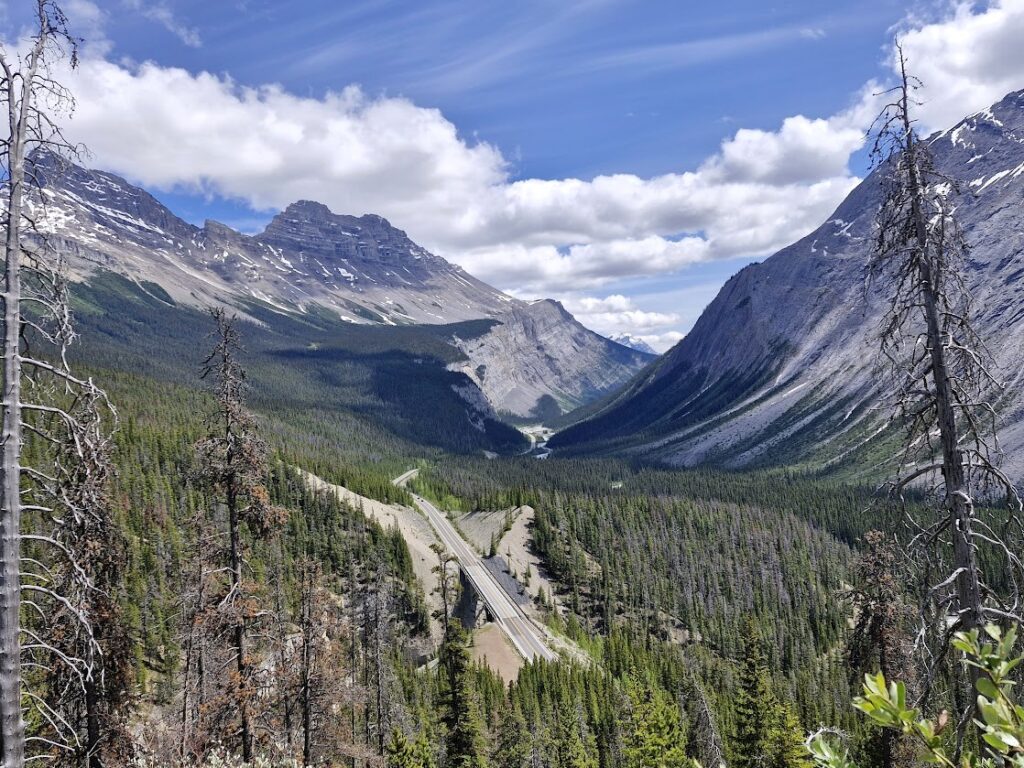
By around 11:30 am, we resumed our journey north along one of the most scenic drives in the world—the Icefields Parkway, which links Banff and Jasper National Parks. This 230-kilometre stretch is famed for its breathtaking views of mountains, glaciers, lakes, and valleys. Along the way, we caught a glimpse of Hector Lake and made our first stop at Bow Lake, another glacial lake whose pristine waters mirrored the surrounding peaks.
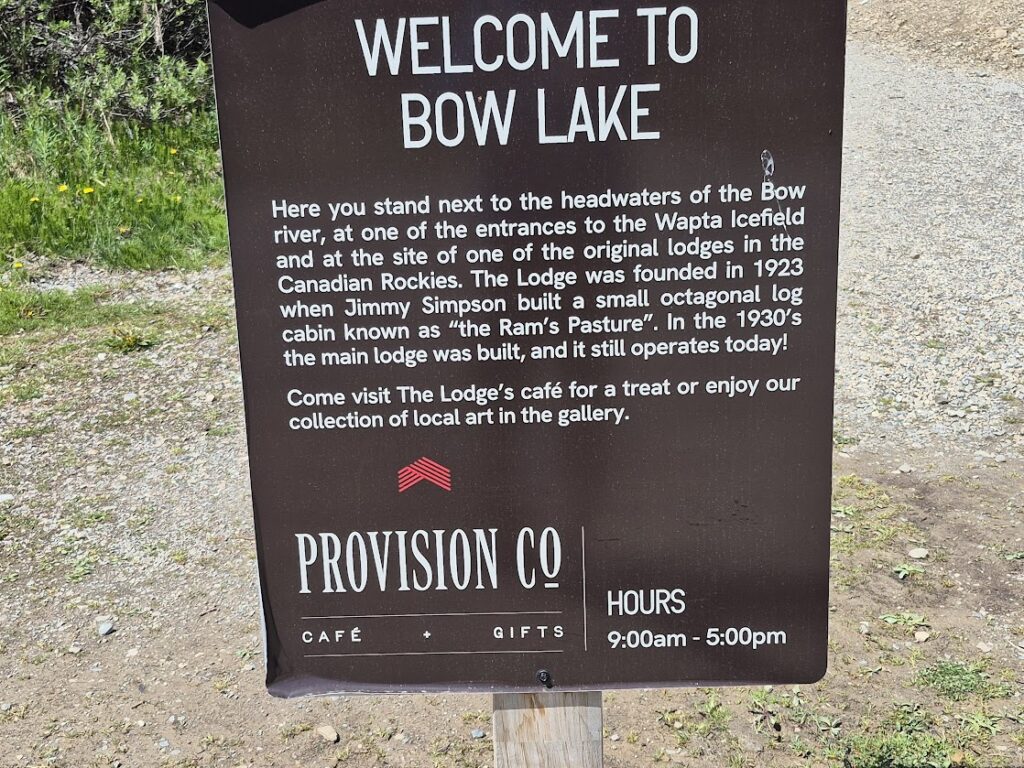
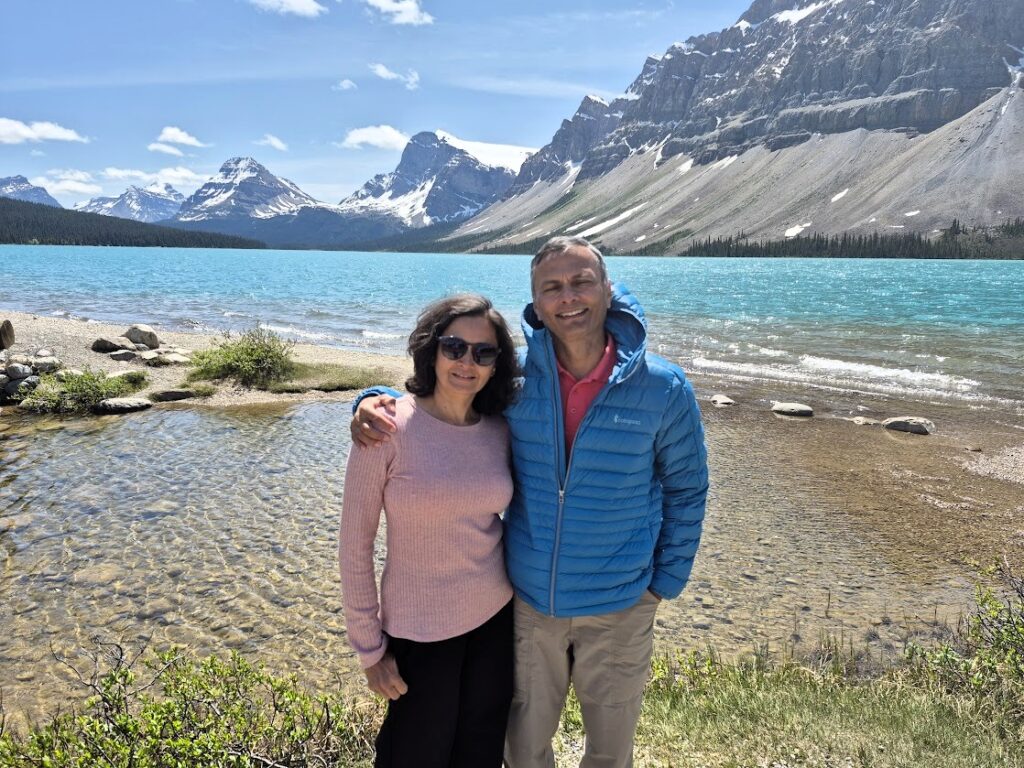
At Bow Lake
It was just as beautiful as Lake Louise, and far quieter.
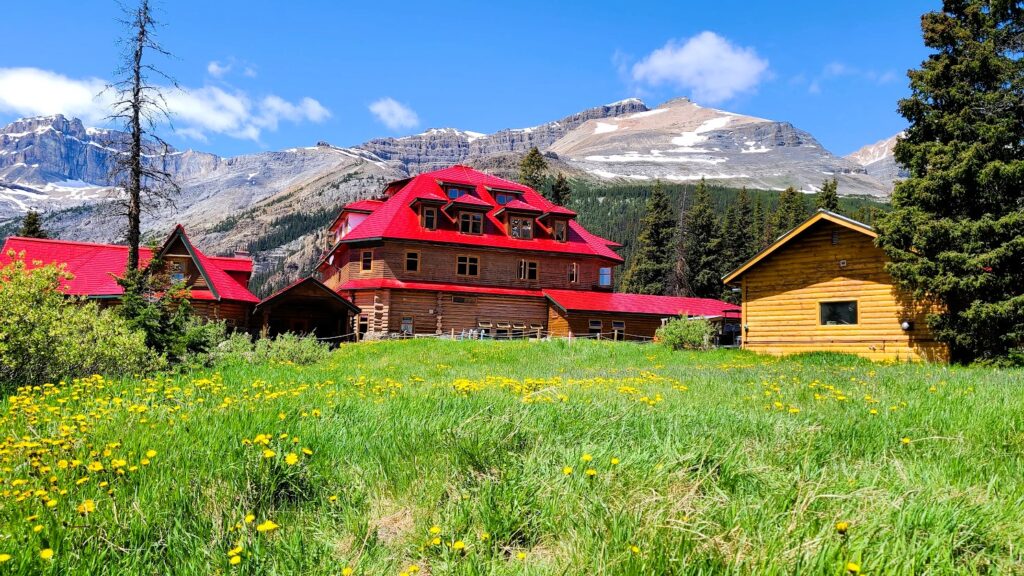
A short drive brought us to Peyto Lake, one of the most iconic spots in Banff. From a high lookout point, we viewed the lake’s vibrant blue water, shaped like the head of a wolf. Its surreal color comes from glacial rock flour suspended in the water, and the vista was nothing short of magical.
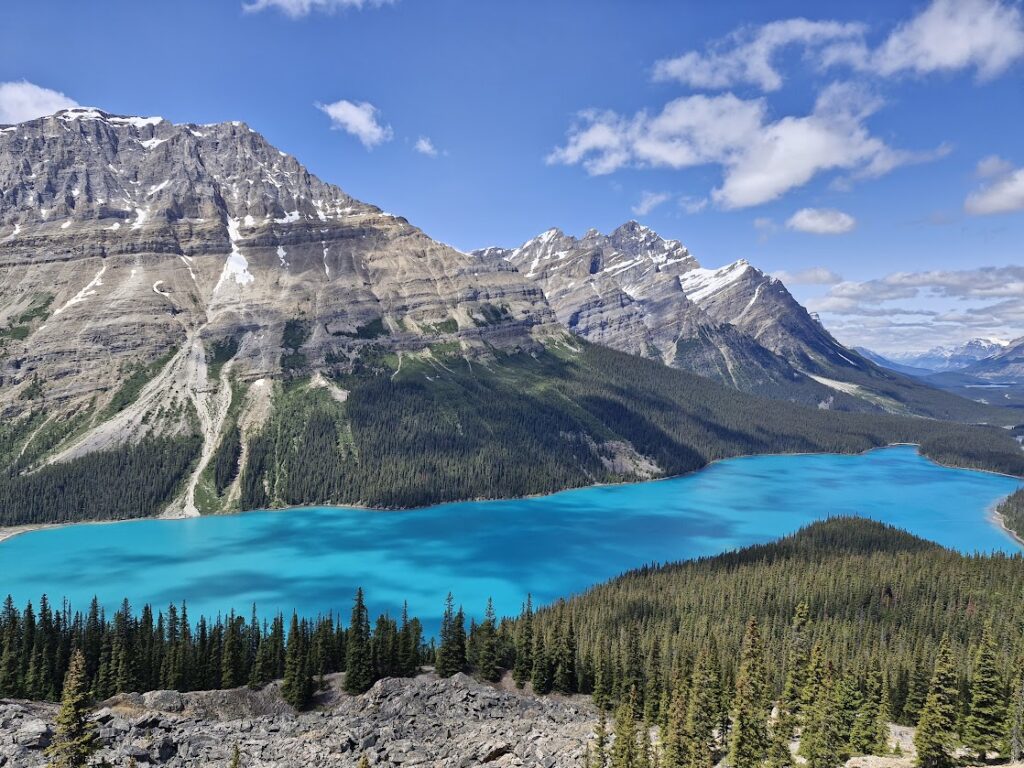
Peyto Lake, nestled in the heart of Banff National Park, is famous for its striking turquoise color and unique shape—often said to resemble a wolf’s head. Fed by glacier meltwater, the lake gets its surreal hue from rock flour suspended in the water. The best view comes from the Bow Summit viewpoint, the highest point on the Icefields Parkway. Standing there, overlooking the shimmering lake framed by rugged peaks and dense pine forests, feels like peering into a postcard brought to life.
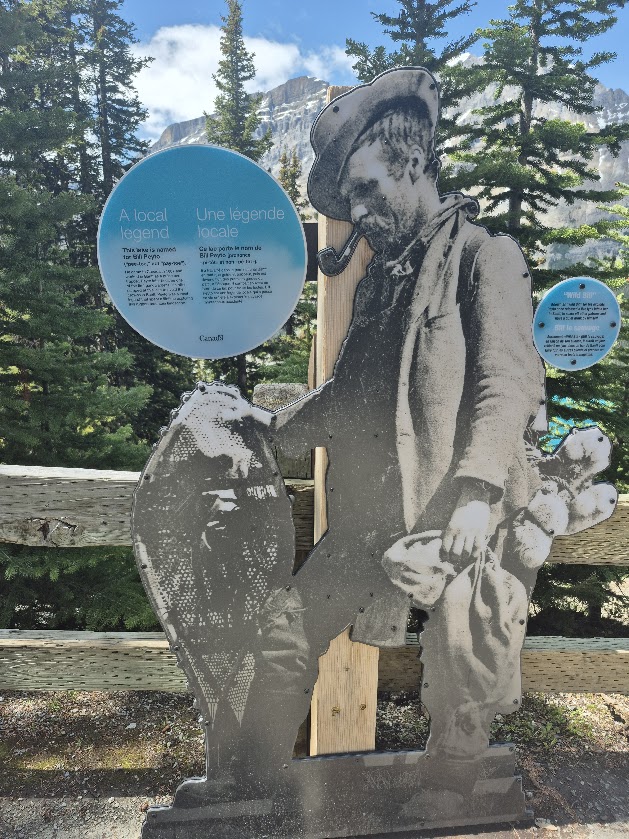
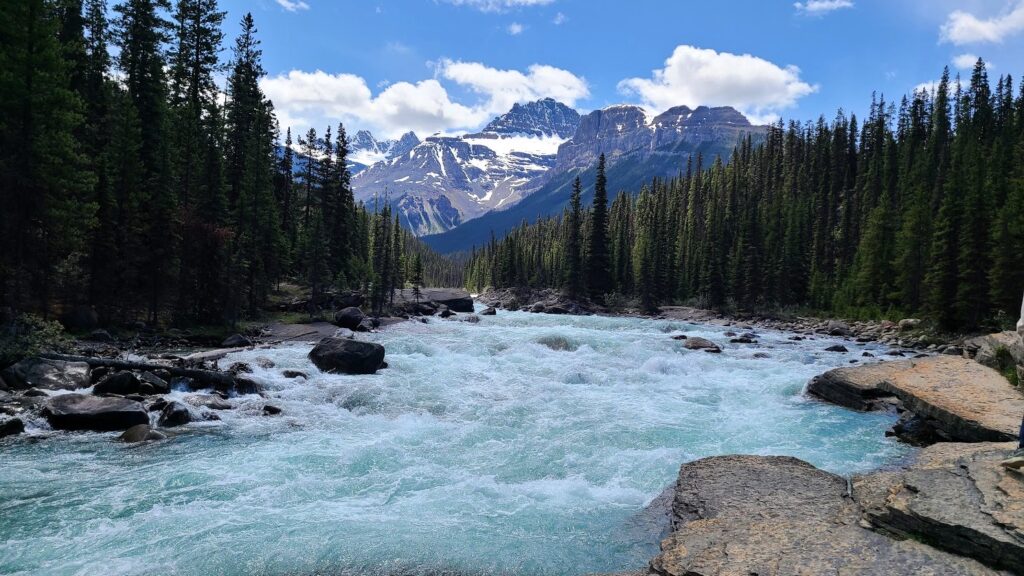
Next, we stopped at Mistaya Canyon, a dramatic slot canyon carved by glacial meltwater.
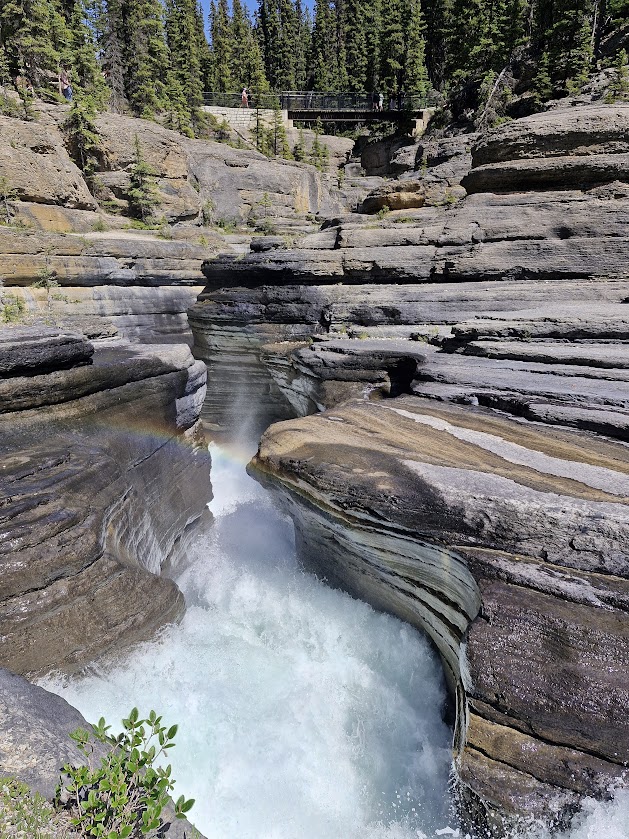
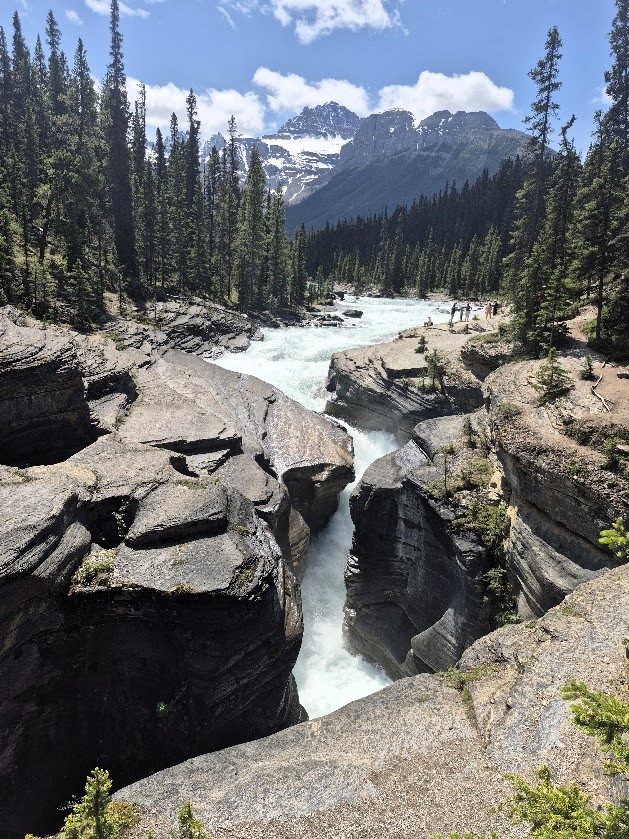
Here, water has sculpted the rock into twisting, swirling formations, and standing above the rushing water gave us a deep appreciation for the raw power of nature.
We continued on to the highlight of the Icefields Parkway—the Columbia Icefield, a 325-square-kilometer expanse of ice that straddles the Continental Divide.
It feeds eight major glaciers, including the Athabasca Glacier, which descends almost to the highway. We stopped at the Icefield Centre, where visitors can book tours that take you directly onto the glacier in massive Ice Explorers—giant all-terrain vehicles designed for icy conditions.
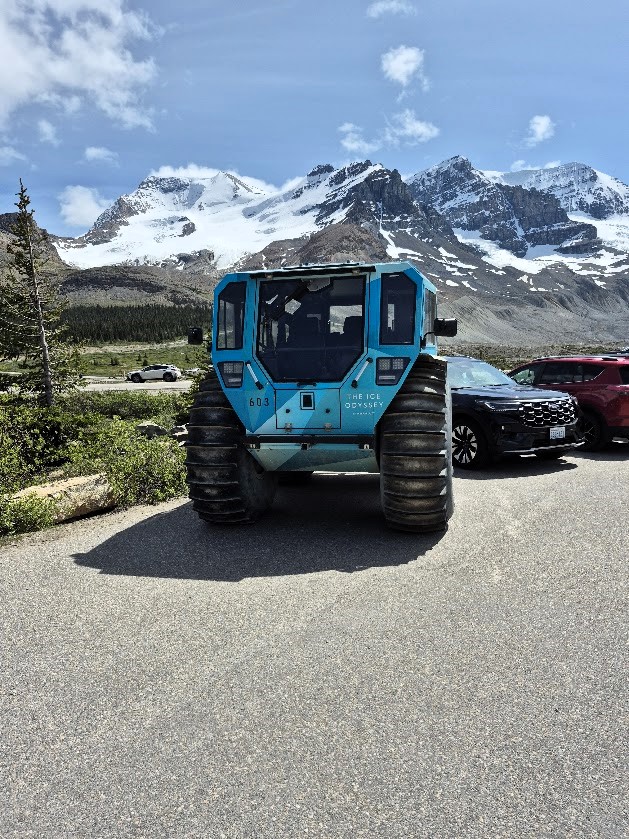
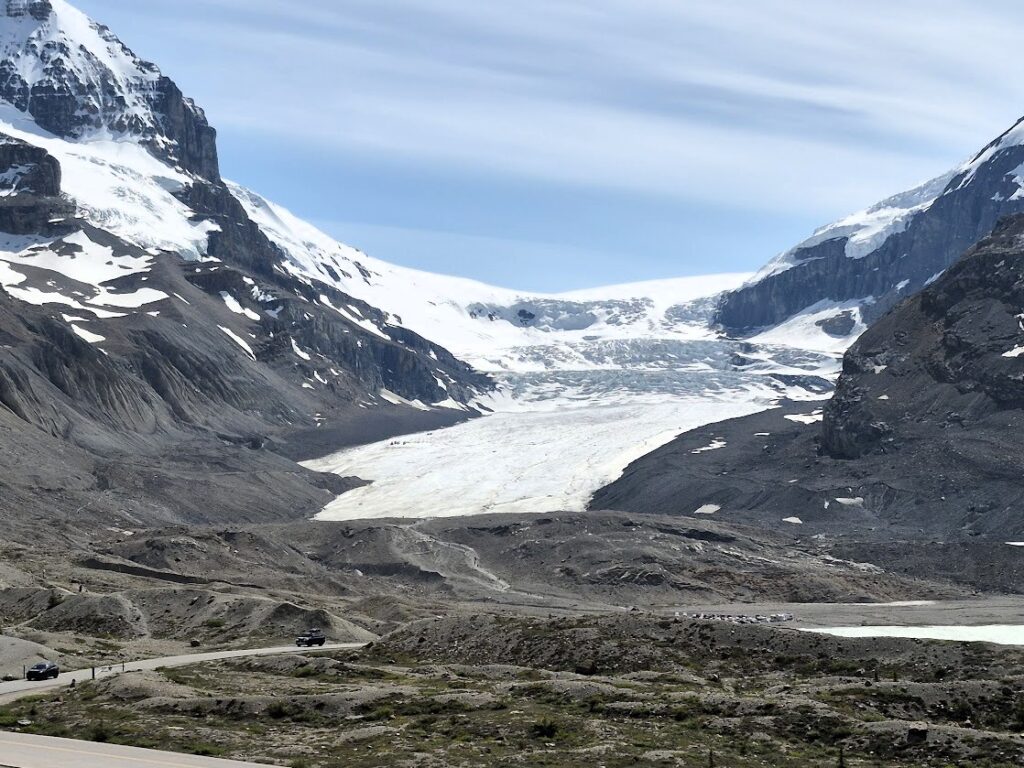
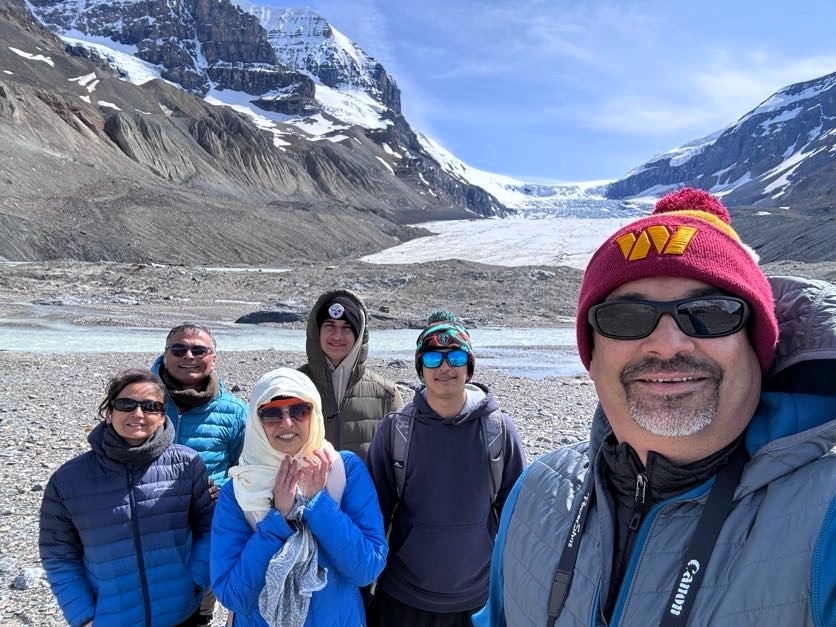
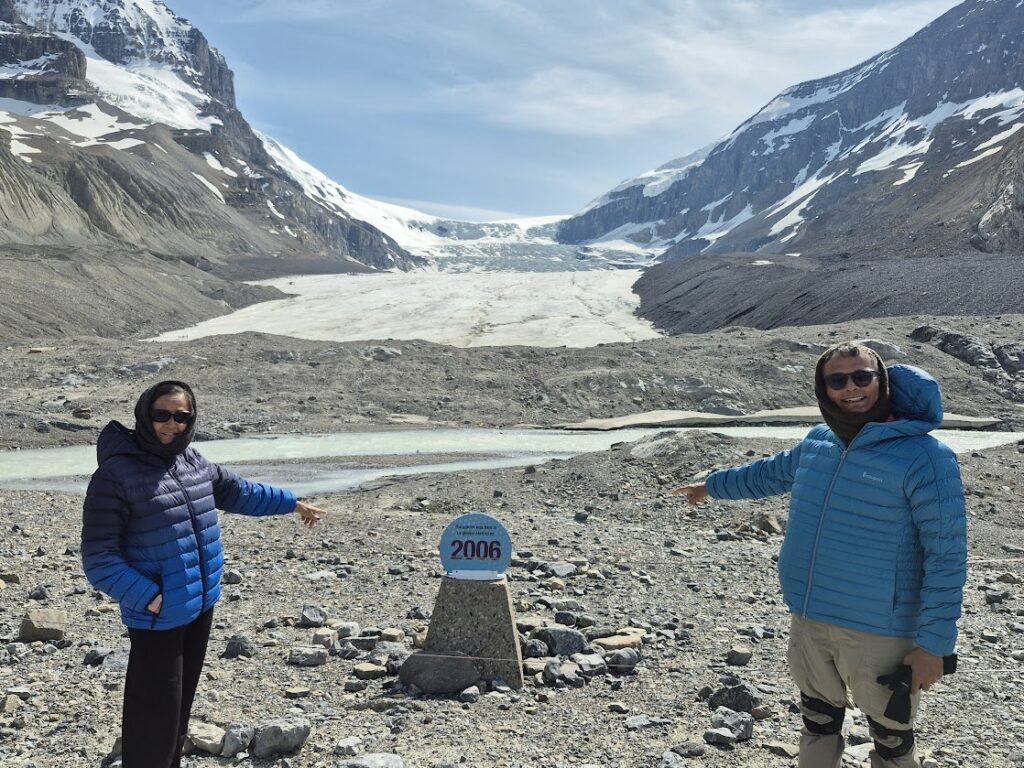
Though we didn’t do the tour this time, we walked near the toe of the glacier, passing markers showing how much it has receded over time. It was sobering to see how far it had retreated even since 2006. We had last visited the glacier in 2002, and the change was dramatic—a powerful visual reminder of climate change in action.
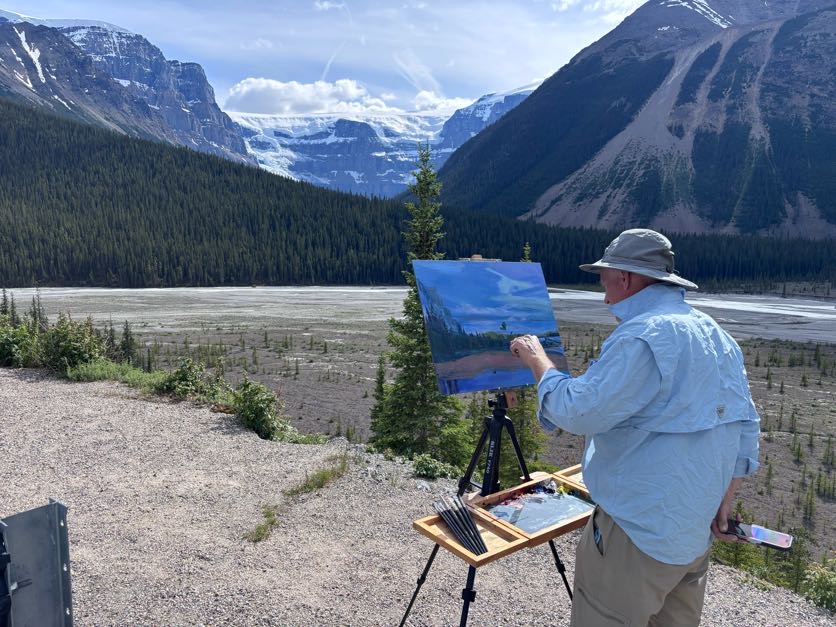
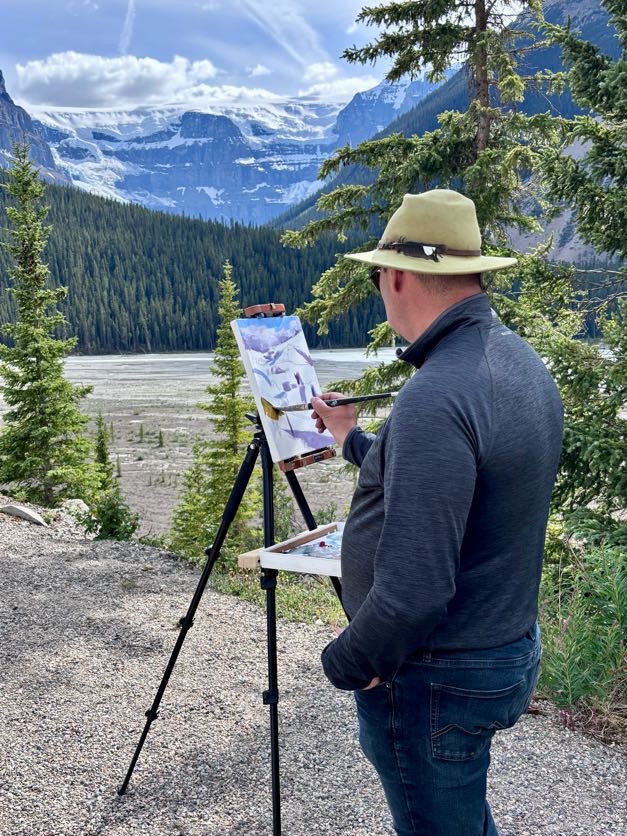
As we continued driving, we crossed into Jasper National Park, marked roughly by the glacier itself. Along the way, we pulled off at a roadside viewpoint and were surprised to see artists painting en plein air. They were part of a group called Men Who Paint (www.menwhopaint.com), a collective of Canadian artists who travel and paint outdoor landscapes across the country. It was inspiring to watch them capture the majesty of the Rockies with watercolor and brush in real time.
Further north, we stopped at Sunwapta Falls, where the glacial melt from the Athabasca Glacier rushes into a narrow gorge.
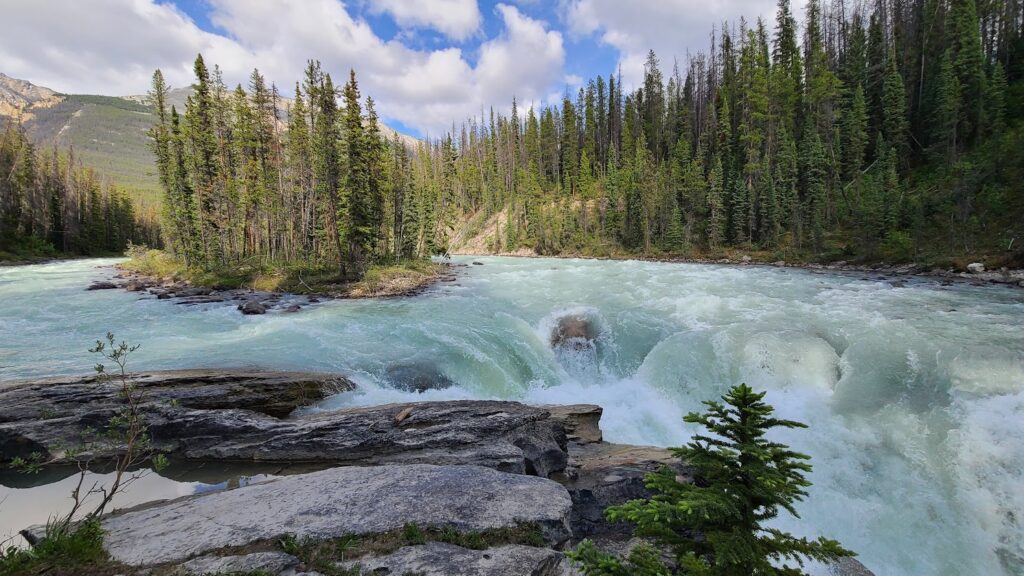
The waterfall is forceful and dramatic, made even more intense by the surrounding rock walls that funnel the water through a sudden drop. From there, we made our way to Athabasca Falls, one of the most powerful waterfalls in the park. Though not especially tall, the sheer volume and pressure of the water as it barrels through the canyon is awe-inspiring.
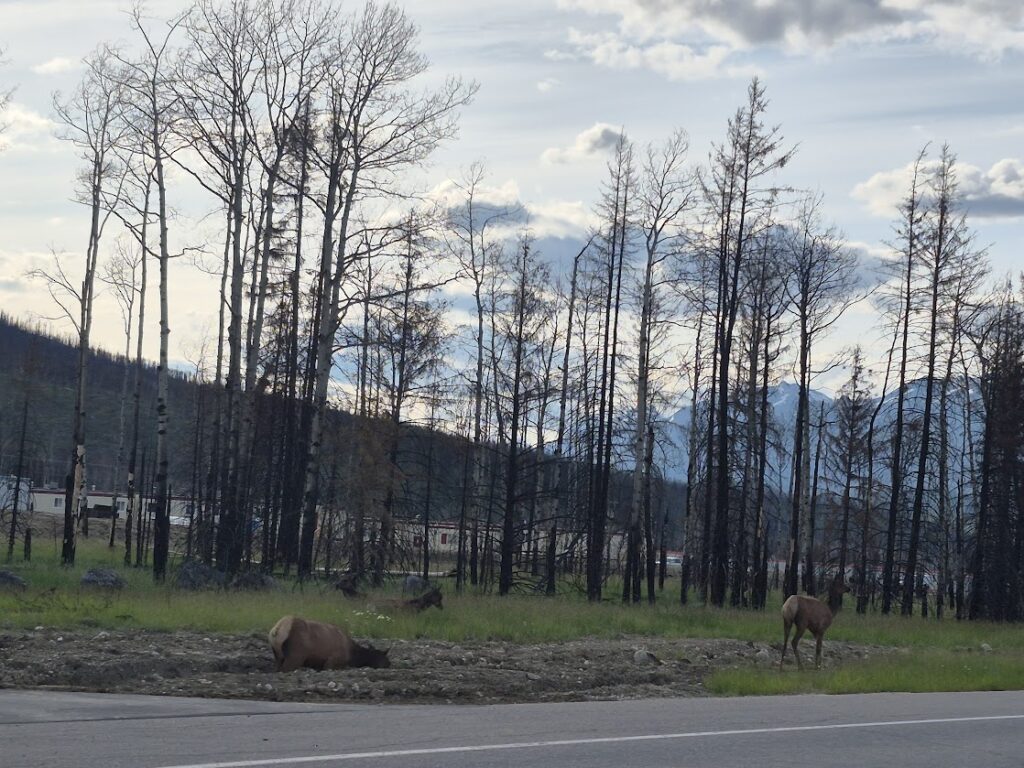
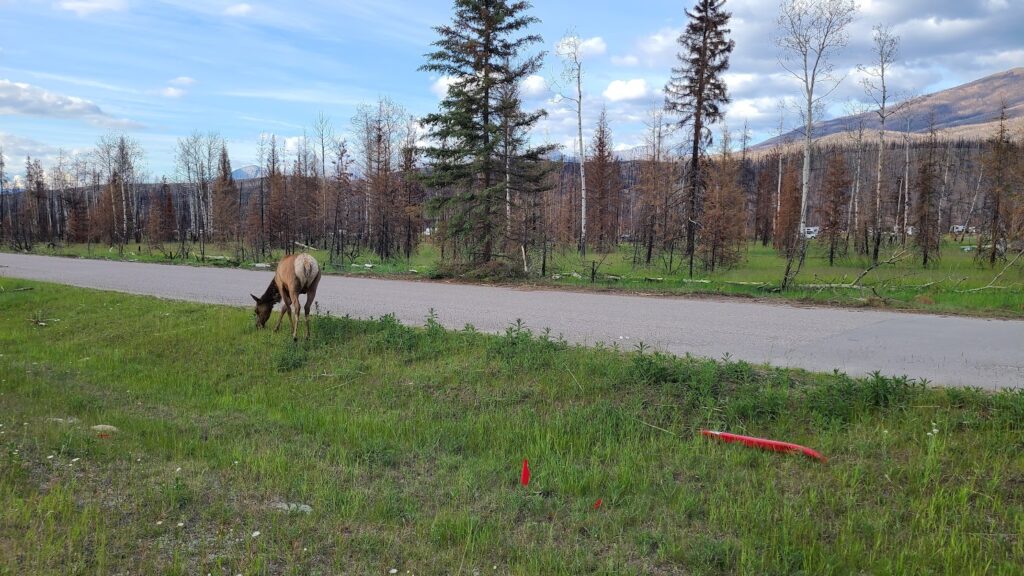
By now, the sun was beginning to dip behind the mountains, casting golden light over the charred forest landscape. The Jasper wildfires of 2024 had burned much of the surrounding forest, and we drove through long stretches of blackened trees. Yet amid the scars of the fire, we saw signs of regrowth—new greenery emerging at the base of burnt trunks. Wildlife sightings added to the magic; a few deer and mountain goats were visible near the roadside, calm and undisturbed by our passing cars.
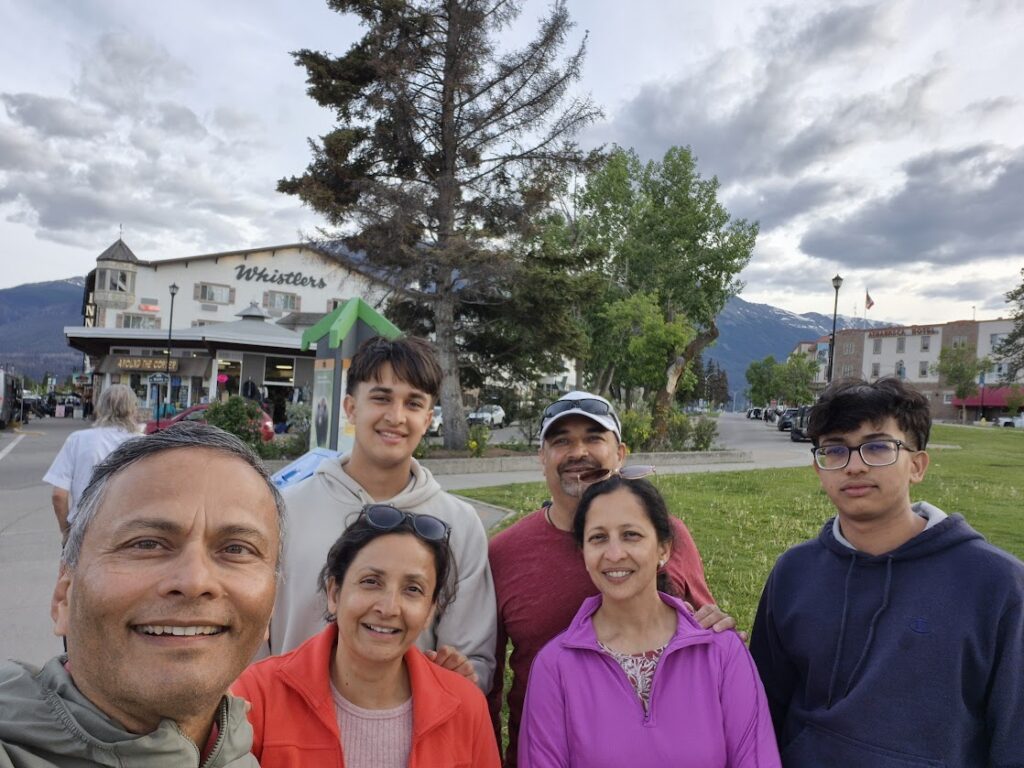
We arrived in the town of Jasper in the early evening and had dinner at Haldi, an Indian restaurant offering a welcome taste of home. The food was decent—familiar flavors that hit the spot after a long day. After dinner, we strolled around Jasper’s small but charming downtown. It’s a modest town surrounded by towering peaks, and though the wildfires had left their mark, the spirit of the place remained intact.
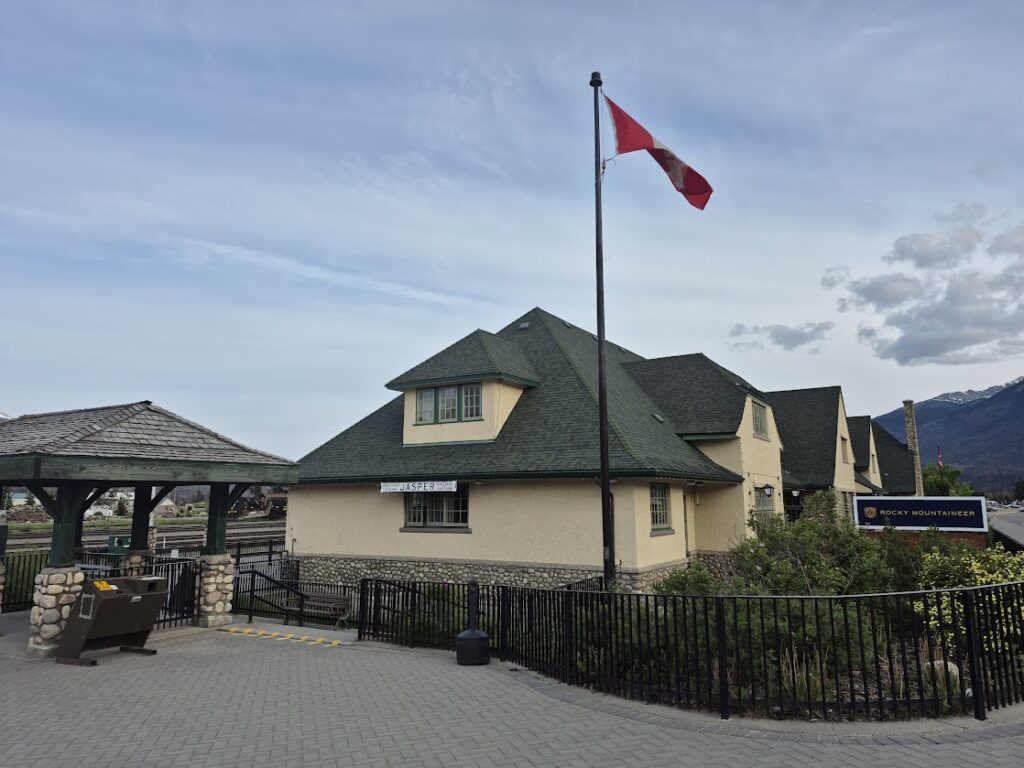
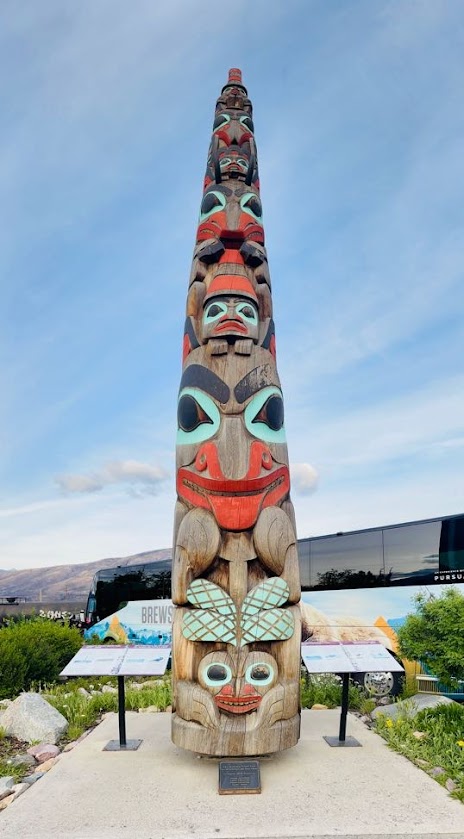
Our hotel for the night was located in Hinton, about an hour north of Jasper. The drive took us through more scenic terrain, with the fading daylight giving the mountains a soft, violet hue. We reached our hotel by 9:45 pm, tired but deeply fulfilled. It had been a long day of alpine beauty, powerful waterfalls, glacier views, and meaningful reflections—without a doubt, one of the most unforgettable legs of our journey.
Day 6: June 20, Friday – Jasper & Yoho National Parks
We started from the town of Hinton at 8:45 am. We had stayed in a Family Suite at Kanata Hotel in Hinton. It was an excellent hotel. Our room was 882 sq. ft. with two bedrooms and easily accommodated the six of us.
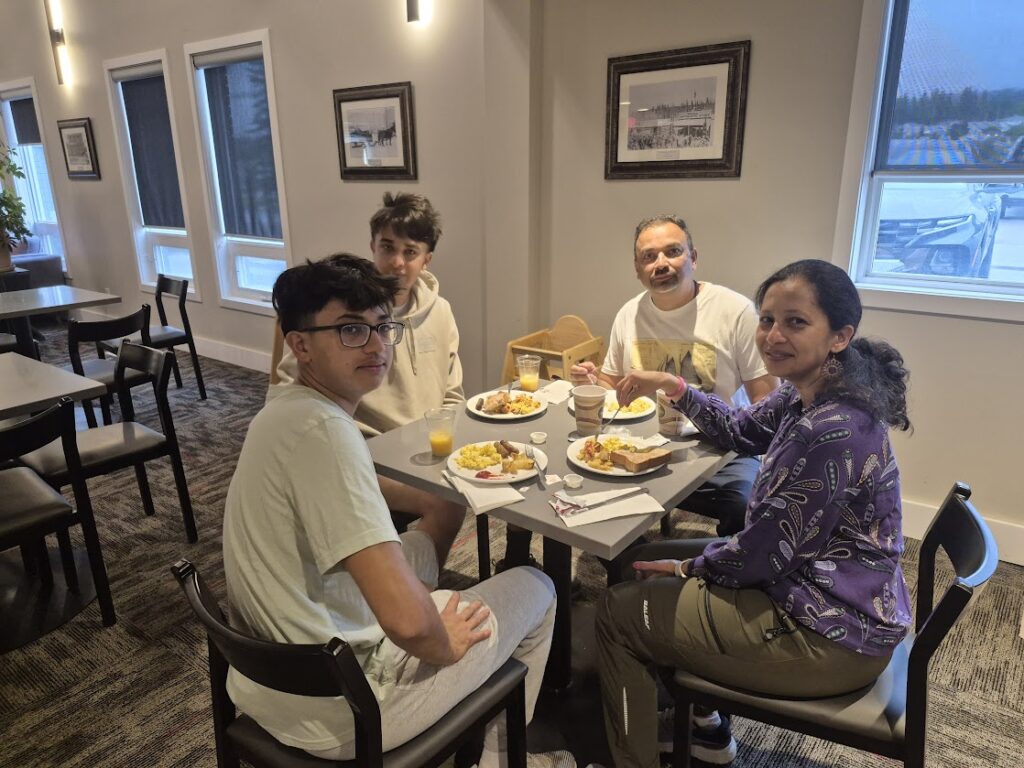
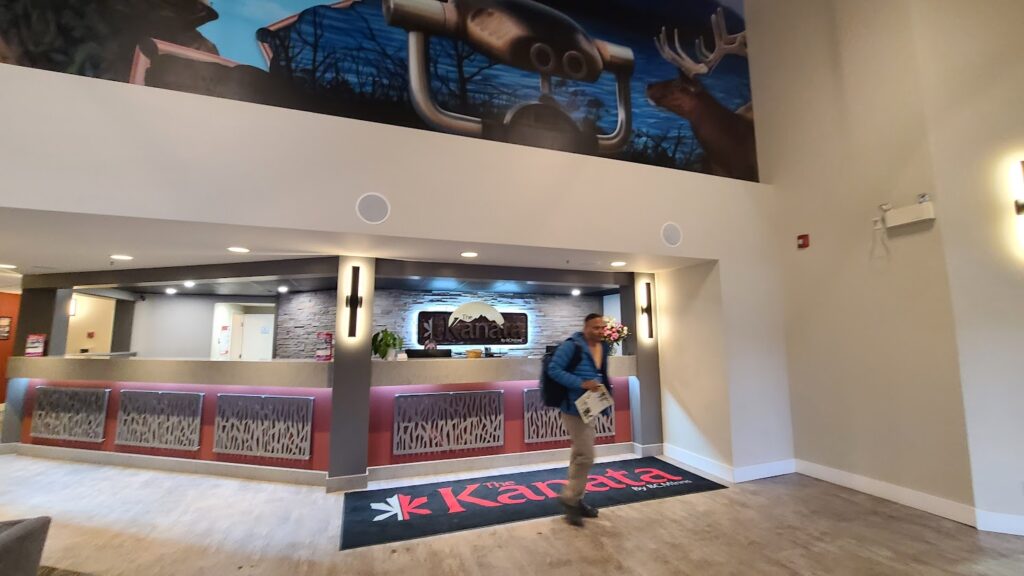
We finished our breakfast at 8:45 am and then started out to see the other sights we had missed on the previous day. The weather was cloudy, and there was some rain as well.
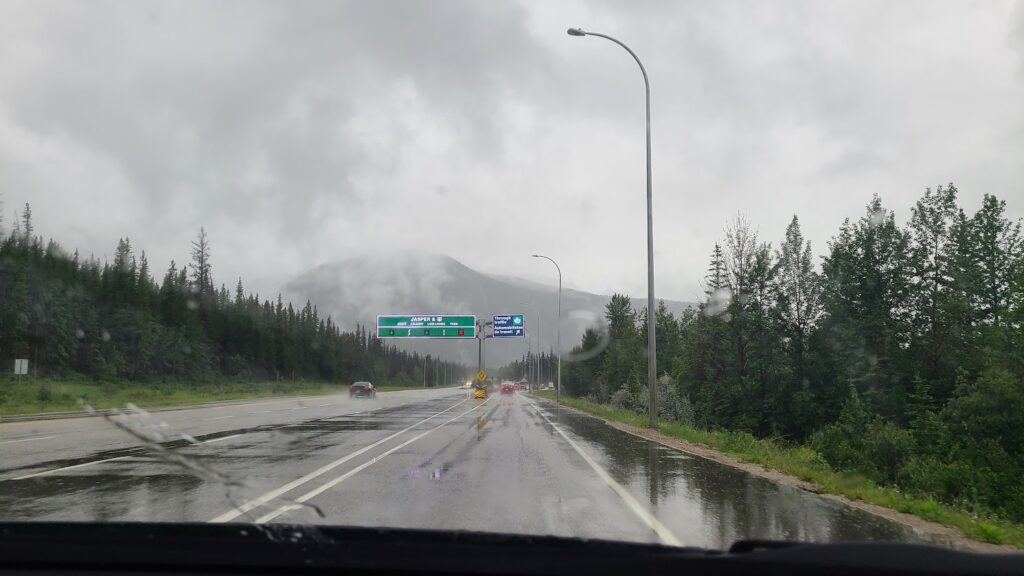
Rain had been correctly predicted for this day, so we had packed as much as possible into Day 5.
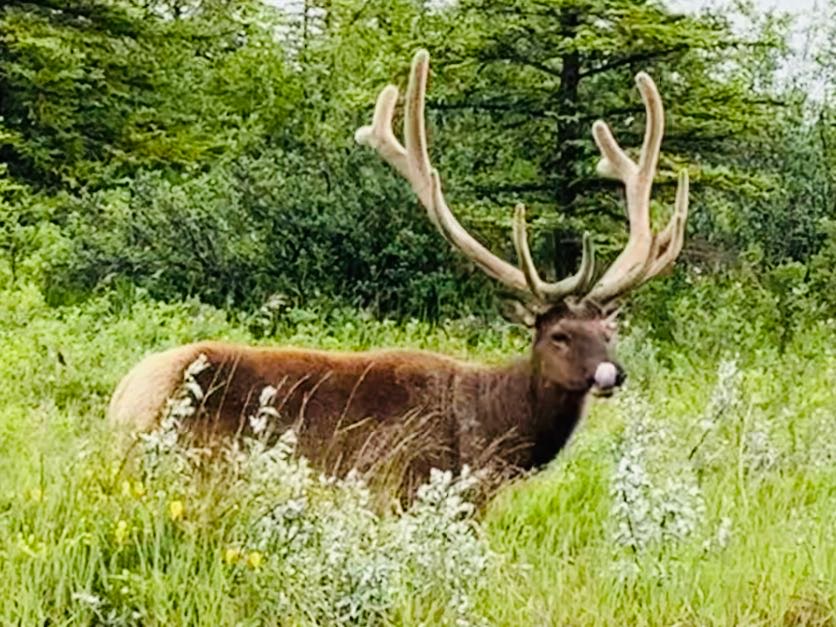
The elk of Jasper strikes a pose!
Despite the rain, we got some great animal sightings along the way. The scenery looked very different under the overcast sky. Since we were mostly driving, it didn’t bother us much unless we had to get out.
Our first stop was Maligne Canyon in Jasper National Park. The canyon entrance road was closed, so we had to be satisfied with a distant view. We saw a lot of burnt trees from the 2024 Jasper wildfire.
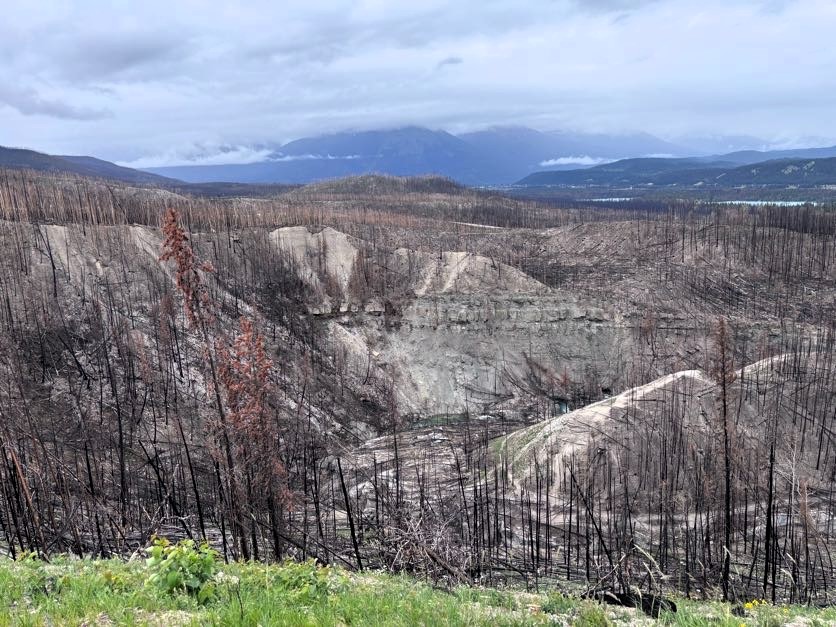
The 2025 wildfire season in Jasper National Park was thankfully milder compared to the 2024 fire, which had burned thousands of hectares near Maligne Canyon and the Athabasca Valley. In 2025, Parks Canada reported that fire mitigation efforts—including controlled burns and improved firebreaks—helped prevent large-scale damage. Some trails remained closed due to cleanup, but the park’s recovery has been swift in many areas, with new vegetation already sprouting among the charred remains. Interpretive signs now help visitors understand the ecological role of wildfires in forest regeneration.
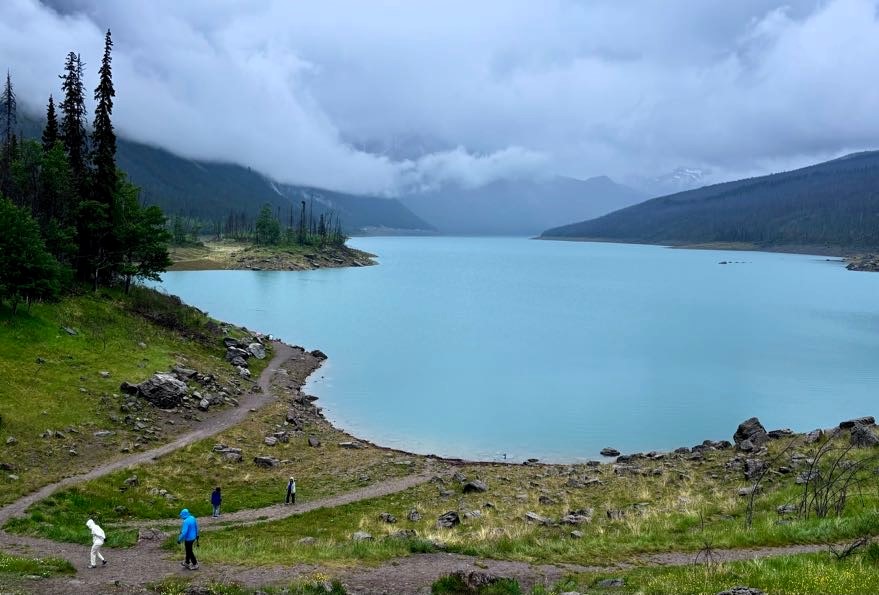
Our next stop was Medicine Lake, a beautiful and mysterious lake in Jasper National Park. It behaves unusually for a mountain lake—its water level rises and falls dramatically during the year.
The lake is part of a complex underground drainage system and is known to “disappear” in late fall when the water drains into sinkholes and caves below.
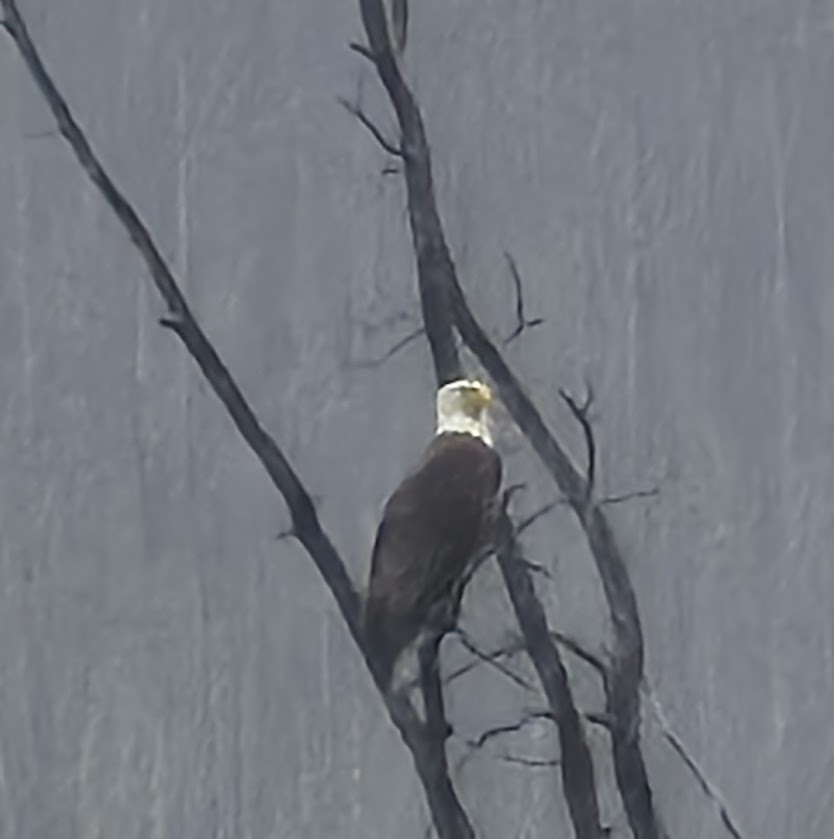
We were lucky to spot a pair of bald eagles guarding their nest here. A very cool and rare sight.
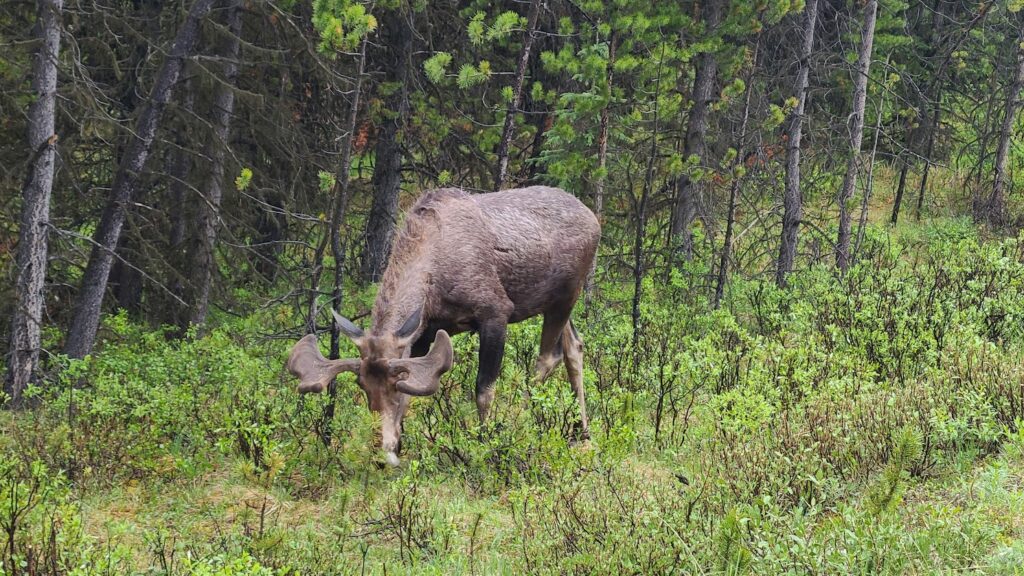
As we proceeded to Maligne Lake, about 25 km farther, we also saw a moose grazing by the roadside.
Maligne Lake in Jasper is a stunning, glacier-fed lake approximately 23 km long. It’s one of the largest lakes in the Canadian Rockies.
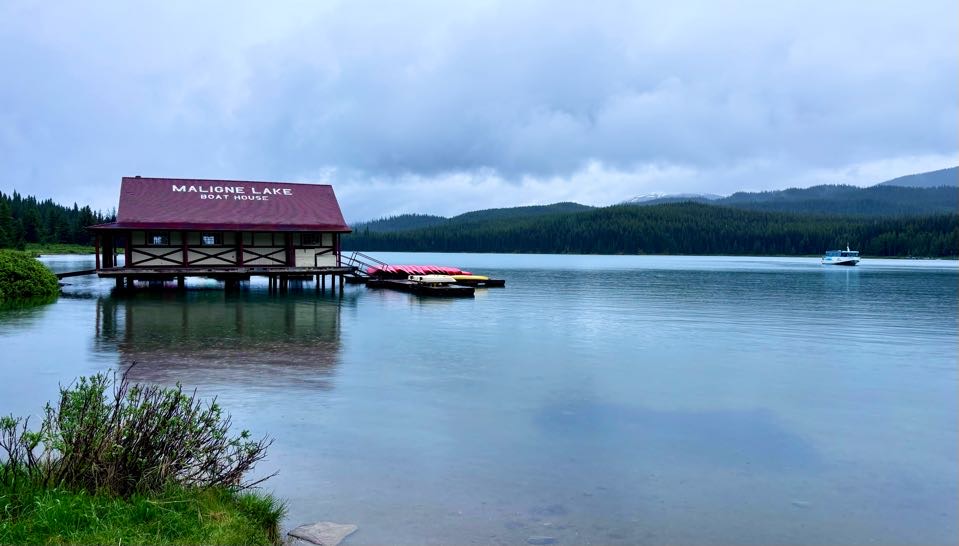
Maligne Lake is one of the most iconic destinations in Jasper National Park, known for its striking turquoise waters and dramatic mountain backdrop. The lake is fed by glacial meltwater and is home to the famous Spirit Island, often photographed and featured in travel magazines. Activities here include kayaking, boat cruises, and hiking along shoreline trails. The surrounding area is also rich in wildlife, with regular sightings of caribou, bears, moose, and bald eagles. The lake was named by early explorers who struggled with navigating its winding channels—“maligne” being French for “wicked” or “malicious.”
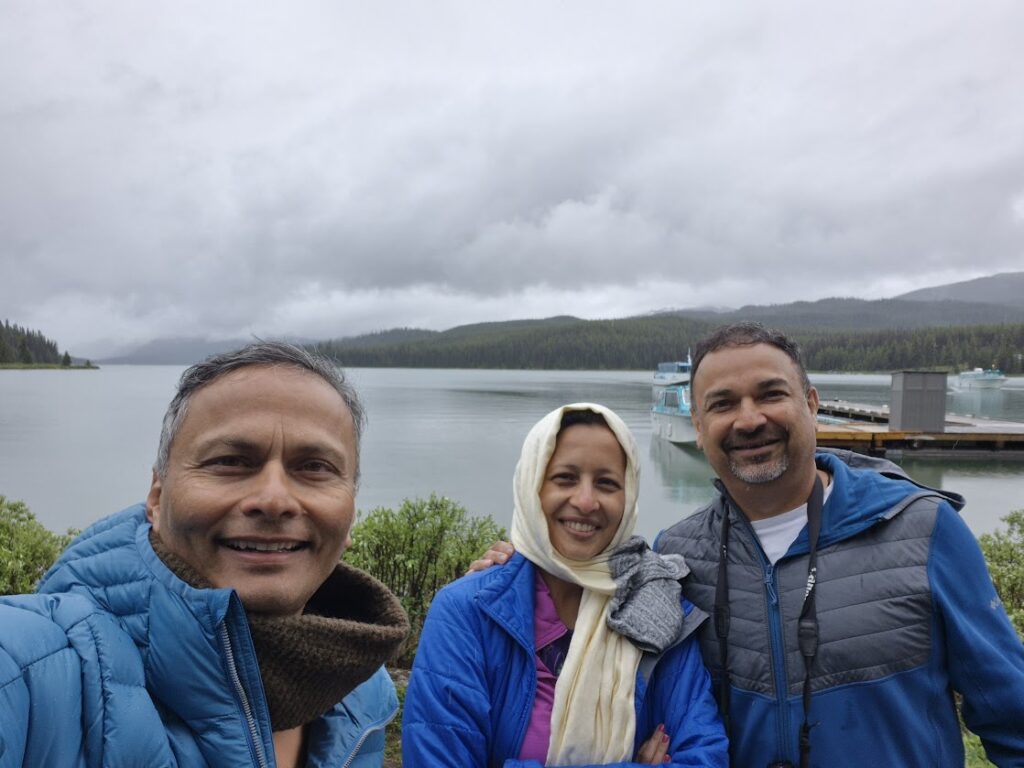
From Maligne Lake, around 1 pm, we decided to drive directly to Yoho National Park, about 200 km away. The sights along the way were very pretty.
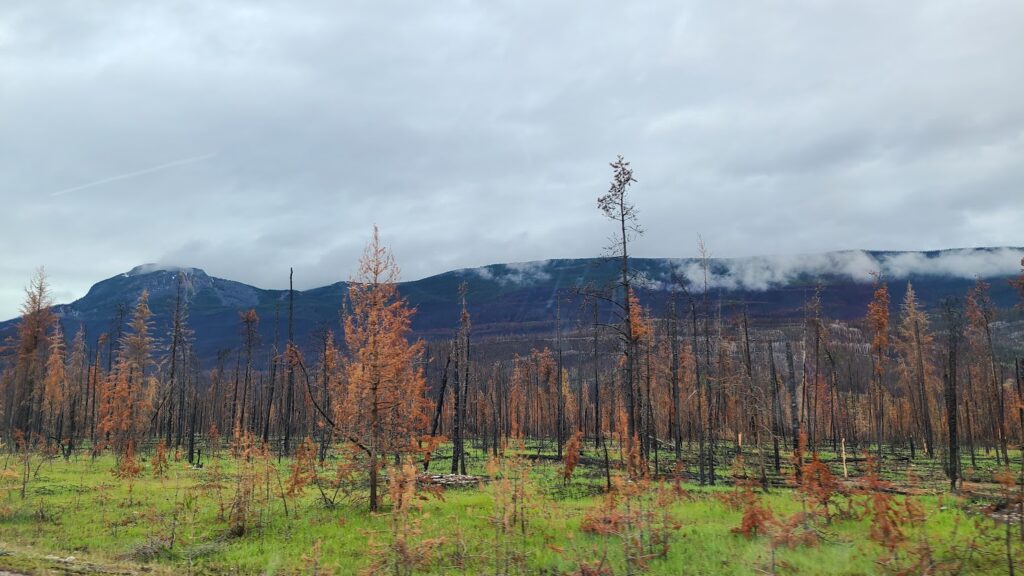
Every turn revealed a breathtaking view. The valleys, forests, and mountain passes were simply mesmerising. We noticed many interesting wildflowers and wildlife during the drive.
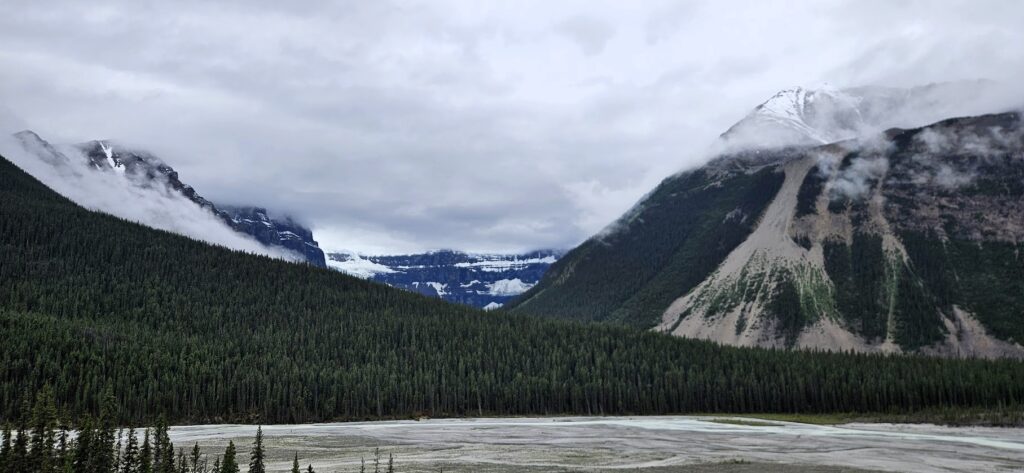
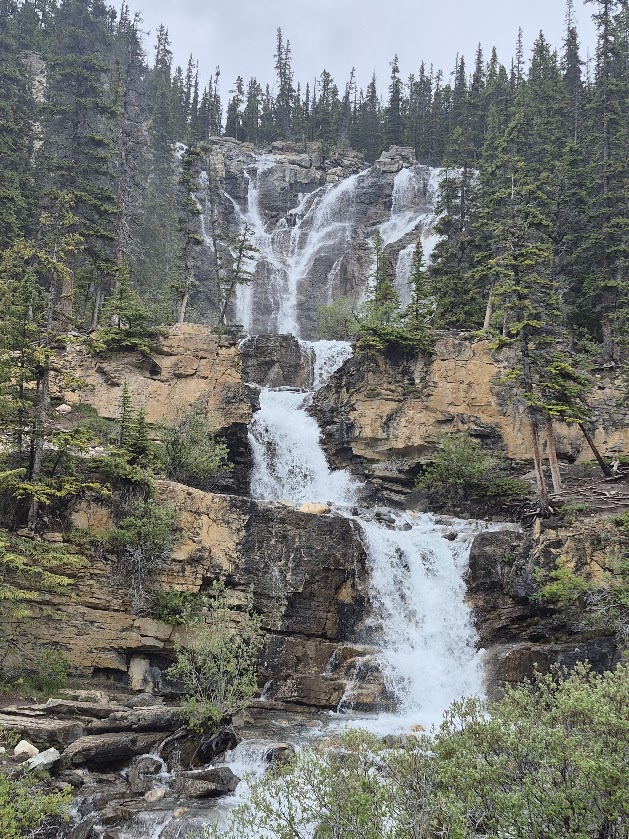
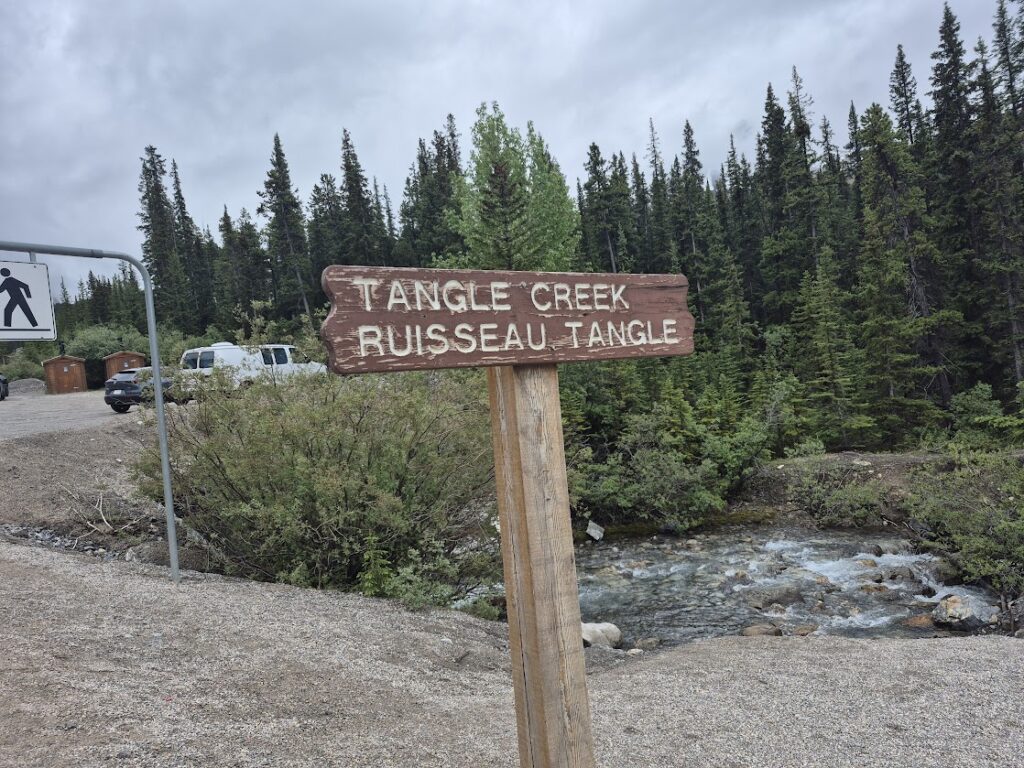
We made a brief stop at Tangle Creek Falls, a tiered waterfall that spills down a rocky slope along the Icefields Parkway. It’s a popular roadside stop and very accessible.
From Tangle Creek, we drove to Kicking Horse Pass, which marks the boundary of Yoho National Park. There, we visited the Spiral Tunnels, a set of tunnels built by the Canadian Pacific Railway around 1910 to reduce the gradient for trains passing through the steep Canadian Rockies.
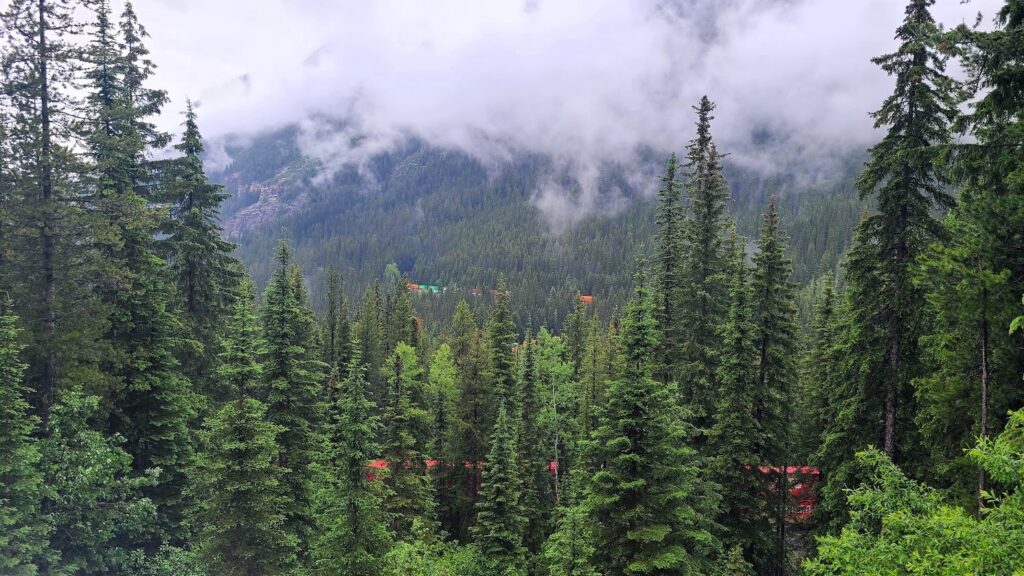
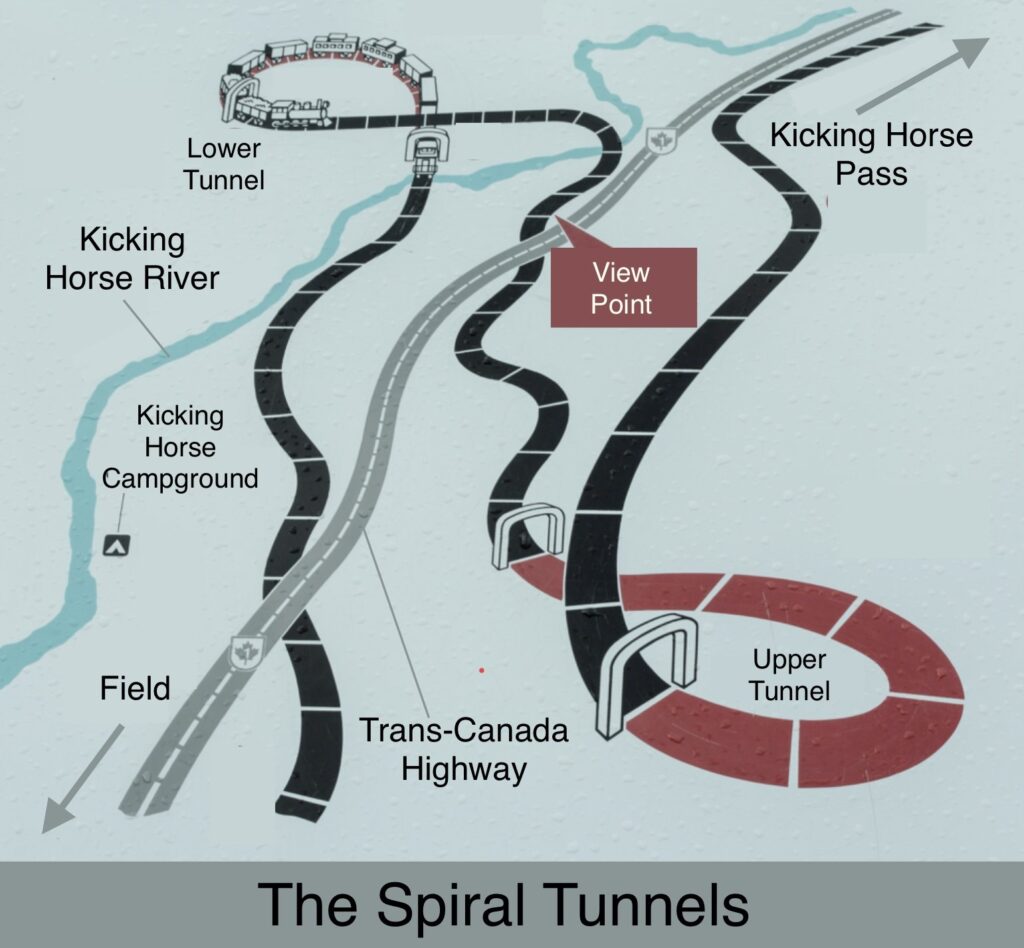
The Spiral Tunnels are an engineering marvel of early 20th-century rail construction. Originally, the grade of the Kicking Horse Pass was a dangerously steep 4.5%. To make it safer for trains, engineers designed spiral tunnels that loop inside the mountains. There are two main tunnels—Upper Spiral Tunnel in Cathedral Mountain and Lower Spiral Tunnel in Mount Ogden. Trains actually pass over themselves, creating a figure-eight path that safely reduces the slope to 2.2%. You can watch trains emerge and disappear into different points of the mountain from a dedicated viewing platform. It’s a fascinating sight, especially for train enthusiasts and anyone interested in engineering history.
From the Spiral Tunnels, we continued through Kicking Horse Pass on the Trans-Canada Highway toward Takakkaw Falls in Yoho National Park.
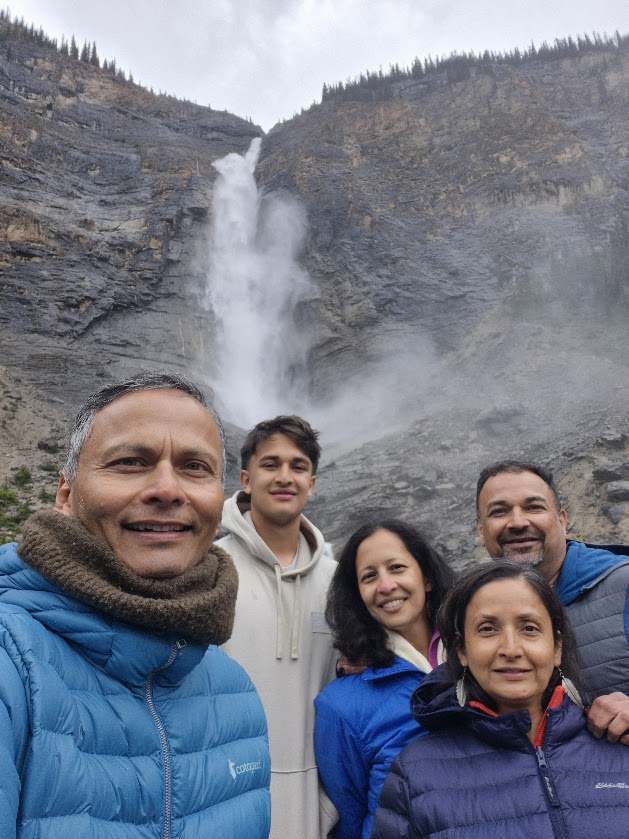
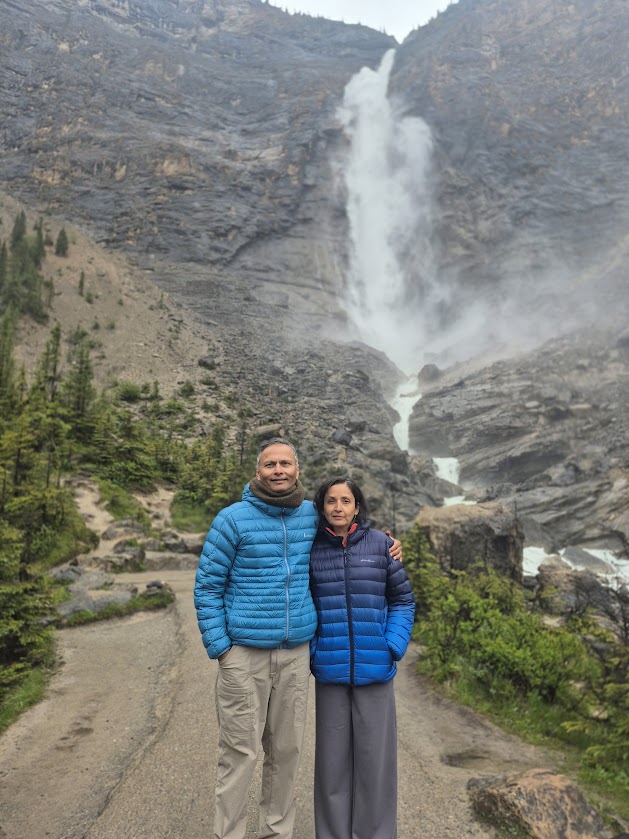
The drive was absolutely beautiful, winding through dense forests and mountain views.
Takakkaw Falls is one of the tallest waterfalls in Canada and a must-see natural attraction in Yoho National Park. The name “Takakkaw” means “it is magnificent” in Cree, and the falls live up to their name. The water originates from the Daly Glacier, part of the Waputik Icefield. In peak summer, the glacier melt dramatically increases the volume of the falls, creating thunderous mist and visible spray from hundreds of meters away. The falls are accessible by a short, scenic hike from the parking lot and are popular for both daytime photography and evening glow during sunset.
Takakkaw Falls was the last sightseeing stop for the day. Over the past two days, we had managed to cover the highlights of Banff, Jasper, and Yoho National Parks.
As we exited the parks, we couldn’t stop admiring the raw beauty surrounding us. Towering peaks, winding rivers, and ever-changing skies accompanied us all the way out.
We wrapped up Day 6 with a delicious falafel dinner in the charming town of Canmore, just outside of Banff. After dinner, we drove back to Calgary and reached Vishwas Sail’s home at 9:15 pm.
It was a truly wonderful and unforgettable visit to the Canadian Rockies.
Day 7: June 21, Saturday – Calgary Visit
After a busy and eventful week exploring the Canadian Rockies, we decided to take it slow on Saturday. We slept in and had a relaxed start to the day, giving ourselves time to recharge.
In the afternoon, we visited the Military Museums Complex in Calgary.
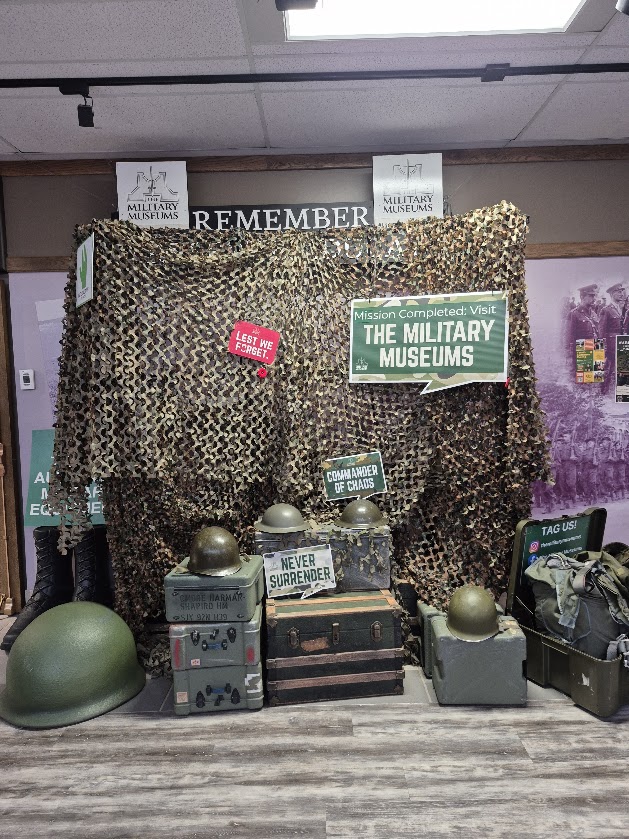
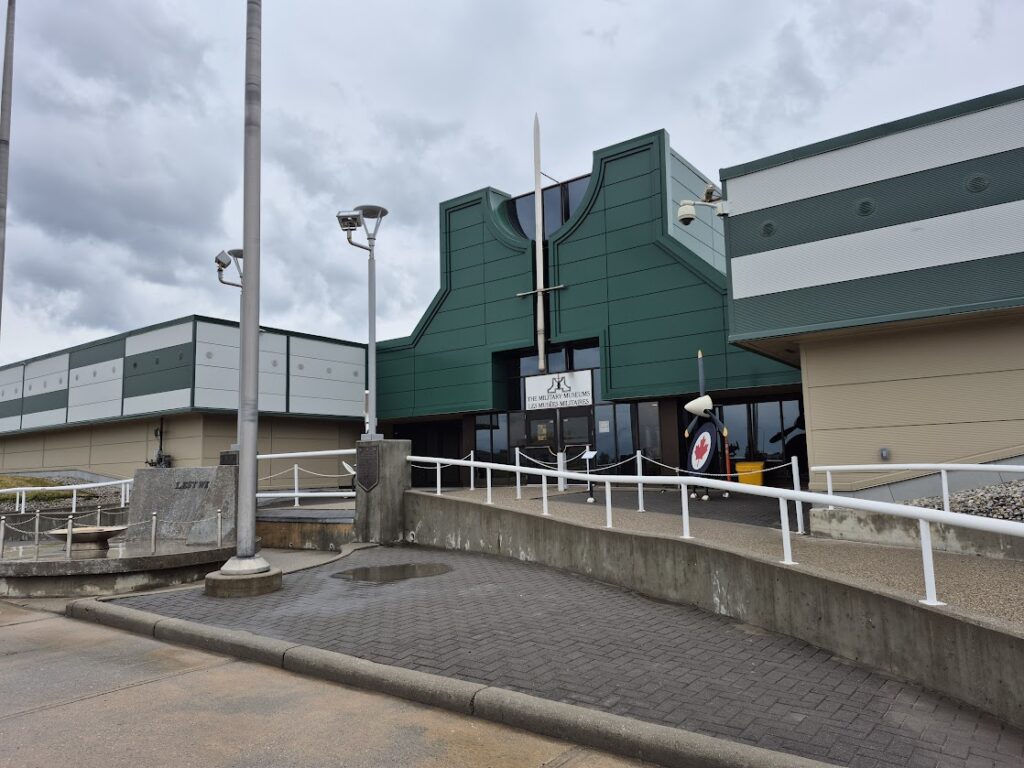
This museum is one of Canada’s largest tri-service museums, featuring comprehensive exhibits on the Army, Navy, Air Force, and Cold War history. Each section was thoughtfully curated, with interactive displays, historical artifacts, and real-life accounts that brought Canada’s military past to life. It was an engaging and educational experience for everyone, and it took us nearly two hours to explore all the exhibits.
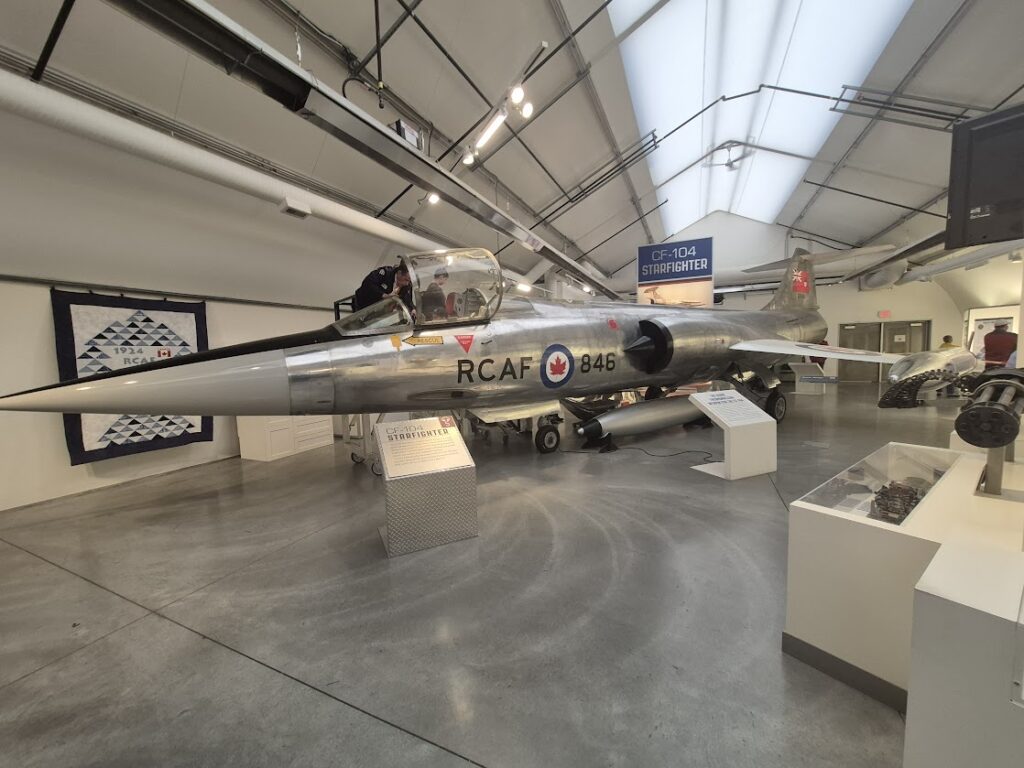
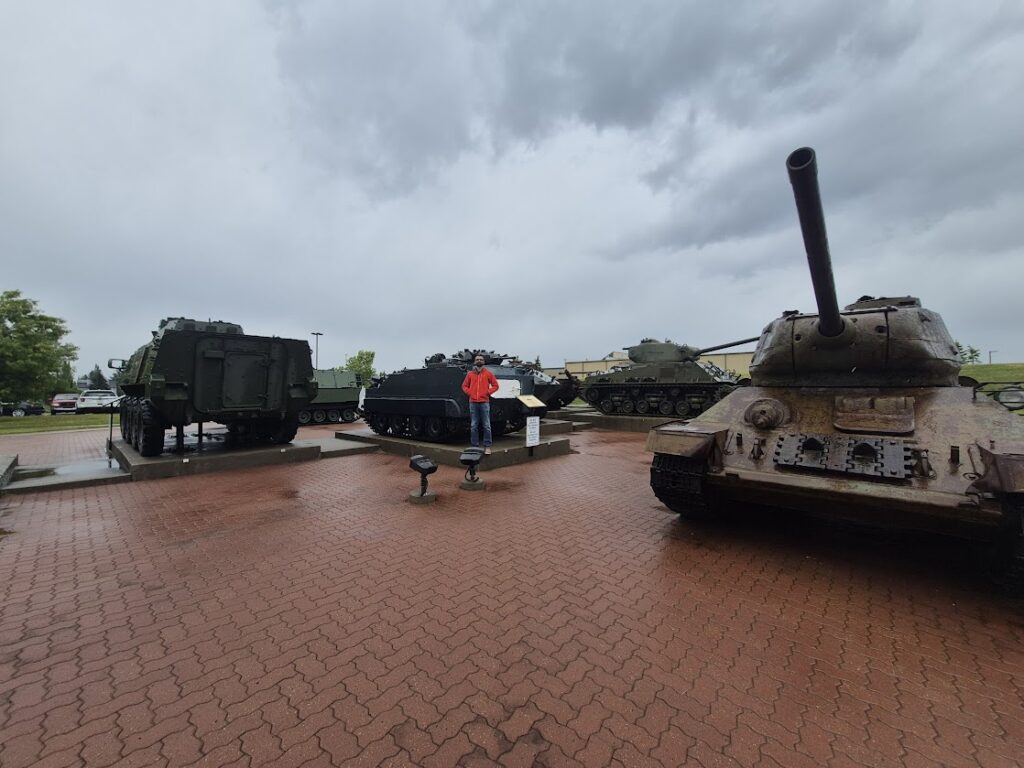
In the evening, we stayed in and watched the Bollywood movie Badshaah, starring Shah Rukh Khan. It was fun, nostalgic, and just the kind of light-hearted entertainment we needed after a long week of travel and sightseeing.
We ended the day with some delicious home-cooked food, shared in good company. It was a calm and cozy conclusion to a wonderful week filled with natural beauty, wildlife, and unforgettable memories.
Day 8: June 22, Sunday – Drumheller, Royal Tyrrell Museum, Calgary Downtown
This was a bright, sunny day—perfect for our plan to head east of Calgary into the fascinating world of prehistoric life. We left Calgary in the morning and drove approximately 150 km (about 1 hour and 30 minutes) to the town of Drumheller, located in the heart of Alberta’s Badlands.
Our main destination was the Royal Tyrrell Museum, a world-renowned paleontology museum dedicated to the study of dinosaurs and ancient life. Alberta is one of the richest areas in the world for dinosaur fossils, and the museum showcases many of these spectacular finds.
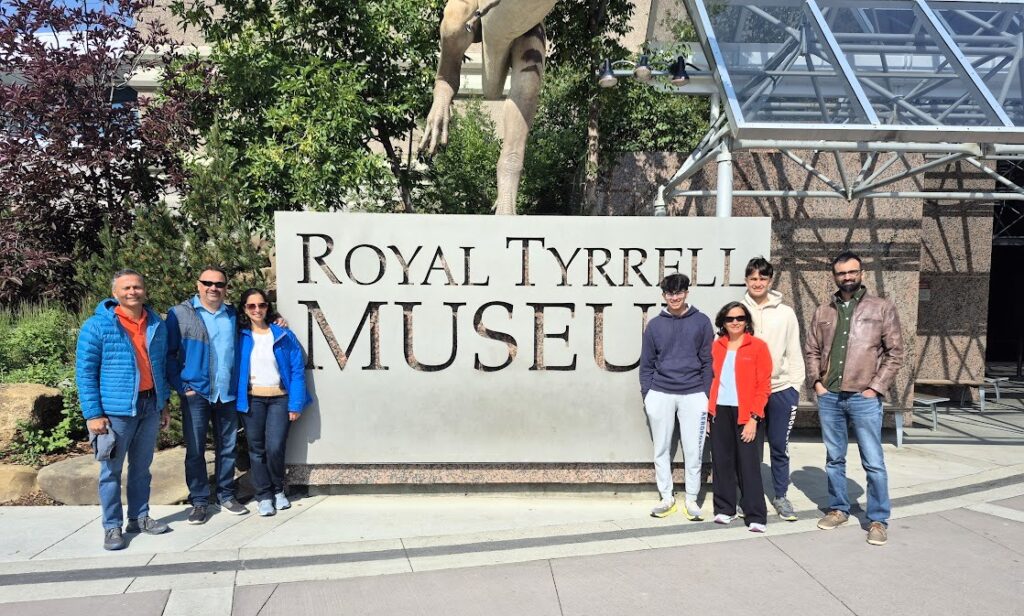
The Royal Tyrrell Museum of Palaeontology is Canada’s only museum dedicated exclusively to paleontology. It opened in 1985 and houses one of the largest displays of dinosaur skeletons in the world. The museum is named after Joseph Burr Tyrrell, who discovered the first dinosaur fossil in the Red Deer River Valley in 1884.
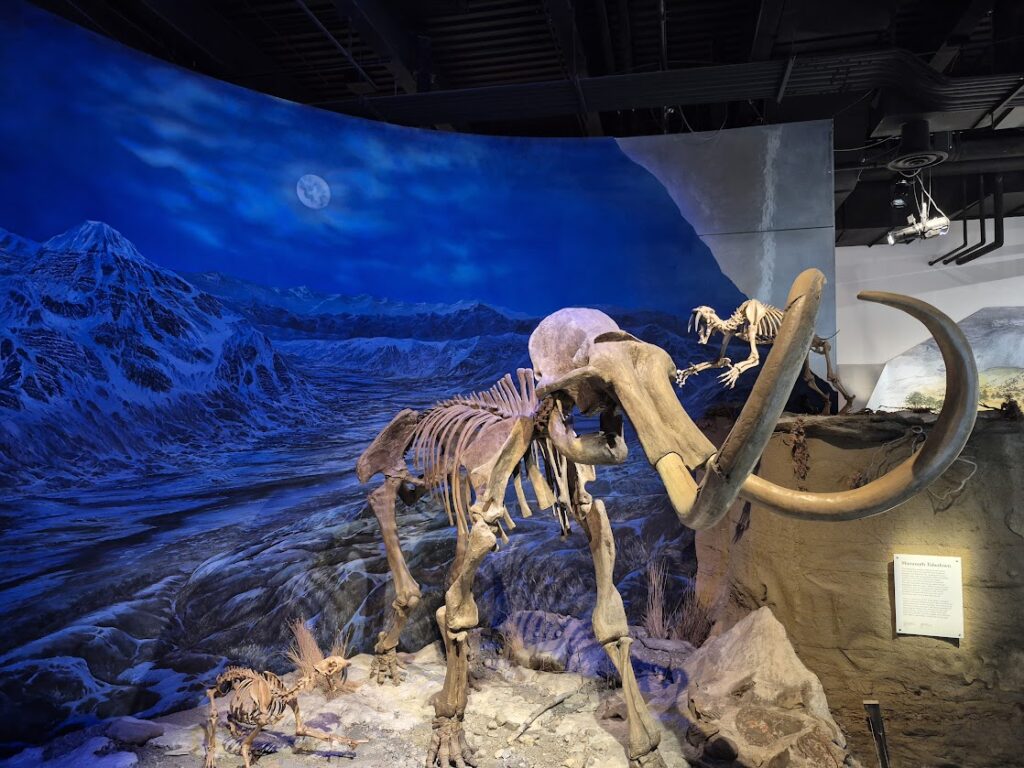
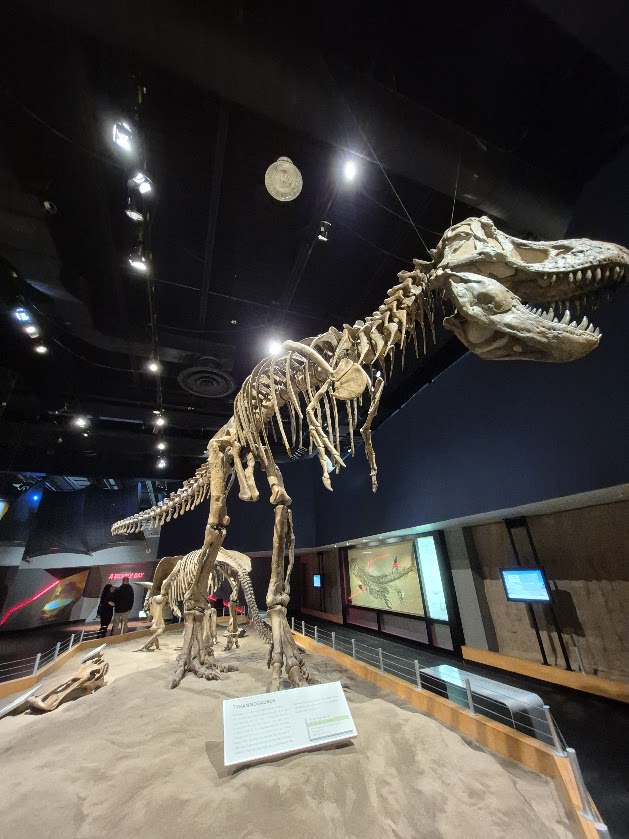
The museum’s galleries take visitors through 4 billion years of Earth’s history—from the origins of life to the rise and fall of the dinosaurs. It features dozens of complete skeletons, life-sized reconstructions, and interactive exhibits that are as educational as they are engaging. A must-see for anyone curious about evolution, geology, or natural history.
We reached the museum around 10:00 am and spent over two hours exploring the various galleries. Some of the dinosaur fossils on display are 66 million years old—absolutely mind-boggling in scale and significance! Even the land around the museum is geologically fascinating, with visible stratified layers of earth corresponding to different prehistoric eras.
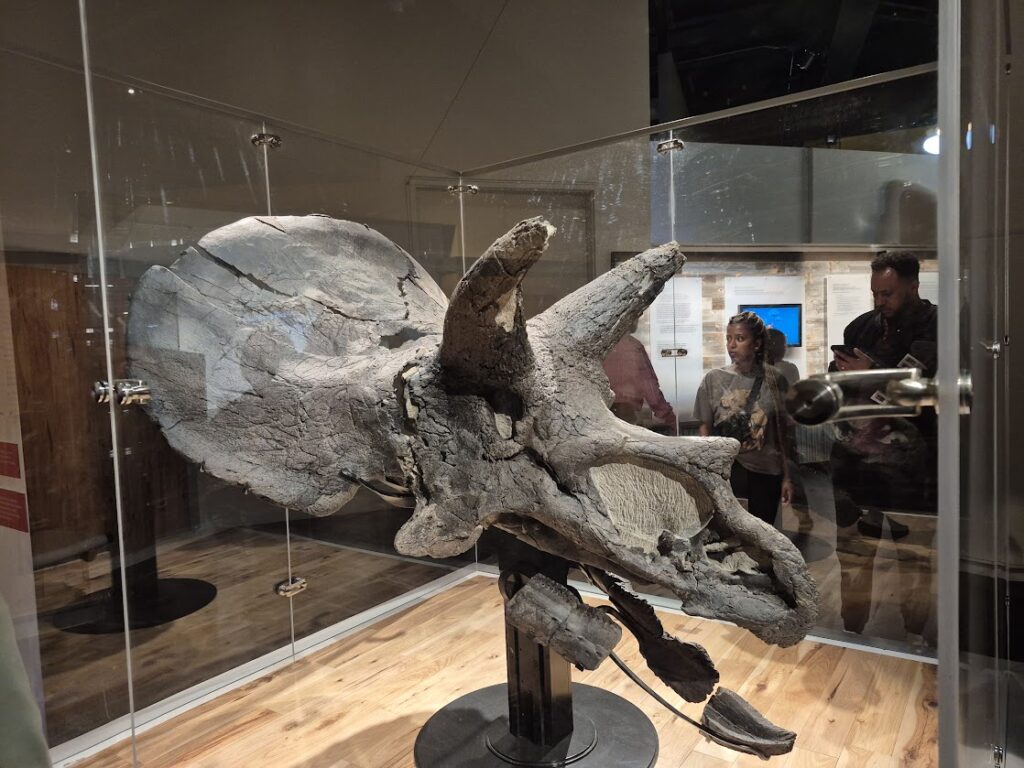
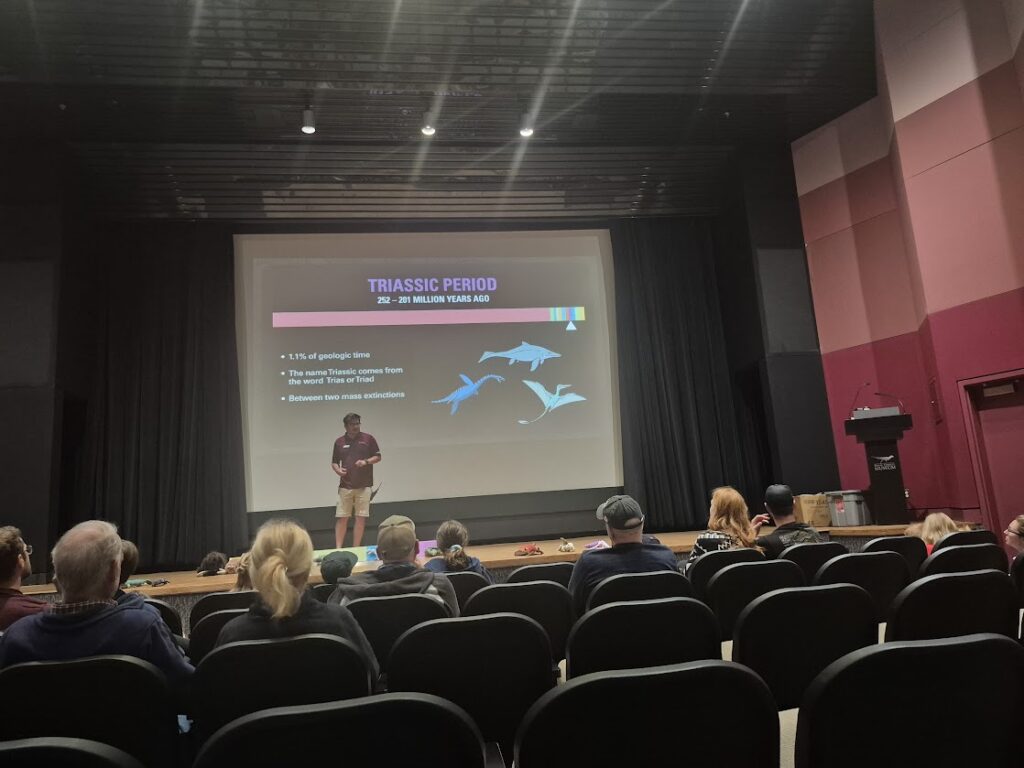
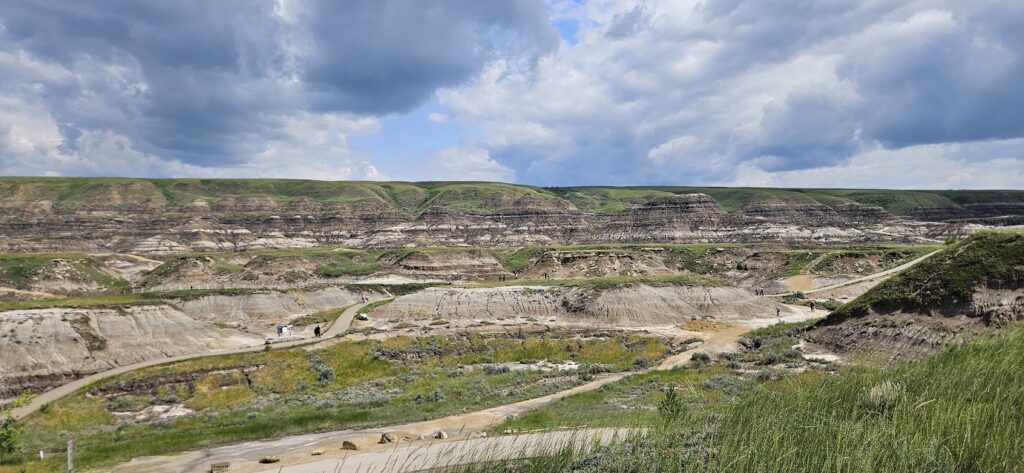
After the museum, we had lunch at a small burger joint in Drumheller called Between the Buns, which served up quick and tasty food.
From there, we visited the famous Hoodoos near Drumheller.
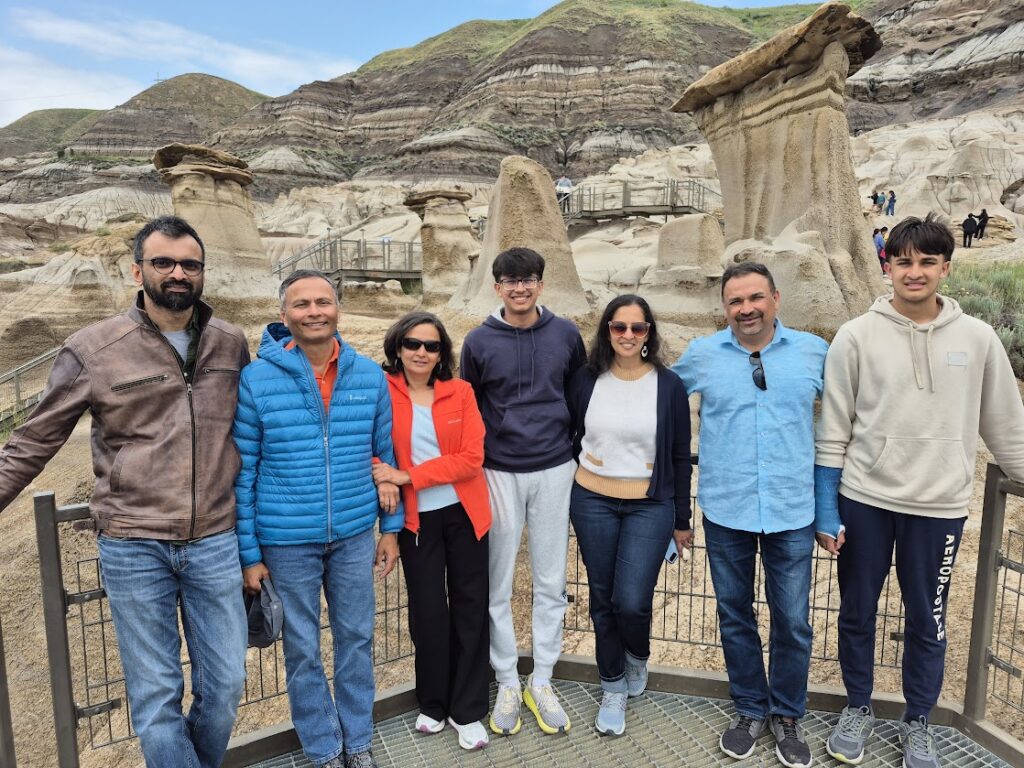
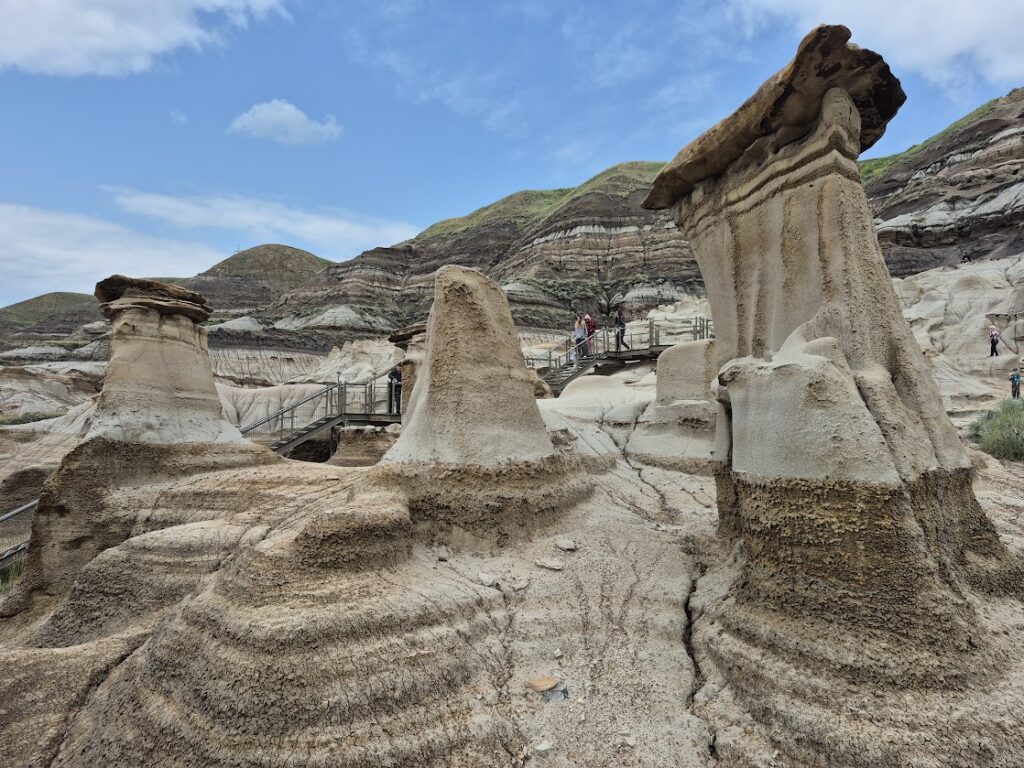
The Drumheller Hoodoos are tall, thin spires of rock that rise dramatically from the arid Badlands terrain. These unique formations are created through millions of years of erosion—where a hard stone cap protects the softer sandstone below, forming their iconic mushroom-like shape.
Hoodoos are rare and can also be seen in places like Bryce Canyon (USA) and Cappadocia (Turkey), but Drumheller’s are among the most accessible and photogenic in North America. A short walk along a marked trail lets visitors get close to these natural wonders.
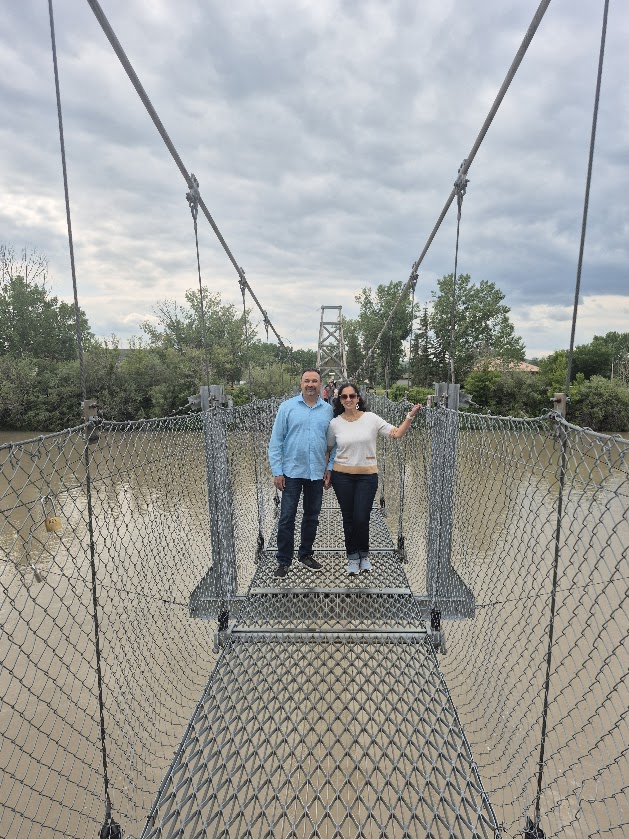
On our way back to Calgary, we made a brief stop at a 1932 suspension bridge, originally constructed to allow coal miners to cross the Red Deer River. It’s a charming relic of Alberta’s industrial past.
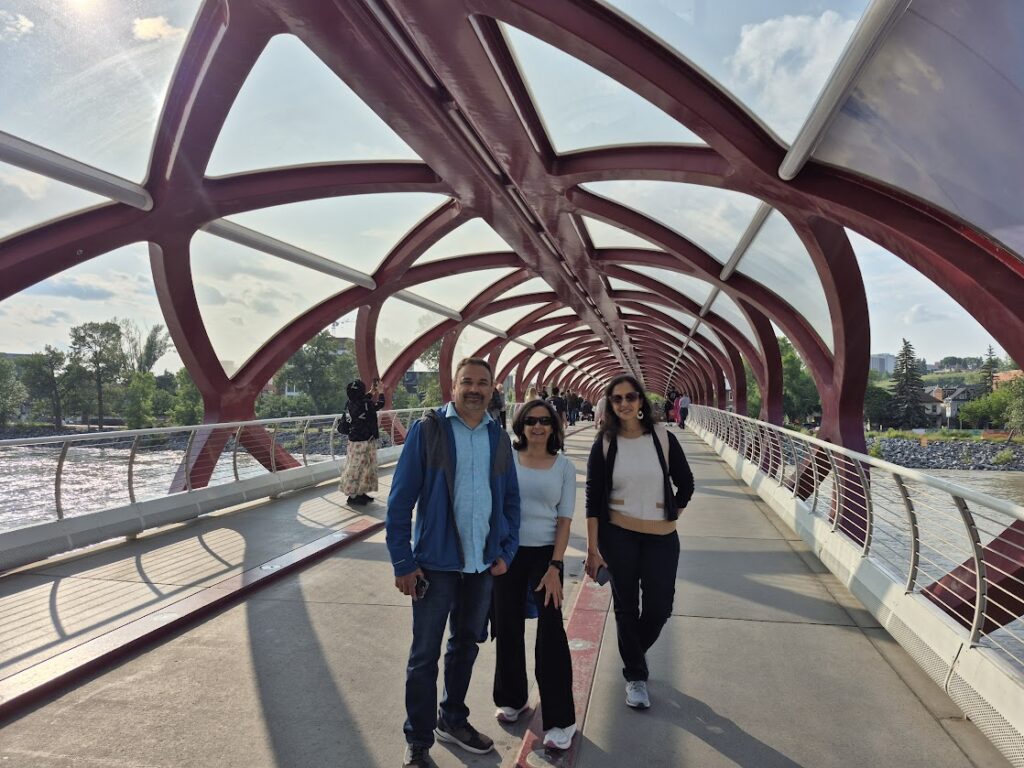
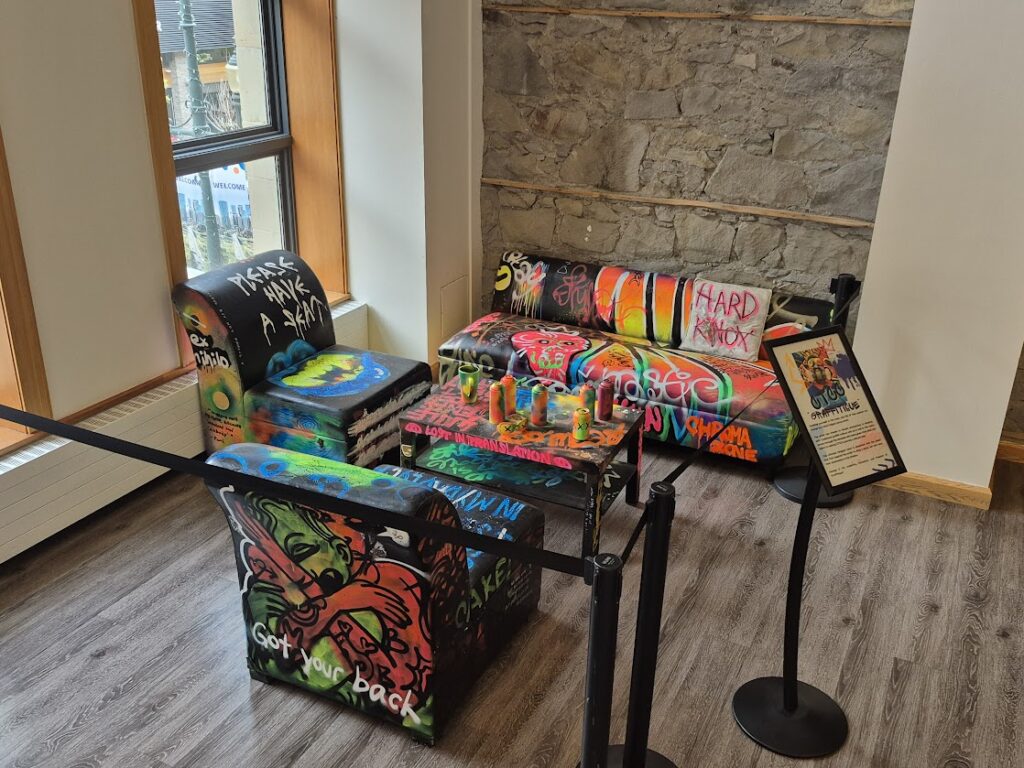
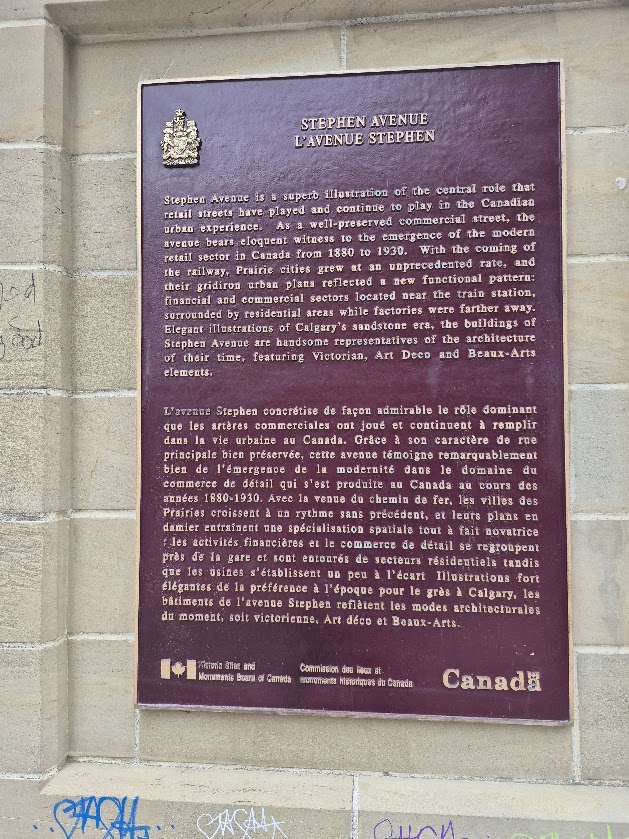
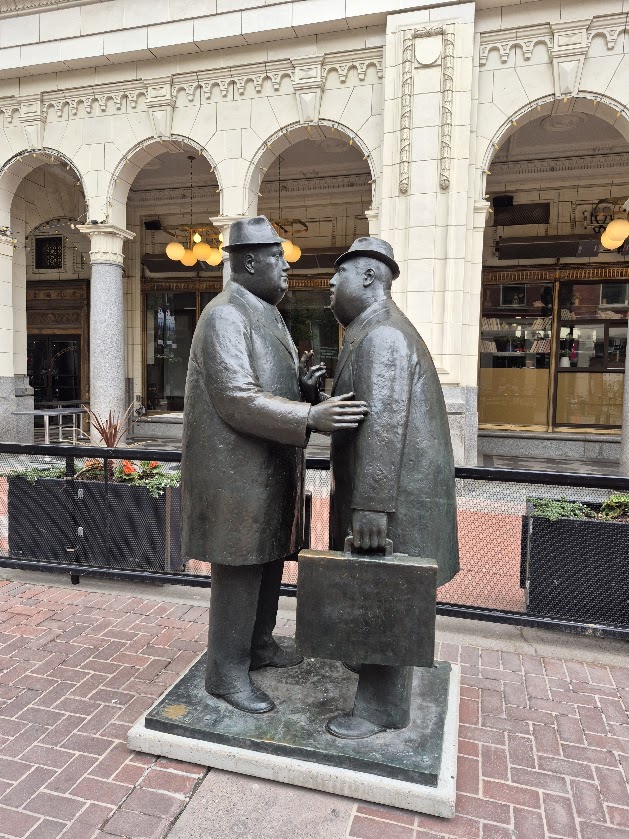
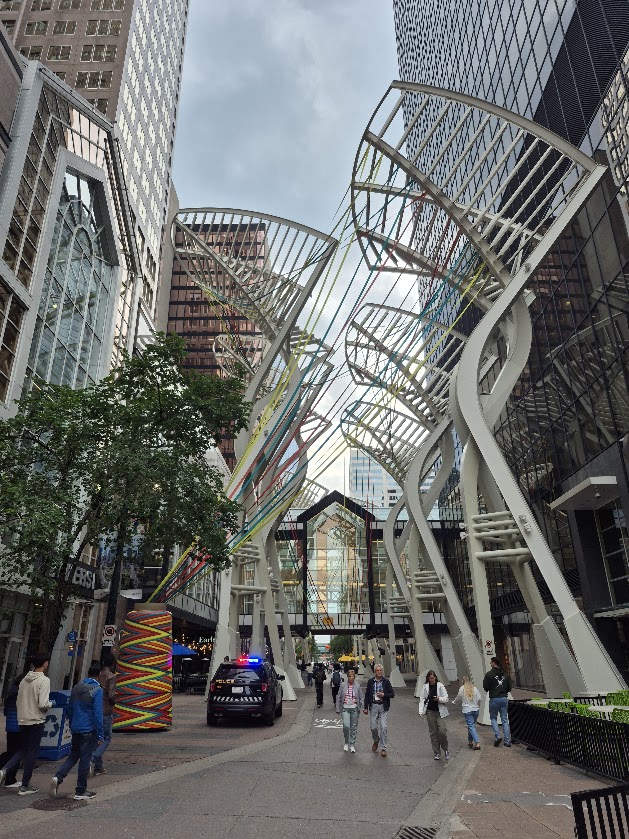
We returned to downtown Calgary around 4:45 pm and spent the rest of the evening exploring the city’s urban highlights:
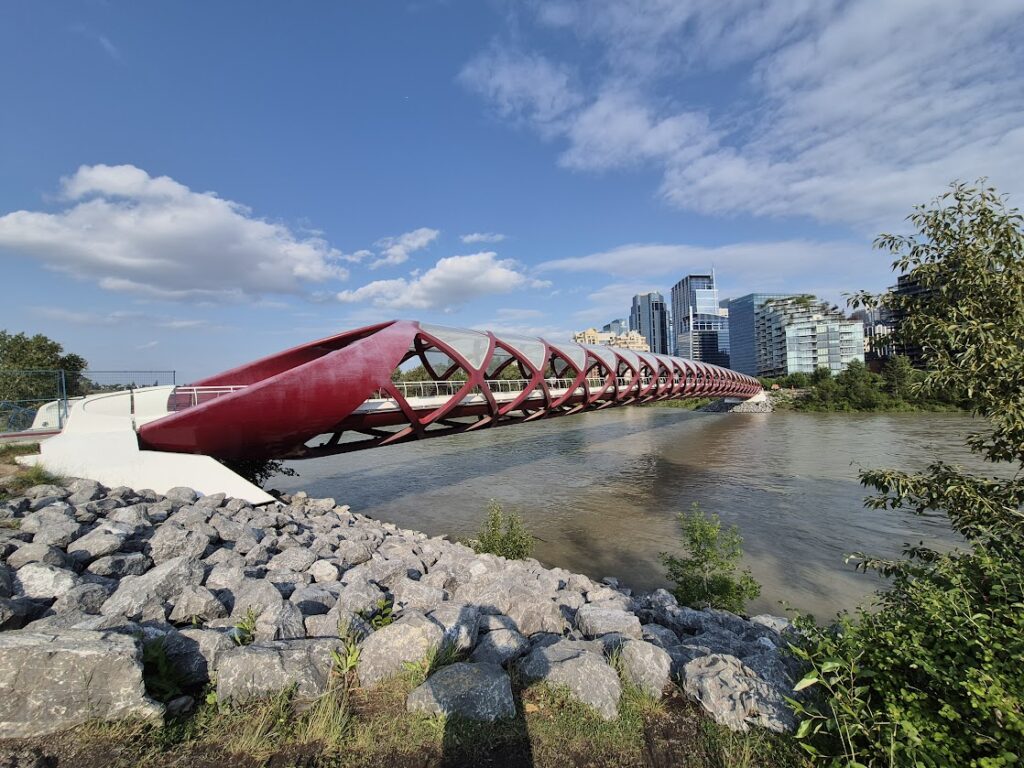
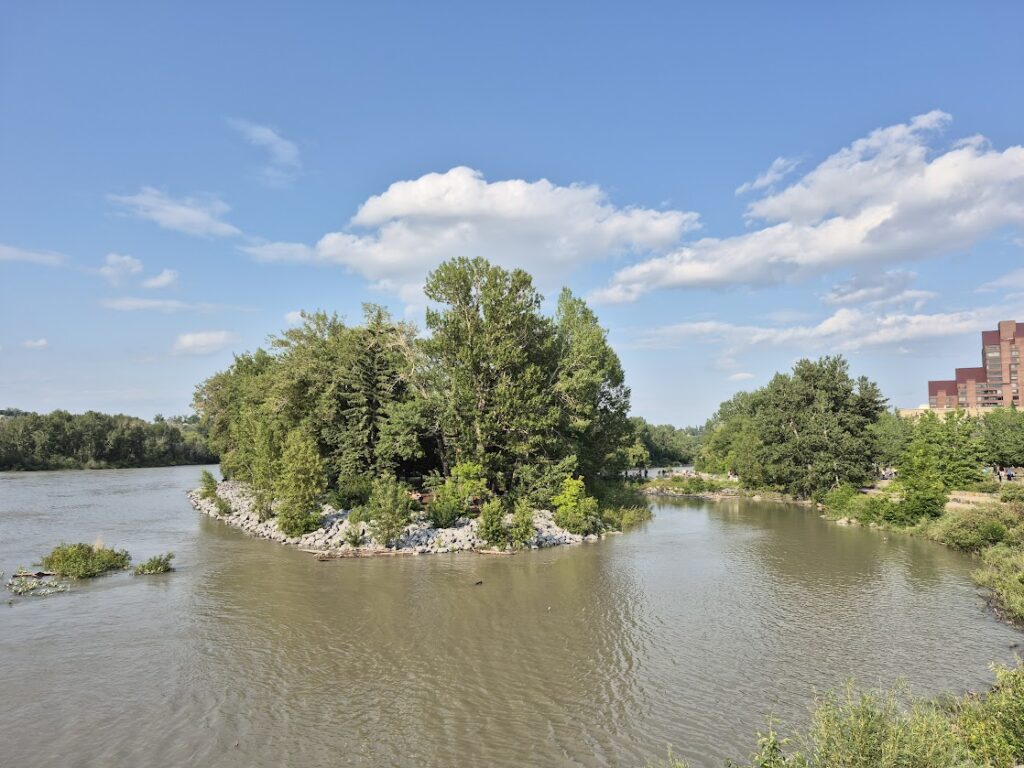
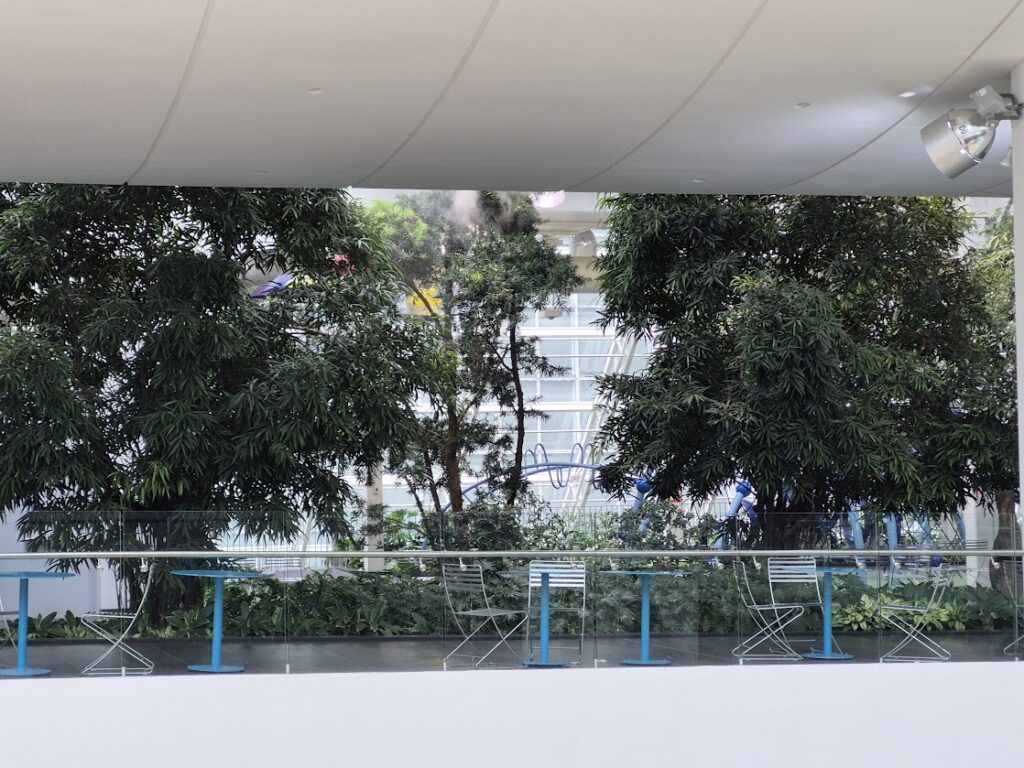
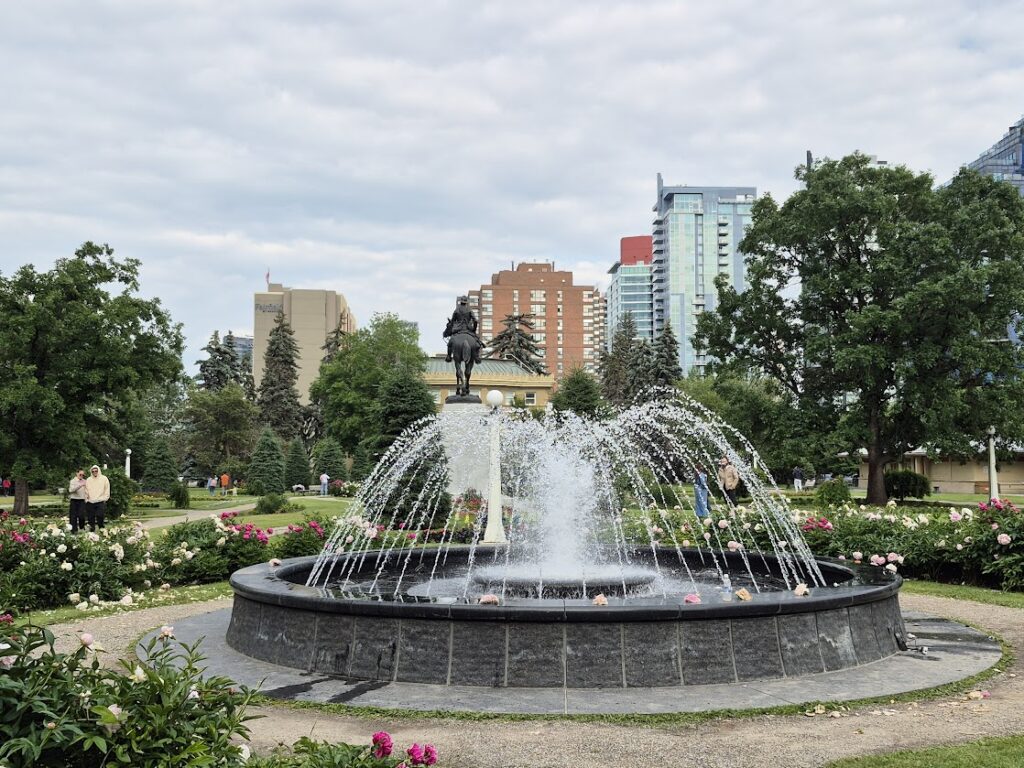
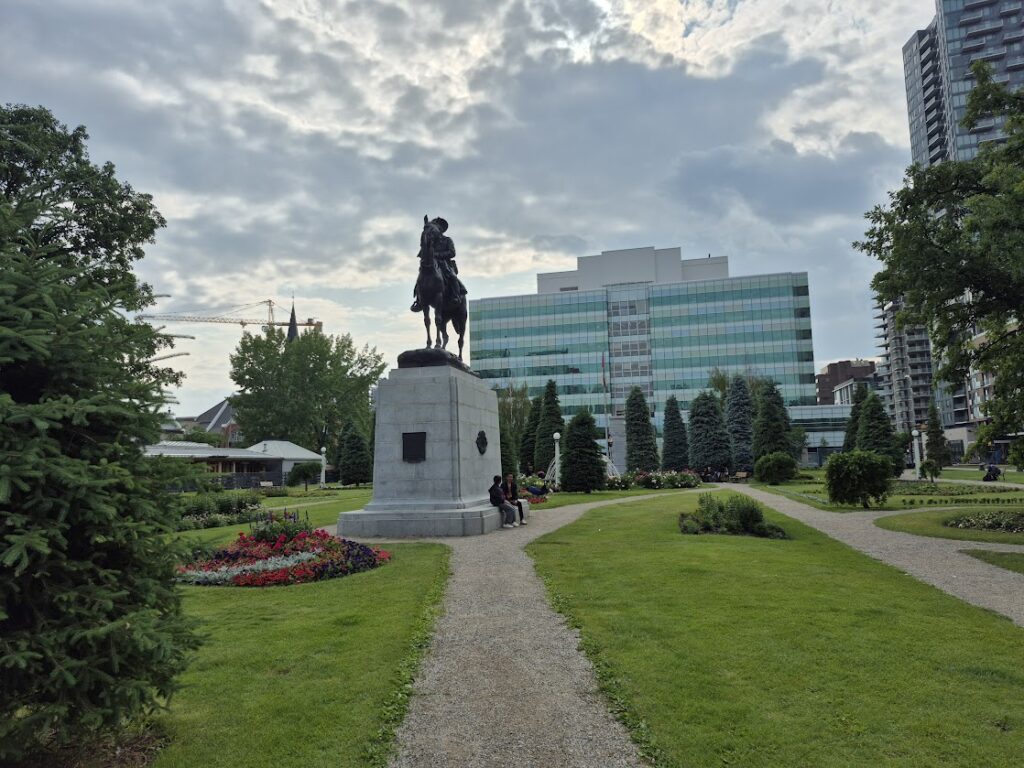
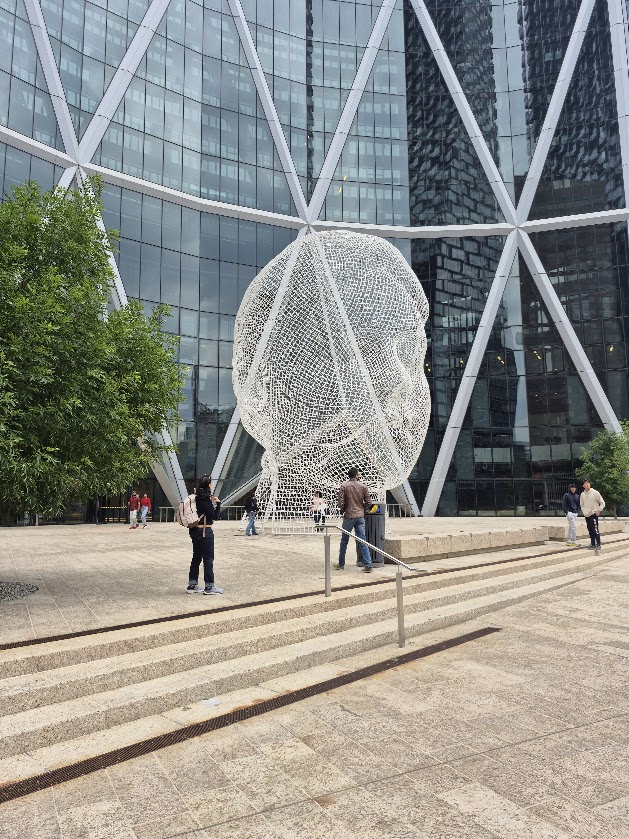
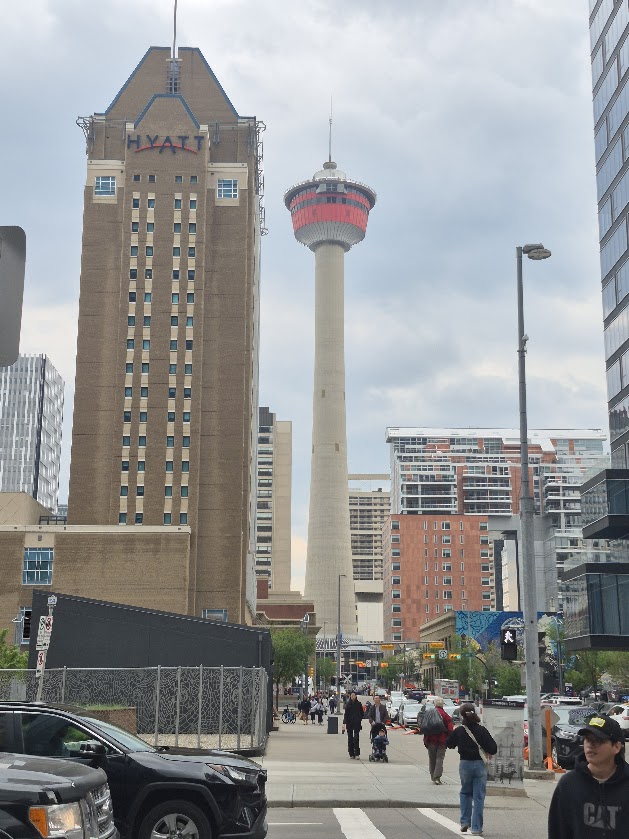
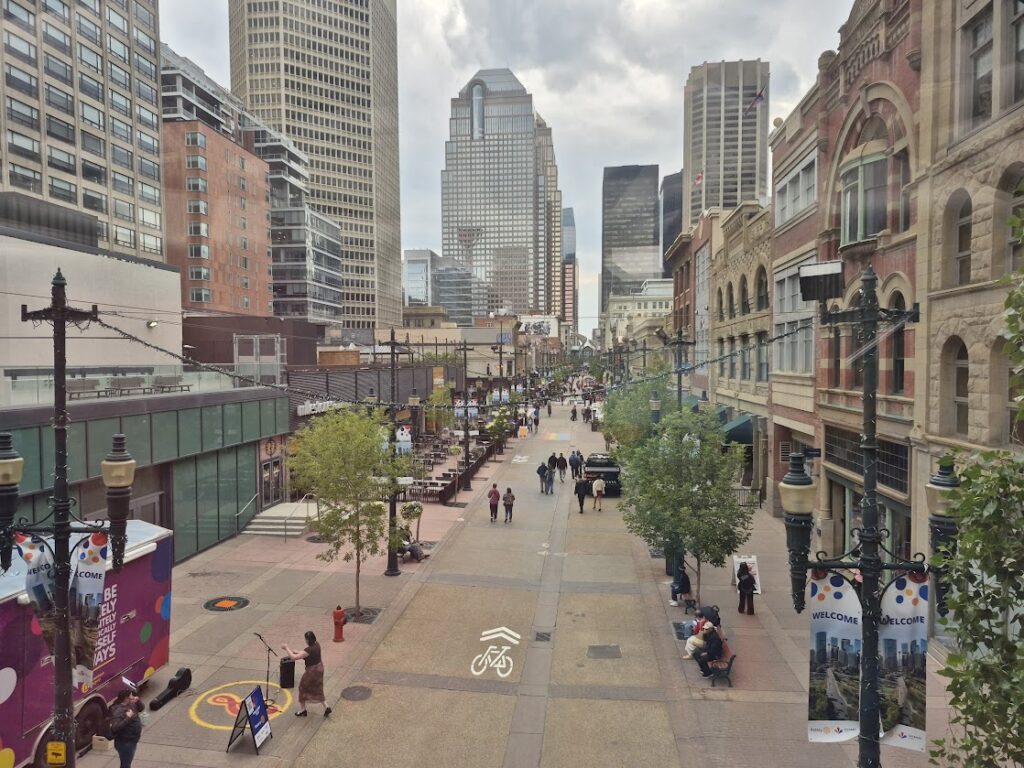
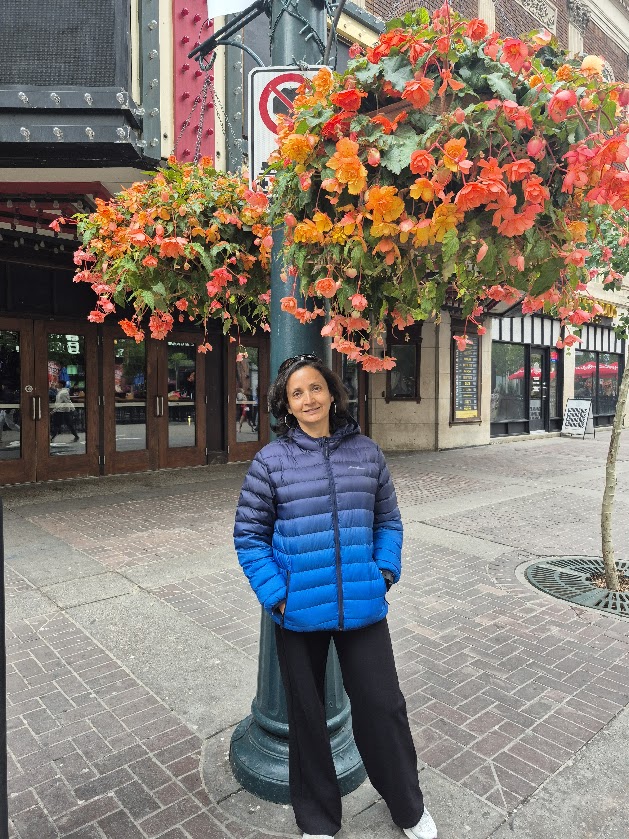
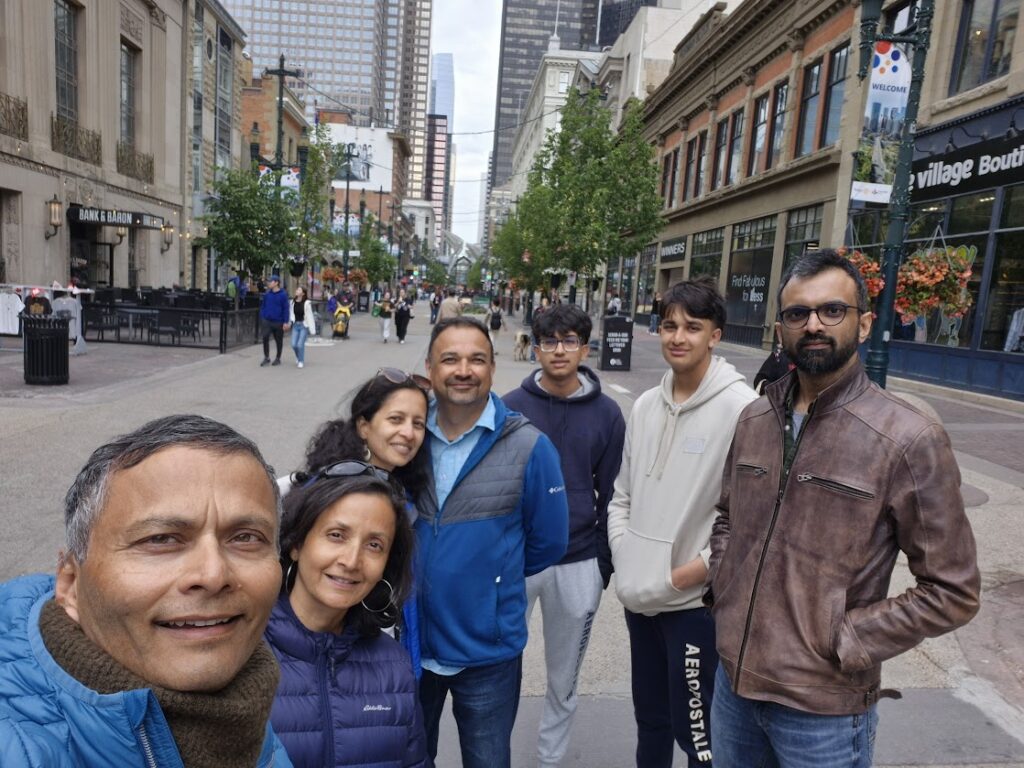
For dinner, we went to Honest Restaurant in Northeast Calgary. It’s part of a popular Ahmedabad-based vegetarian chain, known for its authentic Indian street food. We enjoyed a flavorful meal of Dosa, Amritsari Chole, and Pav Bhaji—all delicious and reasonably priced.
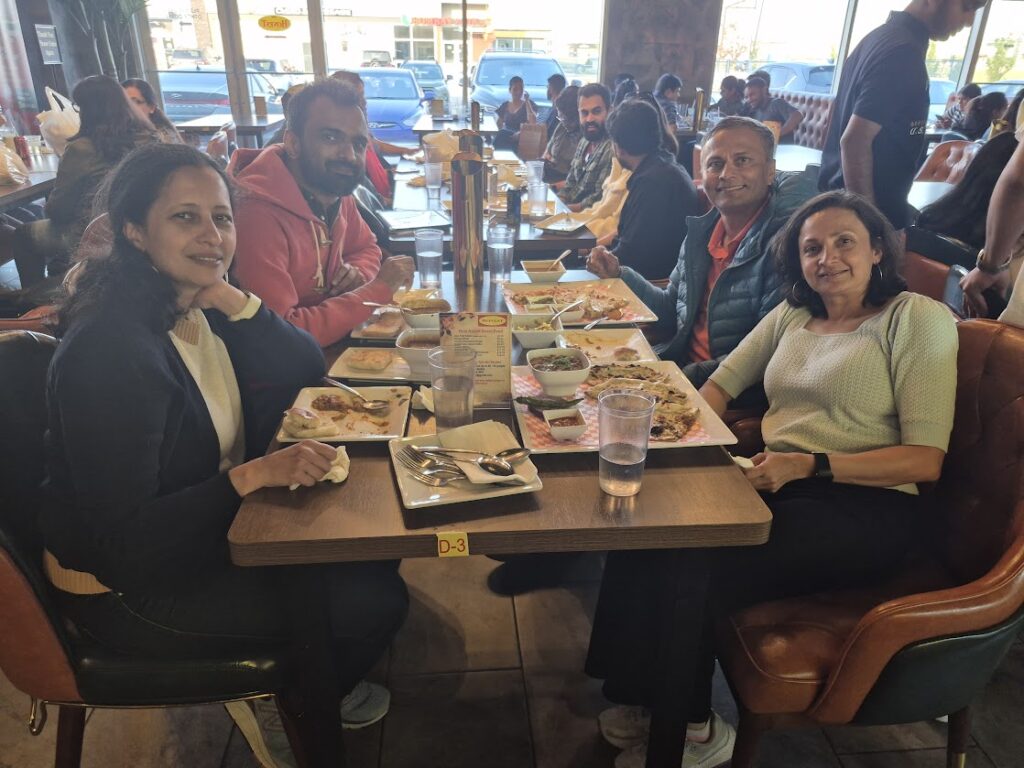
Day 9: June 23, Monday – Calgary & Wrap-up
Our final day in Calgary was relaxed and casual. In the morning, we visited CrossIron Mills, one of the largest outlet malls in Alberta. We arrived around 10:30 am and spent a couple of hours shopping and browsing. The mall has a wide range of brand-name outlets and offers some great deals, making it a good stop for shopping enthusiasts.
By 1:15 pm, we were ready for lunch—and it was an easy choice. We headed back to Honest Restaurant, which had impressed us earlier. This time, our whole group joined in for the meal. We ordered a variety of dishes, including Chole Bhature, Ragda Pattice, Dosa, and Katappa Sandwich.
Once again, the food was excellent—flavorful, authentic, and satisfying. Honest turned out to be a real gem for vegetarian Indian food in Calgary.
The evening was spent unwinding at home with a movie—Hera Pheri, the classic comedy that had everyone laughing—and a friendly game of cards. It was a perfect low-key way to wrap up our action-packed trip.
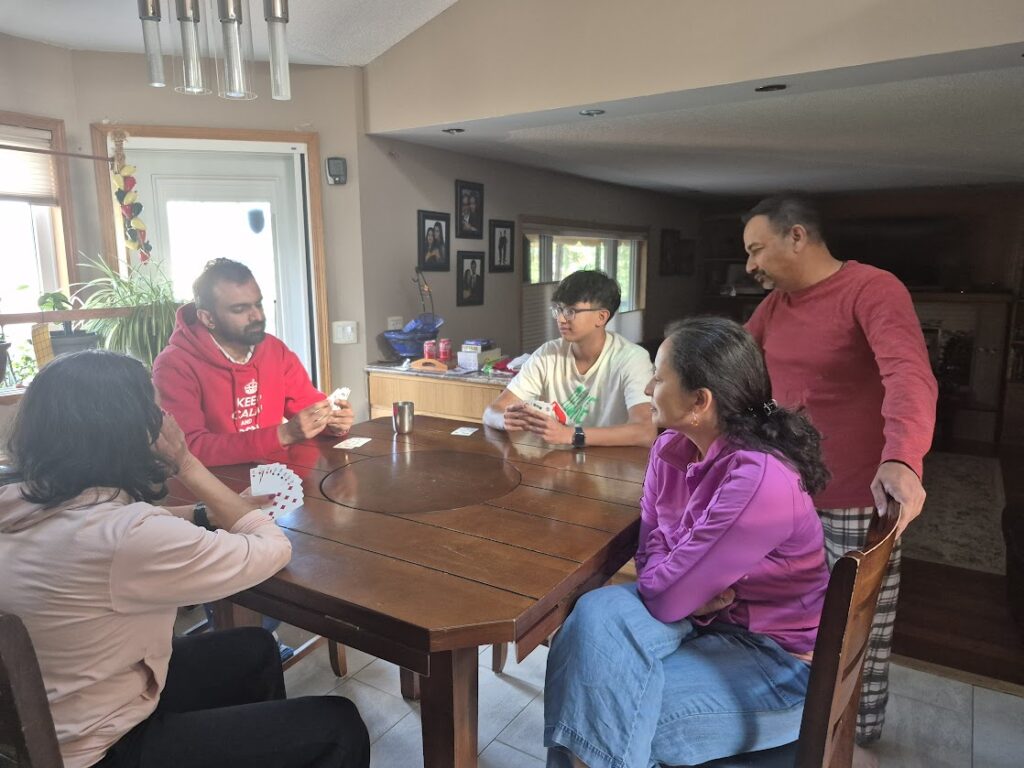
Departure – June 24, Tuesday
We had an early start on Tuesday, June 24, catching our 6:00 am flight from Calgary to Washington, D.C., via Toronto. The early morning departure marked the end of an unforgettable vacation.



Dear Samir,
Your blog is simply mind blowing. Your articulation is reflected in your writing the blog, choice of select photos and above all in your deep and passionate love for the travel and that too with family.
LIVING LIFE KINGSIZE WITH A PURPOSE.
I AM PROUD OF YOU
GOD BLESS YOU & YOUR FAMILY.