

We spent an incredible 6 days in Norway exploring their fjords, sea, natural beauty and well-engineered undersea tunnels.
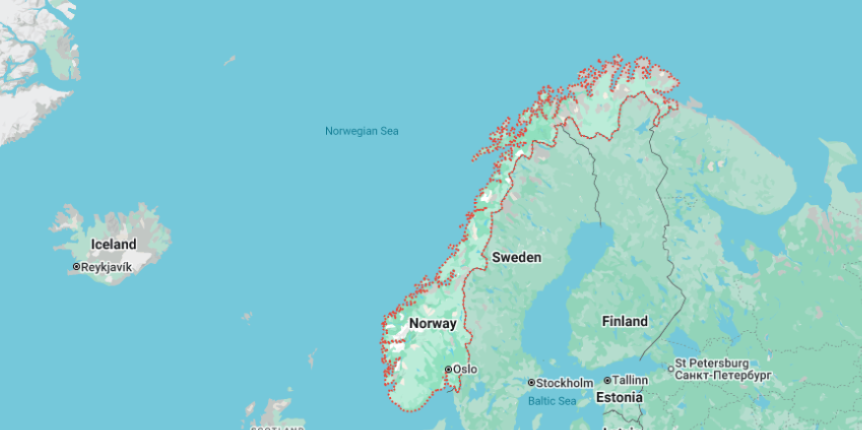
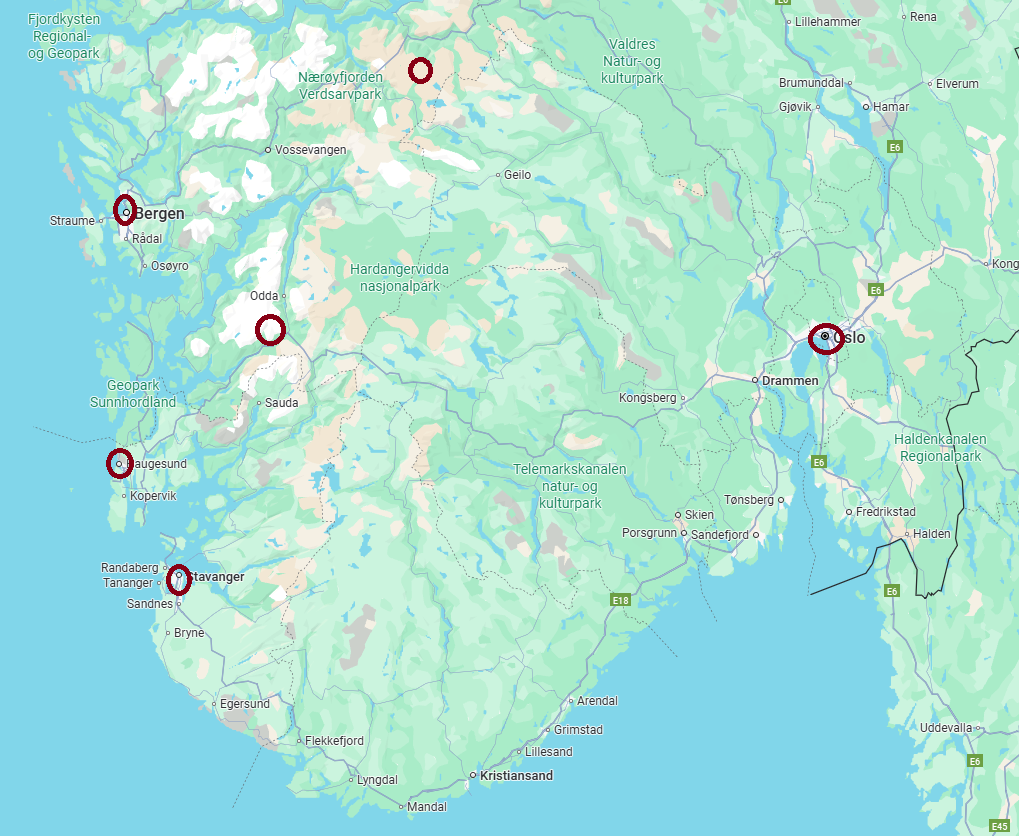
We visited Bergen, Flam, Hardanger Fjord, Haugesund, Stavanger and Oslo, mainly in the Southwest part of Norway.
Day 1: Fri, Aug 8: Flight from Iceland to Bergen, Norway
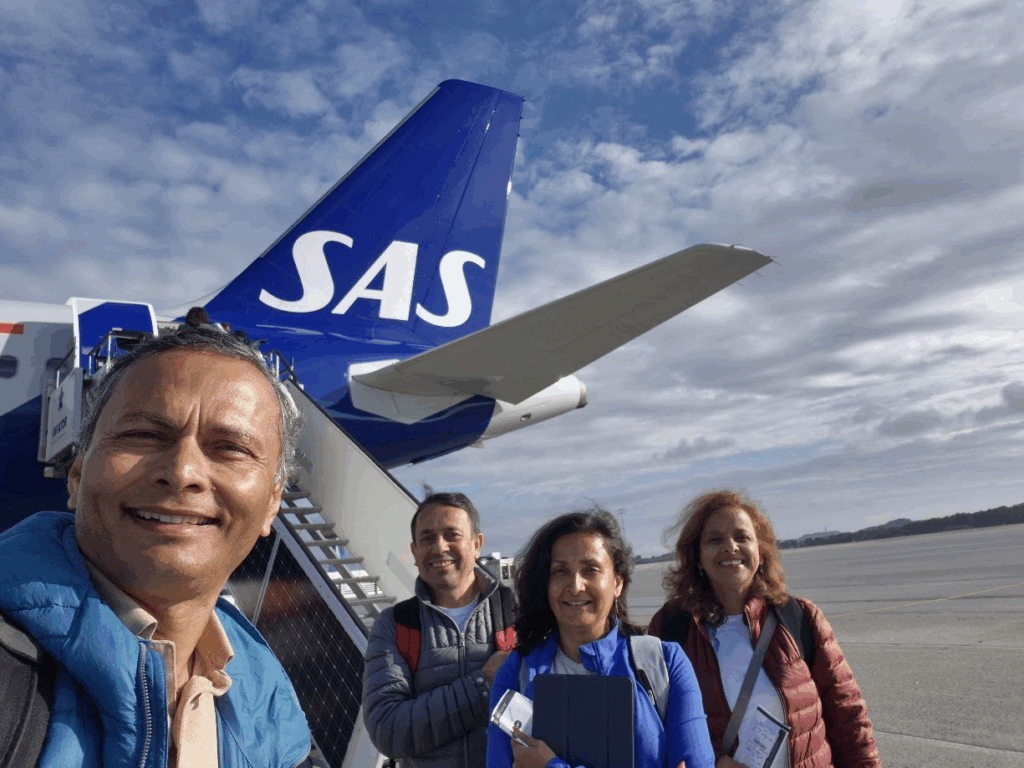
Our SAS (Scandinavia Air Services) flight took off from Reykjavik, Iceland at 10.10 am and reached Bergen, Norway at around 3.45 pm.
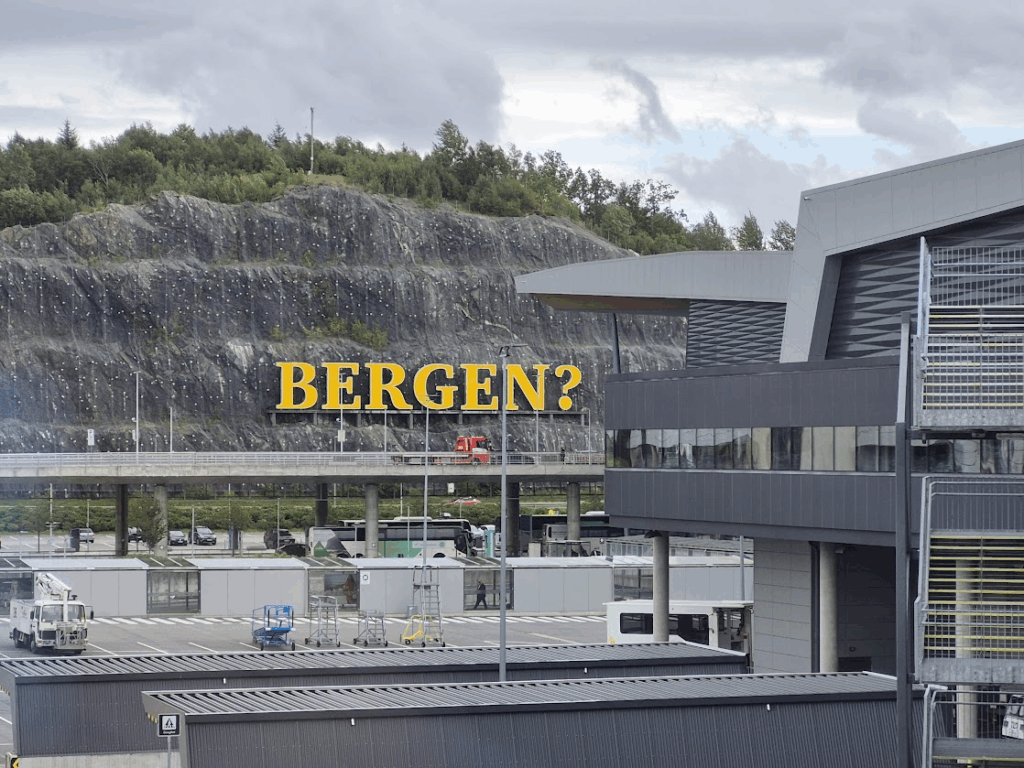
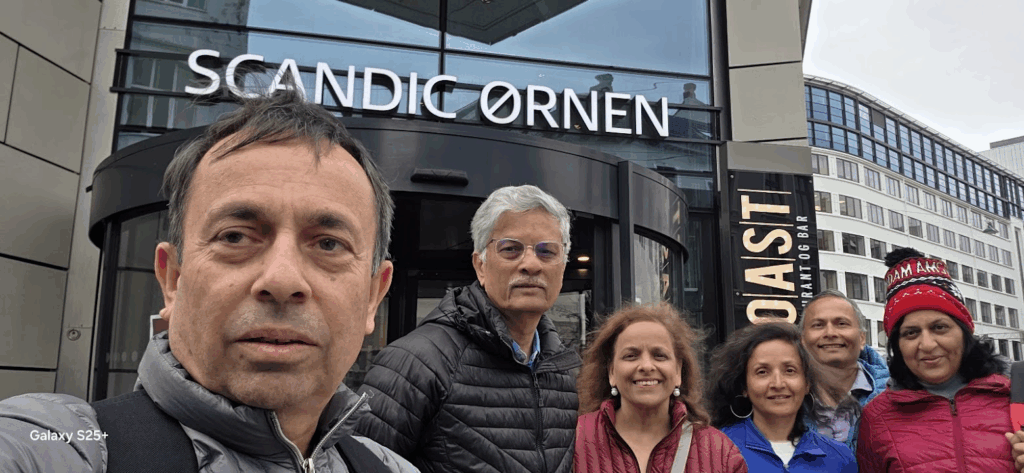
We took off from Bergen airport at 3.45 pm and reached Scandic Ornen hotel at around 4.10 pm.
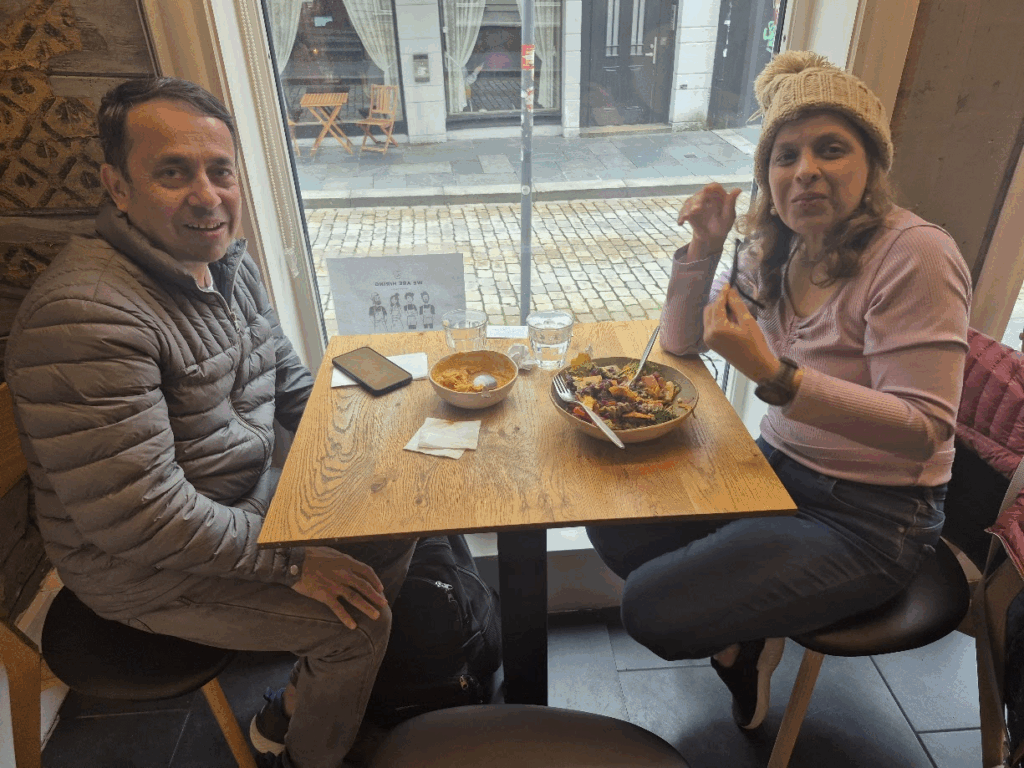
We then went out for a very late lunch at The Daily Pot restaurant where they had wonderful veggie bowls and soups.
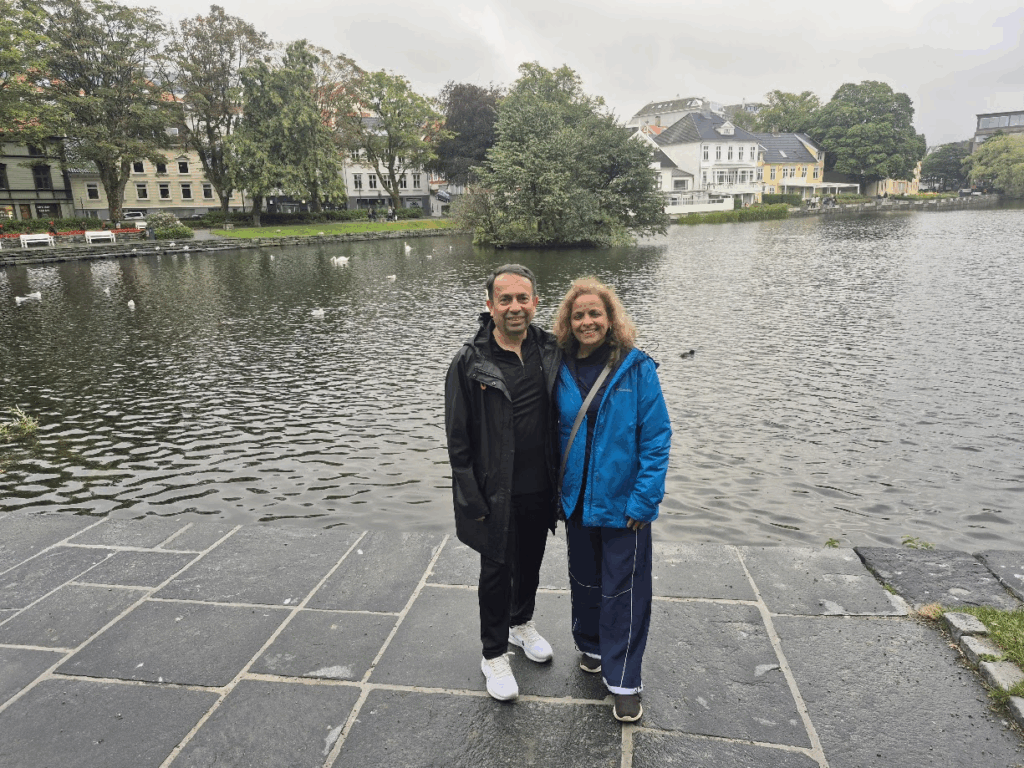
We then roamed around Bergen, the lake, the sailor’s monument. We were planning to go to the harbor and the docks area, when around 6.30 pm there was heavy rain. So we decided to head back to the hotel.
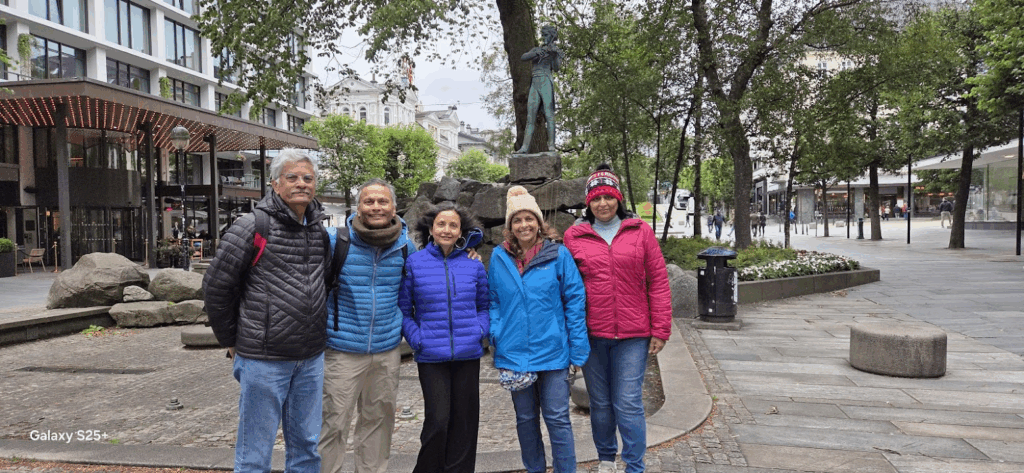
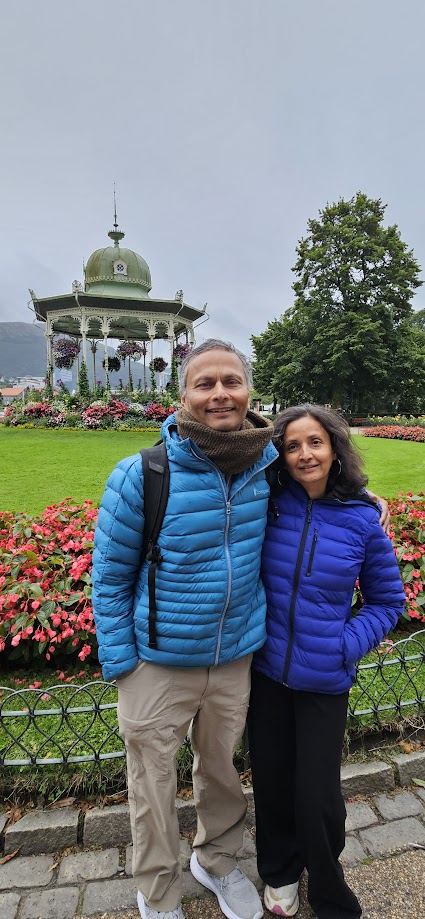
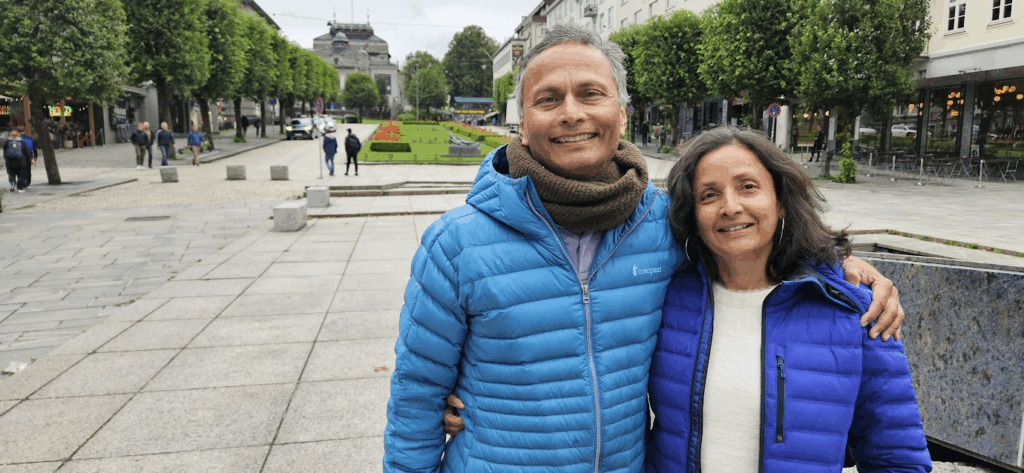
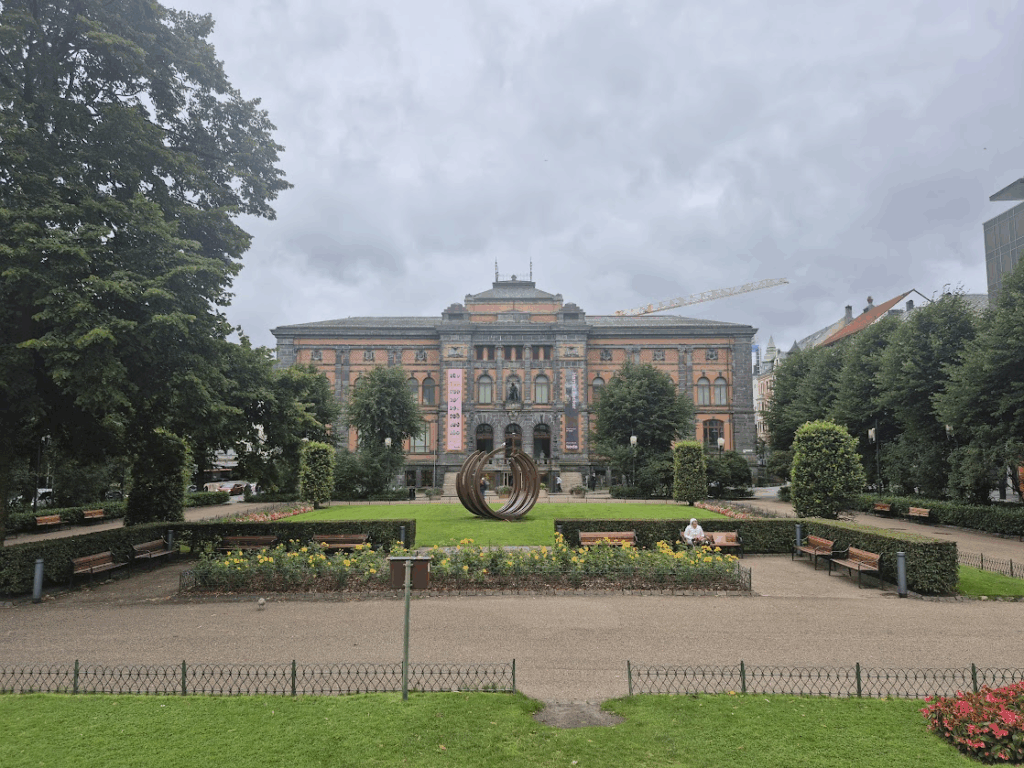
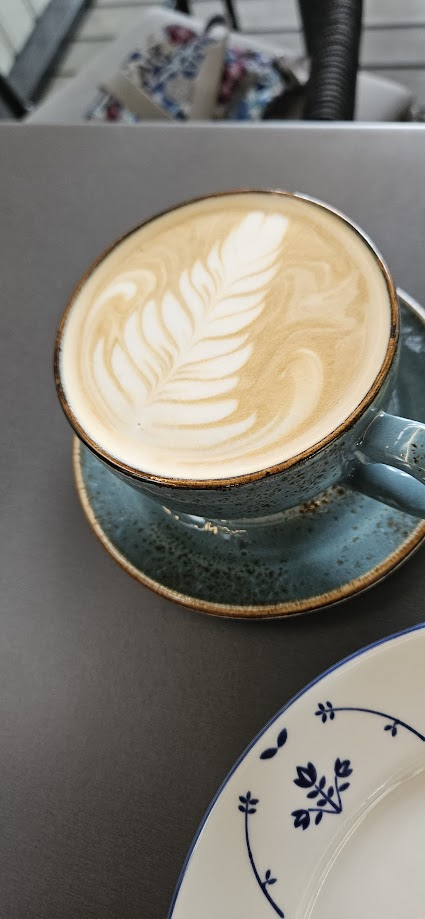
At around 5.30 pm, it started raining. We took refuge in a cozy cafe. It was great to just chat with nice hot coffee while it was raining outside.
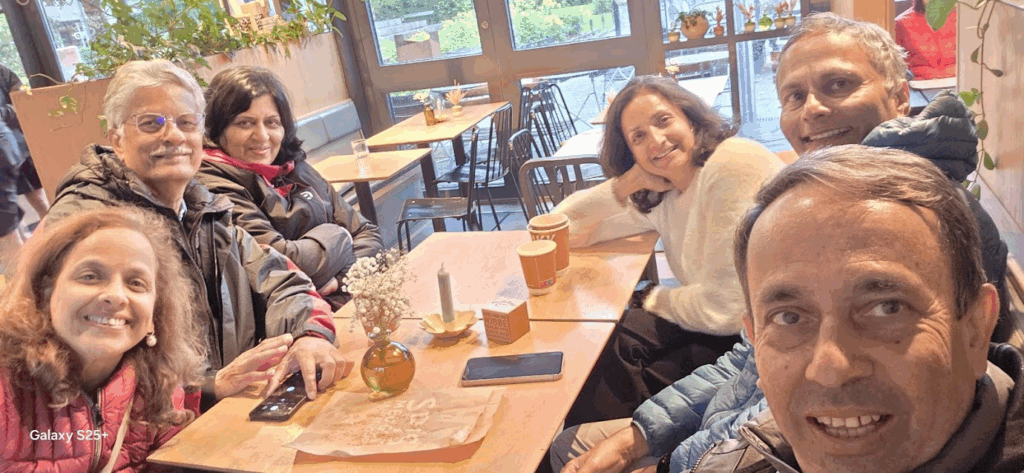
The rain refused to subside. We decided to head back to Scandic Ornen hotel. We retired early and slept around 10 pm.
Day 2: Sat, Aug 9: Flam – World’s Most Scenic Railway
The Flam Railway, a 20 km train ride, is one of Norway’s most popular tourist attractions and is considered one of the world’s best train journeys. The scenic route offers panoramic views across breathtaking fjords, snow-capped mountains, lush forests and tumbling waterfalls.
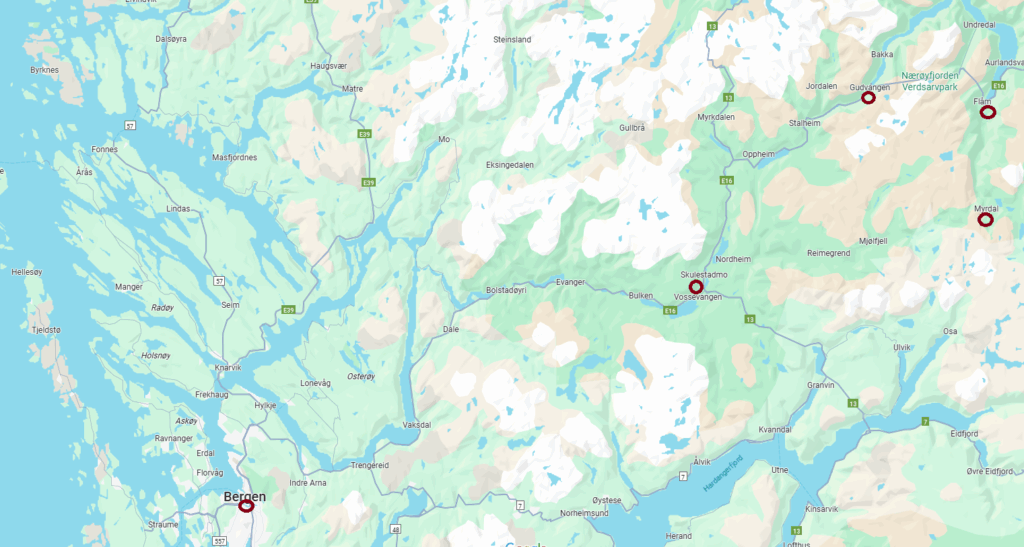
We left Bergen station at 8.30 am and reached Voss by 9.42 am. Our bus from Voss to Gudvangen was at 10.10 am. On the way, we stopped at Hotel Stalheim to see views of Flam Valley.
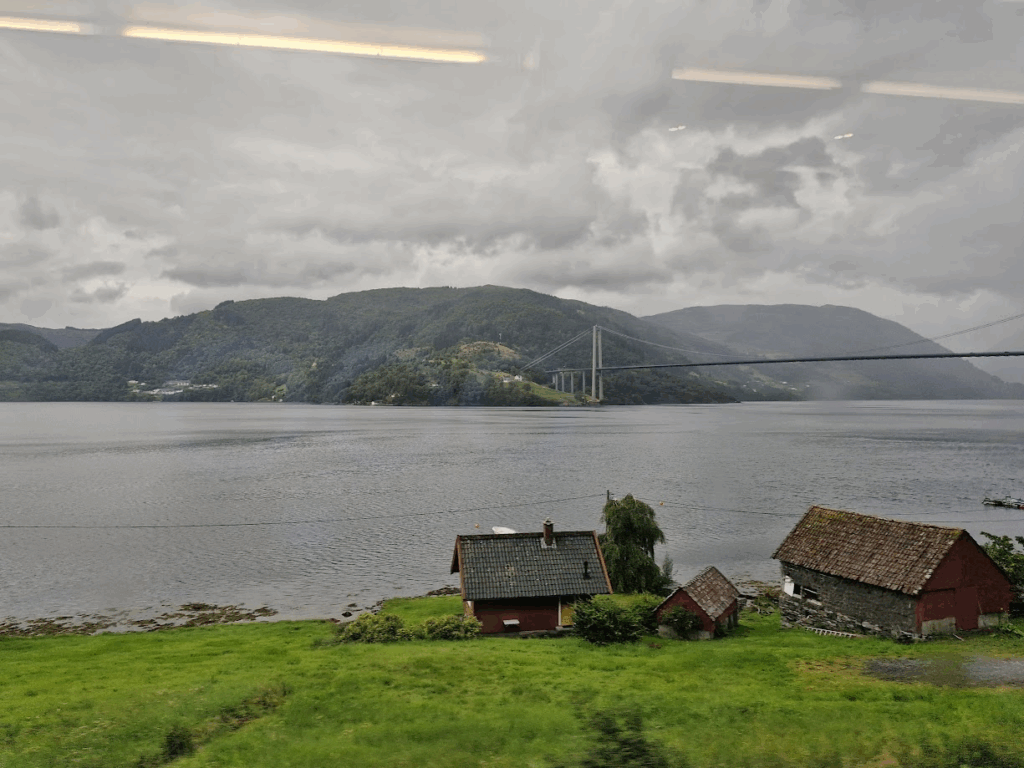
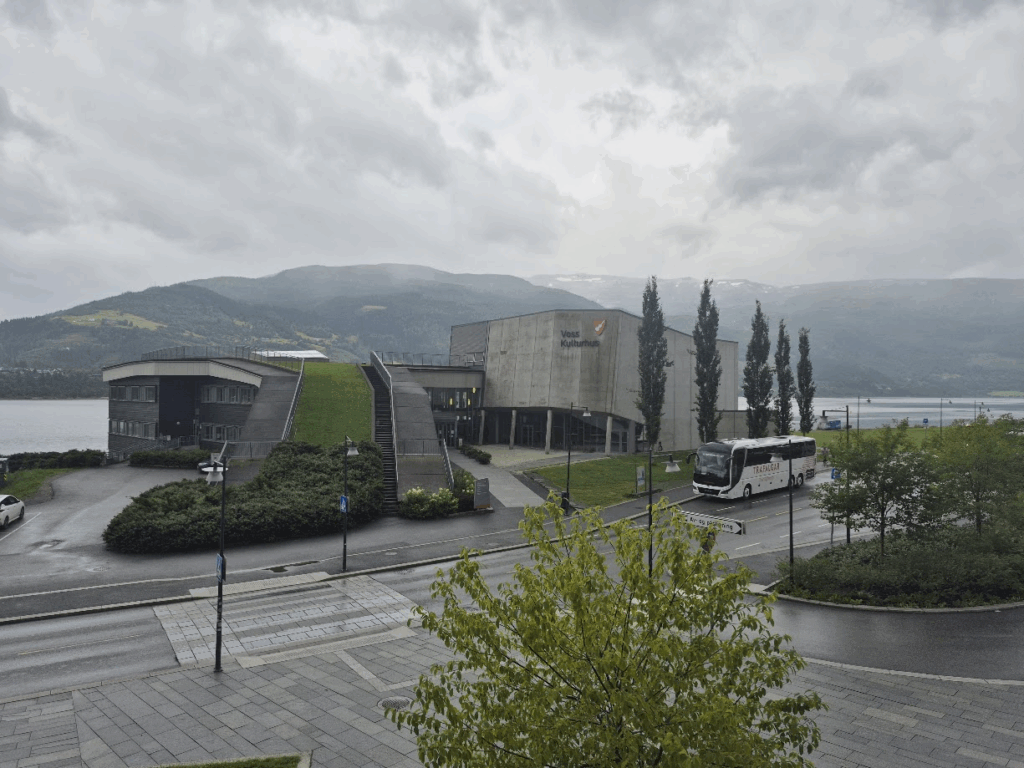
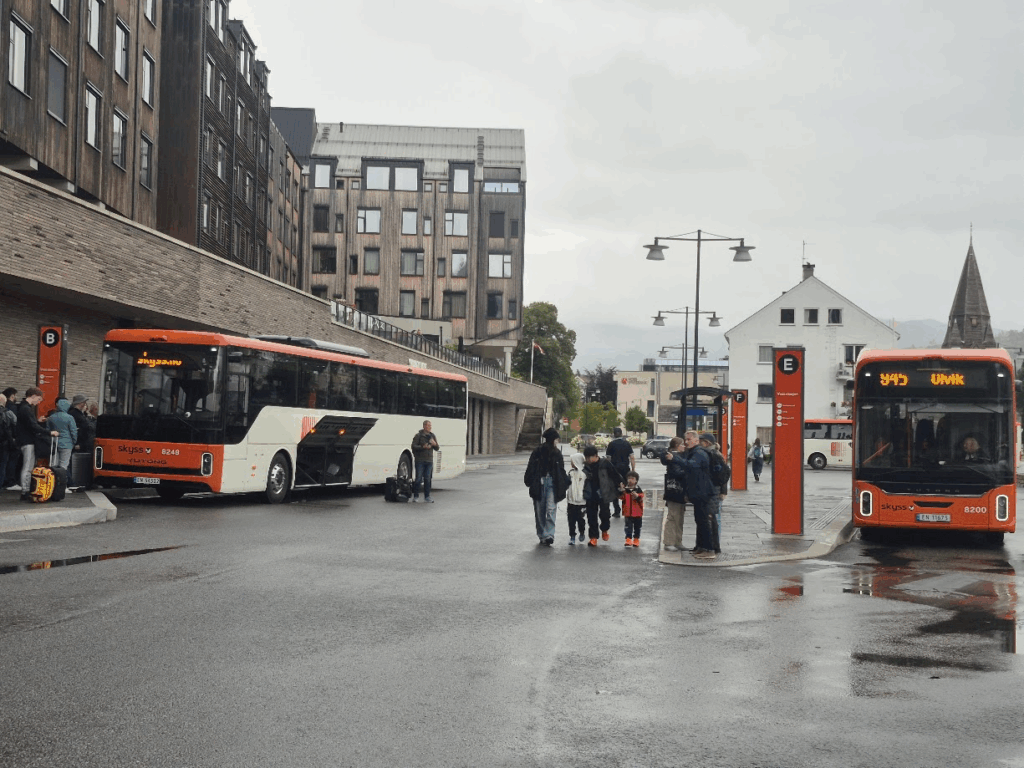
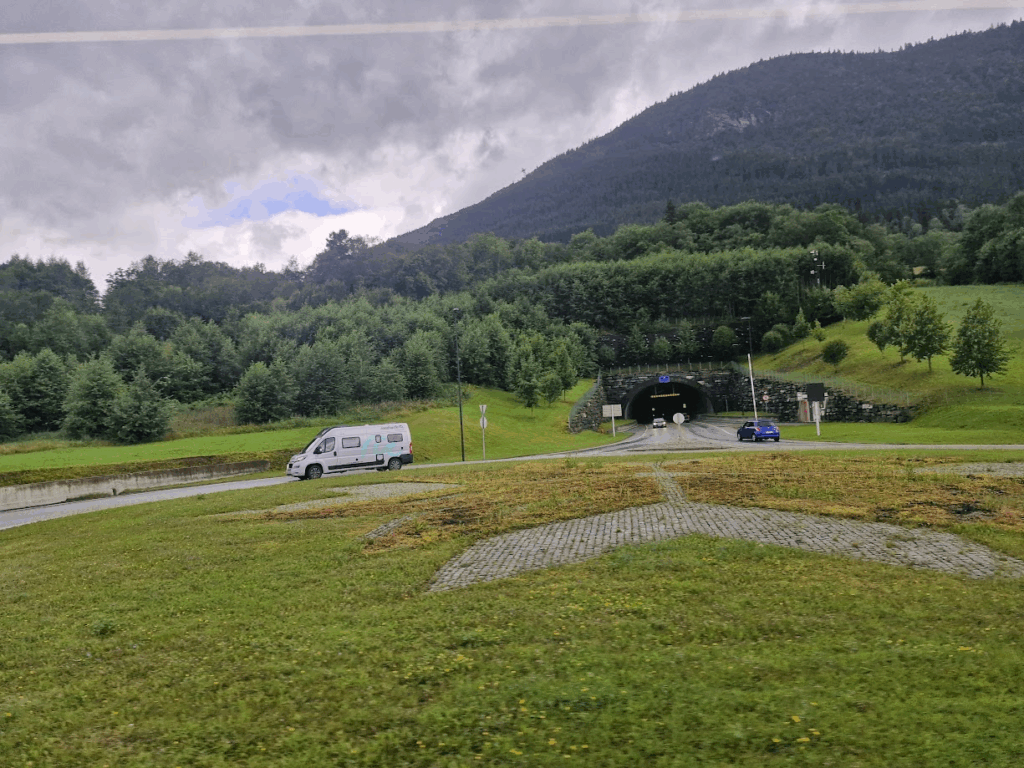
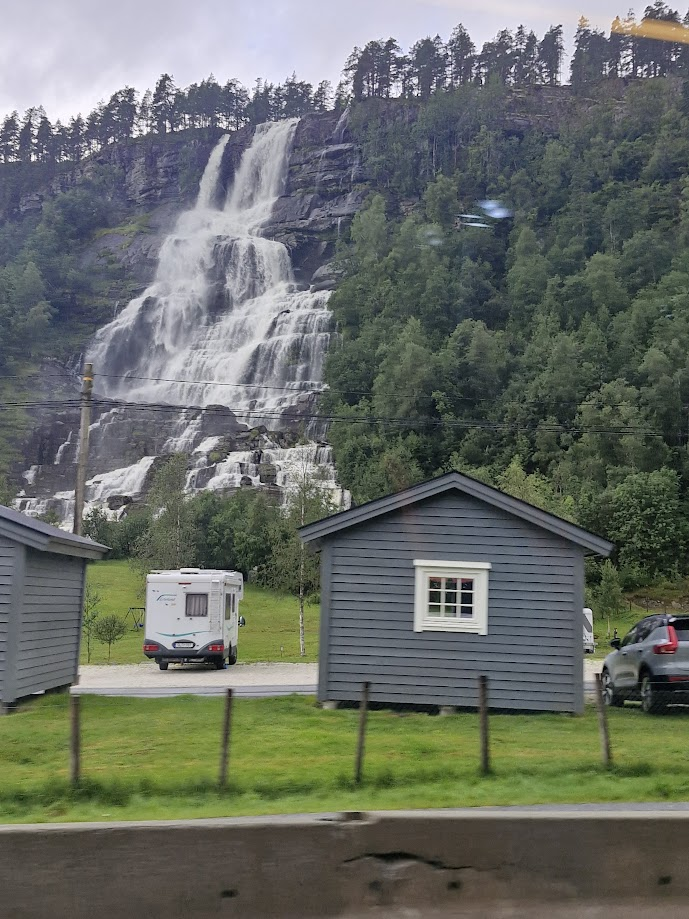
We stopped at the town of Stalheim. From Hotel Stalheim, we saw some wonderful views of the valley below. Our bus was going to travel to that valley. The scenery in Norway was extremely green with tall trees and pines compared to Iceland or Greenland which has only shrubbery and small grass.
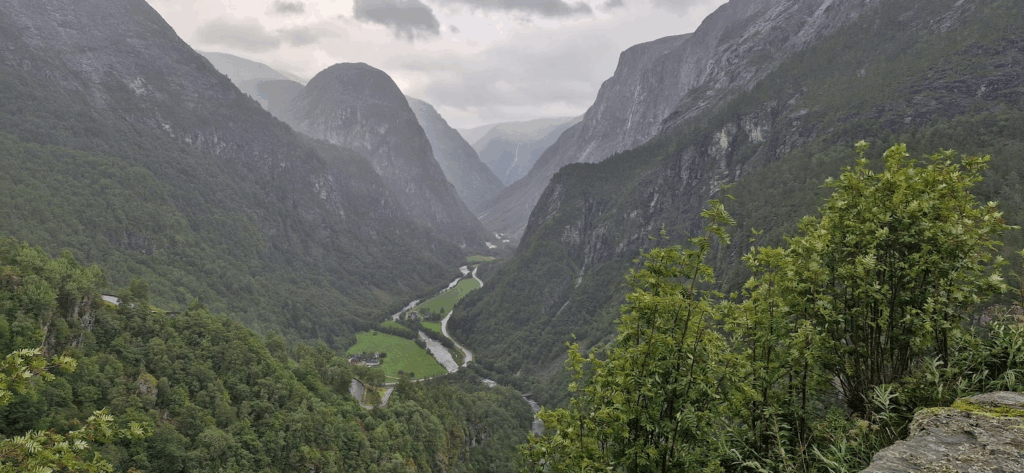
We reached Gudvange at around 12 noon and we hung around Gudvangen till about 2.30 pm. We had Forest pizza and baguette veggie sandwiches for lunch. Gudvangen is a nice place to chill and take pictures.
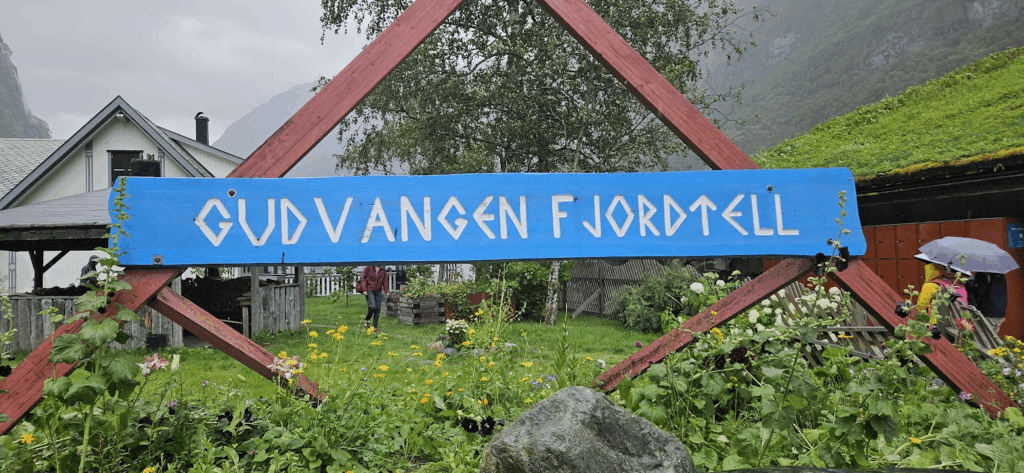
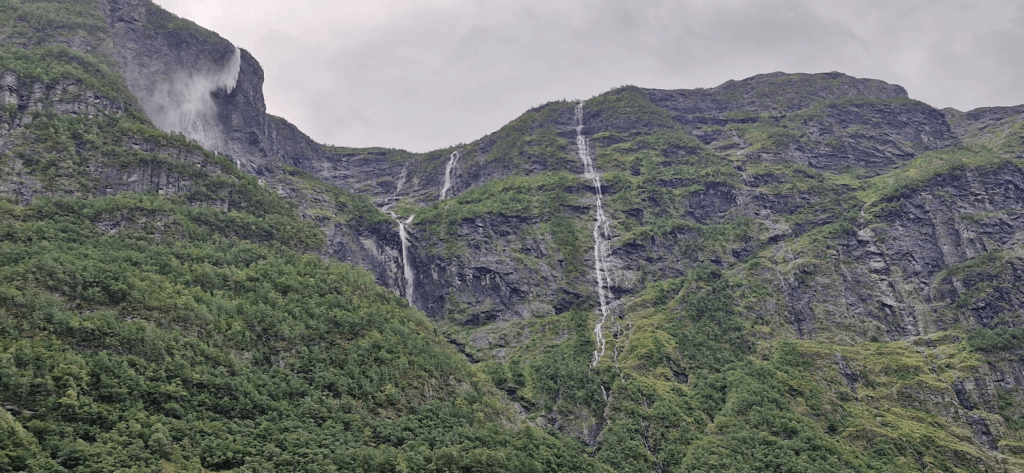
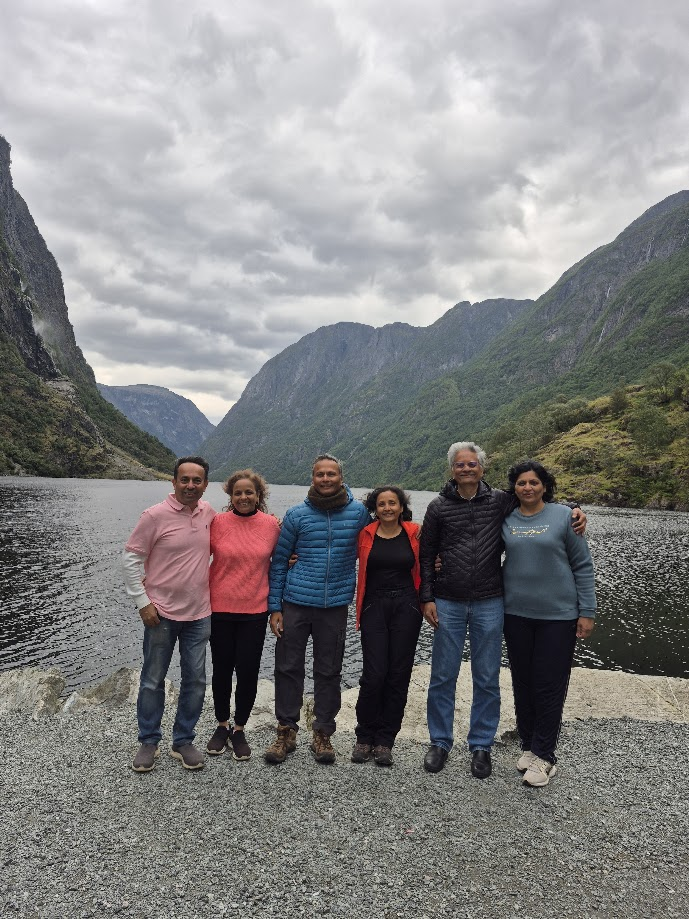
We took the Gudvangen to Flam Naeroyfjord Cruise spanning about 17 km and about 2 hours. Tall cliffs on both sides as we navigated through the fjords.
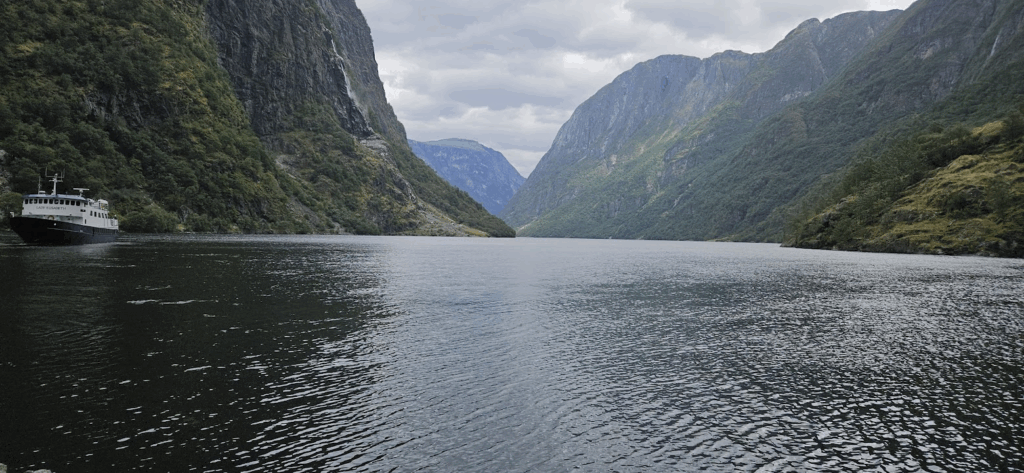
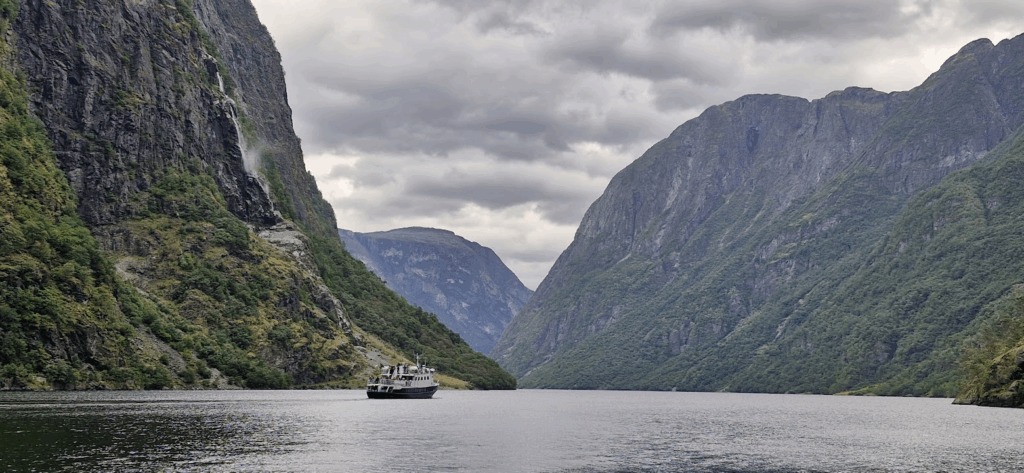
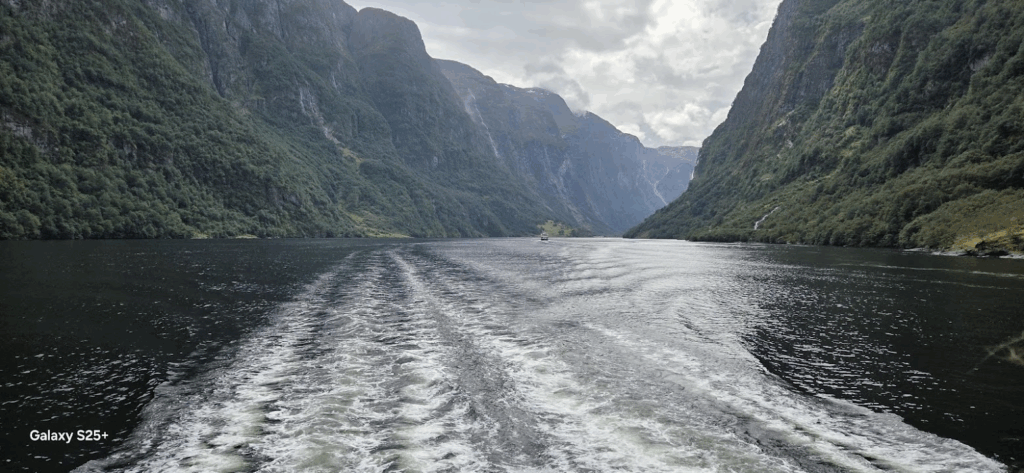
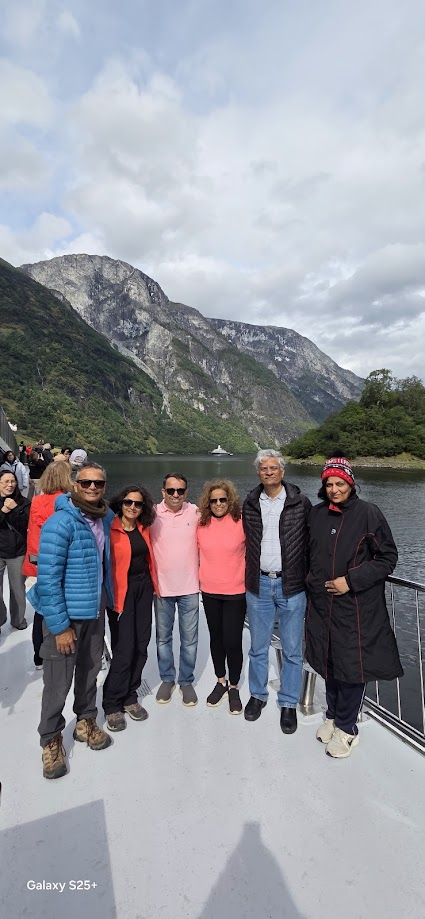
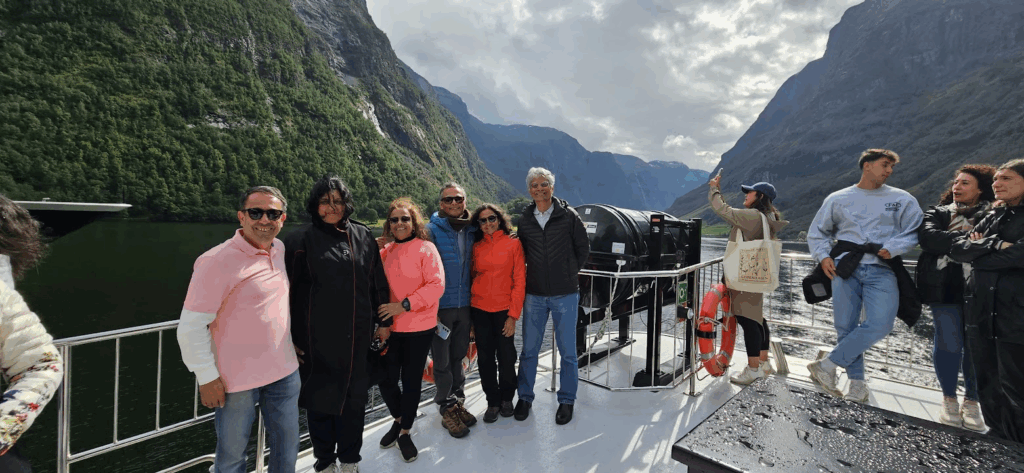
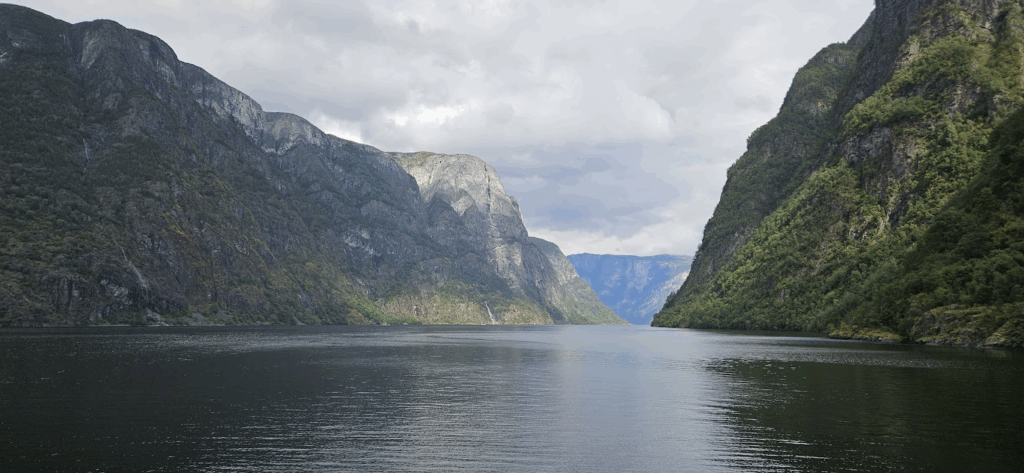
We completed the cruise and reached Flam at 4.30 pm.
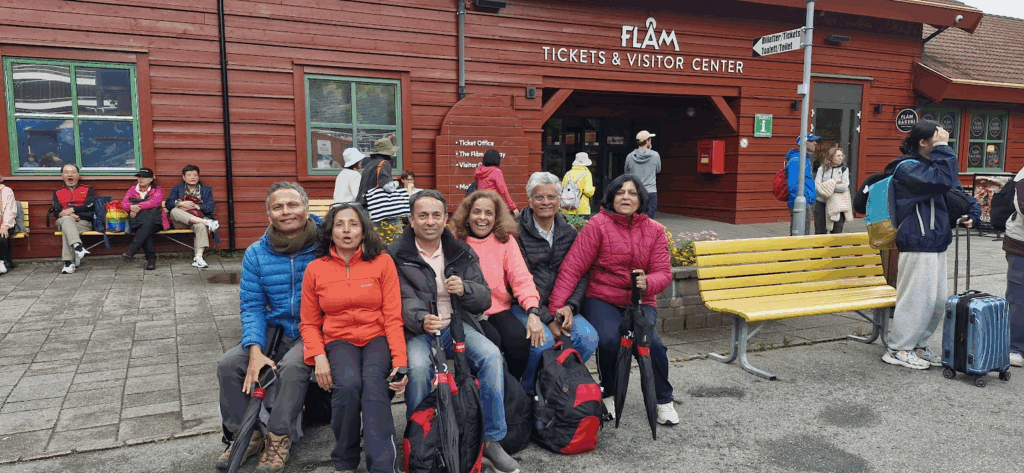
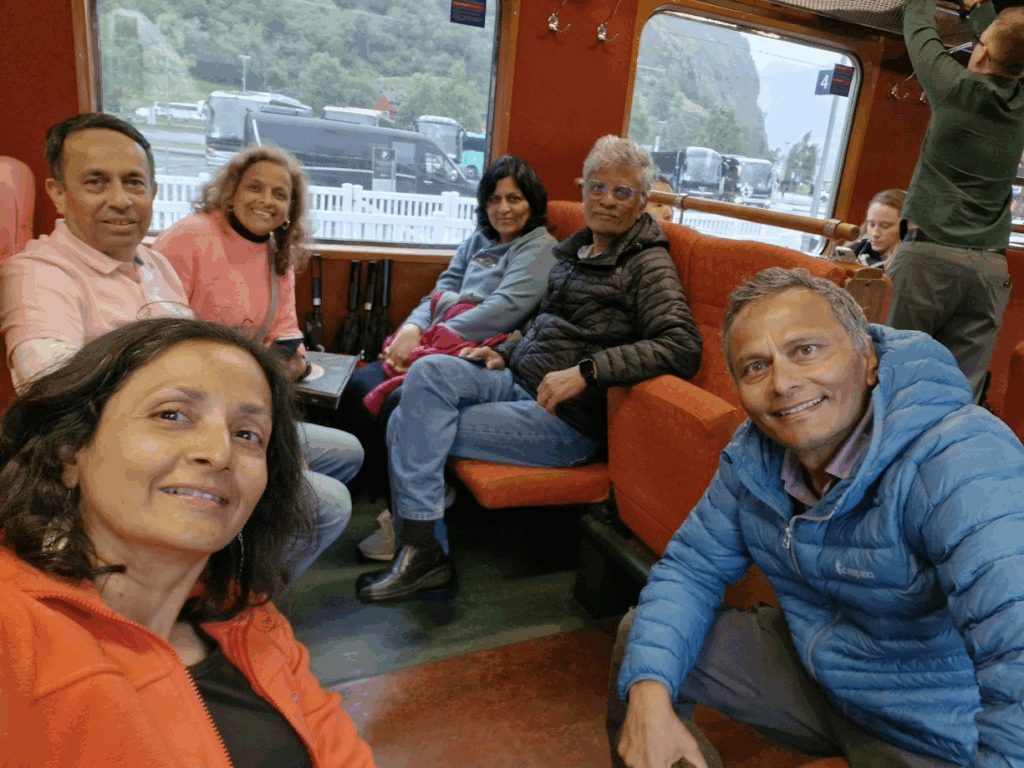
We took the railway from Flam to Myrdal at 5.30 pm which reached Myrdal at 6.30 pm. It is an extremely scenic railway spanning about 20 km with 20 tunnels. It took about 1 hr. The train was totally full. All seats were taken.
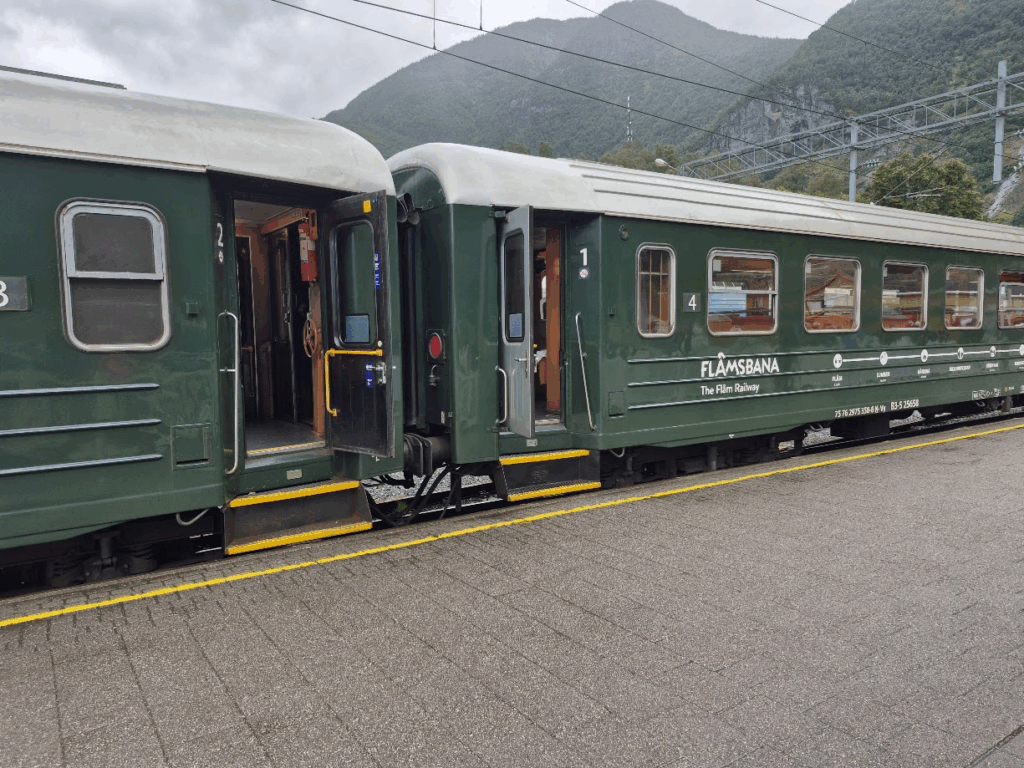
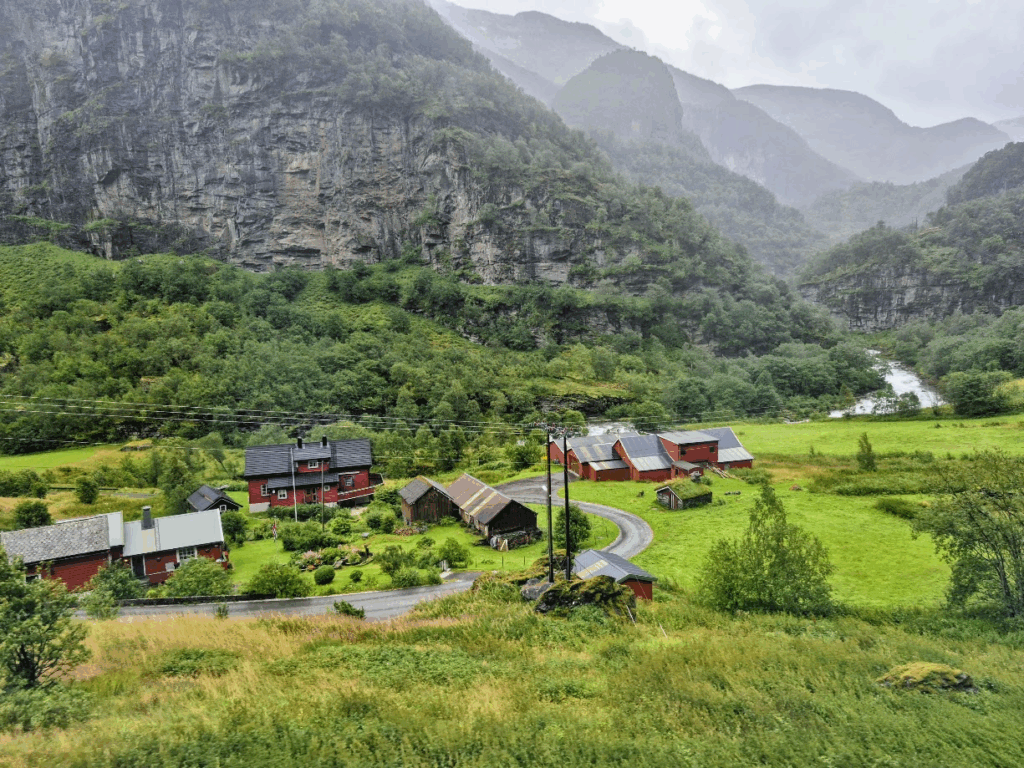
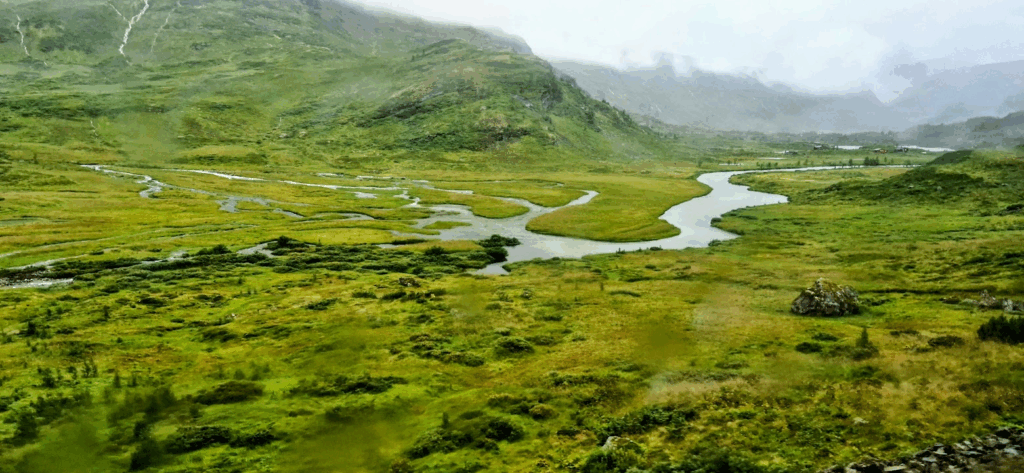
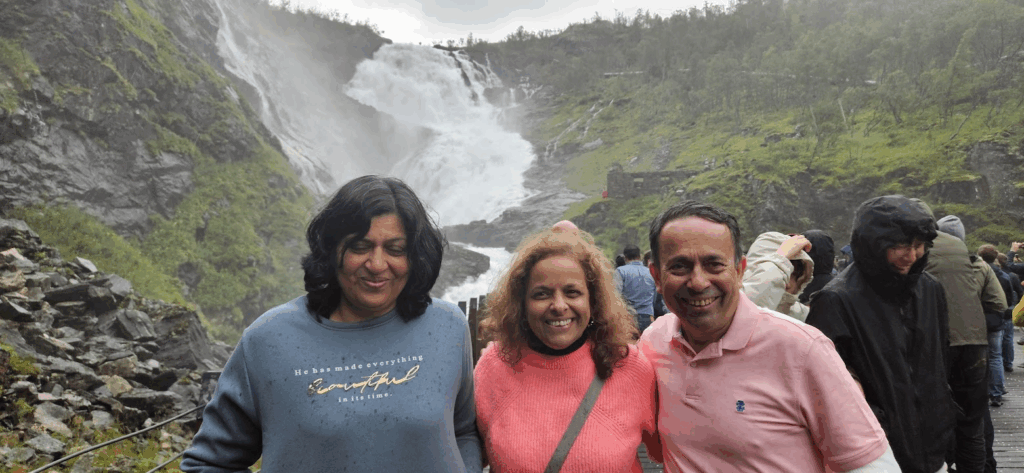
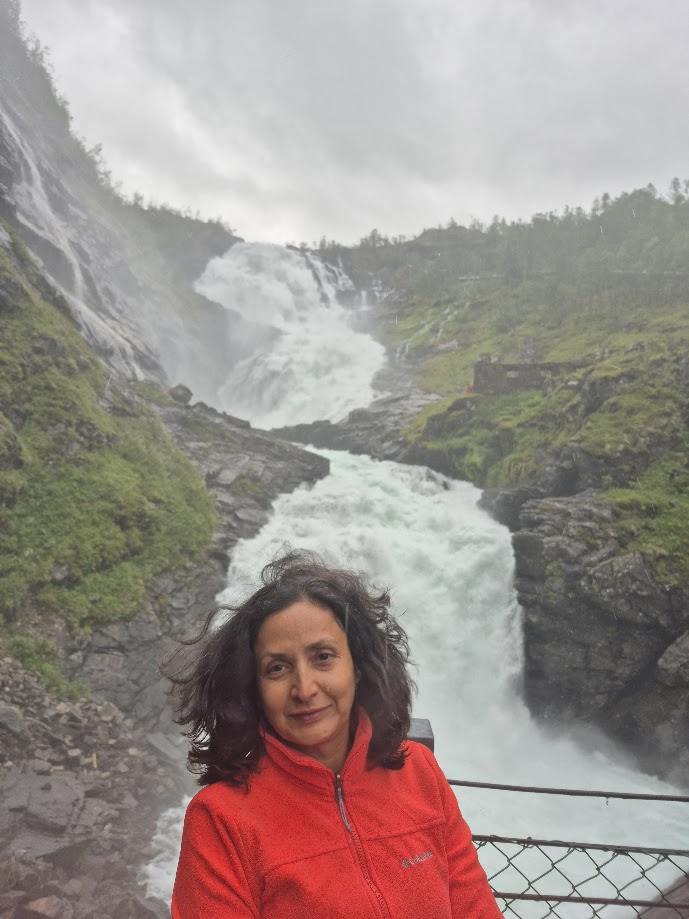
We saw a waterfall Kjosfossen and there was 10 min stop for people to take pictures. There was a performance by the witch Huldra, performed by the Norwegian Balley company at this waterfall. This performance starts whenever the Flam – Myrdal train arrives and passengers get off the train for 10 mins. It is a very well choreographed performance. Great showmanship. In the video below, watch how she jumps at the end.
We got to Myrdal station at around 6.20 pm and took the 6.48 train R40 train from Myrdal back to Bergen.
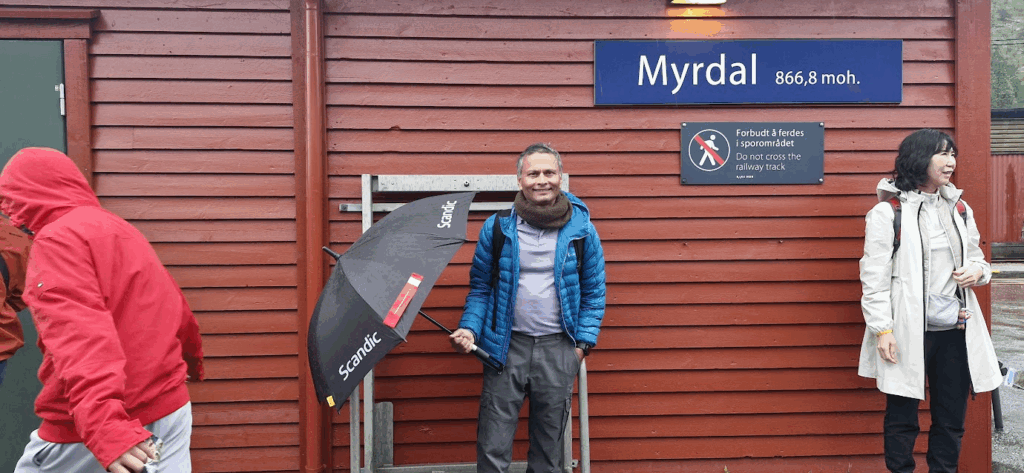
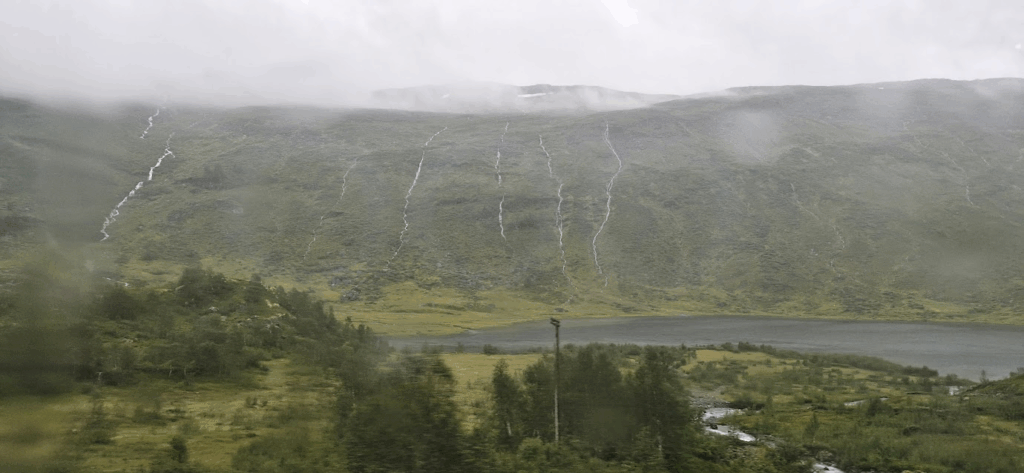
Train from Myrdal to Bergen was a normal train, but views continued to be amazing. We reached Bergen at 9.15 pm.
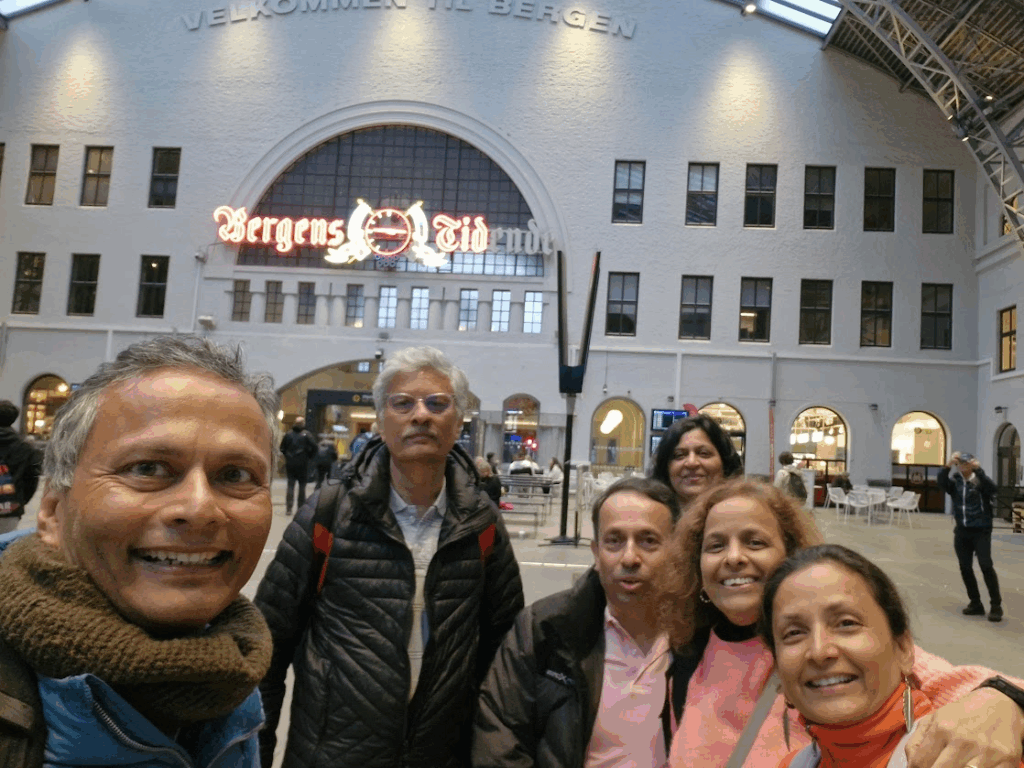
We had a great day in the Flam area. It is great to see how well marketed the Flam railway is. I have seen many beautiful train journeys including the Pune-Mumbai train journey with 29 tunnels. But Flam railway is heavily marketed and designed particularly for tourists. Kudos to the Norwegians for such wonderful marketing.
We got back to the hotel at 9.30 pm. We chitchatted with Bhagwats and Aptes till about 10.05 pm. We retired because the Bhagwats had to leave for Pune, the next day, Sunday morning.
Day 3: Sun, Aug 10: Hardanger Fjord, Waterfalls
Ajay and Ashwini left at 5.15 am for their flight to Pune. I picked up the rental car from Hertz at Bergen airport at 10 am. It was a Hongqi EHS-9, a very high end Chinese electric car. Got back to the hotel at 11 am. The car had a back massager in both the driver and passenger seat. Very fancy.
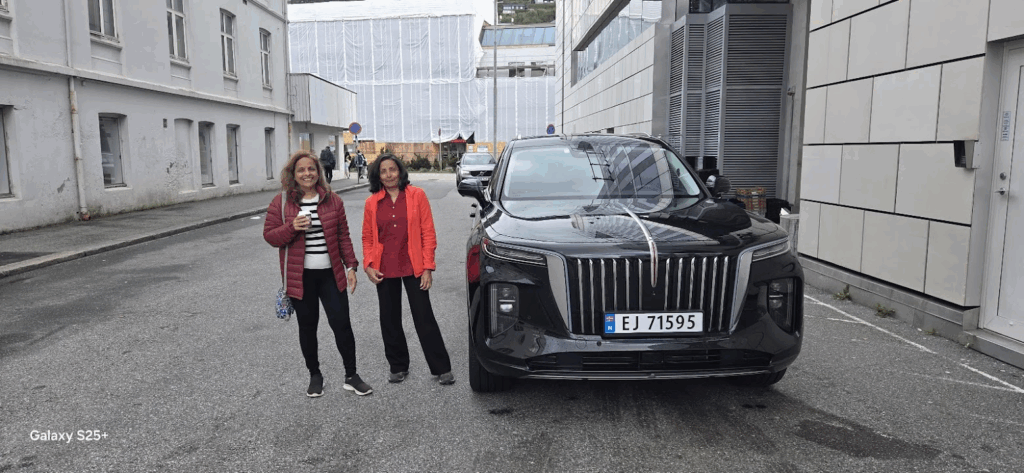
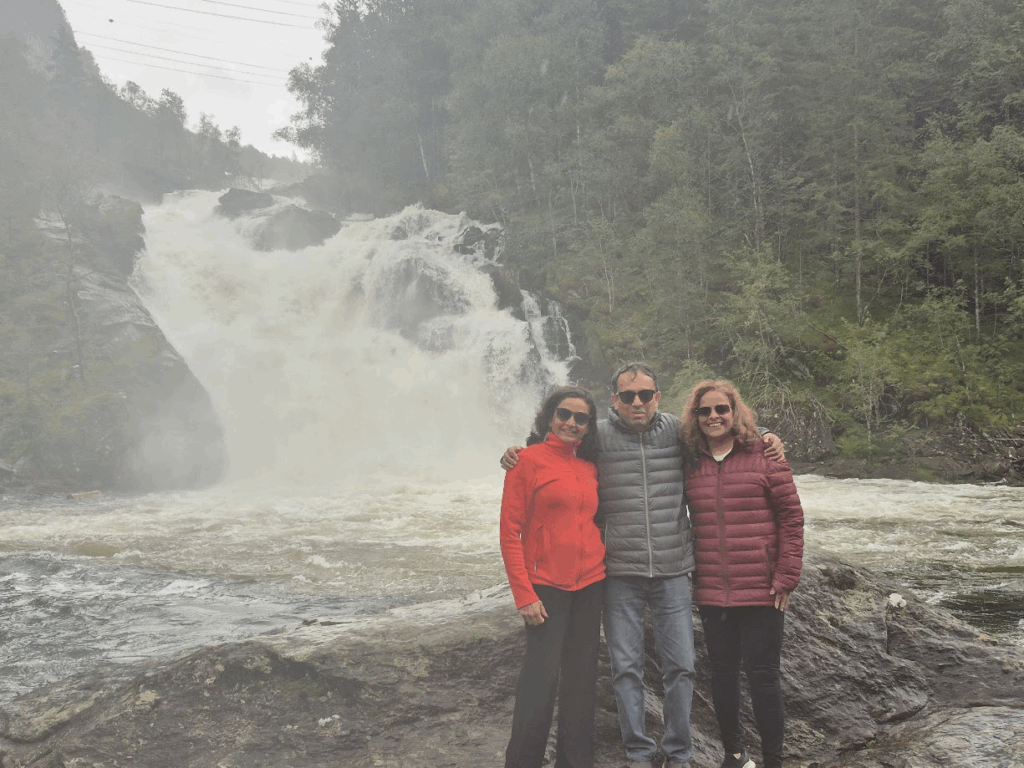
Left the hotel at 11.15 am and started driving towards the Hardangerfjord area. We stopped at Morkholsfossen waterfall.
We started climbing and stopped to take pictures of the Fossen Bratte waterfall.
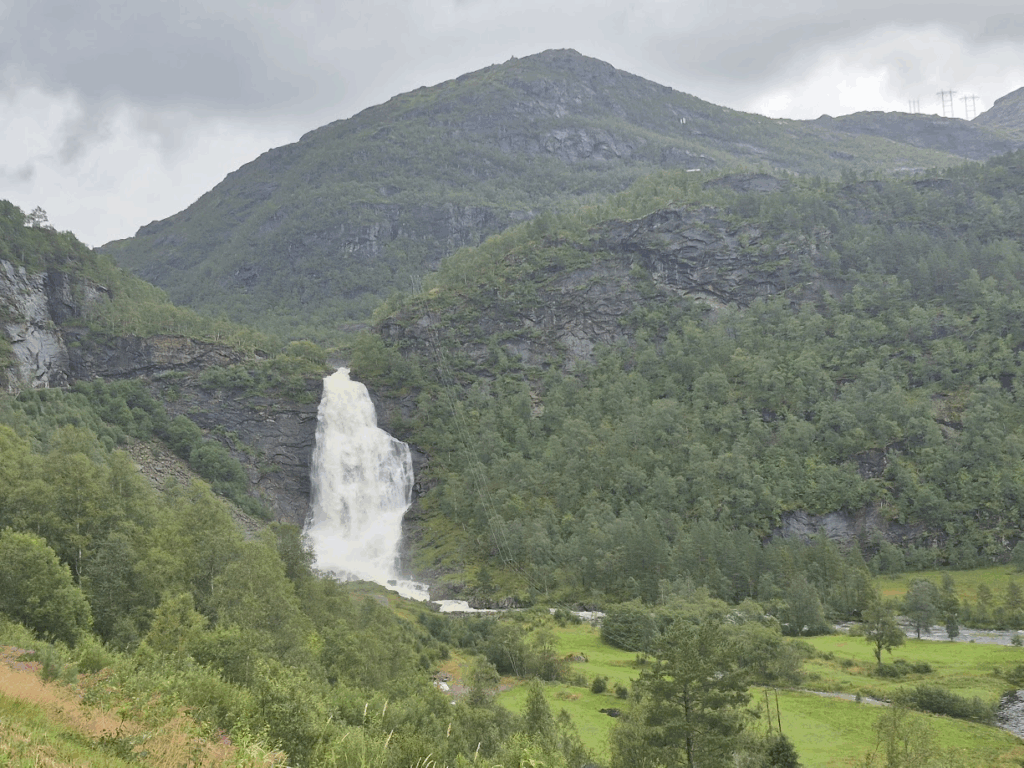
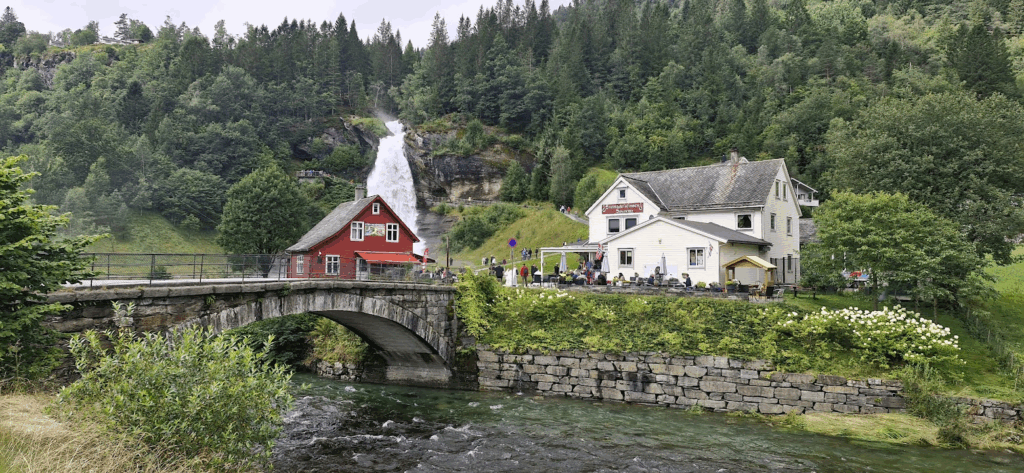
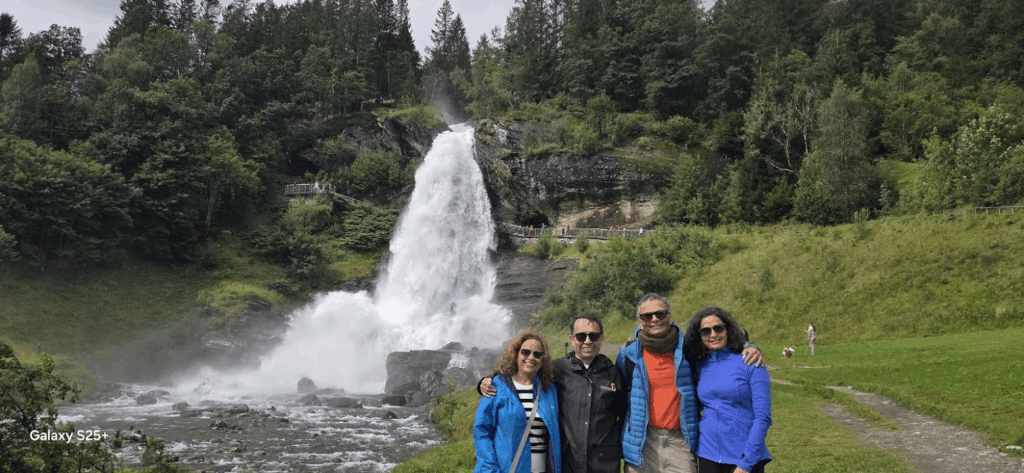
Stopped at Steindalsfossen waterfall. The waterfall is one of the most visited tourist sites in Norway. From the parking lot, the path goes along the waterfall, up a hill, and behind it where visitors can behind the rumbling water. Steinsdalsfossen is 46 metres (151 ft) high, with a main drop of 20 metres (66 ft), and has the greatest volume when the snow melts in May and June.
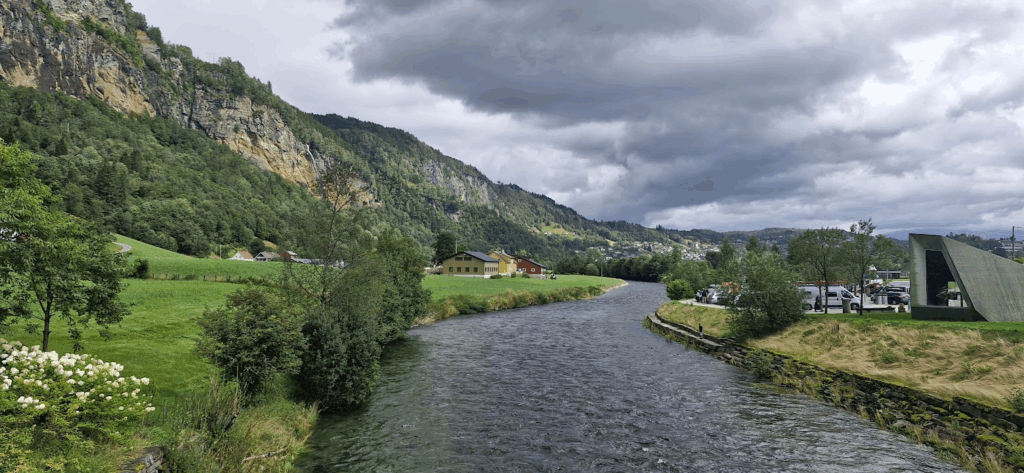
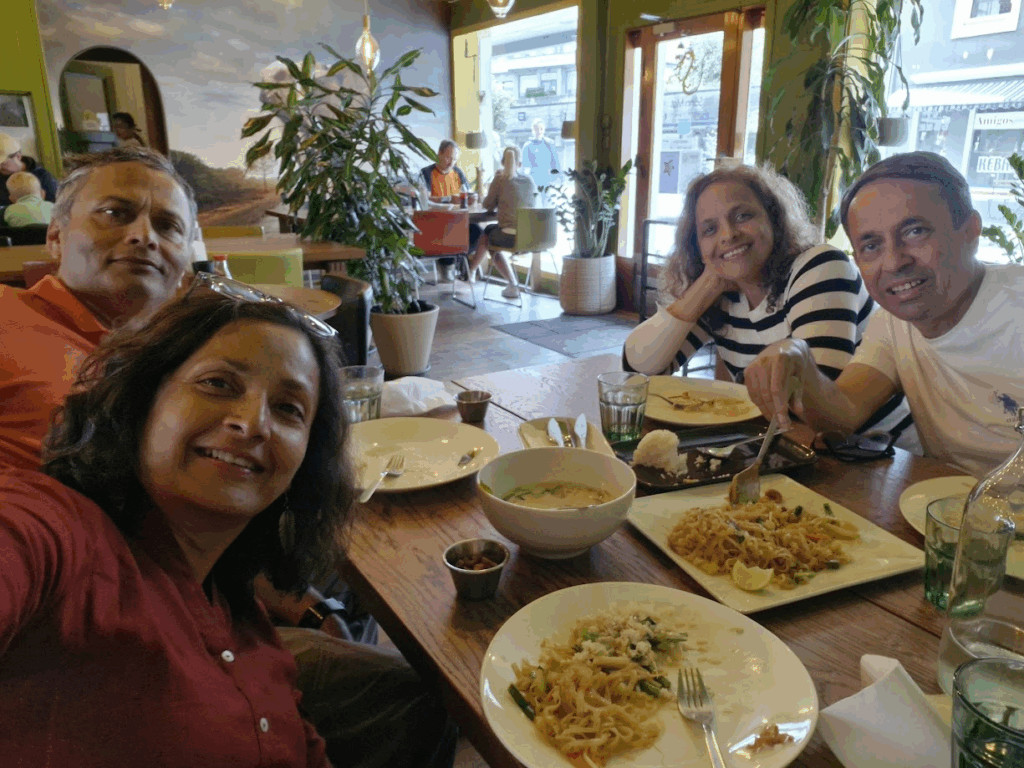
We decided to stop for lunch and we found a Thai place called Sann Matt in a nearby town of Nordheimsund. The Thai food turned out to be delicious. There are a lot of Thai people settled in Norway.
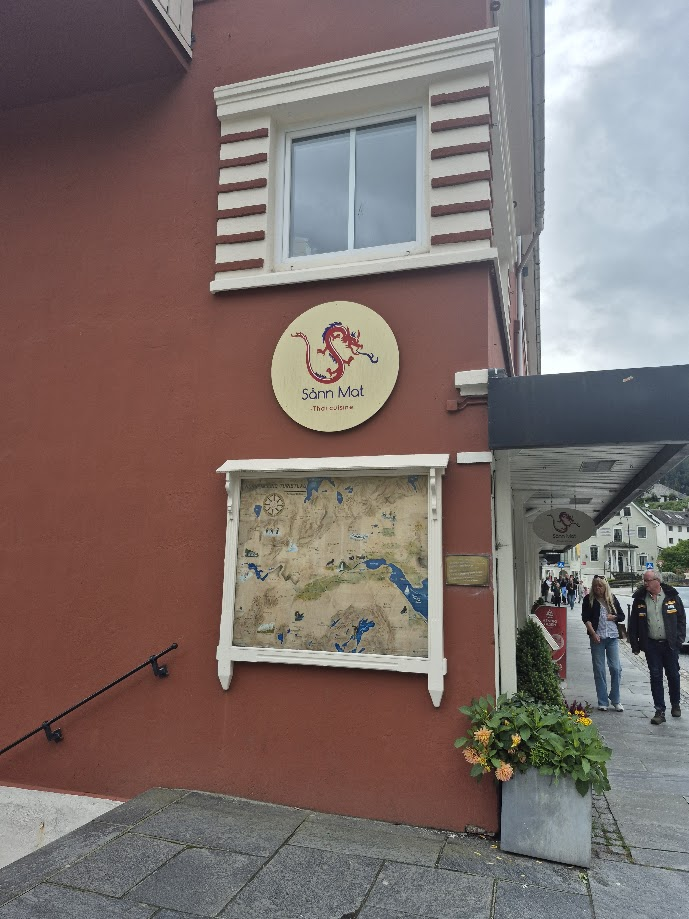
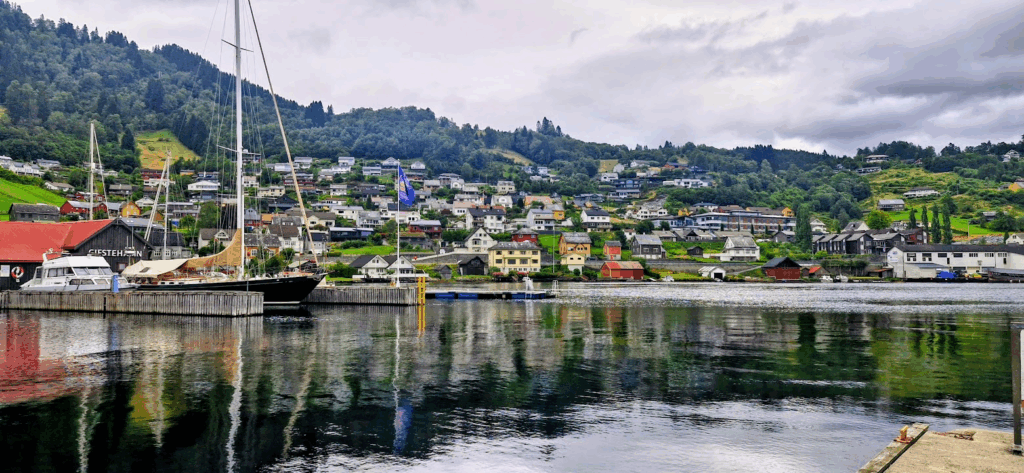
Nordheimsund town was very picturesque. The colorful houses added to its beauty.
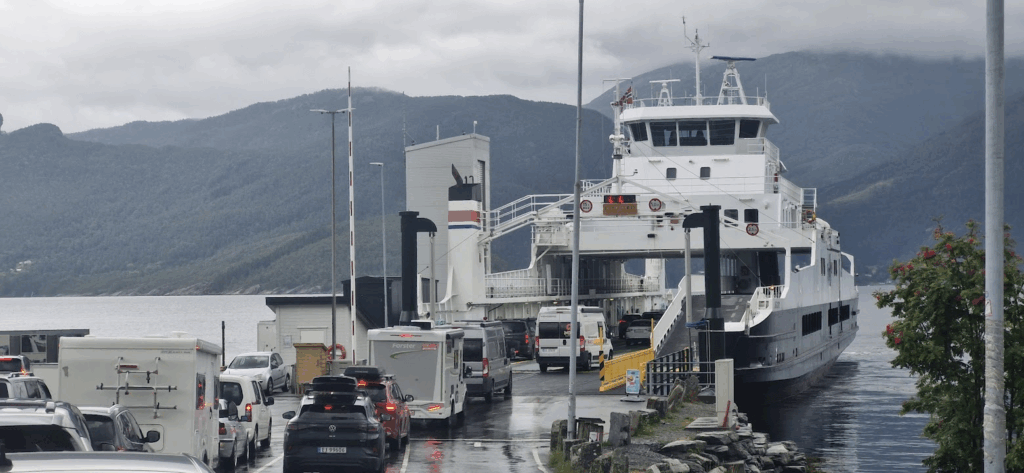
The next stop on the highway was the ferry to Jondal. In Norway, ferries are a part of the highway system. The highway ends in a ferry which picks up on one side of the fjord and drops you off at the other side. Loading/unloading is highly efficient and together it takes about 4 mins to unload and load all the cars and passengers. Things are highly organize.
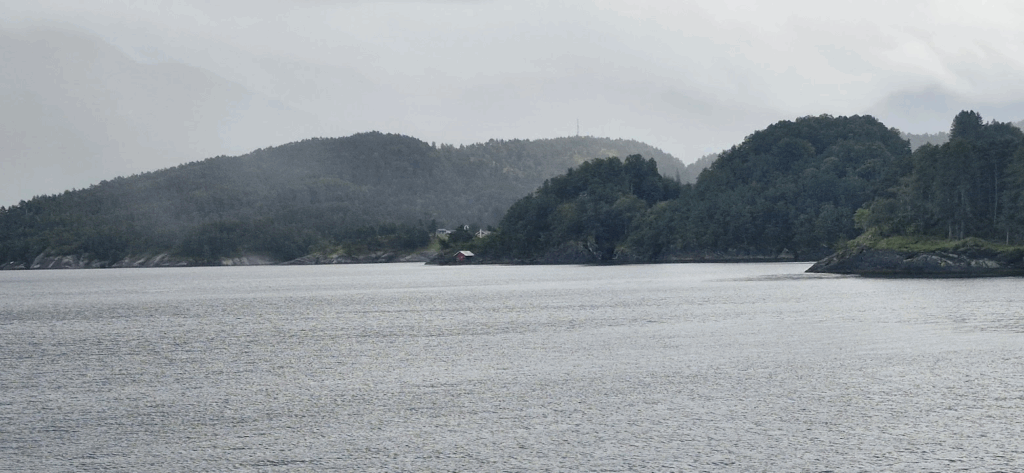
The views of HardangerFjord from the ferry were fantastic.
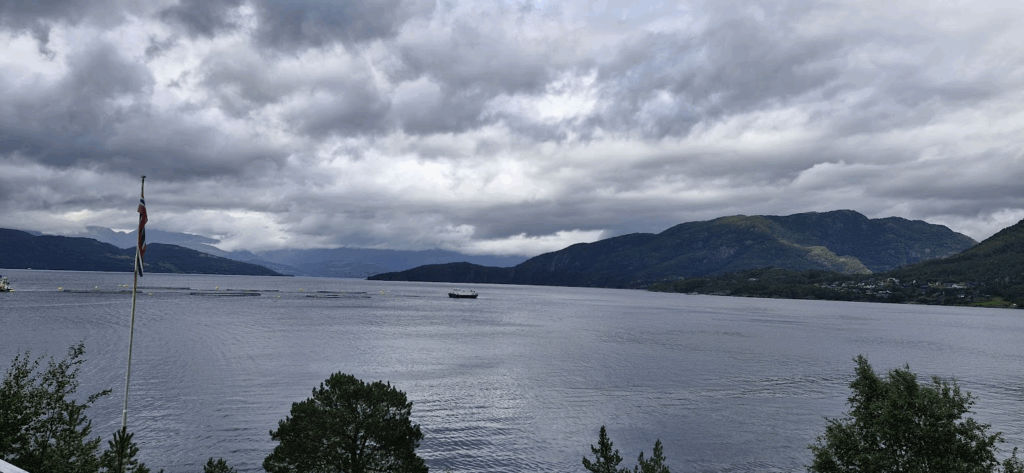
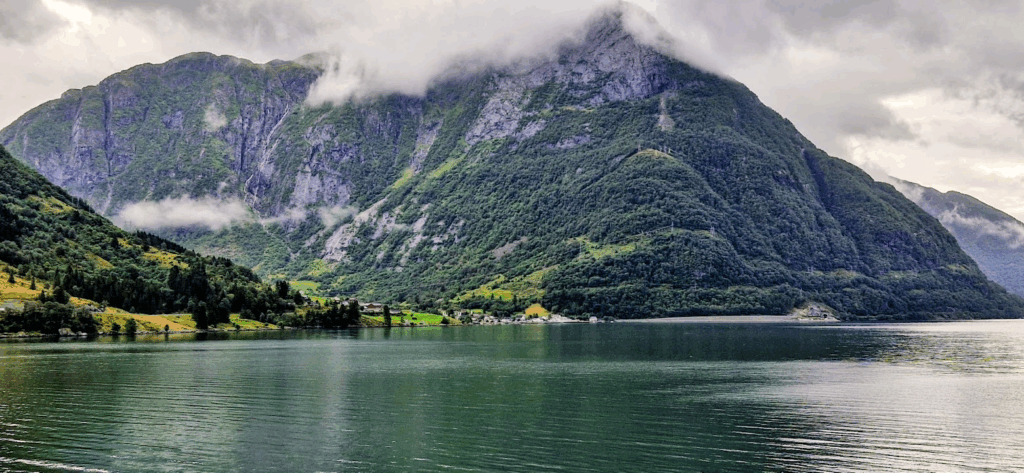
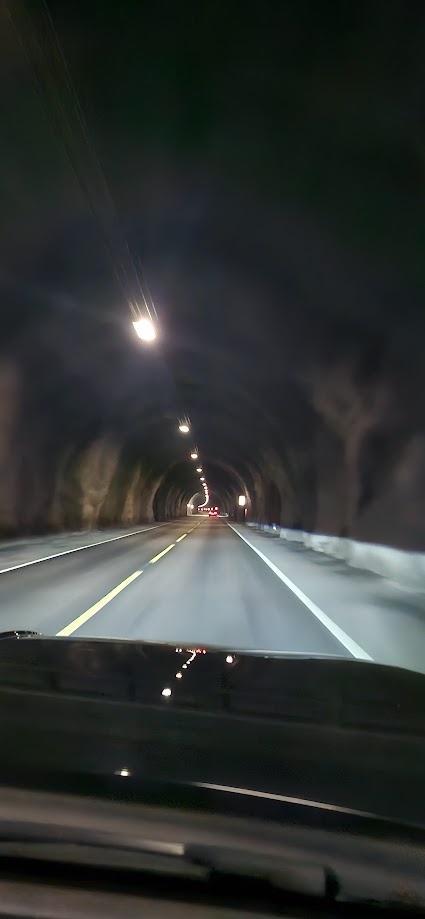
Another feature of Norway is the number of tunnels underneath the mountains and fjords. They are truly an engineering marvel. During our trip to Hardanger fjord, we went through at least 25 tunnels of varying lengths, the longest being 11 km in length.
The other feature of Norway is the number of waterfalls. We passed by the Lattefossen waterfall and then the Langfossen waterfall (Long falls).
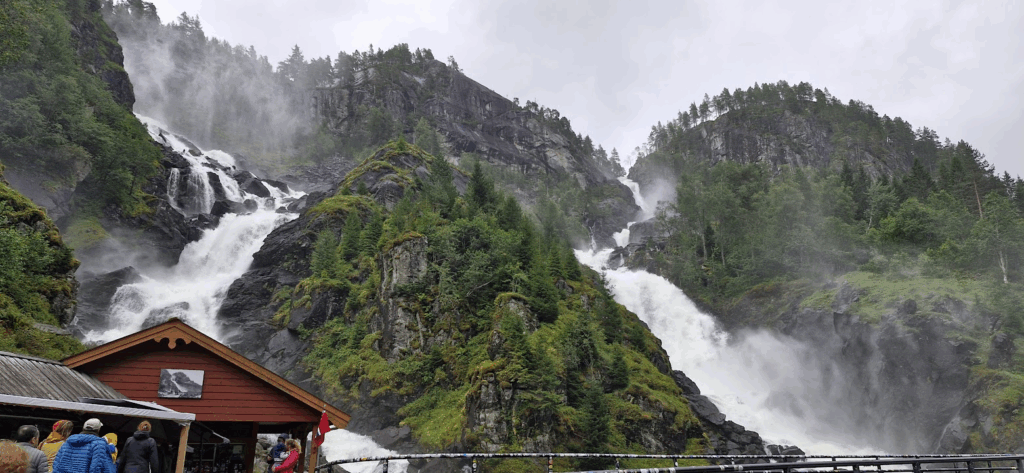
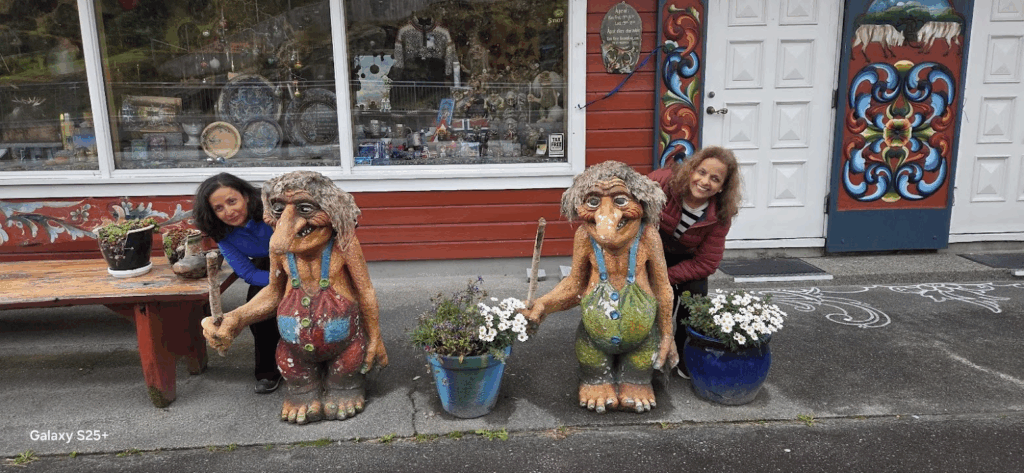
Near the waterfall, we also found a souvenir shop with Scandic characters.
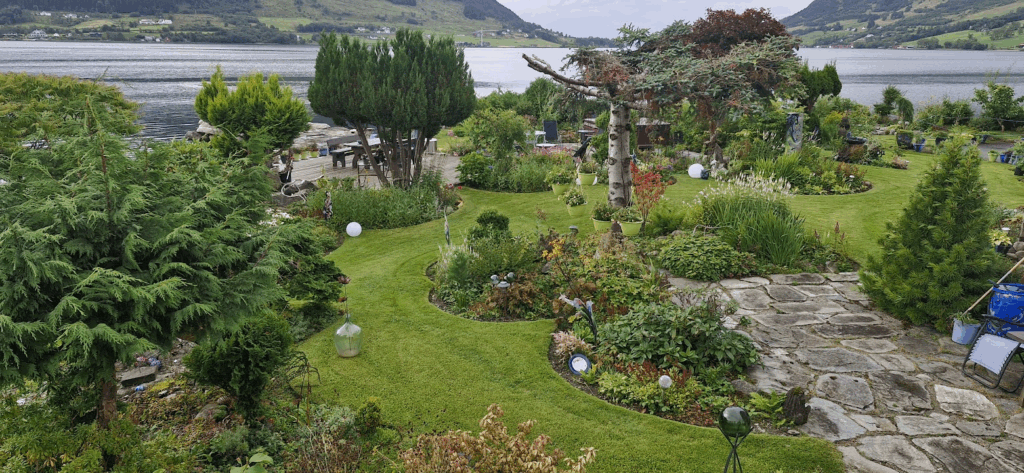
We reached the Home Hotel Amanda in Haugesund at 8.50 pm. That was our destination for the day.
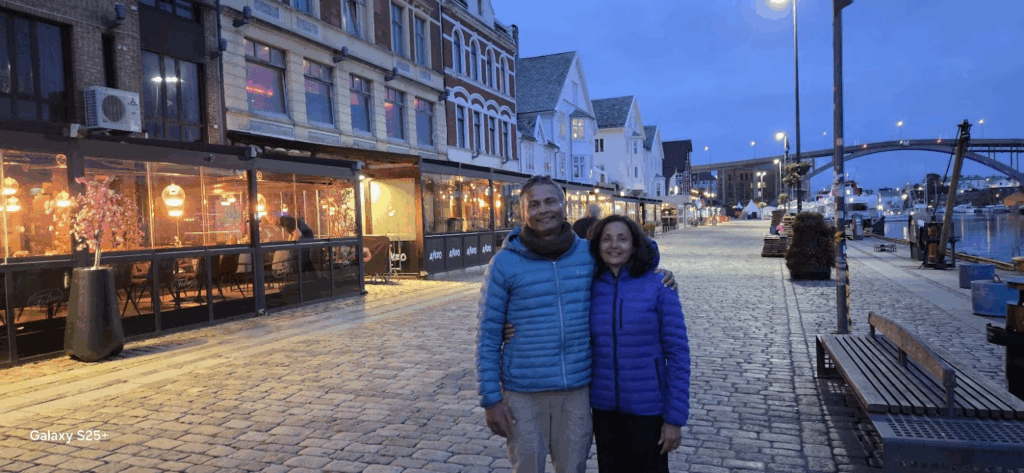
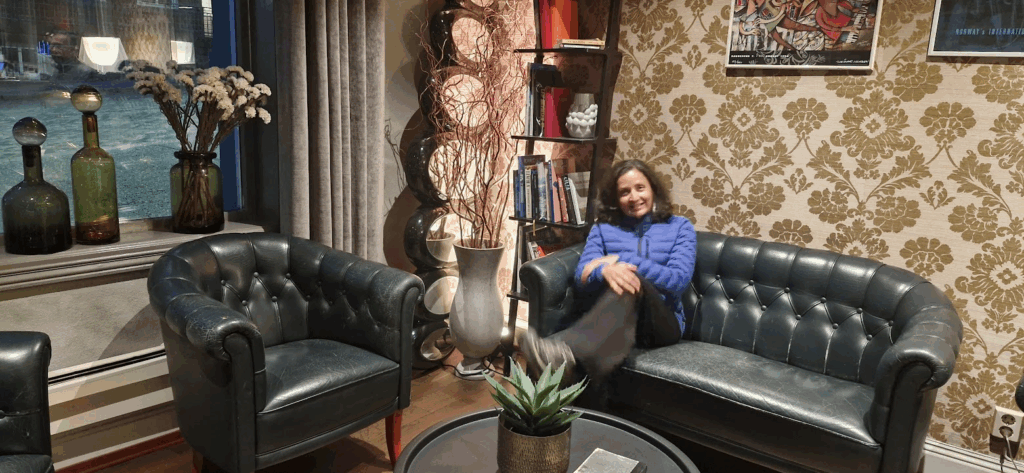
Since we had an EV, we had to figure out how to charge it. We had to find an EV charging parking lot, download the app and start the charging. A little more painful compared to filling petrol in the tank. EV gives about 5 kms per unit Rs. 8 per km.
We ate at Italian place Il Forno near the hotel – wood fired pizza, pasta. The food was delicious.
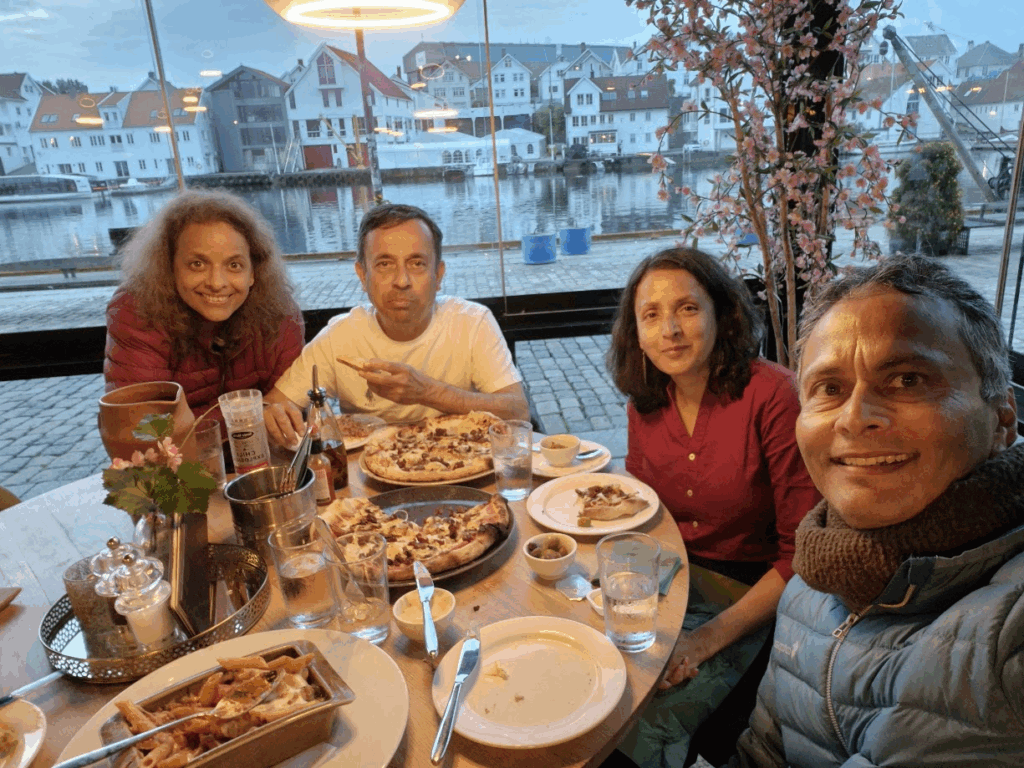
We retired for the night at 10.30 pm. It was a day of waterfalls and tunnels.
Day 4: Mon, Aug 11: Stavanger, Pulpit Rock
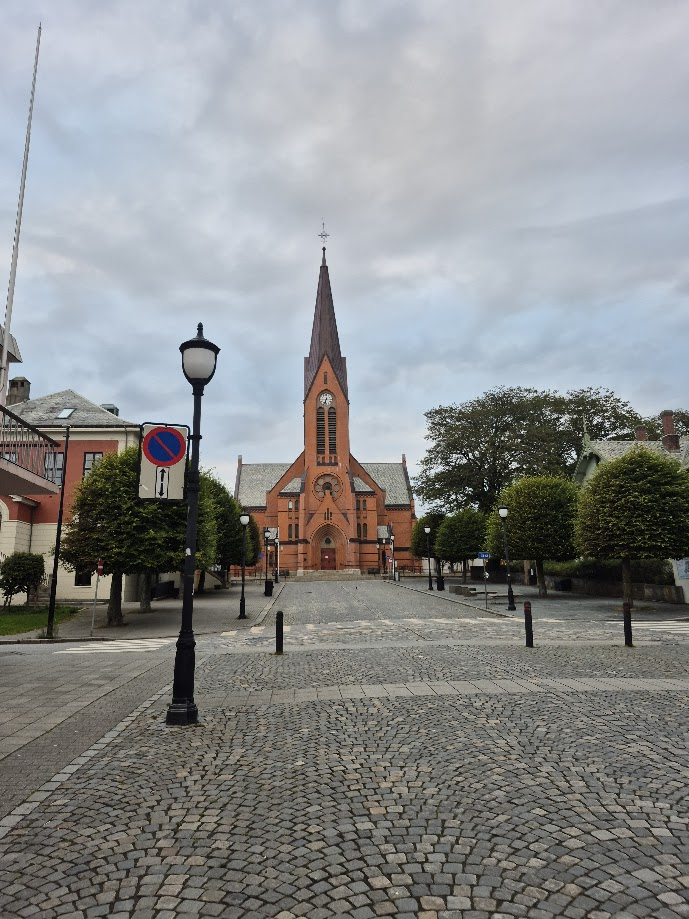
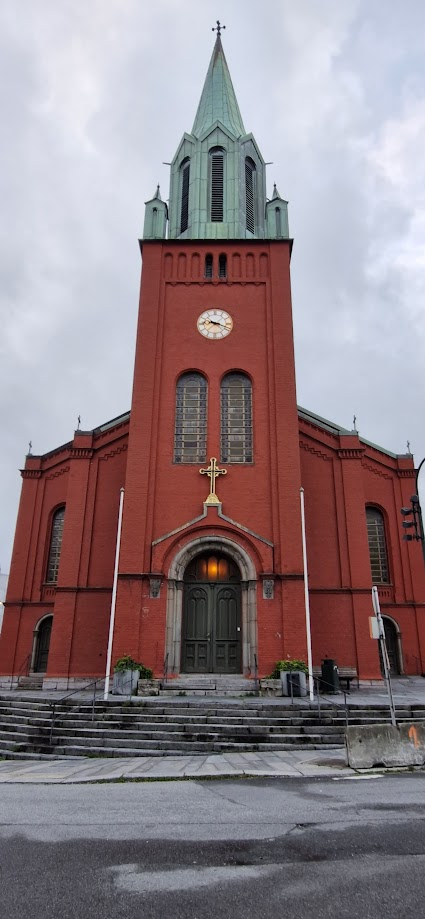
We left Haugesund at 8.30 am to visit Pulpit Rock, a popular viewpoint near Stavanger. As I picked up the car from the parking lot, I noticed a beautiful church in Haugesund.
We also had to figure out the charging for the car. Though Norway’s economy is based on oil exports, the country internally is 80% electric. Many petrol stations (not all) also have fast charging points for electric cars. We fast charged the car for 30 mins at a Shell gas station in Haugesund.
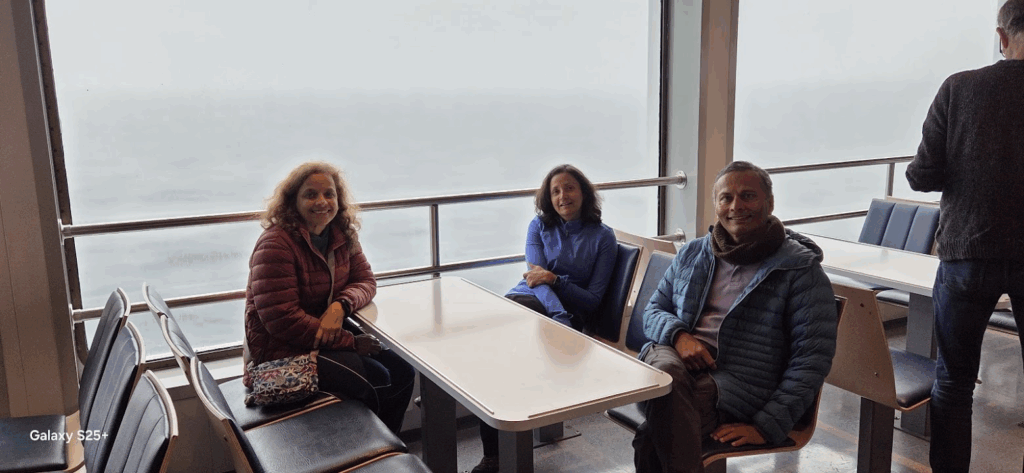
Drove on E39 towards Arsvagen. Picked up the ferry at 10.15 am from Arsvagen. Unloading and loading of cars happened in flat 4 mins. Ferry was from Arsvagen to Mortavika and took 24 mins. It docked, unloaded cars, loaded cars and left for the return trip in 6 mins. So 30 mins cycles.
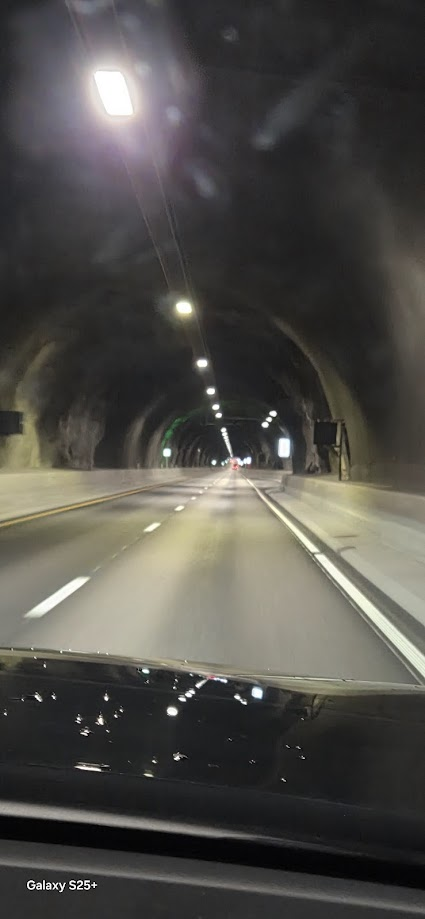
We crossed the Ryfylke Tunnel, that is the world’s longest and deepest undersea road tunnel, stretching 14.4 km and reaching a depth of 292 meters (almost 1,000 ft) below sea level. Remarkable feat of engineering.
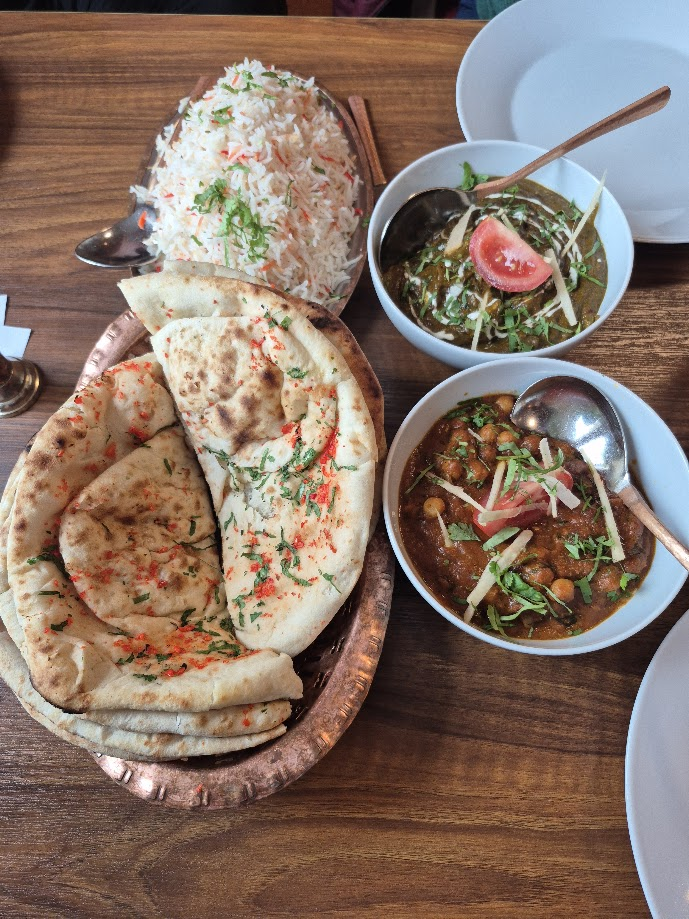
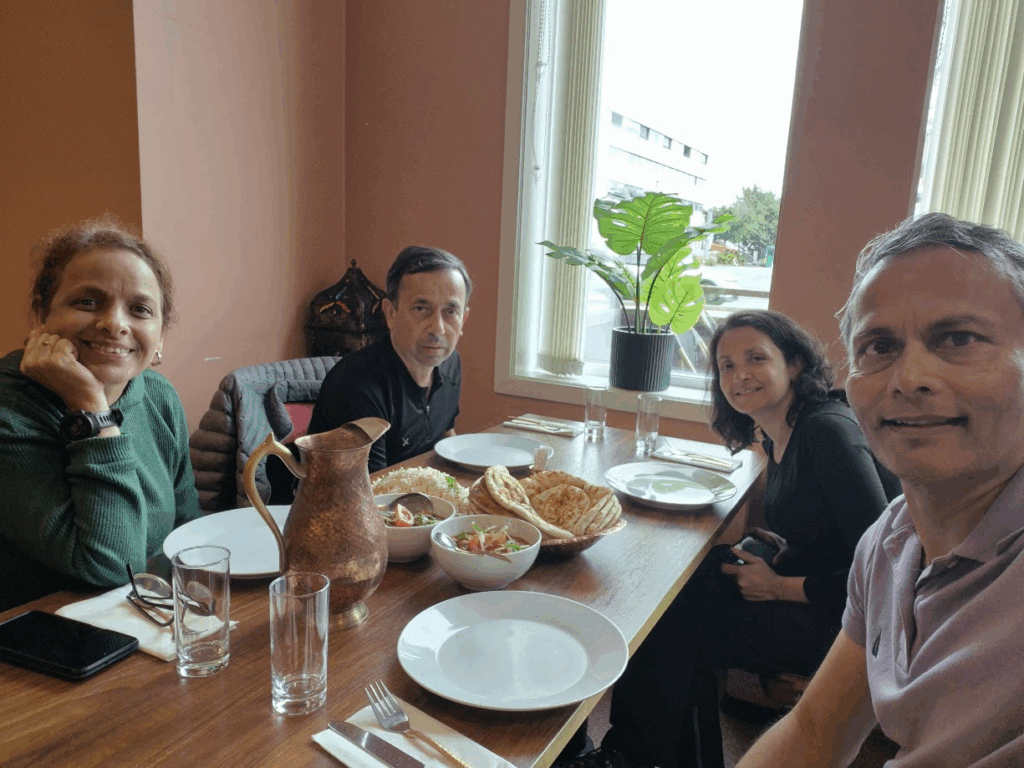
After crossing the Ryfylke tunnel, we we drove to Pulpit Rock. It is a steep cliff which rises 604 metres (1,982 ft) above Lysefjorden. It is a big attraction in Stavanger. When we reached the parking lot, it was raining heavily, so we decided to cancel the Pulpit rock trek (about 4 hours). We drove to Stavanger and ate lunch at Indian Zaika. Palak Paneer, Chana Masala and Dal Tadka. There was just one person taking the order and cooking the food. However, the food was prepared very quickly and it was very tasty.
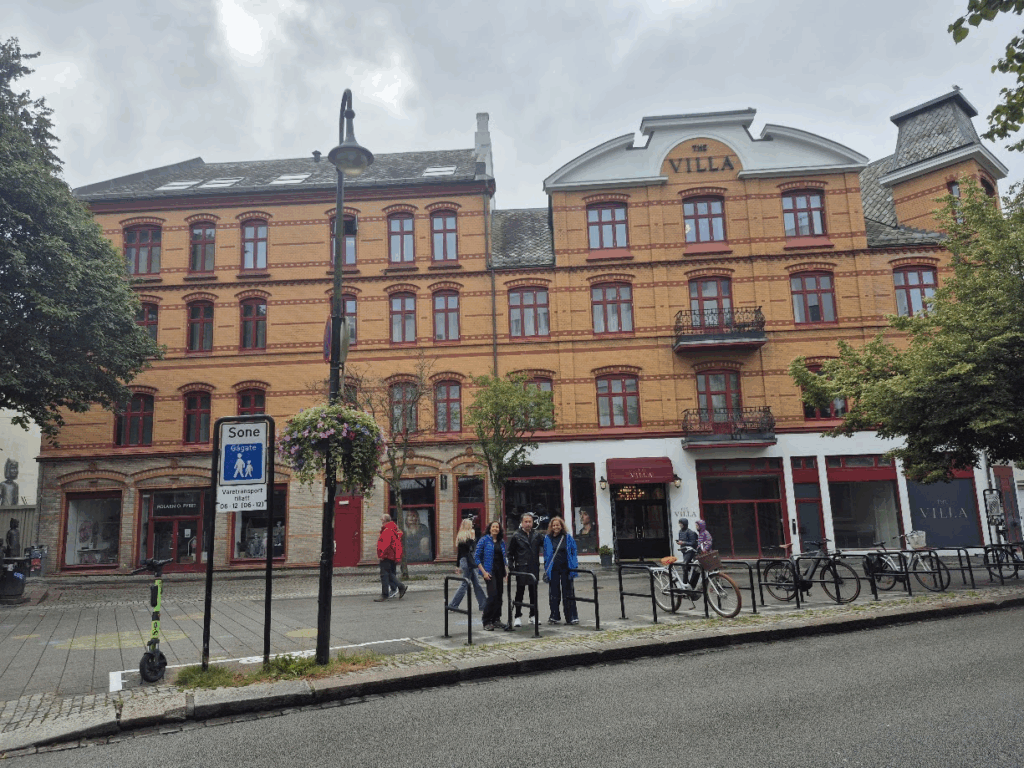
We came to our hotel The Villa near Stavanger Harbor. Very nice hotel, but self check in. No reception, no people, just technology.
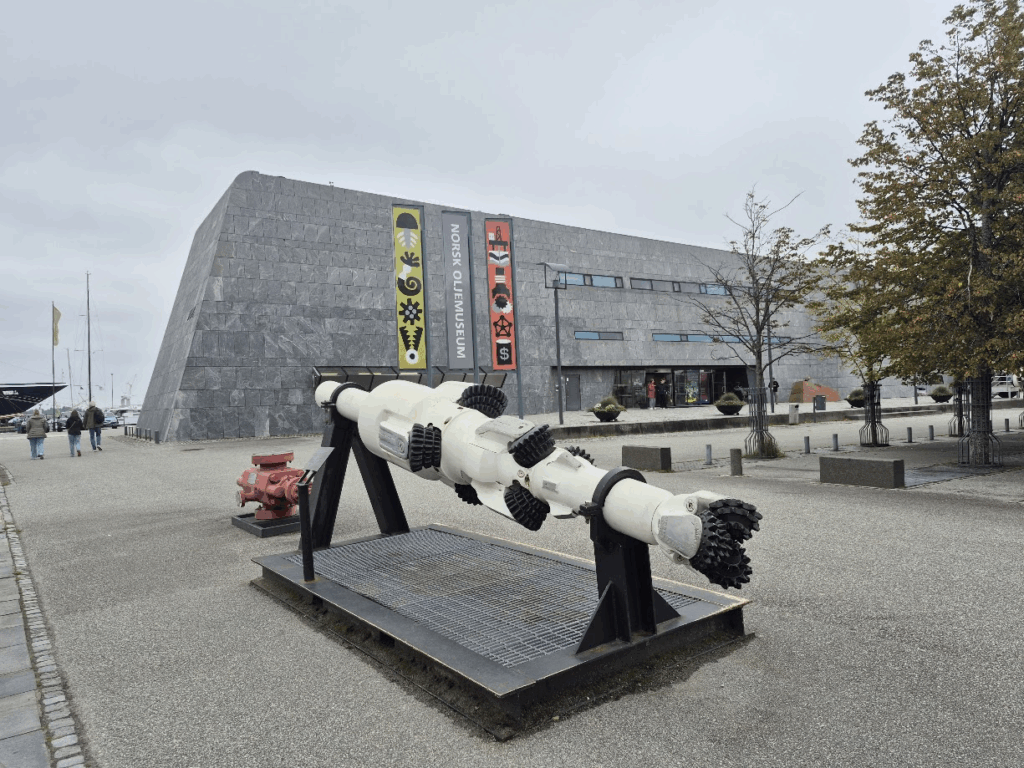
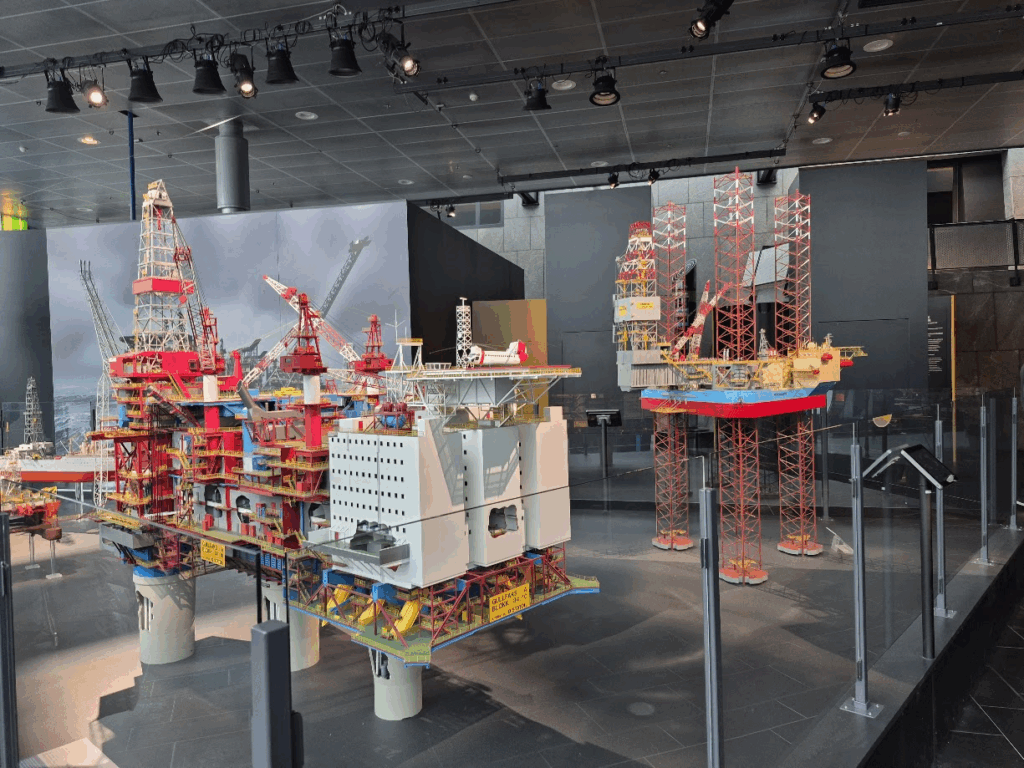
I went to the Norwegian Petroleum Museum which talks about the history of how oil & gas discovery in 1969 in the North sea made Norway one of the richest countries in the world. the exhibits are interactive and informative. It also talked about the development of oil & gas technology in Norway. Stavanger is the oil capital of Norway as Houston is oil capital of the US. 25% of Norway’s GDP is based on the oil industry. Due to oil revenues, Norway has a $2 trillion sovereign wealth fund which has nearly $350,000 per Norwegian citizen.
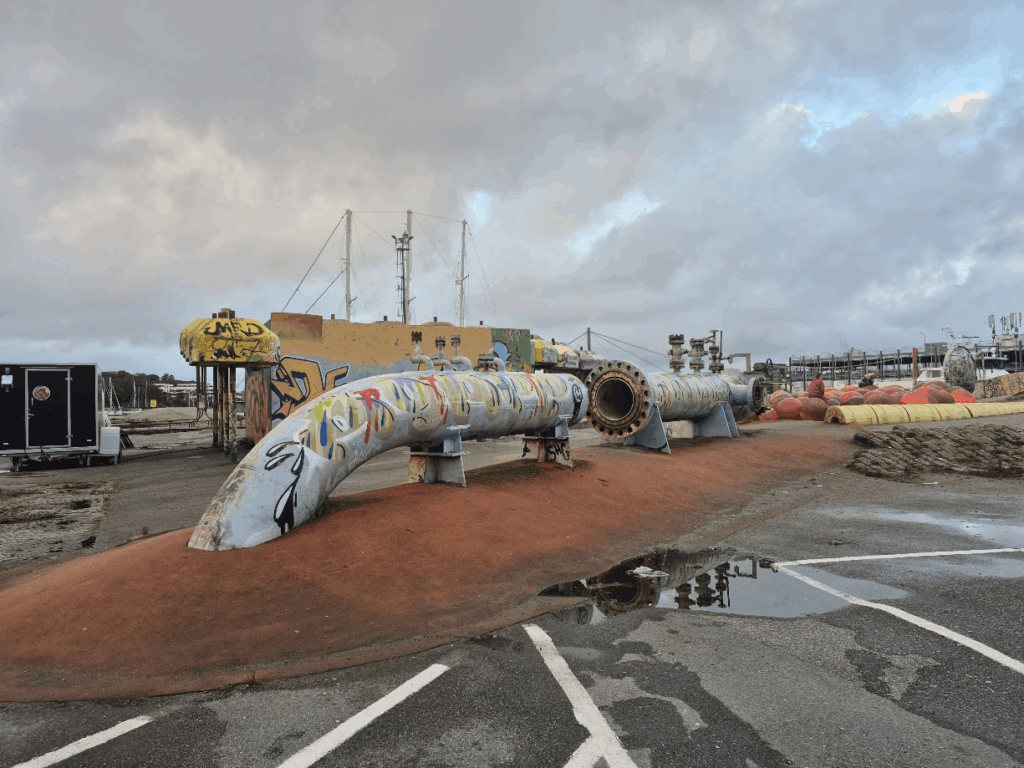
I saw a nearby children’s park built using oil industry parts like pipelines and factory parts.
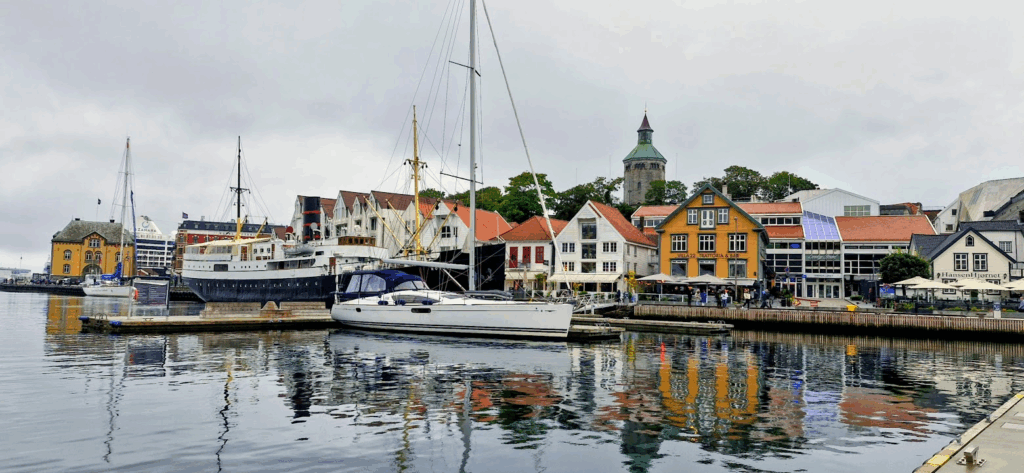
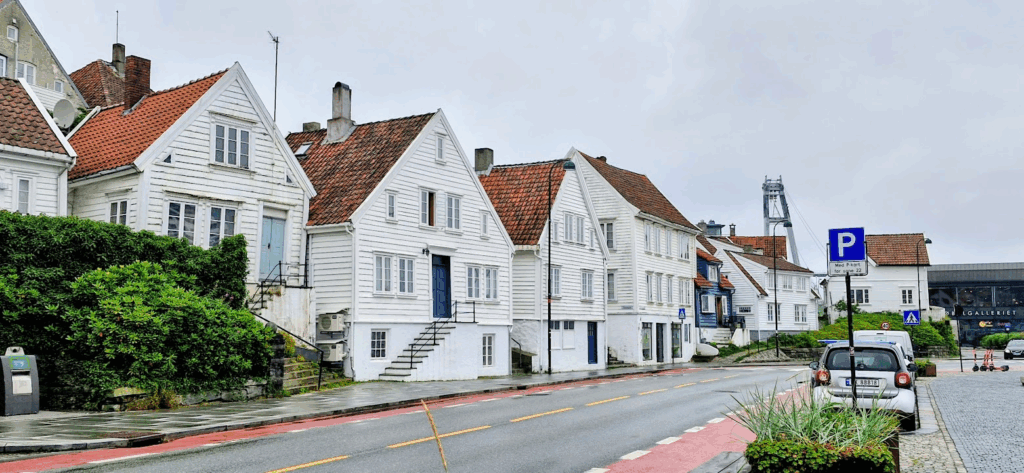
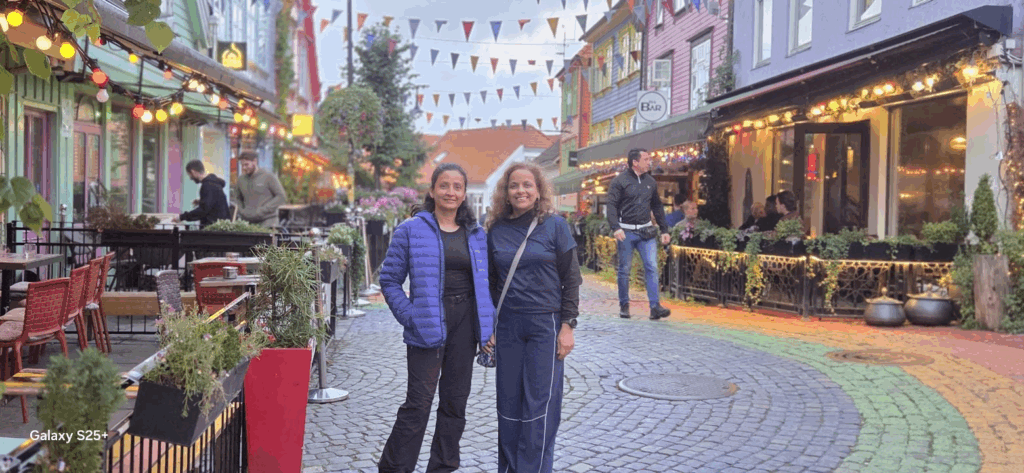
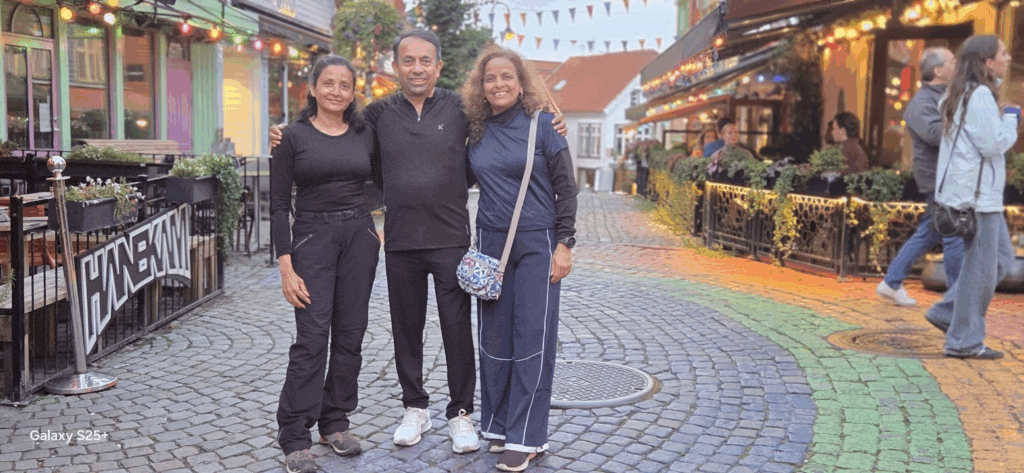
We then walked along the Stavanger Harbour and visited the Gamle. The area consists largely of restored wooden buildings which were built in the 18th century and at the beginning of the 19th century.
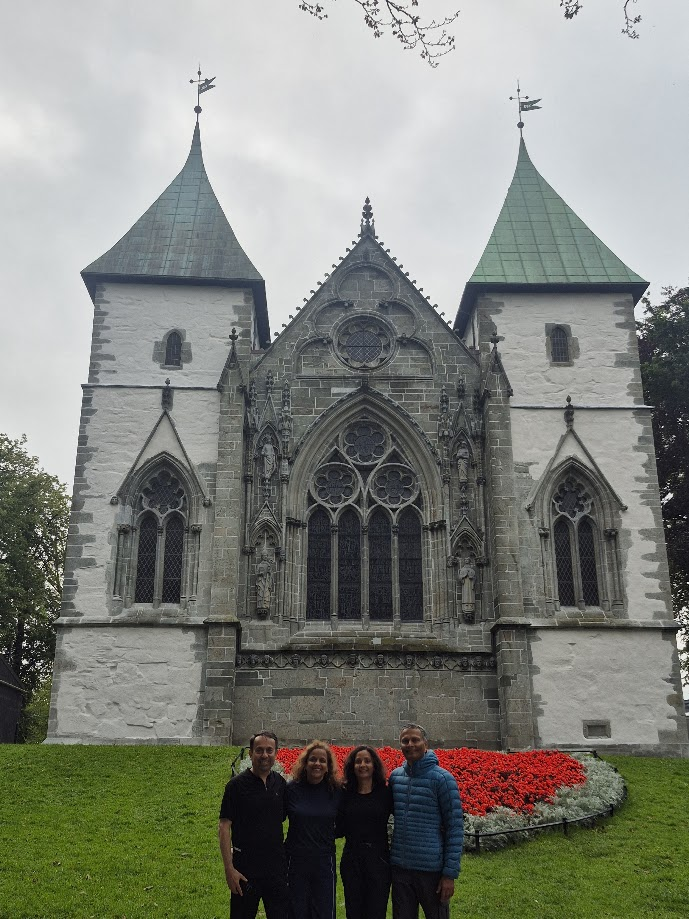
We saw the Stavanger Cathedral which was built 900 years ago. Very pretty.
We charged our EV. Managing charging cycles while on a tourist trip is challenging. We parked our car at a parking lot near our hotel. It has Tesla superchargers. We had to download the 200 MB Tesla app to enable charging. Charging was $0.50 per KWh. Each KWh is about 5 km distance. We ended up spending about $70 on EV charging, but EV charging is inconvenient because you have to wait.
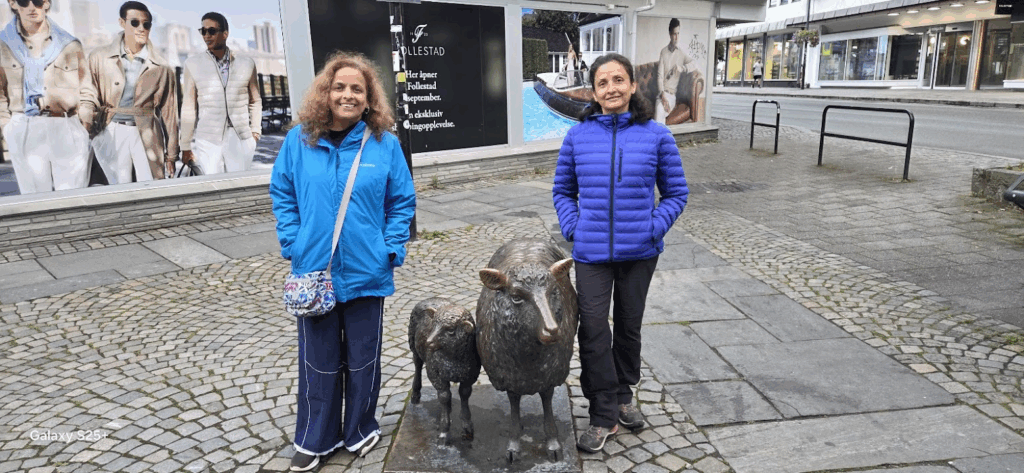
In the evening, we walked around Stavanger. Dinner was at a Thai Restaurant near The Villa hotel. Pad Thai and Red Curry. Very tasty.
We retired to hotel and slept at 9.30 pm.
Day 5: Tue, Aug 12: Flight to Oslo, Oslo City
We took a flight from Stavanger to Oslo on SAS (Scandinavia Air Services) at 9.25 am reaching Oslo at 10.15 am.
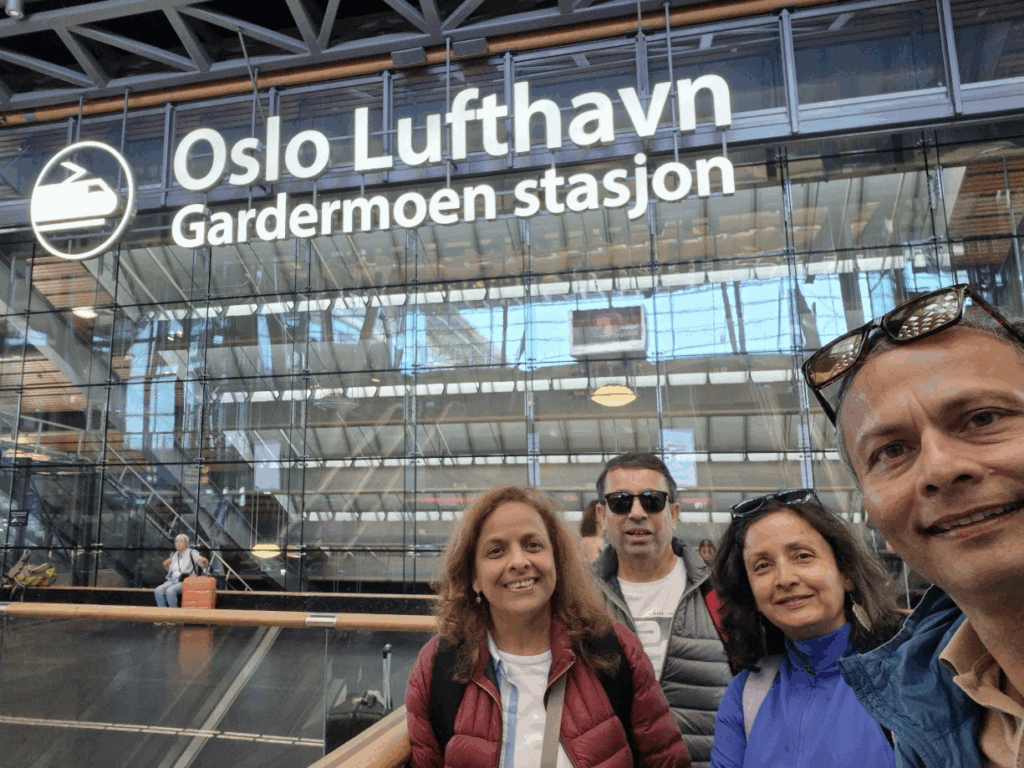
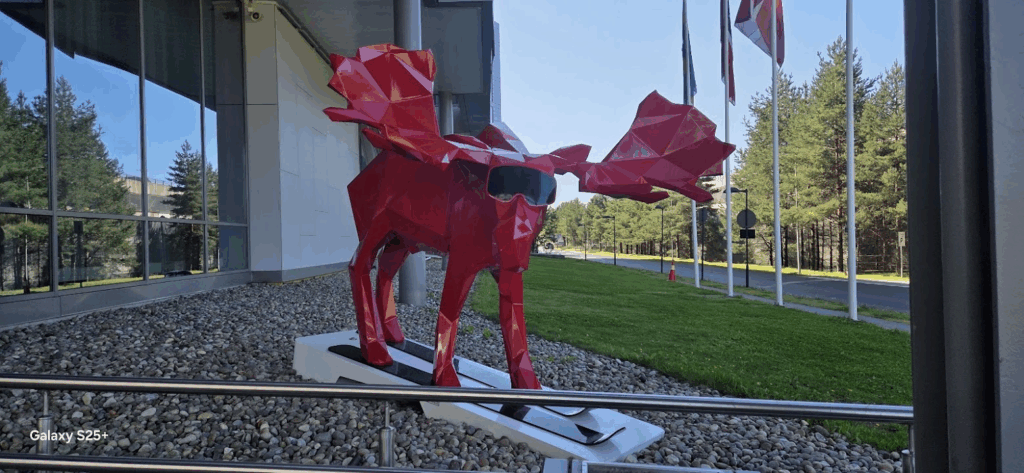
We placed our bags at Radisson Red hotel at Oslo airport. I particularly liked the red reindeer with snow goggles and skis outside the Radisson Red hotel.
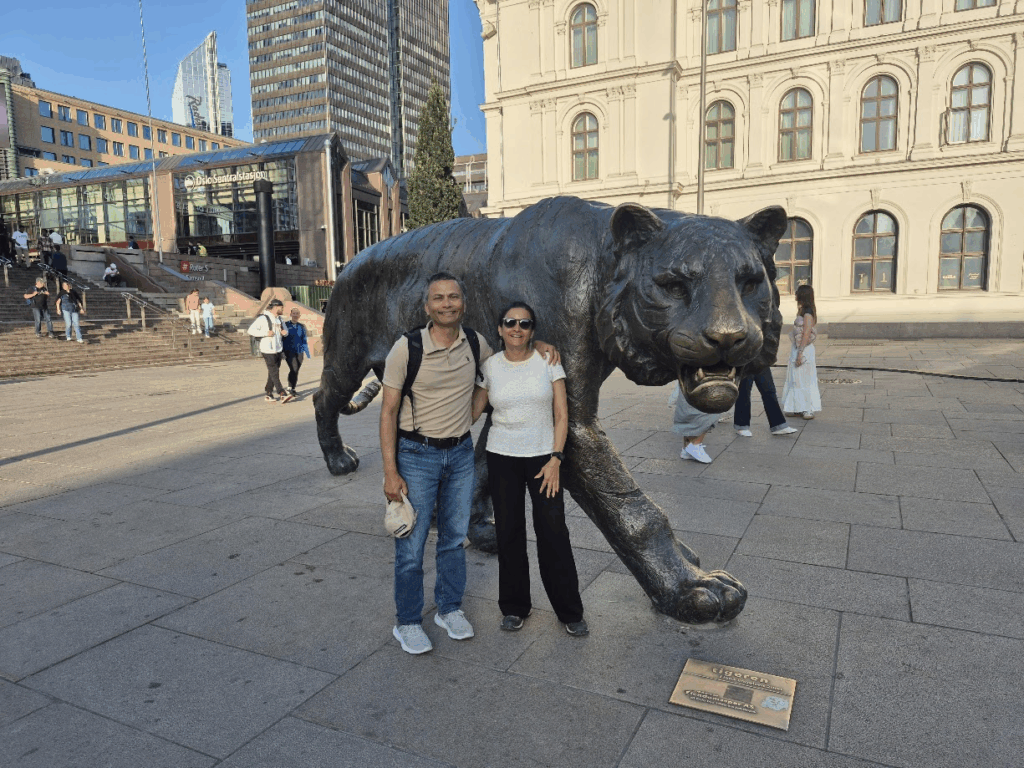
We bought an Oslo pass for $80 per person. It gave us complete freedom to travel on airport express, metro, trains, buses and ferries. It also allowed us free admission to museums. We took the train to Oslo central station. Our first stop was the Oslo tiger. The reason Oslo wanted a tiger, is the city’s nickname Tigerstaden (“The Tiger City”), which most Norwegians are familiar with. The name was probably first used by Norwegian poet Bjørnstjerne Bjørnson. His poem “Sidste Sang” from 1870 describes a fight between a horse and a tiger; the tiger representing the dangerous city and the horse the safe countryside. Since then Oslo has been known as “The Tiger City”, but these days it’s not necessarily meant as a negative thing.
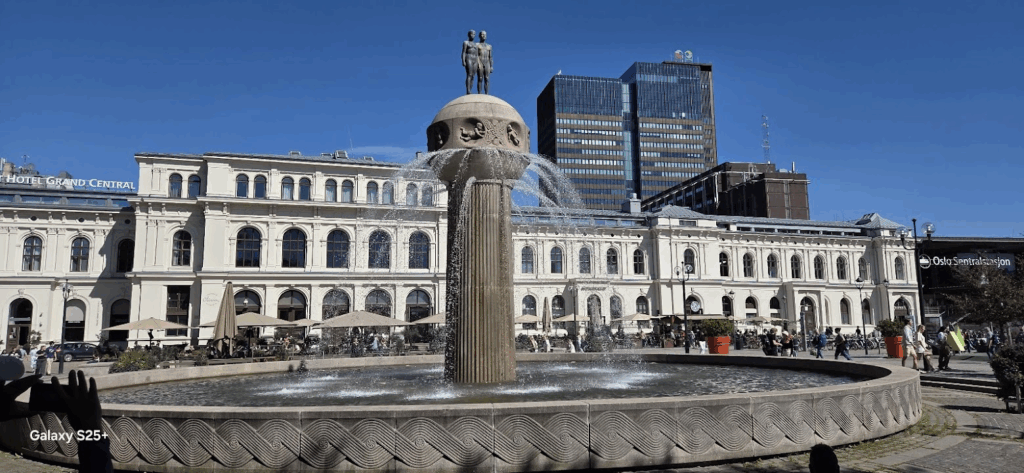
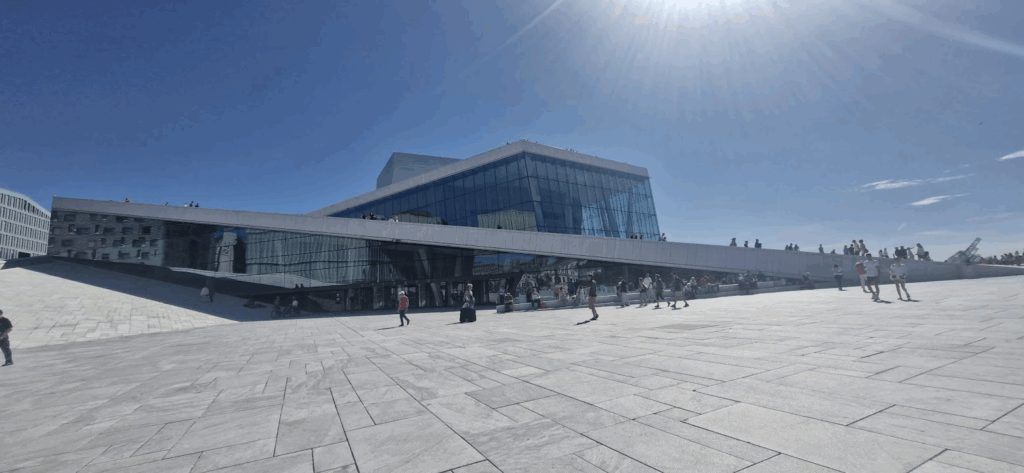
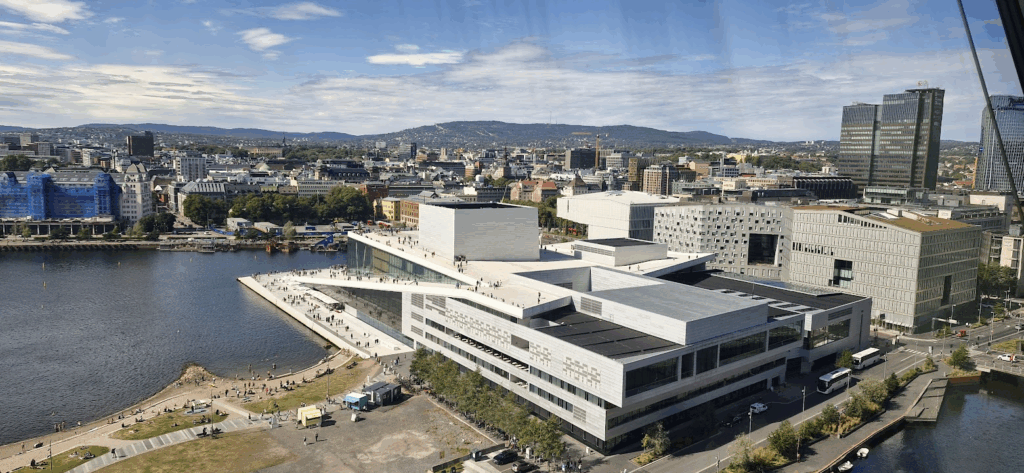
We walked over to the Oslo Concert Hall. It is the base of the Oslo Philharmonic Orchestra (Oslo-Filharmonien), but it also aims to be one of the premier music venues for the general musical and cultural life of Norway, offering a broad variety of musical styles from classical, world music.
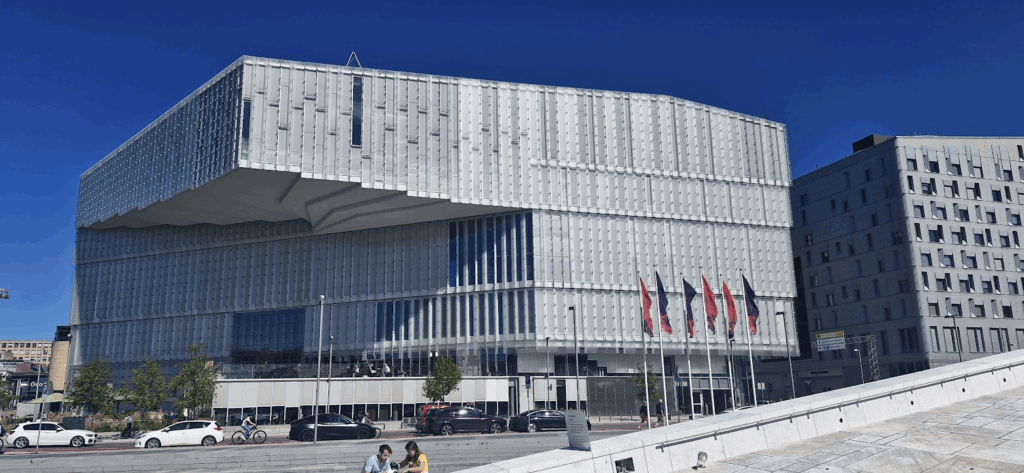
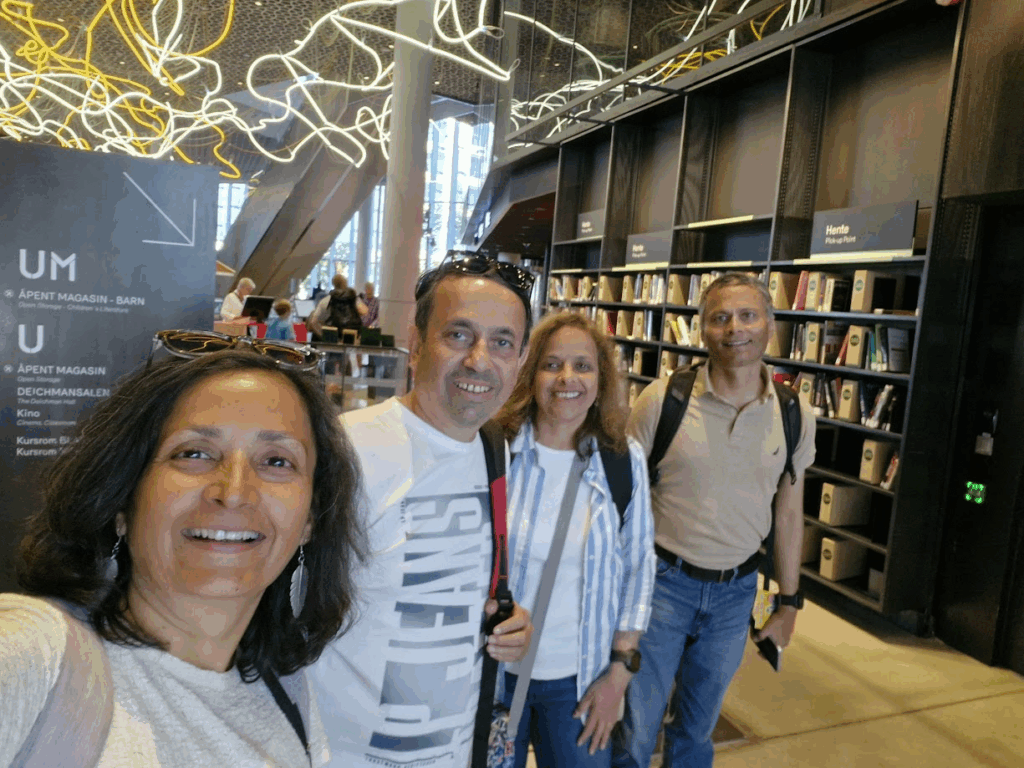
We walked over to a nearby structure that looked like a hotel. It turned out to be the Oslo Public Library. It is a beautiful 8 storey building with different types of books and media on each floor. We had a good time browsing the library and have some coffee.
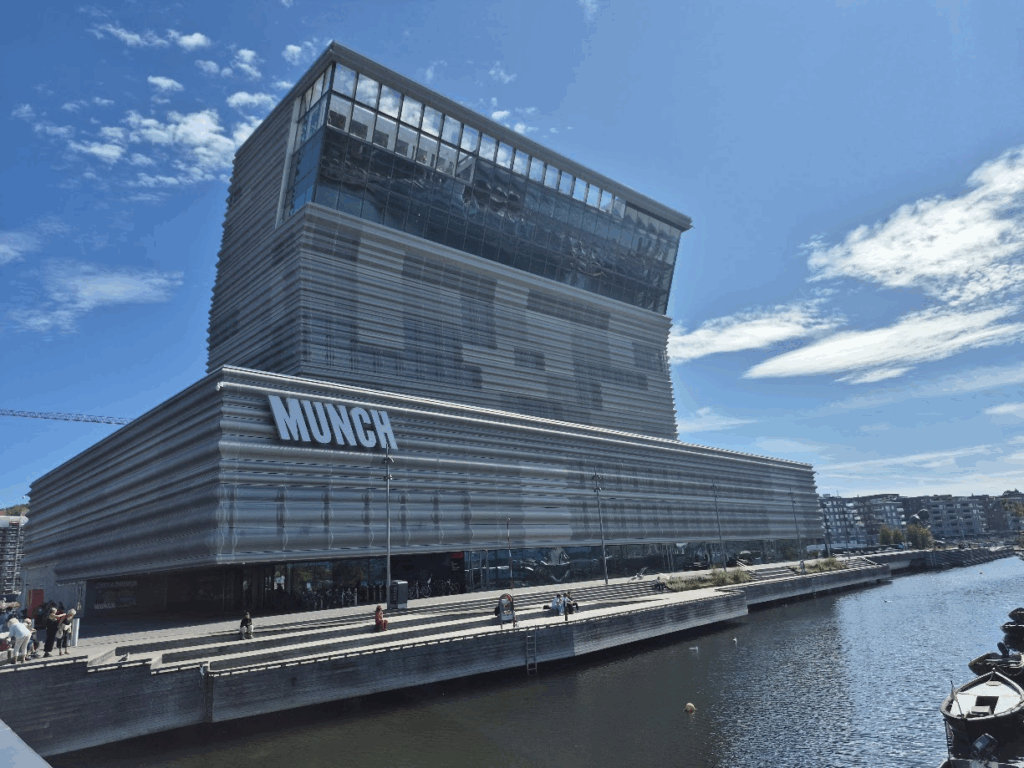
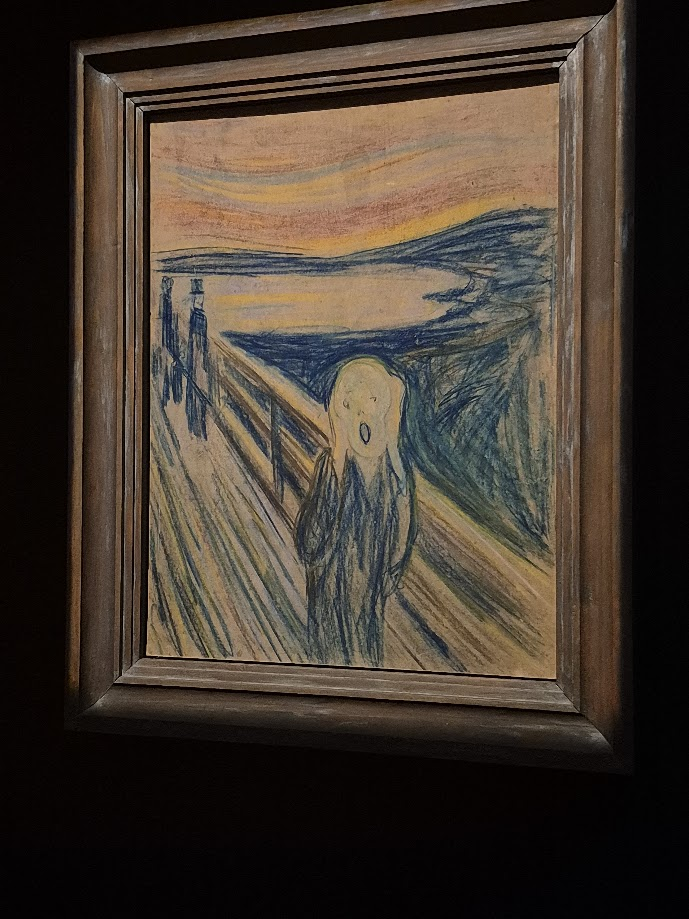
Next, we visited the Munch museum. Edvard Munch who died in 1944 was a Norwegian painter. His 1893 work The Scream has become one of the most iconic and acclaimed images in all of Western art. His childhood was overshadowed by illness, bereavement and the dread of inheriting a mental condition that ran in the family. Studying at the Royal School of Art and Design in Kristiania (Oslo), Munch began to live a bohemian life under the influence of the nihilist Hans Jæger, who urged him to paint his own emotional and psychological state, from this emerged his distinctive style. While the museum is well know, I personally did not like the paintings at all. We visited because we had a free Oslo pass, but I would not pay to go into that museum.
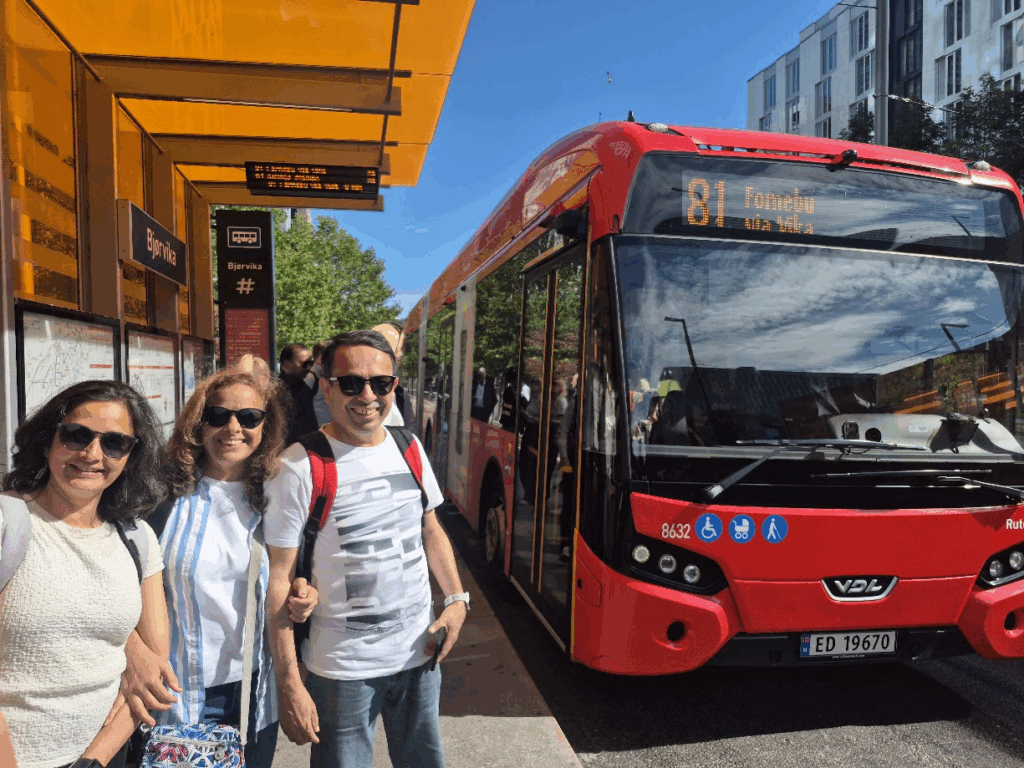
We took public transport everywhere in Oslo. With our Oslo pass, we did not have to pay anything extra. Public transport was modern and efficient.
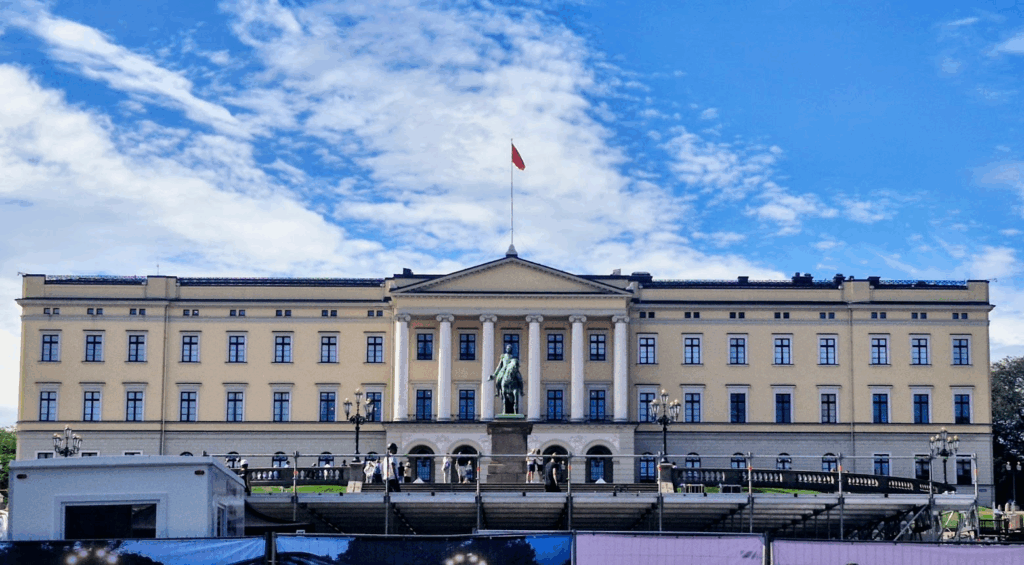
We took a bus to the royal palace. The Royal Palace in Oslo was built in the first half of the 19th century as the Norwegian residence of the French-born Charles XIV John, who reigned as king of Norway and Sweden. The palace is the official residence of the current Norwegian monarch while the crown prince resides at Skaugum in Asker west of Oslo. We tried to get into a guided English tour at 4 pm, but spaces were full.
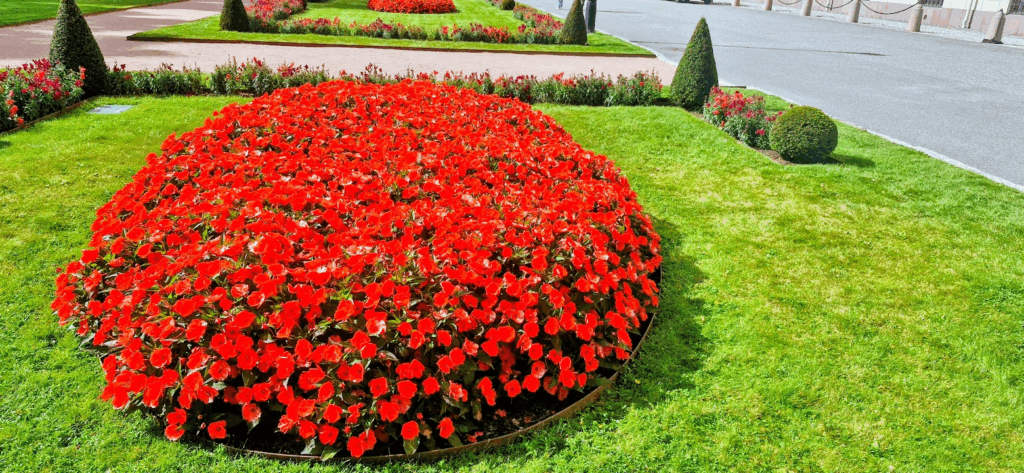
Oslo had a lot of flowers at this time of the year.
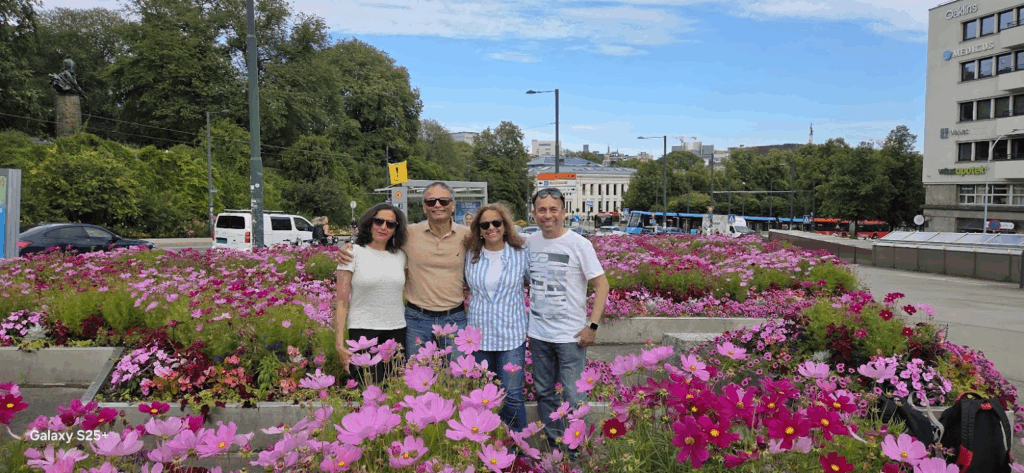
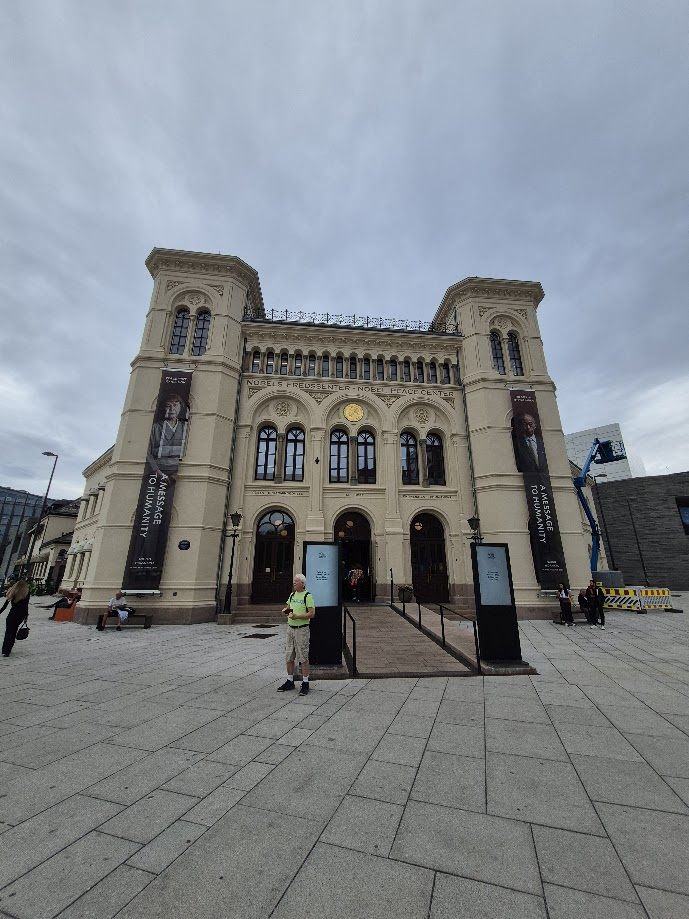
We took a bus to the Nobel Peace Center. While the other Nobel prizes are decided in Sweden, the Nobel peace prize is decided by a committe out of Oslo. The peace center highlights the contributions of all Nobel peace prize winners. It is small but interesting.
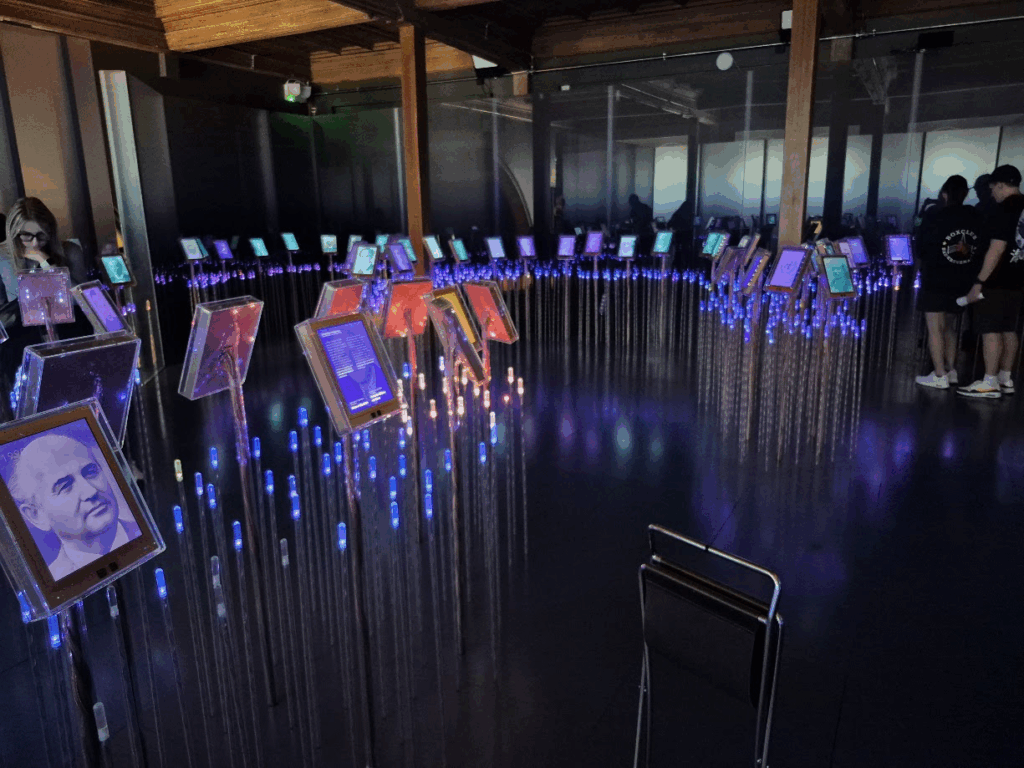
The Norwegian National Museum is next to the Peace Center. It has great exhibits on Norwegian life and culture over the past century. I found it very interesting.
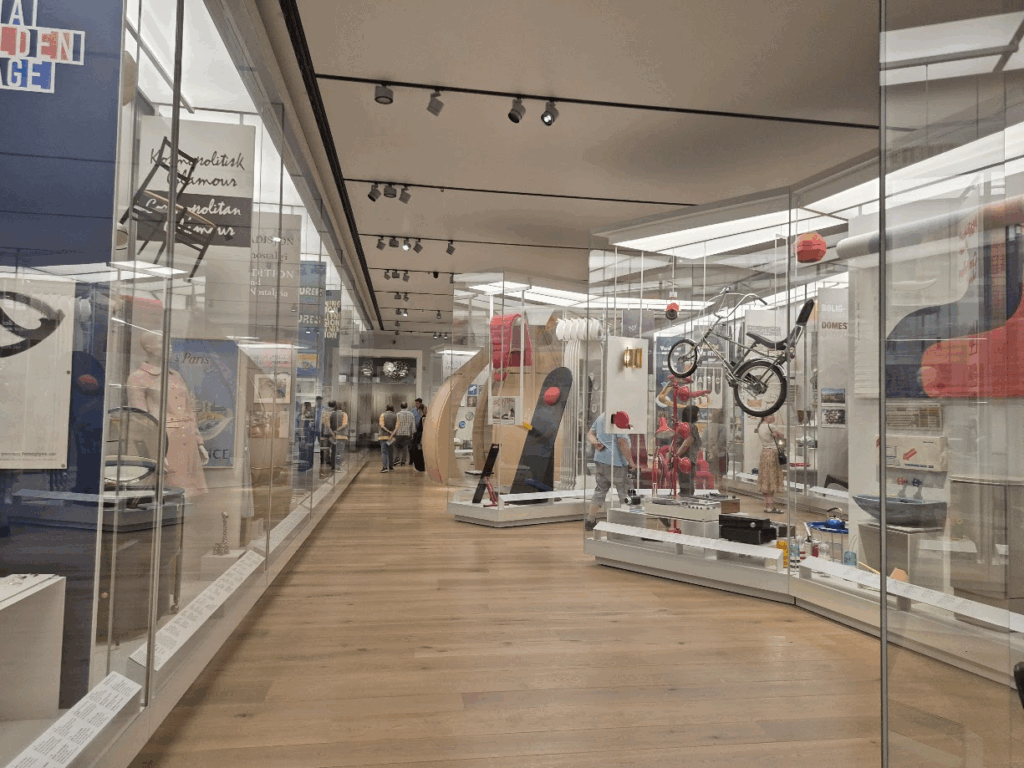
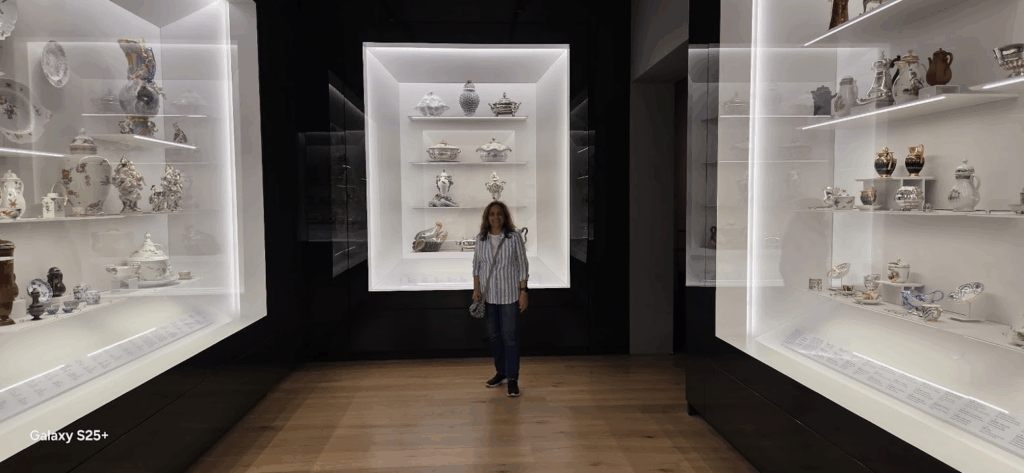
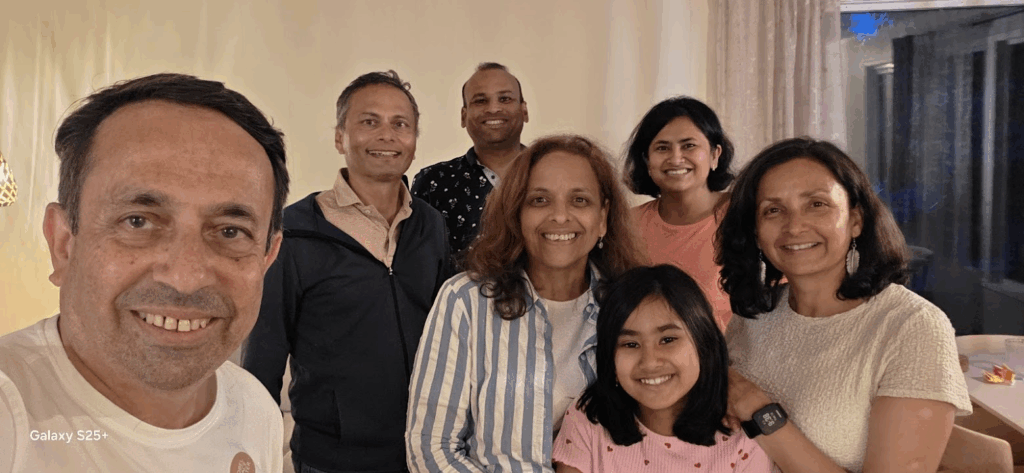
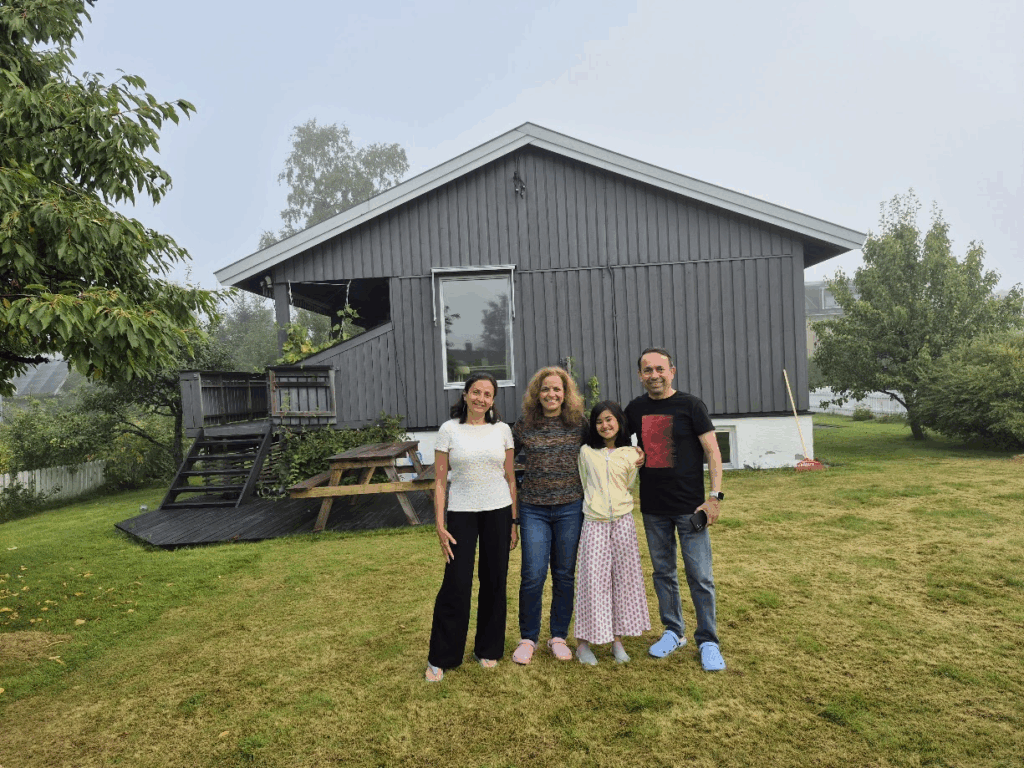
We finished with the museum around 6 pm and we took the train from Oslo Central Station to Spikkestad where Anu’s cousin Charu Patwardhan (Ranade) and her husband lived with her husband Vinit Ranade and their lovely daughter Kanak. We had a great time visiting their home.
Day 6: Wed, Aug 13: Oslo Museums
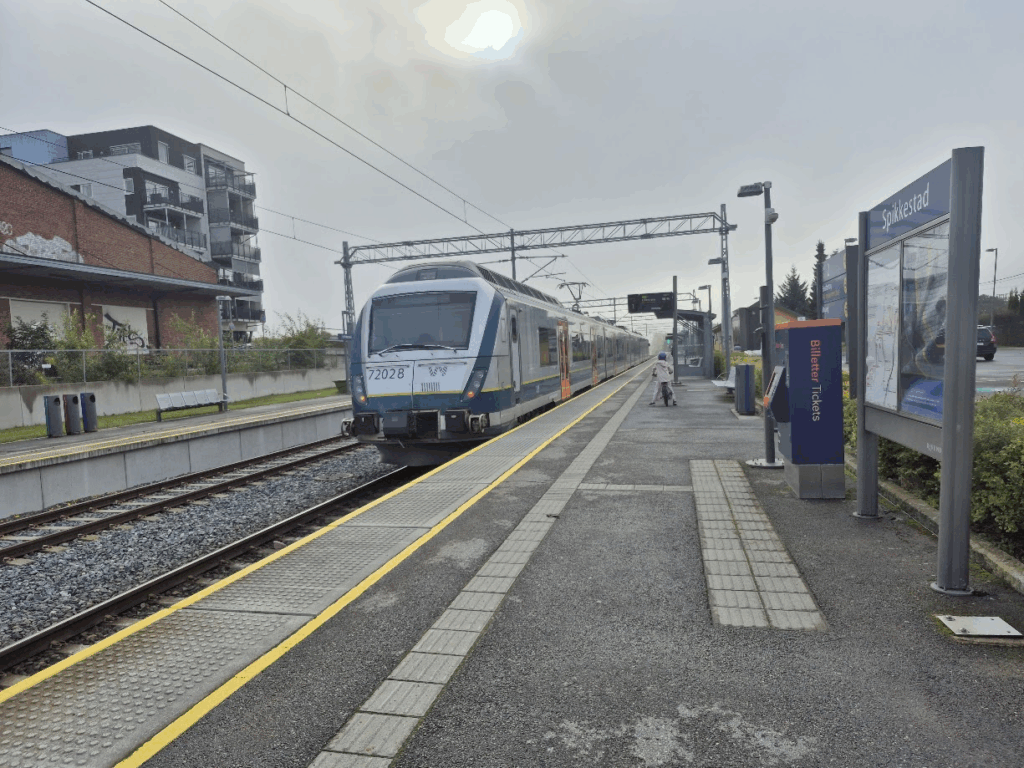
We took the train from Spikkestad at 8.44 am to Oslo Central Station.
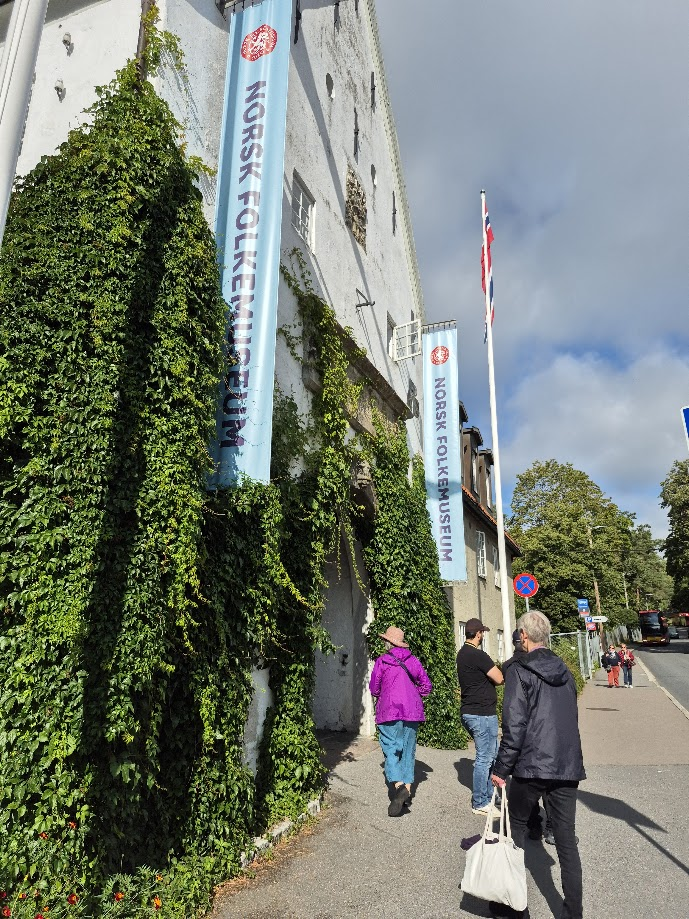
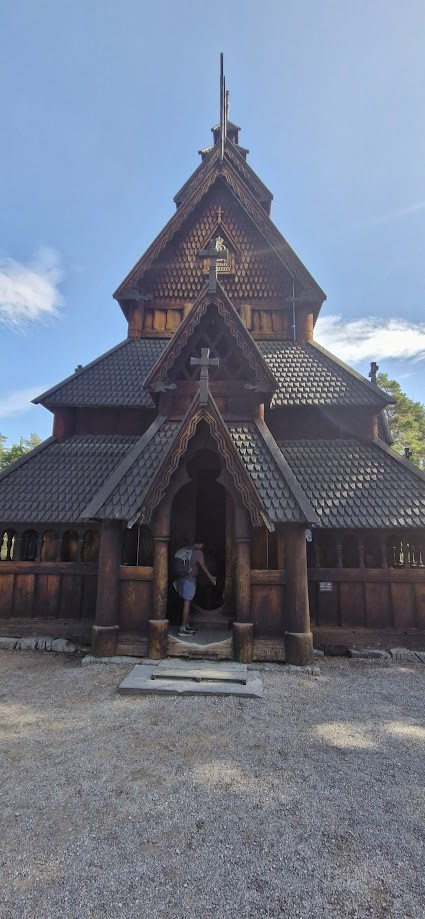
Our first stop for the day was the Norwegian Folk Museum. It is a museum of cultural history with extensive collections of artifacts from all social groups and all regions of the country. It also incorporates a large open-air museum with more than 150 buildings, relocated from towns and rural districts. It felt nice to walk around the exhibits and get a feel for Norway.
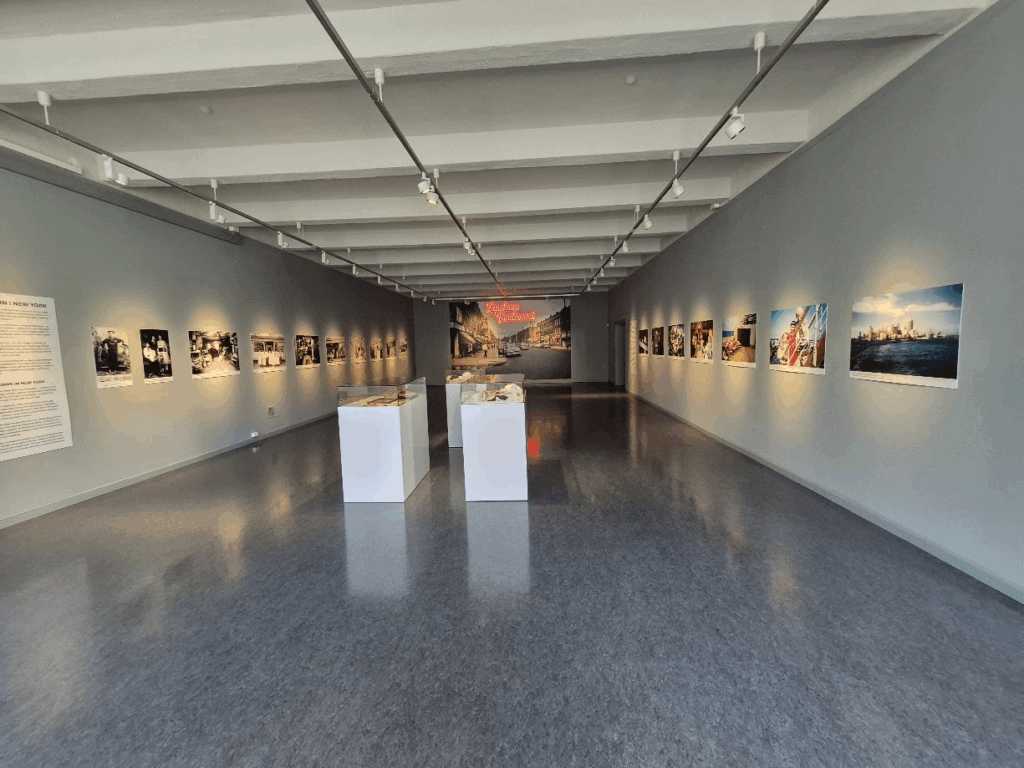
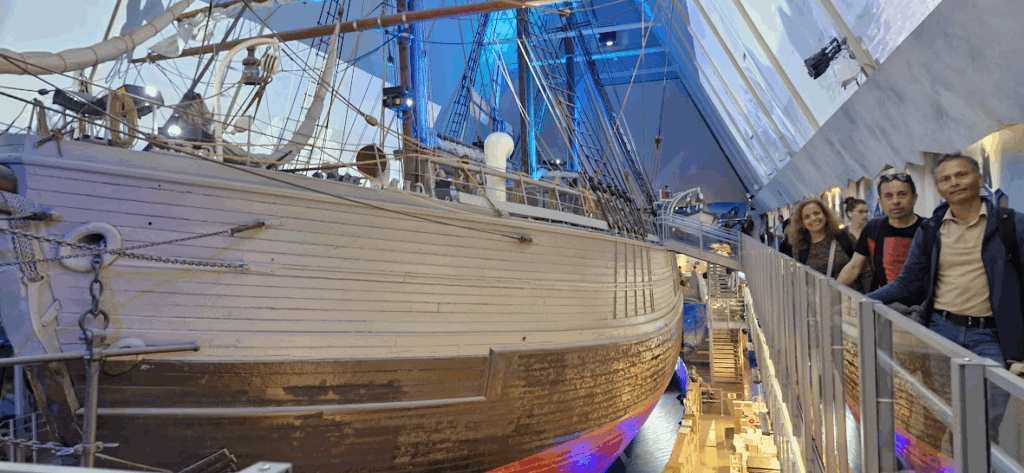
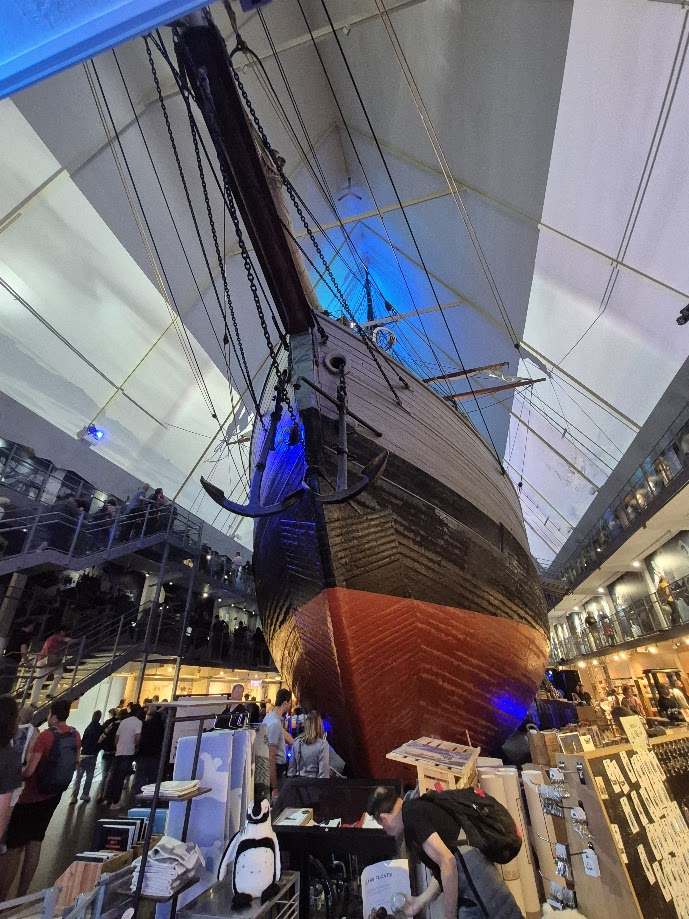
We had reserved this day for museums. Next stop was the Fram museum. The Fram Museum is a museum telling the story of Norwegian polar exploration to both the North and South Poles. Roald Amundsen reached the South pole in 1911, but he reached the North Pole in a flight in 1926. The ship “Fram” was used for these explorations. The ship is restored and kept in these museums.
Nearby was the Kontiki museum. The museum was originally built to house the Kon-Tiki, a raft of balsa wood of pre-Columbian model that Norwegian American adventurer Thor Heyerdahl used to sail from Peru to Polynesia in 1947. He sailed with the sea currents to prove that ancient cultures could have migrated from American mainland to the Polynesian islands.
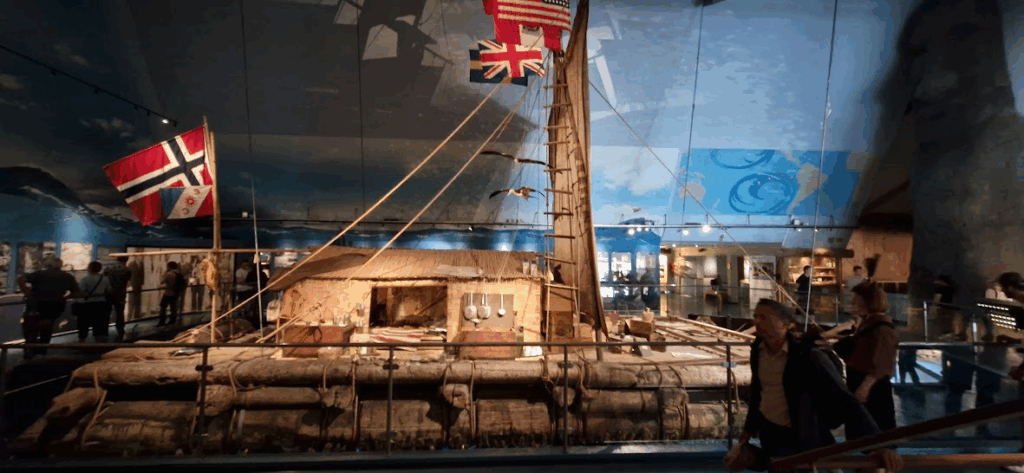
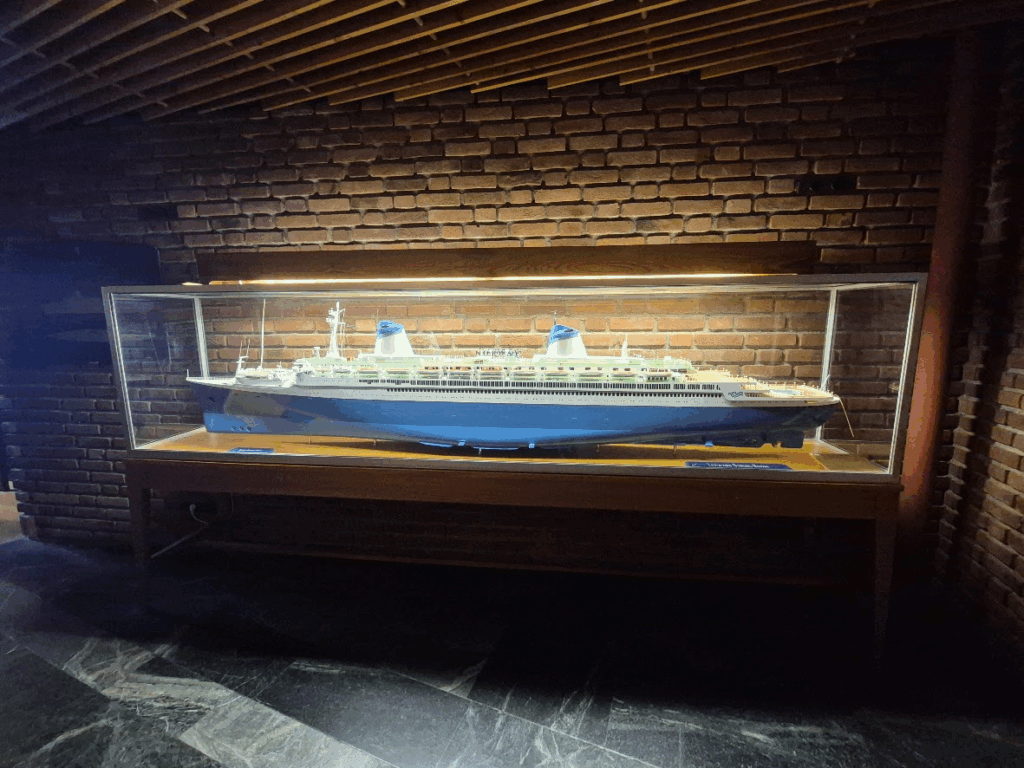
Opposite the Kontiki museum is the Norwegian Maritime museum. The exhibits on coast culture and maritime history cover a number of subjects including ship building, boat models, fishing, marine archeology, and shipping. It was an ok museum, not extremely interesting.
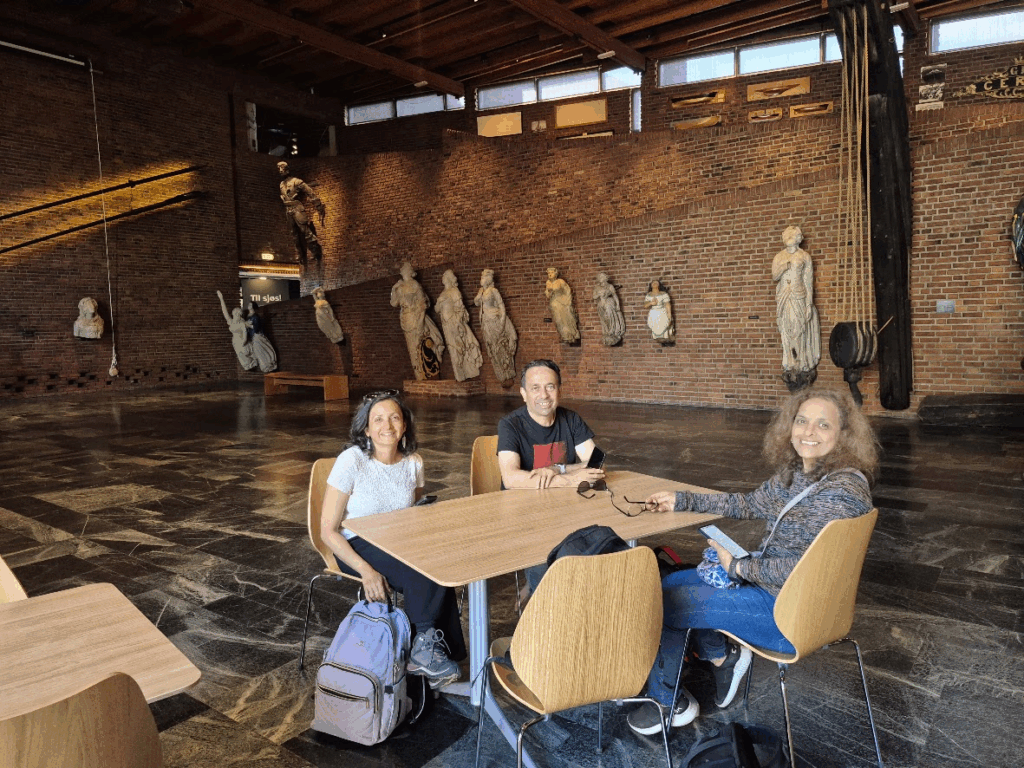
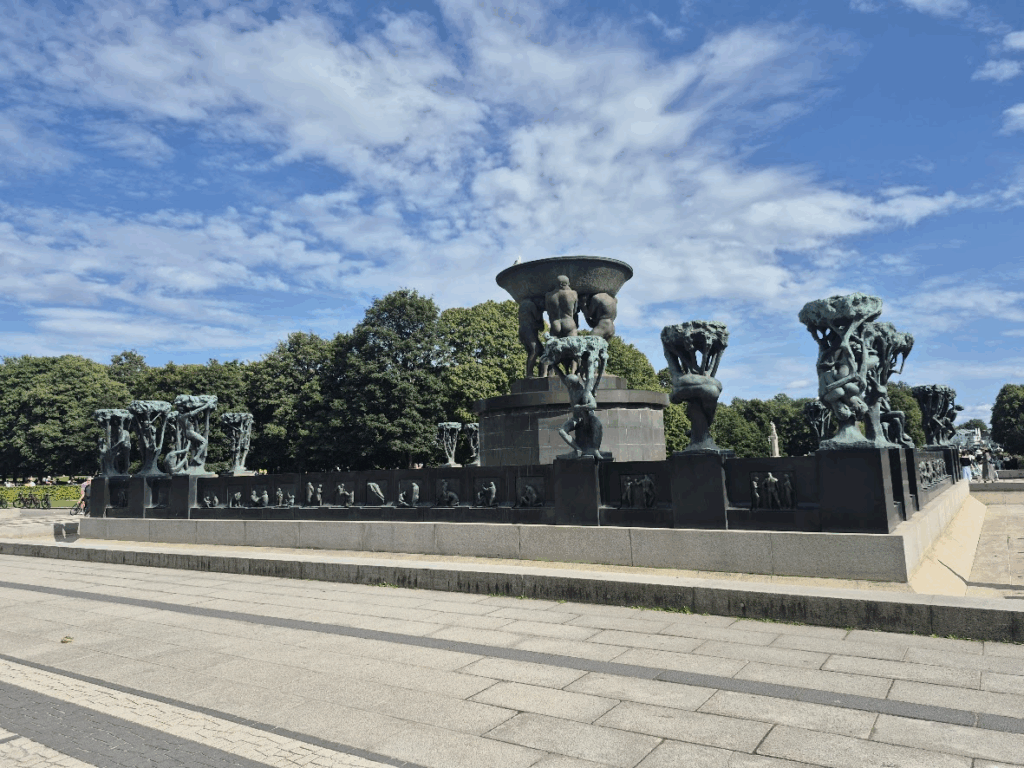
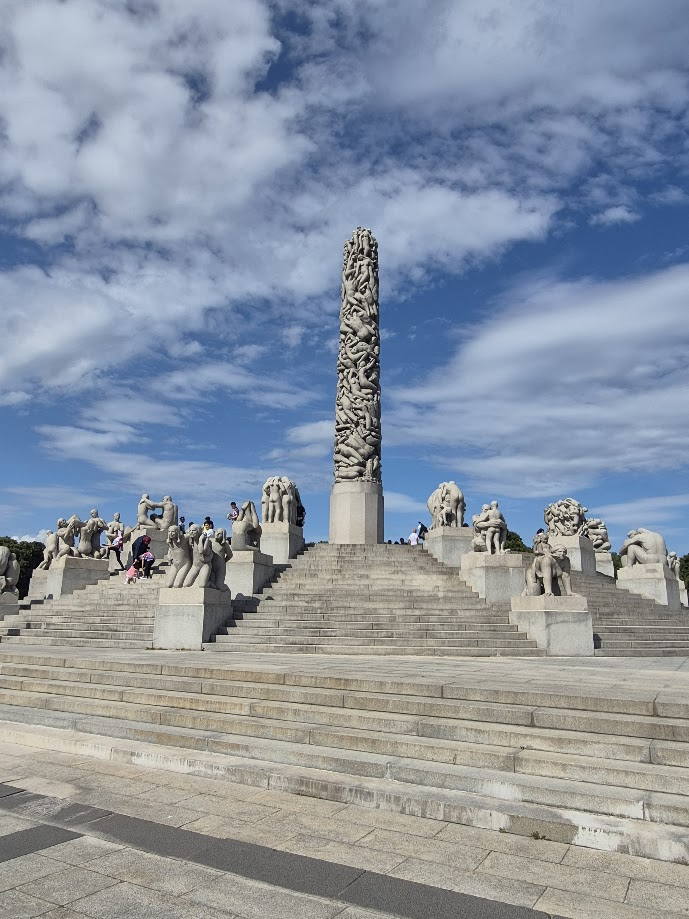
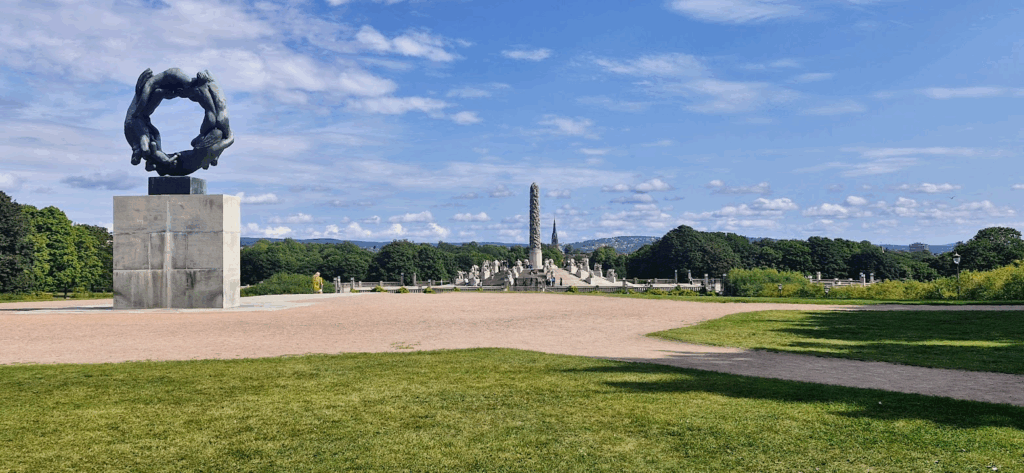
From the museums, we took a bus to Vigeland Park, also known as the Frogner Park. The park is historically part of Frogner Manor and is Oslo’s largest park, open to the public at all times. It includes the manor house which is the seat of Oslo Museum, the nearby Henriette Wegner Pavilion, the Vigeland installation of sculptures created by famous sculptor Gustav Vigeland. It has the largest collection of roses in the country with 14,000 plants of 150 species. Frogner Park is the most visited tourist attraction in Norway. I am not very fond of nude sculptures, hence I found the sculptures just ok, not great. I admit that Vigeland’s creativity and work is amazing though.
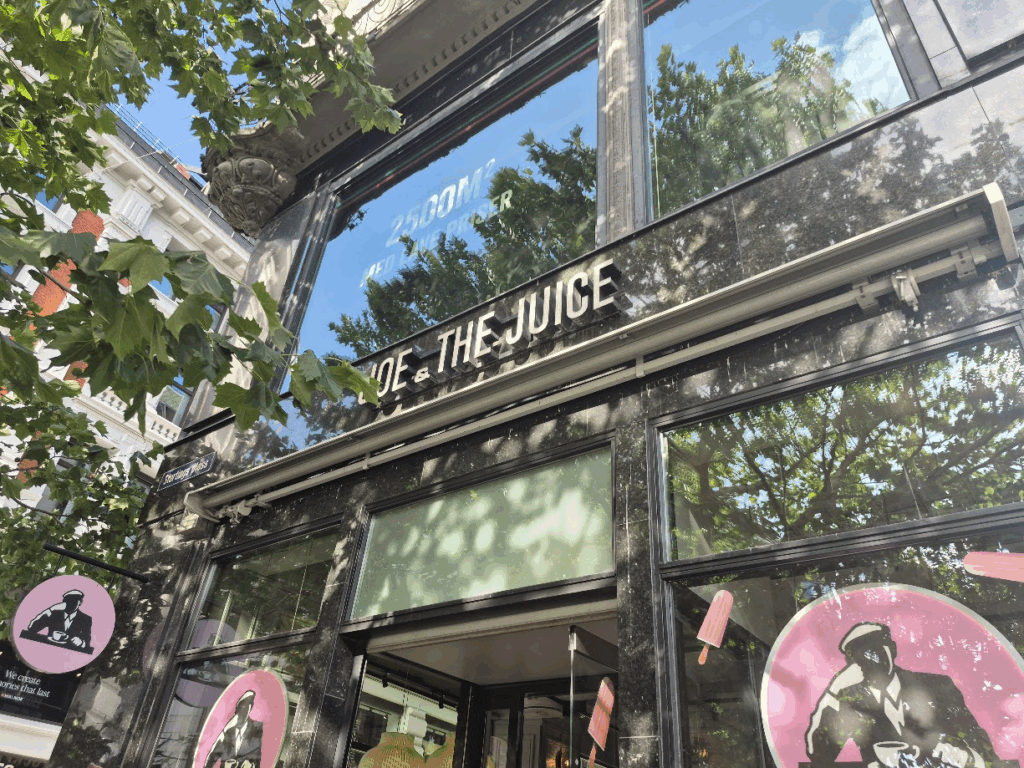
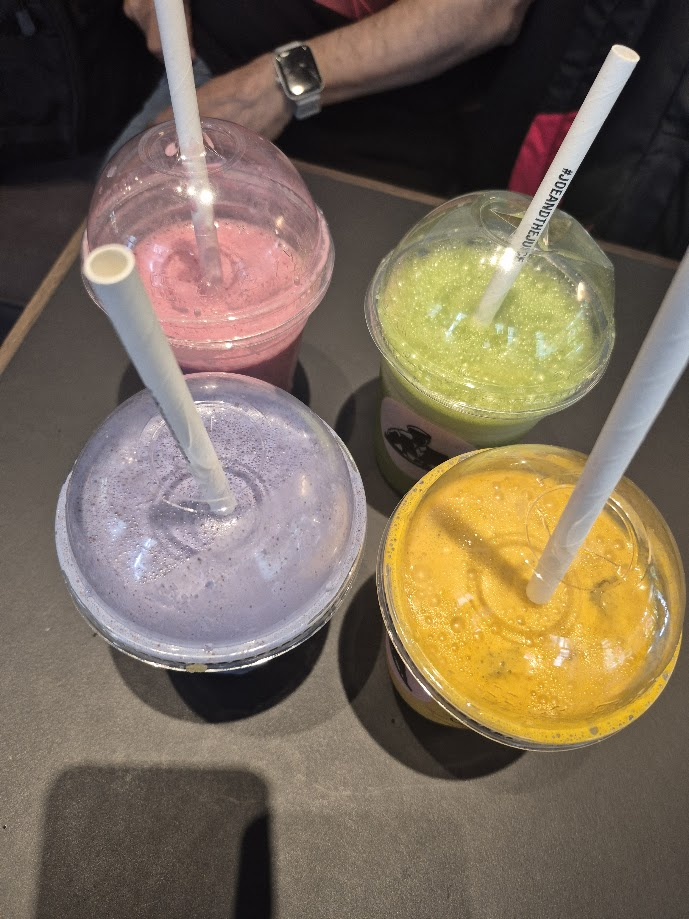
Charu had recommended having a juice break at Joe & The Juice. We took some time to do that. They had some interesting juice mixtures.
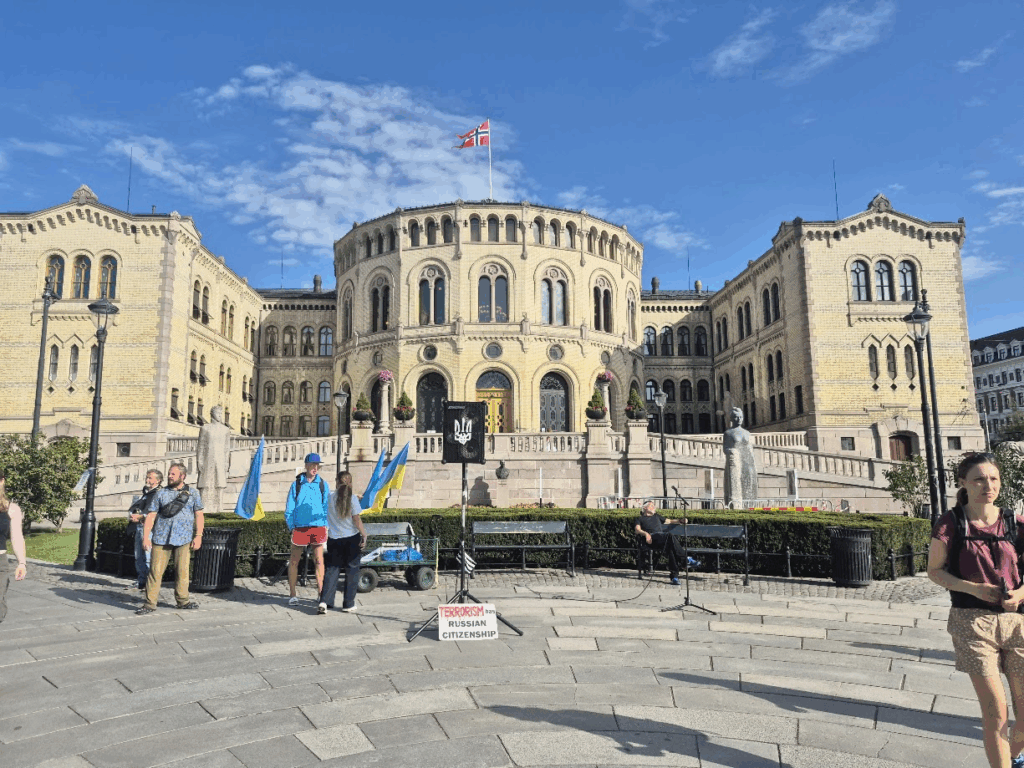
We walked over the Norwegian Parliament (“The Storting”). There was an anti-Russia protest happening in front of the parliament. The Storting was established in 1814 by the Constitution of Norway. The unicameral parliament has 169 members and is elected every four years.
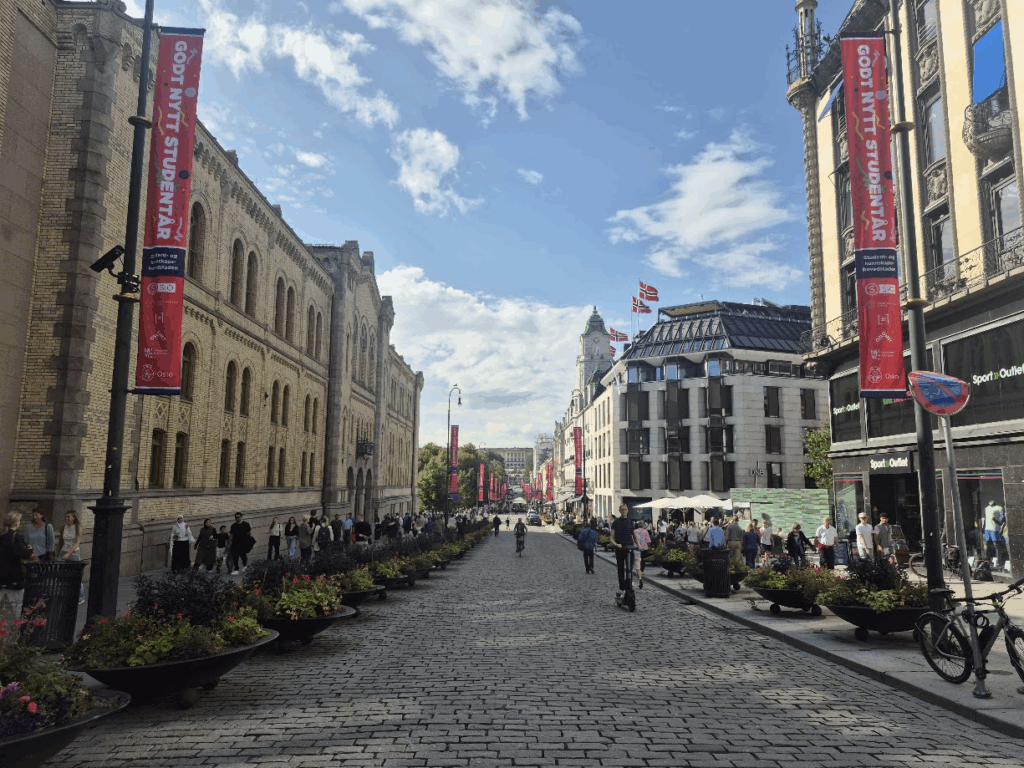
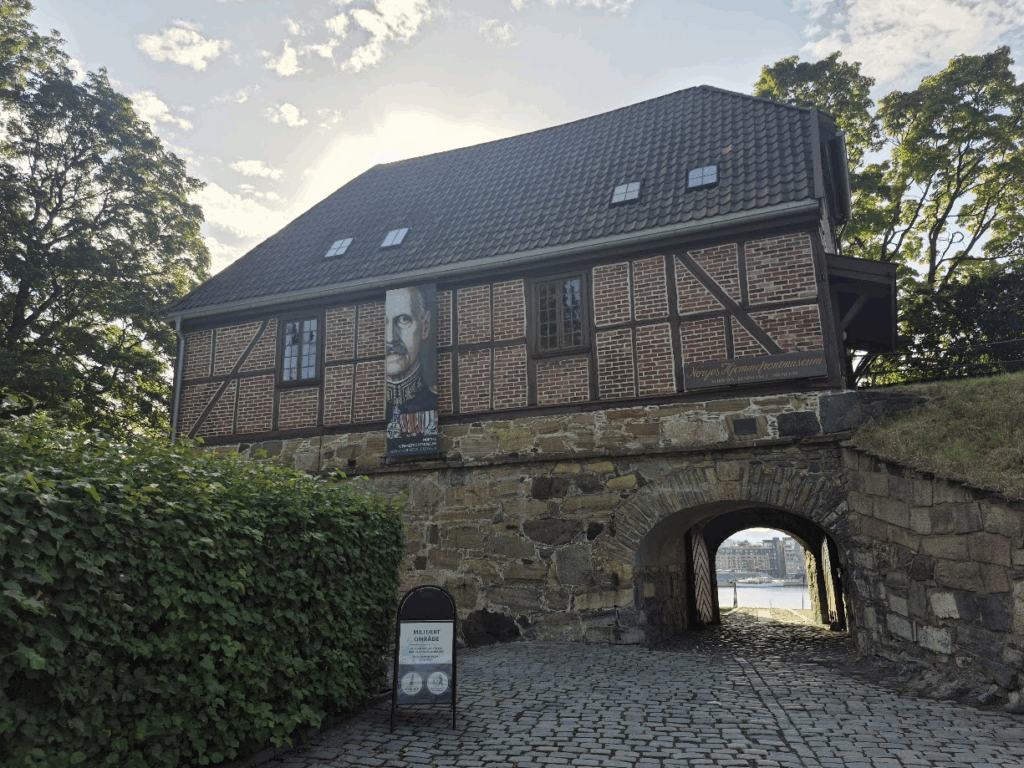
The final attraction was the Akershus Military Fortress. The castle has also been used as a military base, a prison and is currently the temporary office of the prime minister of Norway. When we got there, the fortress was closed, so we got some photos on the outside.
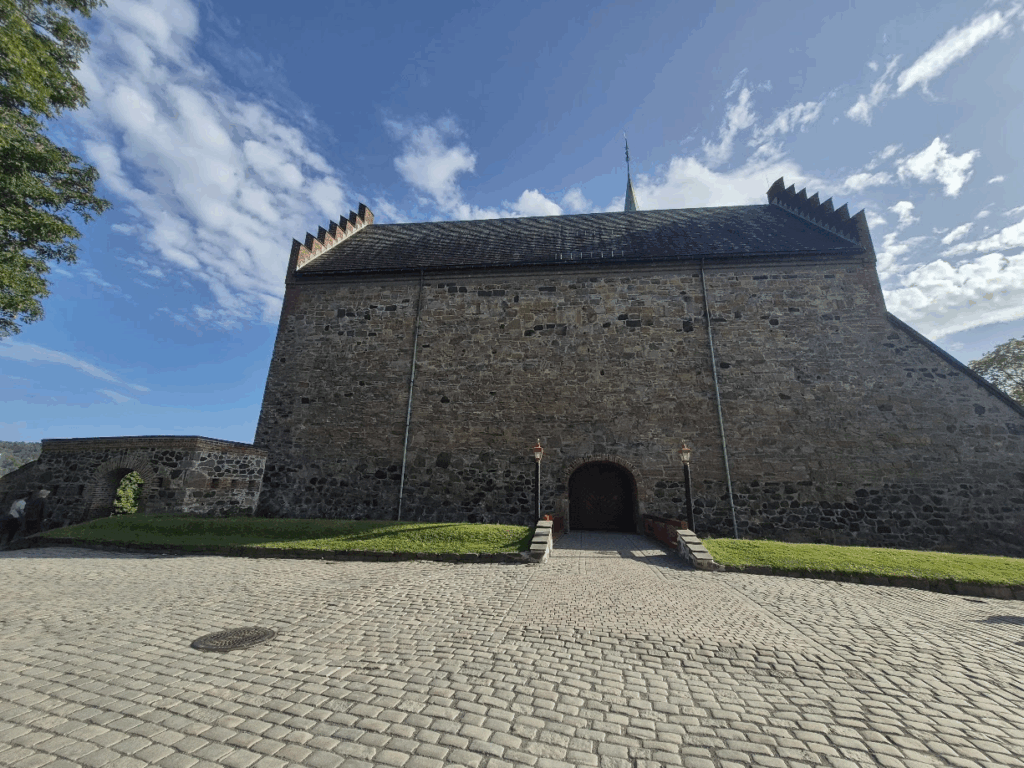
The Norwegian resistance museum was next to the Akershus fortress. It highlights Norway’s efforts during World War II.
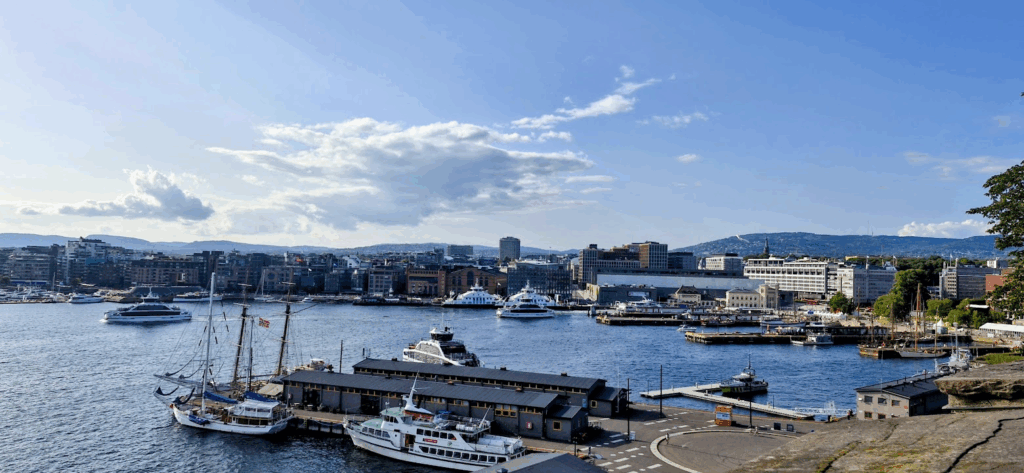
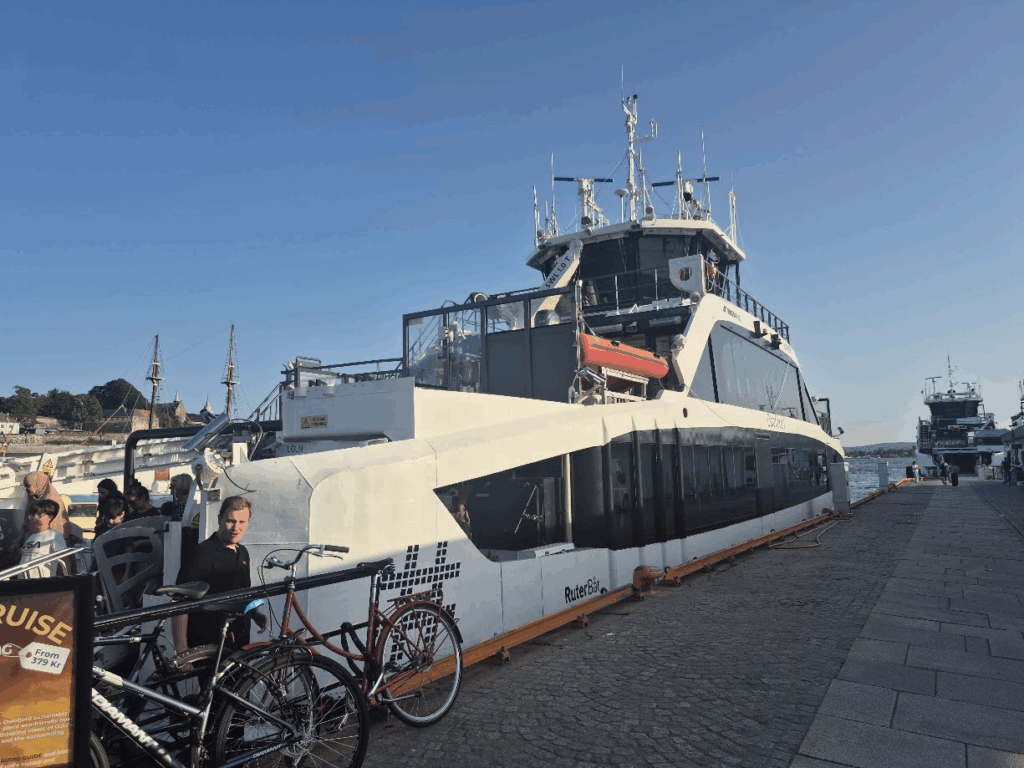
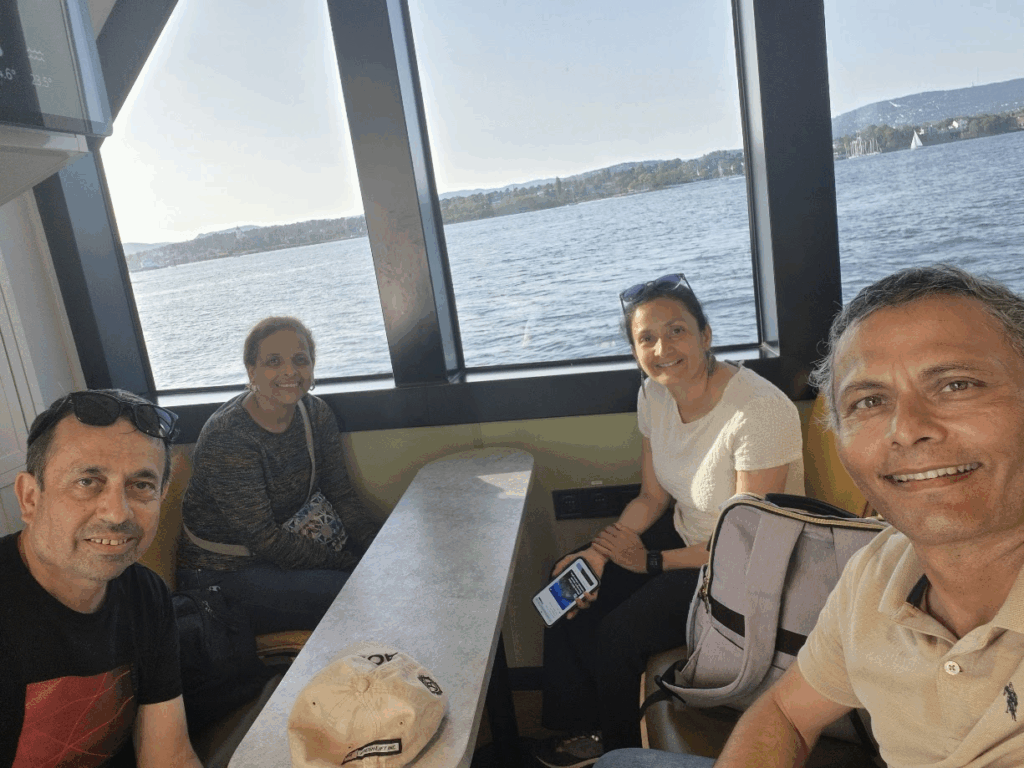
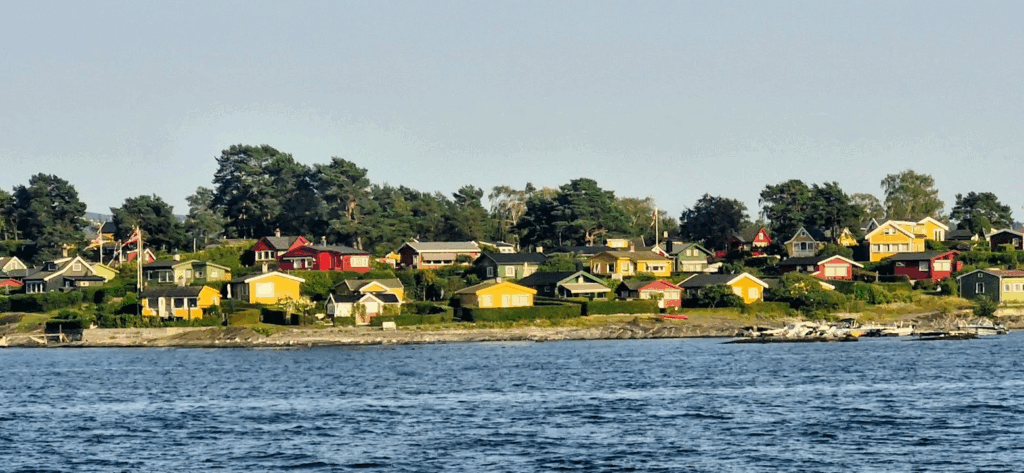
The last activity for the day was a ride in a round-trip public ferry around the islands of Oslo. The fare is included in the Oslo pass. It gives a nice view of all the islands without separately paying for a cruise in Oslo harbor.
For dinner, we ate at Peppe’s Pizza at Oslo Central Station. The veggie pizza turned out to be totally awesome. A great way to end the day.

We returned to Radisson Red at around 8 pm. This was our final day in Oslo.
Day 7: Thu, Aug 14: Flight from Oslo to Mumbai
We took the 7.15 am flight from Oslo to Mumbai. We walked to Oslo airport from Radisson Red hotel.
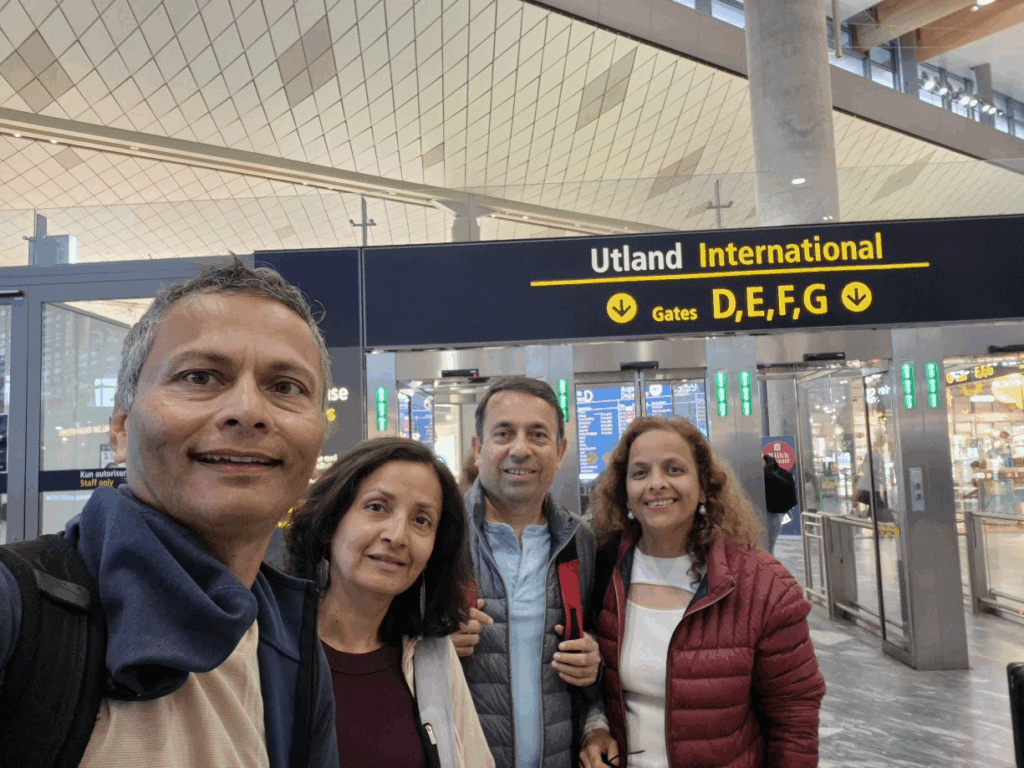
We also were coming to India after a period of 4 months. It felt good to be coming back. We reached Mumbai at 12 midnight and stayed at Tanvi Apte’s home in Andheri at night. Next day, we took the taxi at 7.30 am and got back to Pune at 12.30 pm. We had a wonderful 6 day trip to Norway.