


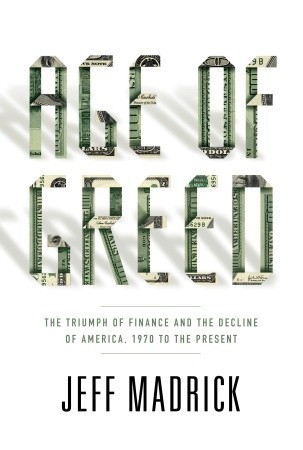
Book Introduction: This non-fiction book covers the deregulatory changes in American banking and finance from the 1960s to the 2008 crisis, that has led to wealth inequality, more frequent boom and bust cycles, as well as hundreds of billions of dollars chasing foolish speculation. Bankers got rich while average wages have stagnated.
Samir’s Rating: 3 out of 5

This book traces the story of American finance through the key characters such as Walter Wriston, Sandy Weill (Citibank), Ivan Boesky, Henry Kravis (Corporate takeovers), Michael Milken (Junk Bonds), Milton Friedman, Alan Greenspan, Paul Volcker (economists), Reagan, Clinton, Bush (Presidents) and many others.
Book Summary:
In the 1940s and 50s, banking and finance was hobbled by regulations from the 1930s New Deal that wanted to avoid events such as the depression of 1929. For example, the Glass Steagall act of 1933 prevented banks from operating as brokerages or offering complementary services. Under Regulation Q of this act, banks were not allowed to offer interest on checking accounts. However, the banking and finance industry cleverly circumvented those restrictions and in parallel, continued to lobby with the government to eliminate the regulations. In the 1960s, Citibank created certificates of deposit which offered interest. Similarly, money market funds were created to circumvent his regulation.
In parallel, finance CEOs liked Walter Wriston of Citibank actively tried to diminish the role of the Federal Government in finance by lobbying for deregulation. Milton Friedman, economist at University of Chicago along with Alan Greenspan, Chairman of the Federal Reserve, pitched free market theory. As the years passed, governments, both Republican and Democrat were in favor of deregulation. Airlines, energy, utilties, truck, railroads and banking were slowly deregulated. Anti-trust litigation was not pursued. Reagan cut taxes, increased military spending and aggressively favored deregulation. Banks were allowed to create a basket of offerings, banking, brokerage, mortgages, credit cards, often creating conflicts of interest.
Deregulation of finance created a culture of chasing short term profits over long term innovation. New financial mechanisms such as leveraged buyouts, junk bonds, derivatives, currency trading, hedge funds attracted lots of money, but often resulted in a loss for the common investors.
This has led to finance teams being compensated disproportionately highly without regard for whether money is being channeled towards innovation and productive causes. This greed in finance has led to major financial scandals, insider trading, and very frequent boom and bust cycles, resulting in massive enrichment of bankers at the cost of erosion of wealth for the average investor.
Book Opinion:
The book walks through the timeline from the 1960s to 2008 through a brief biography and description of the key players and their contributions to changing the financial landscape. Chapters are dedicated to these key players often grouped together in a common theme. The book mainly argues that deregulation in America has been responsible for the enrichment of bankers, wealth inequality, loss of innovation and average wage stagnation relative to productivity gains. The characters add to the depth of the description, but sometimes, the number of pages dedicated to each character is too much. The book could be less verbose about the history of each character. Also, within each character, the timelines go back and forth, confusing the reader.
While I enjoyed the history of financial deregulation traced through the decades through various characters, I disagree with the author’s fundamental premise. Deregulation freed industry from the restrictions that were preventing growth. Each individual or organization should be free to choose where they should deploy their money. I believe that money allocated with self-interest in mind is the most efficient deployment of capital. Deregulation in any industry does feed greed and speculation, but it also allocates capital efficiently. Though bust cycles may happen quicker, capital destruction during bust cycles is also a natural phenomenon that collects and eliminates non-productive assets quickly. Morever, such deregulation has allowed the American financial industry to grow rapidly, create wealth and become an envy of the world.
As productivity increases, wealth of people who sit at the top of the productivity pyramid will grow faster than the wealth of the people at the bottom. Wealth inequality is not a reason to create a regulatory enviroment that stifles free markets, rapid innovations and wealth creation. Adjusted for inflation, the average purchasing power of Americans has increased nearly 5 times since the 1930s.
Jeff Madrick has written a book titled “The Case for Big Government“. He is pro-regulation and pro-big government. His leanings are clearly visible in this book as well. Having grown up in India, I have seen how a heavily regulatory environment that can stifle innovation, growth and wealth creation for decades. Therefore, I am inclined to not agree with the author’s conclusions.
Who should read this book?
If you are interested in world finance or American finance, you should read this book to learn about the history of American banking, regulations that arose in the 1930s and how progressive deregulation created new financial mechanisms. It is a long but interesting read regardless of what you think of the author’s views.